

Explore Turks and Caicos Historical Sites Now
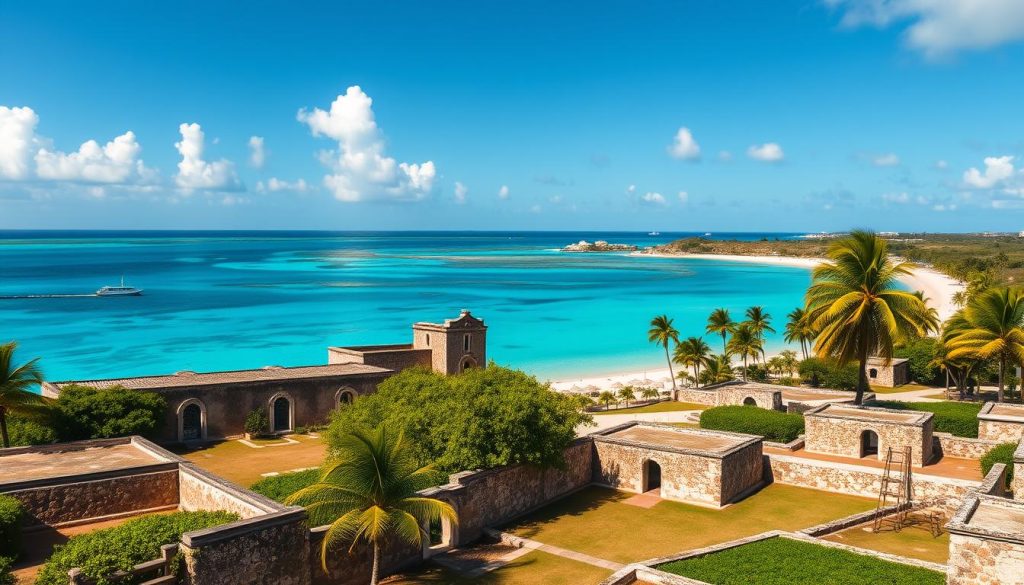
Ever wondered how the history of the Turks and Caicos Islands connects to today? This archipelago is full of hidden treasures. From historic sites to must-see attractions, each place has a story to tell.
Join us on a journey to ten historical sites that showcase the region’s rich history. Discover landmarks like the Grand Turk Lighthouse, built in 1852, or Wade’s Green Plantation from the 18th century. Whether you love history or just want to learn about Turks and Caicos, this guide is for you. It opens the door to the deep history that has shaped these islands for centuries.
Introduction to the Rich History of Turks and Caicos
The Turks and Caicos Islands have a rich history. Exploring the history of Turks and Caicos shows a story of the Lucayan people, early explorers, and the salt industry. The first people lived here around 700-1000 AD. They had a vibrant culture before Europeans arrived.
Explorers like Christopher Columbus and Juan Ponce De Leon visited in the 15th and 16th centuries. Pirates and British Loyalists found refuge here in the late 17th century. This created a mix of stories about conflict, commerce, and exploration.
The salt industry became key by the late 16th century. It lasted for over three centuries. African slaves were brought in the 18th century for cotton fields. Later, the economy shifted to tourism in the mid-1980s.
Historical landmarks in Turks and Caicos show its past. You can see the legacy of the Taino, colonial settlers, and the salt trade. Visiting these sites helps you understand the islands’ rich heritage.
| Year | Event |
|---|---|
| 700-1000 AD | First known human habitation by the Lucayans. |
| 1492-1600 | Visits by European explorers like Columbus. |
| 1681 | First permanent settlement established by salt collectors from Bermuda. |
| 1783 | Arrival of British Loyalists bringing African slaves for agriculture. |
| 1962 | John Glenn’s splashdown near Grand Turk during the Space Race. |
Overview of Turks and Caicos Historical Sites
The Turks and Caicos Islands have a rich history. Many sites show the impact of the salt industry and old plantations. These places are key to understanding the islands’ past.
The islands have a long history, with people living here for about 1,000 years. The first settlers arrived between 700 and 1,000 AD. Salt was a big part of their economy for over 300 years.
Cockburn Town is the oldest settlement, started by salt collectors in 1681. There are also old plantations, like Cheshire Hall and Wade’s Green. The Grand Turk Lighthouse, built in 1852, shows British influence.
In the 1980s, the islands started to focus on tourism. The Grand Turk Cruise Center opened in 2006, bringing many visitors. Now, the islands are known for their history and tourism.
Must-Visit Historical Attractions in Grand Turk
Grand Turk, the capital of the Turks and Caicos Islands, is full of historical landmarks. These sites show the story of this amazing region. You’ll learn about the islands’ culture and their role in maritime and salt industries.
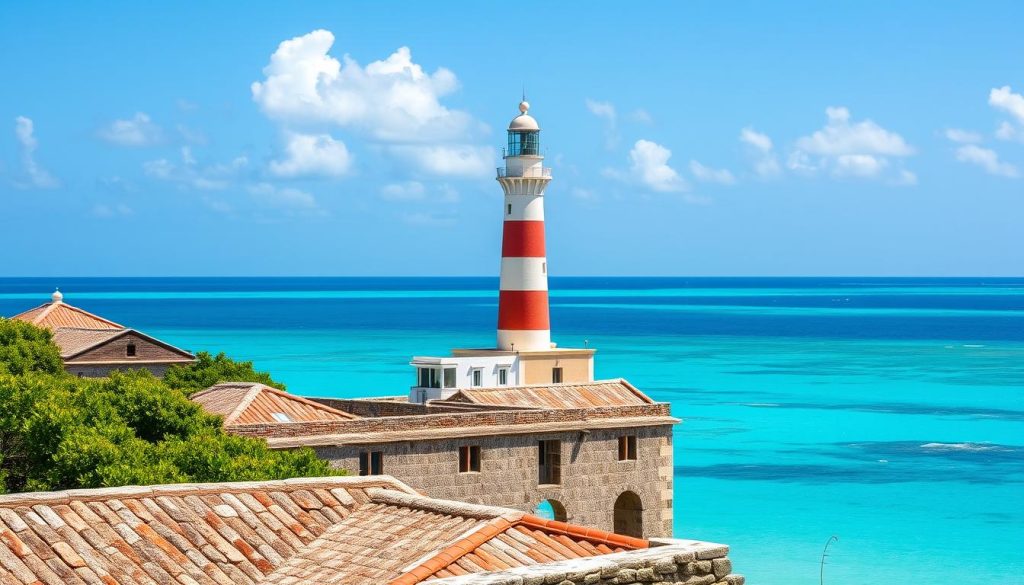
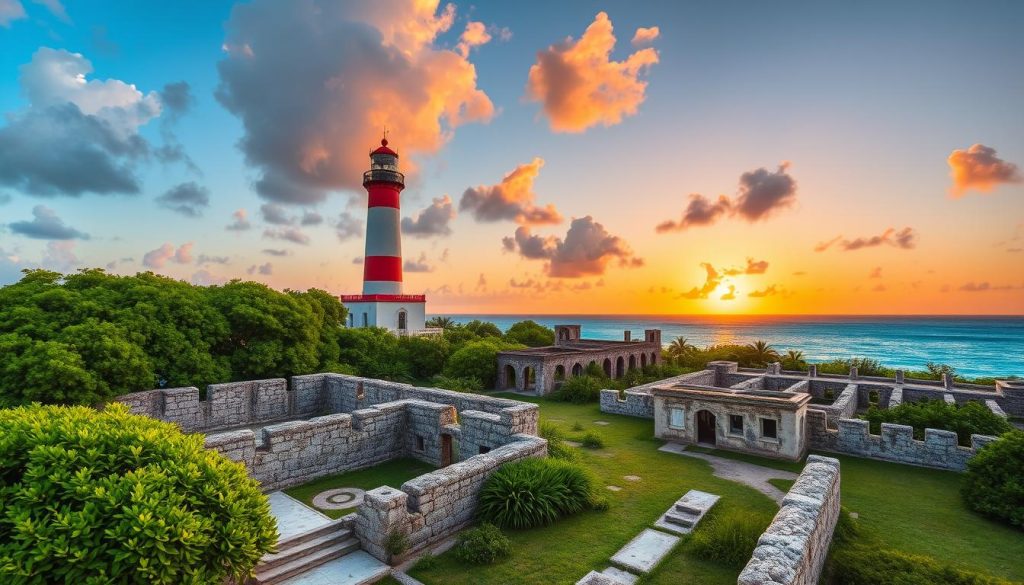
The Grand Turk Lighthouse
Built in 1852, the Grand Turk Lighthouse is a key landmark. It guides ships safely through the waters. It’s a symbol of the island’s importance in shipping and navigation.
H.M. Prison
H.M. Prison dates back to the 18th century. It gives a look into the past’s harsh prison life. It’s a key spot for those interested in the Turks and Caicos’ social history.
The National Museum
The Turks & Caicos National Museum is a treasure. It has artifacts from the islands’ history. You’ll learn about the Taino people, maritime stories, and the salt industry.
Exploring the Salt Industry: Historical Landmarks in South Caicos
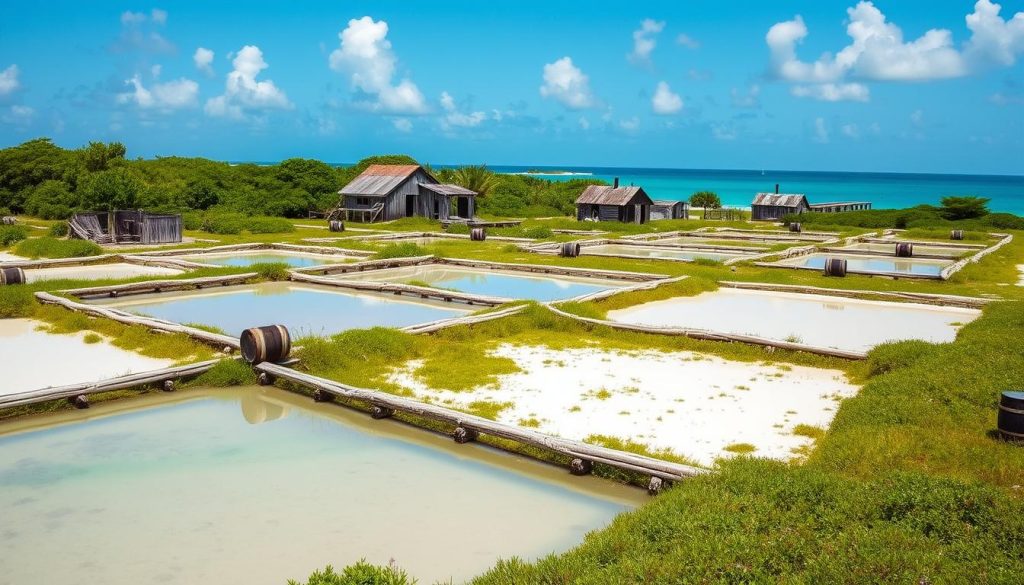
The history of Turks and Caicos shows how important the salt industry was. South Caicos is known for its huge salt salinas, covering about 800 acres. These salt ponds started in the late 1600s, using advanced methods to make and export salt.
The salt industry was key to the local economy, with South Caicos leading the way. At its best, they sent almost a million bushels of salt every year. This led to the growth of small towns on the islands, showing how salt helped people’s lives.
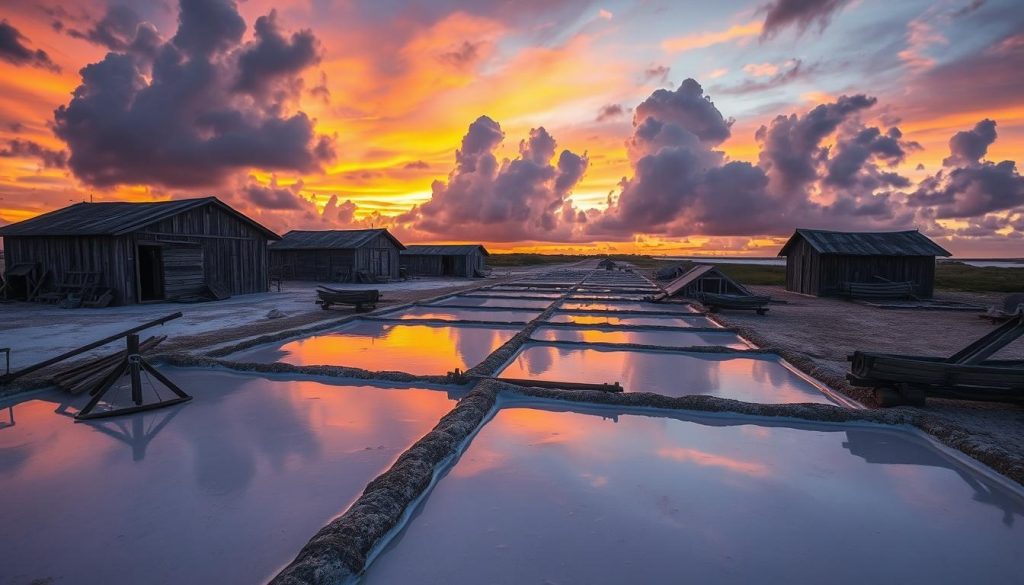
Visiting the old salt industry sites is a must. You’ll see ruins of cotton and sisal plantations and salt production areas. Places like Conch Bar Cave and the U.S. Coast Guard LORAN station give insight into the salt trade’s history and decline after the 1950s.
Exploring South Caicos lets you see its stunning coastlines and unique landscape. The trade winds have shaped the island, making it beautiful and historically important. Whether you’re looking for shells or visiting historical sites, you’ll learn a lot about Turks and Caicos’ salt industry.
| Key Aspects of Salt Industry | Details |
|---|---|
| Peak Production Area | 800 acres of salt ponds |
| Salt Exports | Nearly 1 million bushels annually |
| Timeline | Late 1600s to 1960s |
| Significant Developments | Growth of small towns due to salt trade |
| Decline of Industry | Mid-1950s onwards |
Remarkable Historical Sites in Providenciales
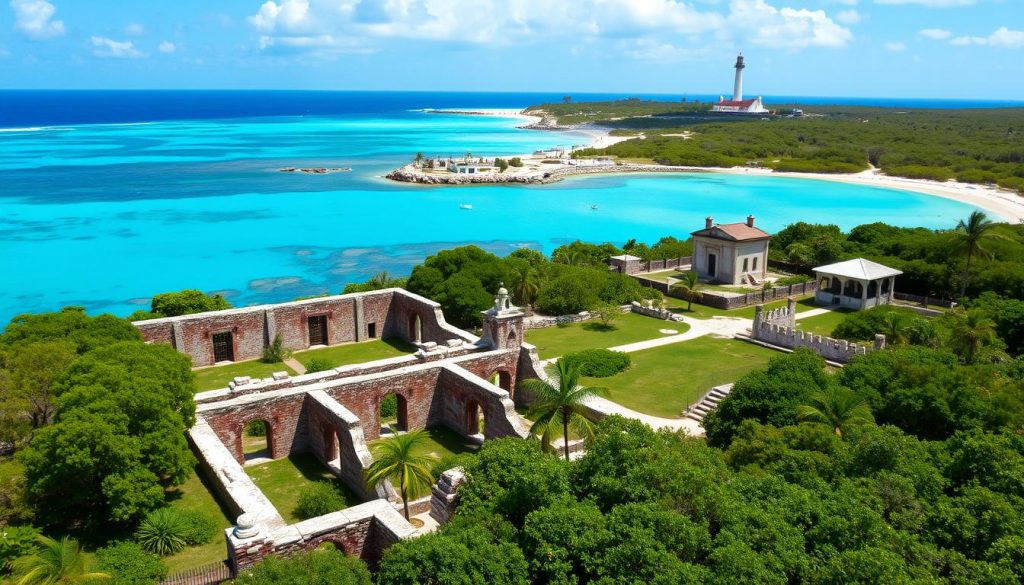
Providenciales boasts a range of historical sites that showcase its rich heritage. Cheshire Hall Plantation is a key site, built by Loyalists after the American Revolution. It’s the only open plantation in Providenciales, giving a peek into a thriving cotton economy.
The plantation offers insights into the island’s agricultural past and the lives of its early settlers.
There’s also Sapodilla Hill, known for its ancient rock carvings. These carvings date back to the mid-1700s. They were left by sailors who were shipwrecked, sharing their stories and struggles.
These sites add a unique chapter to Providenciales’ history, enriching our understanding of the island’s past.
Cheshire Hall Plantation
Cheshire Hall Plantation is a vital part of Providenciales’ history. It shows how the cotton industry shaped the local economy. Visitors can see the remnants of daily life for those who lived and worked there.
Sapodilla Hill Rock Carvings
The Sapodilla Bay Hill rock carvings are a treasure of Providenciales’ ancient sites. They feature symbols and inscriptions that connect us to the island’s history and maritime culture. Exploring these carvings invites us to reflect on the lives of sailors from long ago.
Uncovering Historic Ruins in Turks and Caicos
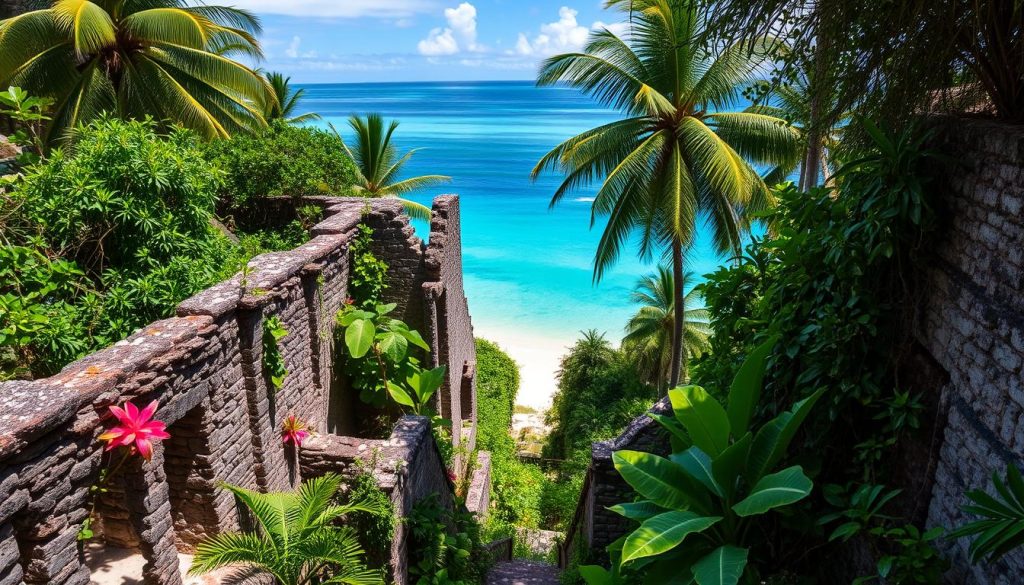
The historic ruins in Turks and Caicos tell a story of the islands’ past. They show the importance of cotton and sisal farming. Wade’s Green Plantation and Haulover Plantation are key sites that highlight the life of plantations.
Wade’s Green Plantation
Wade’s Green Plantation gives a peek into old plantation buildings. It was built in the early 1800s for sisal processing. Walking through the ruins, you see the hard work of those times.
The plantation was crucial for the local economy. Its remains remind us of agriculture’s role in the area’s history.
Haulover Plantation
Haulover Plantation shows the impact of sugar cane farming. Its ruins tell of a hardworking plantation life and sugar’s importance. Exploring here, you learn how farming has shaped the islands’ culture.
These ruins are more than old buildings. They offer a glimpse into the islands’ economic and social history over the years.
Fascinating Stories Behind Turks and Caicos Historical Architecture
The historical architecture of Turks and Caicos is full of stories. Each building shows a piece of the island’s past. The style is a mix of colonial and local, using coral stone and wood.
These structures tell us about the early settlers and the salt industry. The salt industry was key to the islands’ growth.
The Grand Turk Lighthouse, built in 1852, is a key landmark. It helped ships navigate safely. It shows the islands’ importance during the salt industry’s peak.
Every historical building offers a peek into the lives of those who came before. From the Lucayan people to the British colonists, their stories are told through these structures.
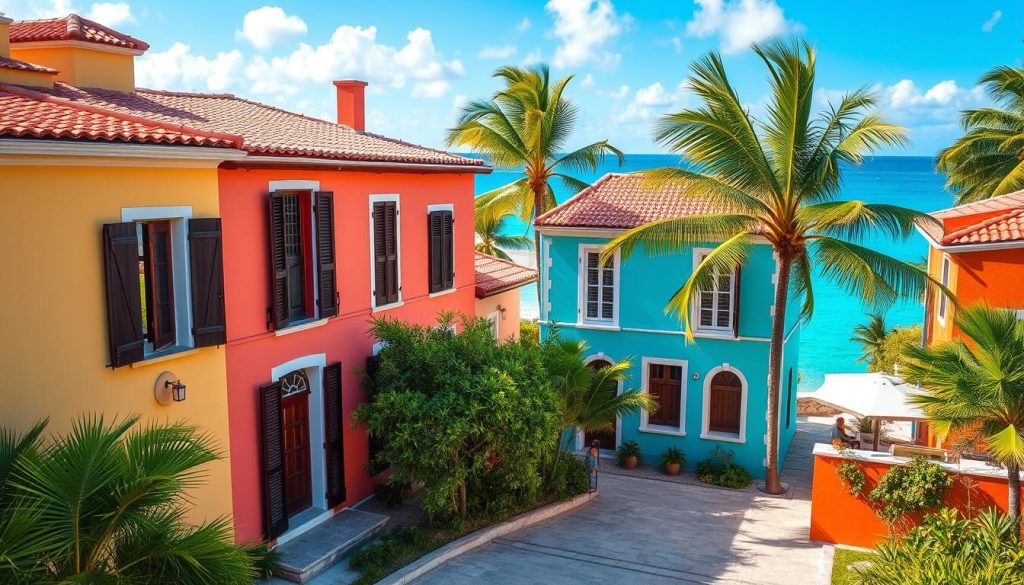
- Coral stone construction that stands up to the weather.
- Local materials and styles that show the islands’ cultural mix.
- Buildings that were homes, shops, and community centers.
The Turks & Caicos National Museum in Grand Turk is a key place. It keeps artifacts that tell the story of the islands’ architecture. The museum has exhibits on pre-Columbian times and shipwrecks, showing the islands’ maritime history.
It also hosts events and programs to teach about the architecture. This helps people understand the importance of the islands’ history and culture.
Learning about the history behind the architecture of Turks and Caicos is special. It shows the islands as more than just a place to visit. The buildings tell stories of resilience and creativity, leaving a lasting legacy.
Legacy of the Salt Industry in the Turks Islands
The salt industry deeply influenced the Turks Islands’ history and economy. Today, we can still see its impact. Sites like Salt Cay Salinas, South Caicos Salinas, and The Boiling Hole show how salt production tied the local environment to early economic activities.
Salt Cay Salinas
Salt Cay Salinas is a key part of the salt industry’s history. These evaporation ponds highlight the innovation and hard work of salt rakers. They show how salt production shaped the island’s culture.
South Caicos Salinas
The South Caicos Salinas is another important site. It features large evaporation ponds. In the early 1700s, Bermudians arrived, boosting salt harvesting. Exploring here, you’ll learn how salt drove economic growth and community building.
The Boiling Hole
The Boiling Hole is a natural wonder used in salt processing. It symbolizes the Turks Islands’ industrial past. Here, you’ll see how salt production was part of the early islanders’ lives.
| Site Name | Key Features | Historical Significance |
|---|---|---|
| Salt Cay Salinas | Evaporation ponds, local flora | Showcases salt raking techniques and community life |
| South Caicos Salinas | Extensive evaporation networks | Historical economic center with Bermudian influence |
| The Boiling Hole | Natural processing site | Represents industrial techniques used in salt production |
Exploring Ancient Sites in Middle and North Caicos
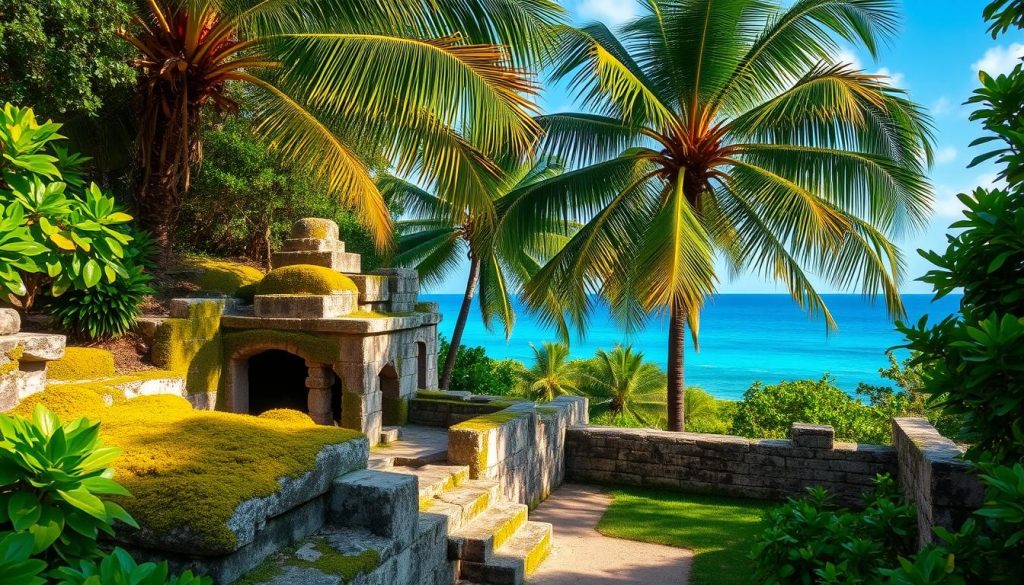
Discover the ancient sites in Middle and North Caicos. These islands show the rich history of the region. They have stunning landscapes and important geological and ecological features.
These unique places help us understand the ancient cultures that lived here. It’s a chance to see the past come alive.
Indian Cave—Middle Caicos
Indian Cave is one of the Caribbean’s biggest cave systems. It’s known for its amazing geological formations. These include huge stalactites and stalagmites that took thousands of years to form.
This cave was a shelter for the Taino people. Animal remains and artifacts found here tell us about their lives. It’s a fascinating look into the island’s early history.
Flamingo Pond—North Caicos
Flamingo Pond is a natural paradise and a key spot for biodiversity. It’s famous for attracting pink flamingos, which come here every season. The pond is where these birds breed, showing the area’s ecological wealth.
Visiting this place lets you see the connection between nature and history. It links you to the ancient sites in Providenciales. You’ll learn about the wildlife that has lived here for generations.
| Site Name | Location | Significance |
|---|---|---|
| Indian Cave | Middle Caicos | Largest cave system, historical artifacts from Taino people |
| Flamingo Pond | North Caicos | Niche for vibrant flamingos, ecological biodiversity hotspot |
Insights into the Historical Sites in Grand Turk
Grand Turk has a rich history, with many sites that show its past. Each place has its own story, revealing important events that shaped the area. The Grand Turk Salinas and Yankee Town are key to understanding the island’s history.
Grand Turk Salinas
The Grand Turk Salinas highlights the island’s salt production era. This era was crucial for the island’s economy, but it ended in the 1950s. Today, you can still see remnants of this time, showing the hard work that helped the island grow.
Visitors can see how big the salt production was. It was a big part of the local economy. The Salinas are also surrounded by beautiful nature, making them interesting for both history lovers and casual visitors.
Yankee Town
Yankee Town was built in the late 1800s, showing early American settlement after the War of Independence. It was a key industrial area, supporting the plantation economy at its best. Walking through Yankee Town, you see how the past influenced its growth.
The buildings and structures tell stories of strength and community. They let visitors experience Grand Turk’s lively past. Exploring these sites gives a full picture of the island’s history and its lasting impact.
Turks and Caicos Historical Sites: The Role of the Cotton and Sisal Plantations
The cotton and sisal plantations offer a unique look into the Turks and Caicos Islands’ past. They are mainly found in the Caicos Islands. These plantations show the islands’ agricultural roots and how they’ve shaped the local culture and architecture.
In the late 19th century, sisal became a key crop. Two big companies, the West Caicos Fibre Company and East Caicos, led the sisal industry. By 1891, a lot of land was cleared for farming. This marked the start of a booming agricultural sector.
The 1901 census showed a diverse community. This diversity was a result of the plantations’ influence. It highlighted the changing population dynamics.
The islands’ colors tell a story of their rich history. Each color represents a part of their cultural landscape:
| Color | Significance |
|---|---|
| Red | Represents Grand Turk, tied to the Turks Head Cactus |
| White | Symbolizes Salt Cay and the salt industry |
| Orange | Denotes South and East Caicos, known for fishing |
| Tan | Links to Middle Caicos and its thatch production |
| Green | Highlights North Caicos and Wade’s Green Plantation |
| Turquoise | Represents Providenciales and the tourism industry |
| Pink | Symbolizes marine life and uninhabited cays |
| Yellow | Represents the sun’s vivid influence on the islands |
Learning about the cotton and sisal plantations helps us see why they’re among the best historic sites in Turks and Caicos. Their lasting impact continues to shape the islands’ culture today.
Excursions to Uninhabited Islands and Their Historical Significance
Visiting the uninhabited islands of Turks and Caicos is a unique way to see their history. Each island has its own story, showing the area’s ecological and cultural heritage. This makes your journey through the history of Turks and Caicos even more special.
Little Water Cay
Little Water Cay is a nature reserve famous for its endangered Turks and Caicos Rock Iguana. It shows the importance of protecting nature and keeping history alive. As you see the clear waters and green landscapes, you’ll understand the importance of nature and history.
The stories of the native species highlight the islands’ historical value. They also show the islands’ dedication to taking care of the environment.
Half Moon Bay
Half Moon Bay is known for its beautiful beaches and stunning views. It also has historical sites that tell of early sea cultures. By exploring these sites, you learn about the island’s past and how people lived there.
Walking on the beach, you feel like you’re stepping back in time. It’s a powerful way to see the history of Turks and Caicos up close.
Conclusion
Exploring Turks and Caicos historical sites takes you on a unique journey. You’ll discover the islands’ rich history. The Grand Turk Lighthouse, built in 1852, and the old salt industries tell fascinating stories.
The National Museum is a treasure trove of artifacts. It preserves over 200 years of history. It connects you to the islands’ rich heritage.
Visiting sites like Wade’s Green Plantation and Cheshire Hall Plantation gives you insight. You’ll see how the salt and cotton industries shaped the culture. Each site is a reminder of the islands’ past and a glimpse of their beauty.
Whether you’re exploring Providenciales’ turquoise coastlines or North Caicos’ green landscapes, these sites are key. They deepen your appreciation for the islands. Learning about each site’s history lets you connect with the community’s legacy, making your visit unforgettable.





