

Exploring Uplistsikhe History and Culture
What secrets lie within the ancient Georgian rock-cut town of Uplistsikhe that could reshape our understanding of early civilization?
Nestled on the left bank of the Mtkvari River in Georgia, Uplistsikhe—meaning “the Lord’s Fortress”—offers a glimpse into a rich tapestry of Uplistsikhe history and culture. This extraordinary cultural heritage site Uplistsikhe, dating back to the 6th century BC, showcases the remarkable rock-cut architecture that once housed a thriving community. At its peak, it was home to around 20,000 people during the early Middle Ages and was a vital stopping point along the legendary Silk Road, showcasing a unique blend of trade and cultural exchange. In this article, you journey through the fascinating history and cultural significance of Uplistsikhe, exploring its archaeological wonders and enduring legacy.
Introduction to Uplistsikhe
Uplistsikhe is a key historical and cultural site in Georgia. It’s an ancient town carved into rock, showing the skill of early people. This place has a rich history of about 3,000 years, shaping Georgia’s past.
The site covers 40,000 square meters, split into three main areas. It has a complex of caves and tunnels. At its peak, it was home to nearly 20,000 people, making it a major center for politics, religion, and culture from the 6th century BC to the 11th century AD. Exploring Uplistsikhe, you’ll find artifacts from the late Bronze Age to the late Middle Ages.
One highlight is a beautiful Christian basilica from the 9th-10th century. It shows the town’s changing religious beliefs. The views from the cliffs, looking over the village and Mtkvari River, are stunning. Uplistsikhe’s history and beauty make it a top spot for history tourism.
The Ancient Georgian Rock-Cut Town
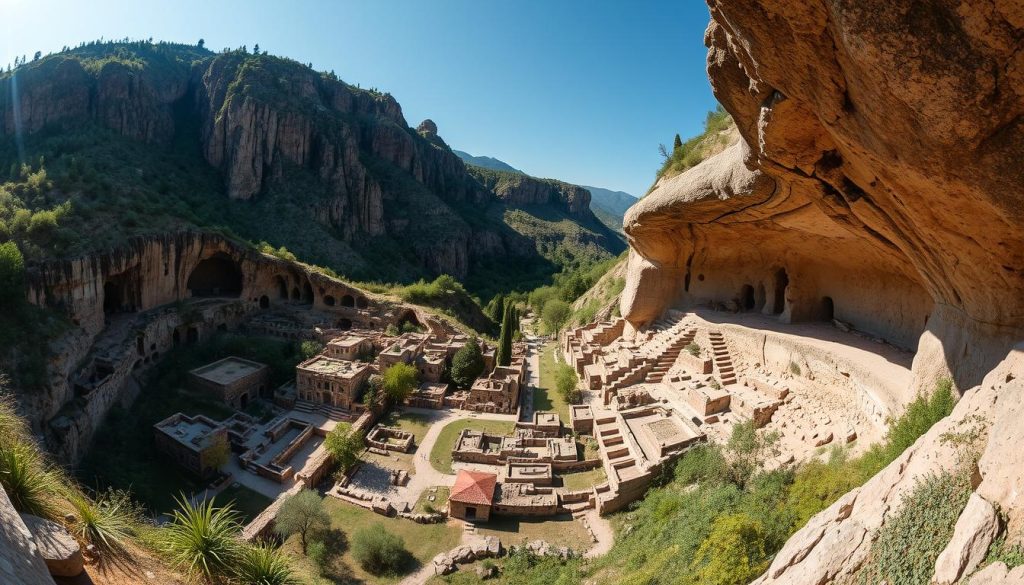
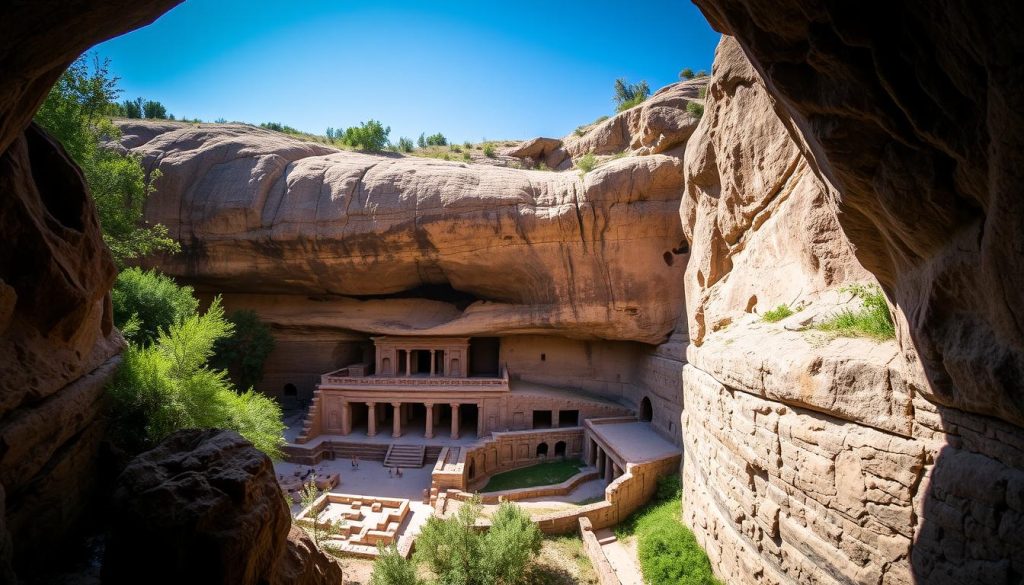
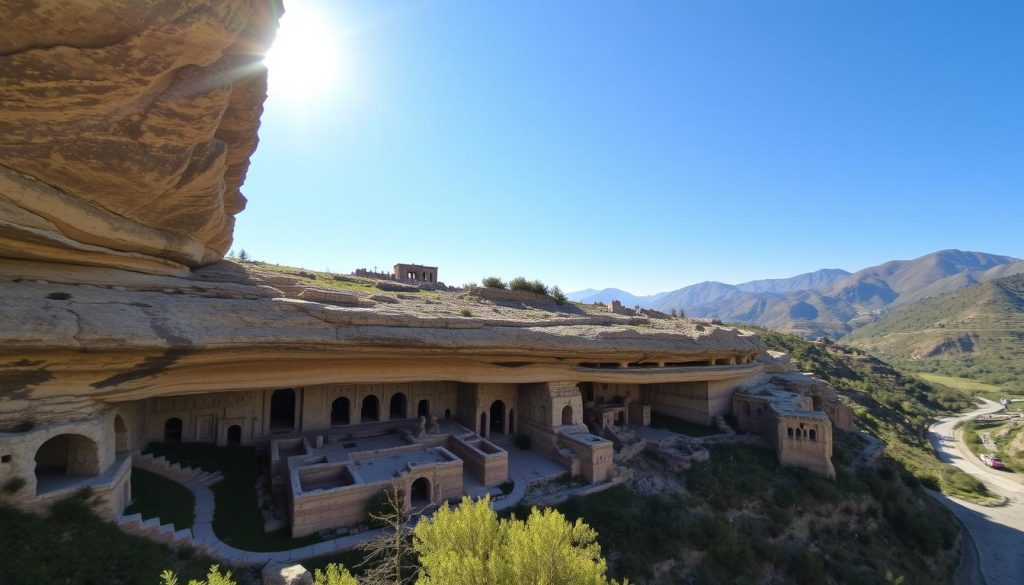
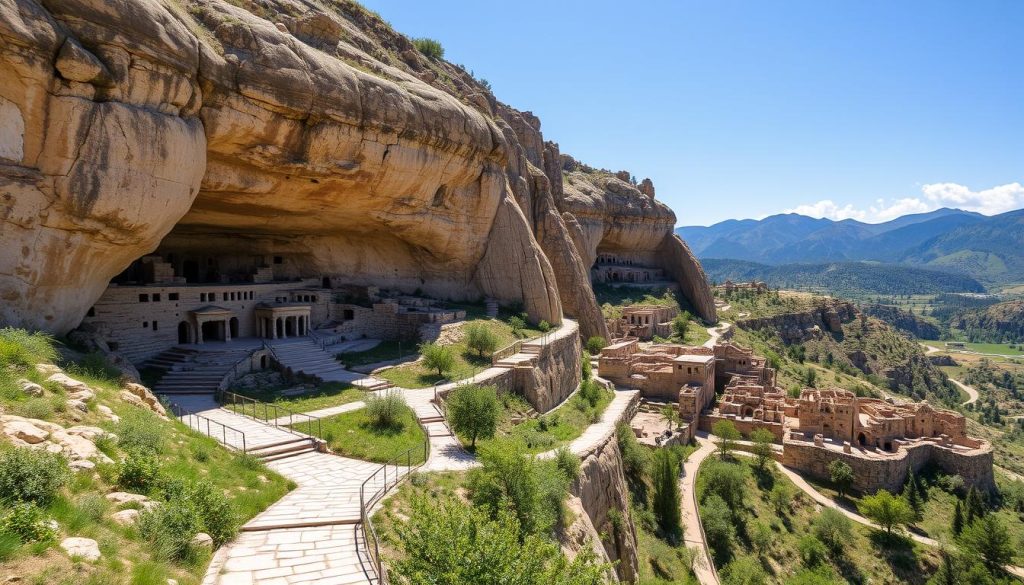
Uplistsikhe is a stunning example of rock-cut architecture. It shows detailed structures carved into rock. This ancient town in Georgia covers about 8 hectares and is split into three main areas: south, middle, and north.
Each section highlights the town’s artistic and practical sides from its time.
Overview of Rock-Cut Architecture
The Uplistsikhe ruins mix nature and human work. The structures started around the end of the 2nd millennium BC. They span from the Early Iron Age to the Late Middle Ages.
The Christian basilica at the top, built in the 9th–10th centuries, stands out. It shows how architecture and beliefs changed over time. This gives us a glimpse into Uplistsikhe’s role in Georgia’s history.
Significance of Uplistsikhe’s Location
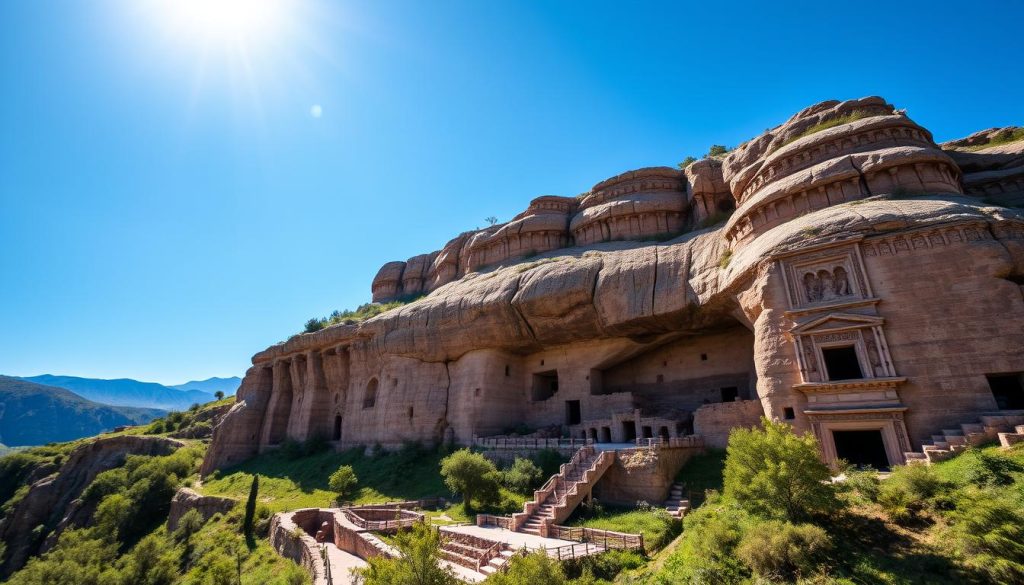
Uplistsikhe sits by the Mtkvari River, making it a key trade center. It was part of the Silk Road, which boosted its economy. The town’s location helped it stay important through history.
Archaeologists have found gold, silver, and bronze items there. These finds show the town’s wealth. After a 1920 earthquake damaged it, efforts to save it began in 2000.
Now, Uplistsikhe is on UNESCO’s tentative list. This move recognizes its global importance.
Historical Significance of Uplistsikhe
Uplistsikhe has a rich history that shows its importance in ancient Georgia. It was a key spot for trade, thanks to its location on the Silk Road. This made it a place where different cultures met and mixed.
Importance Along the Silk Road
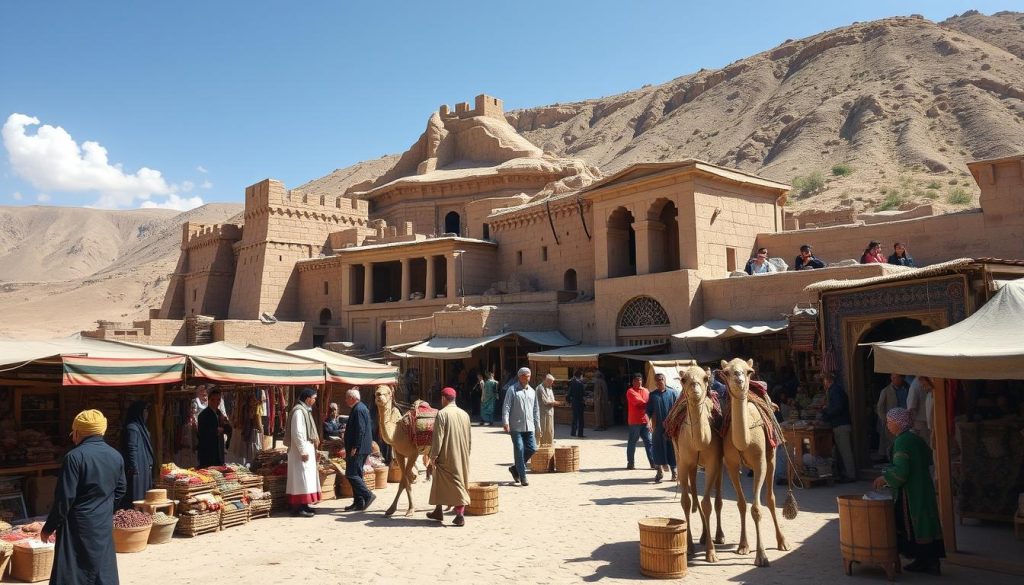
Uplistsikhe was a major commercial center on the Silk Road. This ancient route was not just for goods but also for ideas and cultures. Merchants brought valuable items, boosting the economy and making the town lively.
The town’s architecture shows its prosperous past. Its unique rock-cut designs and old trading structures tell stories of its busy days.
Residency of Ruling Class and Governance
Uplistsikhe’s governance changed with the rise and fall of empires. It was a place of power, home to the ruling class. They shaped the laws and culture of the area.
When Christianity came, Uplistsikhe adapted and grew. Its history shows how politics and architecture were linked.
| Period | Significance | Key Features |
|---|---|---|
| 2nd Millennium BC | Early settlement and trading | Initial rock-cut structures and residences |
| 4th Century AD | Christianization and decline of pagan practices | First Christian basilica built |
| 8th-10th Century | Stronghold during Muslim conquests | Enhanced fortifications and defensive structures |
| 14th Century | Mongol invasions led to abandonment | Significant population decline and structural damage |
Uplistsikhe History and Culture
Uplistsikhe is a mix of ancient history and spiritual importance. It was once a sacred place for pagan worship. The religious practices Uplistsikhe show the beliefs of its people. The site has sanctuaries from Persian, Greek, and Roman cultures.
Religious Practices and Pagan Heritage
The cultural heritage site Uplistsikhe is more than just ruins. It shows its pagan past with altars and shrines. These relics give us a glimpse into ancient rituals.
When paganism faded, early Christian structures appeared. A Christian basilica was built in the 9th-10th centuries. This change shows the shift from pagan to Christian traditions.
Influence of Different Cultures on Uplistsikhe
Uplistsikhe’s location in eastern Georgia made it a cultural crossroads. It’s one of the oldest cities in Georgia. It played a big role in the region’s history, influenced by many empires.
Excavations have found jewelry and ceramics. These show the artistic and cultural richness of the time. This mix of cultures has shaped the Uplistsikhe culture we see today.

Exploring Uplistsikhe Archaeological Site
The Uplistsikhe archaeological site takes you back in time. It shows the wonders of Georgia’s oldest cave city. This site covers about 9.5 hectares, mixing ancient architecture with natural beauty. You’ll find a network of caves, once home to around 5,000 people.
Defensive walls, water systems, and various structures show the complex life of its ancient residents. Uplistsikhe had living quarters, marketplaces, and theaters. Walking through its narrow paths, you’ll see its importance in politics, economy, and religion.
During your visit, you’ll learn about its rich history. Excavations have found pottery and metal objects, showing life from the 4th millennium BC to the 18th century AD. The site’s natural cliffs and the Kura River helped protect it.
Uplistsikhe’s cultural importance adds to your experience. It was a thriving society from the 3rd millennium BC. But, it declined with Christianity’s rise in the 1st century AD. Restoration efforts started in 2004 to keep its stories alive.
The Uplistsikhe site is a testament to ancient ingenuity and Georgia’s culture. It’s a chance to see history meet stunning landscapes.
Tourist Attractions in Uplistsikhe
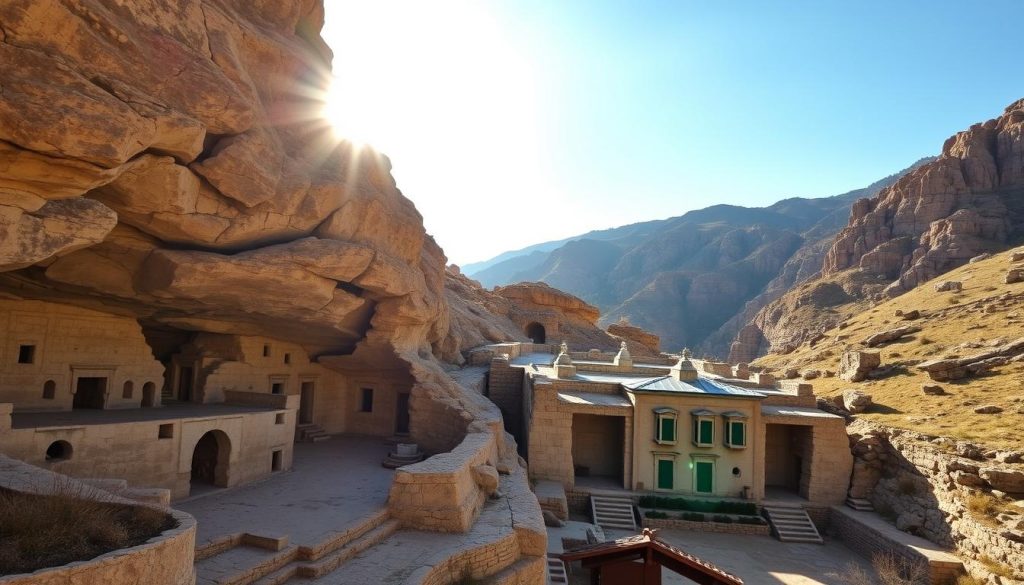
Exploring Uplistsikhe reveals many amazing sights. These attractions show the town’s rich history and stunning architecture. They give us a peek into the lives of those who lived in this ancient cave city.
Main Cave Temple
The main cave temple Uplistsikhe is a key religious site. It’s carved into the rock and was important for early Christian practices. The temple’s designs blend ancient pagan and Christian styles, making it a must-see for history buffs.
The Royal Palace and Amphitheater
The Royal Palace and Amphitheater are among Georgia’s top tourist spots. They were key places for government and public events. The amphitheater, in particular, shows how people in the past enjoyed entertainment and social gatherings.
Rock-Hewn Churches and Historical Structures
The rock-hewn churches in Uplistsikhe, like the Uplistsulis Eklesia, date back to the 10th century. They showcase the skill of ancient builders and the importance of faith. These structures, along with others, tell the story of Uplistsikhe’s Christian heritage.
| Attraction | Significance | Year Established |
|---|---|---|
| Main Cave Temple | Religious Heritage | Unknown |
| Royal Palace | Political Center | Medieval Period |
| Rock-Hewn Churches | Christian Influence | 10th Century |
Uplistsikhe Cave City Experience
Your trip to Uplistsikhe cave city is a journey into ancient history and stunning landscapes. This site, from the early Iron Age, shows off different architectural styles. As you wander through its tunnels and chambers, you feel the rich heritage of Uplistsikhe.
The city grew during the Hellenistic period, becoming a bustling urban center and a key religious site after Christianity arrived in the 4th century AD. Exploring its historic halls, like Queen Tamar’s Hall and ancient wine cellars, gives you a glimpse into its lively past.
Uplistsikhe once had a population of 20,000 to 30,000 people. It offers breathtaking views of the landscape and the Mtkvari River. To make your visit better, consider a local guide. They can share the site’s history and point out hidden spots like the tunnel to the river and pagan temples.
Traveling from Tbilisi takes about 1.5 to 2 hours by car. Uplistsikhe is a great day trip. While bigger towns like Gori take credit cards, cash in GEL is best for small vendors. Wear comfy shoes and respect this historic place.
| Feature | Description |
|---|---|
| Historical Origins | Dates back to the late 2nd millennium BC |
| Peak Population | Between 20,000 and 30,000 inhabitants |
| Architectural Styles | Influenced by Anatolian, Iranian, and early Christian cultures |
| Notable Features | Queen Tamar’s Hall, ancient pharmacy, wine cellars, pagan temples |
| Visit Duration | Approximately 1.5 to 2 hours from Tbilisi |
Visitor Information: Planning Your Trip
Planning your trip to Uplistsikhe? Knowing how to get there and what to expect will make your visit better. This ancient town carved into rock is easy to reach and full of history. Here’s what you need to know.
Getting to Uplistsikhe
Uplistsikhe is just 10 km from Gori, making it easy to get to by car or public transport. From Tbilisi, a one-way ticket to Gori is about 3 lari. The trip to Uplistsikhe costs around 1 lari. Here’s a quick summary of transportation costs:
| Route | Cost (lari) |
|---|---|
| Tbilisi to Gori | 3 |
| Gori to Uplistsikhe | 1 |
| Total Transportation | 8 |
Best Time to Visit
The best time to visit Uplistsikhe is in spring and autumn. The weather is nice, making it perfect for exploring the town. You won’t have to deal with very hot or cold weather.
Tickets and Entrance Fees
Entrance fees for Uplistsikhe are very affordable, at 7 lari. Your ticket lets you see a wide range of architectural styles and cultures. Guided tours are also available. They provide more information about this unique site.
Local Cuisine and Dining Options
Exploring Uplistsikhe’s local cuisine is a treat filled with real flavors. This ancient town has a few cozy dining spots. They serve traditional Georgian dishes. The eateries and cafes blend into the scenery, making a perfect spot to relax after exploring.
Visitors love dining at cafes that use fresh, local ingredients. You can try khinkali, meat-filled dumplings, and khachapuri, a cheese-filled bread. These dishes show off Georgian cooking traditions. Uplistsikhe’s casual dining spots are great for trying these local treats.
For a fresh-air meal, try picnicking in a scenic spot. You can grab takeout from a local cafe or bring your own food. The beauty around makes your meal even more enjoyable.

| Cafe Name | Specialties | Ambiance |
|---|---|---|
| Cafe Uplistsikhe | Khinkali, Khachapuri | Rustic and Cozy |
| Scenic View Eatery | Grilled Meats, Local Wines | Outdoor Seating with Nature Views |
| Traditional Georgian Spot | Vegetarian Dishes, Fresh Salads | Relaxed and Inviting |
Don’t miss out on Uplistsikhe’s local cuisine. It’s a chance to enjoy the area’s sights and history. Each meal not only fills your belly but also lets you dive into Georgia’s rich heritage.
Preservation of Cultural Heritage at Uplistsikhe
Keeping Uplistsikhe safe is key to its survival. Efforts are in place to protect it from erosion and the impact of tourists. These actions help keep the site’s architecture and cultural value intact.
There’s a growing focus on saving cultural sites like Uplistsikhe. The U.S. Ambassadors Fund for Cultural Preservation has given nearly $2 million to 21 projects in Georgia. In 2018, they helped fund a project to protect Uplistsikhe’s unique rock-hewn structures.
Georgia is using various methods to preserve its cultural sites. Here are some examples:
| Year | Project | Funding Amount | Focus Area |
|---|---|---|---|
| 2020 | Jvari Monastery | $500,000 | General preservation |
| 2019 | Major Church of Jvari Monastery | $100,000 | Comprehensive study |
| 2018 | Uplistsikhe Rock Curved City | N/A | Protection of rock-hewn complex |
| 2020 | Major Church of Jvari Monastery | $506,250 | Conservation plan implementation |
| 2020 | Svaneti Museum of History | N/A | Conservation of armor |
It’s also important to educate people about preserving cultural sites. Getting locals involved helps protect Uplistsikhe for the future. This approach encourages tourism that respects the site.
Visiting Uplistsikhe is a chance to see its history and architecture up close. By being a responsible tourist, you help keep this cultural gem alive.
Community and Cultural Events
Uplistsikhe is alive with community events that honor its rich history and culture. The local people are very involved in these activities. They help keep their cultural identity strong.
These events often feature traditional music, dance, and crafts. They offer a fun and engaging experience for everyone.
Festivals Celebrating Uplistsikhe’s Heritage
Uplistsikhe hosts many festivals throughout the year. Each festival highlights the area’s unique traditions and history. From harvest festivals to historical reenactments, they attract locals and tourists.
Activities include:
- Live performances by local artists
- Traditional Georgian cuisine sampling
- Workshops on crafts such as pottery and weaving
- Guided tours of the archaeological site
These festivals entertain and showcase Georgia’s cultural legacy. They ensure Uplistsikhe’s traditions live on for future generations.
Importance of Community Involvement
Community involvement is key to preserving Uplistsikhe’s customs. Residents are crucial in organizing and taking part in these events. Their dedication keeps cultural stories alive.
By joining in these events, you help understand and value Uplistsikhe’s history.
Participating in local festivities brings people together. It shows the bond shared through heritage and culture. Supporting these events helps keep Uplistsikhe’s cultural richness alive.
Challenges Facing Uplistsikhe Today
Uplistsikhe, a historic cave city in Georgia, covers 40,000 square meters. It was once home to 20,000 people in 700 caves. Despite its beauty, Uplistsikhe faces many challenges that threaten its preservation.
Environmental erosion is a big problem. Weather conditions cause the rock-cut structures to decay. This shows the need for sustainable preservation to fight these issues.
Tourist congestion is another challenge. As more people visit, managing the crowds is crucial. It’s important to balance tourism with conservation. This requires teamwork from local authorities, archaeologists, and the community.
Efforts are underway to preserve Uplistsikhe. The goal is to protect its ancient theaters, temples, wine cellars, and churches. People and organizations must work together to keep Uplistsikhe alive for future generations.
Conclusion
Uplistsikhe is a key part of Georgia’s history and culture. Its unique architecture and deep history attract many visitors. Exploring this site helps you understand Georgia’s cultural evolution over time.
Visiting Uplistsikhe makes your travel more rewarding. It also shows the importance of saving such historical treasures.
Walking through Uplistsikhe’s caves and tunnels, you see its past importance. It was a major center for politics and religion back then. This place shows how different cultures have shaped Georgia.
Visiting Uplistsikhe is a chance to see Georgia’s history and culture up close. It’s a call to preserve this ancient site for future generations. They will get to see the depth and richness of Georgia’s heritage.





