Explore Ancient Hunza Valley Historical Forts
Ever thought about Hunza Valley’s historical sites and their impact? Hunza Valley is in northern Pakistan. It’s known for its stunning views and deep history. Here, ancient forts tell tales of power, culture, and amazing architecture.
This article takes you on an adventure to these amazing structures. You’ll discover their stories and unique traits. See why they’re so important for tourism today. Baltit Fort and Altit Fort are just the start. They show the vibrant history of this area, ready to be discovered by you.
Introduction to the Hunza Valley
The Hunza Valley, in the Karakoram mountains, is a jewel on the ancient Silk Route. It is known for its beautiful geographical features of Hunza Valley. Spanning 11,660 km², the area is full of high peaks, green orchards, and unique culture. It draws travelers, historians, and nature lovers alike.
Located at 2,438 meters high, the valley mixes natural wonders with historic charm. Key sites like the Khunjerab Pass, at 4,693 meters, highlight the valley’s important past and extreme landscapes.
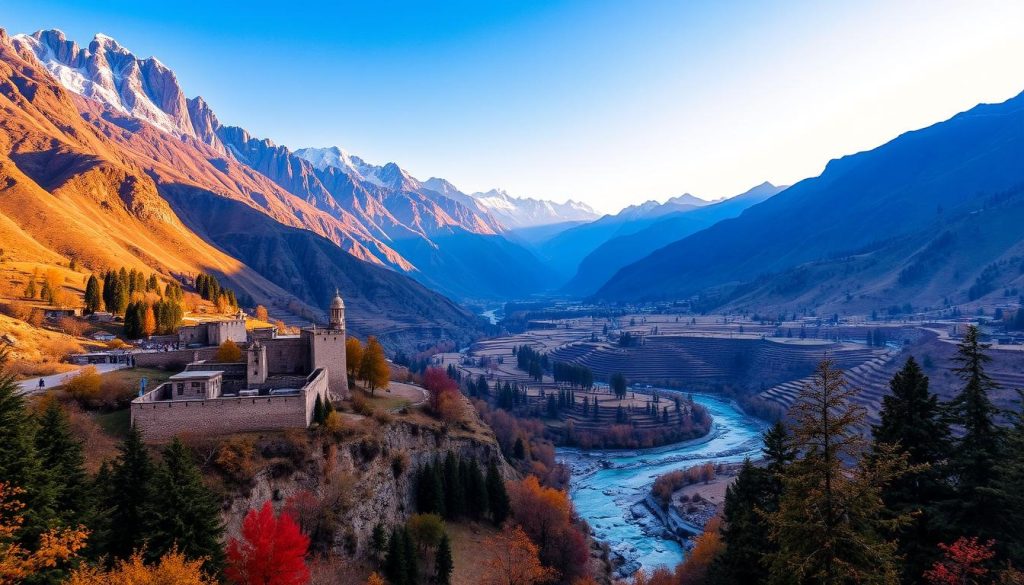
Recently, the valley changed a lot, especially after Attabad Lake formed in 2010 due to a landslide. This event changed 26 kilometers of the Karakoram Highway. Yet, Hunza’s culture remains vibrant, with its high literacy rate and focus on education thanks to the Aga Khan Mirs.
While debated, Hunza’s famed longevity is often tied to a diet rich in natural foods, plenty of exercise, and glacier water drinking. Tourists are drawn here not just for the views but for the deep historical and cultural stories, including ancient forts.
Natural Beauty and Historical Significance
The Hunza Valley is a beautiful place that draws people from all over. It features grand mountains, green valleys, and clear rivers. These create a unique and stunning landscape. Hunza is big, covering 7,900 square kilometers, and it sits high, over 2,438 meters above sea level.
Hunza has a rich history that makes it even more interesting. It was an important part of the Silk Road. This road linked different cultures and helped trade for centuries. Tourists love exploring its ancient forts and cultural spots.
In summer, from May to September, Hunza gets warm, with temperatures from 20 to 30 degrees Celsius. This weather is perfect for outdoor fun and enjoying the calm surroundings. But, in winter, it gets very cold, with temperatures falling below freezing. This shows another beautiful side of Hunza.
Hunza is not just about its views. It’s home to rare animals like snow leopards and markhors. The people of Hunza, mostly Ismaili Muslims, have a rich culture that’s over 2,000 years old.
Visiting Hunza is an unforgettable journey. You can hike, learn about local traditions, or just enjoy the mountains. Every moment in this stunning valley makes you appreciate its beauty and history even more.
Forts of Hunza Valley: A Brief Overview
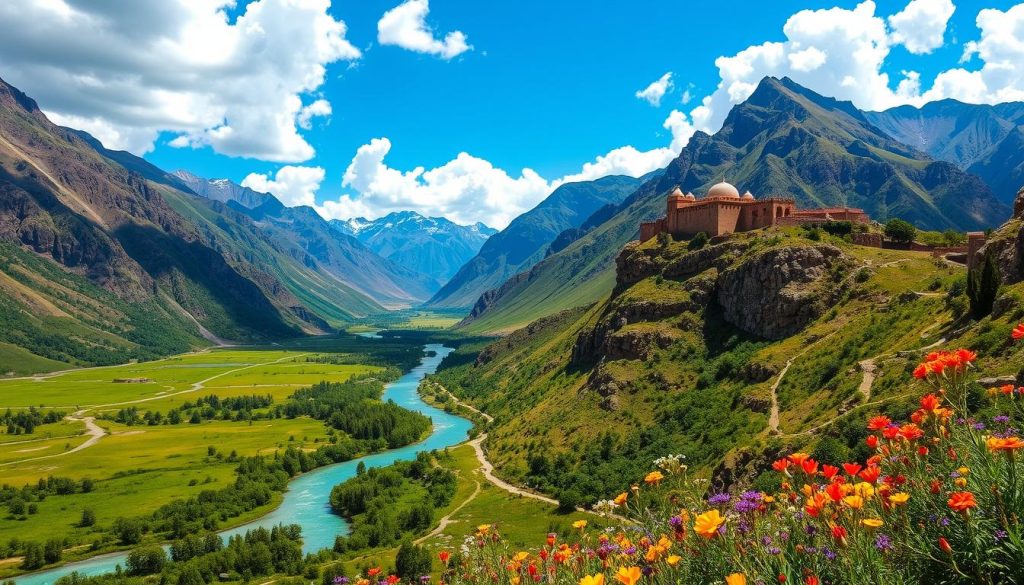
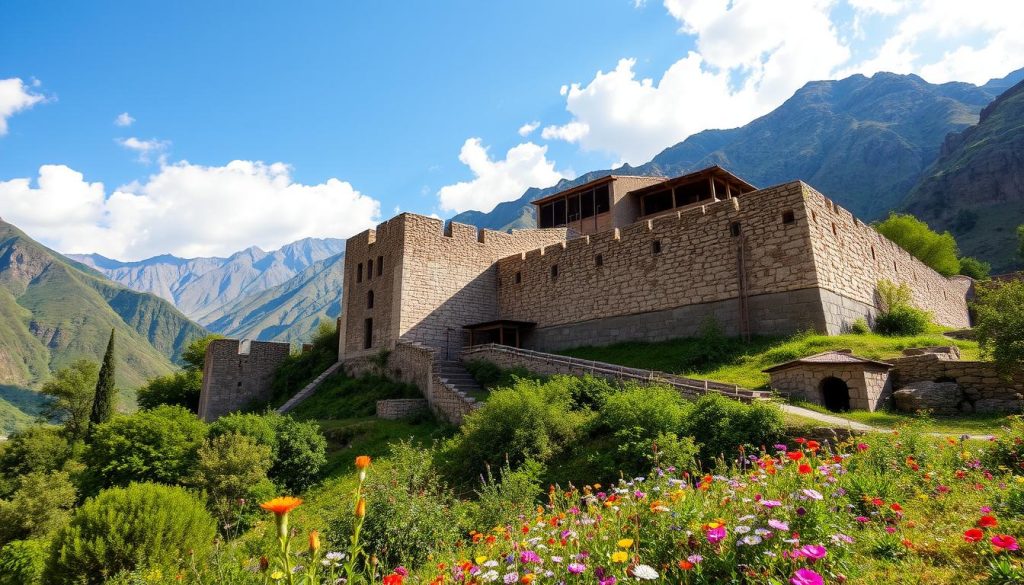
The ancient fortresses of Hunza Valley are captivating. They remind us of the area’s past rulers and rich history. The Hunza forts, especially Baltit Fort and Altit Fort, reveal much about the lifestyle of Hunza’s Mirs. Built with local styles and outside influences, they’ve stood strong over centuries.
Baltit Fort, started in the 8th century CE, is dear to locals. The Mirs left it in 1945, leading to a big fix-up by 1996. Now on the UNESCO Tentative list since 2004, it even won a Time Asia award in 2005. Inside, visitors see local antiques and old cannons, diving into the area’s history.
Altit Fort, just as key, shows more of Hunza’s building heritage. These forts don’t just highlight history; they draw tourists too. This has helped Karimabad grow, bringing jobs and boosting the economy. It shows how the forts continue to shape the area’s culture and success.
Baltit Fort: A Majestic Time Capsule
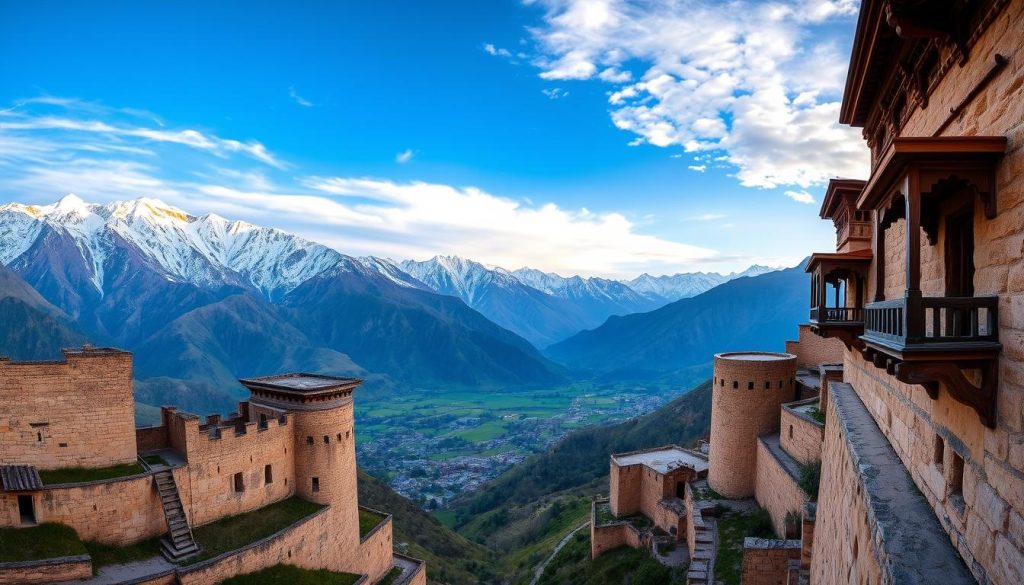
Baltit Fort has stood for over 700 years, symbolizing the rich history of Hunza Valley. It was once the home of Hunza’s rulers. Its high location provides amazing views of the area around it.
The fort is not just old stones; it shows how the local culture has grown. It’s also key in keeping local traditions alive today.
A Historic Symbol of Power
The fortress was super important for the area’s leadership and defense. It has seen many key moments in Hunza’s story. The royalty of Hunza is closely tied to this fort, making it a lasting emblem of their power.
Architectural Marvels and Unique Features
The look of Baltit Fort blends Tibetan and Central Asian designs beautifully. Inside, you’ll find amazing woodwork done by the area’s craftsmen. This design was smart, allowing for air and light to flow in while keeping the fort safe.
Thanks to restoration work, its beauty is preserved. Now, it’s also a center where people from all over the world can learn about its history.
Altit Fort: A Glimpse into Hunza’s Ancient Past
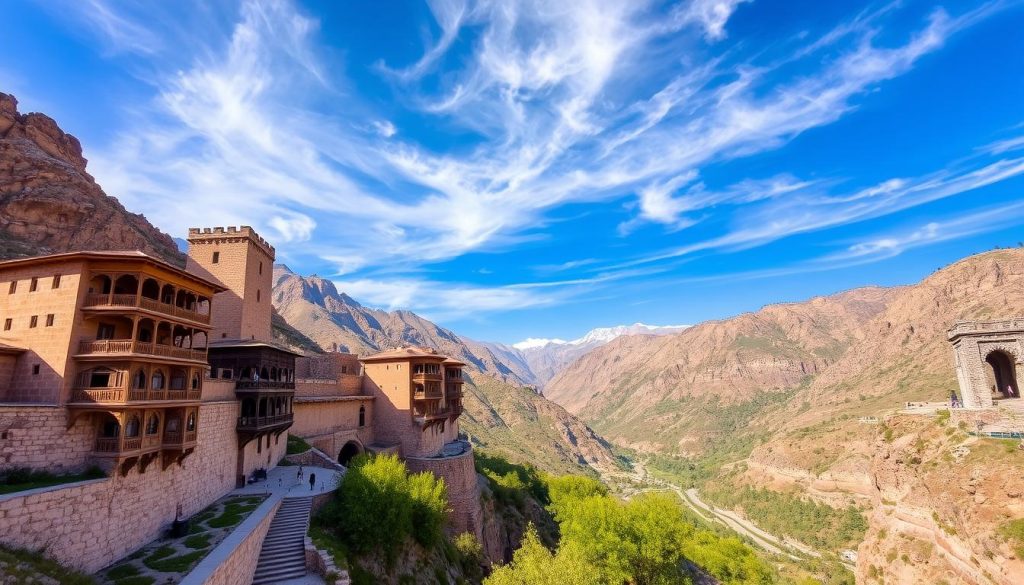
The Altit Fort is a key piece of ancient history of Hunza, over 900 years old. Perched on a cliff, it showcases the region’s rulers’ lives. The architecture, with detailed woodwork and strong stone walls, offers a peek into the past.
Its design celebrates the skill of local artisans. It connects us deeply to the history of Hunza.
Historical Significance and Restoration Efforts
Altit Fort is among the oldest in Hunza, vital to its cultural history. The Aga Khan Cultural Service has worked hard to keep it standing. This work began in the early 2000s, with help from the Aga Khan Trust for Culture and Norway.
These efforts made the fort more accessible without harming its old-time charm.
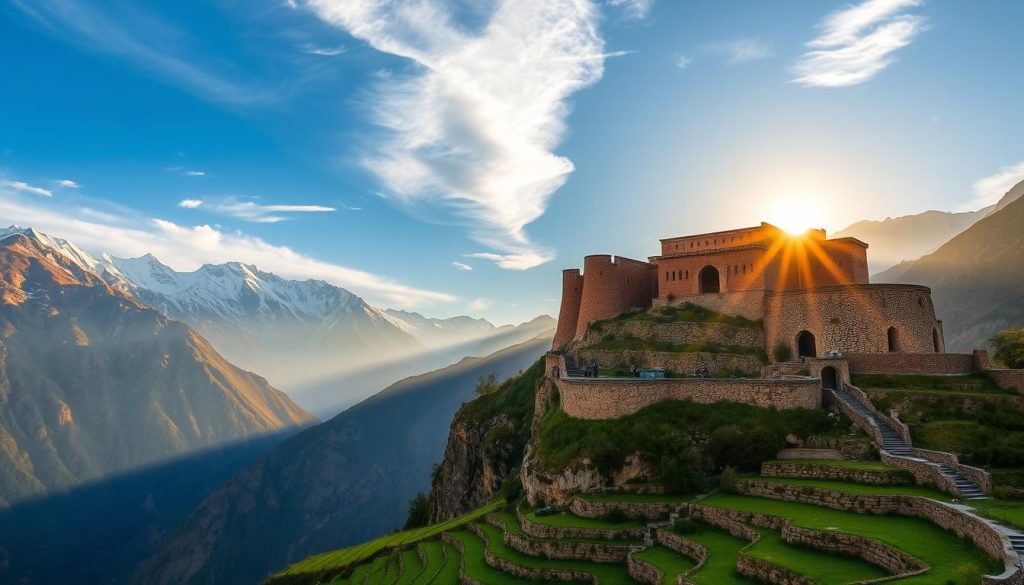
Altit Fort attracts lots of tourists, especially since the Karakoram Highway was finished in the 1970s. It’s not far from Karimabad and is a loved spot for history buffs. On guided tours, you learn about Hunza’s rulers and see stunning views.
The fort is loveliest in spring and autumn. These seasons bring perfect weather for festivals and cultural events. In 2011, it earned a UNESCO award for preserving cultural heritage. It’s a place where history fans, nature enthusiasts, and culture seekers all find joy.
| Aspect | Details |
|---|---|
| Age | Over 900 years |
| Architecture | Intricate wooden balconies, stone walls |
| Restoration Support | Aga Khan Trust for Culture, Government of Norway |
| Accessibility | Short drive or well-maintained walking paths from Karimabad |
| Best Visiting Times | Spring (March – May) and Autumn (September – November) |
| UNESCO Recognition | Asia-Pacific Award for Cultural Heritage Conservation (2011) |
| Tourism Growth Drivers | Karakoram Highway, eco-friendly travel trends |
Nagar Fort: The Silent Guardian of the Valley
Nagar Fort is a significant part of Hunza Valley’s history. It stands grandly over the valley’s eastern side. Unlike other famous forts, it quietly tells tales of the area’s past. Built centuries ago, its architecture mirrors local traditions. It also played a key role in defending the region, overseeing important paths through the valley.
The fort goes back to the 18th century, making it one of the oldest around. Studies show it wasn’t just for defense but also a home, hinting at the area’s past ways of life. Walking through its walls, you feel transported back in time to when it was a lively hub of authority.
Numbers highlight Nagar Fort’s significance. It’s one of four historical forts in Hunza, known for its unique design. The number of visitors has been growing, showing more people want to learn about it. This interest is bringing new life to the fort’s history and culture.
The table below shows how Nagar Fort compares to other forts in the valley:
| Fort Name | Construction Date | Visitor Count (2022) | Architectural Style | Historical Role |
|---|---|---|---|---|
| Nagar Fort | Early 18th Century | 2,500 | Local Style | Defense and Residence |
| Baltit Fort | 700 Years Ago | 5,000 | Balti Architecture | Cultural and Political Hub |
| Altit Fort | 900 Years Ago | 3,200 | Traditional Shina Style | Feudal Center |
| Ganish Fort | 500 Years Ago | 1,500 | Indigenous Design | Historical Gateway |
Nagar Fort’s stories help us understand Hunza Valley’s rich history. It stands tall, welcoming those eager to explore and admire its beauty.
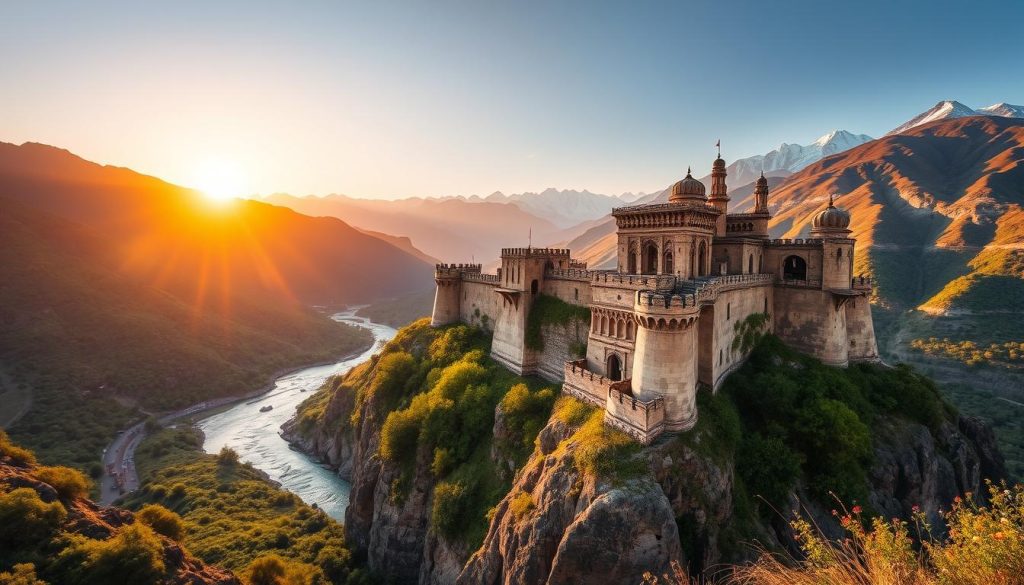
Ganish Fort: Unveiling Hidden Treasures
Ganish Fort is a hidden jewel in Hunza Valley. It’s in the peaceful village of Ganish. Here, visitors get a peek into stories from the past. The fort showcases stunning architecture. This reflects the culture and social life of the valley’s ancient people.
The fort’s design shows off architectural genius. It tells us about the lifestyle and traditions of the people back then. As we explore Ganish Fort’s history, we learn more about its impact. It significantly influenced Hunza’s culture and economy long ago.
The real beauty of Ganish Fort is in its serenity. This calm environment provides a magical experience. It draws history lovers to connect with the past. While roaming the fort or enjoying the landscape, Ganish Fort offers a memorable dive into Hunza Valley’s hidden wonders.
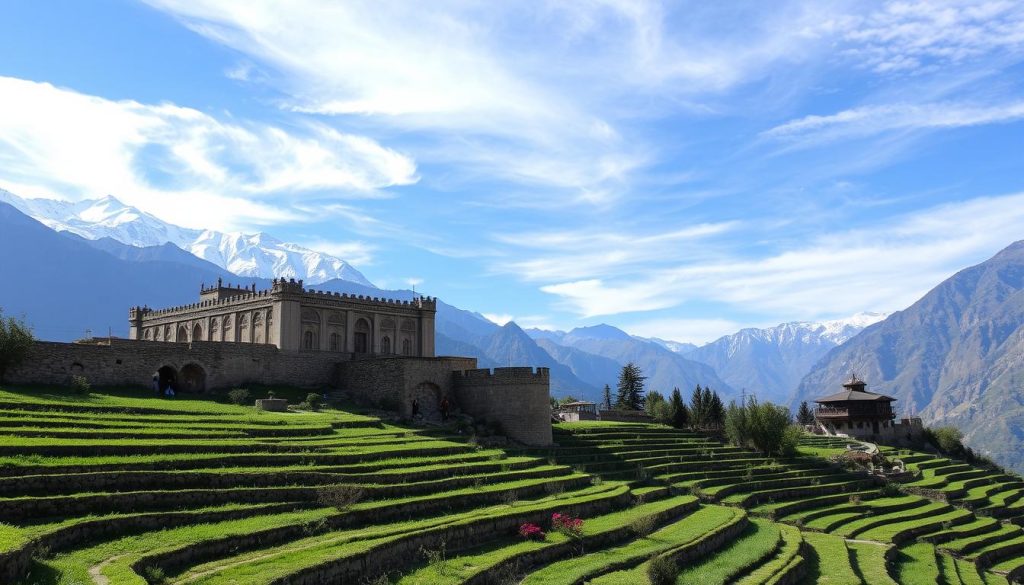
Exploring Other Historical Sites in Hunza Valley
The Hunza Valley is rich in cultural heritage. It offers a mosaic of historical sites in Hunza Valley beyond its prominent forts. Here, you’ll find ancient structures that narrate stories from a bygone era.
These landmarks in Hunza include traditional homes, ancient watchtowers, and remnants of old caravanserais. Each site reveals unique aspects of the region’s past. It’s like stepping back in time.
For history buffs, these sites are a treasure trove. Walking through the preserved homes offers a peek into the Hunza lifestyle and architecture. The watchtowers provide stunning valley views, showing their historical importance.
Maintaining these landmarks in Hunza preserves their beauty. It also shows a commitment to maintaining the region’s cultural identity. Notable historical sites include:
- Ancient Watchtowers
- Traditional Homes
- Old Caravanserais
Each site gives a unique perspective on Hunza’s rich history and life. Exploring these places makes your visit richer. It’s an adventure filled with stories ready to be discovered.
Hunza Valley Historical Forts: Cultural Heritage and Tourism
The historical forts in Hunza Valley are a big draw for global tourists. Icons like Baltit Fort and Altit Fort showcase the area’s architectural skills and past ways of life. They tell stories of ages past, making them key tourist spots in the valley.
The Karakoram Highway (KKH) makes getting to Hunza easy. It links Islamabad to this region, offering amazing views all year. The best times to visit are spring and fall. You can see the amazing natural beauty and historical sites. Plus, there’s trekking, local markets, and traditional food.
These historical forts are crucial to understanding Hunza’s cultural heritage. Preserving them helps keep the story of the valley alive for the future. Tourism here boosts the local economy too. It helps preserve cultural and natural treasures. By visiting, you learn more about the area’s history and its role in the ancient Silk Road.
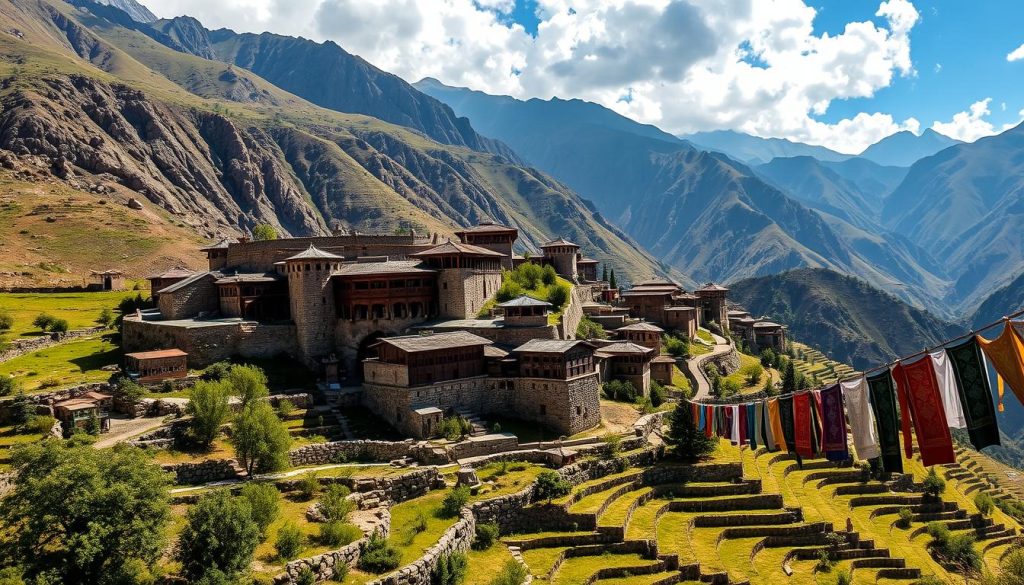
Preservation Efforts for Hunza Valley Forts
The Hunza forts’ preservation is crucial for keeping the area’s cultural legacy alive. The Aga Khan Trust for Culture (AKTC) has played a key role in these efforts. They have earned praise and awards from UNESCO for their work, including 15 UNESCO Asia-Pacific Heritage Awards for Cultural Heritage Conservation. These honors show their dedication to projects that respect the historical value of the sites.
The Baltit Fort, over 700 years old, saw major improvements in 1996 alongside Karimabad village. This project showed that preserving heritage could also boost local culture. At the same time, it provided learning experiences for both travelers and locals.
Similar restoration work has been done on other historic sites in Hunza and Baltistan. These projects go beyond fixing old buildings. For example, turning the 90-year-old Vazir House in Swat into a guesthouse has helped the local economy.
The Leif Larsen Music Centre in Altit is another effort to keep local culture alive. It focuses on preserving and showcasing local music traditions. This initiative is about more than saving the past; it enriches the community’s culture.
From 2002 to 2013, the AKTC’s efforts won several UNESCO Asia-Pacific Heritage Awards. They even received the Pacific Asia Travel Association (PATA) Golden Globe award and the British Airways Tourism for Tomorrow Award. These awards recognize their focus on restoring sites in a way that supports responsible tourism and, in turn, local growth.
Recognition for conservation work continues yearly, highlighting the significance of heritage preservation. Efforts in places like Ganish village and Altit Fort have gained attention. By focusing on improving skills and local infrastructure, these initiatives also help the tourism sector. This benefits both the community and the tourists drawn by these historical treasures.
Conclusion
The forts in Hunza Valley are very important. They show the area’s identity and its strong spirit. These forts are not just old buildings. They tell stories of the past, filled with power and culture. Each fort, like the beautiful Baltit and the ancient Altit, helps keep the Hunza Valley’s history alive. They let us see into the lives of the people from long ago.
The forts have a special look that mixes Tibetan, Central Asian, and Islamic styles. This shows the amazing skills of the people who built them long ago. The work done to fix Altit Fort in the 1990s is especially important. It helps make sure we don’t forget the deep history these buildings hold. This work helps keep the forts’ stories going for everyone to learn from.
When you visit these forts, you see more than just their beauty. You feel a connection to a deep and rich culture that is still alive today. By valuing Hunza Valley’s forts and their history, you help protect them. This makes sure they stay with us, sharing their stories for many years.