Explore Svetitskhoveli Cathedral Frescoes & Art
Ever wondered how ancient Christian art in Georgia tells centuries of devotion, history, and artistry? At Svetitskhoveli Cathedral in Mtskheta, you’ll find a wealth of frescoes and artwork. These pieces show the spiritual heart of Georgian Christianity and tell stories that shaped the nation.
This 11th-century wonder is famous for its frescoes and artwork. They draw visitors in with their detailed designs and deep meanings. As you look at the frescoes, you’ll learn about Georgian history and culture. You’ll see the unique art found in Georgian churches over the years.
Introduction to Svetitskhoveli Cathedral
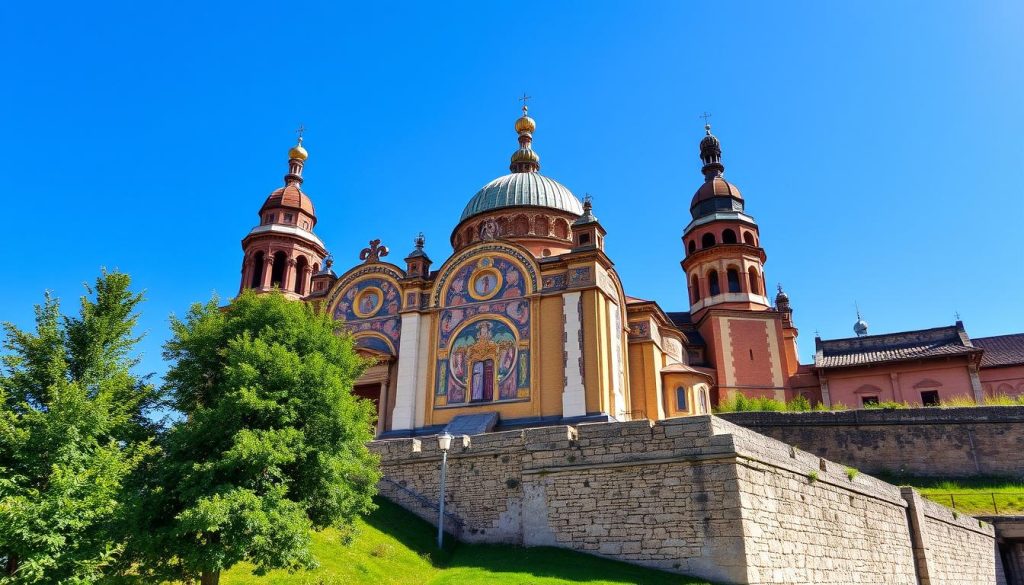
Svetitskhoveli Cathedral, meaning “Life-Giving Pillar,” is a major landmark in Mtskheta, Georgia. It is a masterpiece of Georgian architecture with a rich history. Built in the early 11th century, it has shaped the region’s faith and culture for centuries.
The cathedral is famous for its massive size and detailed wall paintings. It’s a UNESCO World Heritage Site and the place where Georgian monarchs were crowned. It’s said to have the sacred Tunic of Christ. Visitors to Mtskheta, a small town with about 5,000 people, are amazed by this historic site. A bus ride from Didube to Mtskheta costs just 1 Lari, making it easy to visit.
Visiting Svetitskhoveli Cathedral, you’ll see its stunning architecture and spiritual importance. It’s the home of the Patriarch of the Georgian Orthodox Church. People from all over come to learn about its history and Georgian culture.
The Historical Significance of Svetitskhoveli Cathedral
The Svetitskhoveli Cathedral is very important. It is a place where many Georgian kings, patriarchs, and nobles are buried. It was built in the early 11th century, showing how faith and national identity came together.
The cathedral’s design is stunning, with intricate carvings and stone reliefs. It has survived many challenges, like earthquakes and invasions. Today, it is one of the biggest churches in Georgia, measuring 57.7 meters long and 49 meters tall.
Though many of the original paintings have faded, some still exist. The sanctuary features a large image of Christ surrounded by cherubs. These images help us understand the Georgian people’s religious traditions.
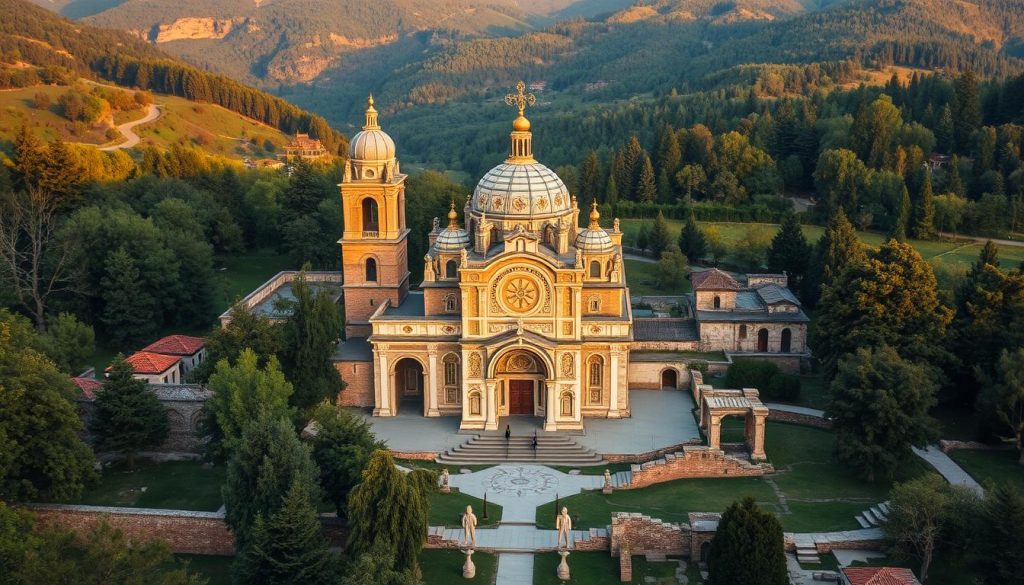
Archaeologists have found important artifacts, like an 11th-century house of the Patriarch. Svetitskhoveli Cathedral is a UNESCO World Heritage Site. It is the spiritual center of Georgia, showing its deep history.
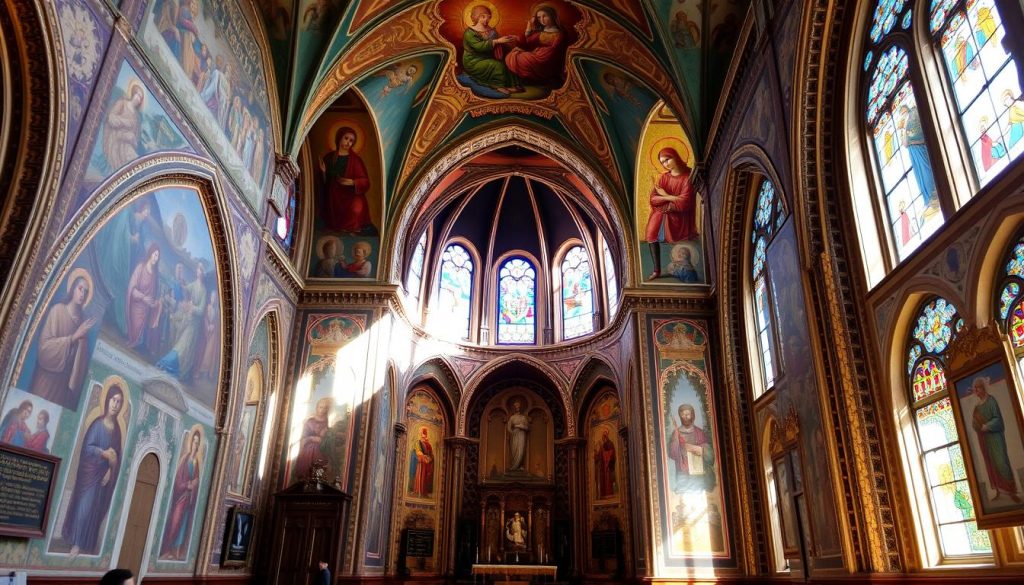
Svetitskhoveli Cathedral frescoes and artwork
The frescoes in Svetitskhoveli Cathedral show the deep culture and faith of Georgia. They tell stories of important religious events and Christ’s life. Each piece is a mix of old traditions and new art, showing the artists’ deep faith.
Overview of the Frescoes’ Themes
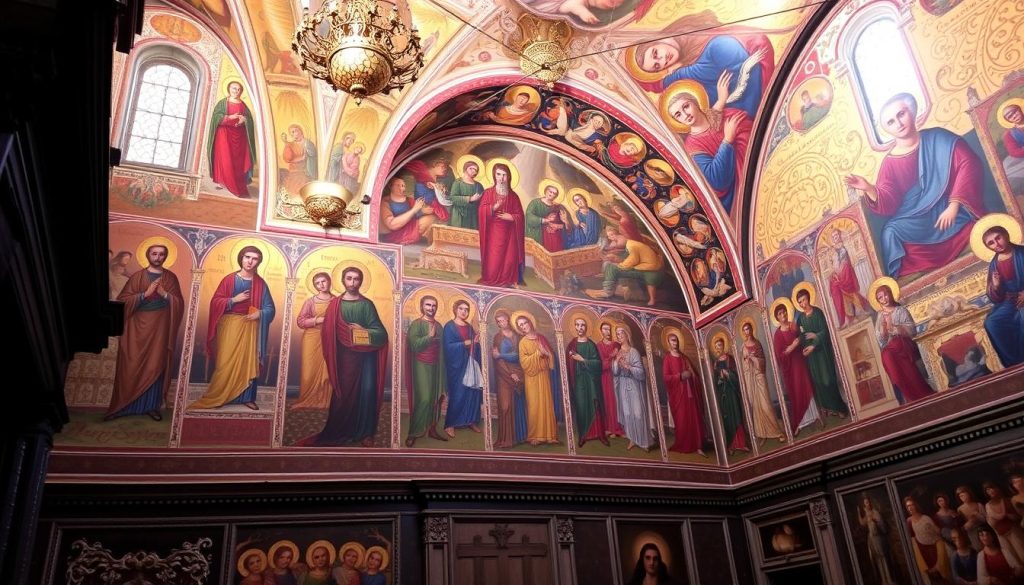
The frescoes in Svetitskhoveli Cathedral cover many subjects. They show biblical stories, saints, and everyday life. This helps visitors understand Georgian spirituality.
- Evangelical storylines.
- Depictions of holy figures and saints.
- Everyday scenes that allow for a glimpse into the historical context.
Artistic Techniques Used
The artists at Svetitskhoveli Cathedral were very skilled. They used buon fresco to make colors bright. Even though many frescoes have faded, what remains shows the art of medieval Georgia.
| Technique | Description | Significance |
|---|---|---|
| Buon Fresco | Applying pigments on freshly laid wet plaster. | Ensures longevity and vibrancy of colors. |
| Tempera | Using egg yolk as a binder for pigments. | Allows for detailed brushwork and finer textures. |
| Mosaic | Creating images with small colored pieces. | Provides durable and intricate designs. |
Georgian Religious Paintings: A Cultural Context
Georgian religious paintings have deep roots, starting in the 4th century when Christianity became the state religion. This moment began a rich tradition of visual art deeply connected to faith. These artworks are not just spiritual symbols but also historical records.
Places like Gelati Monastery and Svetitskhoveli Cathedral show early Georgian art. They capture the essence of faith and local traditions.
By the 12th century, frescoes at Vardzia showed influences from Eastern Christian and Byzantine styles. These murals told stories of daily life and spiritual journeys. Later, European influences brought more secular themes into Georgian art.
Artists like Niko Pirosmani, Lado Gudiashvili, and Elene Akhvlediani mixed traditional and modern styles. Russian art schools also influenced Georgian painting, blending old and new. Today, artists like Levan Lagidze and Temo Japaridze explore new themes and techniques.
Art galleries in Tbilisi, like the Art Palace and National Gallery, showcase Georgian art. This vibrant scene draws cultural tourists. It lets them see the deep connection between Georgian religious paintings and the country’s culture. Through these artworks, you can understand Georgia’s heritage and identity better.
| Artistic Period | Key Characteristics | Notable Works/Artists |
|---|---|---|
| 4th Century | Emergence of religious art | Early frescoes at Svetitskhoveli Cathedral |
| 12th Century | Byzantine influence | Frescoes of Vardzia |
| Late 18th – 19th Century | European influence, secular themes | Niko Pirosmani, Lado Gudiashvili |
| 20th Century | Integration of modern styles | Elene Akhvlediani, contemporary artists |
The Iconography Found in Svetitskhoveli Cathedral
The religious iconography in Svetitskhoveli Cathedral shows the rich spiritual and artistic heritage of Georgia. Each symbol has a deep meaning, telling stories of Orthodox Christianity. These symbols show the faith and beliefs of the people and the teachings of their time.
Symbolism of the Life-Giving Pillar
The Life-Giving Pillar is a key symbol in the cathedral. It connects the divine with the earthly world. It’s tied to the legend of Christ’s Tunic, showing its importance in Christian beliefs.
This pillar stands for hope and renewal through faith. It shows the strength and spiritual bond found in Georgian art.
Depictions of Christ and the Apostles
The walls of Svetitskhoveli Cathedral are filled with frescoes of Christ and the Apostles. These images tell the core beliefs of Orthodox Christianity. They share important teachings that shaped religious life and society in Georgia.
The art in the cathedral goes beyond decoration. It tells stories and teaches about faith, making it a powerful tool for religious education.

| Symbol | Meaning | Significance in Art |
|---|---|---|
| Life-Giving Pillar | Connection between heaven and earth | Emphasizes hope and restoration |
| Christ Representations | Divinity and salvation | Foundation of Christian teachings |
| Apostles Representations | Disciples of Christ | Lessons of faith and leadership |
Historical Frescoes in Georgia: An Artistic Evolution
The tradition of creating historical frescoes in Georgia is a key part of mural art’s history. These frescoes started simple in the early Christian era. But, during the medieval golden age, they became detailed and colorful, showing their deep value today.
Georgia’s art reflects a mix of styles, from Mesopotamian to Byzantine. This blend shows the country’s rich history.
The Svetitskhoveli Cathedral, built in the 11th century, is a symbol of Georgian Christianity. It has frescoes that tell important historical stories. The Gelati Monastery, founded in 1106, also has stunning mural paintings from different centuries, showing the lasting impact of Georgian art.
The Jvari Monastery, from the 6th century, has greatly shaped Georgia’s architecture and art. Over time, artists added more detail and depth to the frescoes. The golden era of fresco art, from the 11th to the 13th centuries, is marked by masterful works that cover both religious and cultural themes.
| Location | Established | Key Features |
|---|---|---|
| Svetitskhoveli Cathedral | 11th century | Frescoes of historical figures and religious themes |
| Gelati Monastery | 1106 | Mural paintings from the 12th to 17th centuries |
| Jvari Monastery | 6th century | Influential for numerous Georgian church designs |
| Vardzia Monastery | 12th century | Frescoes in the Church of the Dormition |
| Bolnisi Sioni Cathedral | 5th century | Houses some of the earliest Georgian frescoes |
Keeping these artworks safe is vital. The Georgian government and UNESCO work together to protect them. Their efforts ensure that future generations can enjoy and learn from Georgia’s frescoes.
The Best Frescoes at Svetitskhoveli Cathedral
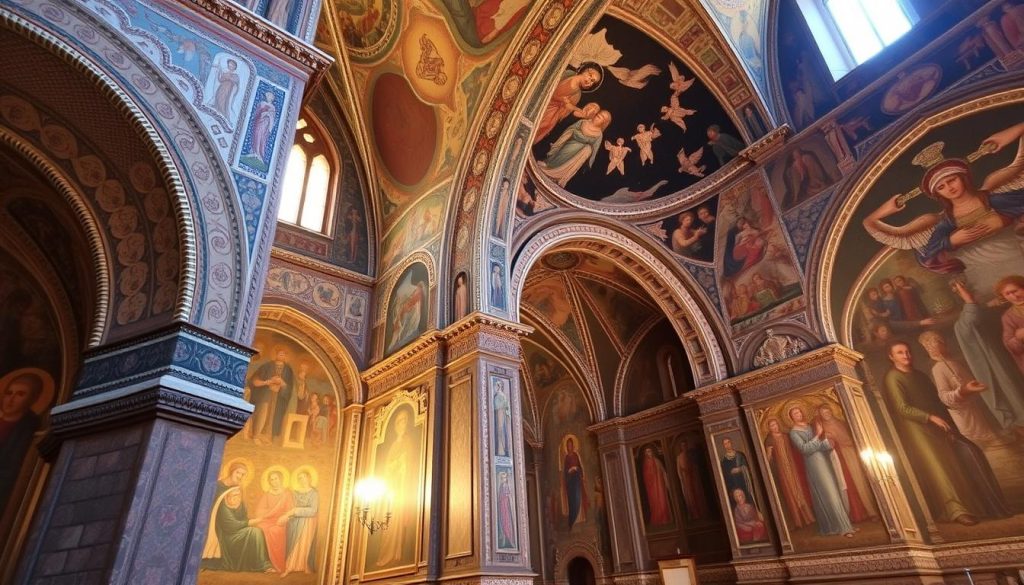
Svetitskhoveli Cathedral is famous for its stunning frescoes. These artworks show the talent of Georgian artists. They depict religious themes and stories from the Bible, important to the local culture.
The beauty of these frescoes is unmatched. They demonstrate the skill and faith of the artists. Visitors should definitely see them.
Noteworthy Artists and Their Contributions
Many talented artists have worked at Svetitskhoveli Cathedral over the years. Their frescoes are still admired today. These artists used colors and symbols to tell stories of Georgian spirituality and history.
Preservation Challenges and Efforts
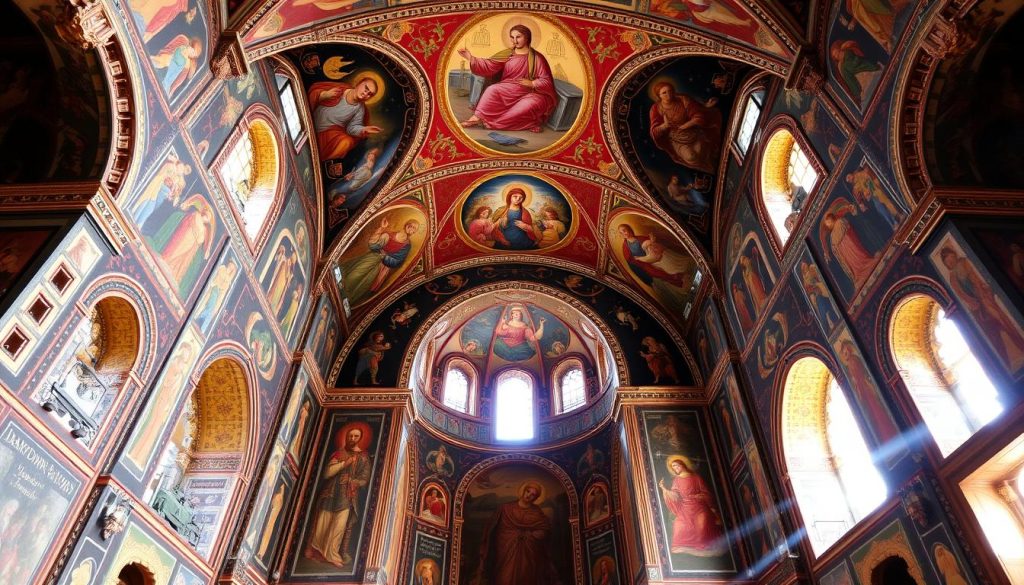
Keeping the frescoes safe is hard. Weather changes can damage them. Past repairs have also made some parts hard to see.
But, there are efforts to save these artworks. The Georgian government and international groups are working together. They aim to protect and restore the frescoes for the future.
| Challenges in Preservation | Efforts Made |
|---|---|
| Environmental factors | Collaboration with international organizations |
| Obscured details from past restorations | Recent conservation projects ongoing |
| Fluctuations in temperature and humidity | Implementation of climate control systems |
| Fading paint due to exposure | Regular maintenance checks and interventions |
Unique Artwork in Georgian Churches
Exploring Georgian churches reveals their unique artwork. The frescoes stand out for their bright colors and lively scenes. Each church is more than a place of worship; it’s a canvas for stories. It blends local culture with Christian tales, creating a rich tapestry of art.
Churches like Svetitskhoveli Cathedral and Jvari Monastery showcase the art’s excellence. The Jvari Monastery, built in the 6th century, has murals over 1500 years old. The Gelati Monastery’s medieval frescoes are UNESCO World Heritage Sites, showing the art’s enduring value.
The artwork in these churches does more than inspire faith. It also tells the story of Georgia’s past. Every stroke of paint reflects the beliefs and traditions of ancient societies. By exploring this art, you learn about Georgian history and identity.