

Explore Svetitskhoveli Cathedral Architecture
What secrets hide in Svetitskhoveli Cathedral’s ancient walls? This UNESCO World Heritage site is a treasure trove of Georgian culture and art. Built from 1010 to 1029 AD, it’s a masterpiece of medieval architecture.
It stands tall, at 54 meters, and offers stunning views. The frescoes inside tell stories of Georgian life and traditions. Are you ready to explore its rich history and design?
Introduction to Svetitskhoveli Cathedral
The Svetitskhoveli Cathedral is a key symbol of faith and history in Mtskheta Georgia. It’s known as the “living pillar” and attracts visitors worldwide. It shows the importance of the main Orthodox Christian cathedral in the area. This architectural wonder is a perfect example of Georgian architecture, reflecting the rich culture and spirituality of the Georgian people.
The cathedral stands at 54 meters, telling a story of early Christianity in Georgia. It took about 19 years to build, starting under King George I and finishing under King Bagrat IV. It’s not just a place of worship but also a historical landmark celebrating religious architecture.
Visitors can see the detailed frescoes and paintings inside and outside the cathedral. These artworks show scenes important to Georgian traditions and life. Among its treasures is the Heaton of the Lord, highlighting the cathedral’s religious importance. Every year, thousands come to Mtskheta for the Svetitskhovloba holiday to honor this sacred place.

Svetitskhoveli Cathedral welcomes everyone with free admission and open hours. It’s a must-see for anyone wanting to learn about Georgia’s spiritual heritage. The mix of beauty and history makes it a key spot for understanding Georgia’s spiritual roots.
Historical Background of Svetitskhoveli Cathedral
Svetitskhoveli Cathedral is a key part of cathedral history in Georgia. It was built in 1029 under King George I. Located in Mtskheta Georgia, it’s the country’s holiest site.
Legends say St. Sidonia, who got Christ’s tunic, is buried here. This led to Christianity becoming the state religion under King Mirian.
The cathedral’s design is from the early Middle Ages. It’s 57.7 meters long and 49 meters high. Its stonework, with yellow, red, and green stones, adds to its beauty and history.
It has faced many challenges, like invasions by Mongols, Persians, Arabs, and Russia. Yet, it has regained its glory, thanks to restorations. In 1994, it was named a UNESCO World Heritage site along with Jvari Monastery.
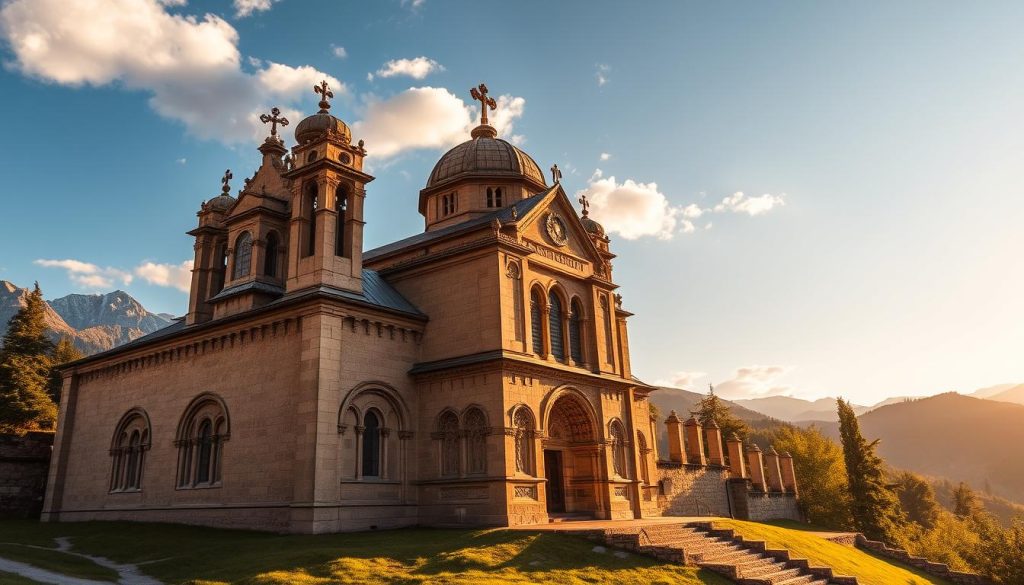
Now, Svetitskhoveli Cathedral draws many tourists. Mtskheta has grown a tourist industry. Visitors also see new bazaars with local crafts and souvenirs.
The cathedral is a symbol of spiritual and national identity in Georgia. It stands as a testament to its long cathedral history.
Svetitskhoveli Cathedral Architecture
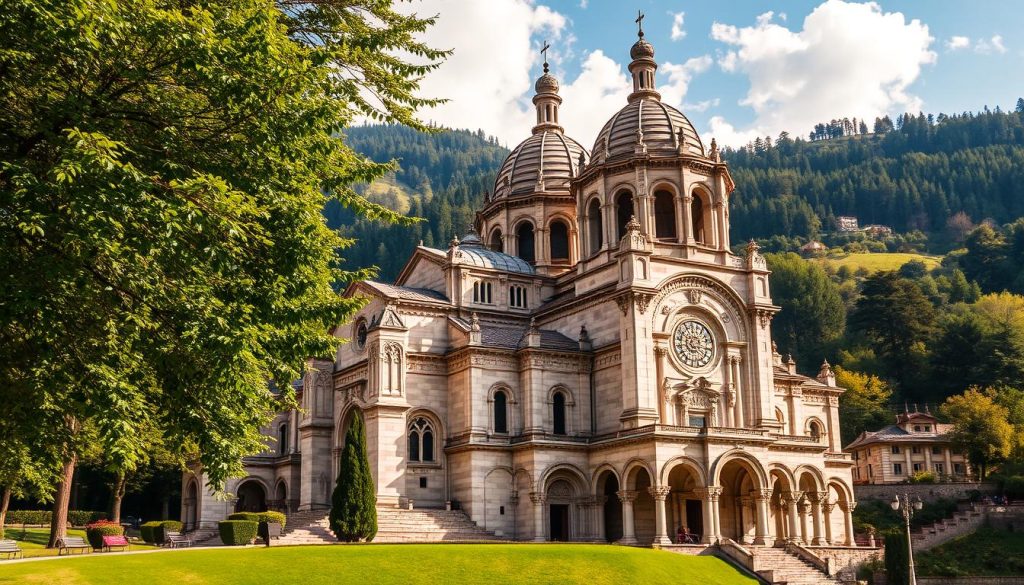
The architecture of Svetitskhoveli Cathedral shows the beauty and complexity of Georgian design. Its 54-meter dome stands tall, dominating Mtskheta’s skyline. The western façade, with its ornaments and relief, reflects medieval architecture’s elegance.
Overview of Architectural Style
The cathedral’s style is the cross-dome design common in its time. This design places the dome over the church’s arms, creating harmony. The use of stone and structural elements shows its importance in Georgian architecture.
Details like carved doorways and geometric motifs add to its beauty. They also serve practical purposes.
Influence of Medieval Architecture
The medieval influence on Svetitskhoveli is clear in its design. It has strong walls and high ceilings, creating a sense of awe. Features like circular windows and bold arches beautify the structure and show medieval artistic values.
This mix of elements makes the cathedral a key part of Georgian architecture’s history.
Cultural Significance of Svetitskhoveli Cathedral
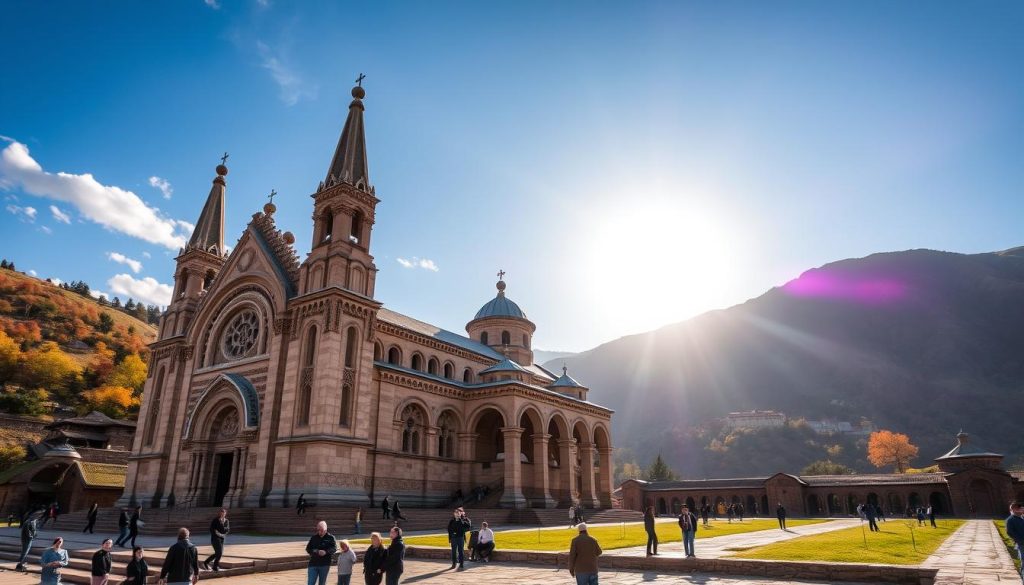
The cultural importance of Svetitskhoveli Cathedral is huge. It’s a key religious spot for Georgian Orthodoxy and a symbol of national pride. Located in Mtskheta, Georgia’s old capital, it’s more than just a building. It’s a part of Georgia’s history and daily life.
Religious Importance in Georgian Orthodoxy
Svetitskhoveli Cathedral is a sacred place in Georgian Orthodoxy. It’s where at least ten Georgian kings are buried. It’s also said to have Jesus’ robe, making it very special.
As a center for religious architecture, it shows Christianity’s strong roots in the area. Since 334, it has been a key place for religious life. It’s also where the Patriarch lives, showing its big role in shaping religious practices.
Role in the History of Mtskheta
The history of Mtskheta and Svetitskhoveli Cathedral are closely linked. This city is one of the oldest places on Earth. The cathedral, built in the 4th century and rebuilt in the 11th, shows the Georgian people’s faith and strength.
As a UNESCO World Heritage Site, it’s not just a beautiful building. It’s also a key part of national celebrations, like the Day of Svetitskhoveli on October 14.
| Aspect | Details |
|---|---|
| Year of Adoption of Christianity | 334 |
| UNESCO Recognition | 1994 |
| Original Construction Year | 4th Century |
| Reconstruction Year | 11th Century |
| Significance | Second most sacred Christian site |
Design Features of Svetitskhoveli Cathedral
The design of Svetitskhoveli Cathedral is filled with artistic details that show its grand history and architecture. It combines symmetry and asymmetry in a unique way. This mix makes the cathedral visually appealing and stands out.
Artistic Details and Ornamentation
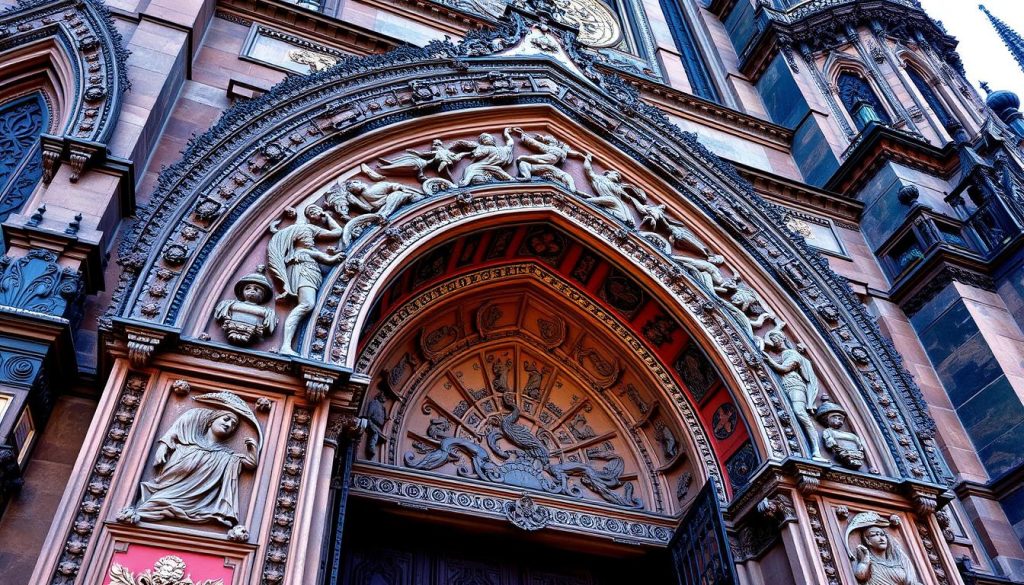
The Western façade is covered in detailed carvings. These carvings show biblical scenes, flowers, and shapes. They reflect the rich tradition of Medieval architecture, where art and faith were closely tied.
Decorative stones with grapes are a nod to Georgian winemaking. Inside, frescoes tell stories of faith and everyday life. They give us a peek into the culture of that time.
Symmetry and Asymmetry in Design
Svetitskhoveli Cathedral has both symmetrical and asymmetrical parts. The cross-in-square design focuses on the central dome. Yet, it keeps the whole structure balanced.
The Southern façade shows off the asymmetrical parts. This mix of design elements shows the cathedral’s beauty. It’s a perfect example of Medieval architecture.
Construction Timeline of Svetitskhoveli Cathedral
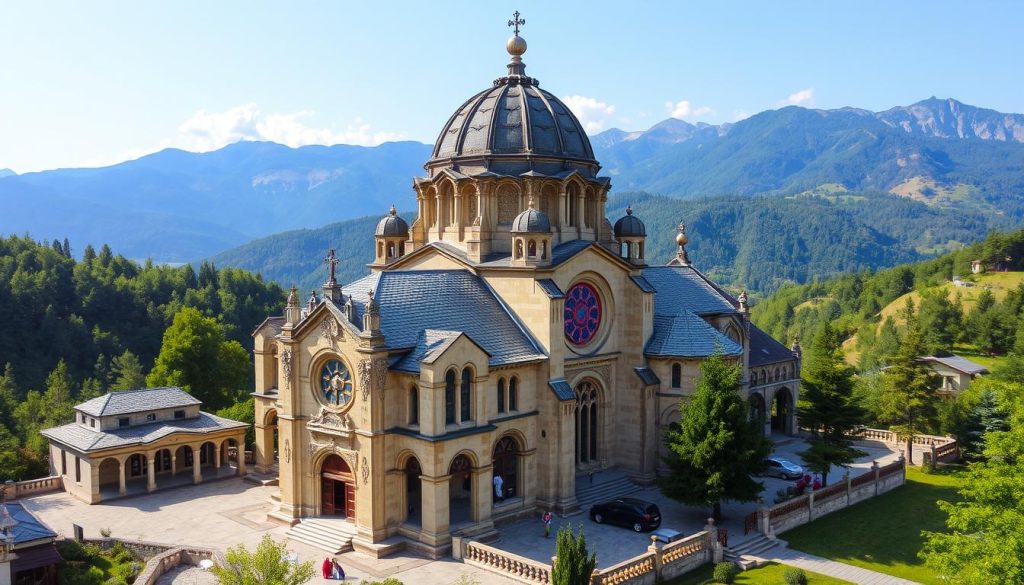
The construction of Svetitskhoveli Cathedral started in 1010 under King George I. It shows a mix of architectural styles over the years. The building was finished in 1029, becoming a key part of Christian heritage in Georgia.
First, there was a wooden church from the 4th century. Then, in the 11th century, a stone structure was built by Arsakisdze. In 2006, it was named a National Cultural Monument of Georgia.
The cathedral has seen many changes, like in the 14th and 15th centuries. A big restoration in 1970-71 found old parts, like the original St. Nino church. Today, it stands 57.7 meters long, 27 meters wide, and 49 meters tall.
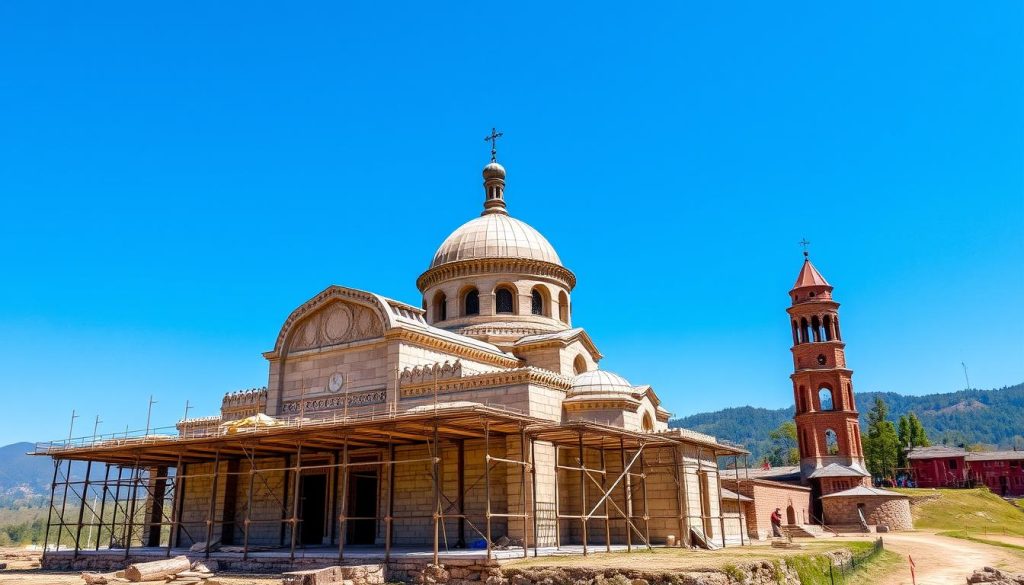
Looking at Svetitskhoveli Cathedral’s history, we see its deep importance. It shows the blend of faith, art, and community in Georgia’s history. The cathedral is a living piece of Georgia’s past.
Reliefs and Sculptural Works
The Svetitskhoveli Cathedral is known for its detailed sculptural works and reliefs. These add to its architectural beauty. Throughout the cathedral, you’ll find sculptures that tell stories of local traditions and religious beliefs.
These artworks show the growth of Georgian art, starting from the 10th century. During this time, relief sculpture saw a big leap forward.
Notable Sculptures and Reliefs
The western façade of Svetitskhoveli Cathedral has some of the most impressive sculptures. They show scenes from the Bible with great detail. This shows the skill of the artists back then.
The cathedral’s design is full of stories. It combines simple and complex motifs. This highlights the storytelling traditions of Armenian and Georgian cultures.
Symbolism in Architectural Details
The architectural details at Svetitskhoveli Cathedral carry deep meanings. For example, the grapevine motif links to Georgia’s farming culture. It shows how faith and daily life are connected.
These symbols are key to understanding Georgian heritage. The sculptures here help visitors see the importance of these symbols.
The Role of Svetitskhoveli in Georgian History
Svetitskhoveli Cathedral is more than just a beautiful building. It’s a key part of Georgian history and identity. This site in Mtskheta, Georgia, connects spirituality, governance, and culture. It shows the importance of religious education in early Christianity in Georgia.
Many Georgian kings were crowned and buried here. This makes Svetitskhoveli a royal site. It has seen many raids from different empires, showing the strength of Georgian identity.
The cathedral is said to have Jesus’ shroud, adding to its spiritual importance. It, along with Jvari Monastery, is a UNESCO World Heritage Site since 1994. Visiting this site lets you connect with Georgian history and culture.
Visiting Svetitskhoveli Cathedral
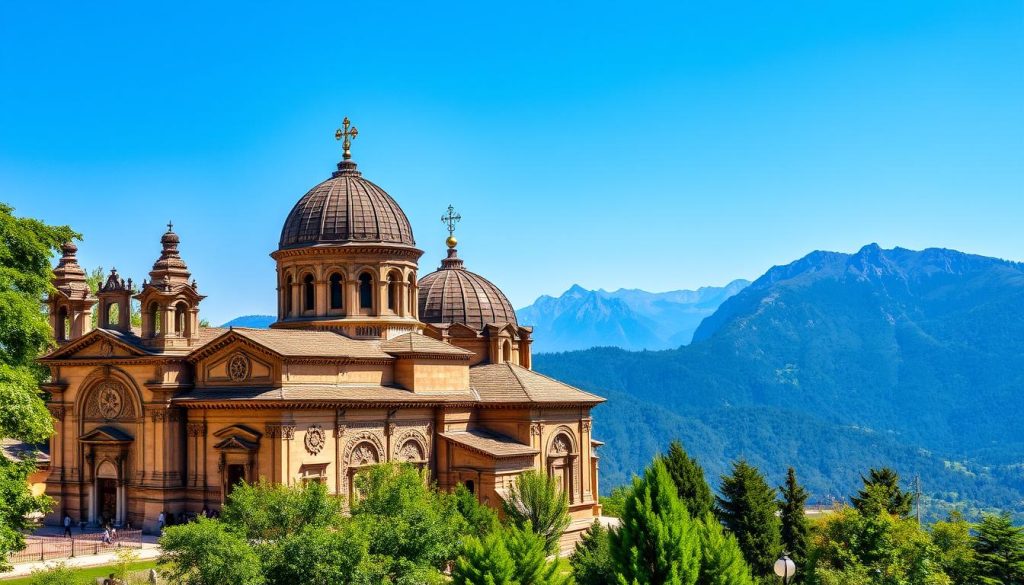
Planning a visit to Svetitskhoveli Cathedral in Mtskheta, Georgia, promises a rich and peaceful experience. The cathedral is open every day from 9:00 AM to 8:30 PM. Admission is free, but check for any service times that might limit access.
Visitor Information and Accessibility
The cathedral is easy to navigate, with clear paths and areas for visitors. It’s designed for everyone to enjoy the stunning frescoes and detailed reliefs. Getting there is simple, with Mtskheta just 20 km from Tbilisi, a 15-minute drive.
What to Expect During Your Visit
At Svetitskhoveli Cathedral, you’ll be amazed by its beauty and history. Look out for the “miraculous pillar” and the many artistic treasures. You’ll also learn about the local heritage and traditions of Mtskheta, Georgia.
UNESCO World Heritage Status
Svetitskhoveli Cathedral is a UNESCO World Heritage site. This is a big honor for its architecture and history. It shows the Cathedral’s special place in Georgian culture and heritage.
It was built between 1010 and 1029 by Catholicos Patriarch Melkisedec. The Cathedral is a top example of medieval architecture in the Caucasus. It mixes local traditions with influences from different times, making it valuable worldwide since 1994.
Mtskheta also has other historical sites, known for their art and culture. The palace and gates of Katolikos Melchizedek add to the area’s heritage.
Keeping the site safe is a big task. The State Party has a plan to protect it. They watch over it and keep a list of all the important buildings in Mtskheta.
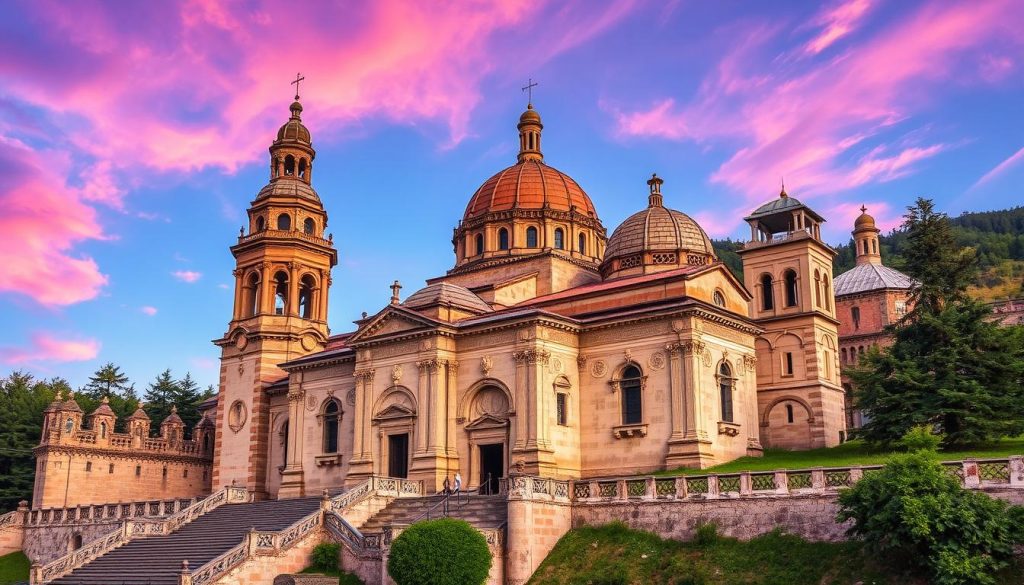
Working to save the Cathedral shows its value. It’s not just a building but a symbol of Georgia’s deep culture.
Events and Celebrations at the Cathedral
Svetitskhoveli Cathedral is a key spot for many religious celebrations and cultural events all year. The big event is Svetitskhovloba on October 14th. It honors the cathedral and Mtskheta’s rich history. This celebration is very important, drawing in both locals and tourists.
It’s a time of big crowds. Getting into the cathedral can take up to 20 minutes.
Other important events include Mariamoba on August 28th and Giorgoba on November 23rd. Mariamoba marks the Dormition of the Virgin Mary. Giorgoba celebrates St. George, a key figure in Georgian culture.
During Giorgoba, people share traditional dishes like Svanetian khachapuri. This shows how cultural significance and festive joy go together.
When you join in these events at Svetitskhoveli Cathedral, you’ll see streets full of vendors and cultural shows. People also visit nearby holy sites like Samtavro Convent and Gelati Monastery. This makes their visit even more special.
The lively atmosphere of these celebrations highlights the cathedral’s importance. It’s a key place of faith and heritage in Georgia.
Conclusion
Svetitskhoveli Cathedral is a stunning example of Georgian architecture and culture. Built in the 11th century, it showcases the area’s Medieval beauty. It has been a key part of Georgia’s spiritual journey.
The cathedral’s design, with its central dome and cruciform shape, blends medieval Georgian, Byzantine, and Oriental styles. This mix highlights the cultural depth of Georgia’s religious sites. Visiting this UNESCO World Heritage site lets you feel its mystical atmosphere, enriched by the legend of the Robe of Christ.
Exploring the cathedral’s grand design and details reveals a story of history, spirituality, and creativity. Preserving such an old building is a challenge. It shows the importance of keeping our architectural heritage alive. Svetitskhoveli Cathedral is a must-see for anyone interested in Georgian history and architecture.





