Discover Sundarbans Hidden Waterways Today
Ever wondered what’s hidden beneath the Sundarbans, the world’s largest mangrove forest? This area, shared by India and Bangladesh, is full of secrets and stories. Its rivers, tidal channels, and creeks, formed by the Ganges, Brahmaputra, and Meghna, create a unique adventure.
Exploring the Sundarbans with Just Nature Expeditions, you’ll see a world teeming with life. You’ll find Bengal tigers, exotic birds, and more. This UNESCO World Heritage Site is also home to myths and local cultures, making your trip unforgettable. Get ready for an adventure in Sundarbans!
The Enigmatic Sundarbans: Overview
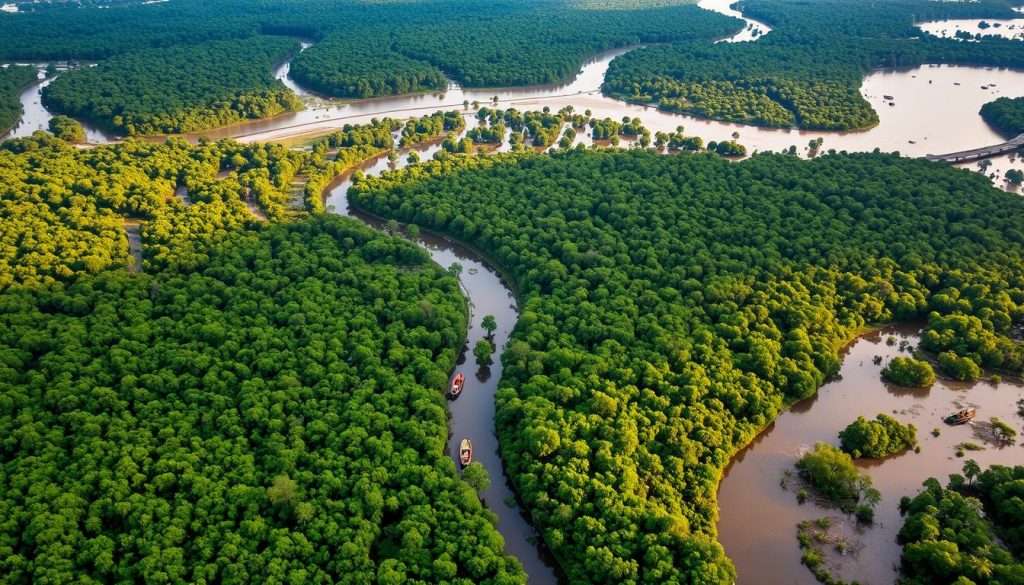
The Sundarbans covers over 10,000 square kilometers. It’s a unique ecosystem with mangroves, marshes, and waterways. It’s where the Ganges, Brahmaputra, and Meghna rivers meet, making it a treasure of biodiversity.
Here, plants and animals live in brackish waters. This creates a habitat unlike any other. It’s a place where nature thrives.
The name “Sundarbans” means “beautiful forest” in Bengali. It’s known as a mystical paradise. Its history goes back to 200-300 AD, with big changes during the Mughal era.
During the 17th century, it was a place for Portuguese pirates and salt smugglers. This led to fewer people living in the forest. The Bengal Forest Department was set up in the 1860s to protect it.
The Sundarbans National Park is the world’s largest mangrove forest. It’s in India’s West Bengal and Bangladesh. It’s famous for its wildlife, including the Bengal tiger.
The park is a UNESCO World Heritage Site. It supports ecotourism. Visitors can see its natural wonders, like bioluminescent waters.
| Statistic | Details |
|---|---|
| Total Area | 10,000 sq km (3,900 sq mi) |
| Bengal Tiger Population | Significant numbers reside here |
| Nearby Rivers | Ganges, Brahmaputra, Meghna |
| Establishment as UNESCO Site | Designated as a World Heritage Site |
| Ideal Visiting Season | November to February |
Visiting the Sundarbans lets you connect with nature. It supports conservation efforts. Knowing its history and ecology deepens your appreciation for this unique place.
Exploring the Sundarbans Hidden Waterways
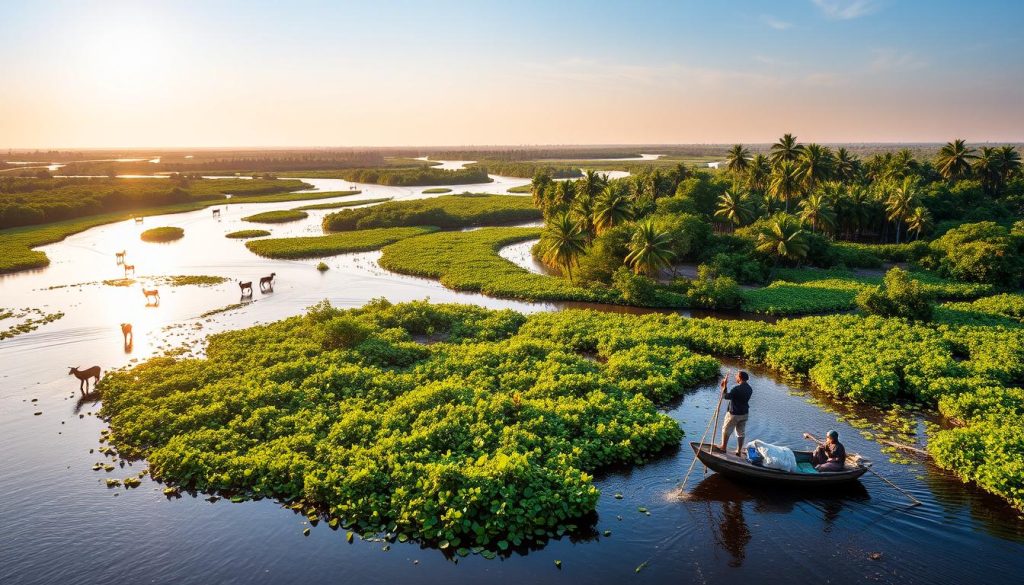
To truly appreciate the magic of the Sundarbans, you must embark on a thrilling waterway adventure. This expansive mangrove forest covers approximately 10,000 square kilometers. It offers a unique landscape where rivers, tidal channels, and creeks intertwine. As you drift along these hidden waterways, you immerse yourself in a rich ecosystem teeming with life.
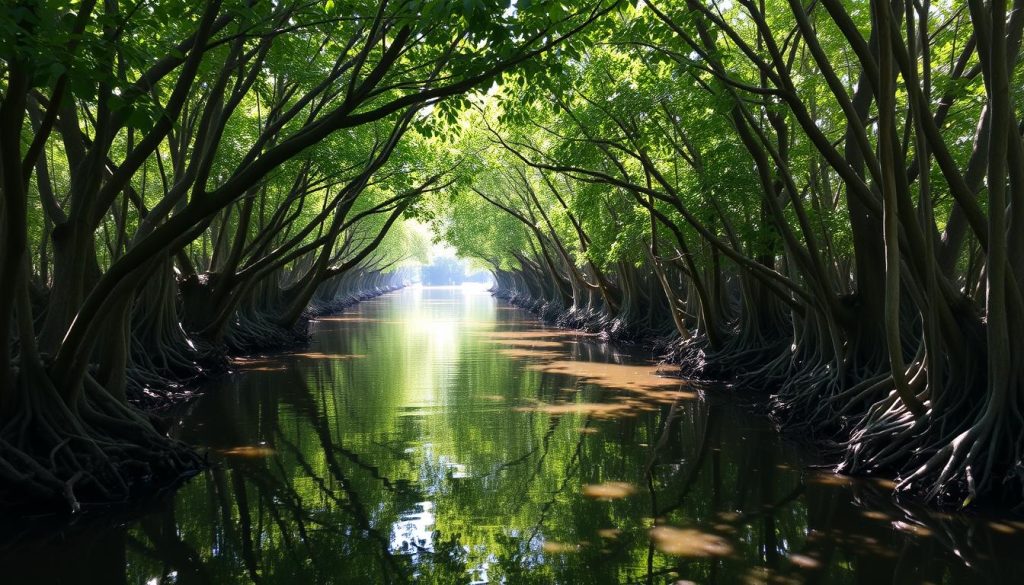
Joining a Sundarbans boat tour provides you with an opportunity to observe the biodiversity that flourishes in this environment. The forest is home to more than 260 bird species, including the vibrant kingfishers and majestic eagles. While on your journey, keep your eyes peeled for the elusive Royal Bengal Tiger, with an occurrence rate of 4-5 sightings per week adding an air of excitement to your adventure.
These boat excursions not only cater to wildlife enthusiasts and avid birdwatchers, but they also allow for encounters with local communities. As you glide past riverbanks, you get a glimpse into the daily lives of those who depend on fishing and honey collection for their livelihoods. The design of the boats used in the tours enhances your exploration, as they are perfectly suited for navigating the shallow waters and narrow channels.
Every moment on a boat in the Sundarbans offers spectacular views, creating unforgettable memories. Guided by local experts, these excursions educate visitors about the importance of conservation efforts. They significantly contribute to responsible tourism and a greater awareness of the delicate balance within this unique ecosystem.
Why the Sundarbans is a UNESCO World Heritage Site
The Sundarbans UNESCO World Heritage Site is known for its incredible biodiversity and ecological importance. It was named a UNESCO World Heritage Site on December 7, 1997. This area covers about 10,000 km2 in the Ganges delta. It’s a key home for many species.
It has 55% forest and 45% wetlands. This mix supports a wide range of plants and animals.
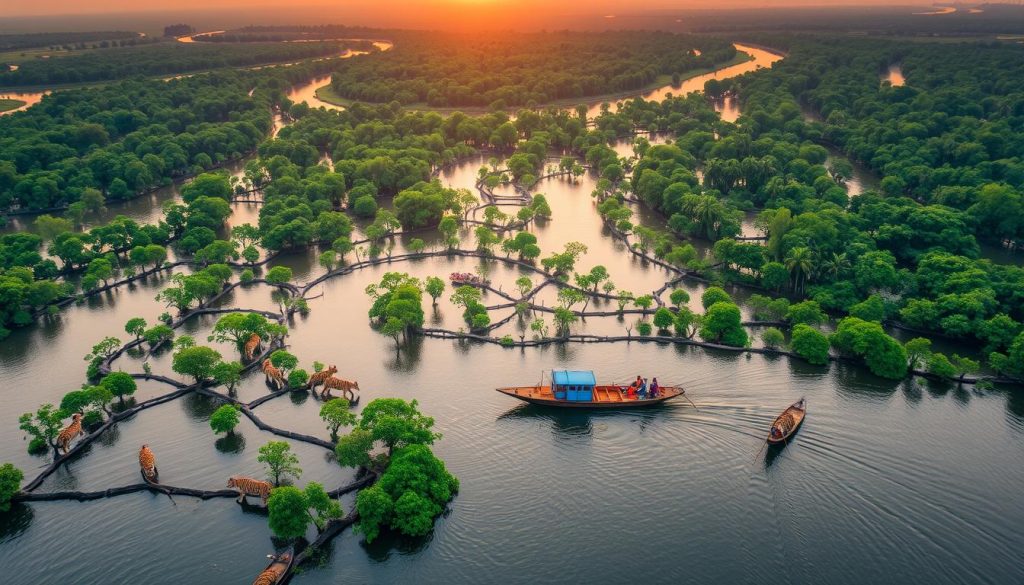
The Sundarbans is more than just a home for many species. Its mangrove forests protect coastal communities from storms. Bangladesh has 66% of the world’s mangroves, and India has 34%.
There are 78 types of mangroves here. This shows how rich its ecosystem is.
“The Sundarbans is a unique blend of land and water ecosystems, playing a crucial role in sustaining both biodiversity and local livelihoods.”
Keeping this area safe is a big job. The Sundarbans Tiger Reserve was set up in 1973. It works to save the world’s largest tiger population.
It also helps over 260 species of migratory birds. And it protects the endangered Royal Bengal Tiger, with about 100 in the area.
Local people help protect the Sundarbans. They use methods that don’t harm the environment. There are tours for visitors to learn and see the area’s beauty.
These tours include wildlife photography and learning about fishing. But, visitors must get the right permits. This helps with the conservation work.
| Feature | Details |
|---|---|
| Area | Approximately 10,000 km2 |
| Forest Land | 55% |
| Wetlands | 45% |
| Types of Mangroves | 78 |
| Tiger Population | Approximately 100 |
| Migratory Bird Species | Over 260 |
| UNESCO Designation | December 7, 1997 |
Natural Wonders of the Sundarbans Mangrove Forest
The Sundarbans mangrove forest is a stunning mix of natural beauty and biodiversity. It covers about 10,000 square kilometers. This special place is known for its amazing plants and animals.
The mangrove trees’ stilt roots shape the landscape. They help keep the forest stable and provide homes for many species.
More than 260 bird species call this place home. You can see colorful kingfishers, elegant herons, and majestic eagles. The rare masked finfoot also lives here. This variety draws birdwatchers and nature enthusiasts from everywhere.
The Sundarbans is famous for its Royal Bengal Tigers. These tigers have learned to live in the mangrove forest. It shows how wildlife and their habitats can work together.
The Sundarbans is also a UNESCO World Heritage Site and Biosphere Reserve. The rivers Ganges, Brahmaputra, and Meghna meet here. This creates a rich and lively environment.
Visitors come all year, but winter is the best time to visit. The weather is mild, making it perfect for exploring.
Walking through the Sundarbans mangrove forest is peaceful. You’ll see amazing wildlife. It’s an experience you’ll never forget.
Wildlife Encounters: A Nature Lover’s Paradise
The Sundarbans is the world’s largest mangrove forest. It’s a dream spot for wildlife lovers. You can see the Royal Bengal Tiger and many other animals here.
Birdwatchers will love the Sundarbans. It’s home to over 300 bird species. You can see the white-bellied sea eagle and kingfishers here.
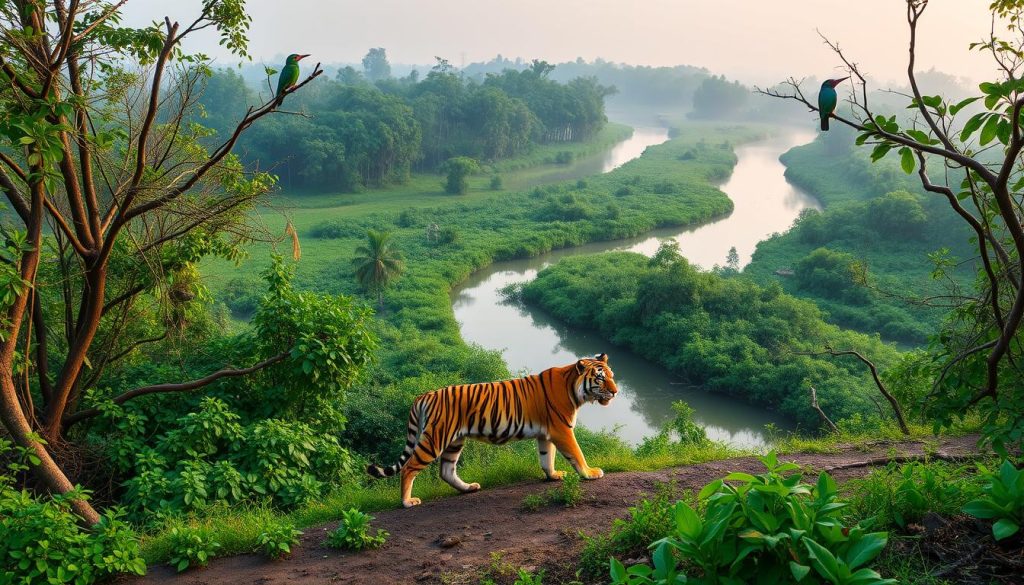
Local guides make your visit special. They share knowledge about the forest and its animals. You can go on jungle safaris and nature walks.
- Photography lovers will find amazing shots here.
- Try the local food, like fresh seafood and Bengali dishes.
- Eco-friendly tours help protect the forest for the future.
There are many places to stay, from eco-lodges to riverfront resorts. The Sundarbans offers adventure and beauty. A wildlife safari here is unforgettable.
Sundarbans Tiger Reserve: The Land of the Bengal Tiger
The Sundarbans Tiger Reserve is a key place for the Royal Bengal tiger. It protects a large number of these amazing animals. This reserve is in the biggest mangrove forest in the world and is a UNESCO World Heritage site.
Efforts to save wildlife in the Sundarbans focus on the bond between humans and animals. Communities sometimes struggle with conflicts with wildlife. About 25 people are attacked by tigers each year.
Education and green practices are key. Solar energy projects in villages improve life and reduce tiger encounters.
Visiting this Bengal tiger home, you’ll see a rich world. There are almost 300 bird species and many plants and animals. The Sundarbans is crucial for saving wildlife. It shows how fragile this place is and why we must protect it.
Sundarbans Hidden Waterways: A Unique Ecosystem
The Sundarbans unique ecosystem is a mix of fresh and salty waters. It’s home to a wide variety of life. This largest mangrove forest in the world is key to keeping our planet’s biodiversity.
Exploring the hidden waterways, you’ll see a world full of life. Mangrove trees’ roots help hold the soil and offer homes to many birds. You’ll find over 234 bird species, each one a wonder to see.
The brackish waters are crucial for marine life. They act as a nursery for important fish. This helps local economies and ensures food for nearby people.
The Sundarbans is home to many rare animals. You’ll find the world’s largest Irrawaddy dolphins, saltwater crocodiles, and Royal Bengal Tigers. Efforts are made to protect this biodiversity and its importance.
The Sundarbans’ ecosystem is vital and constantly changing. It protects against cyclones and supports global biodiversity. We must admire and care for this Sundarbans unique ecosystem.
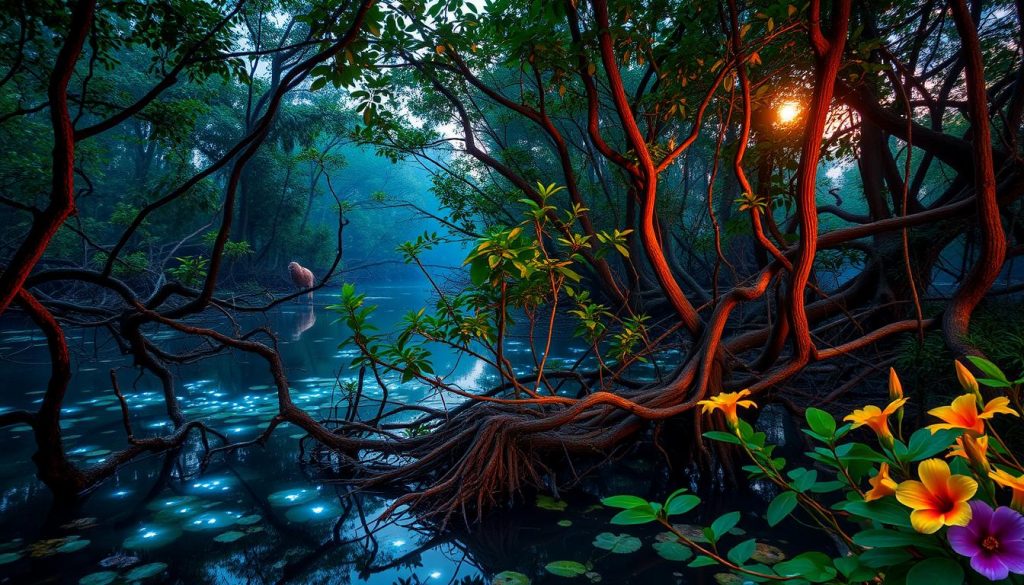
Embarking on a Sundarbans Boat Tour
A Sundarbans boat tour is a unique chance to see one of the world’s most amazing ecosystems. You’ll travel through winding rivers and see the stunning beauty of the area. Wildlife and culture are big parts of the trip, making each journey special and unforgettable.
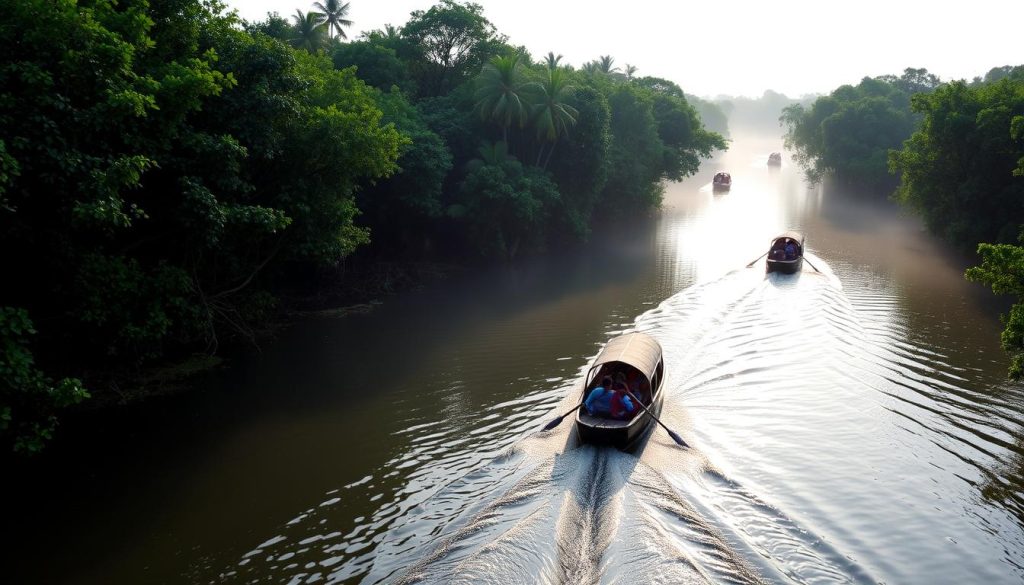
Companies like Sundarban Safar offer tours for all kinds of travelers. You can pick from day trips or longer packages with places to stay, food, and guides. Most people are very happy with their tours, with 87% saying they loved it.
Quality equipment is also a big plus, with 92% finding it good. And, amazingly, no one had anything bad to say about the service.
The Sundarbans is home to incredible wildlife, including over 300 bird species. You might see the famous Royal Bengal Tiger, crocodiles, and dolphins. There are watchtowers where you can get up close to the animals.
For something special, you can rent a private boat or take a luxury tour. Luxury tours offer more comfort, while private boats let you plan your own trip. Booking early is a good idea, as it gets busy during peak times.
It’s important to follow safety rules and respect the wildlife during your tour. This helps keep the mangrove forests safe for everyone in the future.
| Tour Type | Description | Price Range |
|---|---|---|
| Day Tours | A quick exploration of the main attractions, ideal for those on a tight schedule. | $$ |
| Extended Packages | Includes lodging, meals, and guided tours over several days for a deeper immersion. | $$$ |
| Luxury Tours | Spacious cabins, upscale dining, and premium services for a lavish experience. | $$$$ |
| Private Rentals | Customizable itineraries allowing for personal schedules and activities. | Varied |
Start your adventure on a Sundarbans boat tour. Here, nature and culture come together for a journey you’ll never forget.
Cultural Insights: Meet the Local Communities
Meeting the Sundarbans local communities adds a special touch to your trip. They share their traditional ways of life and customs. These villagers are skilled in fishing and boat-making, living in harmony with the delta’s unique ecosystem.
Traveling through the Sundarbans is more than seeing nature. It’s also about connecting with the locals. You can try dishes made with fresh seafood, diving into their culinary traditions.
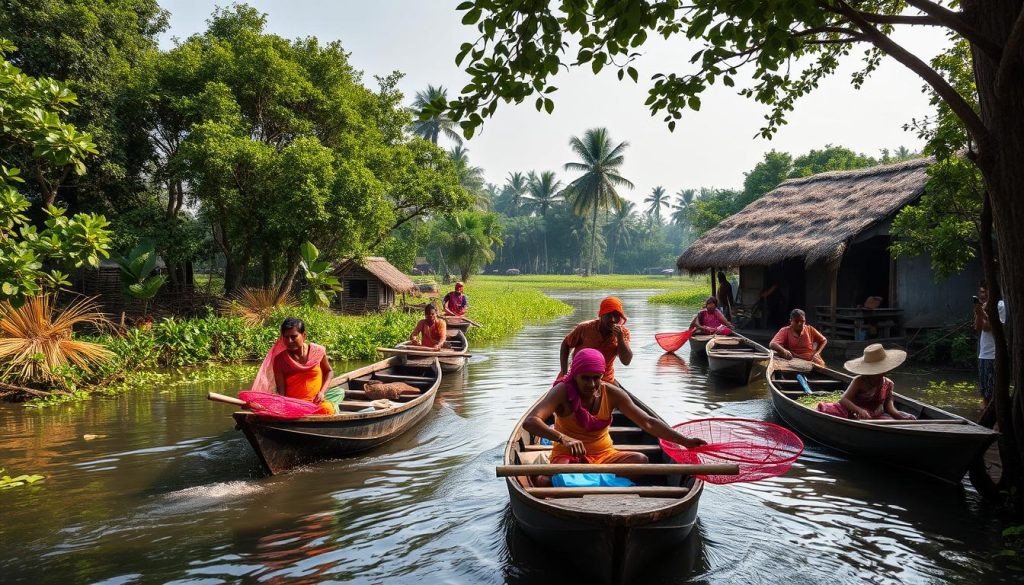
- Learning about age-old fishing methods used in the region.
- Participating in local craft sessions showcasing boat-making techniques.
- Tasting traditional dishes, unique to the Sundarbans.
These experiences offer a peek into the daily lives and traditions of Sundarbans locals. They show how the community lives in harmony with nature. This deepens our respect for their lifestyle and the need to protect their cultural heritage.
| Cultural Experience | Description | Benefits |
|---|---|---|
| Fishing Techniques | Experience traditional fishing methods. | Gain insights into sustainable practices. |
| Boat-Building Skills | Hands-on workshops on boat crafting. | Understand the craftsmanship that supports local livelihoods. |
| Culinary Adventures | Tasting local seafood delicacies. | Enjoy authentic flavors and recipes passed down through generations. |
Top Sundarbans Tourism Attractions to Visit
The Sundarbans region is full of must-see places. It’s a mix of wildlife and culture. Exploring this UNESCO World Heritage Site shows many attractions, each special in its own way.
Sajnekhali Wildlife Sanctuary is known for its diverse wildlife. You can see Bengal tigers, deer, and crocodiles here. It’s a great spot for nature lovers to see the Sundarbans’ amazing animals.
- Sajnekhali Bird Sanctuary: A birdwatcher’s dream, with many bird species.
- Dobanke Watch Tower: Great for wildlife spotting with its wide views.
- Hiron Point: See where rivers meet, creating a beautiful sight.
- Dublar Char Island: A quiet spot for a relaxing day by the river.
- Katka: Home to deer and crocodiles, seen roaming freely.
- Netidhopani: Ancient ruins add mystery and history to your trip.
Tin Kona Island is peaceful, with its unique shape. The trip ends at the Sundarbans Beaches. Here, rivers meet sandy shores, with crabs scuttling around.
The Sundarbans National Park is key for wildlife tourism. It shows the balance between land and water. Guided tours and boat cruises let visitors see stunning views and maybe even a Royal Bengal Tiger.
Local communities share their traditional ways of life. They show how they live with the mangrove ecosystem. Each place offers a unique experience, making the Sundarbans a top spot for wildlife and culture fans.
Adventure Awaits: Sundarbans Wildlife Safari
Start an unforgettable journey in the Sundarbans wildlife safari. It’s a mix of adventure and nature in the world’s largest mangrove forest. This UNESCO World Heritage Site is a biodiversity hotspot, perfect for those who love nature and wildlife.
With Lokenath Travels, you’ll have a thrilling time. Knowledgeable local guides will take you through calm waterways. You might see the rare Royal Bengal tiger, saltwater crocodiles, and spotted deer. Watching sunbathing crocodiles and playful elephants is a highlight of the safari.
During your adventure, you’ll explore the mangrove forests. You’ll also meet local communities and learn about their culture. Seeing the sunset over the waterways is a breathtaking experience.
Here are some exciting packages for your Sundarbans wildlife safari:
| Package Type | Duration | Accommodation Type | Price (₹) |
|---|---|---|---|
| Standard Tour | 1 Night 2 Days | Standard | 3999 |
| Standard Tour | 2 Nights 3 Days | Standard | 5500 |
| Premium Tour | 1 Night 2 Days | 5-Star Hotel | 9000 |
| Premium Tour | 2 Nights 3 Days | 5-Star Hotel | 16000 |
| Premium Tour | 1 Night 2 Days | 3-Star Hotel | 7000 |
| Premium Tour | 2 Nights 3 Days | 3-Star Hotel | 13000 |
Pick the package that fits your style and get ready for unforgettable memories in the Sundarbans wildlife safari.
Conclusion
The Sundarbans offers a unique adventure travel experience. It lets you dive into one of the most diverse and lively ecosystems on Earth. As you explore the waterways of this UNESCO World Heritage site, you see stunning landscapes and a rich variety of life.
Meeting the incredible wildlife, like the Bengal tiger, and the local communities gives you a deep look into the Sundarbans’ culture. With about 7% of the world’s mangrove forests in South Asia, the Sundarbans is crucial for its biodiversity and the people who live off it.
Thinking about your Sundarbans adventure? Remember, you can help protect it. By choosing sustainable tourism, you help keep this amazing place safe for the future. Your trip becomes more than just an adventure; it’s a way to care for the environment.