Safeguarding the Sundarbans Mangrove Forest
What if the fate of millions of coastal residents depended on a forest few have seen? The Sundarbans Mangrove Forest is the world’s largest estuarine mangrove forest. It lies along the coast of India and Bangladesh. It’s a crucial barrier against climate change and natural disasters.
This unique ecosystem is home to the endangered Royal Bengal Tiger. It also supports local communities by protecting them from tidal waves and coastal erosion. As you read on, you’ll learn why mangrove conservation is so important. You’ll also see the efforts needed to protect this valuable natural resource.
Introduction to the Sundarbans Mangrove Forest
The Sundarbans mangrove forest covers a huge area of 140,000 hectares. It’s one of the biggest mangrove ecosystems worldwide. This UNESCO World Heritage Site is in West Bengal, India, and southern Bangladesh. It’s made up of islands and waterways.
It’s home to over 453 species of animals. This includes 290 bird species and the famous Royal Bengal Tiger. There are about 400 to 450 tigers here. This shows why we must protect the Sundarbans.
The Sundarbans is full of life, with 334 plant species and many aquatic animals. But, it faces dangers like cyclones and human activities. We need to save the Sundarbans to protect its animals and people who depend on it.
The Importance of Mangrove Conservation
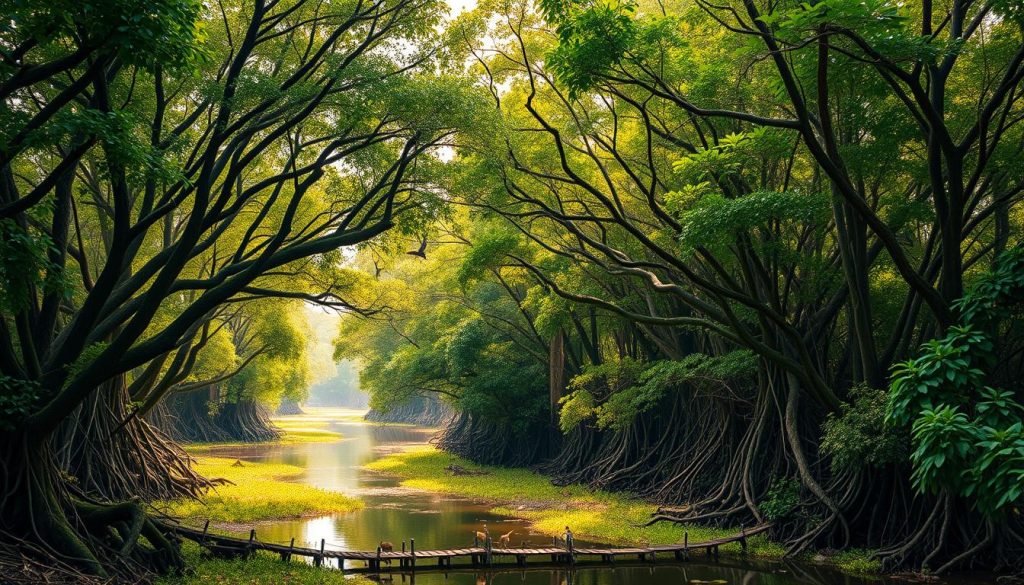
Mangroves are key to the health of coastal areas. They are vital for the communities that live nearby. Learning about mangrove conservation shows their many benefits.
Benefits of Mangroves for Coastal Communities
Mangroves offer many advantages to coastal communities. They protect against storms and floods, keeping homes safe. This is crucial for people who live close to the sea.
They also support fishing, which is important for local jobs and food. Many groups work together to plant mangroves. This lets local people help protect their homes.
Role in Biodiversity and Ecosystem Health
Mangroves are home to many different species. They create habitats that are important for marine life. These forests help fish and crustaceans grow, supporting the ocean’s food chain.
Healthy mangroves keep the balance of nature. Saving them helps wildlife and the people who depend on the sea. This shows why mangrove conservation is so important.
Understanding the Ecosystem of the Sundarbans
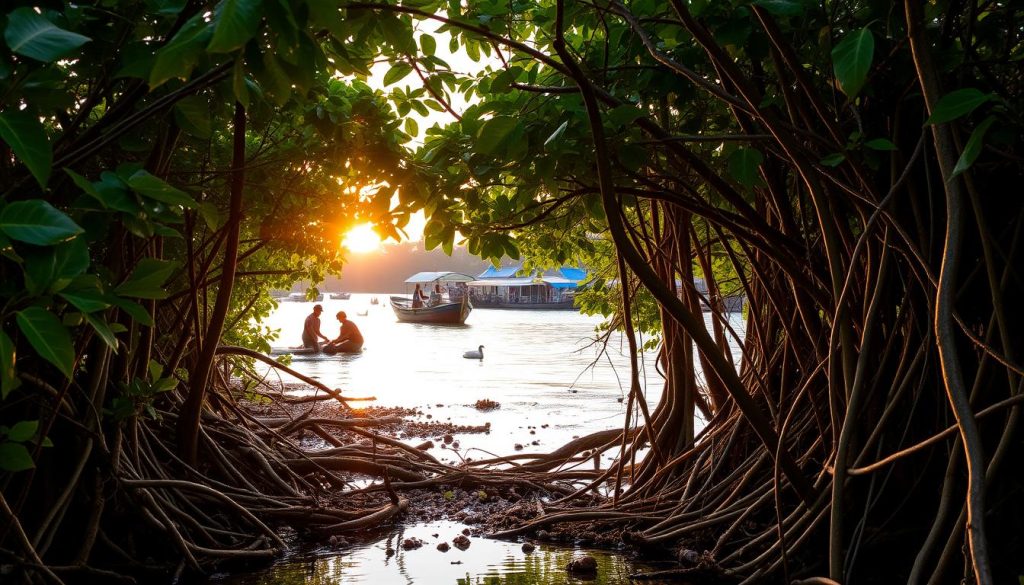
The Sundarbans is a UNESCO World Heritage Site known for its rich ecosystem. It covers about 10,000 square kilometers and is full of life. This mangrove forest is crucial for global biodiversity.
It has over 334 plant species, like the Sundari tree. There are 26 mangrove species and more than 80 varieties. This makes protecting Sundarbans wildlife very important.
It also has over 120 fish species, 270 birds, 42 mammals, and 35 reptiles. This makes it one of the most diverse places on Earth.
The Unique Royal Bengal Tiger Habitat
The Sundarbans is home to the Royal Bengal Tiger, a symbol of conservation. Projects like Project Tiger aim to protect this tiger and its habitat. The tiger is key to the Sundarbans’ biodiversity.
This shows how important it is to save habitats. Conservation efforts must be strong to protect these ecosystems.

Sundarbans Mangrove Forest Conservation Efforts
The Sundarbans Mangrove Forest is huge, covering 140,000 hectares. It’s key for protecting biodiversity and helping coastal communities. Local people are key in protecting this special place.
Groups like the World Wildlife Fund work with locals. They teach sustainable practices and environmental education. This builds a sense of community and helps protect the Sundarbans.
- WWF India’s efforts to conserve nearly 1 million acres of protected land across India and Bhutan.
- Project Tiger, launched in 1973, aims to protect the critical habitats of the Royal Bengal Tiger, a prominent species in the Sundarbans.
- The inscription of the Sundarbans as a UNESCO World Heritage Site in 1987 has drawn international attention to its ecological significance.
- Community-led initiatives have successfully increased awareness about the importance of mangroves in preventing coastal erosion and supporting fisheries.
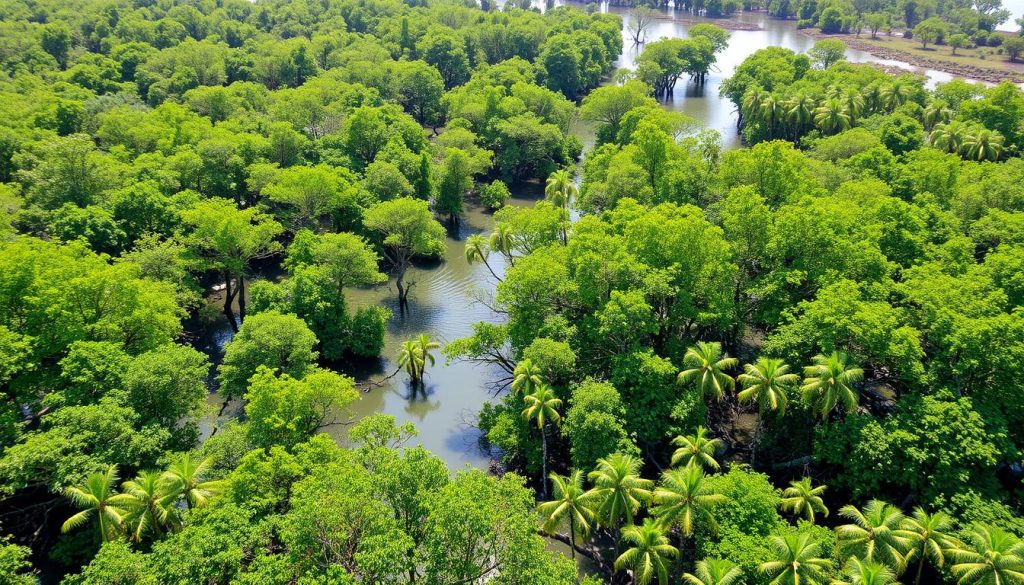
Working together, organizations and communities improve mangrove management. Local knowledge makes conservation efforts better and more meaningful.
| Conservation Initiative | Focus Area | Community Role |
|---|---|---|
| World Wildlife Fund – Project CAT | Protecting 1 million acres | Active participation in monitoring |
| Project Tiger | Royal Bengal Tiger protection | Engagement in habitat preservation |
| Local Environmental Education Programs | Raising awareness on mangrove benefits | Volunteer involvement and leadership |
Conservation in Sundarbans is a team effort towards a sustainable future. It’s not just science; it’s a community movement. Everyone’s help is vital for the Sundarbans’ survival.
Impact of Deforestation on Sundarbans
Deforestation in the Sundarbans causes big problems for the environment and people. It’s important to know why it happens to fix the crisis. The loss of forests affects the balance of nature and the lives of those who depend on it.
Causes of Deforestation
Many things lead to deforestation in the Sundarbans. Key reasons include:
- Rising salinization of soil, making land bad for farming.
- Agricultural expansion, which takes over mangrove areas.
- Water redirection for people to drink, reducing water in mangroves.
- Urbanization and infrastructure development that changes how land is used.
These issues harm the Sundarbans’ ecosystem. Mangroves are key to protecting the coast, but they’re being lost.
Consequences for Local Communities
Deforestation’s effects on local communities are severe. Mangrove loss means:
- Increased vulnerability to disasters like cyclones and floods.
- Displacement as sea levels rise and land is lost, affecting many.
- Loss of livelihoods for fishermen and farmers, causing economic trouble.
- Declining health of mangrove ecosystems, harming water and carbon storage.
The Sundarbans is getting smaller, making these problems worse. We need to protect the environment and help local people fast.

Climate Change and Sundarbans Conservation
The Sundarbans Mangrove Forest is facing big threats from climate change. Over seven million people live here, making it very vulnerable. Rising sea levels, flooding, and extreme weather like cyclones are making things worse.
Effects of Climate Change on Mangrove Ecosystems
The Sundarbans is seeing big problems because of climate change. Cyclones are happening more often, getting stronger. This is hurting the mangroves, leading to less biodiversity and threatening jobs.
The UNESCO World Heritage Site is losing a lot of forest. People are building embankments to fight flooding.
Strategies to Mitigate Climate Impact
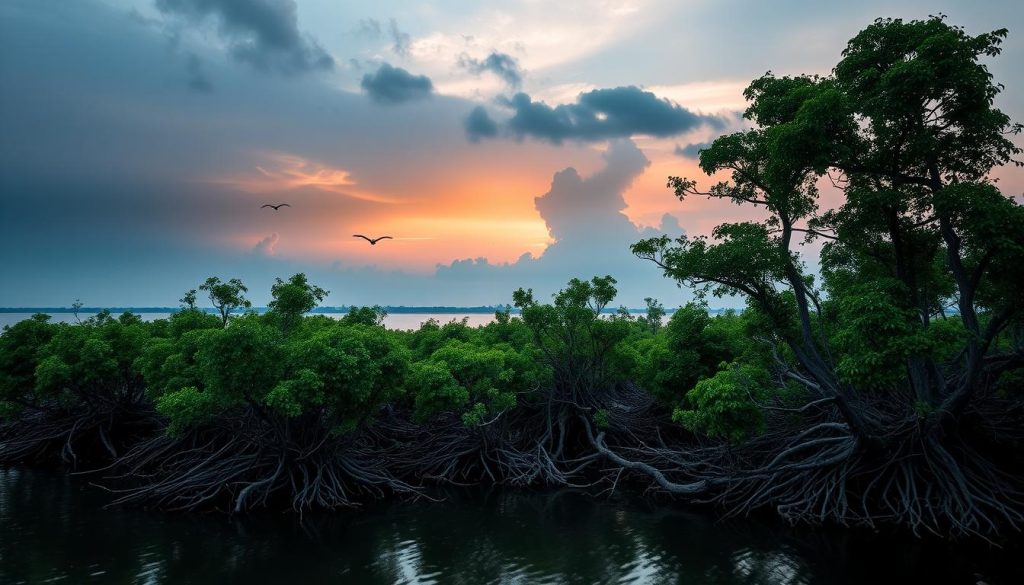
To fight climate change, we need to act. Reforestation is key to bring back mangrove defenses. Good water management helps mangroves grow.
Getting local people involved in conservation is also important. It helps use traditional knowledge to face climate challenges.
| Strategy | Description | Expected Impact |
|---|---|---|
| Reforestation | Planting native mangrove species to restore lost areas | Increased biodiversity and erosion control |
| Water Management | Techniques to regulate salinity and water flow | Improved crop yields and healthier ecosystems |
| Community Engagement | Involving local residents in conservation decisions | Increased awareness and support for sustainable practices |
These plans help protect the mangroves and make local communities stronger. They face less danger from climate change.
Eco-Friendly Initiatives in Sundarbans
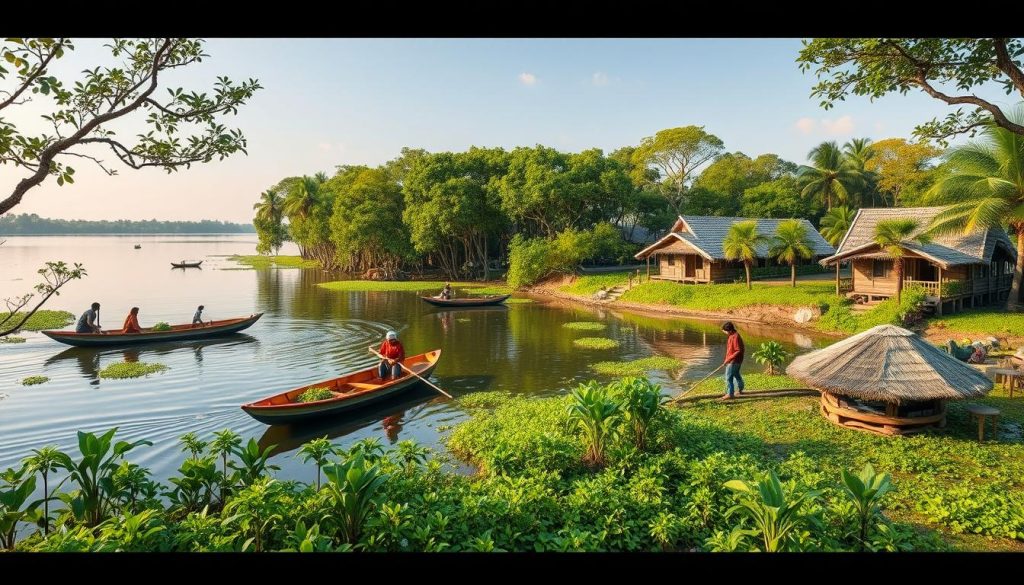
In the Sundarbans, many eco-friendly projects aim to save the mangrove ecosystem. They also help the local community. These efforts boost biodiversity and help people economically and socially.
Community-Led Reforestation Projects
The Sundari initiative is a big project. It aims to restore 4,000 hectares of mangroves in West Bengal. This area has over 1.5 million people in 400 communities.
So far, over 600,000 trees have been planted. This helps restore wildlife habitats. Community involvement is key to these projects’ success.
More than 450 families, including over 50% women, help out. This builds environmental stewardship and strengthens local bonds.
Plastic Waste Management Programs
Plastic pollution is a big problem in the Sundarbans. It harms the area’s biodiversity. Local groups run awareness campaigns and clean-up drives.
These efforts show the community’s dedication to their environment. They work towards a sustainable future for nature and people. Reducing plastic waste makes the Sundarbans cleaner and healthier.
Together, these projects protect the environment and strengthen the community. They improve resilience and social bonds.
Protecting Sundarbans Wildlife
Protecting Sundarbans wildlife is key to saving this special place. Conservation programs have set up protected areas. These help marine life recover and thrive.
By watching over biodiversity, these programs keep fish and other sea creatures healthy. This is important for the environment and for people who depend on it.
Conservation Programs for Marine Life
Important programs work to keep marine life in Sundarbans safe. They protect fish that are important for the economy. This helps manage mangroves in a sustainable way.
These efforts help both the ecosystem and the people who live there. It shows we care about both nature and the communities that depend on it.
The Need for Habitat Protection
Keeping mangrove habitats safe is vital for wildlife and ecosystems. We must fight against damage from climate change, sea level rise, and pollution. Protecting these areas helps the Sundarbans’ plants and animals, including 49 mammal species and many fish and birds.
By focusing on these efforts, we help local communities and protect a precious part of our planet.