Top Sundarbans Activities for Wildlife Enthusiasts
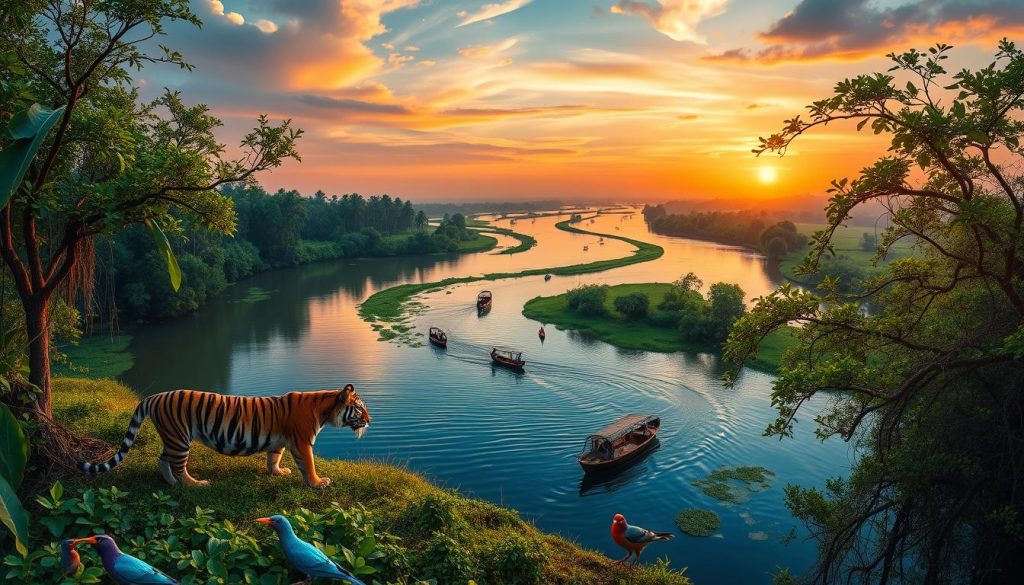
Ever wondered what it’s like to be in the heart of the world’s largest mangrove forest? The Sundarbans, covering over 10,000 square kilometers in India and Bangladesh, is a treasure trove of experiences. It’s a UNESCO World Heritage Site, famous for its diverse wildlife, including the Royal Bengal Tiger.
In this article, we’ll explore the best activities for wildlife lovers in the Sundarbans. From exciting safaris to learning from local fishing communities, there’s an adventure waiting for you.
Sundarbans: An Overview
The Sundarbans is a huge river delta in the Bay of Bengal, shared by India and Bangladesh. It spans about 10,000 square kilometers. This makes it the biggest mangrove forest in the world.
This area is crucial for the environment, known as the “lungs of the Earth.” It’s home to many species, including the Royal Bengal Tiger and the largest saltwater crocodiles. These animals are famous for their beauty and power.
Many endangered species live here, like the Olive Ridley Turtles. They nest on Kanak Island from December to March. Bird lovers will enjoy the Sajnekhali Bird Sanctuary, with 315 species of birds.
The Sundarbans has a unique landscape. It’s 70% land and sandbars, and 30% water. This mix supports a wide variety of plants and animals. There are 334 plant species, showing the area’s rich biodiversity.
The Sundarbans also has cultural importance. It hosts the Ganga Sagar Mela, India’s second biggest fair. Food here is mostly local seafood and fish, offering true regional tastes.

The Sundarbans is not just beautiful but also full of life. It’s a great place to explore and learn about our planet’s most vital ecosystems.
Understanding the Unique Mangrove Ecosystem
The Sundarbans ecosystem is a true marvel of nature. It’s home to a vast array of mangrove species. These plants live in salty waters with changing tides. Over 80 plant species call this place home, showing its incredible biodiversity.
Mangroves grow in warm, coastal areas around the world. Some species, like Avicennia marina, can even be found in Eastern Australia. As the climate changes, mangroves are spreading, adding to the Sundarbans’ diversity.
Mangroves have special ways to deal with salt. Some can handle very salty soils. They either get rid of salt or keep it out. For example, Rhizophora and Bruguiera block most salt, while Avicennia uses glands to remove it.
The roots of mangroves are also unique. They help the plants breathe in wet soils. Some mangroves grow tall, while others stay small. This variety supports many animals, making mangroves crucial for Sundarbans’ wildlife.
The Sundarbans is not just a home for animals; it’s also a popular tourist spot. Visitors can hike, boat, and watch wildlife. It’s a UNESCO World Heritage Site, drawing people who love nature and conservation.

Sundarbans Wildlife Tours: An Introduction
Wildlife tours in the Sundarbans offer a special look at a world-famous ecosystem. These tours let you see amazing animals and help protect them. Over the last ten years, Sundarban Wildlife Tourism has led tiger tours with a success rate over 90%. This makes tiger safaris in Sundarbans a top choice for wildlife lovers.
The Sundarbans delta, covering about 40,000 square kilometers, is the only mangrove tiger land on Earth. It has the world’s largest mangrove forest and the biggest reserve of Royal Bengal Tigers. This place is also home to many other animals, like reptiles, birds, and saltwater crocodiles.
Going on a wildlife tour offers more than just seeing animals. There are different tour packages for everyone. You can go on:
- Guided wildlife safaris for a deep dive into the forest
- Night safaris to see creatures that come out at night, like owls
- Canopy walks for a bird’s-eye view of the mangrove
- Cultural village walks to learn about local fishing communities
- Wildlife photography excursions for amazing photos
- Customizable experiences for what you want to see
Thanks to the Wildlife Photo Safaris Fund and Sundarban Wildlife Expedition, these tours focus on community and conservation. You’ll learn from guides who know a lot about the local wildlife and ecosystem.
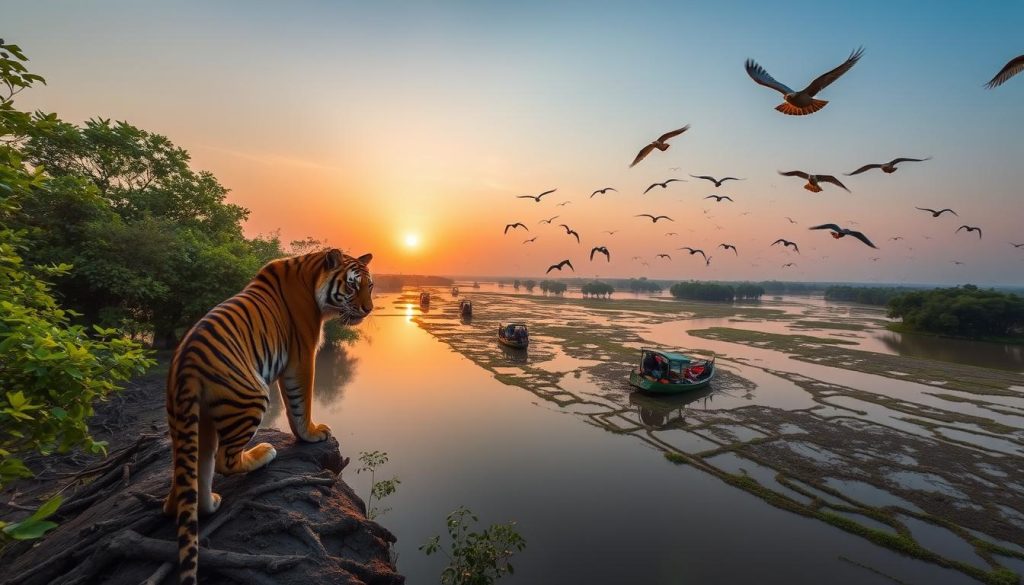
Whether you’re into adventure or just want to see wildlife, Sundarbans tours are unforgettable. They support important conservation work. Get ready to explore a unique place full of life.
What are the best activities for wildlife enthusiasts in the Sundarbans?
The Sundarbans is a top spot for wildlife lovers. It’s a UNESCO World Heritage Site with rich biodiversity. Here, you can see many wildlife species in their natural home. Activities range from exciting safaris to calm boat cruises.
Guided Wildlife Safaris
Guided wildlife safaris are a highlight. They offer a chance to see the rare Royal Bengal Tiger. With about 100 tigers in the mangrove forest, it’s a thrilling experience. Guides share their knowledge, helping you understand the Sundarbans ecosystem.
Cruising through Mangrove Creeks
Cruising through mangrove creeks is another must. It’s a great way to see wildlife like crocodiles, otters, and birds. You might see Fishing Cats or dolphins playing in the water. The calm waters make it a beautiful way to see nature.
Wildlife Species to Spot
The Sundarbans is a birdwatcher’s dream, with over 500 bird species. The Sajnekhali Bird Sanctuary is a key spot, with over 200 species. At the Bhagabatpur Crocodile Project, you can see saltwater crocodiles of all ages. Exploring these places lets you see the Sundarbans’ diverse wildlife, making for a memorable trip.
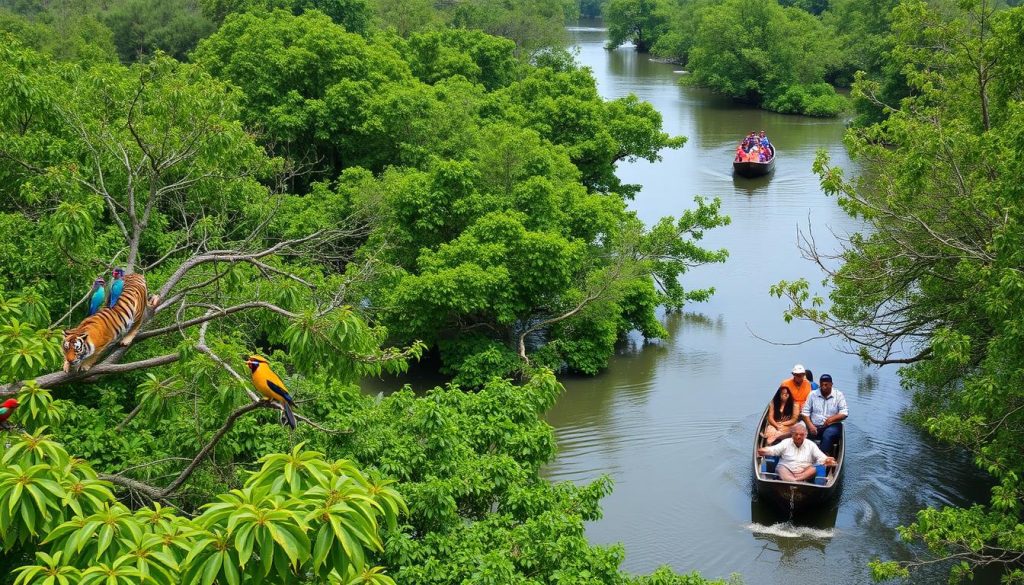
Sundarbans Wildlife Photography Excursions
The Sundarbans is a paradise for wildlife lovers, offering amazing chances to see the Royal Bengal Tiger up close. To capture these moments, you need the right skills and knowledge. Here are some tips to help you make the most of your time in this stunning place.
Tip for Capturing the Royal Bengal Tiger
For tiger photography, patience and flexibility are key. These animals live in thick mangrove forests, so knowing their habits is important. A long lens lets you take photos from far away without disturbing them. Look for angles that show the tiger’s world in the Sundarbans.
- Focus on lighting conditions; early mornings and late afternoons provide optimal natural light.
- Use a sturdy tripod for stability when shooting from a distance.
- Keep noise levels low to avoid scaring away wildlife.
- Scout locations like Sudhanyakhali Watch Tower for higher chances of spotting tigers and other endemic species.
Best Time for Wildlife Photography
The right time for your photo trip is crucial in the Sundarbans. The golden hours, early mornings and late afternoons, are best for capturing wildlife. Knowing the seasons helps plan your visit.
| Time of Day | Suggested Activities | Wildlife Sightings |
|---|---|---|
| Early Morning | Guided boat tours | Royal Bengal Tigers, crocodiles |
| Late Afternoon | Jungle safaris | Birds, deer, and other wildlife |
| Midday | Relaxation and reviewing photos | Limited activity from most wildlife |
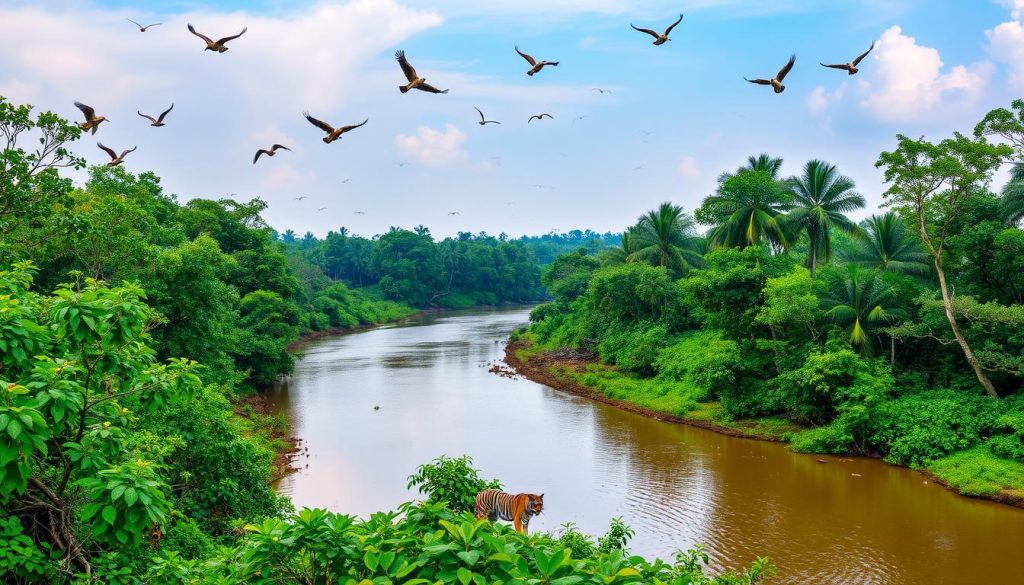
Bird Watching Adventures in the Sundarbans
The Sundarbans is known for its Royal Bengal Tigers and is also a paradise for bird watchers. It’s home to over 500 bird species, drawing birdwatchers from all over. Bird watching here lets you see the beauty of this place and its many birds.
Top Bird Species to Encounter
Here are some of the top birds you can see in the Sundarbans:
- Brown-winged Kingfisher
- Osprey
- Brahminy Kite
- White-bellied Sea Eagle
- Masked Finfoot
- Mangrove Pitta
- Sandpipers and Plovers
These birds show the Sundarbans’ rich bird life. You can also see rare birds like the Masked Finfoot and Mangrove Pitta.
Recommended Bird Sanctuaries
There are many bird sanctuaries in the Sundarbans for bird watching. Some of the best places are:
- Sajnekhali Wildlife Sanctuary
- Bhagabatpur Crocodile Project
- Netidhopani
These places offer great chances to see many bird species. They also teach how to watch birds without harming them. This helps protect the birds and their homes.
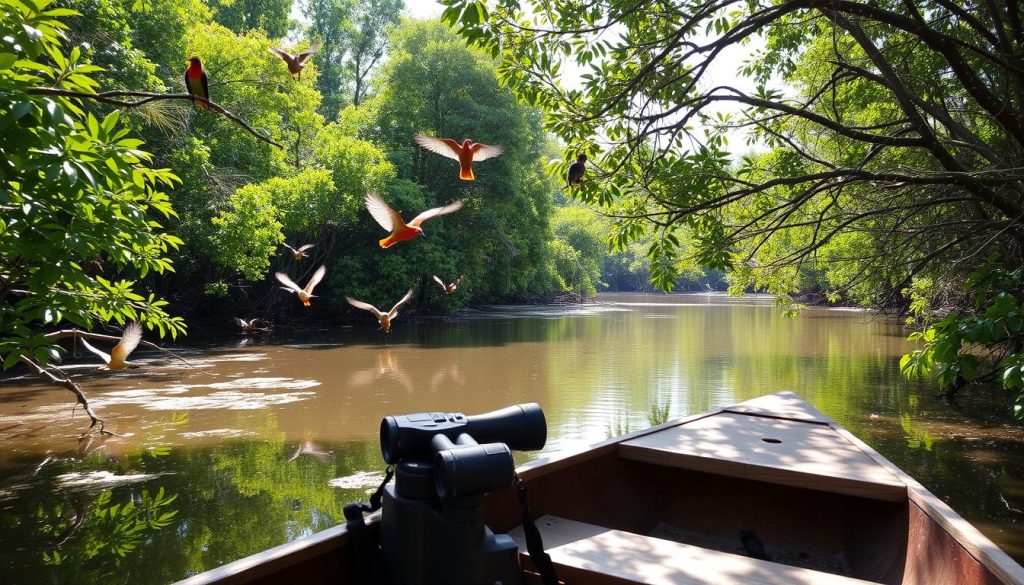
Exploring Sundarbans Wildlife Sanctuaries
The Sundarbans is the world’s largest mangrove forest, full of wildlife. It’s a great place to explore various wildlife sanctuaries. Here, conservation efforts help keep the ecosystem balanced.
The Sundarbans National Park is a key spot. It’s a Ramsar Wetland Site and a UNESCO World Heritage Site. It’s home to endangered species like the Royal Bengal tiger.
Guided tours here are small, with only eight people. This makes the experience more personal. Guides share their knowledge, helping you understand the ecosystem better.
Wildlife tourism in India is growing, with the Sundarbans being a big draw. People come from all over for wildlife safari tours. These tours offer a chance to see many species, like the Leopard Cat and King Cobra.
Custom-made camouflage boats add to the adventure. They let you get up close to nature.
Start your safari at sunrise for the best chance to see wildlife. You can spot over 260 bird species and more. The Sajnekhali Wildlife Sanctuary is great for families, with lots of animals and plants to see.
The Dobanki Watchtower and Canopy Walk offer amazing views. They’re exciting for everyone, no matter their age.
Places like Netidhopani offer history and wildlife together. You can see animals in peaceful waterways. Meeting local fishing communities adds to the cultural experience, showing you their traditional ways of life.
Engaging with the Local Fishing Communities
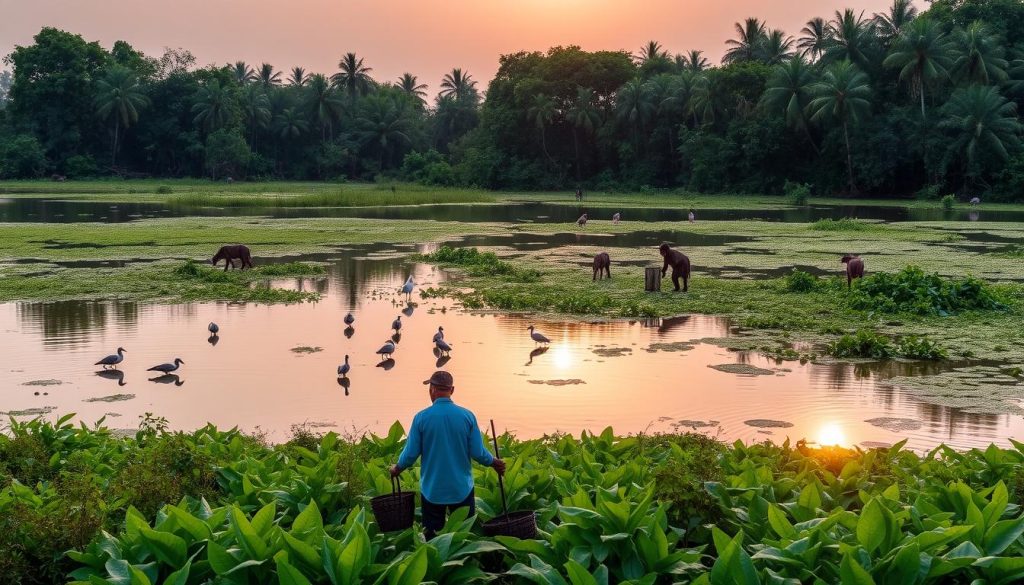
The local fishing communities in Sundarbans offer a unique cultural experience. They use traditional methods passed down through generations. These methods show their deep connection to the ecosystem.
Visitors can see unique fishing techniques like cast nets and bait fishing. These methods are key to preserving local resources.
Fishing is not just a job for these communities; it’s a big part of who they are. The best times to fish change throughout the year, depending on the species.
- Monsoon Season (June to September): Known for hilsa migration upstream for spawning.
- Post-Monsoon (October to December): Ideal for prawns and bhetki due to improved water clarity.
- Winter (January to February): A suitable time for catching tangra and crabs.
These communities face big challenges from climate change. Talking to them gives us a glimpse into their struggles and successes. It also teaches us about sustainable practices.
Royal Sundarban Tourism offers special chances to meet these communities. You can go on fishing tours that include guided experiences and cultural exchanges. These tours teach the value of responsible fishing and preserving cultural heritage and wildlife.

Participating in Sundarbans Wildlife Conservation Efforts
Conservation is key to keeping the Sundarbans’ unique wildlife alive. The efforts face big challenges like habitat loss, poaching, and human-wildlife conflicts. These threats harm the balance of this special place, home to the Royal Bengal Tiger and other endangered animals.
Understanding Conservation Challenges
The Sundarbans faces many threats to its wildlife and habitats. Climate change is causing sea levels to rise, damaging the mangrove ecosystems. Poaching is still a big problem, driven by the demand for wildlife products. Also, when animals look for food in human areas, it leads to dangerous situations.
To tackle these challenges, we need help from the community, government, and wildlife groups. Working together is crucial.
How You Can Get Involved
You can make a big difference in Sundarbans wildlife conservation. Here are some ways to help:
- Volunteer Programs: Look for local conservation projects to join through various organizations dedicated to the Sundarbans.
- Donations: Help local NGOs by donating to support their conservation work.
- Raise Awareness: Share your Sundarbans experiences on social media or blogs to spread the word about conservation.
- Eco-Friendly Tourism: Choose eco-friendly places to stay and services that support conservation through sustainable tourism.
By joining conservation efforts, you help the environment and make unforgettable memories. These memories connect you to the Sundarbans and its amazing wildlife.
Conclusion
The Sundarbans is a top spot for wildlife lovers, with many activities that promise unforgettable experiences. It’s home to over 300 bird species and thrilling tiger safaris. This place lets you connect with nature in a deep way.
From the stunning views at the Sundarban Mangrove Interpretation Center to the vast 10,000 square kilometers of biodiversity, every moment is special. It helps you appreciate this unique ecosystem.
Your trip to the Sundarbans will give you memories and teach you about conservation challenges. You can join local fishing communities and celebrate the Bonbibi Yatra Festival. These activities honor traditions and add to your adventure.
Whether you’re on a guided safari, a boat ride under the stars, or birdwatching, the Sundarbans has it all. It’s a UNESCO World Heritage Site with diverse activities.
Remember, every activity you do helps protect this amazing wilderness. The Sundarbans invites you to explore its wildlife and encourages you to help preserve it. Your visit becomes a way to love and protect our planet.