Eco-Friendly Sundarbans Lodging: A Green Stay
Have you ever thought about how your travel choices could help protect amazing ecosystems like the Sundarbans? This UNESCO World Heritage Site is full of life, including the Bengal tiger and colorful sea creatures. It’s not just for adventurers; it’s also for those who want to travel responsibly.
Looking for eco-friendly places to stay in the Sundarbans? You can find resorts that care about the environment and the local community. These places are more than a place to sleep. They work hard to keep the area beautiful for everyone.
The Importance of Eco-Friendly Accommodation
In today’s travel world, eco-friendly places to stay are key. More people want to travel in a way that’s good for the planet. This means choosing places that care about the environment and support local communities.
Understanding Sustainable Tourism
Sustainable tourism means traveling in a way that protects nature and respects local cultures. By staying in eco-friendly places, you help support green energy, reduce waste, and save the environment. In the Sundarbans, tour operators are using electric boats, showing they care about the planet.
It’s also important to connect with local people. This way, you can make a positive difference in the area you visit.
Benefits of Choosing Eco-Friendly Lodging
Choosing eco-friendly places to stay has many advantages. For example, it helps reduce your carbon footprint. Many eco resorts focus on growing food organically and buying it locally.
This not only supports green practices but also makes your trip more interesting. You get to try local food and learn about the culture. In fact, 95% of these resorts work with local people, making a positive impact on everyone.
By staying in these places, you’re helping to protect special places like the Sundarbans. It’s a way to travel responsibly and make a difference.
Are There Eco-Friendly Accommodations in the Sundarbans?
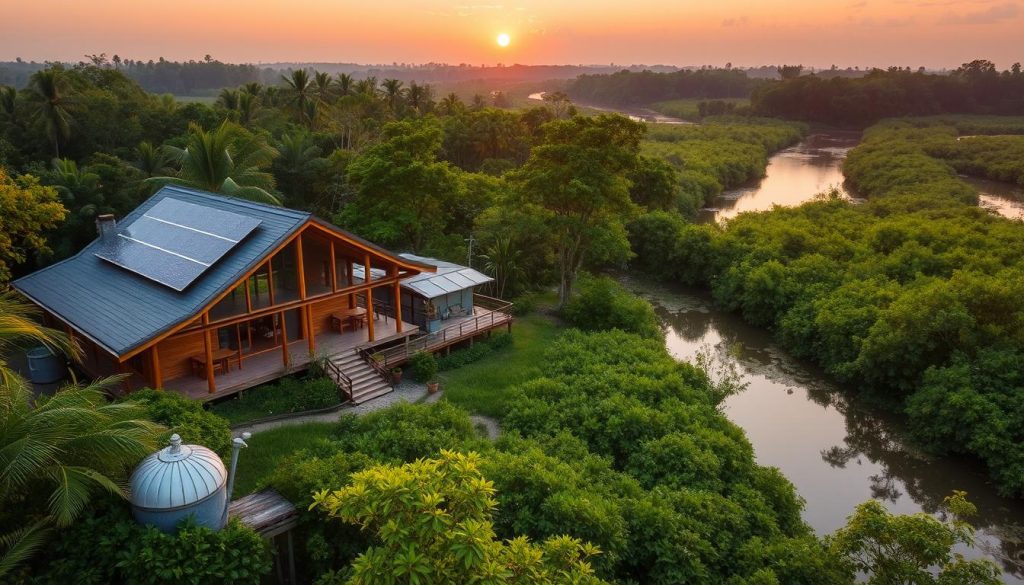
Travelers looking for a green stay in the Sundarbans have many options. These eco village resorts focus on being kind to the environment. They use local materials and try to leave a small footprint.
Overview of Eco Village Resorts
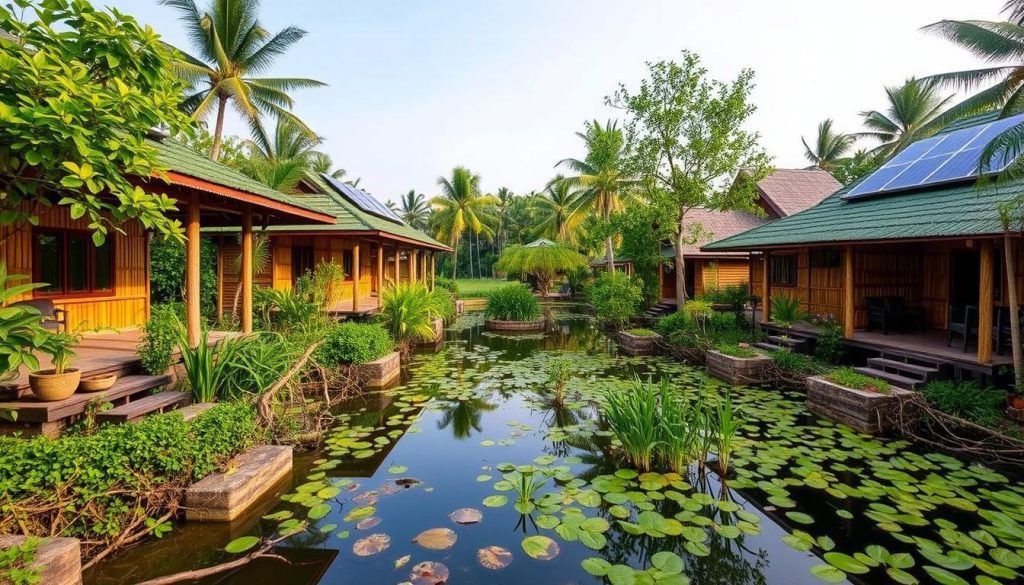
Eco village resorts are great for those who care about the planet. They build with local stuff like mud, wood, and hay. This makes them blend in with the stunning nature around them.
The Sundarban Eco Resort on Satjelia Island is a great example. It has thatched roof cottages and bamboo huts. These offer comfort and help the environment. Guests can enjoy the scenery and support local tourism.
Examples of Eco-Friendly Lodging Options
There are many eco-friendly places to stay in the Sundarbans. Here are some highlights:
- Sundarban Eco Resort: It has thatched cottages and bamboo huts. The resort uses rainwater and solar power.
- Cultural Experiences: Guests can try local food and help plant mangroves. This supports conservation.
- Wildlife Safaris: The resort offers boat tours. These tours let guests see wildlife and connect with nature.
These resorts combine caring for the environment with helping the community. They are ideal for those who want to enjoy nature while staying true to their values.
Sundarbans Eco-Friendly Lodging: Features and Benefits
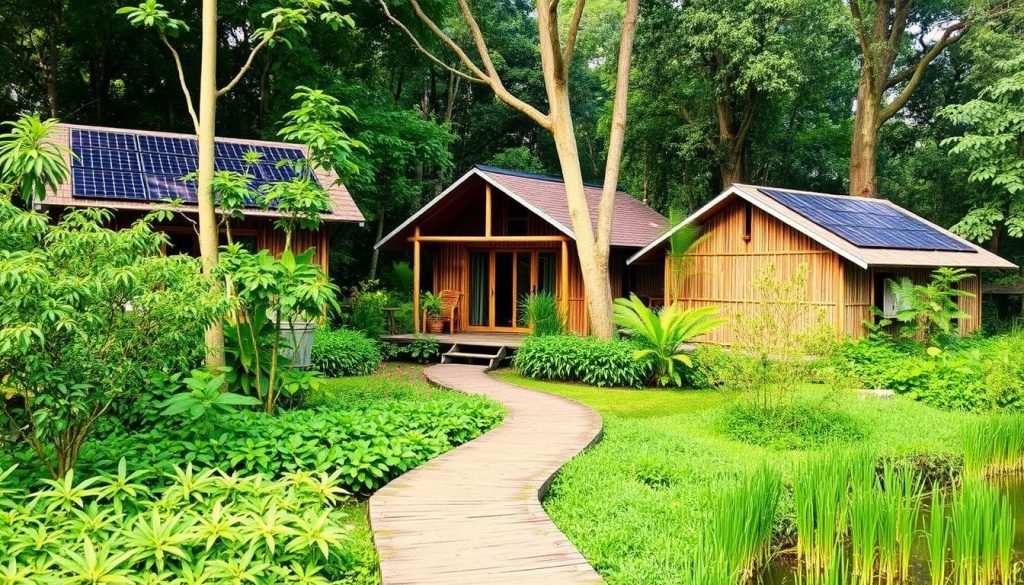
Staying at eco-friendly lodges in the Sundarbans is special. It combines comfort with care for the planet. These places show off the best of eco-friendly living, with green buildings and smart energy use. Guests get to enjoy nature all around them.
Natural Materials and Sustainable Architecture
Eco-friendly lodges in the Sundarbans use local materials. This helps local communities and supports green building. The buildings last longer and keep cooler, making guests happy and saving energy.
Energy Efficiency and Carbon Footprint Reduction
These lodges focus on saving energy. They use solar power and smart water use. This cuts down on carbon emissions. Guests can still enjoy Wi-Fi and great food, but it’s all done in an eco-friendly way.
Immerse Yourself in Nature
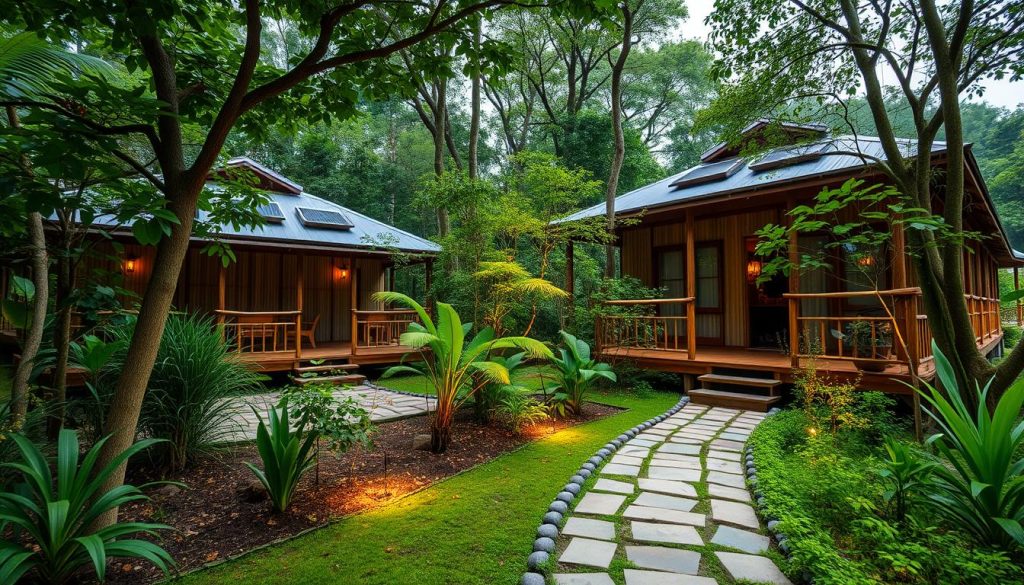
Staying in eco-friendly places in the Sundarbans lets you dive deep into nature. This mangrove forest is full of life, with Bengal tigers and many bird species. You can enjoy guided tours and boat safaris that help protect wildlife.
Wildlife Viewing Opportunities
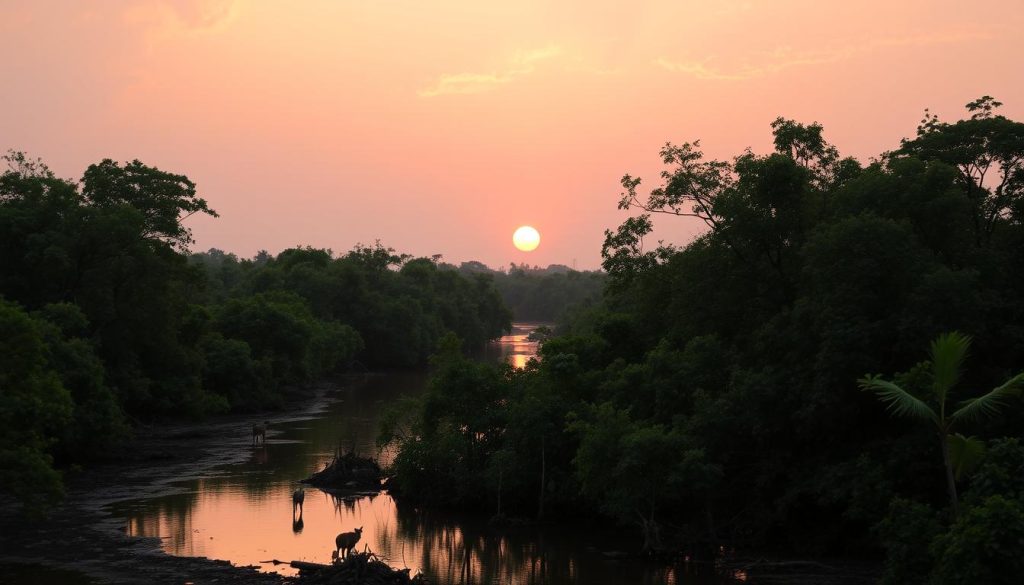
The Sundarbans is the world’s largest mangrove forest, covering about 10,000 square kilometers. It’s a home to many animals. Guided tours offer great chances to see wildlife up close. The best time for wildlife watching is from November to February.
Guided Tours Through the Mangroves
Take boat safaris to see the forest’s rivers and canals. These tours give you a close look at the forest and its creatures. They also help with conservation by teaching about environmental issues. Supporting responsible tourism helps protect the Sundarbans and supports local people.
| Activity | Description | Best Time |
|---|---|---|
| Wildlife Viewing | Observe Bengal tigers and various bird species in their natural habitat. | November to February |
| Boat Safaris | Navigate through the mangroves, offering a unique vantage point. | Year-round, best during winter |
| Guided Tours | Learn about the ecosystem from knowledgeable local guides. | Year-round |
By taking part in these nature experiences, you help save the Sundarbans. You also make your trip unforgettable with amazing memories.
Community Engagement and Local Interactions
Getting involved with the local community makes your Sundarbans trip better. Eco-friendly places focus on connecting visitors with locals. They work with villages to help the economy grow.
By staying in eco-tourism spots, you help the community thrive. This way, tourism helps everyone, not just visitors.
Supporting Local Villages and Economies
Tourism in the Sundarbans brings jobs for many. People work as tour guides, boat operators, and artisans. This helps reduce poverty and improves life for many families.
Your visit can also boost local businesses. You’ll support shops, restaurants, and markets. This helps the local economy grow.
Cultural Exchange Initiatives
Exploring the Sundarbans lets you learn about its culture. You can talk to locals and learn about their traditions. This helps keep their culture alive.
Many resorts offer workshops and tours. They show you the community’s customs and stories. This makes your visit more meaningful.

Ecotourism in the Sundarbans focuses on being green. Resorts manage waste and protect wildlife. By choosing these places, you help the environment and the community.
This approach makes your trip good for you and the locals. It’s a win-win situation.
Organic and Locally Sourced Cuisine
Eating at eco-friendly resorts in the Sundarbans is a special treat. Every bite tells a story of sustainability and local flavor. The focus on locally sourced food makes your meal even better. It also shows off the region’s vibrant agricultural practices.
Dining Experiences at Eco-Friendly Resorts
Choosing to dine at eco-friendly resorts means enjoying meals made from fresh, seasonal ingredients. These places work with nearby farms and local fishermen. This ensures your meals are the best the Sundarbans has to offer. You might try:
- Hilsa fish, a beloved dish, cooked with mustard oil and spices.
- Green mud crab, known for its tender meat and rich flavor, harvested from brackish waters.
- Mangrove honey, a unique sweetener, adds a special touch to dishes.
- Wild rice (Khaira), a traditional staple, adds flavor and connects you to local heritage.
Health Benefits of Eating Fresh and Local
Choosing organic cuisine in Sundarbans is good for your health. It’s not just tasty, but also promotes a healthier lifestyle. The benefits include:
- Getting more nutrients from fresh produce.
- Less exposure to harmful preservatives and additives found in processed foods.
- Supporting local farmers and sustainable practices, which helps the community.
- A smaller carbon footprint because food doesn’t have to travel far.
Dining at eco-friendly resorts combines sustainability with local culture. Every meal is a unique experience that also shows care for the environment.
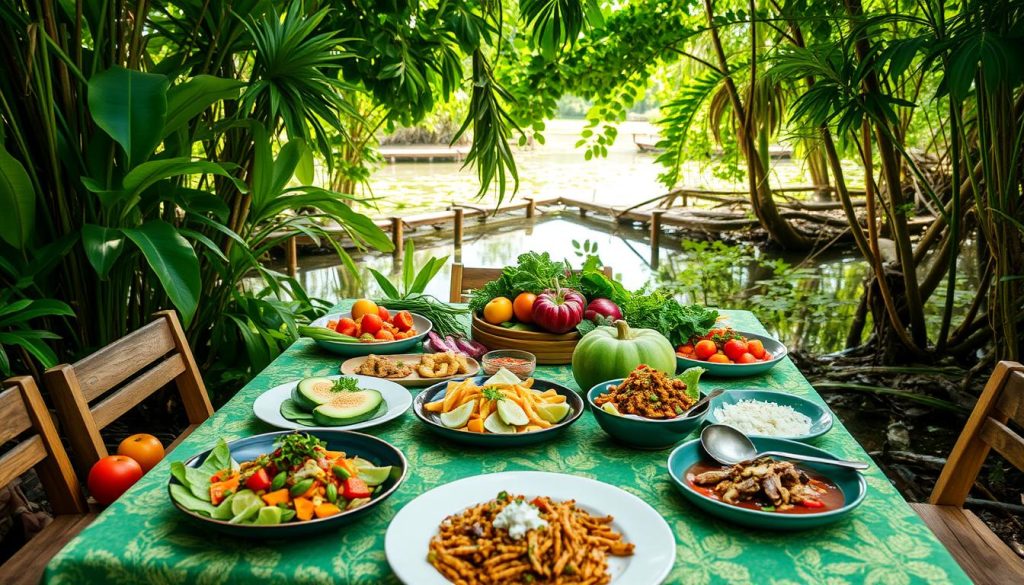
| Dish | Main Ingredient | Cooking Technique |
|---|---|---|
| Hilsa Fish Curry | Hilsa Fish | Cooked with mustard oil and spices |
| Green Mud Crab | Large Green Mud Crab | Steamed or sautéed |
| Wild Rice Pilaf | Wild Rice (Khaira) | Slow-cooked |
| Mangrove Honey Dessert | Mangrove Honey | Used as a natural sweetener |
Sustainable Practices in Eco-Friendly Resorts
The Sundarbans region is known for its rich ecosystem. Resorts here focus on sustainable practices to protect this environment. They use innovative waste management and renewable energy. This ensures tourism is done responsibly, allowing guests to enjoy nature without harming it.
Waste Management and Conservation Efforts
Eco-friendly resorts in the Sundarbans have set up effective waste management systems. They focus on:
- Recycling programs to cut down landfill waste
- Composting organic waste to improve soil quality
- Reducing single-use plastics
Guests get to stay in comfortable places and help with conservation. They can join in planting mangroves. This helps the ecosystem and teaches guests about caring for nature.
Solar Power and Renewable Energy Sources
Renewable energy is key in eco-lodging in the Sundarbans. Many resorts use solar power, cutting down on fossil fuel use. This move not only lowers carbon emissions but also boosts energy efficiency.
Choosing sustainable energy shows a commitment to protecting the environment. It makes the stay more meaningful for guests.
| Sustainable Practices | Importance | Examples |
|---|---|---|
| Waste Management Initiatives | Reduce environmental impact | Recycling, composting, reduction of plastics |
| Renewable Energy Sources | Decrease reliance on fossil fuels | Solar power utilization, energy efficiency |
| Community Engagement | Promote local economies | Cultural exchanges, eco-tourism activities |
Activities and Adventures in the Sundarbans
The Sundarbans is a mix of excitement and calm, perfect for those who love adventure and those who want to relax. It’s famous for wildlife tours on boat safaris. These tours take you through the mangrove waterways, showing off stunning views and a chance to see the Bengal tiger and over 250 bird species.
Boat Safaris and Wildlife Tours
Boat safaris are not just fun; they also help protect the environment. You can join guided tours to learn about the area’s conservation. The best time for these adventures is from November to February, when the weather is great for outdoor activities.
Relaxation and Wellness Opportunities
After all the excitement, you can relax at eco-friendly lodgings. These places offer treatments, yoga, and meditation to connect you with nature. It’s a perfect way to make your trip both exciting and calming, turning the Sundarbans into a place of both adventure and peace.