Exploring Sundarbans: Different Travel Methods Revealed
Ever thought about how to explore the Sundarbans’ vast ecosystem? It’s filled with waterways and amazing wildlife. The Sundarbans, a UNESCO World Heritage Site, is the world’s largest mangrove forest. It covers over 10,000 km² in Bangladesh and India.
Here, you can see the endangered Royal Bengal Tiger and many other animals. They live in a mix of land and water. Knowing how to get around is key to seeing it all.
This article will show you the best ways to travel through the Sundarbans. You’ll learn about boat safaris and local ferries. These offer great views and a chance to see the area’s wildlife up close.
Introduction to the Sundarbans
The Sundarbans overview shows a unique ecosystem covering over 10,000 square kilometers in India and Bangladesh. It’s the world’s largest mangrove forest, filled with diverse plants and animals. The area is famous for its Bengal tigers, saltwater crocodiles, and over 260 bird species.
Exploring this magical place, you’ll find more than just beauty. You’ll learn about local myths and culture. Almost four million people live here, blending their traditions with the forest’s importance. Visitors might hear stories of good luck from seeing monitor lizards.
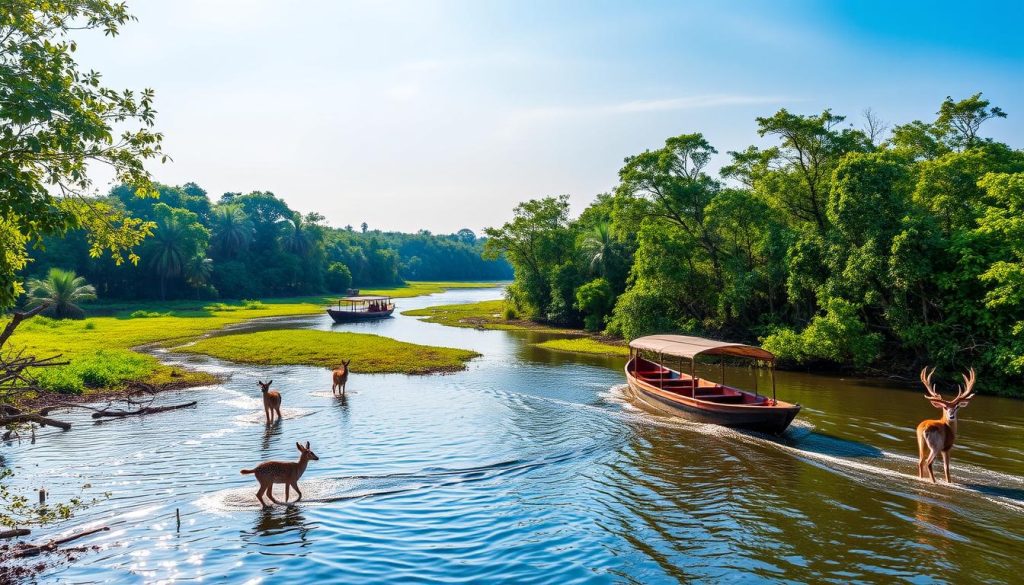
Climate change is a big worry for this special place. Rising sea levels and changing landscapes are big challenges. Yet, these changes also open new doors for wildlife tourism.
Every year, millions visit to see the wildlife and mangrove islands. The Sundarbans is home to around 453 wildlife species. It’s a haven for nature lovers and those interested in eco-tourism. Each visit is a mix of adventure and learning, making it unforgettable.
The Unique Geography of the Sundarbans
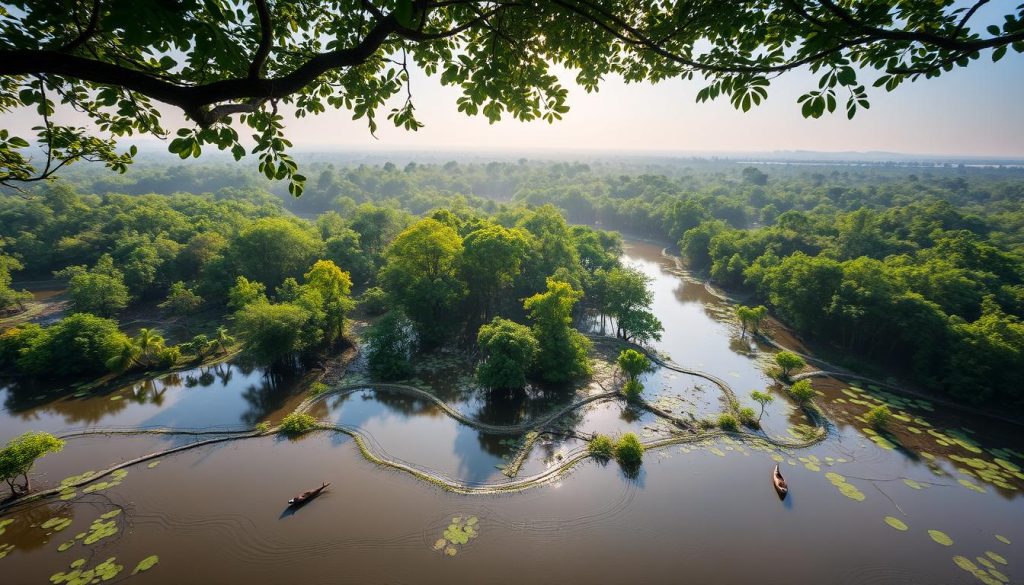
The Sundarbans’ unique geography shapes its stunning *landscape*. It spans about 3,860 square miles, mostly on the India-Bangladesh border. Bangladesh has three-fifths of this area, making it a key ecological spot.
Mangrove forests cover two-fifths of the Sundarbans. Water bodies, like tidal waterways and mudflats, make up half. This mix creates a rich ecosystem, home to unique biodiversity.
Over 250 bird species live here, including seasonal and permanent residents. The Sundarbans National Park, created in 1984, is a vital sanctuary. It’s also a UNESCO World Heritage site since 1987. Plus, it has three wildlife sanctuaries in Bangladesh, all UNESCO sites since 1997.
The Sundarbans is a UNESCO biosphere reserve. It’s crucial for aquatic life and many animal species. The Bengal tiger, with about 440 in the region, thrives here. Around 106 tigers live in Bangladesh’s Sundarbans.
This landscape faces challenges like rising sea levels. But its beauty and diversity make it a top spot for nature lovers.
| Feature | Details |
|---|---|
| Area | Approximately 3,860 square miles |
| Mangrove Forest Coverage | About two-fifths of the region’s surface area |
| Water Coverage | Approximately half of the area |
| Bird Species | Over 250 species |
| Protected Areas | Sundarbans National Park, UNESCO World Heritage site |
| Biosphere Reserve | Designated by UNESCO |
| Estimated Tiger Population | Approximately 440 in the whole region; around 106 in Bangladesh |
What are the different ways to travel through the Sundarbans?
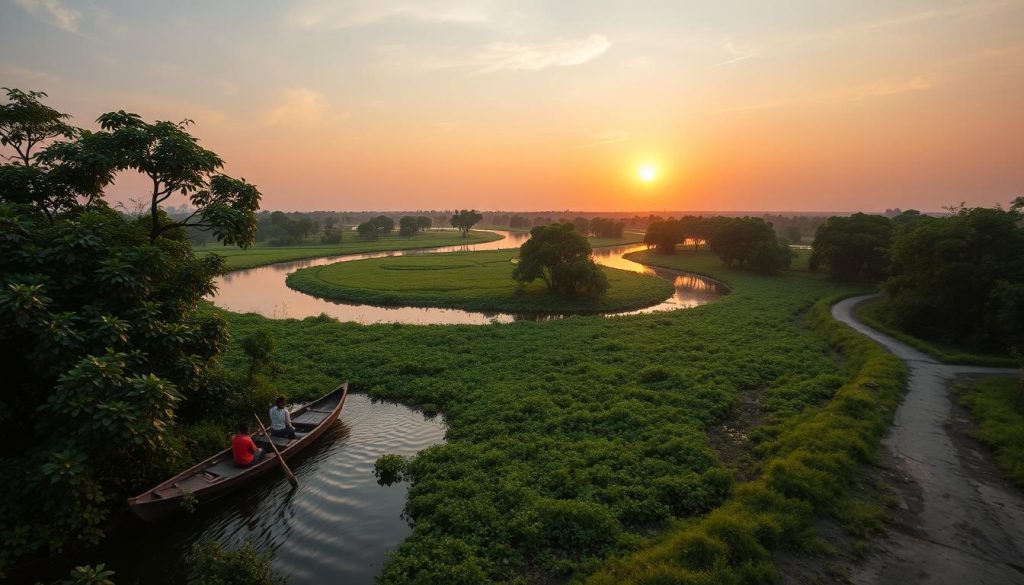
Exploring the Sundarbans is an adventure with many travel options. The network of rivers and canals is perfect for boat travel. It’s the best way to see the world’s largest mangrove forest up close.
Boat Travel: An Essential Mode of Transport
Boat travel is a key way to see the Sundarbans. Private chartered boats let you plan your trip. They take you to hidden spots full of wildlife and beauty.
A boat trip offers amazing views of nature. It’s a favorite among travelers. Whether it’s a short cruise or a long trip, the water is the best way to see the Sundarbans.
Using Local Ferries for Scenic Views
Local ferries are another way to see the Sundarbans. They let you enjoy the views and meet other travelers. Traveling by ferry is good for the environment, fitting with sustainable tourism.
Ferries are important for the local transport network. They help you see the mangroves, wildlife, and culture. Trying different travel ways in the Sundarbans makes your trip richer and more meaningful.
Best Transportation in the Sundarbans
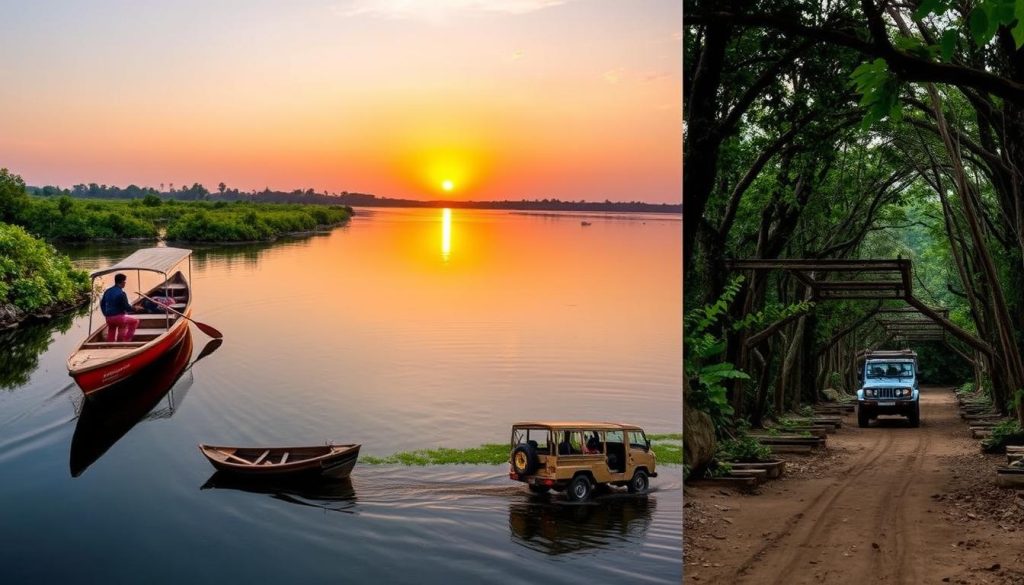
Traveling through the Sundarbans is a unique experience. It requires understanding the best transportation options. The right mode of transport can make your adventure better.
The Sundarbans is full of rivers and channels. Waterways are the main way to explore. For many, the best way to travel is by boat.
Choosing the Right Boat for Your Adventure
When planning your trip, think about the boat type you need. A medium-sized boat is great for wildlife watching. It lets you get close to the rich biodiversity, like the Bengal tiger.
Larger boats offer comfort and have amenities like beds. They let you stay longer in this amazing place. Having the right amenities can reduce travel tiredness and let you enjoy nature more.
Understanding Boat Types and Specifications
Knowing about boat types is key for a great Sundarbans experience. Here’s a quick look at some popular ones:
| Boat Type | Specifications | Advantages |
|---|---|---|
| Motorized Boat | Stable and fast, designed for navigating larger channels. | Quick transportation, comfortable seating, suitable for groups. |
| Traditional Country Boat | Smaller, manually rowed, ideal for narrow passages. | Intimate experience, better for wildlife viewing in serene settings. |
| Luxury Cruise | Equipped with amenities, spacious cabins for overnight stays. | Combination of comfort and exploration, suitable for leisurely travels. |
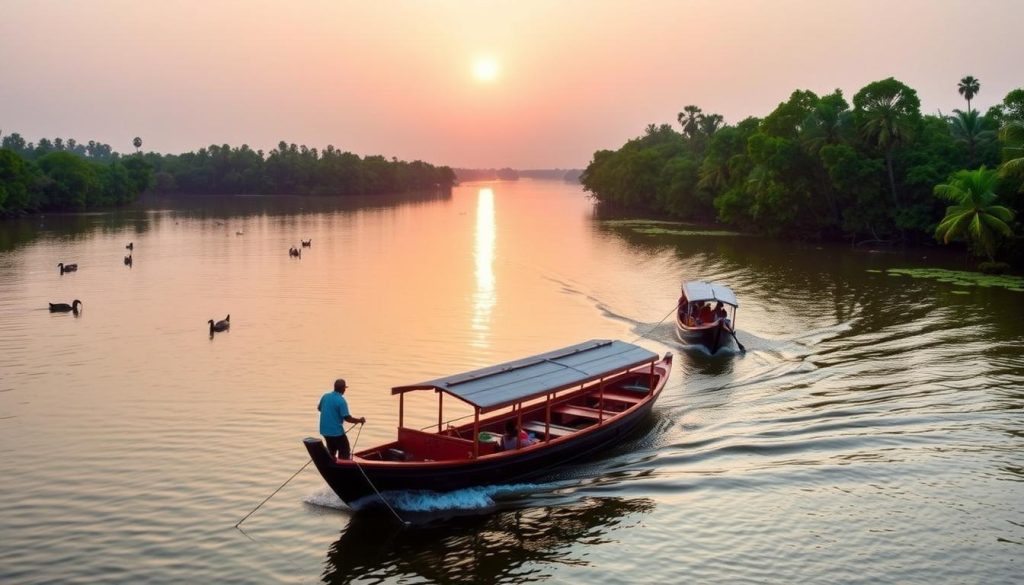
Picking a boat that fits your needs and goals is crucial. It ensures an unforgettable journey. It also supports local boat services and sustainable tourism.
Exploring the Sundarbans by Boat
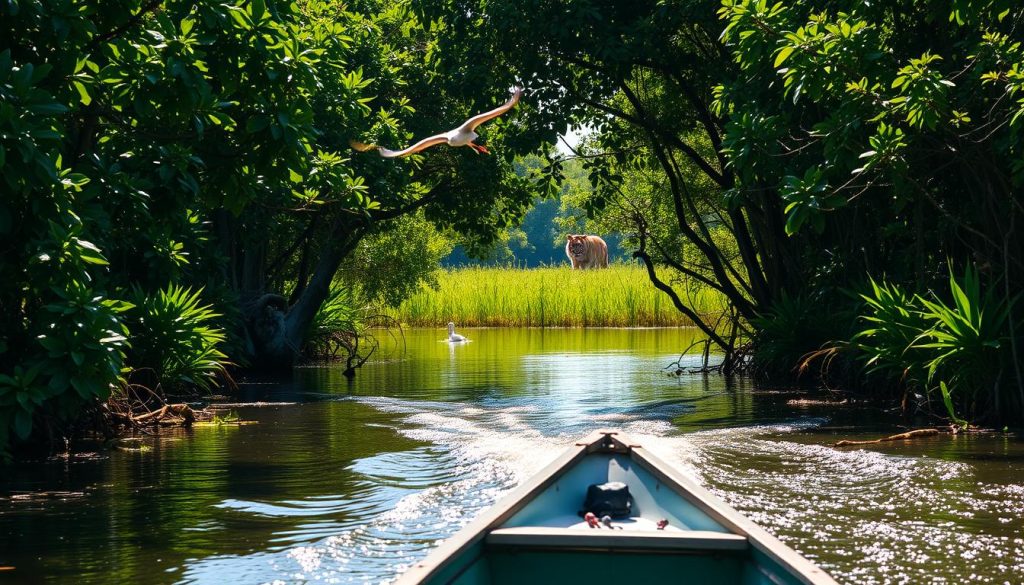
Exploring the Sundarbans by boat is a unique way to see this special place. The Sundarbans covers about 10,000 square kilometers. It has dense mangrove forests and many waterways. A boat tour lets you see parts of the forest that are hard to reach, making it easier to see wildlife.
On these tours, you might see the majestic Bengal tiger. There are about 100 in Bangladesh and 70 in India. As you move through the calm channels, you’ll see the beauty of the Sundarbans.
The best times for seeing wildlife are early morning and late afternoon. The water is calm, and the scenery is stunning. You’ll see tigers, deer, and crocodiles in this UNESCO World Heritage Site.
Most tours include everything you need. You’ll stay for three nights: two on the boat and one in Khulna. The package includes food, guides, and activities. You’ll go trekking, visit wildlife sanctuaries, and see local wildlife centers.
The best time to go is from mid-November to mid-February. The weather is cool, making it perfect for cruising and wildlife watching. You’ll also get to try delicious Bangladeshi fish dishes, adding to your experience.
| Tour Highlights | Description |
|---|---|
| Duration | 3 nights (2 nights on boat, 1 night in Khulna) |
| Wildlife | Spot Bengal tigers, crocodiles, and various bird species |
| Activities | Trekking in mangroves, visiting wildlife sanctuaries, cultural programs |
| Best Time to Visit | Mid-November to mid-February |
| Unique Experiences | Yoga sessions, cooking demonstrations, lectures by naturalists |
How to Get Around the Sundarbans?
Traveling the Sundarbans is both challenging and rewarding. Knowing how to get around makes your trip better. The area offers many ways to travel, with boats being key.
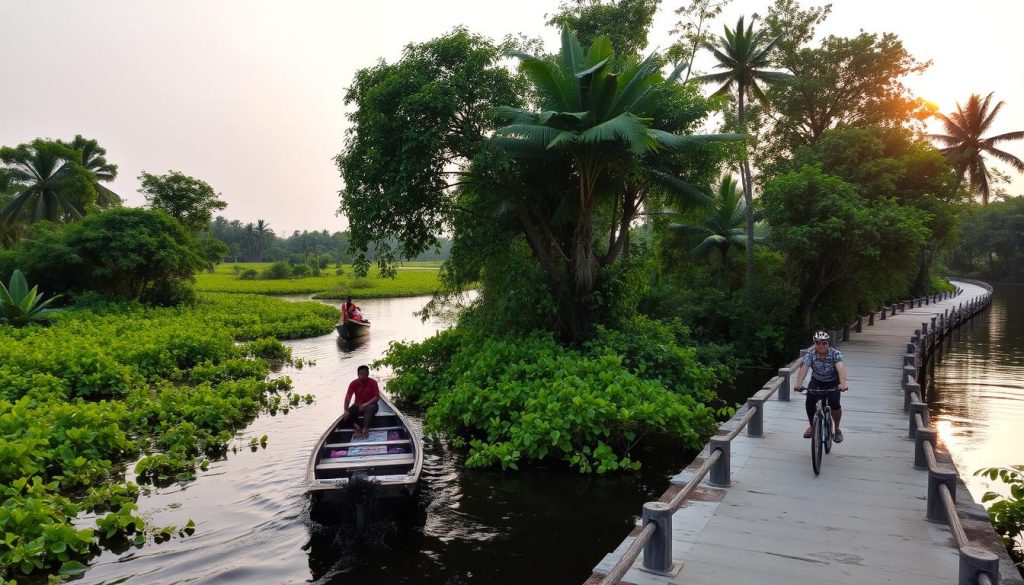
Places like Sarakkhali and Sudhanyakhali are entry and exit points. They add to the area’s beauty. Local guides help you move through the waterways smoothly.
Walking tours are also a great way to see the Sundarbans. They let you connect with the culture and nature up close. Remember, armed guards are there to keep you safe, like when you visit Jamtola Beach.
The Sundarbans is huge, covering 1400 sq km. Exploring it through different travel options makes your trip better. It also supports sustainable tourism.
Eco-Tourism and Sustainability in Travel
Eco-tourism in the Sundarbans shows how important it is to travel sustainably. This way, we can protect this unique place and help the local people. The Sundarbans, covering 10,000 km2, is home to endangered animals like the Royal Bengal Tiger and estuarine crocodiles. By choosing to travel responsibly, you help in conservation and see the area’s beauty.
Supporting Local Communities Through Responsible Travel
Responsible travel is key to making eco-tourism in the Sundarbans better. It helps by bringing in money for:
- Park upkeep
- Wildlife care
- Conservation projects
This money helps communities by offering jobs. People work as guides, boat operators, and homestay hosts. It also helps improve things like sanitation, healthcare, and education.
Many eco-tourism projects help women earn money, which boosts equality and social status. Sustainable tourism includes:
- Boat tours
- Nature walks
- Cultural experiences
Visiting the Sundarbans lets you see Bengal tigers and saltwater crocodiles. It also supports sustainable growth. By traveling responsibly, we help keep wildlife safe and support the local economy.
Visiting the Sundarbans: Tips for Travelers
Going to the Sundarbans is a chance to see one of the biggest mangrove forests in the world. To enjoy your trip, follow these Visiting the Sundarbans tips. They will help you see more wildlife and explore the area better. A good plan can make your trip unforgettable, with amazing views of plants and animals.
Best Times for Travel to Enhance Wildlife Sightings
The best times for travel to Sundarbans are from October to March. This time has less rain or storms. For the best wildlife views, visit during low tide. This is when animals often come out to play.
Early mornings and late afternoons are the best times to see animals. You might see tigers and other creatures during these hours.
- Schedule your visit between October and March
- Plan trips during dawn or dusk for better wildlife sightings
- Keep binoculars handy for birdwatching and distant wildlife spotting
- Research specific locations such as Hiron Point and Kachikhali for unique experiences
By adding these tips to your plan, your Sundarbans trip will be even better. With the right planning, you’ll dive into the beauty and variety of this amazing place.
Sundarbans Travel Guide: What to Expect
Traveling to the Sundarbans is a mix of vibrant culture and stunning nature. You’ll see many animals, including the royal Bengal tiger. This area is huge, covering about 10,000 square kilometers, with 40% in India and the rest in Bangladesh.
Several tour packages are available, starting at around Rs. 3,500. Prices can go up to Rs. 7,000-8,000, depending on your stay and boat choice. Keep in mind parking costs in Godkhali, which can be Rs. 100 to Rs. 200 during busy times.
Boat costs vary, starting at Rs. 2,000 per day. You’ll see many animals like crocodiles, dolphins, and over 200 bird species. Seeing a man-eating tiger is rare, about 5%.
Book with SundarbanDeltaTourism for customizable packages and expert guides. Pack light clothes, sunscreen, and essentials to protect the environment.
For a great tour, get picked up from Kolkata and choose from luxury resorts to local hotels. Exploring this delta, you’ll see the beauty of nature and culture.
Conclusion
Exploring the Sundarbans reveals a stunning ecosystem full of wildlife and cultural richness. You’ll learn about various travel methods that are good for the environment. Each way, like boat tours or local ferries, offers a special view and unforgettable moments.
When planning your trip, remember the Sundarbans’ ecological value. Events like Cyclone Sidr show its vulnerability. Seeing the wildlife here, like the Bengal Tiger, connects you with nature.
Your visit to the Sundarbans is more than just seeing its beauty. It’s about helping preserve this amazing place for others. By choosing eco-tourism and respecting local communities, you make your visit meaningful. This way, the Sundarbans will remain a special place for all travelers.