Exploring Sundarbans: Risks and Challenges Faced
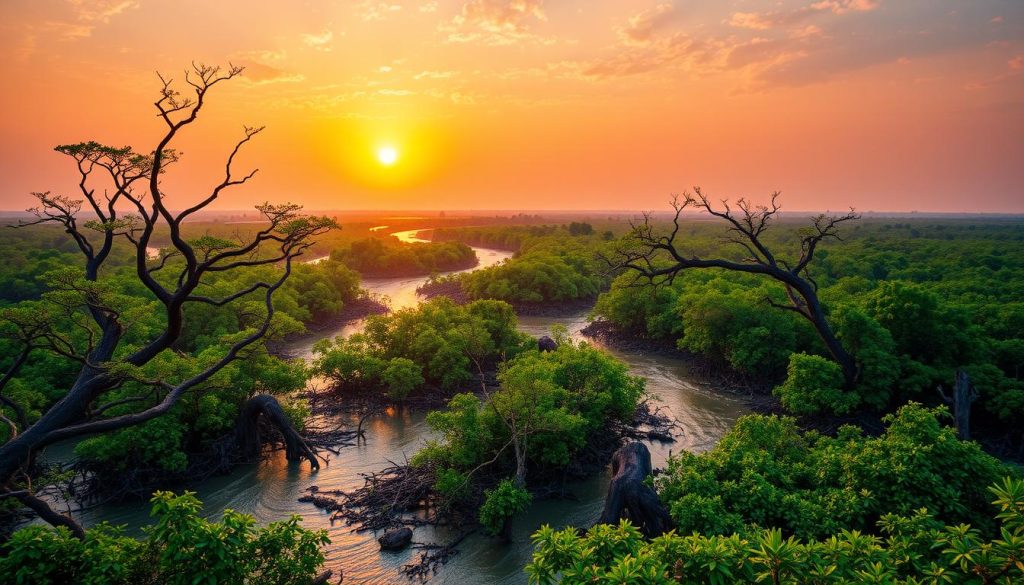
Have you ever wondered about the Sundarbans’ enchanting yet perilous waters? This UNESCO World Heritage Site spans over 10,000 square kilometers. It has stunning beauty and potential dangers for travelers.
The Sundarbans is home to mangrove forests and endangered species like the Royal Bengal Tiger. Climate change also poses environmental challenges. Knowing the risks and challenges is key for safe and responsible travel in this unique ecosystem.
The Ecological Significance of the Sundarbans
The Sundarbans is a huge area, covering about 9,630 square kilometers. It has 102 islands. This place is very important for keeping the coast safe from erosion and storms. It helps both local people and the whole world.
Over 4 million people live on 48 islands, making their living from fishing and farming. The Sundarbans is key to their economy. This shows how important it is for the environment.
This area is a treasure for biodiversity. But, rising sea levels are a big problem. They cause flooding and land loss. If the sea rises by 28 cm, 96% of the Bengal Tiger’s home in Bangladesh will be lost.
It’s very important to save the Sundarbans. Not just for the Bengal Tiger, but also for many plant species. They help keep the ecosystem healthy.
Also, many mangrove forests have disappeared since the 1950s. The Sundarbans has many mangrove species, but 16% are at risk. This area is also very good at absorbing carbon dioxide, helping fight climate change.
We need to protect this area from climate change. Rising sea levels are a big danger. They threaten both wildlife and people’s lives. Saving the Sundarbans means keeping its biodiversity and ecosystem services safe.
| Current Threats | Impact |
|---|---|
| Rising Sea Levels | Increased flooding; habitat loss for wildlife |
| Habitat Degradation | Loss of biodiversity; decline in fish populations |
| Climate Change | Increased cyclone frequency and severity; threats to human settlements |
| Saline Intrusion | Damage to freshwater ecosystems; decreased agricultural productivity |
| Human Activity | Increased pressure on resources; decrease in natural habitats |
Overview of the Sundarbans’ Unique Biodiversity
The Sundarbans is a remarkable ecosystem with a unique biodiversity of the Sundarbans. It has a wide variety of plants and animals. The forest covers about 140,000 hectares and has over 334 plant species.
It is home to 693 animal species, including 49 mammals and 260 birds. The critically endangered Royal Bengal tiger lives here, with about 400 to 450 individuals. This is the highest density of tigers in the world.
The Sundarbans also has endangered wildlife like the Irrawaddy dolphin and Indian python. The estuarine crocodile and river terrapin are unique to this area. These species help maintain the balance of the mangrove species in this national treasure.
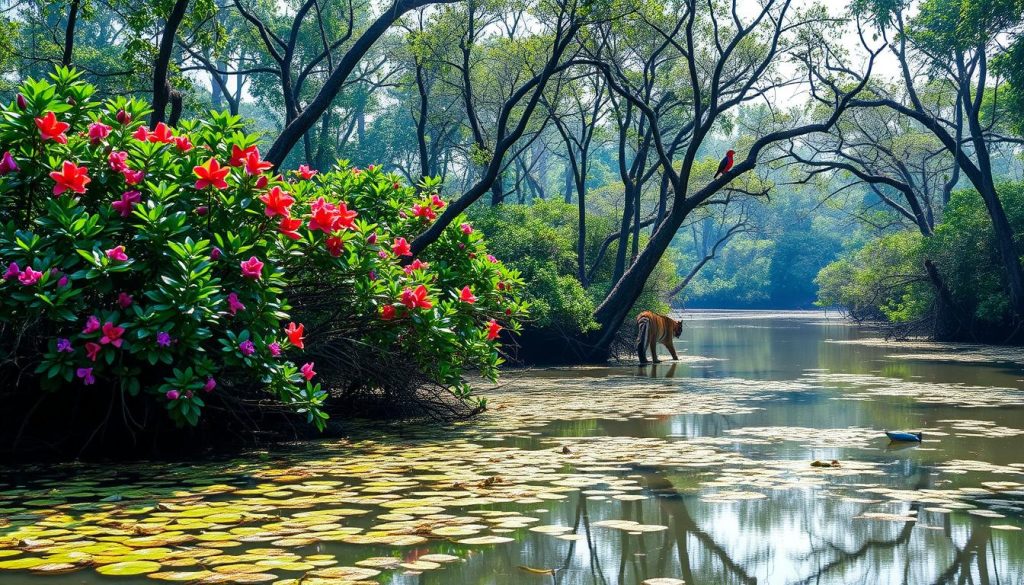
This ecosystem is known for its delta formation and island colonization. But, it faces challenges like habitat loss and pollution. Deforestation, salinification, and illegal activities like poaching threaten its unique biodiversity of the Sundarbans.
Conservation efforts are crucial to protect the Sundarbans. They help preserve the flora and fauna for future generations.
What are the risks and challenges of visiting the Sundarbans?
Visiting the Sundarbans is an adventure, but it comes with risks. It’s important to know these challenges for a safe trip. The main concerns are environmental hazards and dangers from wildlife.
Environmental Hazards and Cyclones
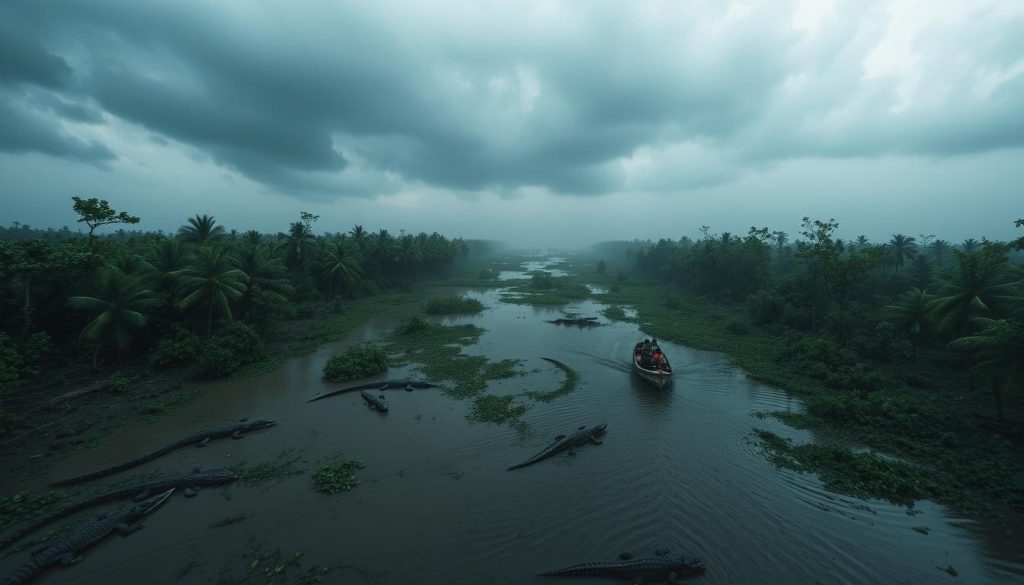
The Sundarbans often face environmental hazards like tropical cyclones. These storms can hit without warning. The area’s coastal location makes it very vulnerable to these events.
Rising sea levels, caused by climate change, make storms worse. This affects both communities and the environment. Also, human actions like damming rivers harm the mangroves. Mangroves are key for storing carbon and supporting biodiversity.
Safety Risks from Wildlife Encounters
Wildlife encounters are a big wildlife danger. The Sundarbans are home to the Bengal tiger. As people move in, conflicts with wildlife grow. Visitors might face risks from tigers or other animals.
It’s crucial to be careful and aware in these areas. This is true where people and tigers share the same space.
Understanding the Local Communities and Their Challenges
The Sundarbans is home to about 7.2 million people. Many face big challenges like poverty and not having safe water. The past use of natural resources has made it harder for them to get what they need.
Socio-Economic Vulnerabilities
In the Sundarbans, a lot of people live in poverty. In the Indian Sundarbans, 34% live below the poverty line. Also, 47% can’t afford two good meals a day. This shows how urgent it is to help these communities.
Many families move seasonally to find work. They hope to earn more money outside their homes.
Access to Resources and Basic Services
Getting what they need is a big problem for Sundarbans’ locals. About 3.5 million people depend on the forest for their jobs. They use timber, honey, and fish, but using too much harms the environment.
Women, like those called ‘Tiger Widows,’ face special problems. They’ve lost family members to wild animals. The government tries to help with a Social Safety Net Programme, but it doesn’t reach everyone.

Navigating the Mangrove Ecosystem Safely
Exploring the Sundarbans is an adventure that needs careful planning. It’s important to stay safe and respect the unique ecosystem. By following the best practices, you can have a great time while keeping risks low. Knowing how to move through the mangroves safely is key for your safety and the environment’s health.
Best Practices for Exploring the Mangroves
When you go into the Sundarbans, it’s crucial to explore safely. Here are some important steps:
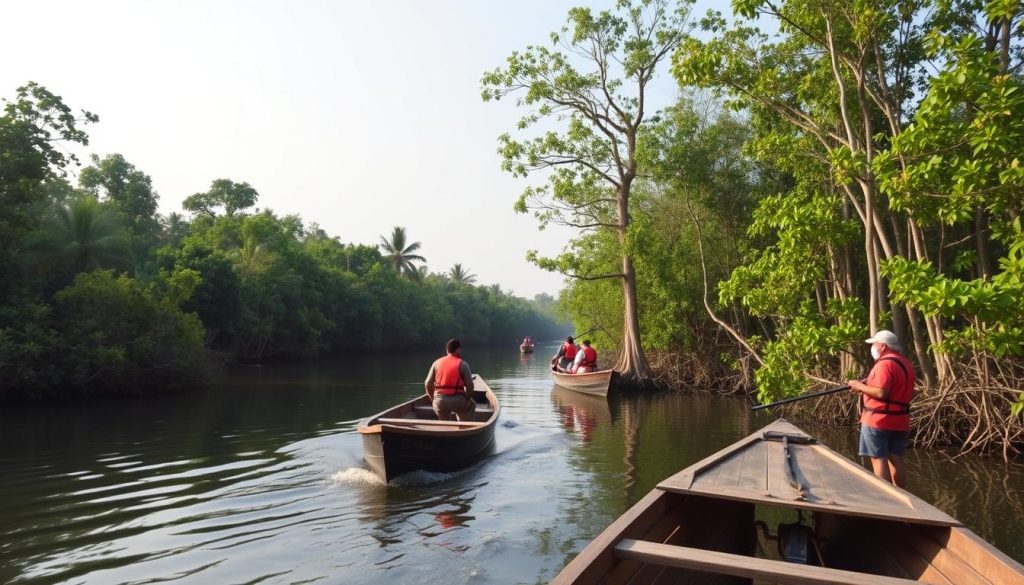
- Traveling with a guide: Guides know the area well and keep you safe.
- Respecting wildlife: Keep a safe distance from animals to not disturb their homes.
- Sticking to established pathways: Marked trails are safer for you and the mangroves. Going off path can damage the environment.
Guided Tours vs. Solo Exploration
Choosing between guided tours and going solo changes your Sundarbans trip. Each choice has its own benefits:
| Aspect | Guided Tours | Solo Exploration |
|---|---|---|
| Expert Knowledge | Guides know the local area well | You might not know as much without a guide |
| Safety | Guides keep you safe | Going solo can be riskier |
| Experience | Guided tours have set plans | You can choose your own path |
| Cost | Guided tours might cost more | Going solo can save money but might have extra costs |
Thinking about guided tours versus solo travel helps you plan your Sundarbans trip. No matter your choice, following the best practices is key for a great adventure.
Travel Risks in the Sundarbans Region
The Sundarbans is known for its amazing wildlife and beautiful views. But, it also has travel risks that you should know about. Knowing about health issues and infrastructure problems can help you stay safe while exploring.
Waterborne Diseases and Health Issues
Waterborne diseases are a big concern in the Sundarbans. Poor sanitation can lead to illnesses like cholera and dysentery. It’s important to stay clean and drink bottled water to avoid these problems.
Carrying a basic medical kit with essential medicines is also a good idea. This can help you in case of any health emergencies.
Infrastructure Challenges in Remote Areas
The Sundarbans is far from cities, which makes travel harder. Emergency medical help is often far away. This can make it tough to get help quickly if you get sick or hurt.
Bad roads can also make it hard to get to hospitals. Knowing these challenges can help you plan better. It ensures you have a plan in case of emergencies.
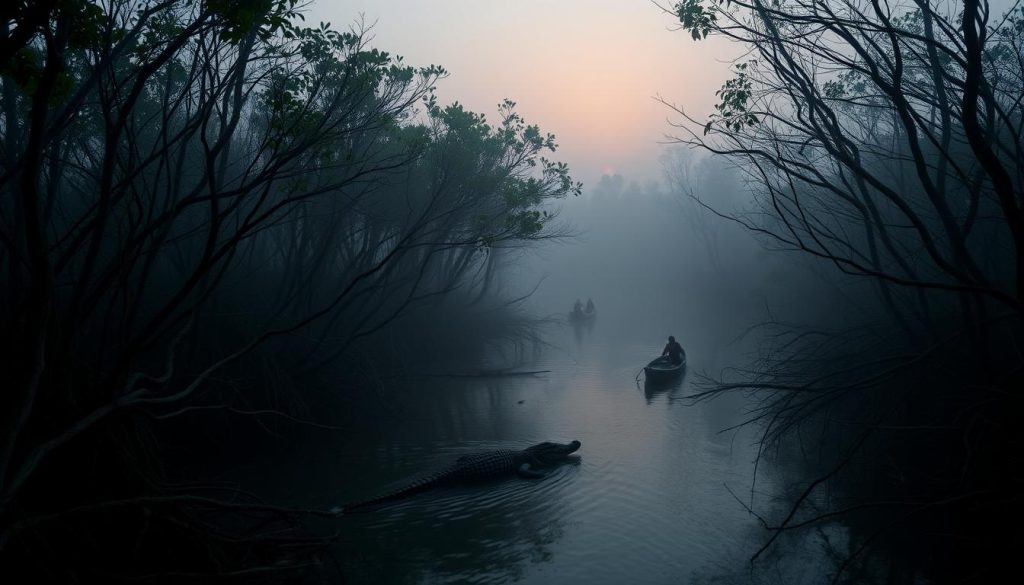
Safety Tips for Navigating the Sundarbans
For a safe adventure in the Sundarbans, follow these key safety tips. This area, the world’s largest mangrove forest, needs careful exploration. Stay on marked trails to avoid wildlife risks.
Traveling in a group is safer. It offers support in emergencies and helps spot wildlife like Bengal tigers. Local guides are crucial, knowing the area and handling challenges.
The monsoon season, from June to September, is intense. It brings heavy rain and strong winds, raising flood and debris risks. Visit from October to March for better weather.
Preparation is key for Sundarbans visits. Carry essential safety items like:
- First-aid kit
- Sufficient drinking water
- Insect repellent
- Sun protection gear
Stay informed about the weather and tell someone about your plans. Share your route, trip duration, and return time. Respect wildlife and its home for safe tourism.
With the right mindset and preparation, you’ll enjoy the Sundarbans’ beauty safely and enrichingly.
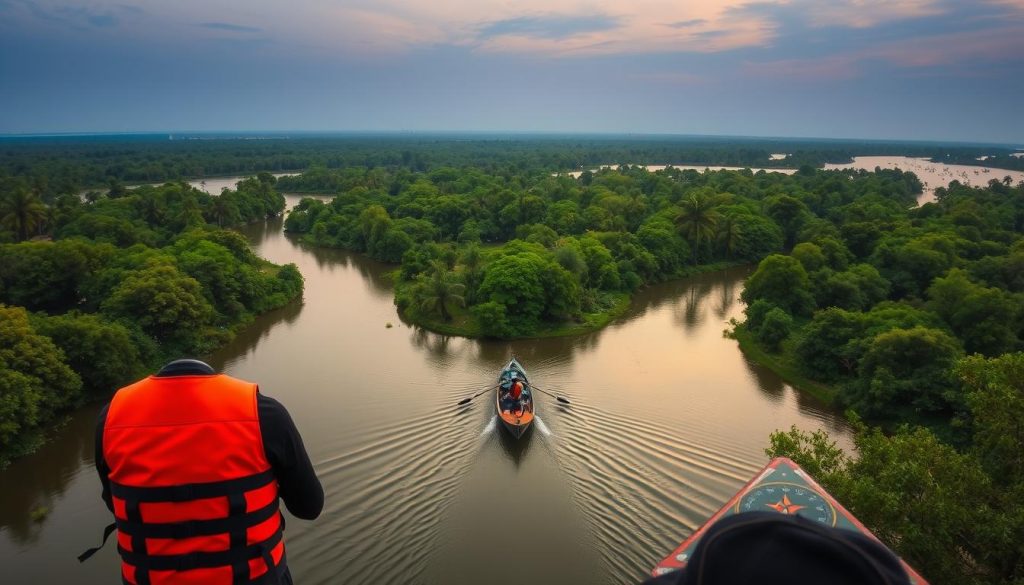
Sundarbans Tour Challenges: A Visitor’s Perspective
Visiting the Sundarbans is a mix of amazing nature and challenges. It needs careful planning and knowing what to expect. The visitor’s view helps us understand these hurdles, from getting around to protecting the environment.
This area is full of tidal waterways and home to Bengal tigers and birds. Travelers often face unknowns that can change their trip.
Tourists often face:
- Transport problems because of the area’s remote spot
- Weather issues, like cyclones
- Little communication and internet in wildlife spots
- Knowing how to protect the mangrove ecosystem
People who have been there say it’s important to balance the beauty with the risks. Knowing about local efforts to save the environment helps. Sharing your story helps others plan better trips.
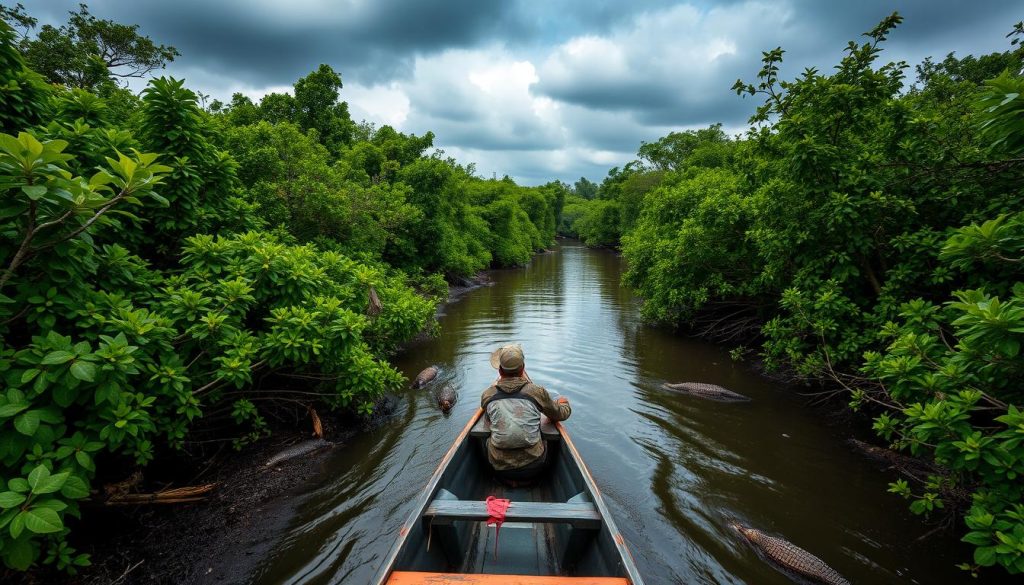
To enjoy the Sundarbans fully, knowing the challenges is key. Learning about the area’s importance and travel tips can make your trip rewarding. It shows respect for this UNESCO World Heritage site’s rich life.
Conclusion
The Sundarbans, the world’s largest mangrove forest, is both stunning and complex. It poses risks and challenges for those who visit. Knowing these risks is key for your safety and for saving this special place.
Rising sea levels and extreme weather threaten the Sundarbans. This makes conservation even more critical. By understanding these threats, you help protect the landscape and the people who depend on it.
Human-wildlife conflict and pollution are big issues. Responsible tourism is essential. Activities like boat tours and cultural experiences can help us appreciate the area’s biodiversity.
Supporting local economies and sustainable living is also important. This helps the community in conservation efforts. By respecting nature and the people who live here, we ensure the Sundarbans’ future.
Exploring the Sundarbans is a chance to see its beauty and help protect it. Traveling wisely lets you enjoy the area while contributing to its preservation. Every effort, no matter how small, helps address the Sundarbans’ challenges and supports conservation.