Explore Unique Cultural Experiences in the Sundarbans
Have you ever wondered how a place known for its stunning landscapes can also be full of rich cultural traditions? The Sundarbans, a UNESCO World Heritage site, is not just the largest mangrove forest in the world. It’s also a place filled with unique cultural experiences. As you explore the Sundarbans, you’ll learn how the stories of the local Mawali people are a big part of the region’s identity.
This amazing delta, made by the Ganges, Brahmaputra, and Meghna rivers, is a great place to see different cultural practices. These practices show how the local communities live in harmony with their incredible surroundings. Join us as we explore the Sundarbans’ cultural heritage. We’ll show you the customs, folklore, and festivals that make life here special.
The Enchantment of the Sundarbans
The enchantment of the Sundarbans is found in the heart of Bengal. It’s the world’s largest mangrove forest, covering about 10,000 square kilometers. Its tidal waterways and peaceful landscapes are truly breathtaking.
This place is a UNESCO World Heritage Site and Biosphere Reserve. It’s home to many wildlife species, including the famous Bengal tiger. Nature lovers and travelers find it fascinating.
The best time to visit is from October to February. The weather is mild, perfect for exploring the area’s plants and animals. The monsoon season adds vibrant colors to the landscape.
Wildlife safaris are a great way to see the Bengal tiger, saltwater crocodiles, and birds. It’s an adventure you won’t forget. Discover the magic of this natural wonder.
Understanding the Sundarbans Cultural Traditions
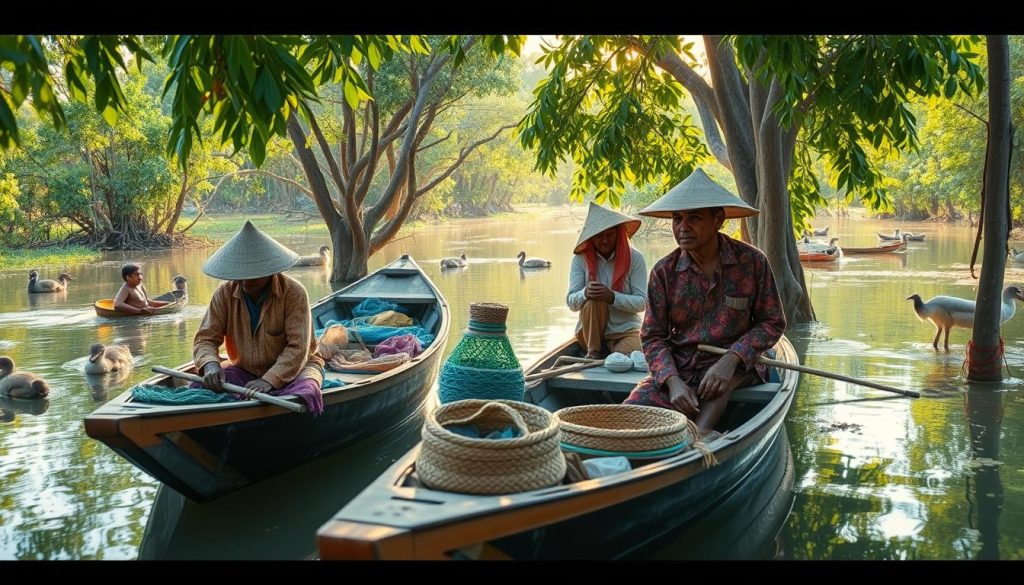
The Sundarbans cultural traditions are deeply connected to nature. Fishing, agriculture, and honey collection are key to the community’s life. People respect the land and its resources greatly.
The worship of Bonbibi, the forest goddess, shows how Sundarbans folklore is part of everyday life. Many rituals and festivals celebrate this spiritual bond. Durga Puja and Gajan are big cultural events that bring people together.
Traditional arts and crafts, like woven mats and fishing nets, show the community’s skill. These items reflect the craftsmanship of the tribal communities.
The Sundarbans is known for its delicious food, like shorshe ilish and bhapa chingri. These dishes are a big part of the shared heritage. The area is famous for its mangrove forest and tiger reserve, as well as its vibrant culture.
Local customs and Sundarbans folklore weave together to create a unique culture. But, modern threats like urbanization and climate change pose a risk. It’s important to work together to protect and celebrate the Sundarbans’ cultural heritage for future generations.
What are some unique cultural experiences in the Sundarbans?
The Sundarbans is a treasure trove of cultural experiences. You can take traditional boat rides through its water channels. This lets you see the beauty of this UNESCO World Heritage Site up close.
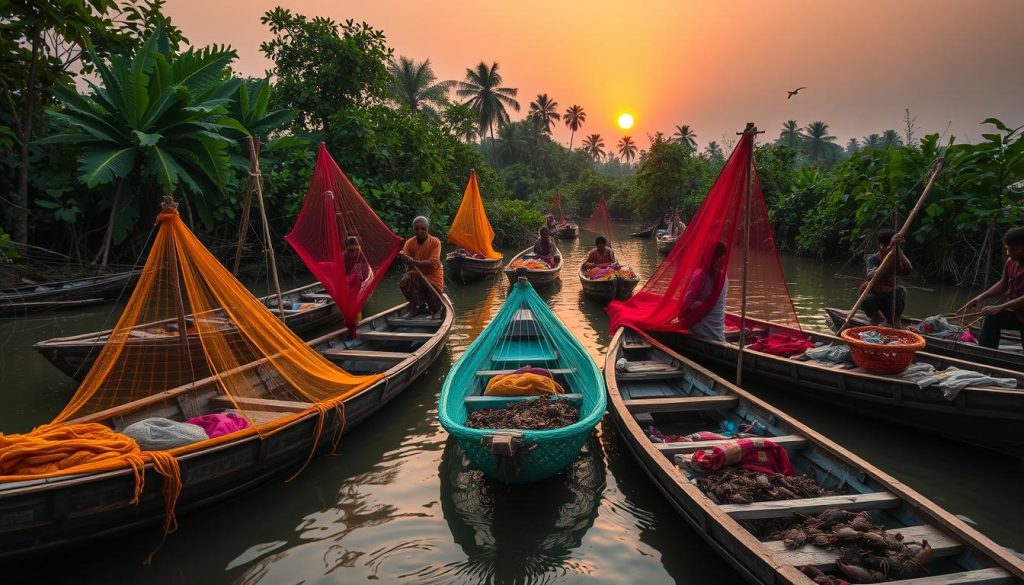
These rides also give you a glimpse into the lives of the villages. You’ll see how they collect fish and honey from the mangrove ecosystem. It’s a chance to learn about their daily routines.
Visiting local handicraft workshops is another way to connect with the area. Here, you can watch artisans at work. They show off their skills, passed down through generations.
Food lovers will enjoy the local cuisine. You can try dishes like Hilsa fish and bhetki paturi. Each meal is a lesson in local culture, with flavors that tell stories of the land.

For those who love adventure, Sajankhali Wildlife Sanctuary is a must-see. It’s a paradise for nature lovers. The interpretive center there showcases the area’s diverse plants and animals.
Local cultural programs are also a highlight. You can watch folk dances and music performed by talented artists. It’s a great way to experience the rhythm and vibrancy of Sundarbans life.
Winter season fire camps offer a unique experience. They bring the community together under the stars. Choosing a reliable tour operator can make your trip even better.
They can plan activities like bird watching, fishing, and tours to ancient temples and mosques. It’s a great way to dive deeper into the culture of the Sundarbans.
Deep Dive into Sundarbans Cultural Heritage
The Sundarbans cultural heritage is a rich story told through its traditions, folklore, and community practices. This area, covering about 10,277 km², is not just full of life but also filled with local history. Traditional art and music are key in showing the spirit of this place.
Exploring Sundarbans, you’ll see many cultural expressions. These show how people and nature live together. Crafts and stories tell of their strength against challenges. The need to keep traditions alive is clear, even with climate change and urban growth.
Festivals and community events are full of meaning. They tell stories passed down through generations. The Bonbibi Mela and Poush Mela are big cultural moments. They are important for their spiritual value and for bringing people together.

In table form, here are some key aspects of Sundarbans cultural heritage:
| Aspect | Description |
|---|---|
| Area | Approximately 10,277 km² consisting of land and water. |
| Wildlife Species | Home to 453 fauna species, including birds, fish, mammals, reptiles, and amphibians. |
| Traditional Festivals | Includes Bonbibi Mela, Poush Mela, and Rash Mela celebrating local customs. |
| Challenges | Cyclones and climate change have impacted tradition preservation efforts. |
| Culinary Traditions | Featured dishes like Hilsa fish and Bhetki paturi highlight local culinary arts. |
The Sundarbans’ cultural story is always growing, thanks to its people. By understanding this heritage, we see the special connection between nature, culture, and community here.
Sundarbans Cultural Activities to Participate In
Exploring the Sundarbans offers rich Sundarbans cultural activities that immerse you in the vibrant heritage of the region. Participatory experiences are plentiful, allowing for deeper connections with local traditions. Engaging in community events facilitates learning about the customs and practices that define life in this unique landscape.
Visitors can partake in various local events, including:
- Fishing with local fishermen: Experience traditional fishing methods while enjoying the thrill of the catch.
- Cooking classes: Learn how to prepare authentic dishes featuring local cuisine, fostering a taste of Sundarbans flavors.
- Cultural performance attendance: Witness the vibrant folk performances that showcase the artistic talents of local communities.
- Village visits: Engage with indigenous villagers and discover their way of life through meaningful interactions and cultural exchanges.
These immersive experiences are designed for individuals and families alike, ensuring that visitors of all ages can join. Knowledgeable guides lead each activity, enriching your understanding of the history, culture, and traditions native to the Sundarbans. Traditional meals often accompany these cultural immersion experiences, creating an authentic taste of local life.
Exploring Sundarbans Cultural Festivals
Cultural festivals in the Sundarbans give a peek into local traditions and community spirit. These events let you dive into the lively lifestyle and rich heritage of the area. With many celebrations all year, each festival highlights different parts of Sundarbans culture, bringing people together.
Bonbibi Mela: A Celebration of Faith and Tradition
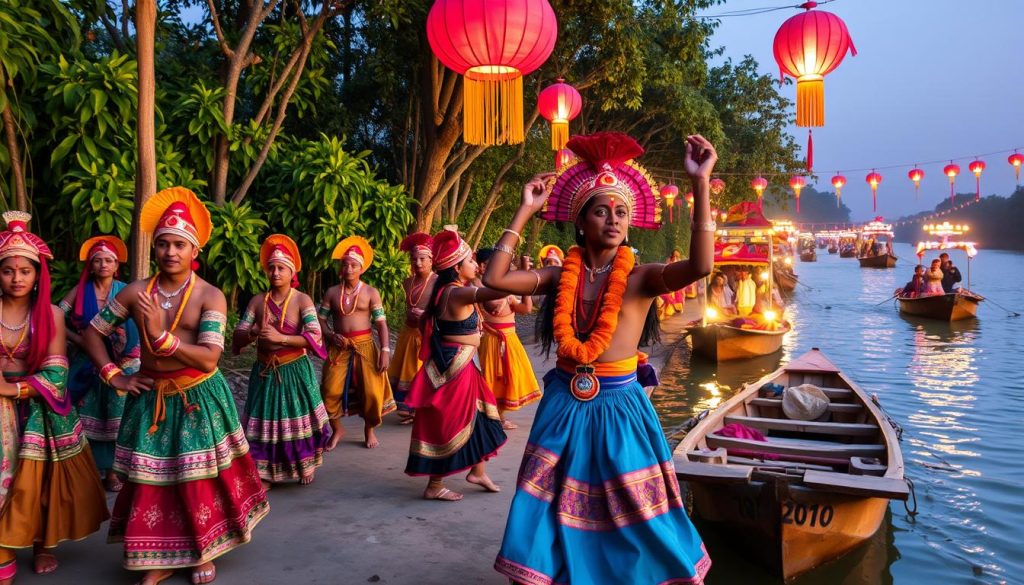
The Bonbibi Mela is a key Sundarbans cultural festival. It honors the goddess Bonbibi, who protects the region and its people. The festival is filled with colorful processions, folk music, and traditional dances.
Food stalls offer local treats, drawing in people from all walks of life. They come to celebrate their faith and bond with the community.
Poush Mela: Harvest Festival Highlights
Poush Mela marks the end of the harvest season, showcasing Sundarbans’ agricultural wealth. The event has a bustling marketplace with local crafts and foods. Visitors enjoy traditional dishes and watch performances that celebrate the area’s culture.
The festival is a time for families and friends to come together. It strengthens community bonds through local celebrations.
Other Notable Festivals and Events
Besides Bonbibi Mela and Poush Mela, Sundarbans hosts other festivals like the Sundarban Hilsa Festival. This event celebrates the Hilsa fish with cooking demos, music, and boat tours of the mangrove forests. Visitors get to try traditional Hilsa dishes and see the region’s natural beauty.
These events capture the heart of Sundarbans cultural festivals. They deepen our appreciation for this special place.
Experiencing the Sundarbans Indigenous Culture
The Sundarbans indigenous culture is a rich mix of traditions and lifestyles. It’s home to tribal communities in the world’s largest mangrove ecosystem. Visitors can learn about local practices and see how these communities live in harmony with nature.
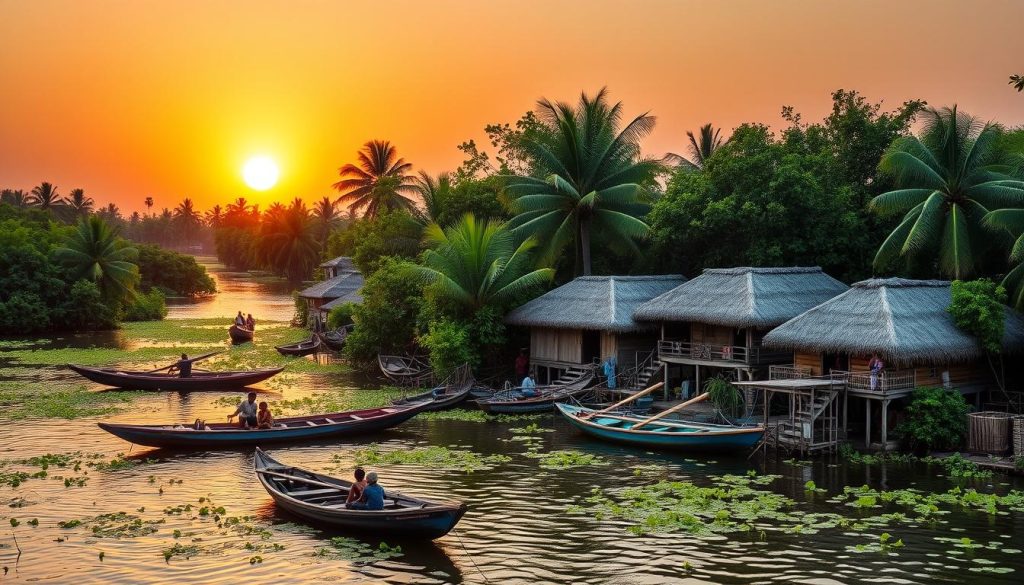
Exploring traditional rituals shows how important the forest is to these communities. It teaches us about living sustainably and peacefully with nature. The balance these groups keep is a lesson in caring for our planet.
By diving into the Sundarbans’ local practices, you help appreciate its rich culture. You get to see how ancient traditions meet modern life. It’s a unique way to understand their customs and way of life.
| Aspect | Description |
|---|---|
| Indigenous Practices | Cultural rituals tied closely to natural cycles and resources |
| Tribal Communities | Diverse groups each with unique customs and languages |
| Sustainability | Traditional knowledge integral to preserving biodiversity |
| Local Engagement | Visitors encouraged to participate in community activities |
| Environmental Stewardship | Local practices highlight conservation efforts and challenges |
Discovering the Sundarbans indigenous culture makes your trip more meaningful. It connects you to the environment and its people. It’s a chance to see the deep bond between communities and nature, reminding us of the need to preserve culture in our fast-changing world.
Local Rituals That Define Sundarbans Life
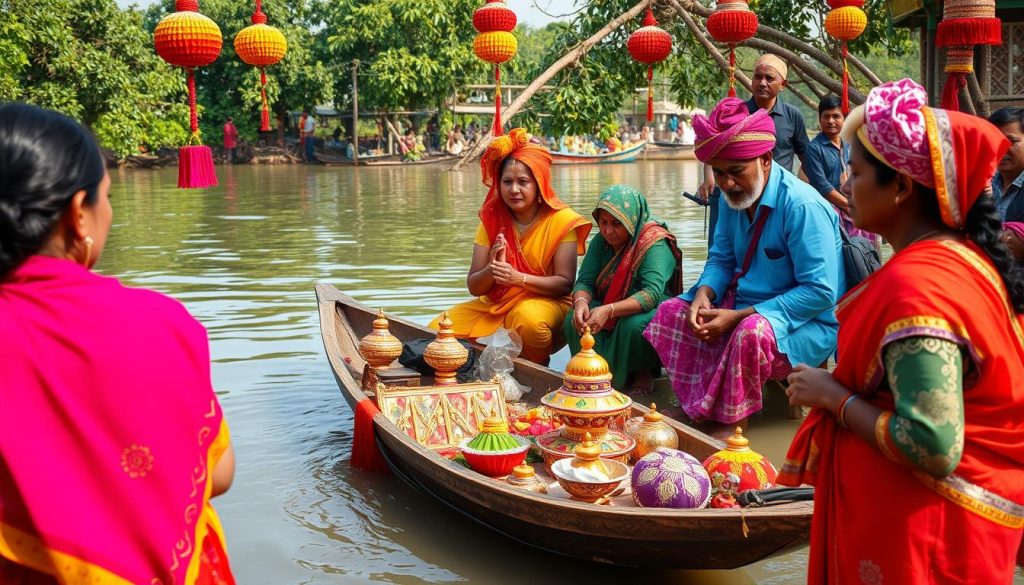
The Sundarbans are rich in local rituals that shape the community’s identity. These traditions are more than just practices. They show a deep connection to nature and the spiritual world. Fishermen often pray before going into the waters, showing respect for nature and the dangers they face.
The worship of Bonbibi, the forest goddess, is a notable ritual. She protects those who work in the mangroves. This tradition shows how nature and faith are connected in the daily lives of the people. The Johuranama tells Bonbibi’s story, linking the past to the present and strengthening the spiritual bond with the forest.
The Bhadu dance is another cultural expression. It shows the harmony between locals and their surroundings. This dance is performed during festivals, celebrating life and nature’s gifts. It shows how everyday traditions blend with ritualistic performances.
Local cuisine also reflects the culture, with dishes like “Bhapa Ilish” showcasing flavors from the mangrove ecosystem. Meals are often tied to rituals and communal gatherings, strengthening community bonds.
Local craftsmanship, like mat and pottery making, is another aspect of Sundarbans local rituals. Creators draw inspiration from aquatic life, embedding cultural stories in their work. These practices honor traditions and promote environmental awareness through conservation.
| Ritual | Significance | Related Tradition |
|---|---|---|
| Worship of Bonbibi | Protection of forest workers | Johuranama narrative |
| Bhadu Dance | Celebration of harmony with nature | Festival performances |
| Fishing Prayers | Respect for aquatic resources | Pre-fishing rituals |
| Community Feasts | Strengthening community bonds | Culinary traditions |
| Craftsmanship Exhibits | Environmental storytelling | Mat and pottery making |
Through these Sundarbans local rituals, you see the community’s cultural significance in their daily lives. It creates a rich tapestry that connects generations to their environment.
The Rhythm of Sundarbans Traditional Music and Dance
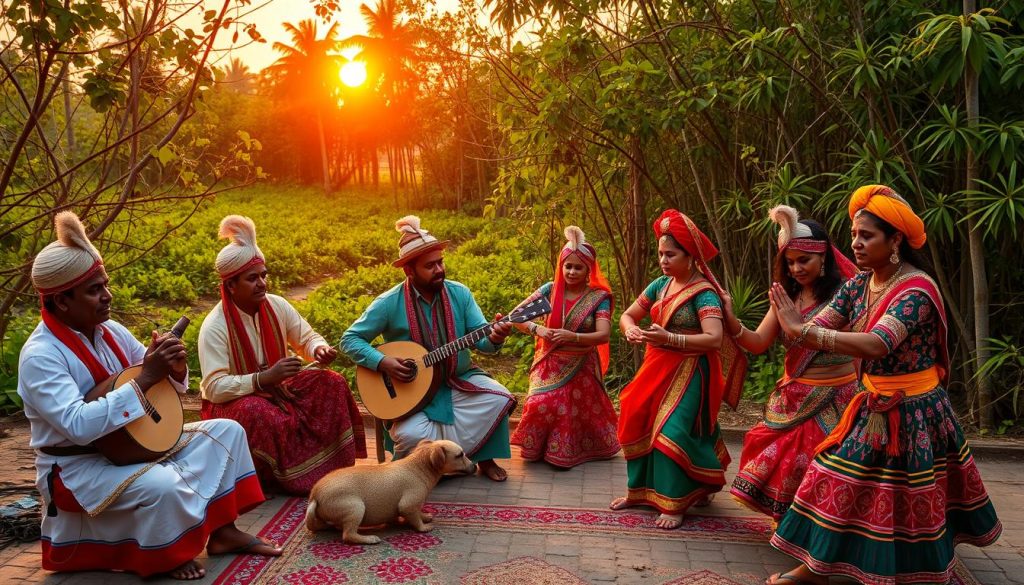
The Sundarbans is known for its vibrant music and dance. These art forms tell stories of nature, love, and community. Festivals here are filled with the sounds of drums, creating a lively atmosphere.
Jhumur songs are tied to harvests, with their upbeat rhythms and energetic moves. Bhatiyali songs share the tales of boatmen and fishermen, touching hearts. These songs and dances are more than just entertainment; they are a celebration of the Sundarbans’ culture and spirit.
Local tourism initiatives, like Royal Sundarban Tourism, offer cultural programs. These include workshops on traditional crafts, culinary adventures, and folk dance performances. They let visitors dive into the local art scene.
- Workshops on traditional crafts
- Engagement in culinary adventures featuring local cuisine
- Folk dance performances during special events
At Royal Sundarban Tourism, many visitors join in folk dances. Cultural workshops also help you grasp the Sundarbans’ music and dance.
| Activity | Frequency |
|---|---|
| Cultural Workshops | Monthly |
| Folk Dance Performances | 85% of visitors participate |
| Culinary Adventures | Participation from 70% of guests |
| Local Religious Festivals | 60% of guests engage |
Sundarbans’ music and dance keep its culture alive and strengthen community bonds. These art forms unite people, ensuring the Sundarbans’ traditions live on for future generations.
Community Celebrations and Their Significance
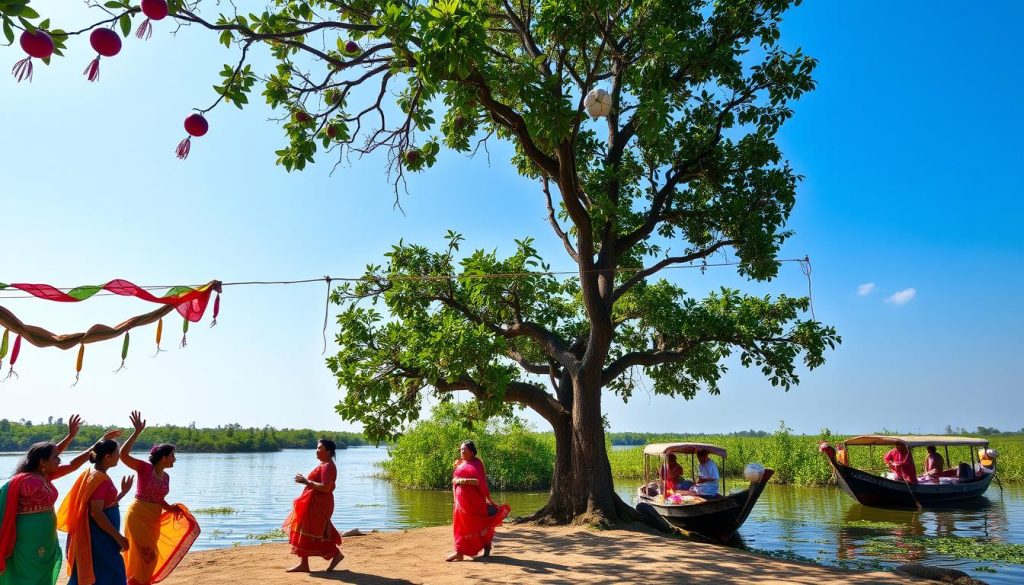
Sundarbans community celebrations show a colorful mix of traditions and social bonds. These events are key in keeping cultural values alive. They let people share common beliefs and traditions. Festivals like Durga Puja and Gajan bring everyone together, celebrating their rich heritage.
These events help the Sundarbans people feel united. They are perfect times for families and friends to come together. They share music, dance, and food like shorshe ilish and bhapa chingri, showing off their culture.
These celebrations also help pass down cultural knowledge to the young. By joining in, you help keep traditions alive. This builds pride in their local identity and appreciation for Sundarbans’ heritage.
| Celebration | Significance | Activities Involved |
|---|---|---|
| Durga Puja | Celebration of goddess Durga’s victory over evil | Idol processions, traditional music and dance, feasting |
| Gajan | Devotion to Lord Shiva, promoting community bonding | Ritual offerings, dance performances, festive gatherings |
| Local Fishing Festivals | Showcase fishing techniques and raise awareness of local livelihoods | Fishing contests, community cooking, and storytelling |
These community events celebrate Sundarbans’ rich culture and protect traditions for the future. By joining in, you add to the community’s vibrancy. You also learn more about their unique way of life.
The Impact of Climate Change on Cultural Traditions
The Sundarbans, a UNESCO World Heritage site, faces big challenges from climate change. It threatens both its ecosystem and the cultural traditions of its 7.2 million residents. Rising sea levels, about three centimeters a year, put coastal communities at risk.
The environment and Sundarbans cultural traditions are closely linked. Many rituals, festivals, and daily activities depend on the land and its resources.
Recent environmental challenges have changed this unique region a lot. The loss of mangroves, which act as natural barriers and habitats, impacts both the ecosystem and local culture. Between 2000 and 2020, about 110 km2 of mangroves were lost due to erosion.
This loss exposes villages to harsh winds and flooding. Traditional fishing and agriculture practices become harder as water and soil salinity increase. By 2050, parts of the Sundarbans may see ocean-level salinity, changing the landscape and cultural norms.
The effects of climate change on Sundarbans cultural traditions go beyond the environment. They also impact social dynamics. Festivals that rely on seasonal cycles face disruption, pushing communities to adapt and modify these cherished observances.
Local traditions may fade without action and commitment to environmental sustainability.
To tackle these challenges, many initiatives aim to preserve cultural heritage while addressing climate change threats. Conservation efforts encourage community involvement in protecting their environment. Local leaders focus on education in sustainable practices.
They aim to blend traditional knowledge with modern environmental stewardship. These efforts seek to enhance resilience against climate change effects. They also aim to strengthen Sundarbans cultural traditions for future generations.
Conclusion
Your journey through the Sundarbans reveals a world of vibrant cultural experiences. These experiences are deeply rooted in the region’s history and spirit. From the lively Bonbibi Puja to the incredible local cuisine, about 50,000 tourists each year dive into the rich traditions here.
Staying in local homestays makes this experience even more special. About 70% of visitors love to connect with the warm communities that hold their heritage dear.
Exploring the Sundarbans shows us the importance of preserving heritage, even with environmental challenges. Community-based conservation projects lead the way, involving over 100 local villagers. They promote sustainable practices.
The rise in cultural activities, like Jhumur dance and local craft workshops, shows growing appreciation. This appreciation helps preserve the Sundarbans’ rich cultural landscape.
The Sundarbans offers more than just a glimpse into an amazing ecosystem. It gives us valuable insights into the resilience and beauty of its cultural heritage. By engaging with local customs and festivities, your experience deepens. You gain a deeper understanding and love for this remarkable region.
Your visit creates lasting memories. These memories highlight the harmonious relationship between people, traditions, and the environment. They ensure that Sundarbans cultural experiences will live on for future generations.