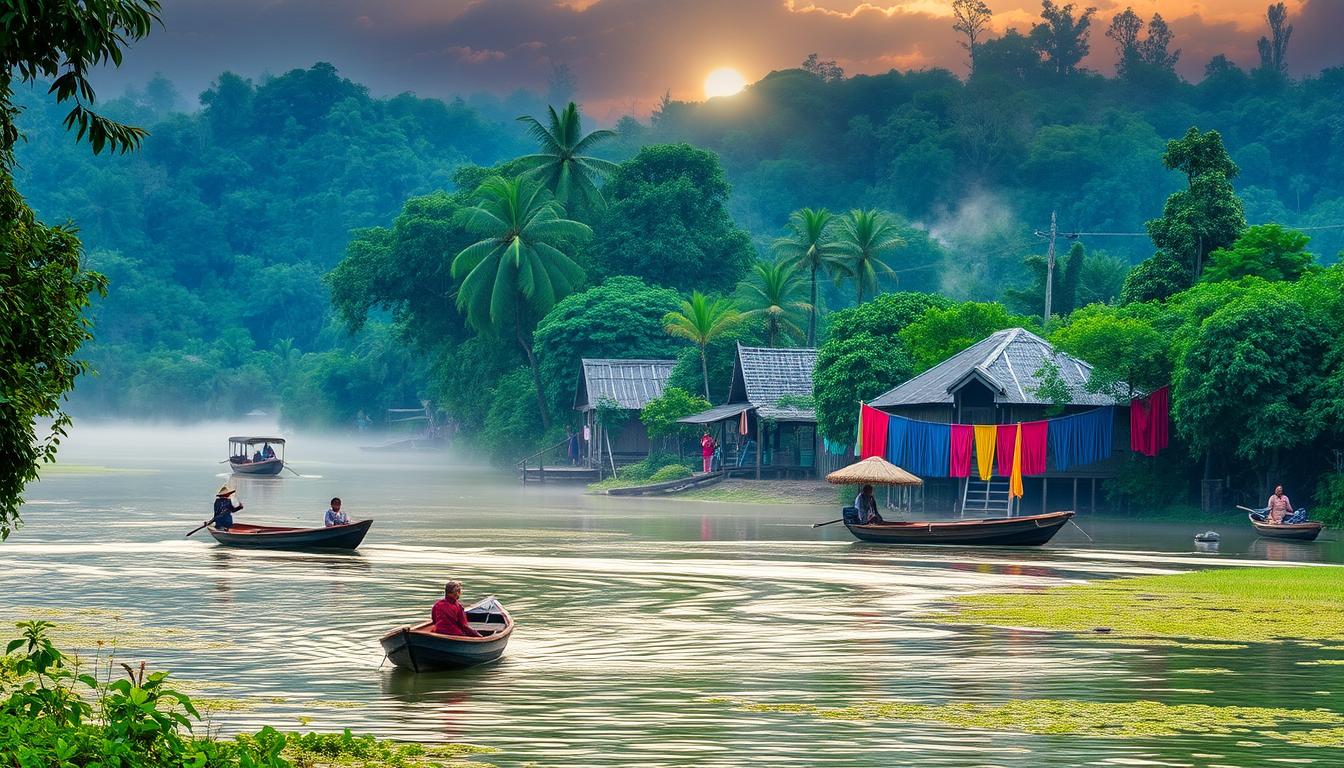
Top Must-See Villages in the Sundarbans Revealed
Have you ever wondered what life is like in the world’s largest mangrove forest? Here, the endangered Royal Bengal Tiger roams freely among vibrant communities. The Sundarbans, a UNESCO World Heritage site, is a place of stunning beauty and biodiversity.
It’s home to about 54 populated islands, each with its own culture and challenges. This region invites you to explore the must-see villages that define its spirit. You’ll discover the rich tapestry of life in the eco villages, showing the deep connection between people and nature.
From sustainable practices to community resilience, the Sundarbans offers a unique glimpse into a way of life. It’s deeply intertwined with nature.
Introduction to the Sundarbans
The Sundarbans is a vast delta, covering over 10,000 square kilometers. It’s formed by the Ganges, Brahmaputra, and Meghna rivers. This area is a mix of tidal waterways and lush mangrove forests, making it the world’s largest mangrove forest.
This place is home to a rare variety of wildlife. The Royal Bengal Tiger, with 400 to 450 individuals, is a key species here. The Sundarbans ecosystem is vital for these animals and many others.
The Sundarbans has a rich history, blending ecology and culture. About 60% of it is in Bangladesh, and 40% is in India. It’s home to 693 species of wildlife, including mammals, reptiles, and fish. There are also 334 species of trees, showing a landscape full of life.
But, this ecosystem faces threats. Natural disasters like cyclones and tidal waves are big dangers. So are human activities like hunting, farming, and taking too much from nature. It’s crucial to protect the Sundarbans for conservation and for the well-being of local communities.
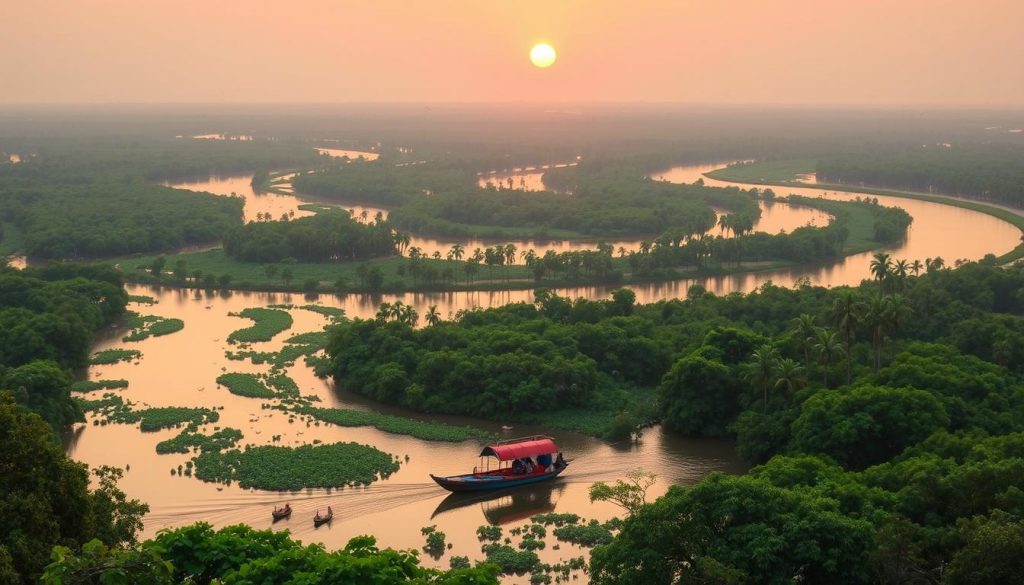
The Sundarbans is more than just beautiful and full of life. The people living here practice eco-tourism and sustainable living. This helps them live in harmony with nature.
Understanding the Sundarbans’ environmental and cultural sides is key. It shows how important it is for our planet. The Sundarbans teaches us about living in balance with nature.
Understanding the Unique Ecosystem of the Sundarbans
The Sundarbans is the world’s largest mangrove forest, covering about 10,000 square kilometers. It’s a vital habitat with complex tidal waterways. It supports diverse wildlife and keeps the ecosystem balanced.
This mangrove forest is home to salt-tolerant species. It’s a breeding ground for endangered animals like the Bengal tiger and estuarine crocodile. These animals are key to the region’s identity.
The tidal movements shape the Sundarbans’ landscape. They affect the mangroves and the plants and animals living there. For example, the Sundarbans has over 60% of India’s mangrove forests. It’s home to many species, including the Saltwater Crocodile, Irrawaddy Dolphin, and Indian Python.
The Sundarbans shows how life is connected. It’s a UNESCO World Heritage Site. It’s important to protect its natural heritage for future generations.
| Wildlife Species | Notable Features |
|---|---|
| Bengal Tiger | Iconic predator, distinct role in the ecosystem |
| Saltwater Crocodile | Largest reptile, crucial for population control |
| Irrawaddy Dolphin | Unique marine mammal, indicator of water quality |
| Spotted Deer | Grazers, maintain plant growth |
| Mangrove Pitta | Vibrant bird species, part of the food chain |
| Indian Python | Powerful constrictor, regulates small mammal populations |
| Olive Ridley Turtle | Important marine species, signifies healthy coastlines |
| White-Bellied Sea Eagle | Majestic predator, monitors fish populations |
| Mudskipper Fish | Unique amphibious fish, indicates ecosystem health |
Visiting the Sundarbans lets you see how biodiversity works. It’s a chance to see how the mangrove forest supports species and local communities.
The Importance of Villages in the Sundarbans
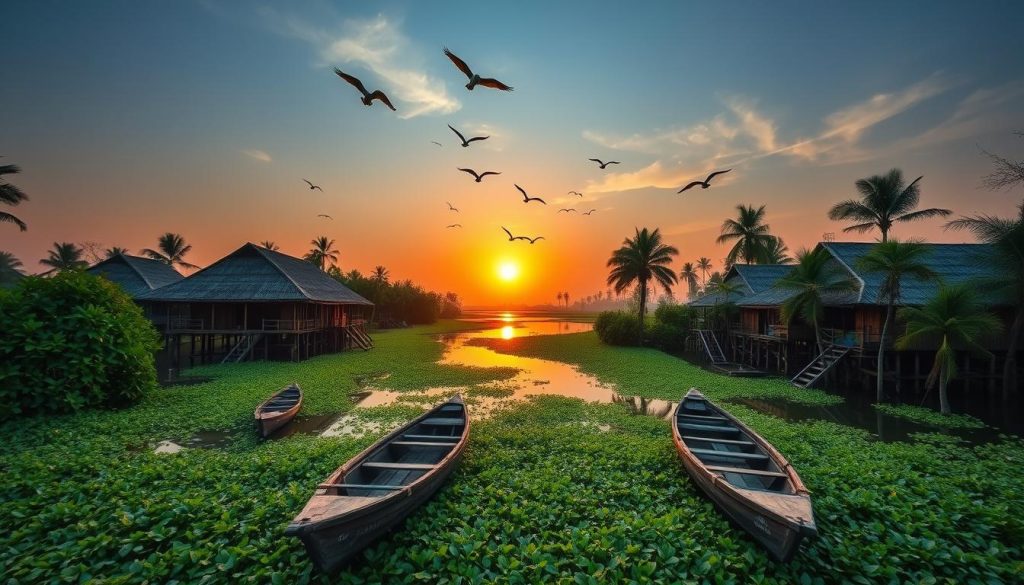
The villages in the Sundarbans are key to both culture and the environment. With about 35,000 households, they show their community significance through many efforts. Families, known as “Tiger Widows,” live with the area’s challenges, like wildlife.
Rural life in the Sundarbans is a balance between human needs and nature. Rehana Begum and her husband have been fishing safely for seven years. Their work, backed by local authorities, supports their living and promotes eco-friendly ways.
This teamwork has improved contact with the Forest Department. It helps villagers report wildlife sightings. With 35% of Bangladesh’s wildlife here, understanding community life is crucial for nature’s health.
Over 2,000 women are now part of local projects. This shows how women are helping their communities grow. Rehana Begum teaches kids to read the Qur’an, boosting confidence and the local economy.
These villages mix old traditions with new ways. This blend is essential for the future of both people and nature.
| Aspect | Details |
|---|---|
| Households Engaged | 35,000 |
| Women Supported | 2,000 |
| Chemical-Free Fishing | 7 Years (Rehana Begum) |
| Wildlife Contributions | 35% of Bangladesh’s Wildlife |
| Ecotourism Revenue (2014-2015) | US$ 144,832 |
What are the must-see villages and communities in the Sundarbans?
The Sundarbans is full of lively villages. Each one offers a special mix of culture and nature. You’ll see the beauty of local life through their traditions and community spirit.
Exploring these villages, you’ll find the heart of Sundarbans communities. They live in harmony with their environment, thanks to their deep knowledge.
Exploring Key Villages
Kapil Muni and Basanti are two villages you must see. They are perfect for diving into local traditions and village life. You can watch craftsmen, try delicious local food, and talk to the people.
The traditional mud huts and beautiful landscapes make it a magical place. It’s a great way to see how people live in the Sundarbans.
Community Life in the Sundarbans
The people of Sundarbans work in fishing, honey collection, and farming. These jobs help them survive and show their love for nature. Their community life is filled with shared beliefs and customs.
They also honor Maa Bonbibi, which brings them together. Talking to the locals, you’ll learn about their struggles and successes. It’s a great way to understand life in these amazing villages.

Top Villages in the Sundarbans
Exploring the top villages in Sundarbans reveals a mix of rich culture and stunning nature. Kapil Muni and Basanti stand out, each offering special experiences. These enrich any trip to this lively ecosystem.
Kapil Muni: A Blend of Nature and Culture
Kapil Muni is famous for its deep spiritual meaning, drawing pilgrims and tourists. The village has a temple dedicated to Kapil Muni. Here, visitors can dive into local customs and practices.
The scenic views and cultural richness make it a must-see. It’s a key part of exploring Sundarbans’ top villages.
Basanti: Gateway to Adventure
Basanti is perfect for adventure seekers in Sundarbans. It offers easy access to outdoor activities like boating through stunning mangroves. As you boat, you might see wildlife like crocodiles and many bird species.
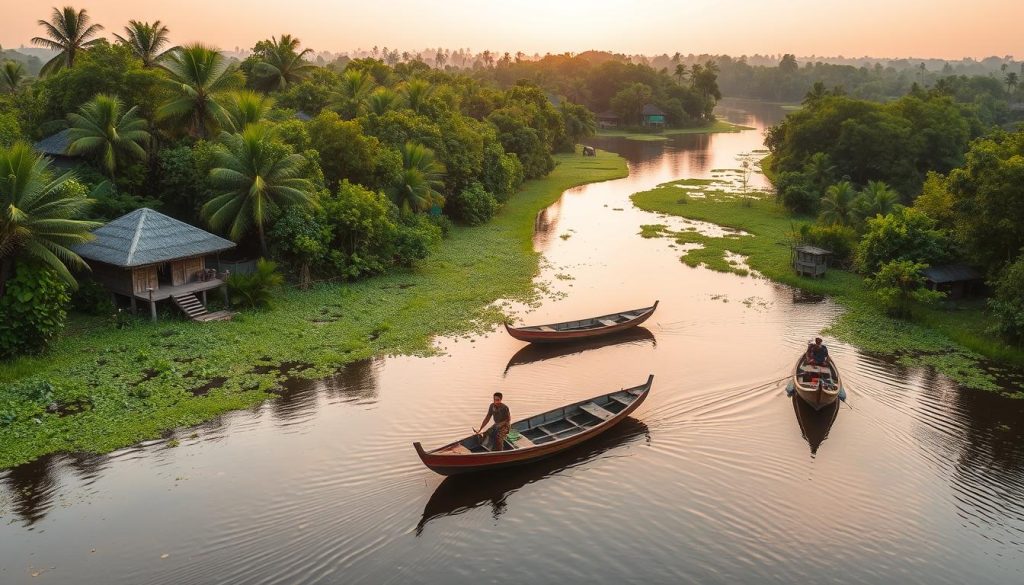
Kapil Muni and Basanti show how nature and culture blend. They offer travelers unique experiences. These connect them to the local community and highlight Sundarbans’ beauty.
Visiting the Eco Village
Visiting the eco village sundarbans is a unique chance to dive into the rich culture and environment of this UNESCO World Heritage site. It’s a chance to connect with local communities, showing the true meaning of sustainable tourism. Here, both visitors and locals learn from each other through shared experiences.
During your visit, you can join in on various activities that highlight the Sundarbans’ beauty. You’ll also learn about eco-friendly practices. It’s a great way to see the area’s wonders while supporting the environment.
Living Among the Locals
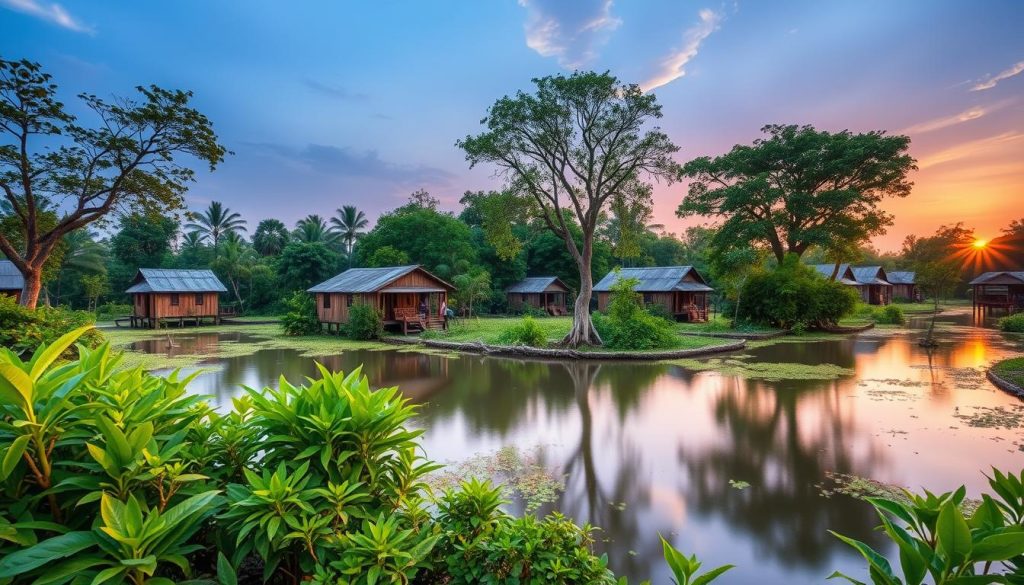
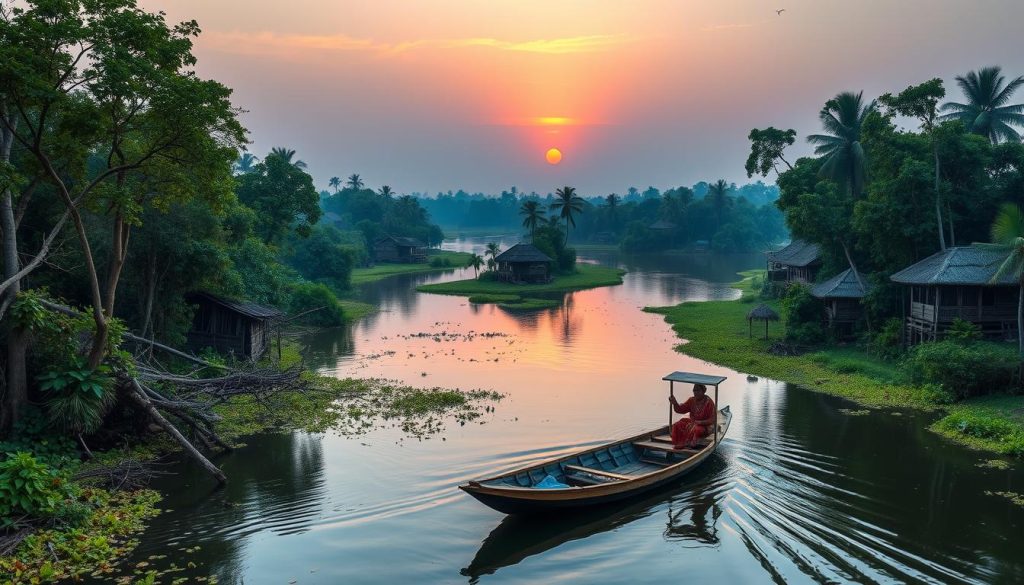
Staying in an eco village sundarbans lets you experience life like a local. You can stay in eco-cottages made from bamboo and palm thatch. These homes are not only cozy but also good for the planet, using natural materials.
Living with the locals, you’ll learn about their farming, fishing, and daily life. It’s a chance to see how they live in harmony with nature.
The Sundarbans offers many activities to make your visit special:
- Cultural experiences that show off local traditions
- Delicious meals made with fresh, local ingredients
- Boat safaris for seeing wildlife and birds
- Forest hikes to see the beautiful views
- Artisan workshops for learning by doing
- Annual cultural events, like Bonbibi Puja
Try local foods like Bawali and Sundri fruits. Enjoy meals made from local produce. It’s a tasty way to support the local economy and sustainable farming.
Joining in on activities like hydroponic training at Banojibi helps protect biodiversity. It also supports sustainable farming. Your visit helps the local economy and promotes caring for the environment.
Sundarbans Tours: What to Expect
Going on sundarbans tours lets you see one of the world’s most amazing ecosystems. The Sundarbans, the biggest tidal mangrove forest, is a mix of beauty and wildlife. You can go on guided safaris or learn about local cultures, making your trip unforgettable.
Types of Tours Available
There are many types of tours in the Sundarbans for different travelers. You can choose from:
- One-day trips for bird-watching and spotting wildlife
- Two-day packages with cultural visits
- Three-day tours for a deeper look at the mangrove ecosystem
- Custom tours based on your interests, like photography or learning
Tour companies like SundarbanDeltaTourism focus on being eco-friendly. They make sure their tours help protect this delicate place.
Best Time to Visit
The best time to see the Sundarbans is from December to February. The weather is cooler, making it great for spotting wildlife. It’s the perfect time for nature lovers.
The weather is also nice, so you can enjoy the views fully. Whether you want to see birds or the Royal Bengal Tiger, visiting then is a great choice.
Sundarbans Attractions Beyond the Villages
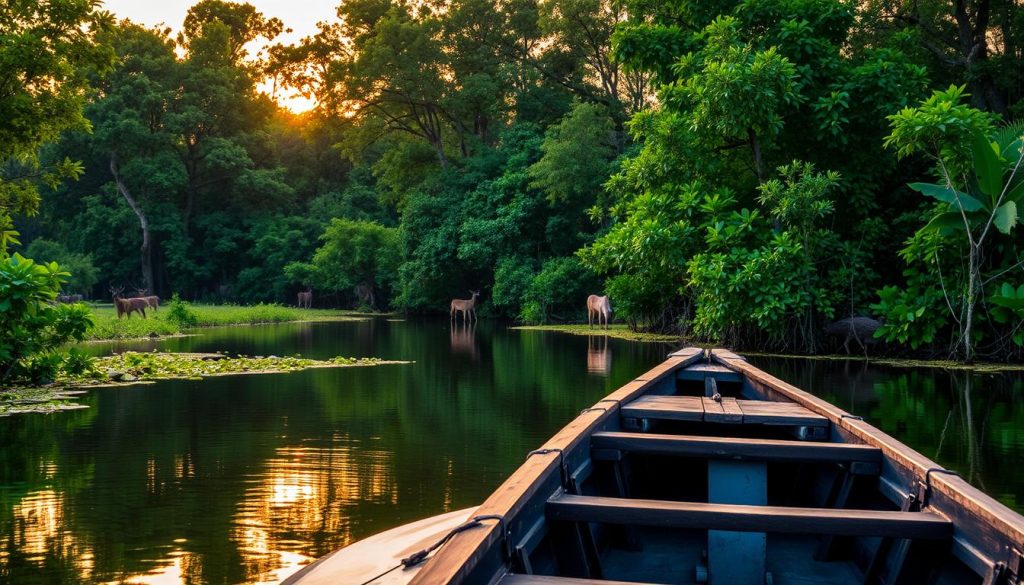
The Sundarbans offers more than just its villages. It’s a haven for wildlife watching, with guided safaris to see the Royal Bengal Tiger. It’s also a birdwatcher’s dream, with 260 bird species to spot.
Exploring mangroves is another highlight. You can take a boat or kayak through the waterways. This lets you see the lush mangrove forests and the animals that live there.
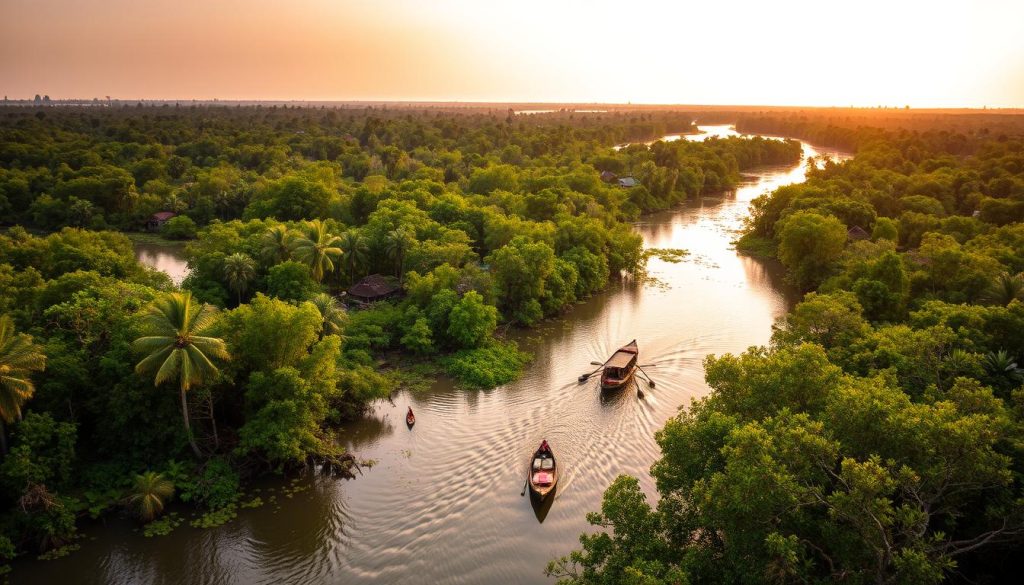
Ecological sites are key to understanding the Sundarbans’ value. They protect endangered species and show why these areas must be saved. The Sundarbans Reserve Forest, for example, is home to a wide range of plants and animals.
- Entry fees vary by visitor category, with domestic tourists paying around Tk 300 per day inside sanctuary areas, while international visitors are charged Tk 3,000 per day.
- For those exploring designated visitor centers, fees are Tk 20 for domestic tourists and Tk 200 for international tourists.
- The Sajnekhali bird sanctuary offers fantastic wildlife vantage points and can accommodate 20-25 spectators at once, enhancing the experience of wildlife watching.
Sundarbans Travel Guide: Tips for a Memorable Experience
Exploring the Sundarbans is an adventure into a unique world. A good sundarbans travel guide makes your trip better. Show respect for local customs and etiquette. This helps you connect with the communities you meet.
It’s important to be eco-friendly in this sensitive habitat. Reduce plastic use and respect wildlife. This helps keep the beautiful landscapes and biodiversity alive. Enjoying wildlife encounters safely is key to a great adventure.
Book your tours early, mainly during busy seasons. This secures the best experiences, like boat safaris. The Sundarbans Delta’s river network is a highlight.
The weather can change quickly, with temperatures from 10°C to 30°C from November to March. Being ready for weather changes is crucial. Here are more tips for a great Sundarbans trip:
- Research the best tour operators for guided experiences.
- Consider staying at local accommodations like Sundarban Tiger Roar Resort and Hotel Sonar Bangla for an authentic experience.
- Pack biodegradable products to minimize environmental impact.
- Bring binoculars for birdwatching — the parks host over 350 species.
- Familiarize yourself with the local flora and fauna to enrich your experience.
| Time to Visit | Temperature Range | Activities | Accommodation Options |
|---|---|---|---|
| November – March | 10°C – 30°C | Boat Safaris, Birdwatching | Sundarban Tiger Roar Resort, Hotel Sonar Bangla |
Follow these tips to fully enjoy the Sundarbans. They help you make memorable experiences while caring for the environment and its creatures.
Conclusion
Exploring the Sundarbans is a chance to dive into a stunning world. It covers over 10,000 km² of lush mangrove forests. You’ll also get to experience the rich culture of the local communities.
Your journey here is not just about seeing amazing wildlife, like the Royal Bengal tiger. It’s also about connecting with villagers and learning about their traditions. Every part of this World Heritage site has its own story, making each visit special.
The Sundarbans promotes sustainable eco-tourism. This helps improve the lives of local people and protects the environment. The money from tourism supports wildlife protection, conservation, and better healthcare and education.
By choosing ecotourism, you help preserve nature and support the local culture. This makes your adventure in the Sundarbans unforgettable.
Your trip to the Sundarbans will leave you with memories that last. It shows how nature and people can live together in harmony. With its wildlife, beauty, and community life, the Sundarbans offers an experience you won’t forget.