Sustainable Sundarbans Tourism Practices Guide
Did you know your travel choices can help save endangered species and support local communities? The Sundarbans, the world’s largest mangrove forest and a UNESCO World Heritage Site, is more than a place to visit. It’s a delicate ecosystem that needs our care. This guide will show you how to travel sustainably to the Sundarbans.
It will give you eco-friendly travel tips and explain why it’s crucial to protect this special place. You’ll learn how to make your trip both enjoyable and beneficial for the environment.
Introduction to Sustainable Tourism in the Sundarbans
Sustainable tourism in the Sundarbans is key to a responsible visitor economy. It makes travel better for visitors while protecting the environment and helping local communities. The Sundarbans, with its vast mangrove forest, is a unique place. It’s home to the largest mangrove forest in the world, covering about 10,000 km2.
Being a UNESCO World Heritage Site since 1999 has focused efforts on tourism management. This management aims to keep the ecosystem healthy and support local people.
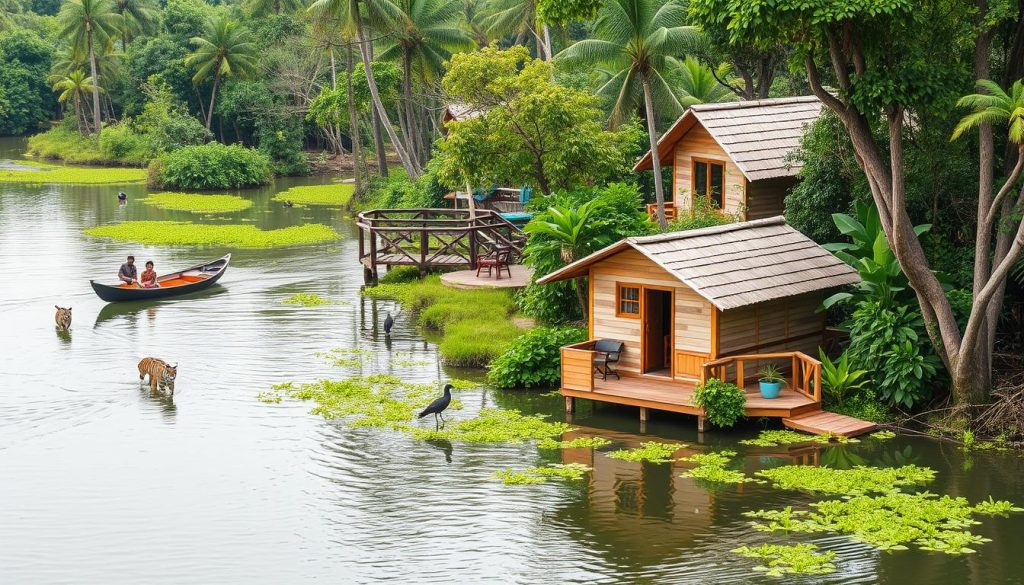
The Sundarbans is full of life, with animals like the Royal Bengal Tiger and marine turtles. The Forest Department in Bangladesh works hard to promote eco-tourism. Places like Katka-Kachikhali are known for their rich wildlife.
Festivals, like the Rash Mela on Dubla Island, bring people together. They help share local culture and traditions, adding to the visitor economy.
Initiatives like the Sundarban Ecotourism Project aim to manage tourism well. They try to keep the area safe for both visitors and wildlife. Despite challenges, there’s a growing effort to protect the Sundarbans’ beauty and culture.
| Key Statistics | Data |
|---|---|
| Total Area | 10,000 km2 |
| Bangladesh Territory | 60% |
| India Territory | 40% |
| UNESCO World Heritage Site | 1999 |
| Notable Species | Royal Bengal Tiger, saltwater crocodiles, dolphins, spotted deer |
| Main Eco-tourism Areas | Katka-Kachikhali, Dubla Island (Rash Mela) |
| Challenges | Infrastructure, local community displacement |
Understanding the Importance of Sustainable Practices
Sustainable tourism in the Sundarbans is very important. This area is huge, with 601,700 hectares of land and lots of wildlife. It’s a key place for nature and people who live there.
By traveling responsibly, visitors can help protect the area. They can also enjoy its beauty. This way, everyone wins.
The Sundarbans is home to over 300,000 people. They work in fishing, wood-cutting, and honey gathering. In 2016, more than 100,000 tourists came, showing the need for balance.
Plans are in place to manage tourism better. This will help keep the area beautiful for everyone.
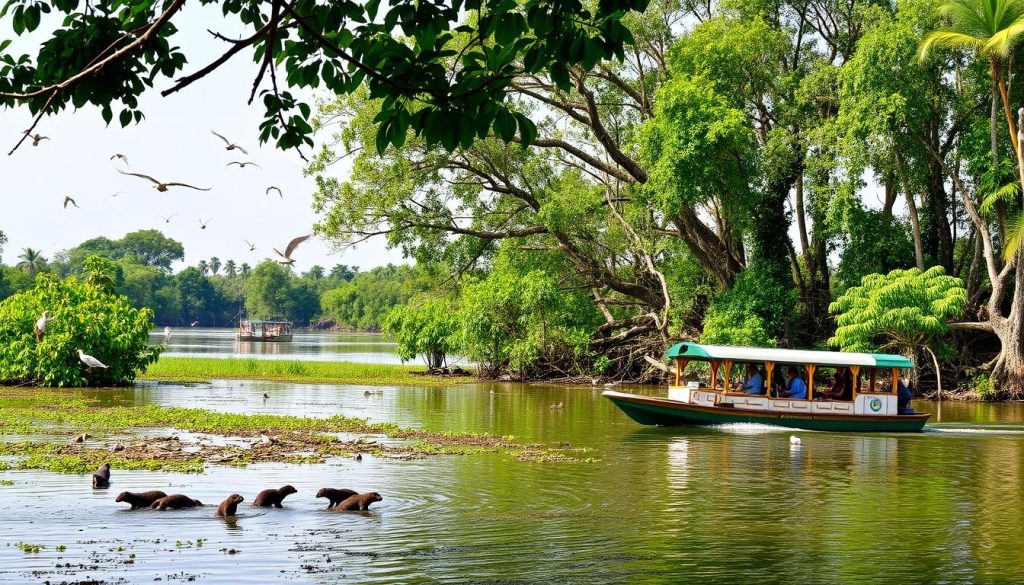
Conservation is key in sustainable tourism. It helps keep the area’s plants and animals safe. The Sundarbans has 334 plant species and the famous Royal Bengal Tiger.
Visitors come to see this beauty. It’s important to protect it for the future.
Working together is crucial for a sustainable future. Tourism is growing fast, and it’s important to do it right. Local people and groups must be involved to keep the area safe for all.
| Key Aspects | Details |
|---|---|
| Area of Sundarbans | 601,700 hectares |
| Biodiversity Species | 334 plants, 165 algae, 210 white fishes, 49 mammals |
| Population | Approximately 3.5 million people |
| Tourism Contribution to GDP (2022) | 3.02% in Bangladesh |
| Potential Tourists (2016) | Over 100,000 visitors |
What are some sustainable tourism practices for visiting the Sundarbans?
The Sundarbans is the world’s largest mangrove forest, full of life and beauty. By choosing sustainable tourism, you can enjoy its wonders without harming it. Here are some eco-friendly tips to help you travel responsibly in this delicate place.
Eco-friendly Travel Tips for Your Visit
To travel green, consider these tips:
- Use local boats for tours to explore the waterways without harming them.
- Bring your own bottles and bags to cut down on plastic waste.
- Join guided walks to learn about conservation and see local plants and animals.
- Keep a safe distance from wildlife and follow the rules to protect them.
- Support local shops and craftspeople to boost the local economy and enjoy real experiences.
Conservation Efforts in the Sundarbans
Protecting the Sundarbans is key to keeping its biodiversity and saving endangered species like the Bengal tiger. The Sundarban Tiger Reserve works hard to protect wildlife while also helping the local economy. Here’s how you can help:
- Join community projects to help restore habitats.
- Support educational programs to teach people why this ecosystem is so important.
- Help keep visitor numbers low to protect the environment and wildlife.
- Choose tourism that respects local culture and wildlife.
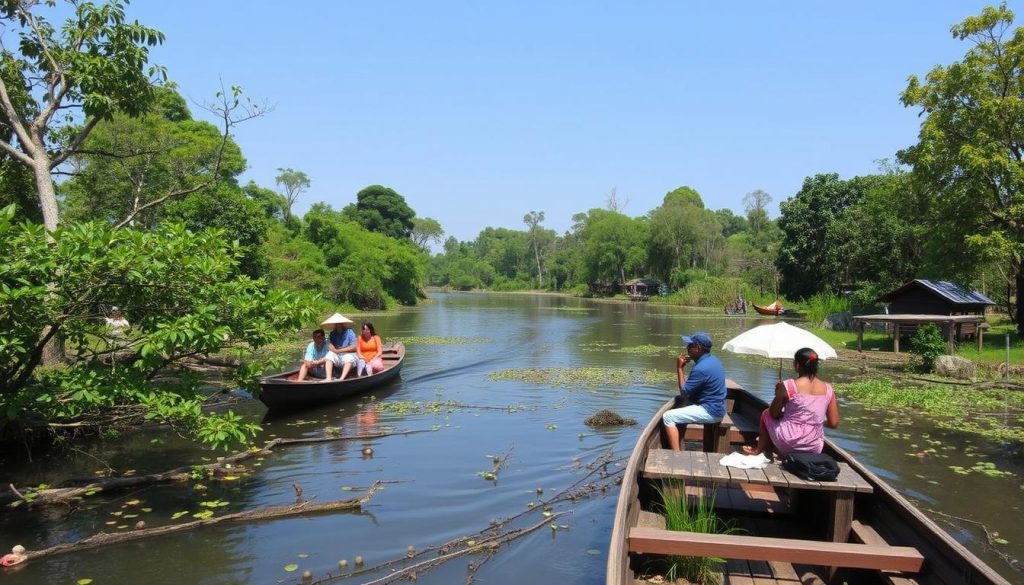
By adopting these sustainable tourism practices, you can enjoy the Sundarbans’ beauty while helping its ecosystems and local people. Eco-tourism makes your trip more meaningful and helps preserve this incredible place for future generations.
Responsible Tourism in the Sundarbans: Key Principles
Visiting the Sundarbans means making choices that protect the environment and respect local cultures. By following tourism principles that focus on sustainability, we can have a positive impact. You can help the local economy and reduce environmental harm.
The Sundarbans is known for its rich biodiversity, including the Royal Bengal Tiger and many bird species. It covers about 25,000 square kilometers, down from 36,000 square kilometers. Bangladesh has sixty percent of the islands, making it a key area for responsible tourism.
Getting involved in the community can make your trip better. Supporting local businesses or eco-friendly lodges helps the local people. Following tourism principles ensures everyone benefits, creating a good relationship between visitors and locals.
By following environmental guidelines, you help protect wildlife and restore habitats. These efforts tackle human-wildlife conflicts, offering chances for travelers to make a difference. Keeping a safe distance and listening to local guides promotes safety and respect.
Ecotourism Guidelines for the Sundarbans
The Sundarbans is a vast mangrove forest of about 10,000 km2. It’s a perfect place for ecotourism. To enjoy it fully, everyone should follow certain rules. These rules focus on being green and working with the local community.
Best Practices for Tour Operators and Visitors
For a small environmental footprint, following the best tourism practices is key. Tour operators need to be green certified and follow conservation rules. Important steps include:
- Setting up good waste management systems.
- Using energy-saving methods in their work.
- Teaching guests to use reusable items, like water bottles and bags.
- Telling tourists about the local nature and why it’s important to protect it.
These actions help keep the Sundarbans safe while also helping its wildlife and park upkeep.
Community Engagement and Participation
Getting the community involved is vital for Sundarbans’ tourism. It helps locals and makes them proud of their home. Ways to engage include:
- Offering jobs as guides, boat operators, and homestay hosts to locals.
- Helping visitors join in on community conservation efforts.
- Running training and awareness programs to better living conditions.
- Supporting local crafts to boost the economy.
These steps empower local people and help women too. They also improve things like sanitation and healthcare for everyone.
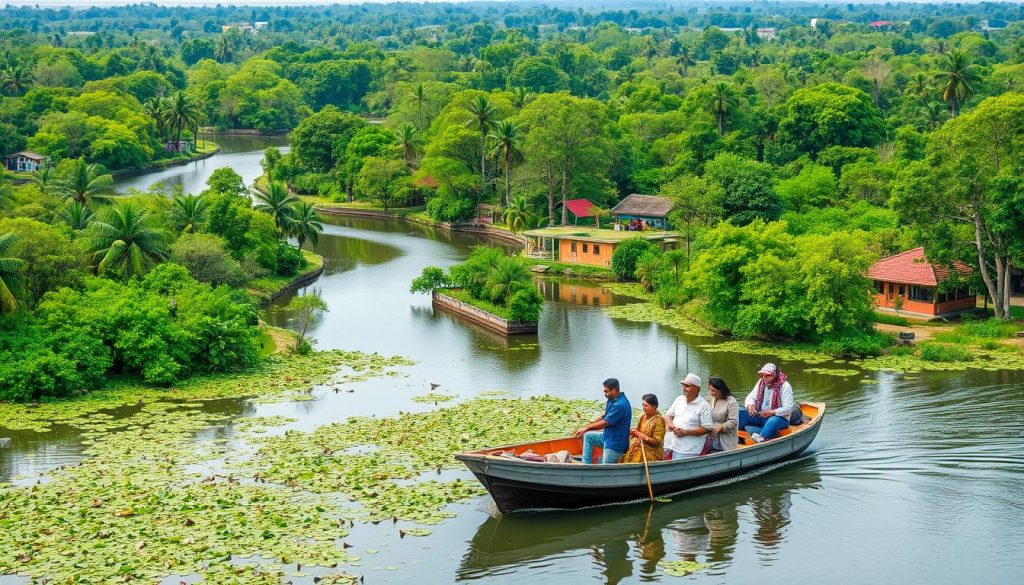
Choosing Eco-Friendly Accommodations
When you plan to visit the Sundarbans, picking eco-friendly places to stay is key. These places help reduce your environmental impact and make your trip better.
Many resorts and lodges focus on being green. They manage waste well, save water, and use clean energy. They also use materials that are good for the planet and save energy and water.
Staying in eco-friendly places also means supporting the local community. Many resorts hire locals, buy from nearby artists, and help with community projects. This helps the local economy and lets you see real local life.
These places also offer things that help you live greener. You can rent bikes, use reusable water bottles, and eat food that’s grown locally.
Guests can also learn a lot from these places. There are workshops, tours, and chances to meet local people. You can even help protect the environment by planting mangroves or helping with wildlife.
Look for places with green certifications like EarthCheck or Green Globe. These show they really care about being eco-friendly.
| Aspect | Details |
|---|---|
| Waste Management | Implementation of effective systems |
| Water Conservation | Strategies integrated into lodging |
| Energy Use | Reliance on renewable sources |
| Community Engagement | Employment of local staff and support for development projects |
| Eco-Friendly Amenities | Bicycle rentals, reusable water bottles, and local cuisine |
| Educational Opportunities | Workshops and guided tours |
| Conservation Efforts | Involvement in wildlife preservation and mangrove planting |
| Certification | Accreditation by EarthCheck, Green Globe, or GSTC |
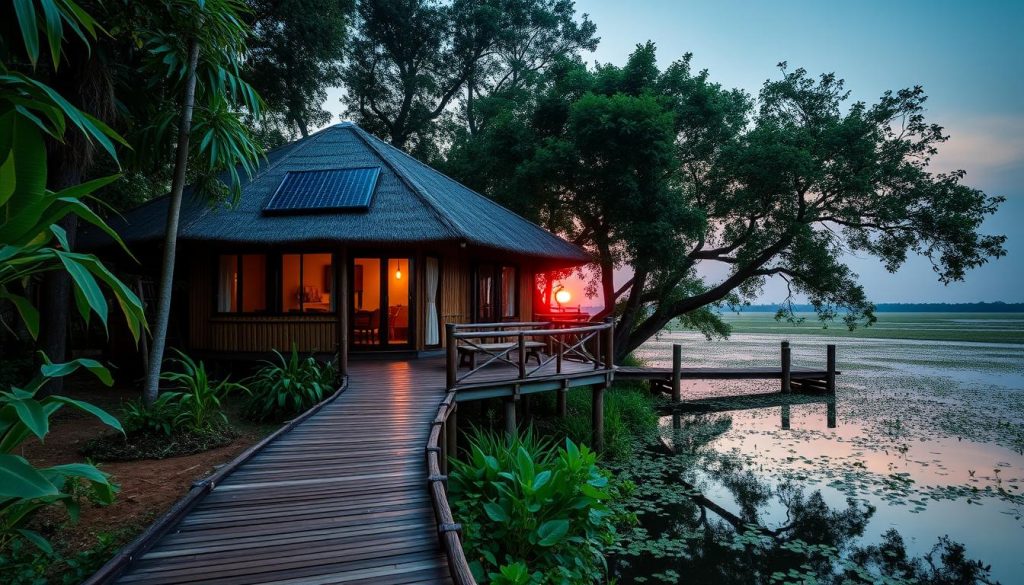
Sustainable Travel Initiatives in the Sundarbans
The Sundarbans is a hub for sustainable travel projects. These projects help local businesses and support artisan communities. They boost the local economy and keep the area’s culture alive. By joining these efforts, you help ensure a green future for the Sundarbans and its people.
Support for Local Businesses and Artisans
Backing local businesses is key to the Sundarbans’ economic health. In places like Kumirmari, people make a living from farming and crafts. Buying local products or services helps these artisans a lot. Here are some ways you can support them:
- Economic Empowerment: Ecotourism projects give jobs and keep people from leaving. This helps the area grow.
- Cultural Preservation: Trying local crafts and food makes your trip better. It also helps keep the culture alive.
- Environmental Awareness: These projects teach everyone about living green. This makes the environment healthier.
A study by an NGO showed the good of river-cruise tourism. It helps local economies in India and Bangladesh. When you join these efforts, visiting markets or festivals is a great way to see local talent. It’s a fun and real experience.
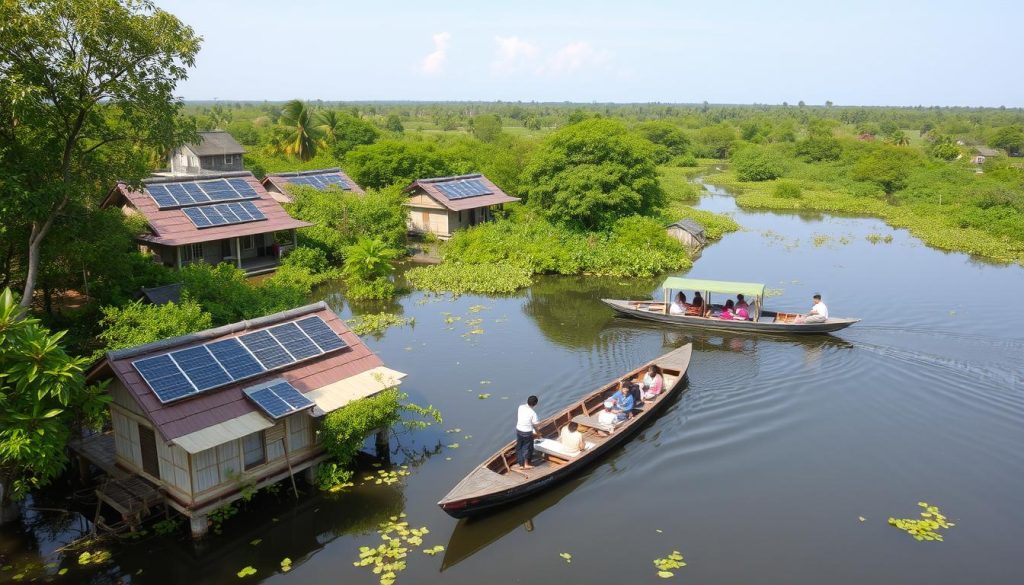
Here’s how helping local businesses and artisans benefits you and the Sundarbans:
| Aspect | Benefits | Examples |
|---|---|---|
| Economic | Strengthens local economies, reduces poverty | Buying handcrafted goods, eating at local restaurants |
| Cultural | Enhances your travel experience, preserves heritage | Participating in local festivals, workshops |
| Environmental | Promotes sustainable practices, protects biodiversity | Supporting ecotourism initiatives, eco-friendly accommodations |
Getting involved in sustainable travel in the Sundarbans helps local businesses and artisans. It ensures a bright future for the Sundarbans and its rich culture.
The Role of Local Communities in Tourism Development
Local communities are key in shaping tourism in the Sundarbans. Their involvement ensures sustainable tourism and improves the eco-tourism experience. This helps the well-being of locals and celebrates the area’s rich culture.
Empowering Women through Eco-Tourism
Women’s roles in tourism efforts boost gender equality and economic freedom. They work as guides, boat operators, and homestay hosts. This creates jobs that were once out of reach, benefiting both individuals and communities.
Projects show the good effects of women in eco-tourism. For example:
- 87.5% of locals in eco-tourism see better job access thanks to mangrove conservation.
- Before eco-tourism, 50% of women were domestic workers. Now, all earn from eco-tourism.
- More than 71% say more community partnerships would make eco-tourism better while keeping culture alive.
Women’s involvement in eco-tourism is crucial. They promote responsible use of resources, ensuring sustainability.
Empowering women has broader benefits. Mangrove conservation improves food security and land use. Eco-tourism income helps build local infrastructure, boosting community welfare. Women’s roles in eco-tourism enrich culture and community strength.
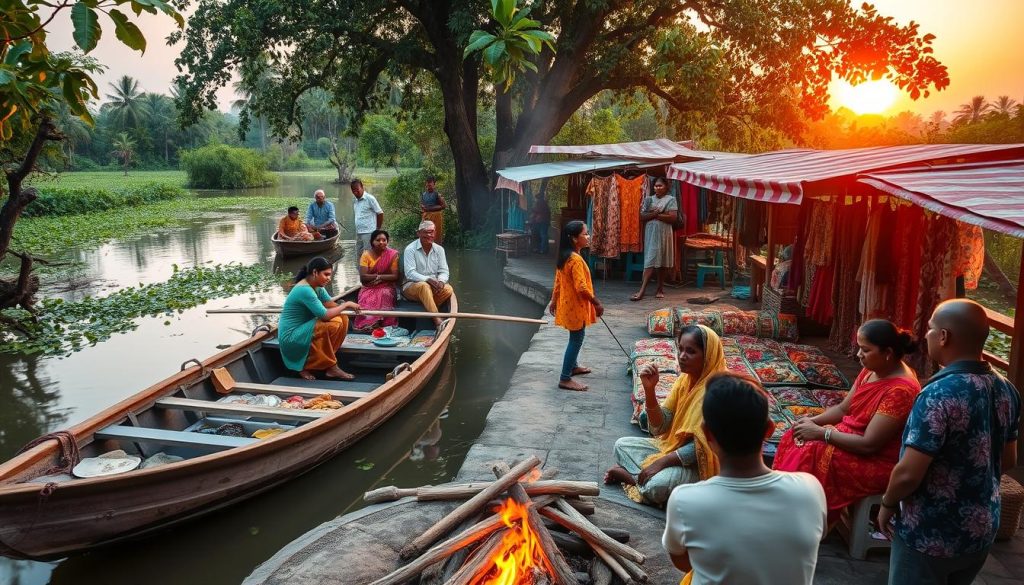
In summary, women’s roles in eco-tourism bring positive changes to their lives and support sustainable tourism in the Sundarbans. Collaboration among stakeholders and local community involvement are vital for eco-tourism’s success in this unique area.
Challenges and Considerations for Sustainable Tourism
The Sundarbans, the world’s largest mangrove forest, faces big challenges in sustainable tourism. Too many visitors put a lot of pressure on resources and can harm the environment. It’s important to find a balance between tourism growth and protecting the environment.
Studies in the area found key factors for sustainable tourism. These include natural beauty, how well tourism fits in, and job chances. Knowing these helps create tourism that helps locals and keeps the environment safe. But, many people don’t know much about sustainability, which makes things harder.
Having good tourism infrastructure is crucial. It makes the Sundarbans more appealing. Political stability and safety also matter a lot for tourism. Without solving these problems, sustainable tourism is hard to achieve.
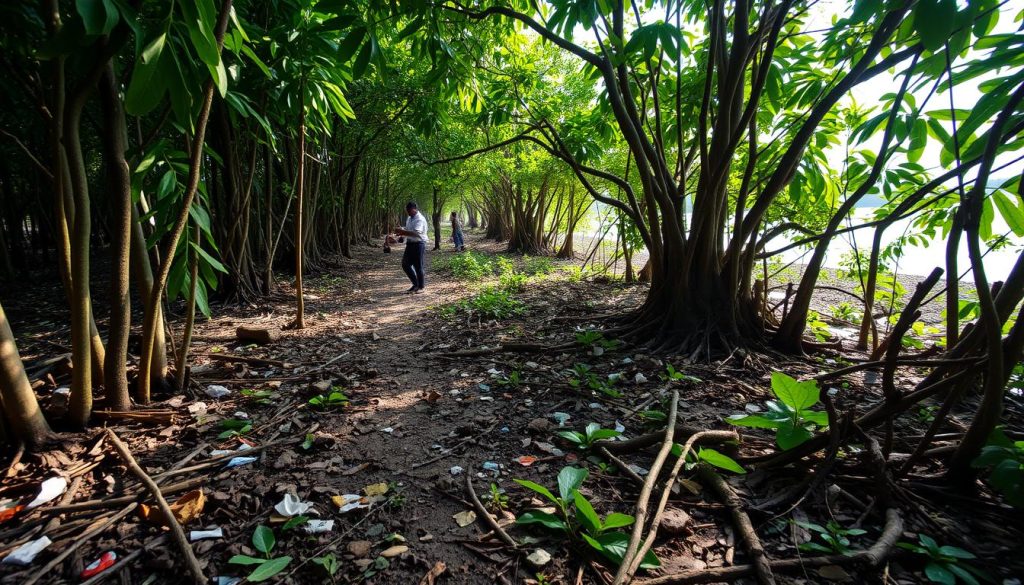
| Challenges of Sustainable Tourism | Potential Solutions |
|---|---|
| High visitor numbers causing ecological stress | Implement controlled visitor access and awareness programs |
| Limited understanding of sustainability among locals | Enhance educational outreach and community training |
| Inadequate infrastructure hindering tourism growth | Invest in sustainable infrastructure development |
| Lack of collaboration among local authorities | Encourage partnerships between stakeholders and government |
By tackling these challenges and using smart sustainable practices, we can keep the Sundarbans beautiful for the future. This way, visitors can enjoy its wonders without harming it.
Conclusion
Sustainable tourism is key to saving the Sundarbans’ unique ecosystem. About 60% of this UNESCO World Heritage Site is in Bangladesh, and 40% is in India. Protecting these natural resources is crucial for future generations.
By following eco-friendly travel tips, you help keep the ecosystem balanced. This also makes your trip more rewarding.
Supporting local communities is vital. Responsible tourism lets you see amazing landscapes and help 3 million people who depend on the Sundarbans. Your visit becomes a chance for mutual respect and shared benefits.
In the end, sustainable tourism helps save the Sundarbans. By taking these steps, both visitors and locals can enjoy this wonder while keeping it safe for the future.