Ideal Time to Fully Explore the Sundarbans?
Ever thought about the best time to see the Sundarbans’ beauty? This UNESCO World Heritage Site is full of lush mangrove forests and diverse wildlife. How many days are required to explore the Sundarbans properly depends on when you go. Knowing the best time to visit is key to seeing everything, from Royal Bengal Tigers to the vast ecosystem.
This article helps you plan your trip to the Sundarbans. Whether you love adventure, culture, or nature, there’s a perfect time for you. The monsoon season brings greenery, while winter offers cooler weather. Each season offers a unique way to experience this amazing place.
Understanding the Sundarbans Ecosystem
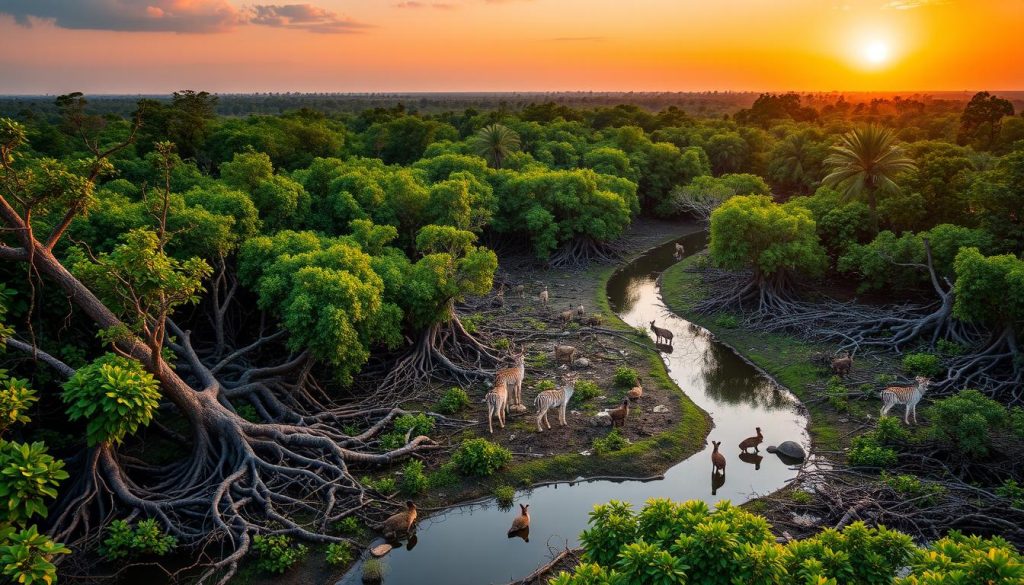
The Sundarbans ecosystem is a vital natural habitat, covering about 10,000 square kilometers. It makes up over 60% of India’s mangrove forests. The area is known for its mangrove forests, waterways, and diverse wildlife.
There are 26 species of mangroves and over 80 associated varieties here. The Sundarbans are home to about 90% of India’s mangrove plants. This biodiversity is key to keeping the ecosystem balanced, supporting both wildlife and local communities.
The Sundarbans stretch across India and Bangladesh, with 40% in West Bengal and 60% in Bangladesh. This division affects the seasons, impacting wildlife and plant life. The mangrove forests protect against cyclones and rising sea levels.
Wildlife in Sundarbans includes Royal Bengal Tigers, saltwater crocodiles, and migratory birds. The area has over 334 plant species and supports over 120 fish species, 270 birds, 42 mammals, and 35 reptiles. Local people depend on it for food, timber, honey, and fish.
The Sundarbans are also a breeding ground for fish, crucial for fishing. In 2022, conservation efforts planted 600,000 mangrove trees. This shows the dedication to saving this vital habitat.
Mangroves can store more carbon than rainforests, making them key in fighting climate change. Exploring the Sundarbans reveals its beauty and the life it supports. It’s a place where humans and wildlife coexist in harmony.
Best Time to Visit Sundarbans for Wildlife Sightings
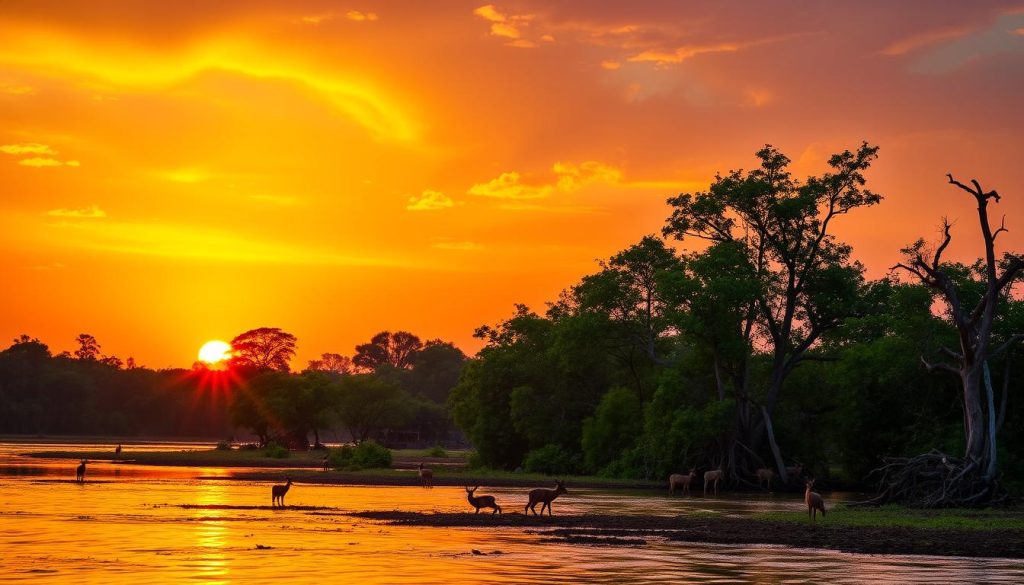
The best time to see wildlife in Sundarbans is from September to March. This period draws many tourists because of the nice weather. During this time, animals are more active, making boat rides exciting.
Visitors can see the Royal Bengal Tiger, dolphins, and many birds. This makes the trip even more thrilling.
In the summer, from March to May, wildlife sightings are still good. Animals go to artificial water bodies near watchtowers to cool off. Planning your visit during these months can make your experience better.
The Sundarbans National Park is about 110 km from Kolkata. You can get there by train or road. The park has different entry fees for Indians and Non-Indians.
There are boat tours that visit several watchtowers. Knowing these details helps you plan your trip well. This way, you can see more wildlife in Sundarbans.
How Many Days Are Required to Explore the Sundarbans Properly?
Figuring out the right amount of time for your Sundarbans trip is key. A minimum of 3 to 4 days is recommended. This allows for boat safaris and experiencing local culture. If you want more, 5 to 7 days lets you visit remote islands and villages, making your trip richer.
Tour Duration Recommendations
Here’s a suggested way to plan your time:
- One day: Go on a wildlife safari to see the Royal Bengal Tiger.
- One day: Dive into local traditions like fishing and honey collection.
- Additional days: Enjoy relaxation and explore beautiful spots like Sajnekhali Wildlife Sanctuary.
Multiple Day Sundarbans Trip Itinerary Suggestions
Here’s a 2 nights and 3 days trip plan:
- Day 1: Arrive in Sundarbans, learn about local culture, and get settled.
- Day 2: Take a wildlife safari to see the Royal Bengal Tiger.
- Day 3: Go birdwatching and visit plantations, then decide whether to leave or stay longer.
Exploring the Sundarbans in Monsoon Season
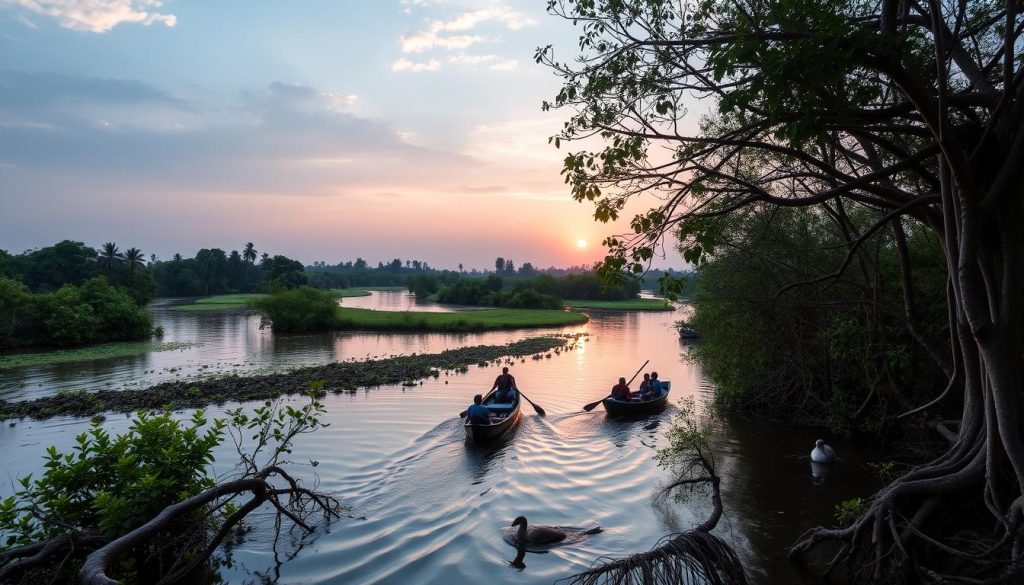
Exploring Sundarbans in monsoon season is a unique experience. From June to September, the area gets heavy rain and turns green. This time offers a chance to see the area’s vibrant plants and animals.
Benefits of Visiting During June-September
Traveling in the monsoon has many perks:
- Fewer crowds: You’ll find fewer people, making it quieter.
- Thriving ecosystem: Rain makes the plants and animals come alive.
- Animal interactions: You might see more animals because of the breeding season.
- Freshwater influx: More water means better boat trips in some spots.
Wildlife Behavior in the Monsoon
Wildlife acts differently in the monsoon. You could see:
- Swimming tigers: These big cats swim when the water is high.
- Increased bird activities: Many birds come here, great for birdwatching.
- Unique interactions: The area’s rich life creates interesting animal meetings.

Summer Exploration: March to May
From March to May, the Sundarbans get very hot, with temperatures between 28°C to 36°C (82°F to 97°F). Some might think it’s too hot to visit. But, this time is great for seeing wildlife, like the Royal Bengal Tiger, as they look for water.
Exploring Sundarbans in summer is exciting. You’ll see animals behaving in amazing ways as they deal with the heat. Seeing these incredible creatures in their home is a unique experience.
When you visit Sundarbans in summer, picking where to stay is important. Places like Sundarban Sonar Bangla and Sundarban Residency are good choices. You can choose from different tour lengths, like 2N/3D or custom tours, based on your schedule and interests.
Summer in Sundarbans is also full of life, with lots of greenery and special plants. Nature lovers find it fascinating. You can visit the Sajnekhali Watchtower or enjoy a quiet walk at the Dobanki Canopy Walk.
| Tour Duration | Average Cost (Rs.) | Highlights |
|---|---|---|
| 1 Day | 5000 | Quick wildlife tour |
| 1 Night / 2 Days | 8000 | Guided tours, jungle safaris |
| 2 Nights / 3 Days | 12000 | Comprehensive exploration, multiple attractions |
| 3 Nights / 4 Days | 15000 | Extended wildlife experience |
Summer in Sundarbans is full of exciting moments. It’s a great place for those who love adventure and wildlife.
Winter Wonderland: November to February
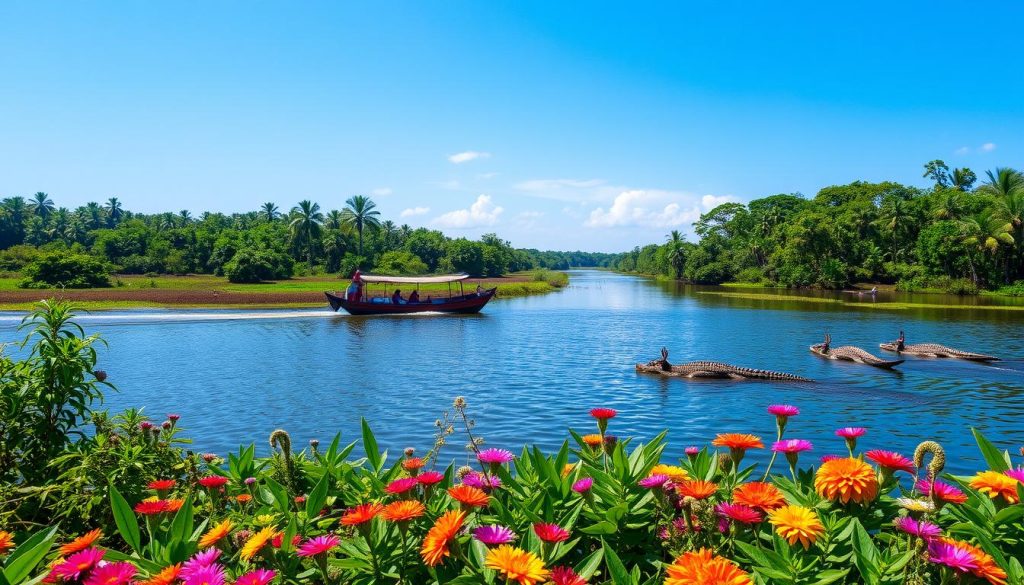
The Sundarbans turns into a winter wonderland from November to February. It’s the perfect time to explore nature. The weather is mild, with temperatures between 20-25 degrees Celsius.
Experience the Best Weather for Exploration
Winter in Sundarbans is great for wildlife lovers. Animals are more active, and you might see more of them. Migratory birds also visit, making it a haven for birdwatchers.
The calm waters are perfect for boat rides. You can see the wildlife from a different perspective. Visiting during these months means you’ll enjoy peaceful mornings and stunning sunsets.
| Feature | Details |
|---|---|
| Temperature Range | 20-25°C |
| Wildlife Activity | High, with many migratory birds present |
| Boat Ride Conditions | Calm waters for better exploration |
| Ideal Activities | Birdwatching, boat safaris, photography |

Unique Experiences: Festivals in Sundarbans
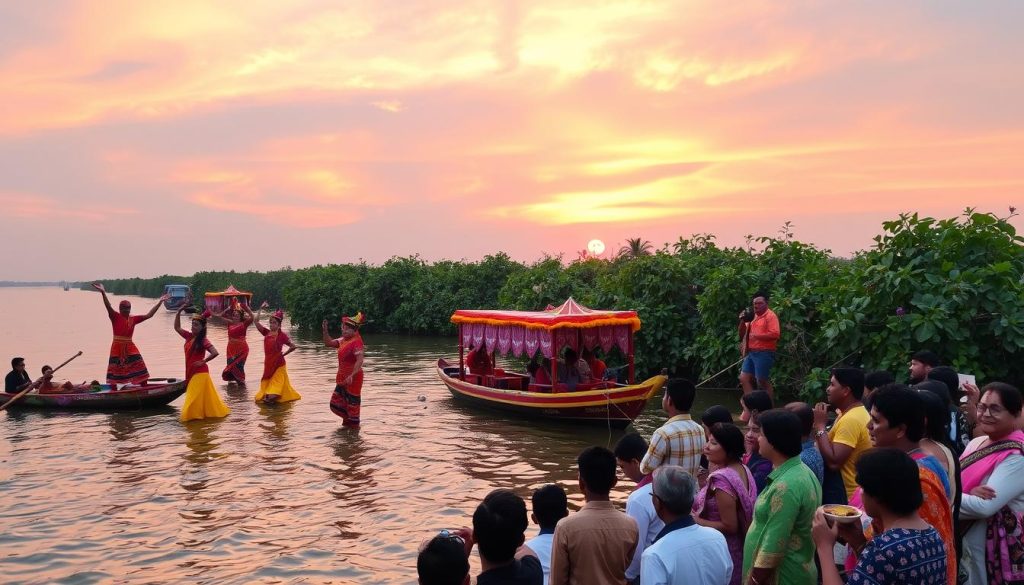
Visiting Sundarbans during its festivals lets you dive into the area’s rich culture. The Sundarban Hilsa Festival is a highlight, celebrating the Hilsa fish. It draws food lovers, culture fans, and nature enthusiasts alike. The festival runs from July to October, focusing on sustainable fishing and conservation.
Joining local festivals lets you connect with the community. You’ll enjoy traditional foods, dances, and crafts. The Sundarban Delta Tourism offers special tours, like the Sundarban Wildlife Safari. These tours include cultural shows and jungle safaris for a full adventure.
Here are some activities to enjoy during the Hilsa festival:
- Boat safaris offering amazing delta views
- Tours of local villages to see daily life
- Bird watching to see native species
- Photography to capture the beautiful landscapes
Book your tours early because many people visit during this time. Bring water, snacks, insect repellent, sunscreen, and clothes for the tropical weather. These items will make your trip better.
The festival awakens your senses and connects you with local culture. By participating in traditions, you’ll understand the Sundarbans community’s spirit. This creates unforgettable memories during your stay.
| Activity | Description |
|---|---|
| Boat Safaris | Explore the waterways of the Sundarbans for stunning views of the landscape. |
| Village Tours | Gain insights into local life and traditions, interacting with residents. |
| Bird Watching | Observe diverse bird species, perfect for photography and nature lovers. |
| Culinary Experiences | Taste traditional dishes made from fresh local ingredients. |
Sundarbans Sightseeing Duration and Key Attractions
To fully enjoy the Sundarbans, knowing how long to stay is key. A good plan lets you see the best spots and take great photos. You’ll need at least two days to see all the wonders of this UNESCO World Heritage site.
The Sunderban National Park is a must-see. It’s home to many animals, including the Royal Bengal tiger. The Kotka Wildlife Sanctuary is great for a jungle safari. From the Kotka watchtower, you can see the beautiful mangrove forest.
Don’t miss the local villages for a peek into their culture. The Jamtola Beach is the cleanest beach in Bangladesh. It’s perfect for relaxing. Boat tours from 8:30 am to 4:00 pm let you see dolphins and other wildlife.
For a full experience, visit places like Bird’s Island and Sunset Point. A 1-night, 2-day tour is best. You’ll get to stay at the Sundarban Tiger Roar Resort, eat meals, and see cultural shows.
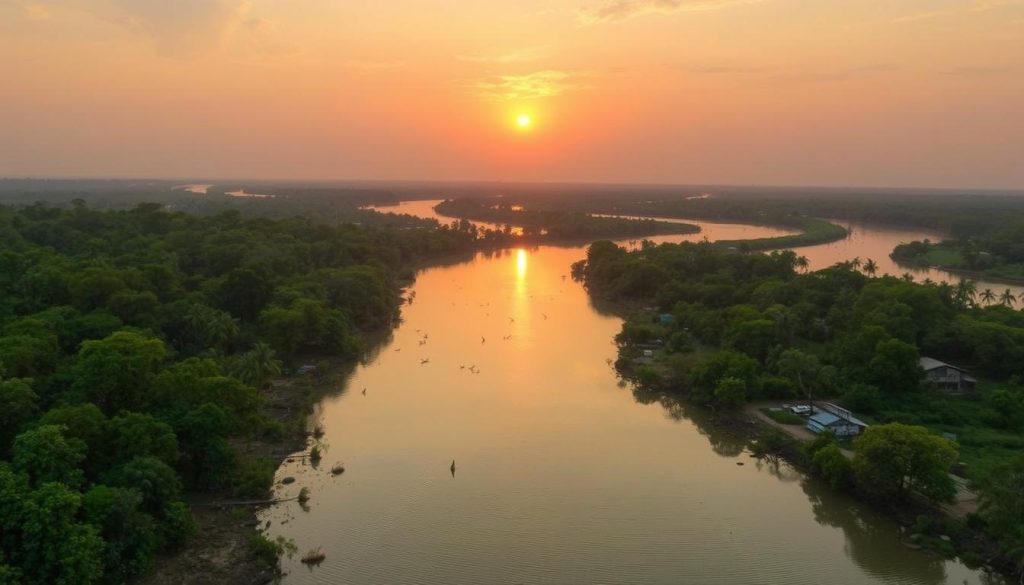
In short, spending time in the Sundarbans lets you see important places. It’s a chance to learn about the mangrove ecosystem and its culture. Your trip will be unforgettable.
Optimal Sundarbans Travel Duration: Planning Your Trip
Planning your Sundarbans trip is key to a great experience. Knowing the best time to visit is crucial. A good plan lets you explore the ecosystem and see the Royal Bengal Tiger.
Spending 4 to 7 days is perfect. It gives you time for wildlife, culture, and the mangrove forest’s beauty.
Don’t forget to pack the right things. Bring binoculars, comfy clothes, and enough for your stay. Choosing a good tour operator, like Royal Sundarban Tourism, makes planning easier. They handle everything from booking to transport.
The table below shows different travel packages. It includes costs and what’s included:
| Tour Package | Cost (per person) | Duration | Inclusions |
|---|---|---|---|
| Two Nights, Three Days Jungle Tour | Rs. 5,400 | 2 Nights, 3 Days | Meals, Boat cruise, Accommodation |
| Standard Room from Delhi | Rs. 5,500 | 3 Days | Meals, Pickup/drop off, Guides |
| Deluxe Room from Delhi | Rs. 6,500 | 3 Days | Meals, Pickup/drop off, Guides |
| Cottage Accommodation | Rs. 7,500 | 3 Days | Meals, Pickup/drop off, Guides |
Considering these points will make your Sundarbans trip better. With a good plan, you’re set for an amazing journey in the mangroves and among the wildlife.

Conclusion
Figuring out how long to stay in Sundarbans depends on the season and what you like. This vast mangrove forest, covering 10,277 km², is a mix of nature and culture. It’s home to over 453 wildlife species, perfect for those who love nature and adventure.
For the best experience, follow some Sundarbans tips. Spending at least 2 nights and 3 days is recommended. This lets you explore fully and enjoy local festivals, birdwatching, and maybe see a Bengal tiger. Also, having a professional tour guide can make your trip better, sharing their knowledge and helping you respect the environment.
Planning well is key to enjoying Sundarbans fully. Think about the weather, your favorite activities, and the local culture. With the right planning, Sundarbans will be a memorable part of your travels.