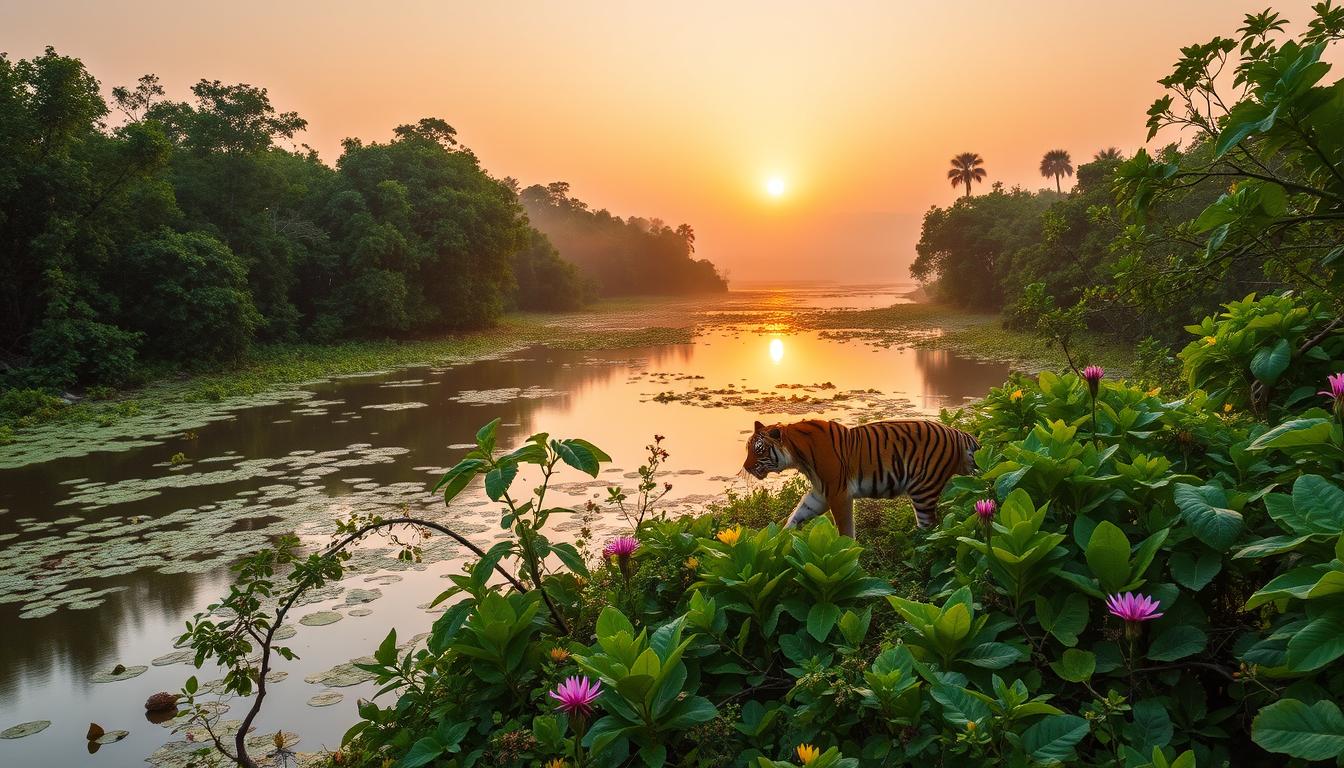
Best Season for Sundarbans Tiger Safari Visits
Ever thought about the best time to see tigers in the Sundarbans? This UNESCO World Heritage Site is Asia’s biggest mangrove forest. It’s not just the views that draw you in, but also the chance to see wildlife up close.
Knowing when to go is key for a great wildlife experience. The Sundarbans is perfect for tiger spotting from November to March. During this time, the weather is just right, and you can see over 350 bird species. So, when is the best time to visit the Sundarbans for a tiger safari? Let’s explore the seasons together.
Understanding the Sundarbans Ecosystem
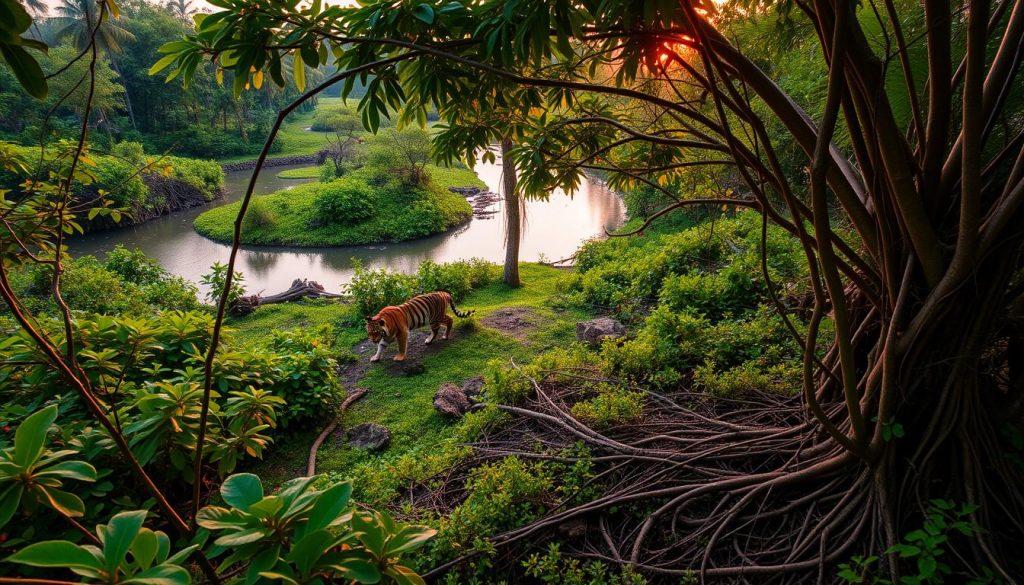
The Sundarbans ecosystem is a unique mix of land and water, with vast mangrove forests. It spans about 10,000 square kilometers, making it the world’s largest mangrove forest. This area is home to a wide variety of life, known as mangrove forest biodiversity. About 60% of it is in Bangladesh, and the rest is in India.
This habitat is key for endangered species like the Royal Bengal tiger. There are around 400 to 450 tigers here, one of the highest numbers anywhere. The Sundarbans is also home to many plants and animals, including 334 plant species and 693 wildlife species. Around 260 bird species also call this place home.
The Sundarbans ecosystem is complex, with tidal rivers, swamps, and mangrove trees playing important roles. It’s not just a home for animals; it also protects endangered species like dolphins and crocodiles. This makes the Sundarbans a UNESCO World Heritage Site, showing its global importance in saving biodiversity.
| Category | Details |
|---|---|
| Forest Area | 10,000 km2 (largest mangrove forest) |
| Biodiversity | 334 plant species, 693 wildlife species, 260 bird species |
| Endangered Species | Royal Bengal Tiger, Irrawaddy Dolphin, Estuarine Crocodile |
| Significance | UNESCO World Heritage Site, Biosphere Reserve |
The Importance of Seasonality in Wildlife Viewing
Knowing when to visit the Sundarbans is key for a great wildlife experience. Each season changes animal behavior and seasons. This knowledge boosts your chances of seeing different species. The best times for tours are from October to March, when it’s cooler and animals are more active.
In winter, temperatures are just right for many animals to come out. This is a great time to see wildlife and birds from Siberia. The clear water and soft sunlight are perfect for photos.
When spring comes in March and April, it gets warmer. Temperatures can hit 25°C to 35°C. This season is still good for seeing wildlife and birds, with the added beauty of greenery. You might find fewer people around, making your experience more personal.
The monsoon, from June to September, brings big changes. Daytime temperatures can soar to 35°C, making the Sundarbans green and lush. Boat tours are different during this time, but you’ll see fewer people. Animals hide in the dense foliage during heavy rain.
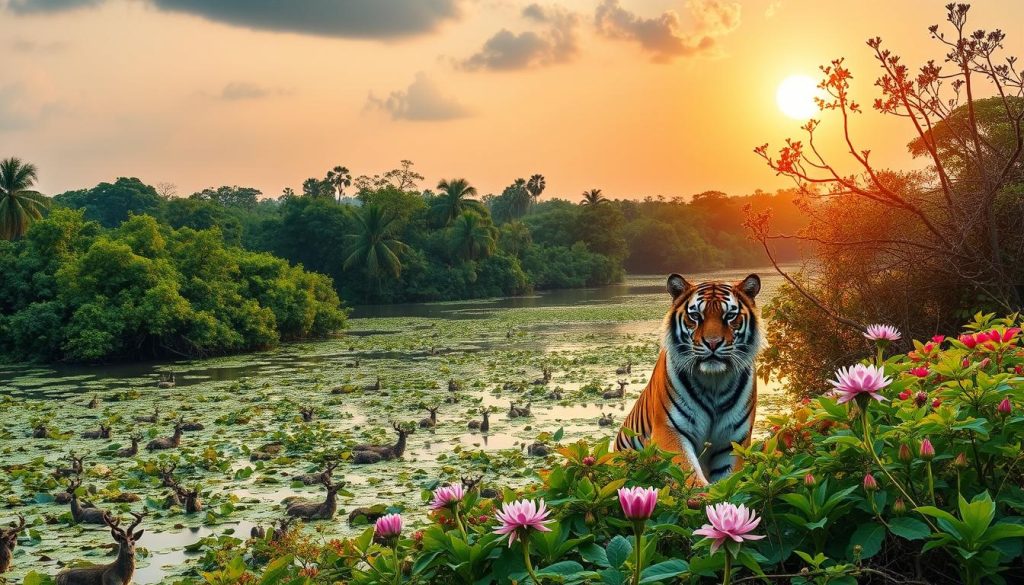
After the monsoon, in October, the dry season starts. This is the best time to see wildlife, like tigers and migratory birds. It’s a great time to explore the Sundarbans.
Which is the best season to visit the Sundarbans for a tiger safari?
Deciding when to visit the Sundarbans can greatly improve your tiger sighting chances. Knowing the best time to go will make your wildlife adventure better. The best time to see tigers is from October to March, when the weather is nice and animals are more active.
Peak Tiger Spotting Season: October to March
This is the best time for tiger lovers. The weather is mild, with temperatures between 20°C and 30°C. Since it’s dry, animals gather near water, making tiger sightings more likely. The rivers are full from the monsoon, making it a great time for Sundarbans tiger viewing ideal season.
Wildlife Activity During Different Seasons
Wildlife behavior changes with the seasons, offering different experiences for visitors. Each season has its own animal behaviors:
- Winter (November to February): Cooler weather makes animals more active. This means more chances to see them.
- Spring (March to April): As it gets warmer, there are fewer people. This makes for a quieter visit to the park.
- Summer (June to September): The heat makes animals hide in shade and water. This might make sightings harder, but they can still happen.
- Post-Monsoon (October): After the rains, animals are more active. This is great for tiger spotting and adds to the experience.
The good weather, rich wildlife, and animal behavior make the peak season the best time for your Sundarbans adventure.
Winter: The Prime Season for Sundarbans Safaris
Winter is the best time to visit the Sundarbans. It offers great chances to see wildlife. The weather is mild, with temperatures between 10°C and 30°C.
Weather Conditions during Winter
The weather in the Sundarbans is perfect in winter. It’s cooler and less humid, making it great for outdoor activities. This is the best time to see the Bengal tiger, as it’s more active.
Bird Watching Opportunities in Winter
Winter turns the Sundarbans into a birdwatcher’s dream. Many migratory birds come here, adding to the beauty of your safari. Places like Sajnekhali are perfect for spotting these birds.
Advantages of Visiting in Winter
- Optimal weather conducive for exploration and wildlife sightings.
- Increased visibility of diverse wildlife, including crocodiles and dolphins.
- Absence of dangerous snakes, ensuring a safer experience during your stay.
- Opportunities for guided walks and cultural interactions with local communities.
- Efficient tour options are offered by Royal Sundarban Tourism, including eco-friendly boat safaris.
- Recommendation to book accommodations and tours in advance for a seamless experience.
Summer: A Different Kind of Adventure
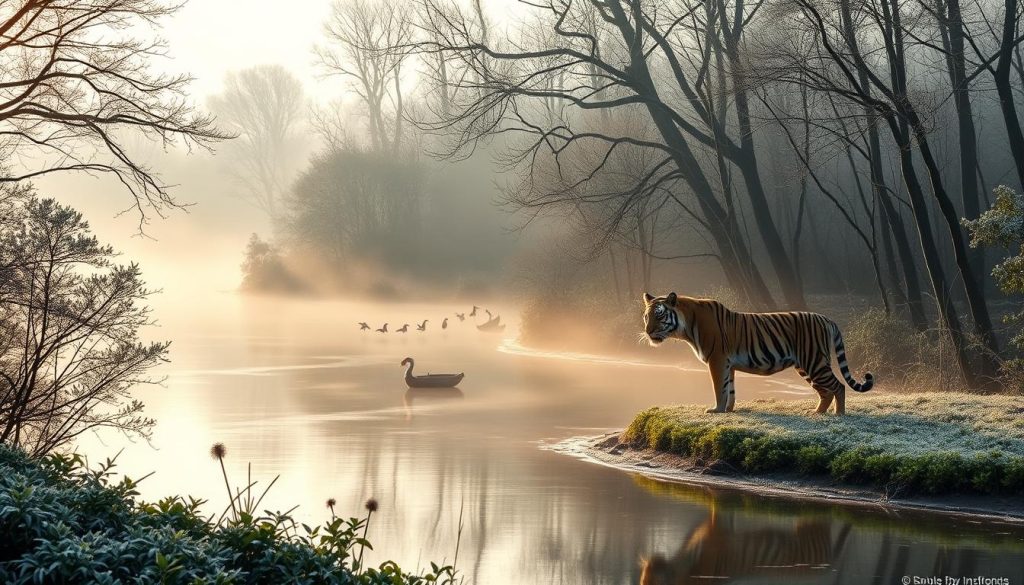
The summer in the Sundarbans, from March to May, is a unique experience for wildlife lovers. Temperatures soar from 20°C to 42°C. This heat changes how animals behave, showing how they survive in the extreme weather.
This season is special for seeing how the Bengal tiger adapts to the heat. It’s a chance to learn about their survival strategies.
Extreme Temperatures and Animal Behavior
In summer, animals change their ways to deal with the heat. They are more active in the cooler parts of the day, like early morning or late afternoon. This is when you might see them most.
Tigers, in particular, move closer to water sources. Watching them is thrilling as they come out of the dense vegetation to drink.
Opportunities for Tiger Sightings
Summer is a prime time for tiger sightings. The heat forces them to find water. While on a Sundarbans summer safari, look for them near rivers and waterholes.
They often cool off or drink there. This makes it easier to see them in their natural setting.
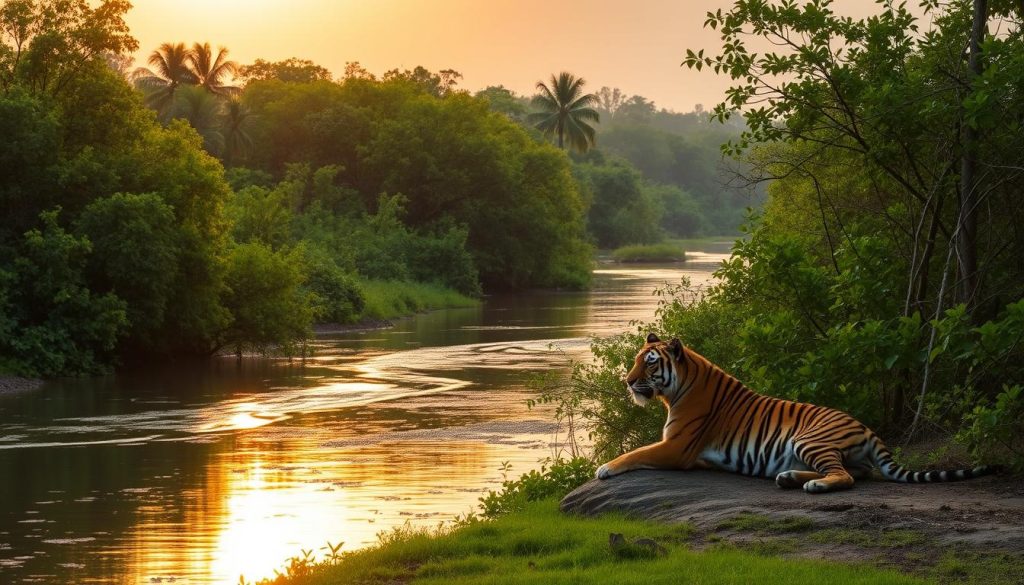
Planning carefully for a summer safari in the Sundarbans can lead to amazing wildlife experiences. You’ll learn about animal behavior and see tigers up close. It’s a unique and unforgettable adventure.
Monsoon: A Unique Experience for the Adventurous
The monsoon season changes the Sundarbans into a vibrant landscape full of life. The monsoon wildlife experience brings colors and sounds. But, it also has challenges that adventurers must face.
Knowing the risks of visiting in monsoon helps you enjoy the adventure safely.
Risks and Rewards of Visiting during Monsoon
Visiting the Sundarbans in monsoon has its challenges. Storms and rising tides can make it hard to navigate. Safety is key, so always check the weather.
Getting a local guide who knows the area well is a good idea. They can help you stay safe. Despite the dangers, the rewards are great. You might see wildlife that’s harder to find when it’s dry.
Natural Beauty Post-Rainfall
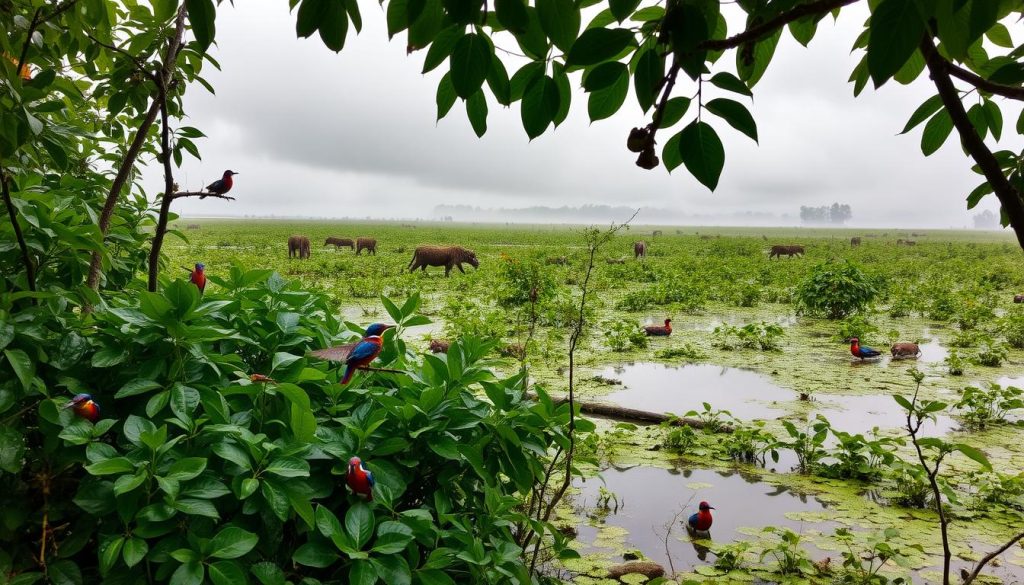
After the rain, the Sundarbans’ beauty shines. The mangrove forests are lush, and wildlife thrives. Boat safaris are perfect because the rivers are full.
This is a great time to see the Royal Bengal Tiger. Migratory birds also come, making birdwatching amazing. Activities include:
- Boat safaris to explore dense mangrove landscapes
- Birdwatching showcases many unique species
- Participating in the Illish Festival celebrating local culture and cuisine
- Night safaris and nature walks for immersive experiences
- Photography tours to capture the breathtaking scenery
Local food is a highlight, with dishes like Chingri Malai Curry and Bhapa Ilish. These experiences make your trip unforgettable, showing the beauty and challenges of the Sundarbans during monsoon.
Optimal Travel Tips for Each Season
Planning a trip to Sundarbans means knowing the challenges each season brings. The weather changes all year, so it’s key to pack right. Here are some top tips for traveling to Sundarbans, covering seasonal prep and safari must-haves.
Preparation for Winter Visits
Winter, from November to February, is the best time to see Sundarbans. The weather is mild, with temperatures between 10°C and 25°C (50°F to 77°F). Make sure to pack:
- Layers of clothing for cooler nights.
- Comfortable hiking boots for walks and safaris.
- Binoculars for spotting birds and wildlife.
Summer Essentials
Summer is hot, with temperatures up to 40°C (104°F). It’s less crowded, but perfect for those who love a challenge. For summer, bring:
- Hydration packs or water bottles to stay hydrated.
- Sun protection like hats, sunglasses, and sunscreen.
- Lightweight, breathable clothes for the humidity.
Monsoon Travel Gear and Precautions
Monsoon, from July to October, brings heavy rains. It’s exciting for those who love adventure. Be ready with:
- Waterproof gear, including jackets and shoes.
- Quick-dry clothes for sudden rain.
- Contingency plans for floods and travel issues.
Knowing how to swim is crucial for river cruises in the monsoon. It ensures safety and fun in this special place.

Flora and Fauna Diversity Throughout the Year
The Sundarbans is home to a wide variety of species. They live in a special mangrove ecosystem. Seasonal flora and fauna change a lot, showing off the area’s vibrant life. Over 1,586 species of mammals, reptiles, and birds live here, making it a rich wildlife spot.
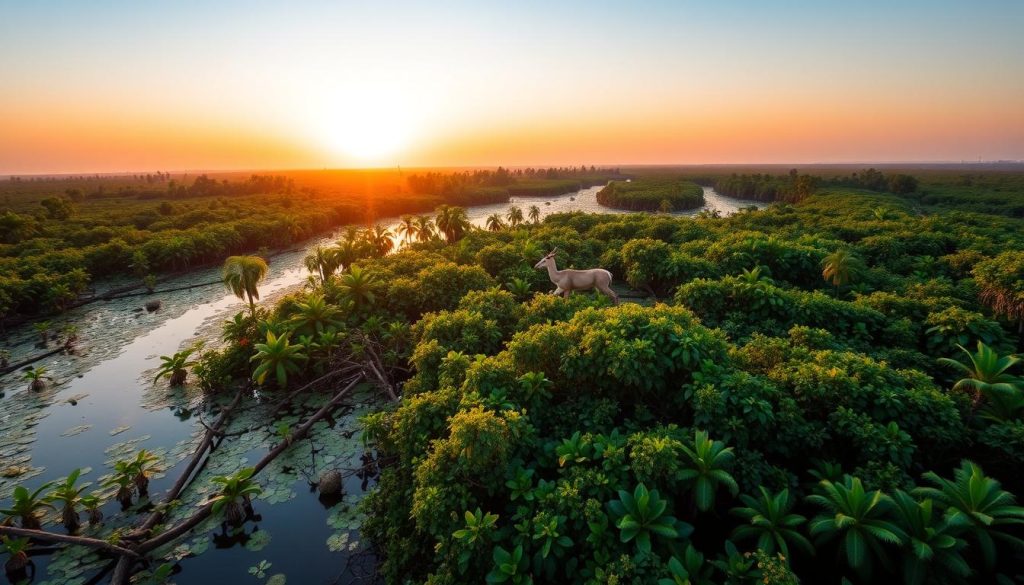
In winter, more wildlife is seen. Royal Bengal Tigers are often spotted as they hunt. Over 300 plant species, like Sundari trees, grow here, giving shelter and food to many animals.
Spring brings more life to the ecosystem. Plants bloom, attracting pollinators. This season also welcomes migratory birds, matching the seasonal flora and fauna bloom.
Summer is hot, but wildlife finds ways to stay active. Keora trees grow fast in these forests. Saltwater crocodiles show the area’s unique adaptations.
The monsoon season brings new life to Sundarbans. Rains make the area greener and help animals breed. Water levels rise, creating new homes for fish and turtles. This shows how the seasons balance the area’s biodiversity.
| Season | Flora | Fauna |
|---|---|---|
| Winter | Sundari Trees, Gewa Trees | Royal Bengal Tigers, Migratory Birds |
| Spring | Flowering Plants, Mangroves | Increased Avian Activity |
| Summer | Keora Trees | Saltwater Crocodile, Various Mammals |
| Monsoon | Lush Greenery | Ganges Shark, Olive Ridley Turtles |
Knowing about the seasons helps us see the Sundarbans’ complex life. Every visit shows a new part of this amazing ecosystem.
What to Expect during Your Visit
Getting ready for your trip to the Sundarbans will make your visit even better. There are many wildlife tours and itineraries to choose from. They let you get close to the area’s wildlife and beautiful landscapes. Plus, there are many places to stay, no matter your budget.
Wildlife Tours and Itineraries
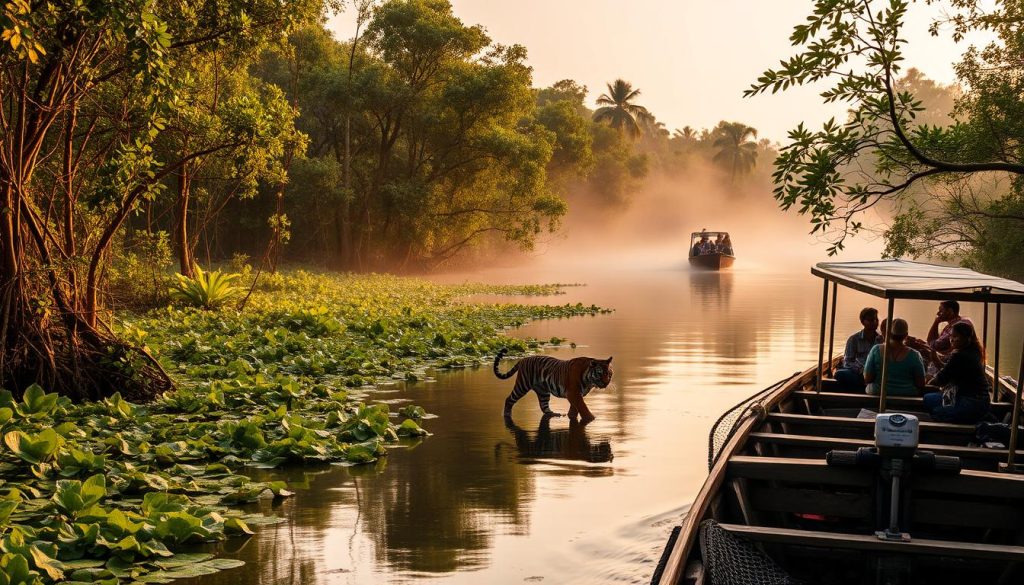
The Sundarbans offers a wide range of experiences. You can pick from guided tours that fit your interests. These tours last from a day to several nights. They take you to the best places to see wildlife, like the Bengal tiger.
Companies like Royal Sundarban Tourism offer special tours. They mix culture and nature with folk dances and boat rides.
Accommodation Options in Sundarbans
There are many places to stay in Sundarbans, for every traveler. You can choose from luxury resorts to budget lodges. Each place offers a unique way to experience local culture and nature.
| Accommodation Type | Features | Price Range (per night) |
|---|---|---|
| Luxury Resort | AC rooms, gourmet dining, spa services | $150 – $300 |
| Mid-Range Lodge | Comfortable rooms, local cuisine, guided tours | $80 – $150 |
| Budget Lodge | Basic amenities, community dining, affordable tours | $30 – $80 |
Planning Your Sundarbans Safari: Key Considerations
Planning well is key for a great time in the Sundarbans. You need to choose a tour operator that fits your needs and make the best travel arrangements to Sundarbans. Knowing the differences in tours will make your trip better.
Choosing the Right Tour Operator
Finding the right tour operator is crucial. Look for one that offers:
- Budget-friendly options: Prices vary, so you can pick from cheap to luxury.
- Reliability and safety: Check for good reviews and safe travel.
- Flexibility: Private tours cost more but let you explore freely.
Travel Arrangements from Kolkata to Sundarbans
Getting to Sundarbans needs good planning. It’s about 100 kilometers (62 miles) from Kolkata. Here are your travel options:
- Boat travel is scenic and direct to the park.
- Car or bus travel is also possible, but roads can be tough.
Choose wisely and remember to get all permits and have a valid passport. Foreign visitors need permission to enter.
| Travel Option | Pros | Cons |
|---|---|---|
| Boat | Scenic and direct access to wildlife | Scheduling can be limited |
| Car/Bus | Flexibility in scheduling | Traffic and road conditions may delay travel |
With good planning for your Sundarbans safari, you’re in for an amazing adventure in this incredible place.
Conclusion
The best time to see wildlife in Sundarbans is from November to February. The weather is mild, making it perfect for tiger sightings and outdoor activities. Each season in Sundarbans has its own charm and challenges.
For the best wildlife experiences, choose guided tours in the dry season. This is when you can see animals like the Bengal tiger more easily. Whether you visit in summer or winter, Sundarbans offers unforgettable moments of nature.
Before you go, make sure to pack right for the weather and check local advice, mainly during the monsoon. Exploring Sundarbans is a mix of adventure, wildlife, and natural beauty. It’s an experience that will stay with you forever.