Visiting India: Reach Sundarbans National Park Easily
Ever thought about how easy it is to get to the Sundarbans National Park? This amazing place is known for its wild beauty and is a hit with travelers. With its many waterways and green mangroves, you might wonder how to get there.
The Sundarbans National Park is huge, covering 10,000 square kilometers. It’s where the Ganges and Brahmaputra Rivers meet. It’s a UNESCO World Heritage Site and home to the Royal Bengal Tiger and many other animals. It’s full of islands and wildlife, waiting to be explored. This article will show you the best ways to get to the Sundarbans National Park, making your visit simple.
Introduction to Sundarbans National Park
Exploring Sundarbans National Park is like stepping into a world where nature meets the wild. It’s where the Ganges and Brahmaputra Rivers meet. This place is huge, covering about 10,000 square kilometers, with a big part in India.
It’s famous for its mangrove trees and home to the Royal Bengal Tiger. This park is a treasure trove of biodiversity.
The Overview of Sundarbans shows it’s mostly forest and wetlands. Wetlands include rivers, creeks, and estuaries. Most of the mangrove area is in Bangladesh, with a bit in India.
The Sundarbans is the biggest mangrove forest in the world. It’s a key spot for learning about nature and protecting it.
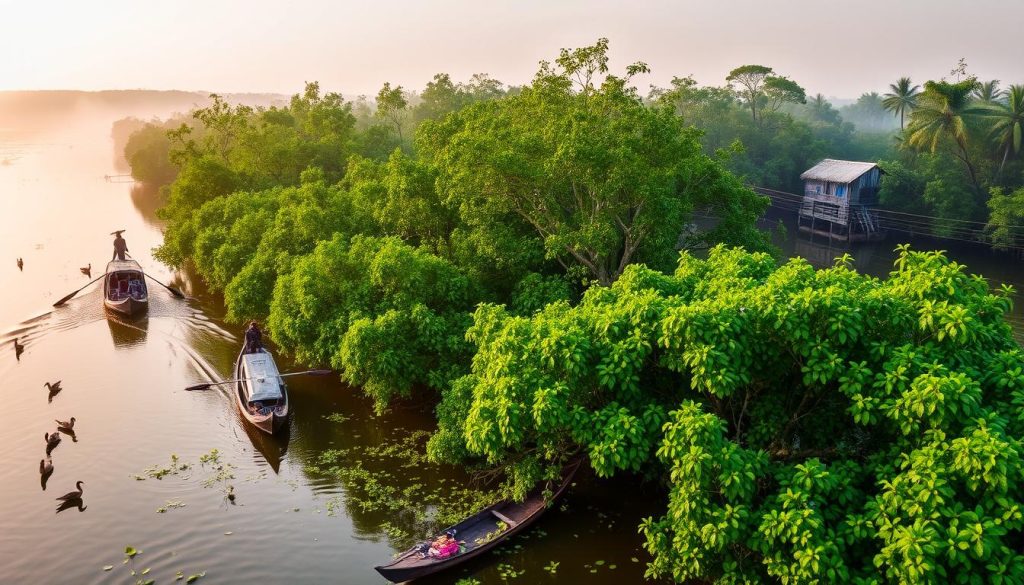
There are 78 types of mangroves here, making it the richest mangrove forest. It’s home to many tigers and other animals. It’s also a place where marine turtles nest.
This variety of wildlife makes Sundarbans a must-see for nature lovers. It shows the importance of preserving our planet’s beauty.
| Statistic | Details |
|---|---|
| Total Area | Approximately 10,000 km2 |
| Area in India | About 35% of total |
| Mangrove Species | 78 species thriving |
| Tiger Population | Approximately 250 tigers |
| Ideal Visiting Time | October to March |
| Distance from Kolkata Airport | 112 kilometers |
| Canning Railway Station Distance | 48 kilometers |
When you visit Sundarbans, you see more than just beauty. You learn about the importance of nature. It’s a place where you can truly connect with the wild.
Importance of Sundarbans National Park
The Sundarbans National Park is key for both nature and culture. It’s a UNESCO World Heritage Site, showing its great value. This highlights the Sundarbans’ role as a UNESCO World Heritage Site.
UNESCO World Heritage Site
In 1987, the park was recognized for its vital ecosystem. It’s a home for the rare Royal Bengal Tiger and other endangered species. The Sundarbans covers 10,000 km2 with many plants and animals.
Conservation is vital to keep this biodiversity. It supports wildlife and local people’s lives.
Largest Coastal Mangrove Forest
The Sundarbans is the world’s biggest mangrove forest. It has complex river deltas and 54 small islands. This place is crucial for wildlife, with 693 species, including 49 mammals and many birds.
The mangroves protect the coast from cyclones and erosion. The park has different areas, like sandbars and water bodies. Understanding these ecosystems is key for nature’s protection.
| Feature | Details |
|---|---|
| Total Area | 10,000 km2 |
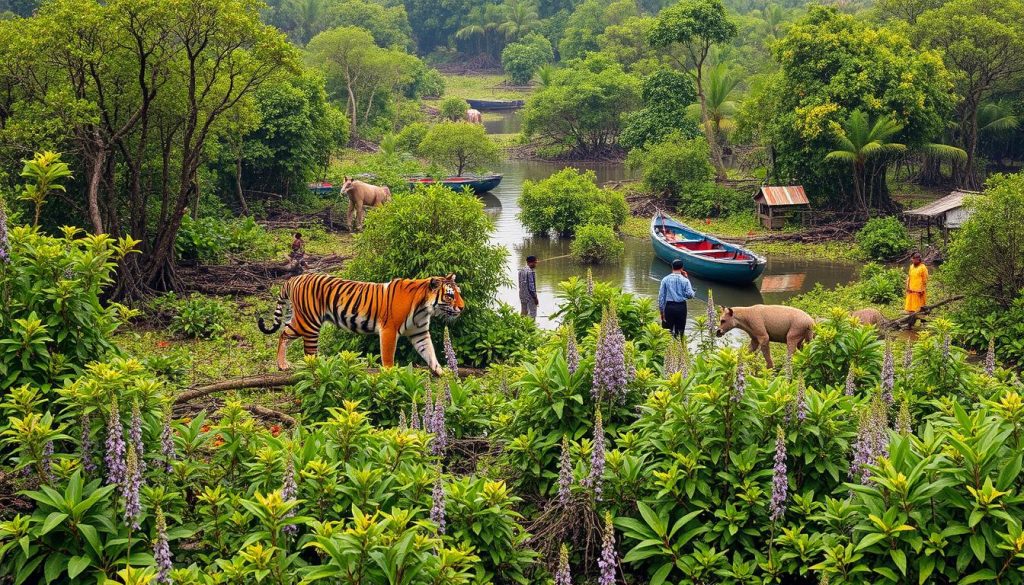
| Protected Species | Royal Bengal Tiger, saltwater crocodile, Ganges river dolphin |
| Wildlife Count | 693 species |
| Plant Species | 334 species |
| Ecosystem Components | Mangroves, sandbars, water bodies |
| Conservation Efforts | Anti-poaching, habitat maintenance, eco-development |
Location and Geography of Sundarbans
The Sundarbans National Park is in southern West Bengal, India. It covers about 9,630 square kilometers. It’s part of a network of 102 low-lying islands with mangrove forests, rivers, and estuaries.
This layout makes Sundarbans a rich habitat for many species. It’s a key place for biodiversity.
The park is at 21°45′N 88°45′E. It’s about 100 kilometers southeast of Kolkata. It borders Bangladesh. The park has about 4,260 square kilometers in India and 6,017 square kilometers in Bangladesh’s Khulna Division.
It’s home to 453 wildlife species. This includes 290 birds, 120 fish, and the Royal Bengal Tiger.
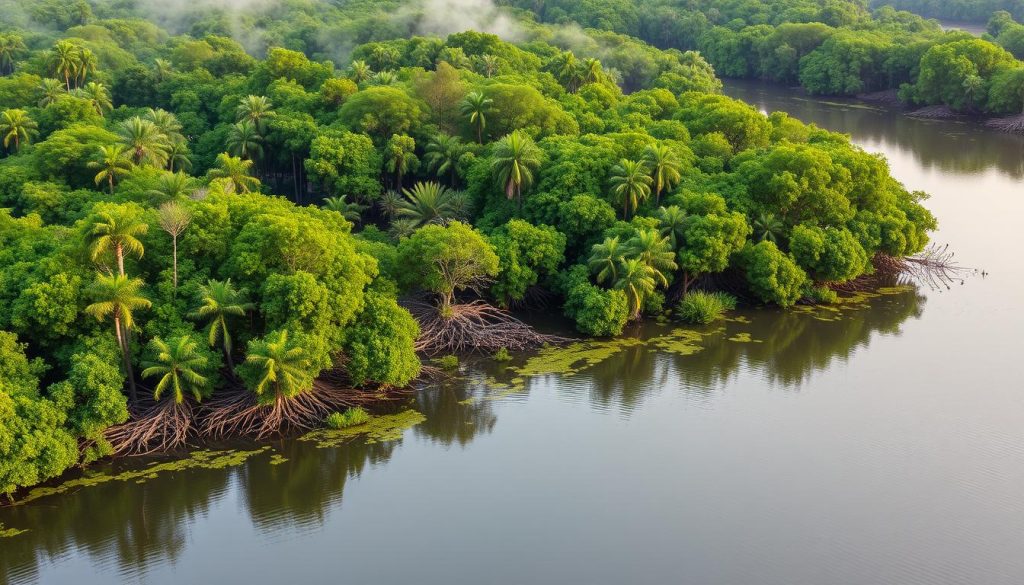
The Sundarbans is beautiful but faces threats. Cyclones and rising sea levels harm it. Human activities also affect its ecosystems.
- Area: 9,630 square kilometers
- Coordinates: 21°45′N 88°45′E
- Wildlife Species: 453 diverse fauna
- Key Flora: Over 64 varieties of Sundari trees
Since 1987, Sundarbans National Park is a UNESCO World Heritage Site. It’s a top priority for conservation. Efforts aim to protect its ecosystems and wildlife.
How can one reach the Sundarbans National Park?
Getting to Sundarbans National Park is easy with many transport options. Knowing how to get there makes planning your trip simpler.
Visiting via Air
The nearest airport is Netaji Subhash Chandra Bose International Airport in Kolkata. It’s about 112 kilometers from the park. After landing, you can take the road or train to reach Sundarbans.
Visiting via Rail
Traveling by train? The closest station is Canning, about 48 kilometers from the park. Trains from Sealdah station in Kolkata go to Canning often. Then, buses or motorboats will take you to the park.
Visiting via Road
Driving or taking a taxi? A good road connects Kolkata to Sundarbans, about 110 kilometers away. You’ll find buses and taxis for a smooth trip.
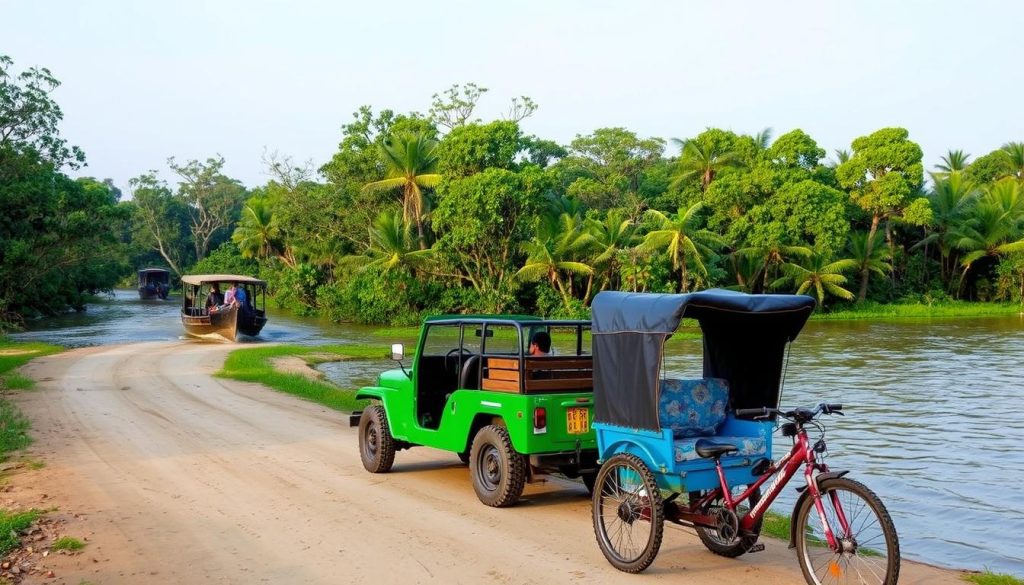
Sundarbans National Park Transportation Options
Exploring Sundarbans National Park needs a good plan for getting there. You can pick from several Sundarbans transportation options based on what you need and can afford. This part talks about public and private ways to reach the park.
Public Transport from Kolkata
Looking for something affordable? Public transport to Sundarbans is a great choice. Buses from Kolkata to places like Sonakhali and Namkhana run often. The trip takes about three hours, offering a scenic ride to the park.
Private Car Rentals and Taxis
Want a more personal trip? Renting a car or taking a taxi is a good idea. It gives you the freedom to go where you want, when you want. Whether you’re alone or with family, a private car lets you see the area at your own pace.
| Transport Type | Details | Approx. Travel Time |
|---|---|---|
| Bus Service | Kolkata to Sonakhali/Namkhana | 3 hours |
| Private Car Rental | Flexible schedule, pick-up from anywhere in Kolkata | Varies based on destination |
| Taxi | Direct access to Sundarbans locations | Varies based on destination |
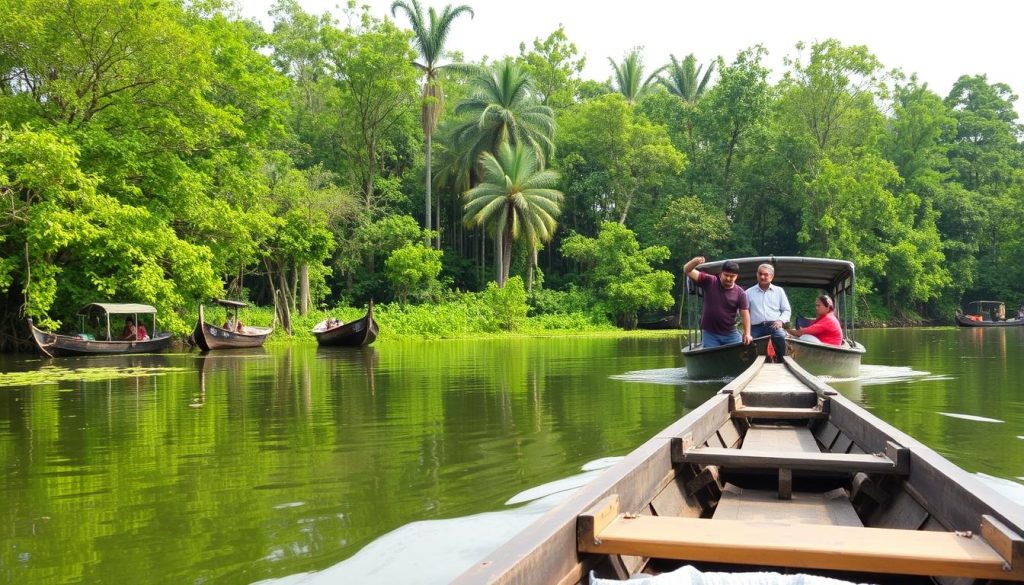
Best Way to Travel to Sundarbans National Park
Traveling to Sundarbans National Park needs careful planning for a great trip. Your budget and what you like matter a lot. You can fly, take the train, or drive, based on what’s best for you.
Choosing the Right Route
The trip starts from Kolkata. The nearest airport is Netaji Subhash International Airport, about 112 kilometers away. If you prefer trains, Canning Railway Station is 48 kilometers from the park. It has trains from Sealdah in Kolkata.
There are also buses from Kolkata to places like Namkhana, Sonakhali, and Raidhighi.
Traveling with Organised Tours
Joining organised tours in Sundarbans makes things easier. They handle transport, stay, and guides. You get to see wildlife and beauty without worrying about planning.
Prices vary from Rs 3500 to Rs 8000, depending on what’s included. Book early because it’s a popular spot.

| Travel Method | Distance (km) | Average Travel Time | Cost Estimate (Rs) |
|---|---|---|---|
| By Air | 112 | Approx 3 hours (including travel to boarding point) | Varies |
| By Train | 48 | 1.5 – 2 hours | 100 – 300 |
| By Road (Bus) | 76 – 105 | 2 – 3 hours | 100 – 400 |
Picking the right travel option for Sundarbans can make your trip better. Think about what you want and how much you can spend to find the best way to see this amazing place.
Key Access Points to Sundarbans National Park
Getting close to important access points makes your trip to Sundarbans National Park better. Knowing where to start your adventure is key to enjoying this special place.
Entry Points from Kolkata
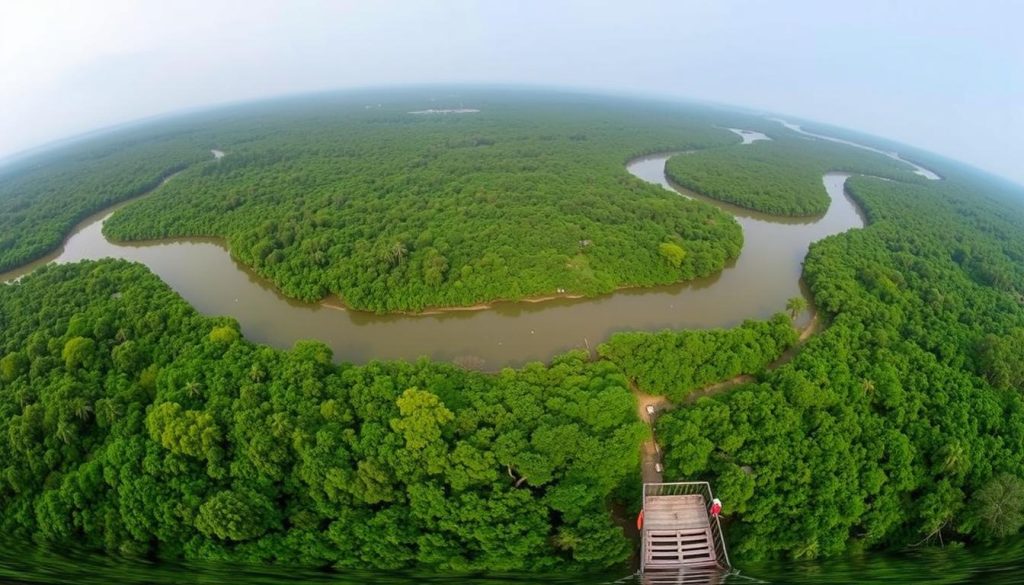
There are several key spots for those leaving from Kolkata. Godkhali, Namkhana, and Sonakhali are top places to start your waterway journey into the park. Each spot offers easy ways to start exploring the beautiful mangrove forests.
Understanding the Various Jetties
Your trip will involve different jetties as starting points for boats and ferries. Knowing about Sundarbans jetties is important for planning your park visit. Learn about their locations, schedules, and services to make your arrival and departure smoother.
| Access Point | Distance from Kolkata | Mode of Transport | Duration |
|---|---|---|---|
| Godkhali | 95 km | Taxi/Bus | 3 hours |
| Namkhana | Approx. 85 km | Taxi/Bus | 2.5 hours |
| Sonakhali | Approx. 100 km | Taxi/Bus | 3.5 hours |
| Canning (Nearest Train Station) | 48 km | Train | 1.5 hours from Sealdah |
Sundarbans National Park Entry Routes
Traveling to Sundarbans National Park is a great way to see wildlife and beautiful landscapes. You’ll use different transport modes for a memorable trip.
Train and Boat Combinations
Using trains and boats is a favorite way to get to Sundarbans. First, take a local train to Canning, about 109 km from Kolkata. Then, motorboats at nearby jetties take you into the park. This journey is full of adventure and lets you see the Sundarbans’ unique ecosystem.
Bus and Ferry Connections
Public buses to Sonakhali also offer ferry rides. This mix of bus and ferry lets you see scenic views and local culture. Whether you pick trains and boats or buses and ferries, both make your trip better and easier.