Impact of Tourism on the Plain of Jars Explained
Have you ever thought about the impact of tourism on places like the Plain of Jars in Laos? This site, with over 2,000 ancient stone jars, shows a mix of good and bad. We’ll look at how tourism helps local businesses but also poses problems for the environment and culture.
The Plain of Jars is a key piece of history from the Iron Age. But it faces challenges from tourism that could harm its future. You’ll learn how tourism affects this site, trying to find a balance between keeping it safe and dealing with more visitors.
Introduction to the Plain of Jars
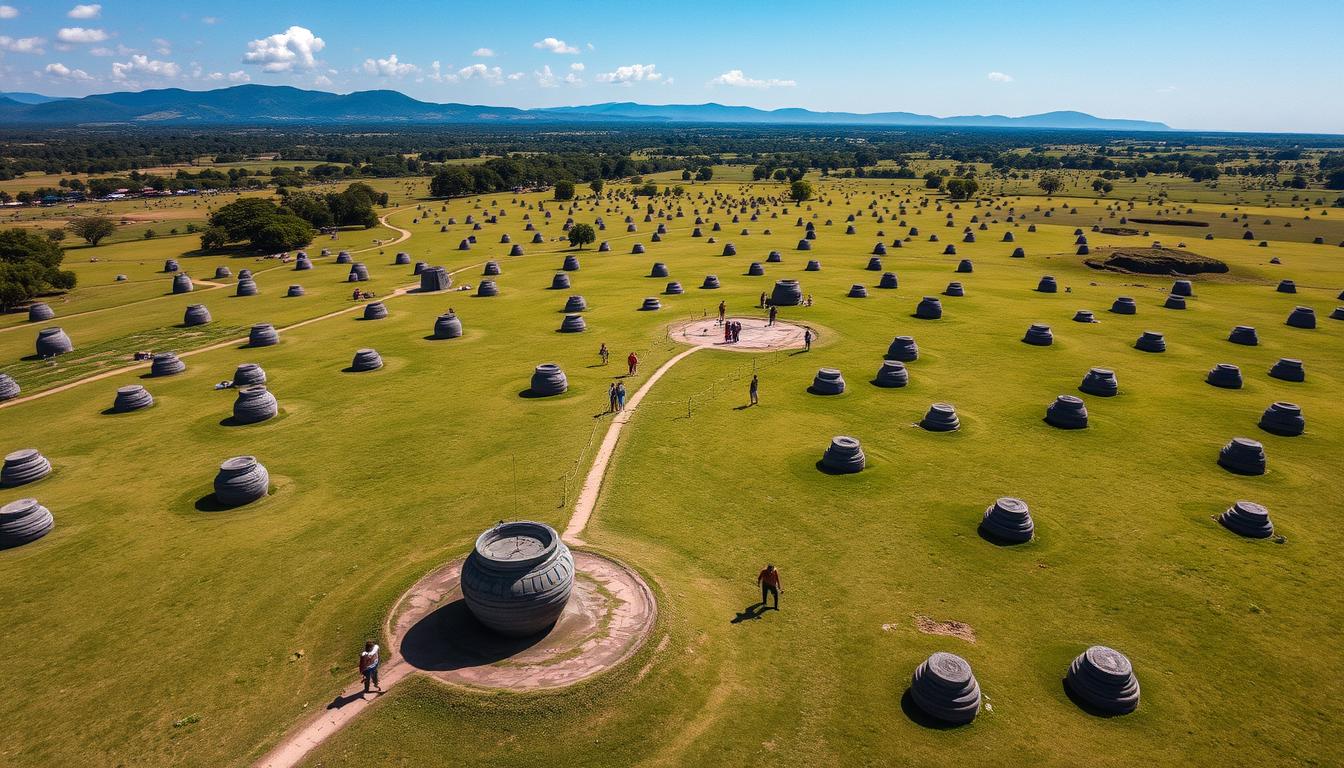
The Plain of Jars is in central Laos, on the Xieng Khouang plateau. It has over 2,100 ancient stone jars. These jars are thought to be from 500 BCE to 500 CE and might have been used for funerals.
But, their true purpose is still a mystery. The Plain of Jars is a major archaeological site in Southeast Asia. It attracts visitors from all over, sparking talks about the Plain of Jars tourism impact and how to protect it.
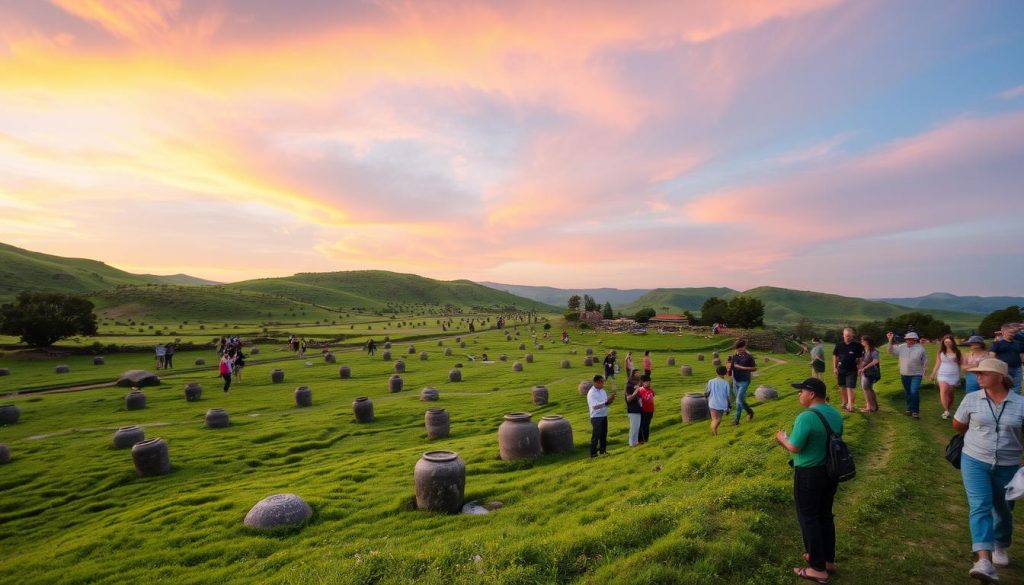
There are about 90 jar sites, but only seven are safe for tourists. This is because of unexploded bombs and mines nearby. Sites 1, 2, and 3 are the most visited.
Site 1, called “Thong Hai Hin,” has over 300 jars. The “King” jar is the biggest, weighing over 10 tons and standing almost three meters tall. Getting to these sites can be tough, with paths that vary in difficulty and how crowded they are.
Visitors pay between 10,000 to 15,000 kip (about 0.48 to 0.72 USD) to see the jars. You can fly to Xieng Khouang Airport from Vientiane or Luang Prabang. Buses also connect major cities to the area.
There are other attractions nearby, like the Piu Cave and Tad Ka waterfall. These add to the site’s appeal for those interested in culture and adventure. As tourism grows, it’s key to understand the Plain of Jars tourism impact to keep the site safe for the future.
Historical Significance of the Plain of Jars
The Plain of Jars is a key piece of history, showing us the lives of ancient people. It’s famous for its unique stone jars. These jars have caught the attention of many historians and archaeologists.
Overview of the Megalithic Jars and Their Origins
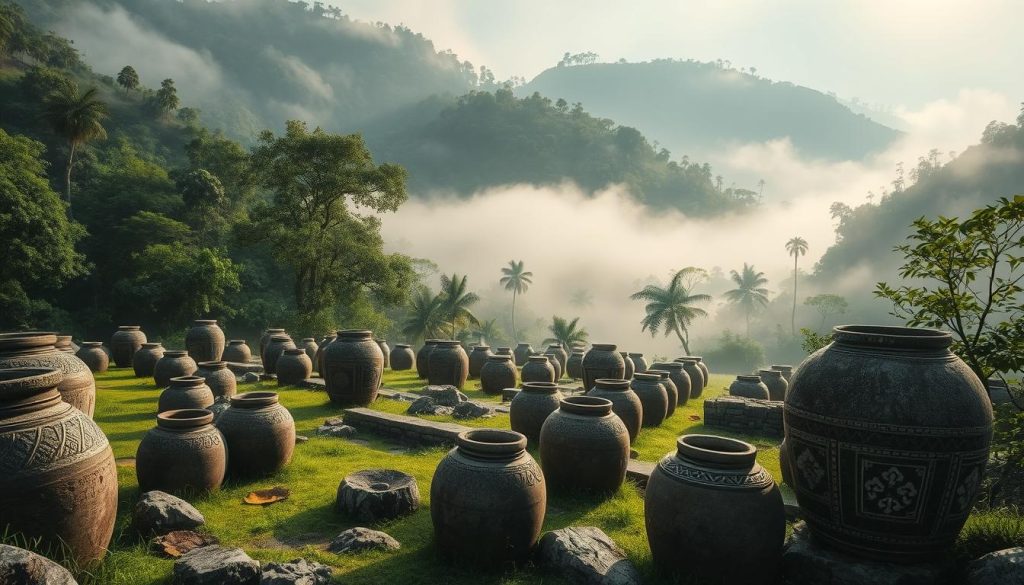
More than 2,000 stone jars are found in the Plain of Jars, spread over 90 sites. These jars, some up to three meters tall, are made of sandstone. Excavations have found pottery and tools, helping us understand the culture.
The jars were likely used for burials. They show the importance of funerals in ancient times, dating back to the second millennium BC to around 1000 AD.
The Role of the Plain of Jars in Iron Age Culture
The Plain of Jars is more than just jars. It helps us understand the Iron Age culture in Southeast Asia. Trade routes connected different societies, making the jars a symbol of social and spiritual beliefs.
Ceremonies in the Plain of Jars reveal the complexity of ancient cultures. They show how these people believed in rituals for death and the afterlife. Their local customs and interactions with others created a rich cultural heritage of the Iron Age.
Current State of Tourism in the Plain of Jars
The Plain of Jars has seen a big jump in tourism. Thousands now visit this UNESCO World Heritage site. Travelers are drawn to the adventure and history of the megalithic jars.
As more people come, local businesses are doing well. But, there are also challenges from the growing number of visitors.
Visitor Statistics and Trends
Only three sites in the Plain of Jars are open to tourists. Yet, these ancient wonders attract thousands each year. The site’s history and culture keep drawing people.
This ongoing interest in the site is part of the tourism trends in Laos.
Popular Sites and Attractions
Sites 1, 2, and 3 are the most visited in the Plain of Jars. They show the area’s history with many jars and stunning views. Site 1 has good visitor facilities, perfect for starting your visit.
Sites 2 and 3 offer amazing views and chances to see local culture. You can visit Hmong villages and see their crafts. These spots make the visit better and help local communities.
| Site | Number of Jars | Key Features | Visitor Experience |
|---|---|---|---|
| Site 1 | Approx. 400 | Visitor amenities, largest jars | Accessible facilities, scenic routes |
| Site 2 | Approx. 300 | Scenic views, tranquility | Ideal for photography, nature walks |
| Site 3 | Approx. 200 | Multidimensional jar arrangements | Cultural interactions, local markets |
How does tourism impact the Plain of Jars?
Tourism in the Plain of Jars brings both good and bad. It affects the environment and local culture. We need to understand this to protect the area for future generations.
Environmental Considerations
Tourism can harm the environment around the Plain of Jars. Too many visitors can damage the soil and disrupt habitats. This can lead to litter and fewer animals, harming the area’s beauty.
Also, more people mean more wear and tear on ancient sites. We must work hard to keep these places safe.
Cultural Implications of Increased Tourism
Tourism also changes the local culture. Communities may start to focus more on making money from tourists. This could make their traditions less real.
Visitors want to experience the culture, but if it’s done wrong, Laos’ heritage could be lost. It’s important to find a balance between tourism and respecting local traditions.
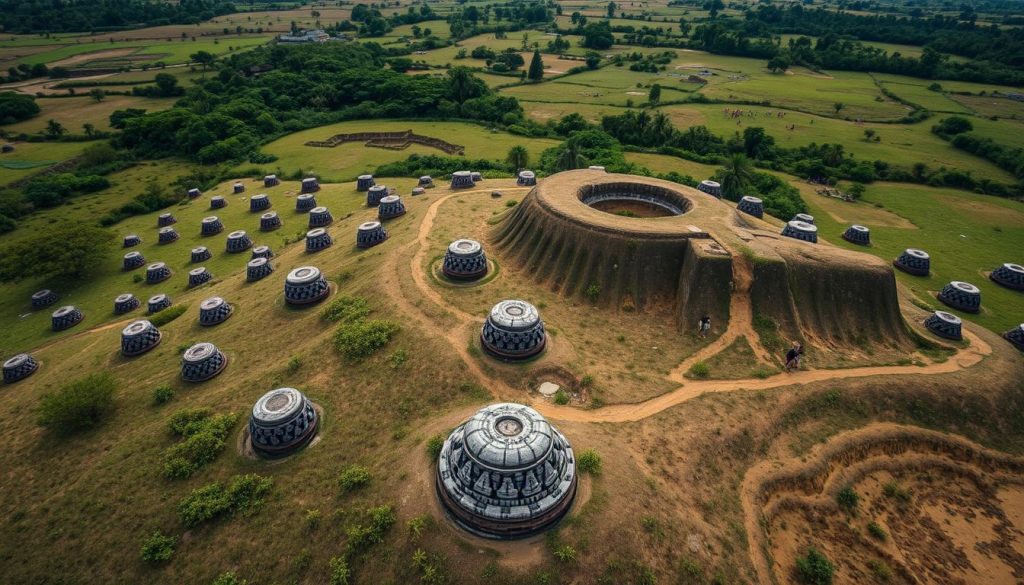
| Impact | Environmental Considerations | Cultural Implications |
|---|---|---|
| Ecosystem Disruption | Increased foot traffic causing soil erosion | Shift from authentic practices to commercialization |
| Wildlife Decline | Habitat loss due to habitat encroachment | Potential for loss of traditions |
| Site Integrity | Wear and tear on archaeological features | Oversimplification of cultural expressions |
Positive Effects of Tourism on the Plain of Jars
Tourism is key to the economy of the Plain of Jars. It brings in jobs and boosts local businesses. This creates a lively economy based on the area’s culture and attractions.
Visitors help by shopping for local crafts and eating at local spots. They also join guided tours. This helps fund projects that improve the community.
Economic Benefits for Local Communities
The impact of tourism goes beyond money. Local artists sell their work, and hotels and restaurants get busier. About 10,000 people visit the USIC visitor center each year.
One in five of these visitors buys something from the Village Shop. This helps around 200 families. It makes the area’s economy and social life better.
Preservation Efforts Fueled by Tourism Revenue
Tourism helps the economy and protects the Plain of Jars. Money from visitors goes to keeping the ancient jars and the area safe. This is crucial for the jars, which are over 2,000 years old.
This relationship helps keep the Plain of Jars’ culture and history alive. It ensures it remains a treasure for future generations.
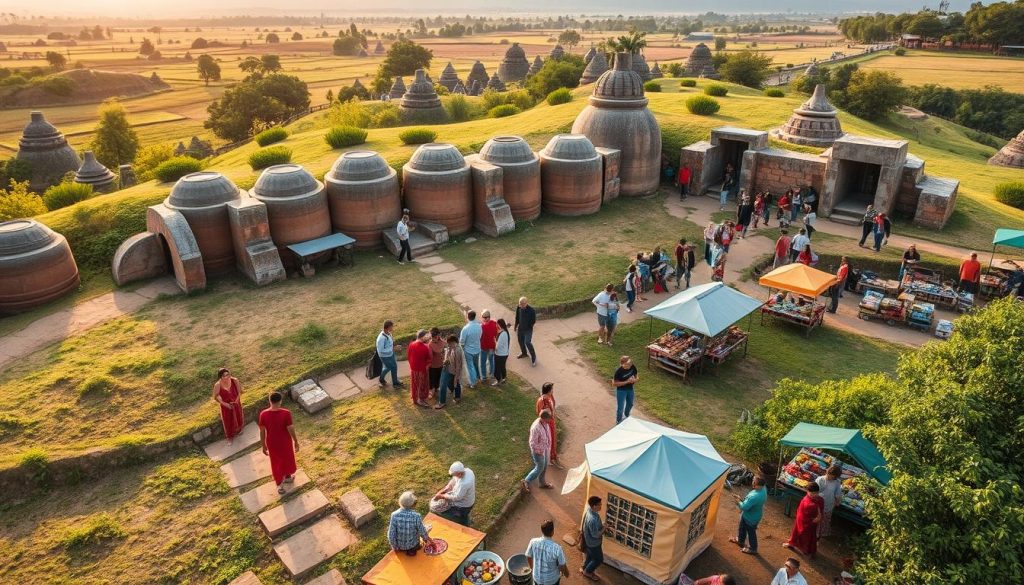
| Benefit | Description | Impact |
|---|---|---|
| Local Employment | Creation of jobs in hospitality and crafts | Improved livelihoods for local families |
| Community Development | Investment in local infrastructure and services | Enhanced living conditions and access to amenities |
| Cultural Preservation | Revenue allocated to conservation initiatives | Protection of heritage sites from decay |
| Visitor Engagement | Tourists participating in local events and activities | Promotion of cultural exchange and understanding |
Negative Impacts of Tourism on the Plain of Jars
The rise in tourism at the Plain of Jars has brought both benefits and challenges. While many enjoy the historical significance, there are serious concerns regarding the negative impact tourism has on the environment and local culture.
Environmental Degradation and Pollution
Tourism contributes significantly to environmental degradation Plain of Jars. Increased foot traffic and visitors lead to soil erosion, damaging archaeological features and disrupting the natural ecosystem. The effects of pollution from tourism become evident as waste generated by travelers accumulates in the area. This pollution threatens the pristine beauty and ecological balance that make the Plain of Jars so special. Addressing these issues demands immediate attention to safeguard the area for future generations.
Cultural Erosion and Commercialization
The commercialization driven by tourism introduces challenges for local communities, often resulting in cultural erosion Plain of Jars. In an effort to attract visitors, traditional practices may be altered or presented in a diluted manner, mainly for profit. This shift not only risks losing authenticity but also undermines the cultural integrity that is essential to the heritage of the region. Understanding these dynamics is vital for preserving the unique identity of the Plain of Jars.
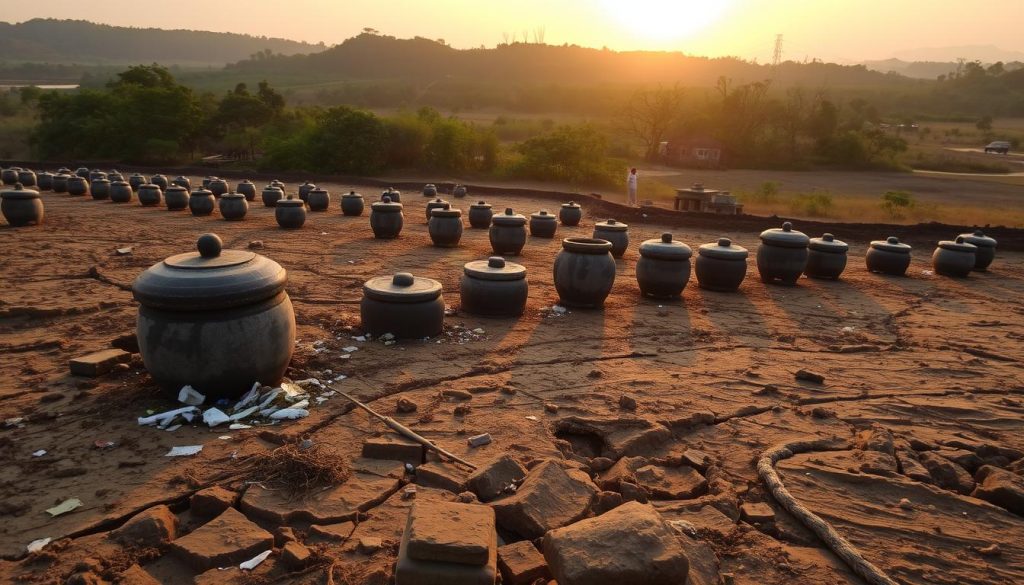
| Impact Area | Description |
|---|---|
| Environmental Degradation | Increased foot traffic leads to soil erosion and damage to archaeological features. |
| Pollution | Accumulation of waste from tourists threatens the ecological balance. |
| Cultural Erosion | Traditional practices lose authenticity as they become commercialized. |
| Negative Impact Tourism | Tourist-driven commercialization risks undermining local culture and heritage. |
Sustainable Tourism Initiatives in the Plain of Jars
Sustainable tourism is changing how we visit the Plain of Jars. It focuses on responsible travel to reduce harm to the environment. This approach teaches visitors about local customs and the need to protect nature.
It also includes educational programs. These programs help visitors respect the area’s culture and history. This way, everyone can enjoy this special place responsibly.
Efforts for Responsible Travel
Groups and local governments are working on plans for better tourism. They offer workshops and training to teach visitors about the area’s ecology and culture. They encourage tourists to:
- Reduce waste and litter.
- Respect local traditions.
- Choose eco-friendly places to stay and travel.
Community Involvement in Tourism Development
Community tourism in the Plain of Jars puts locals at the center. They are involved in tourism, which boosts their pride in their heritage. This involvement allows them to share their culture with visitors, making the experience richer.
This approach also benefits the community. It creates jobs and supports local businesses. It also fosters cultural exchange between tourists and locals.
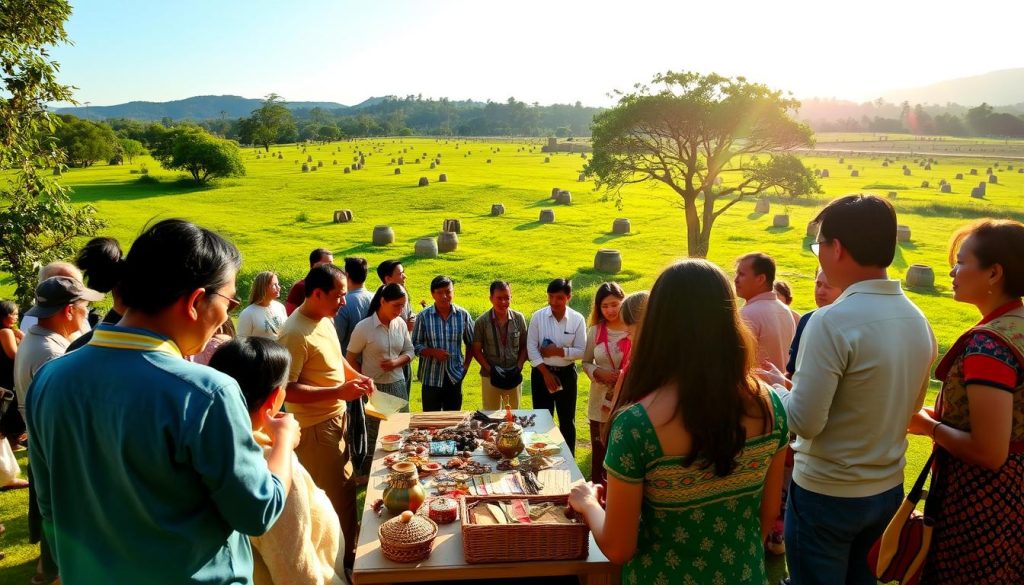
Visitor Experience and Engagement
Visiting the Plain of Jars is a deep dive into local culture and history. Knowledgeable local guides help you understand the megalithic jars and their importance. Educational tourism makes this experience even richer, with workshops and talks that teach about tourism and learning.
Local Guides and Educational Opportunities
Local guides at the Plain of Jars are key to your visit. They share insights that go beyond what guidebooks say. Through educational activities, you can dive into local traditions, try hands-on activities, and learn about the jars’ history.
- Workshops on traditional crafts
- Cooking classes featuring local cuisine
- Guided tours that highlight key cultural aspects
Promoting Cultural Exchange through Tourism
Cultural exchange tourism at the Plain of Jars connects you with the local community. By exploring markets, trying local food, and learning crafts, you build a deeper connection. This exchange benefits both you and the locals, making tourism a win-win situation.
| Aspect | Benefits for Visitors | Benefits for Locals |
|---|---|---|
| Engagement with Local Culture | Deepened understanding of heritage | Preservation of local traditions |
| Participation in Activities | Hands-on learning experiences | Economic opportunities for artisans |
| Exchange of Ideas | Broadened perspectives on life | Cultural enrichment and stimulation |
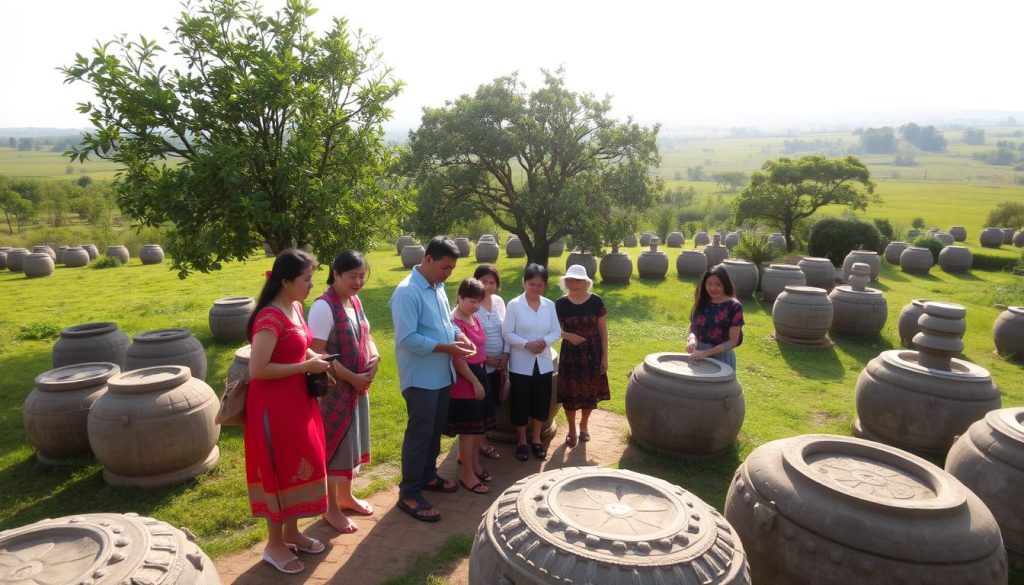
Your visit to the Plain of Jars can truly show the power of tourism and learning. It’s a place where visitors and locals come together, creating memories and connections that last a lifetime.
Environmental Impact of Tourism on the Plain of Jars
The Plain of Jars is a unique archaeological site with a rich history. As more people visit, it faces big challenges. These include damage to the environment and more visitors, which need careful handling to keep the site safe.
Conservation Challenges Faced by the Plain of Jars
Tourism growth brings many challenges to the Plain of Jars. More visitors mean more trash and possible harm to the environment. Local groups work hard to protect it while still welcoming tourists.
They need help from the government, non-profits, and the community. Together, they can find ways to keep the site safe and enjoyable for everyone.
Tackling the Issues of Unexploded Ordnance (UXO)
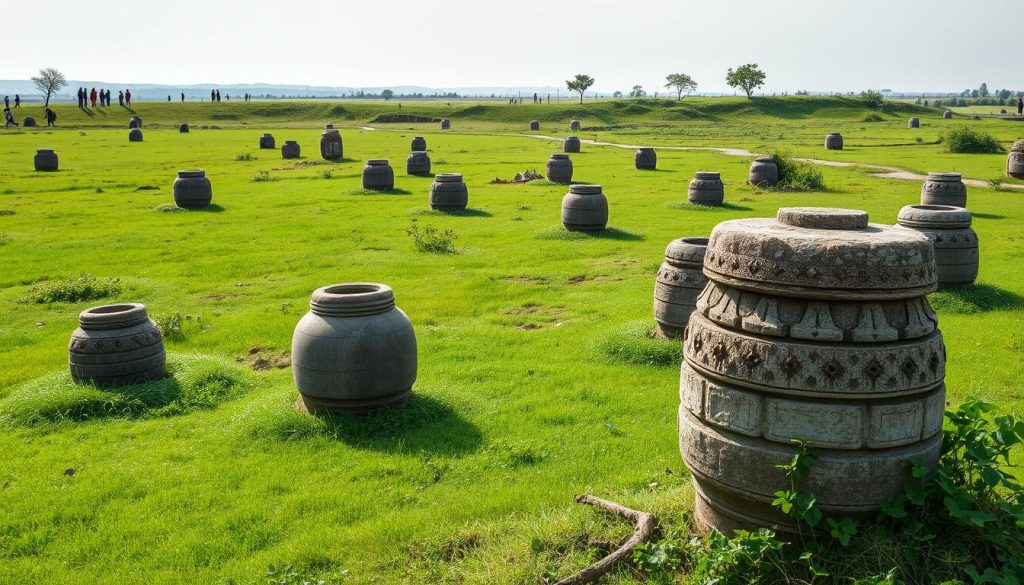
Visitors to the Plain of Jars must be careful because of unexploded ordnance (UXO). Laos was heavily bombed, and many bombs didn’t explode. This makes it dangerous for visitors.
The Lao government and UNESCO are working to clear the UXO. They teach tourists how to stay safe and where to avoid. This is important for enjoying the site’s history without risk.
Cultural Implications of Tourism on the Plain of Jars
Tourism on the Plain of Jars has many effects. It brings in money but also changes how people live and their traditions. Visitors and locals both feel these changes.
The site’s history meets modern tourism. This mix helps keep the ancient jars safe. But, it also risks making the culture into a product for sale.
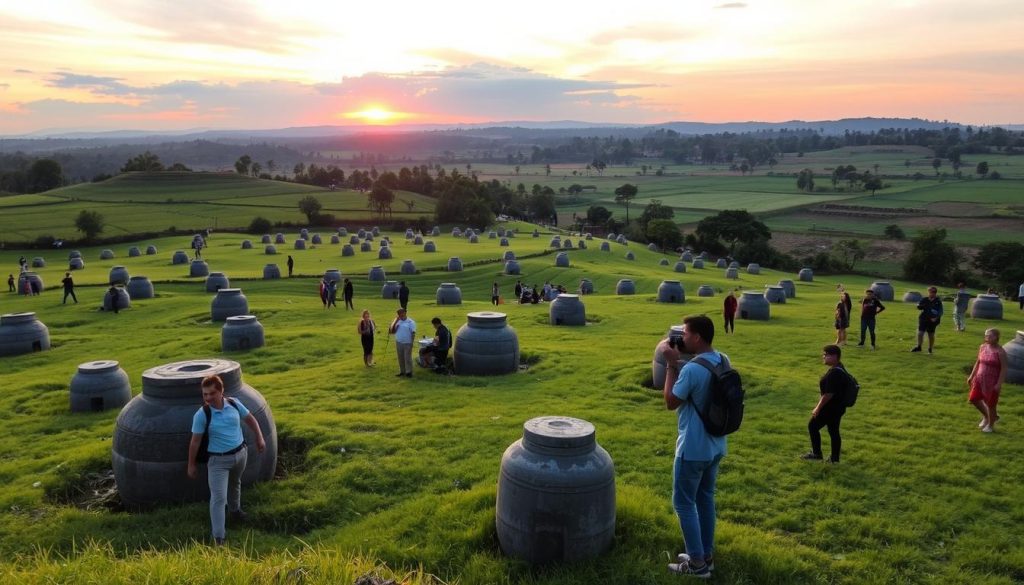
Locals might see their ways of life changed or sold to tourists. This can make their culture less real. It’s important to find a way to keep the culture alive while also making money.
| Aspect | Impact of Tourism |
|---|---|
| Economic Growth | Increased job opportunities and local business development. |
| Cultural Exchange | Opportunities for sharing local traditions and experiences with visitors. |
| Authenticity vs. Commercialization | Risk of altering traditional practices for tourist appeal. |
| Preservation Efforts | Funding for conservation projects due to tourism revenue. |
| Visitor Education | Enhanced understanding of local history and culture through guided tours. |
Tourism at the Plain of Jars can be good for the local culture. But, it also brings big challenges. Teaching visitors to respect the culture can help keep it alive for the future.
Future of Tourism at the Plain of Jars
The future of tourism at the Plain of Jars depends on caring for the environment and working with local people. Visitors and locals must work together to make tourism better. It’s important to focus on preserving cultural heritage and being eco-friendly.
Vision for Sustainable Growth in Tourism
To grow tourism in a sustainable way, we need to mix conservation with tourism. Here are some steps:
- Teach visitors about the Plain of Jars’ importance.
- Get local people involved in tourism to hear their ideas.
- Teach tourists how to travel without harming the environment.
By making locals feel like they own the place, we can protect the culture and help the economy. Teaching tourists about the area’s history can make them appreciate it more.
Prospects for UNESCO World Heritage Status
Getting UNESCO World Heritage status for the Plain of Jars could be a big win. It could:
- Bring more visitors and make the area more famous.
- Give money to protect the cultural treasures.
- Help make tourism better for the environment.
Going for UNESCO status shows our dedication to keeping this special place safe. It also supports sustainable tourism in the Plain of Jars.
Conclusion
The impact of tourism on the Plain of Jars is complex. It brings in money, which helps local communities and preserves sites. But, it’s important to balance tourism with protecting the area’s heritage.
The future of tourism in Laos depends on being sustainable. By traveling responsibly and getting involved in the community, we can protect the Plain of Jars. Local efforts are key in solving environmental problems and promoting cultural exchange.
Finding the right balance is crucial for the Plain of Jars’ future. If we respect its history and deal with challenges like unexploded ordnance, tourism can be a positive force. This could lead to a bright future for tourism in Laos.