Unraveling Legends of the Plain of Jars Mysteries
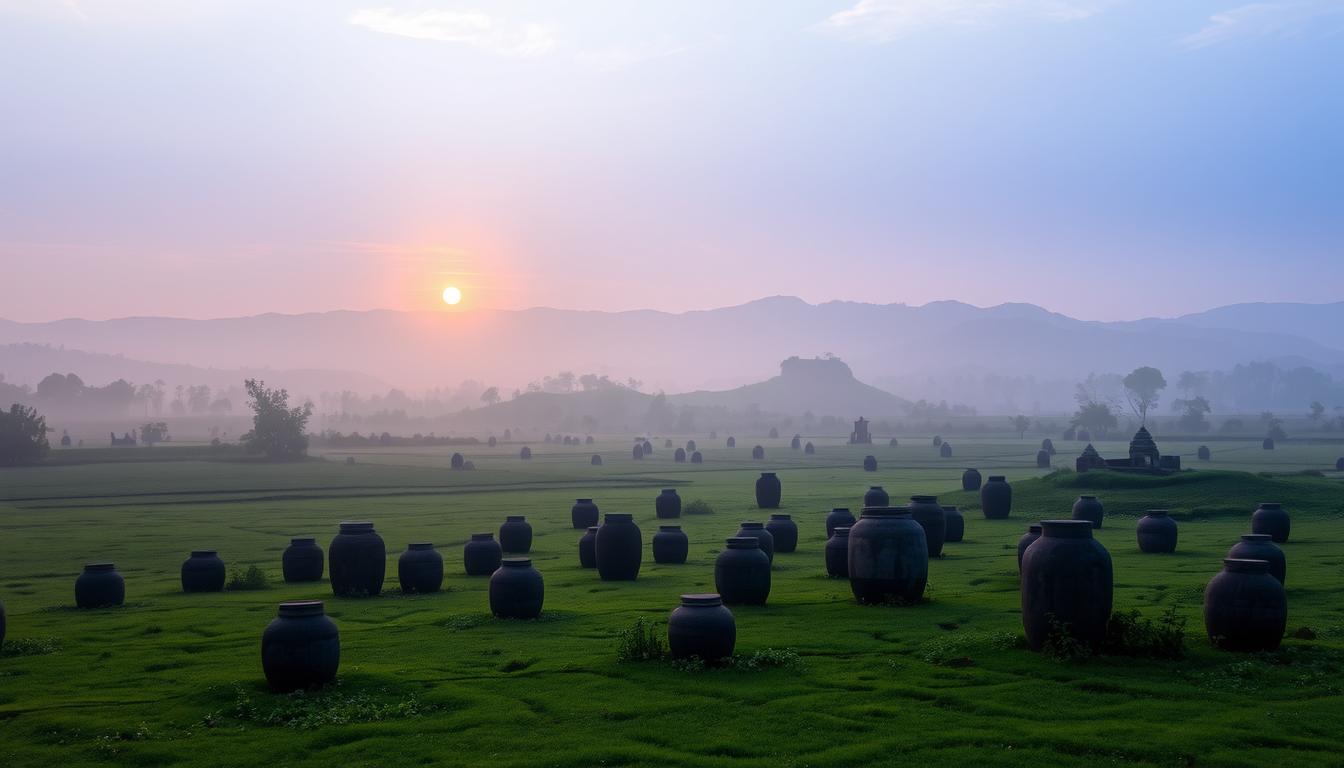
What if the Plain of Jars is more than just an ancient site? It could be a gateway to the stories of old. In Laos’s Xieng Khouang province, you’ll find over 3,000 giant stone jars. They stand tall, from 1 to 3 meters high, across 90 locations.
Since the 1930s, researchers have been trying to figure out the Plain of Jars. They wonder about its origins and what it was used for. This curiosity has sparked many theories and debates.
Exploring the legends of these ancient structures reveals a rich tapestry of local folklore. These stone jars, possibly over 3,000 years old, hold secrets of the past. They tell us about the cultures that once revered them.
The blend of ancient beliefs and archaeological discoveries is fascinating. It shows us a key part of our shared human history. This connection is truly captivating.
Introduction to the Plain of Jars
The Plain of Jars is in Xieng Khouang Province, Laos. It’s famous for its mysterious megalithic jars. These jars are huge, ranging from 1 to 3 meters tall and weighing up to 10 tons.
There are over 3,000 jars across more than 90 sites on the Xieng Khouang plain. They were made from sandstone, granite, and limestone.
The history of the Plain of Jars is still a mystery. Some think the jars were used to store food or wine. Others believe they had a spiritual purpose, linked to ancient burial practices.
Some scholars think the jars might have collected rainwater. This could have helped ancient traders. Legends also suggest a mythical giant race made the jars, adding to their mystery.
Excavations have found human remains and ceramics. This supports the idea that the jars were part of ancient burial customs. The Plain of Jars offers insights into the history and culture of Southeast Asia.

| Feature | Details |
|---|---|
| Total Number of Jars | Over 3,000 |
| Weight of Jars | Up to 10 tons |
| Height Range | 1 to 3 meters |
| Primary Materials | Sandstone, granite, limestone |
| Dating Period | 500 BCE to 500 CE |
| Significant Findings | Human remains, burial goods, ceramics |
| Location | Xieng Khouang Province, northeastern Laos |
Mysterious History of the Plain of Jars
The Plain of Jars is a mystery, with no clear answers about who built it or why. It’s in Xieng Khouang Province, Laos, covering 15,000 square kilometers. It has over 85 massive jars, some up to 10 feet tall and weighing 14 tons.
These ancient structures have puzzled many, leading to talks about old civilizations and their ways. French archaeologist Madeleine Colani studied it and wrote a 719-page book called The Megaliths of Upper Laos.
Her work shows the jars might be 2,500 to 1,500 years old. They were likely built between 1240 and 660 BC. Inside, they often had burial goods, showing their role in funerals.
Similar jars are found in Thailand and India, hinting at cultural links and trade. This adds to the mystery of the Plain of Jars, making it a fascinating topic for history and archaeology fans.
What Legends Are Associated with the Plain of Jars?
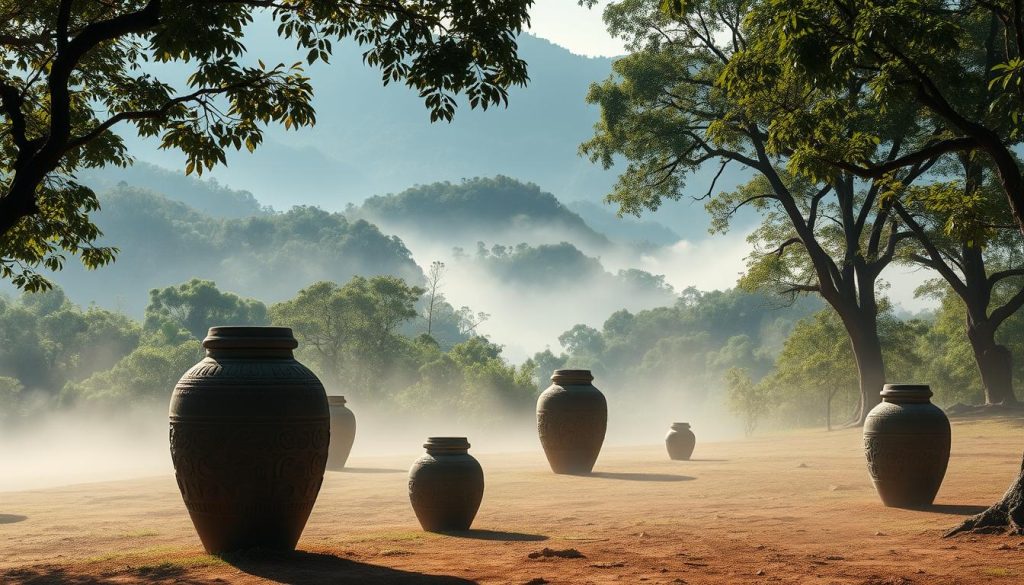
The Plain of Jars in Laos is filled with local folklore that fascinates everyone. Myths about the jars tell stories of giants and great battles. These stories show the rich tradition of storytelling in the area. Each jar has its own special features, linking back to these magical cultural legends Laos. They reflect the deep beliefs and histories of the communities.
Local Folklore and Myths
Local stories say a race of giants, led by King Khun Cheung, made these huge jars. They used the jars to store lots of rice wine. This wine was for celebrating their victories in battles. This shows how important the jars are in local myths and the region’s identity.
Historical Interpretations
Many historians think the jars were used for funerals. Archaeologists found evidence that they might have been burial urns. This helps us understand the ancient cultures of Laos better.
The myths of giants and battles give us a peek into how these events were remembered. They show how history and myths blended together in creating these mysterious structures.
Construction and Purpose of the Jars
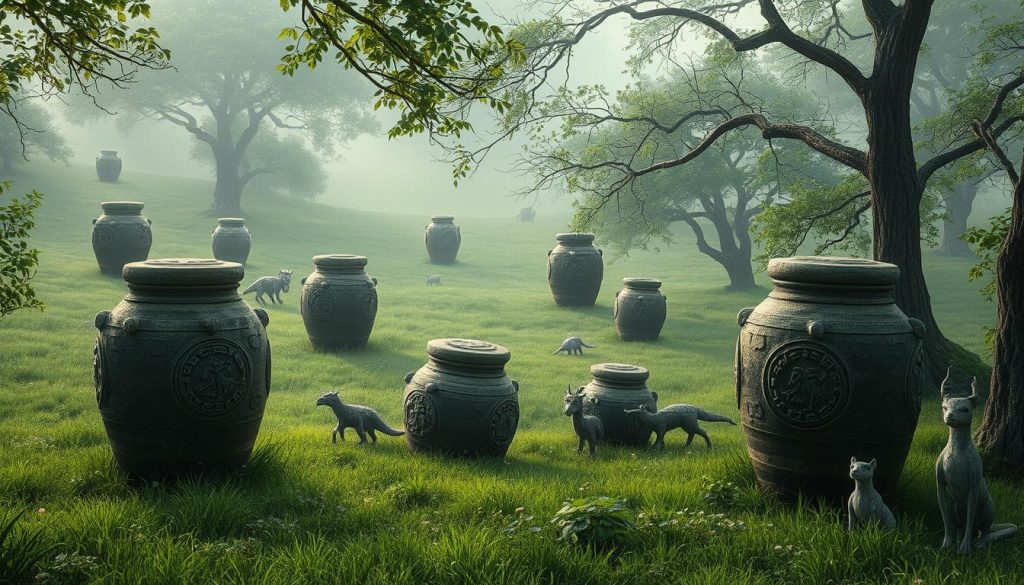
The jars at the Plain of Jars were made with sandstone, a local rock. Archaeologists think they were built about 2,000 years ago. Some jars are almost 10 feet tall, showing the ancient people’s skill in stonework.
Many wonder why the jars were made. Some think they were for storing rice wine. Others believe they were used in rituals, where the dead were placed inside to decompose before being cremated.
How the jars were moved is also a mystery. Some were carried up to 10 kilometers. This shows the ancient builders’ ability to move large stones. It also gives us a glimpse into the culture of ancient Laotians.
Significance of the Plain of Jars in Archaeology
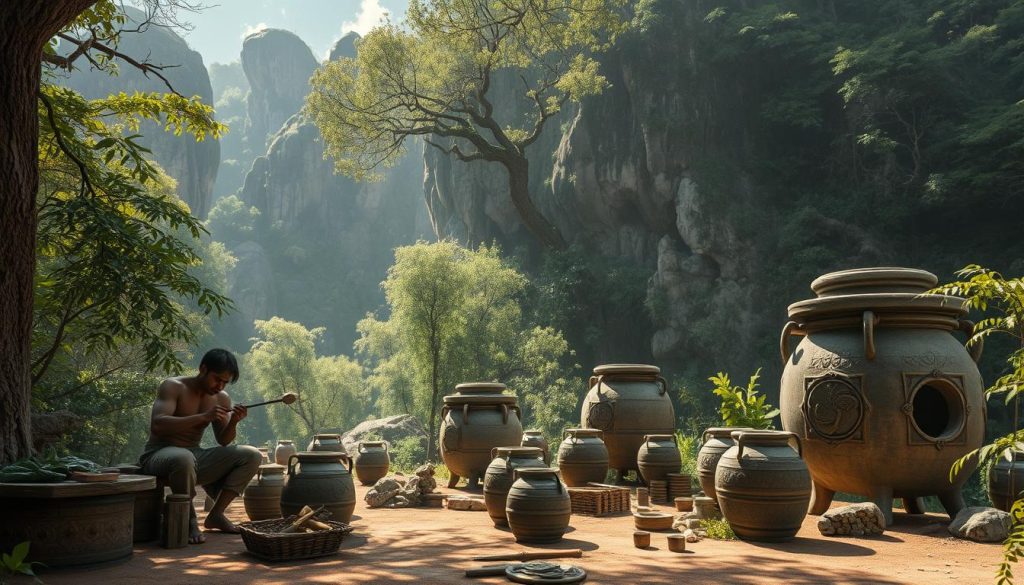
The Plain of Jars is a key site in archaeology. It’s known for its massive stone structures and burial practices. Recent discoveries have made its history even more fascinating. Researchers are now diving deeper into the cultural practices of this site.
Over 90 sites have been found in Xieng Khouang. These sites are home to thousands of stone jars spread across a vast area.
Recent Archaeological Findings
Recently, archaeologists from ANU found 15 new sites. These sites have 137 more massive jars, over 1,500 years old. This discovery adds to the over 100 jar sites already found in Phonsavan.
The largest jars are huge, measuring up to 2.5 by 2.57 meters. There are at least 3,000 giant stone jars, some as tall as 3 meters and weighing tons.
Impact of Burials on Cultural Understanding
The burial practices in Xieng Khouang have greatly influenced our understanding of the region’s history. Human remains from the Iron Age have been found. These discoveries shed light on the complex burial practices of the area.
Carved discs, used as burial markers, have been found. They show images of concentric circles and human figures. This gives us a glimpse into the rich cultural heritage of Lao society.
Miniature clay jars, similar to the large ones, have also been found. They suggest beliefs in afterlife customs. These practices highlight the spiritual importance of the Plain of Jars, adding to Laos’ cultural significance.

| Findings | Details |
|---|---|
| Sites Identified | Over 90 sites with thousands of stone jars |
| Age of Jars | Used between 1,500 and 2,000 years ago |
| Largest Jars Size | 2.5 x 2.57 meters |
| Newly Discovered Sites | 15 new sites with 137 new jars |
| Total Jars | At least 3,000 jars up to 3 meters tall |
| Human Remains | Dating back to the Iron Age, 2,500-3,000 years ago |
| Burial Markers | Carved discs with various imagery found |
| Miniature Jars | Clay jars found buried with individuals |
| Dangerous Site | 35% of Xieng Khouang contaminated with unexploded ordnance |
Cultural Myths Surrounding the Plain of Jars
The cultural myths of the Plain of Jars are key to the identity of Laos’ local communities. These stories link the past to today’s Laotian traditions. They are filled with tales that entertain and deepen our respect for the area’s cultural heritage.
One common myth tells of giants who made the huge jars to hold rice wine. This legend shows the massive size of these structures, exciting both locals and visitors. Today, these stories keep ancient practices alive in local customs and traditions.
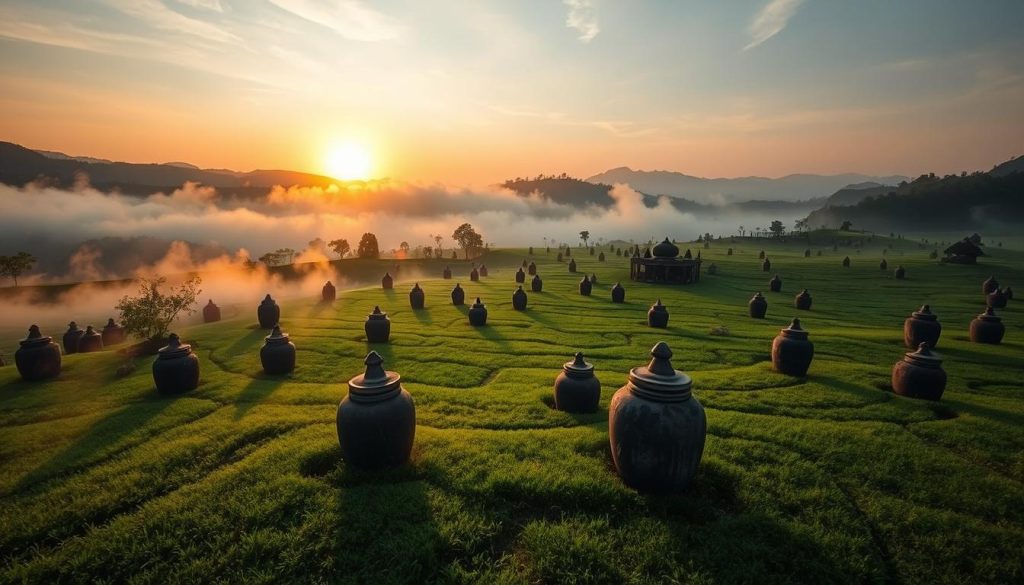
These myths blend spirituality and community. They are not just historical accounts but also moral tales with important lessons. Exploring the cultural myths of the Plain of Jars reveals their deep connection to the values and beliefs of the people who live here.
| Key Aspects | Details |
|---|---|
| Jars Count | Approximately 1,999 stone jars |
| Height Range | 1m to 3m |
| Historical Context | Believed to date back over 3,000 years |
| Major Sites | 90 jar sites, including Site 52 with 392 jars |
| Cultural Importance | Reflect Laotian traditions and historical storytelling |
| Accessibility | Flights available from Vientiane, entrance fee around $1.5 |
Exploring the region and its cultural myths offers a deep understanding of the Plain of Jars. Embracing these stories makes your experience richer. It shows the lasting impact of Laotian customs and beliefs.
Legends of Giants and Epic Battles
The Plain of Jars is filled with stories of giants and great battles. Local legends say giants once walked this land. They fought for land and glory, adding to the area’s rich history and myths.
These tales connect ancient beliefs to today’s culture. They show the values of strength, bravery, and community in Laos. The battles at the Plain of Jars show the giants’ power and teach lessons on unity and courage.
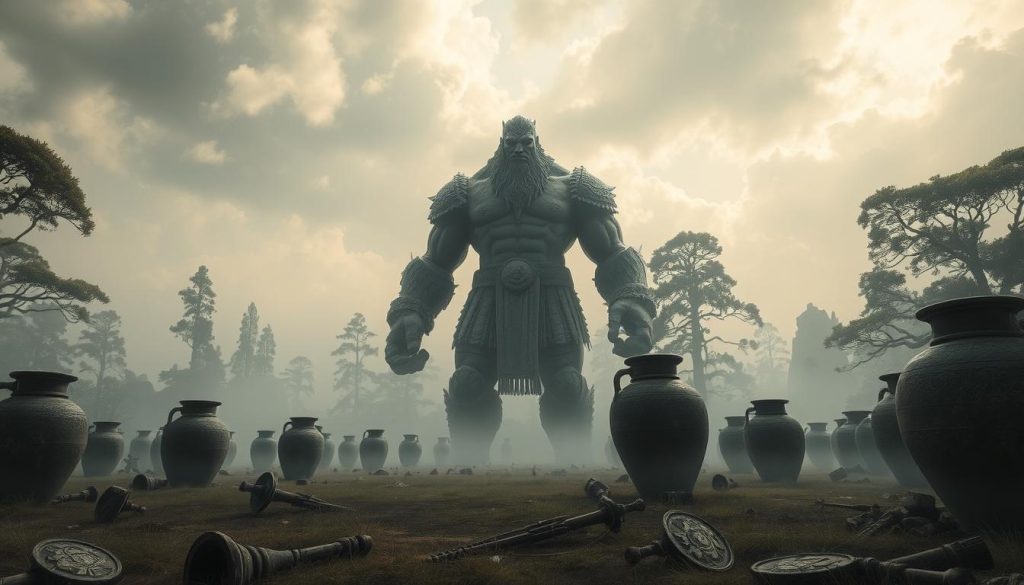
Today, we see the remains of these legends. They shape the local identity and connect communities. Exploring the Plain of Jars lets you dive into the cultural history it holds.
| Legend | Description | Significance |
|---|---|---|
| King Khun Cheung | The giant who created the jars for rice beer. | Symbolizes celebration and victory. |
| Elder Giants | Mythical beings that waged wars across the plains. | Represents strength and bravery in Lao culture. |
| Epic Battles | Conflicts fought for land and freedoms. | Highlights themes of unity among communities. |
Every stone jar and artifact at the Plain of Jars tells a story. They remind us of the epic battles and giants of old. These stories help us understand Laos’ past and spark our imagination.
Plain of Jars as a Burial Site
The Plain of Jars is a key burial site, offering archaeological insights into ancient funerary practices. Over 2,000 stone jars across the landscape show a deep connection between the living and the dead. Each jar, some up to three meters tall and very heavy, shares a part of this fascinating history.
Insights from Archaeological Excavations
Excavations have found many artifacts, like ceramics and grave goods. This shows the jars’ important role in funerary practices. Sites like Thong Hai Hin, with over 300 jars, are key areas of study.
Studies from the 1930s found glass beads, burnt bones, and teeth in the jars. This supports their use in burial rituals. Scholars believe these jars were burial markers, showing a deep understanding of death and the afterlife.
Exploring the area, it’s important to stay on marked paths due to unexploded bombs from the Vietnam War. Safety is crucial as you explore the burial site Plain of Jars and its secrets.
| Aspect | Details |
|---|---|
| Total Jars | Over 2,000 scattered across the burial site |
| Size of Jars | Height up to 3 meters, weighing several tons |
| Main Sites | Thong Hai Hin (300 jars) and more than 90 jar sites in total |
| Historical Period | Placed between 1240 to 660 BC |
| Artifacts Found | Glass beads, burnt bones, teeth, ceramics, and iron objects |
| Safety Notice | Remain on designated paths to avoid unexploded ordnance |
The Enigmatic Materials of the Jars
The stone jars of the Plain of Jars are a fascinating testament to ancient craftsmanship. They were made from various materials like sandstone, granite, and limestone. This variety adds depth to the geological aspects of the Plain of Jars and sheds light on their history.
Each jar is unique, with sizes ranging from 3 to 6 feet tall and weights from 1,300 pounds to 13 tons. The largest jar, called the “King,” shows the remarkable stone characteristics of the area. These sizes highlight the makers’ engineering skills.
The jars date back to the Iron Age of Southeast Asia, from 500 BC to 200 AD. The materials used suggest significant cultural and commercial exchanges. The advanced techniques, like working with sandstone, point to ancient trade routes.
Below is a summary table detailing the significant types of stones used in the jars:
| Material Type | Common Characteristics | Historical Significance |
|---|---|---|
| Sandstone | Predominantly used, showcases advanced crafting techniques | Indicates trade routes and cultural exchanges |
| Granite | Durable, heavier material | Signifies the variety in construction techniques |
| Limestone | Less common but significant in certain jars | Enhances diversity in material sourcing |
This exploration of the geological aspects Plain of Jars invites further study. It helps us understand how these materials were used to create these structures. Learning about the significance of stone characteristics shows the ingenuity of ancient peoples and supports ongoing research.
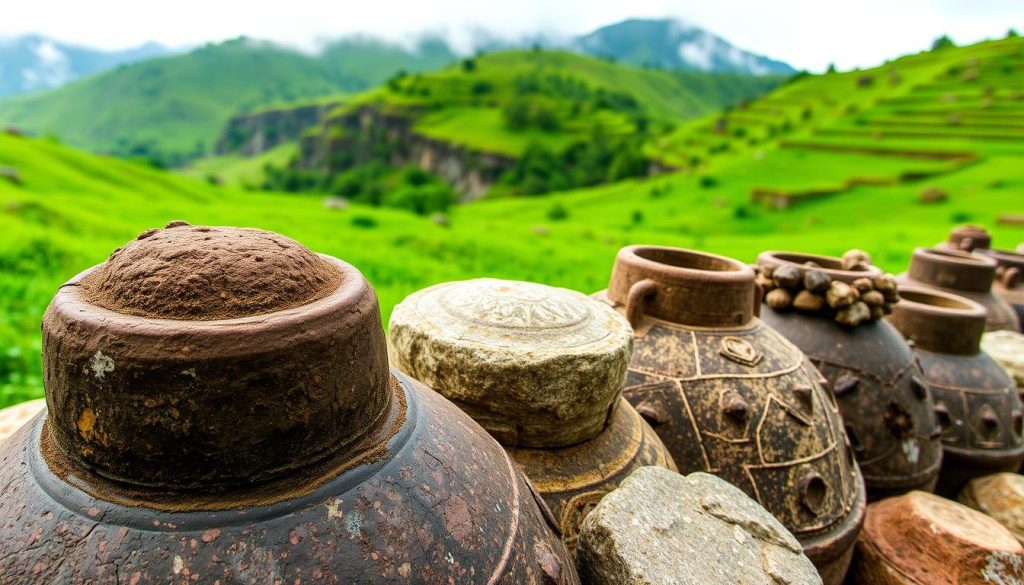
Challenges in Researching the Plain of Jars
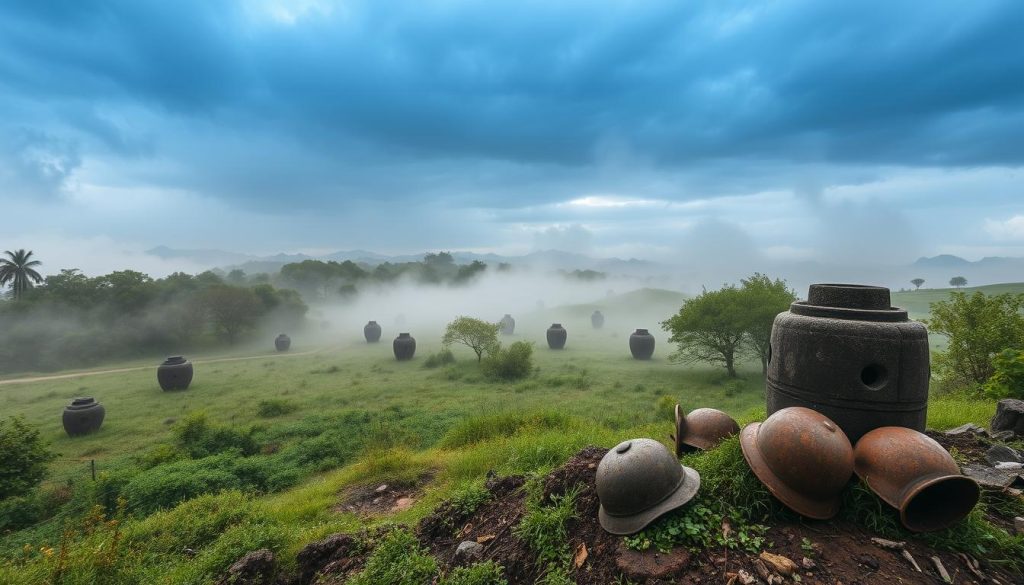
Studying the Plain of Jars is tough due to many obstacles. One big problem is the unexploded ordnance (UXOs) from past wars. Laos has millions of these bombs, making it risky for both archaeologists and locals.
UXOs make it hard to dig up artifacts safely. At Site 1, for example, 127 UXOs were found and removed. This shows the big archaeological obstacles researchers face. They want to learn about a civilization that lived 1,500 to 2,000 years ago.
The dangers of UXOs also slow down learning about the area’s history and culture. The Secret War left almost two million tons of bombs in Laos. This has made the land unsafe for farming and daily life.
Numbers show how big the problem is: 30% of cluster bombs didn’t explode, leaving 20 million UXOs. The UN says 500,000 tons of unexploded ordnance are still buried. This makes it hard for researchers to overcome the challenges in Plain of Jars research.
| Statistics | Details |
|---|---|
| UXOs at Site 1 | 127 unexploded ordinances found and removed |
| Bombs dropped during the Secret War | Almost 2 million tons |
| Unexploded ordnance in Laos | Approximately 20 million UXOs remain |
| Estimated casualties from UXOs | Over 13,000, with 40% being children |
| Number of Plain of Jars sites | 85 sites identified |
| Remaining unexploded ordnance in rural areas | About 500,000 tons |
Conclusion
The Plain of Jars is a fascinating archaeological wonder. It connects human history with rich cultural stories. Exploring this site shows more than just stone jars; it uncovers legends and practices that have lasted through generations.
With over 2,000 stone jars across more than 90 sites, their sizes and rock types add to the mystery. They raise questions about their purpose and origin.
The significance of the jars goes beyond their physical presence. They are linked to ancient burial practices and local customs. Since the early 1930s, scholars have been studying this site. It’s seen as a key prehistoric site in Southeast Asia.
Archaeological efforts are ongoing to learn more about these artifacts. This reminds us of the complex history and folklore of the Plain of Jars.
The Plain of Jars is a mix of myth and archaeology. It invites you to explore past stories and think about Laos’s cultural identity today. As research continues and it aims for UNESCO World Heritage status, its secrets will keep revealing the lasting impact of human creativity and resilience.