Visit Plain of Jars Alone or With a Tour: Safety Tips
Ever thought about exploring the Plain of Jars by yourself or with a tour? This site in Phonsavan, Laos, is filled with over 2,000 ancient stone jars from 500 BC. It’s a UNESCO World Heritage site, but safety is a big concern due to unexploded ordnance from the Vietnam War.
In this article, we’ll look at your travel options to the Plain of Jars. We’ll discuss the pros and cons of going solo versus joining a guided tour. Knowing these details can make your visit safer and more enjoyable as you uncover the secrets of these giant stone jars.
Introduction to the Plain of Jars
The Plain of Jars is a fascinating archaeological site in northeastern Laos. It’s famous for its mysterious stone jars. These jars have puzzled explorers and scholars for centuries.
These jars are about 2,000 years old. There are over 90 sites, but only three are open to visitors. Phonsavan is the main entry point for those wanting to learn about the local culture and history.
The origins and uses of these jars are still a mystery. Many legends and theories exist, making it a fascinating place to visit. Travelers can see these ancient artifacts, making it a unique experience.
Planning your visit is important. Some sites are easy to reach, but others might be harder. Traveling independently can make the trip more exciting, but knowing the area well is key. Learning about the history and sites makes the journey even more rewarding.

- Location: Northeastern Laos, near Phonsavan
- Age: Approximately 2,000 years
- Number of Sites: Over 90 locations, with three open to visitors
- Height of Jars: Ranges from less than one meter to over two meters
- Access: Varies by site; some may require a guided visit
Visiting this area offers a mix of history, culture, and adventure. It’s a must-see for anyone traveling in Laos.
Historical Significance of the Plain of Jars
The Plain of Jars is a treasure trove of history, blending local tales with ancient mysteries. Spread across nearly 100 sites, the stone jars are a puzzle. They might have been used for funerals or to collect rainwater.
This adds a deep layer to our understanding of the past. It shows how ancient cultures lived and thrived.
The Secret War in Laos casts a dark shadow over the Plain of Jars. This war saw Laos become the most bombed country per capita. From 1964 to 1973, over 270 million bombs were dropped.
This led to thousands of deaths and left the land filled with danger. Today, about 80 million unexploded bombs still pose a threat. This makes the history of the jars even more complex.
Visiting the Plain of Jars is a mix of wonder and sadness. You see the beauty of the jars but also the scars of war. It’s a reminder of Laos’s resilience and its journey towards healing.
Understanding the Risks: Unexploded Ordinance (UXO)
The Plain of Jars has a sad history due to unexploded ordnance (UXO) from the Secret War. From 1964 to 1973, Laos was heavily bombed. This left behind many dangers. It’s important to know these risks when visiting this UNESCO World Heritage site.
The impact of the Secret War on Laos
Nearly 2 million tons of bombs were dropped on Laos. This is more than double what was dropped on Germany in World War II. The constant bombing left many unexploded bombs in the area. Knowing this history is key to your Plain of Jars safety.
Statistics on Explosives in the Region
There are about 20 million unexploded ordinances (UXO) in Laos. Since the war ended, over 13,000 people have been hurt by UXO. Sadly, about 40% of these victims were children.
The area’s reality is harsh. Explosives still pose big UXO risks to locals and visitors. Some villagers collect scrap metal, which includes dangerous war leftovers. This makes safety even more of a concern.
| Statistic | Value |
|---|---|
| Bombs dropped on Laos | Almost 2 million tons |
| Remaining UXO | 20 million+ |
| Casualties since the war | Over 13,000 |
| Victims who are children | About 40% |
| Bombing missions conducted | Nearly 600,000 |
| Cluster munitions that failed to detonate | 30% |
| Live on less than $2 USD/day | 60% of the Laotian population |
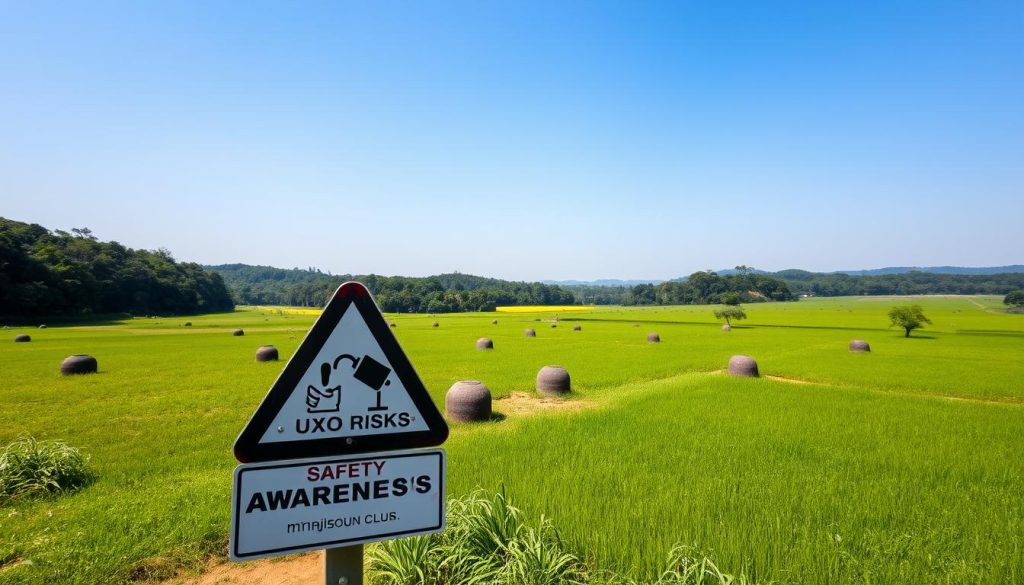
Is it safe to visit the Plain of Jars independently or with a tour?
Planning your trip to the Plain of Jars means weighing the pros and cons of traveling alone or with a tour. Each choice has its own benefits and challenges that can greatly affect your visit. Knowing these points helps you choose wisely, focusing on safety and enjoying your journey.
Exploring the Pros and Cons
Traveling alone to the Plain of Jars gives you freedom and flexibility. You can set your own pace and find hidden spots. Renting a bike in Phonsavan is a good way to see more places, costing about 80,000 LAK a day. Visiting Sites 1, 2, and 3 is also affordable, with prices from 10,000 to 15,000 LAK per person.
- Pros of Independent Travel:
- Flexibility to choose your itinerary
- Potentially lower costs, with bike rentals
- Chance to find hidden gems
- Cons of Independent Travel:
- More risk of finding unexploded ordnance (UXO)
- No expert knowledge on the sites’ history
- No safety guidance or safe route information
On the other hand, joining a tour offers safety and expert knowledge. Accredited drivers and guides lead you on safe paths, reducing UXO risks. Tours include transport and entry fees, making them a great way to see the site efficiently.
- Pros of Guided Tours:
- Access to expert knowledge and history
- Less risk of UXO dangers
- Well-planned itinerary for key sites
- Cons of Guided Tours:
- Less flexibility in your schedule
- Potentially higher costs, depending on the tour
- Less time at each site than traveling alone
The Plain of Jars is vast, with over 90 sites and some with up to 400 jars. While solo travel is exciting, guided tours are safer, given the UXO risks in the area.
| Travel Option | Pros | Cons |
|---|---|---|
| Independent Travel |
|
|
| Guided Tours |
|
|
Choosing the Right Travel Option
Choosing how to travel the Plain of Jars depends on several things like cost, experience, and safety. Solo travelers might enjoy the freedom of exploring alone. They could also save money. But, they might face dangers like unexploded bombs.
Comparing solo travel versus a guided tour
Guided tours, on the other hand, make things easier and safer. They provide helmets, safe paths, and know the rules. Guides know the history and culture of the jars, making your visit more meaningful.
Local regulations and safety measures in place
Exploring alone is tempting, but knowing the rules is key. You must have a guide to visit. This keeps you safe and lets you learn about the area’s history. Guides know the safest ways to see the Plain of Jars.
| Travel Option | Cost | Safety | Historical Insight |
|---|---|---|---|
| Plain of Jars Solo Travel | Lower cost, potential savings | Higher risk due to UXOs | Limited access to historical context |
| Plain of Jars Guided Tour | Higher cost, includes services | Reduced risk with safety measures | In-depth historical understanding |
Personal Safety Tips for Visiting
When you plan to visit the Plain of Jars, keeping yourself safe is key. The area has dangers, like unexploded ordnance (UXO). Here are some tips to stay safe:
- Stay on marked paths to avoid UXOs.
- Listen to your guide about safe places to go.
- Wear sturdy shoes for uneven terrain.
- Drink plenty of water to stay hydrated.
- Use sunscreen and hats for sun protection.
- Be careful with food and drinks to avoid poisoning.
It’s important to watch your belongings. Thieves on motorcycles often target tourists. Also, be aware of drug trafficking in some areas. Knowing your surroundings helps keep you safe at the Plain of Jars.
Traveling in Laos can be tough due to bad roads. Watch out for scams when renting cars. Choose safe and reliable companies. Working with trusted local businesses is key for a safe adventure.
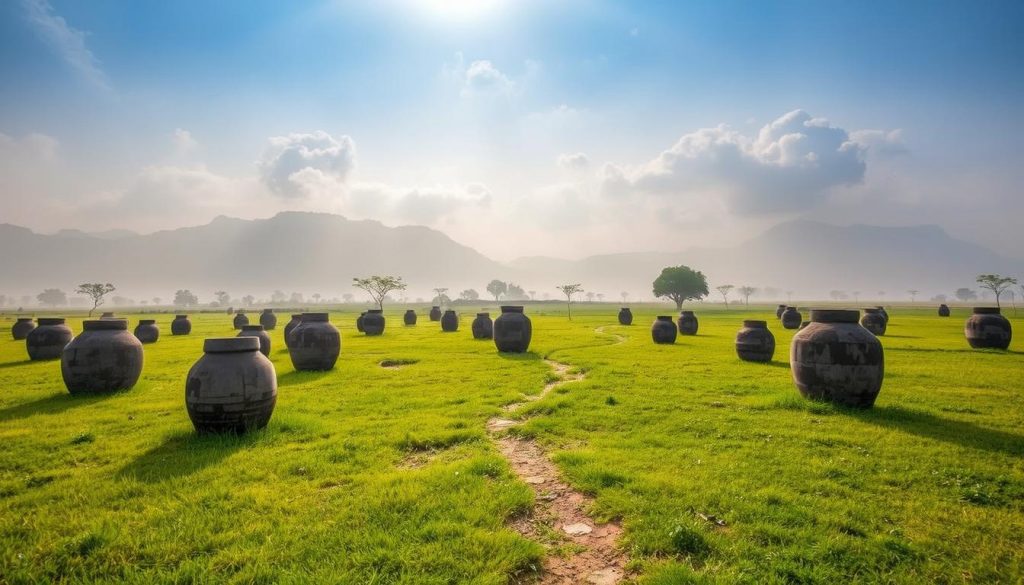
Always be careful. Urban areas have violence and street crime. Don’t carry too much money at once to avoid scams. Also, talk to a doctor before you go to know about health risks.
| Safety Tips | Details |
|---|---|
| Stay on Marked Paths | Avoid unexploded ordnance by keeping to designated trails. |
| Follow Your Guide’s Instructions | Listen to guidance regarding safe practices and areas. |
| Secure Your Valuables | Keep bags close to avoid theft in crowded areas. |
| Verify Rental Agreements | Ensure reputable rental companies to avoid scams. |
| Stay Hydrated | Bring sufficient water, specially in warmer months. |
Your safety at the Plain of Jars is up to you. Follow these tips for a safe visit. This way, you can enjoy the site’s beauty without worry.
Why Guided Tours are Recommended
Visiting the Plain of Jars is a unique adventure. Guided tours are the best way to go. They make sure you’re safe and learn a lot. Accredited drivers are key, guiding you through history safely and enrichingly.
Benefits of hiring accredited drivers
Hiring an accredited driver brings many benefits:
- Expert Navigation: They know how to safely move through tricky areas.
- Permitted Access: They have the right permits to visit different sites.
- Comfortable Experience: They make your trip less stressful, so you can enjoy the views.
Informed guidance through dangerous areas
Accredited guides know a lot about the dangers of unexploded ordnance (UXOs). They make sure you:
- Safe Pathways: Follow paths that are safe from UXOs.
- Educational Insights: Teach you about local legends, history, and the jars’ cultural importance.
- Enhanced Experience: Help you understand what you’re seeing, making your visit better.
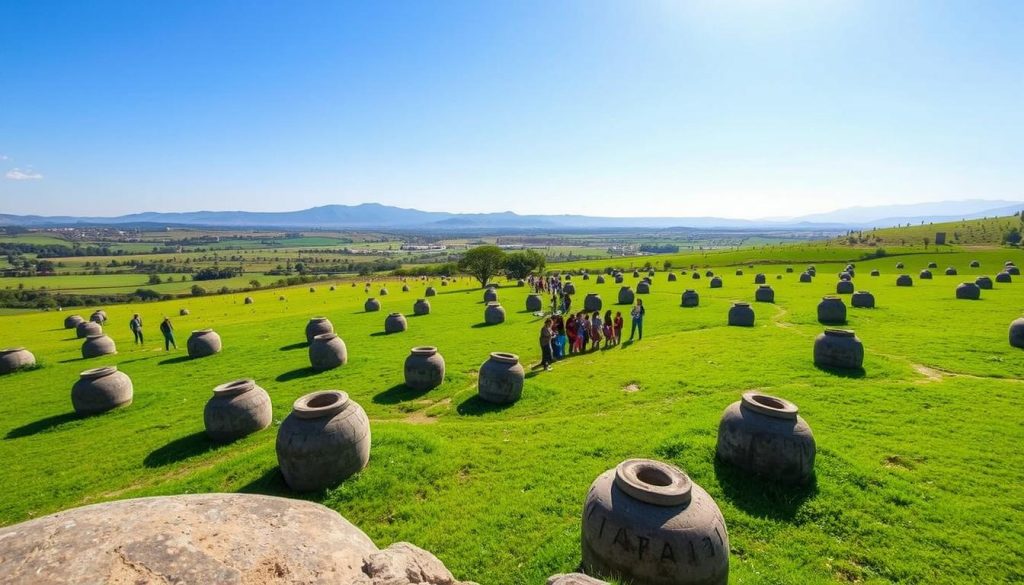
What to Expect on a Guided Tour
Going on a tour of the Plain of Jars lets you explore its rich history without the hassle of finding your way. You’ll visit the three main jar sites, each with its own special charm. Your guide will lead you, stopping for amazing photos and sharing interesting facts, making your trip both fun and educational.
Typical itinerary and highlights
Your journey starts in Phonsavan, the closest town to the Plain of Jars. Your guide will tell you stories about the area and the ancient stone urns. You’ll see different landscapes and up to 400 jars, each telling a piece of the region’s history.
Interaction with local guides
Choosing a guided tour means you’ll get to know local guides. They share their personal stories and add depth to the history of the jars. Their knowledge brings the site to life, making your visit unforgettable.