Intha People’s Culture Explained: Traditions & Lifestyle
What hidden treasures lie beneath the serene waters of Inle Lake, waiting to be uncovered in the vibrant culture of the Intha people? They call themselves “sons of the lake.” This community, with a population estimated between 100,000 to 200,000, thrives in a unique environment. It marks their identity through distinctive traditions and lifestyle practices.
In this article, you’ll dive deep into the Intha people’s culture. You’ll see how their agricultural endeavors, fishing techniques, and remarkable customs encapsulate a way of life. This way of life is shaped by history and the challenges of the modern world.
Introduction to the Intha People
The Intha people live around Inle Lake in Myanmar. They are deeply connected to the lake’s ecosystem. They moved here from southern Myanmar in the 14th century.
They came because of land rules from local leaders. This led them to build a strong society by the lake.
The Intha speak a special dialect of Burmese. It’s part of the Sino-Tibetan family, in the Tibeto-Burman branch. In 2020, there were about 215,800 Intha people.
They mostly make their living from farming and fishing. Almost all Intha people follow Theravada Buddhism. Only a few are Christian.
Their close bond with Buddhism has shaped their traditions. There are about 100 temples and pagodas near Inle Lake. This shows how important their spiritual life is.
Even with modern changes, the Intha keep their unique culture alive. They are known for their strength and ability to adapt.

What is the Intha people’s culture like?
The Intha culture is rich and complex. It is shaped by their history and origins. They came from the Tanintharyi region of Myanmar and settled around Inle Lake. This was due to rules by the Shan saophas.
Over time, Buddhism has greatly influenced their culture. It shapes their community and practices.
Origins and Historical Background
The Intha have a story of resilience and resourcefulness. They live in harmony with Inle Lake’s environment. The lake is their source of livelihood and a community center.
They have developed unique ways to farm and fish. The floating gardens and leg-rowing technique are examples of their ingenuity.
Population and Geographic Distribution
About 100,000 Intha people live in 20 major villages along the lake. Many of them live in floating homes. This shows their deep connection to the lake.
In Nyaung Shwe township, around 200,000 people live, with many being Intha. This highlights their significant presence in the area.
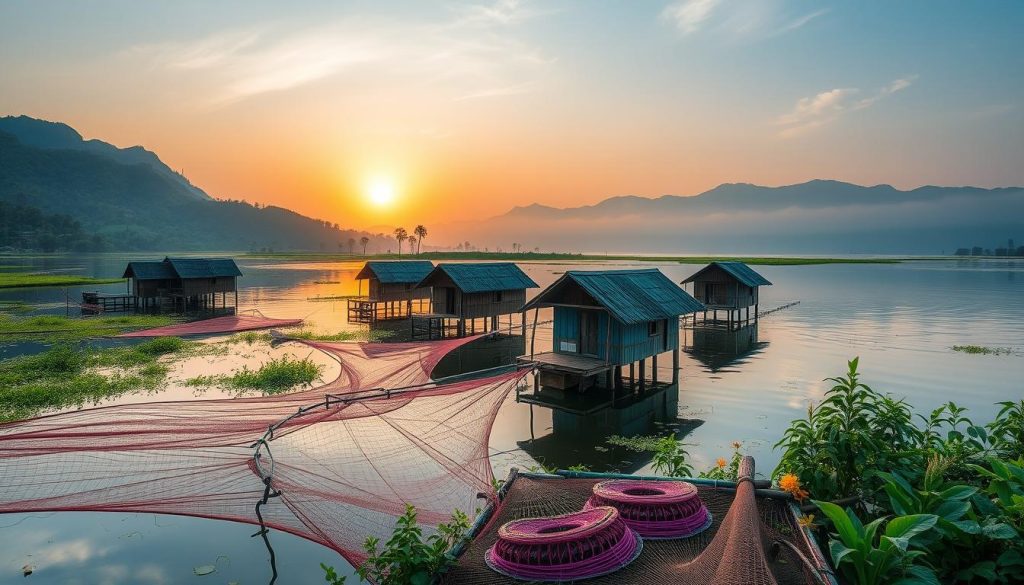
The Intha are known for their one-legged rowing technique. It dates back to the 12th century. This method helps them catch fish more effectively.
Their culture is marked by simplicity and hospitality. They are known for being diligent and friendly, living in harmony with their environment.
| Characteristic | Details |
|---|---|
| Inle Lake Size | 22 km long, approximately 10 km wide |
| Intha Population | Approximately 100,000 |
| Major Villages | 20 along the lakeshore |
| Lifestyle | Floating homes, fishing, agriculture |
| Unique Technique | One-legged rowing |
| Other Inhabitants in Township | About 200,000 total in Nyaung Shwe |
| Key Fish Species | Ngape, tilapia, featherbacks, snakehead, Inle carp |
The Unique Lifestyle of the Intha Tribe
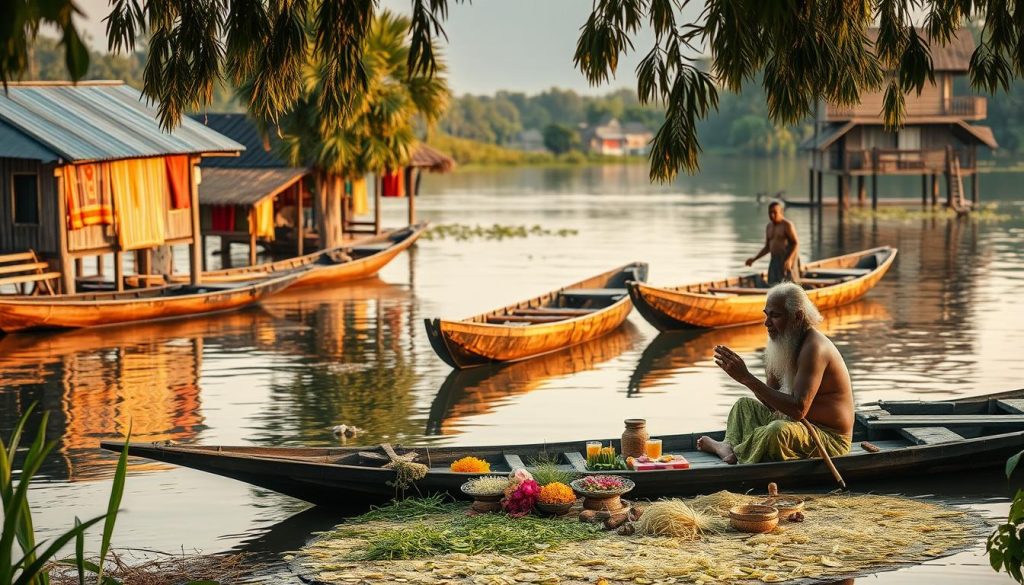
The Intha tribe lives in harmony with Inle Lake. The lake, 45 square miles wide and 12 feet deep, shapes their lives. Homes on stilts or floating on the lake protect against floods and offer easy access to fishing and farming.
Boats are key for getting around, showing how water-based travel is central to their lifestyle. This is different from living on land.
Living on Inle Lake
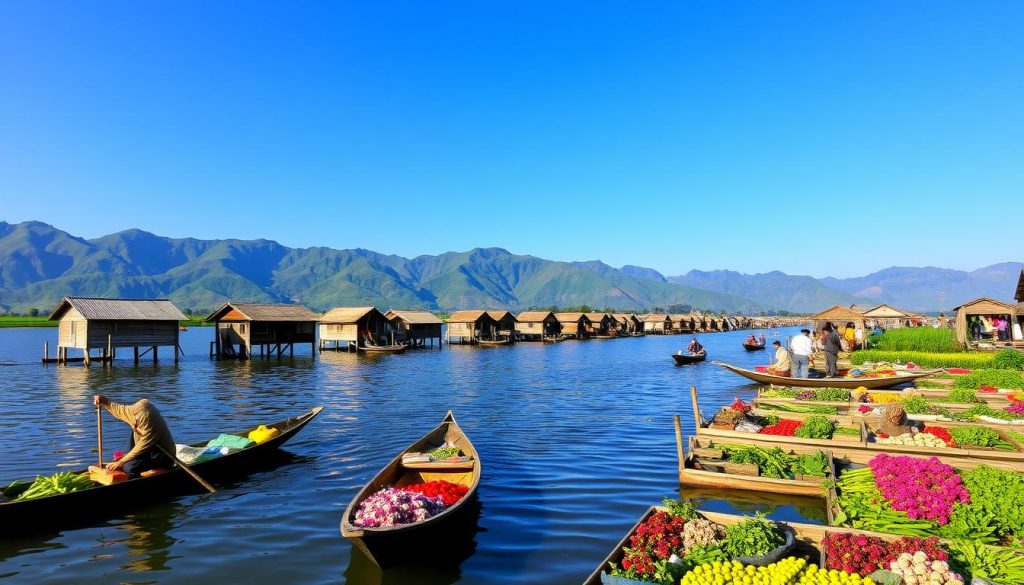
The Intha tribe’s life is deeply connected to their environment. They live off the land, fishing, farming, gathering, and weaving. Daily markets around the lake are lively, where locals trade fresh produce and handmade items.
Their way of life shows a deep respect for nature. They use sustainable practices and focus on community.
Floating Gardens and Agriculture
The Intha’s farming is unique, with floating gardens called “kyun.” These gardens grow crops on the lake’s surface, using plants and soil. They grow rice, vegetables, and fruits sustainably.
This method not only feeds the community but also shows their love for the environment. It helps keep their culture alive.
| Aspect | Details |
|---|---|
| Lake Area | 45 square miles (116 km²) |
| Deepest Point | 12 feet, rises 5 feet during rainy season |
| Population Living Conditions | Predominantly subsistence living |
| Daily Markets | Five different locations for trading |
| Floating Gardens | Plant materials and soil-based agriculture |
| Typical Crops | Rice, vegetables, tropical fruits |
Traditional Customs of the Intha People
The Intha culture is full of vibrant traditions, like their food and clothes. These customs give us a peek into their daily lives and social ways. Their food shows their deep bond with nature, and their clothes symbolize who they are.
Food and Culinary Practices
Intha food is rich and varied, with flavors and ingredients from Inle Lake. A famous dish is *saykha hin*, a bitter soup. Meals often include rice with curries made from local produce.
Green tea is a favorite drink, made with salt for a unique taste. This shows their love for strong flavors. Using fresh, local ingredients adds variety to their food and supports sustainable farming.
Attire and Clothing Styles
The Intha’s clothes tell a lot about their culture. Men wear a pink jacket with loose pants, a mix of casual and traditional. Women have fitted jackets with detailed designs, showing their family’s skill.
The “hat yar” longyi is a special silk and cotton garment. It shows the community’s creativity. Clothes are important for special events, showing the Intha’s identity and values.
Cultural Practices of the Intha Community
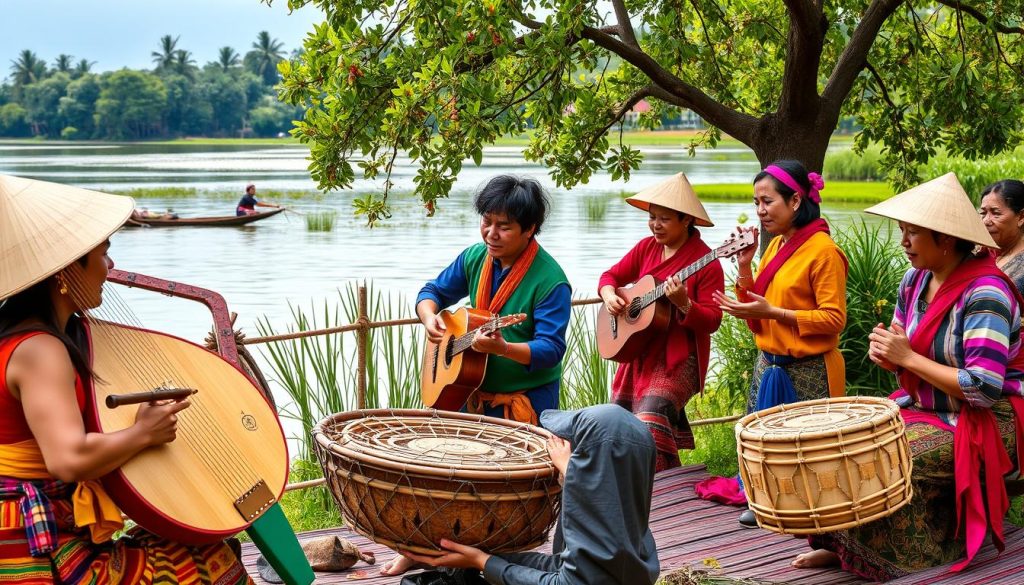
The Intha people’s culture is rich with music and dance. These traditions are key to their social life. Traditional dances like lansi and ozigyi bring everyone together during celebrations.
These dances are not just for fun. They tell stories of the Intha’s history and shared experiences. This way, their culture lives on through music and dance.
Music and Dance
Intha music is a big part of their community events and religious practices. It celebrates their heritage with lively tunes and beats. Traditional instruments add to the festive atmosphere.
Dance performances are a big deal during important times. They let people show off their cultural identity and bond with others. These traditions make Intha culture even more vibrant.
Significant Religious Festivals
The Intha people celebrate many festivals, mainly because of Theravada Buddhism. They mark the Buddha’s birth and enlightenment with big events. These include Vesak and Bodhi Day.
During these festivals, families gather for rituals. They make offerings, meditate, and celebrate together. These events strengthen community bonds and show the value of spiritual practices.
Rituals of the Intha People
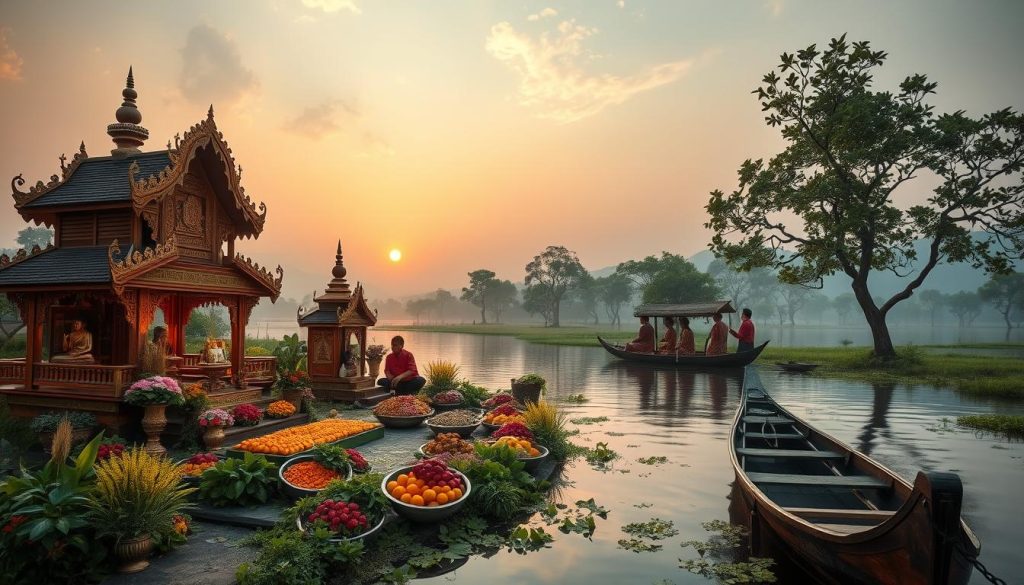
The Intha people’s spiritual life is deeply rooted in Buddhism and animism. They blend Intha Buddhist traditions and Intha animism to create a rich belief system. This blend shapes their daily lives and values.
Buddhist Traditions and Beliefs
Theravada Buddhism is at the heart of Intha spirituality. It guides their morals and daily actions. Rituals like meditation, prayer, and monastic events are crucial.
When a son becomes a monk, it boosts the family’s status. This act shows deep commitment to Intha spiritual beliefs. It highlights the value of individual actions in the community.
Animism and Spirituality
The Intha also believe in animism. They see spirits in nature, like trees, rivers, and mountains. They perform rituals and sacrifices to honor these spirits.
This shows their respect for the environment. Their spiritual beliefs reflect their history and connection with nature.
| Ritual Type | Description | Significance |
|---|---|---|
| Buddhist Meditation | Formal practice to attain mindfulness and spiritual insight. | Enhances inner peace and community moral standards. |
| Monastic Events | Participation in ceremonies, including ordination and festivals. | Strengthens communal bonds and cultural heritage. |
| Animistic Sacrifices | Rituals performed to appease nature spirits. | Ensures harmony with nature and fosters environmental respect. |
Heritage of the Intha Culture
The Intha people have a rich cultural heritage. It includes language, art, and craftsmanship. These elements show their unique identity. Their way of life is closely tied to the lush landscapes of Inle Lake and its surroundings.
Understanding the Intha language and dialects of the Intha people gives us a glimpse into their history and traditions. It shows how language is key in keeping their culture alive.
Language and Dialects
The Intha speak a unique dialect of Burmese. This Intha language is important for keeping their cultural roots alive. Oral traditions, like stories, songs, and folklore, are passed down through this language. They help strengthen their cultural identity.
As the world changes, efforts are being made to save these dialects. This ensures that young people can connect with their linguistic heritage.
Art and Craftsmanship
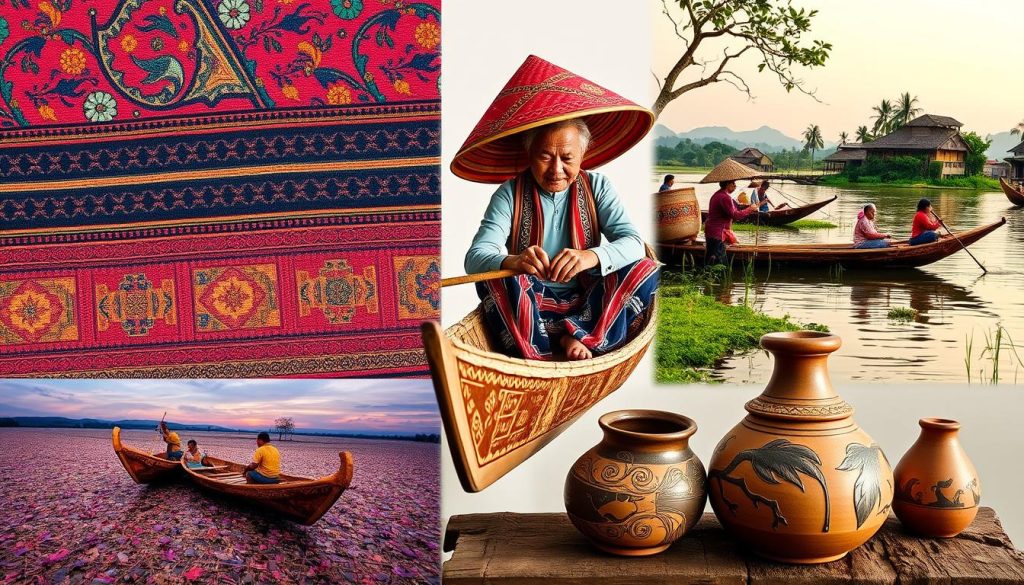
Art and craftsmanship of the Intha people are vital parts of their heritage. They are skilled in weaving and jewelry-making. Their work often features traditional designs that celebrate local materials and cultural motifs.
These handcrafted items are not just for decoration. They are also practical and carry cultural significance. Markets are where Intha art comes alive. They allow artists to share their talents and keep their heritage alive despite modern challenges.
| Aspect | Description |
|---|---|
| Language | The Intha language features unique phonetic characteristics and a rich oral tradition. |
| Dialect | Different dialects of the Intha people reflect regional diversity and identity. |
| Weaving | Hand-woven textiles often showcase traditional patterns and local symbols. |
| Jewelry | Jewelry crafted by the Intha combines local materials with distinctive designs. |
| Market Availability | Intha art and handcrafted items are prominently displayed during local market days. |
Intha Cuisine: A Taste of Tradition
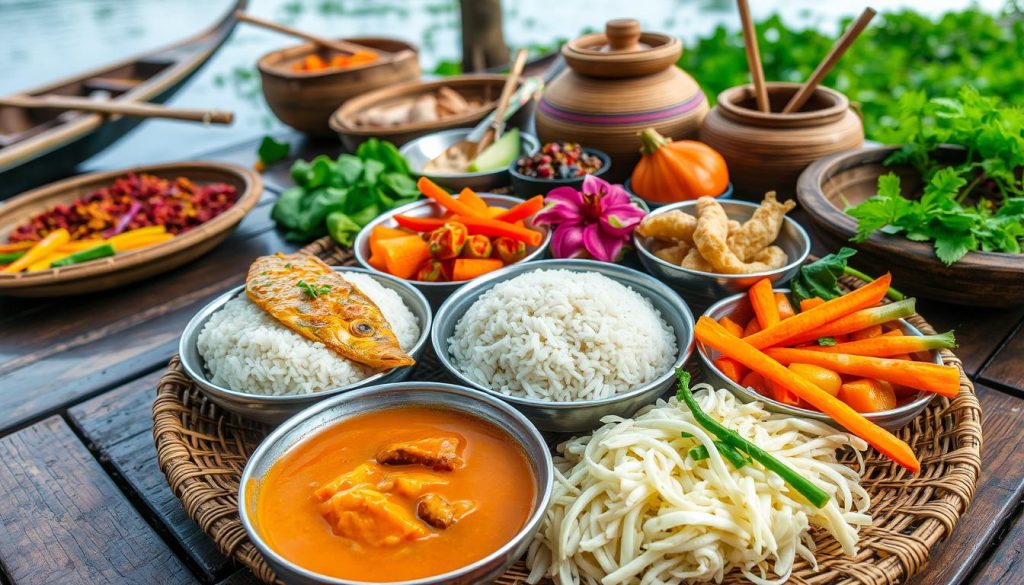
Exploring Intha cuisine is like a journey into tradition. It’s all about using local ingredients. The dishes show a mix of flavors from their floating gardens.
They use freshwater fish from Inle Lake, rice, and seasonal veggies. These ingredients make dishes that truly reflect their environment.
Common Dishes and Ingredients
The traditional foods of the Intha are colorful and varied. Some famous dishes include:
- Inle Fish Curry – A mix of spices with fresh fish.
- Herbal Soups – Made with local herbs for a refreshing taste.
- Rice Noodles – Served with veggies or meats in savory broths.
- Fermented Tea Salad (Le Phet Thoke) – A dish that shows the Intha’s love for unique flavors.
Traditional Cooking Methods
The Intha’s cooking methods are deeply rooted in tradition. They make sure meals are both tasty and healthy. Families often cook together, which strengthens their bonds.
- Grilling – A favorite way to cook fish, adding a smoky taste.
- Steaming – Keeps veggies fresh and enhances their taste.
- Boiling – Used in soups and broths to bring out rich flavors.
Unique Customs of the Intha Ethnicity
The Intha people have a rich culture with unique customs. Their leg-rowing technique is a standout, showing skill and adaptability. Intha market days are also key, bringing together social and economic activities.
Leg-Rowing Technique
The Intha leg-rowing technique is fascinating. It lets people move through Inle Lake’s dense waters easily. Men row with one leg, balancing at the back, for better control and visibility.
This skill is taught to boys when they’re teenagers. It’s a tradition passed down through generations. It shows their physical agility and pride in their heritage.
Market Days and Local Commerce
Intha market days are lively, where people trade goods. You can find everything from fresh produce to handmade crafts. These markets are important for socializing and for the community’s economy.
Traditionally, people barter instead of using money. This keeps cultural traditions alive and boosts economic activity. Market days are a vibrant part of Intha life.

Cultural Beliefs of the Intha Tribe
The Intha’s daily life is deeply rooted in their cultural beliefs. They value community, self-sufficiency, and living in harmony with nature. Around 70,000 people live by Inle Lake, where they fish, farm, and make crafts.
They live on floating gardens, showing their resourcefulness. They grow crops for half the year and fish for the other half. This balance is key to their survival.
Lifestyle and Daily Living
Community is at the heart of the Intha’s life. They work together in farming and fishing. This teamwork strengthens their bonds, showing their belief in family and group well-being.
Their economy mainly comes from farming and fishing. Men usually fish, while women manage homes and farms. This division of labor supports their community.
Role of Women and Men in Society
In Intha society, men and women have clear roles. Men fish to make a living, while women weave and sell crafts. Yet, women also play key roles in the community.
They help make decisions and take part in cultural events. This shows how traditional and modern values blend in Intha culture.
Intha Community and Modern Challenges
The Intha community is facing many challenges due to urbanization and tourism, mainly around Inle Lake. These changes have altered their traditional way of life. Urbanization has led to land degradation and a loss of cultural practices. Tourism adds to these issues, making it harder for the Intha to keep their traditions alive.
Impact of Urbanization and Tourism
Urbanization and tourism are changing the Intha society. Their traditional crafts and farming, like floating gardens, are at risk. This commercialization threatens their cultural identity and economic stability. The community struggles to preserve their heritage while meeting modern needs.
Educational Attainment and Health Concerns
The Intha community faces challenges in education, with high school dropout rates. Children often drop out to work and support their families. Limited access to quality education affects literacy rates. Health issues, like poor healthcare and high child mortality, also plague the community.
Improving education and healthcare is crucial for the Intha’s future. These efforts are necessary for the community’s growth and a better future for the next generation.
| Challenge | Impact | Potential Solutions |
|---|---|---|
| Urbanization | Land degradation Diminished cultural practices |
Community-led conservation initiatives Promote sustainable tourism |
| Tourism | Cultural commodification Economic shifts |
Developing cultural awareness programs Support local artisans |
| Education | High dropout rates Low literacy levels |
Improving school infrastructure Scholarship programs for families |
| Health | High child mortality Low life expectancy |
Enhanced healthcare access Community health education |
Conclusion
The Intha people’s culture is a mix of rich traditions and unique lifestyles. It is shaped by their environment and history. A summary of Intha culture shows a community thriving on Inle Lake’s waters.
Here, floating villages and gardens tell stories of resilience and adaptation. The traditional leg-rowing technique by fishermen and vibrant festivals show their deep connection to their surroundings.
As modern challenges face this community, preserving their traditions is key. Their dedication to customs like lotus weaving and sustainable fishing is clear. These practices keep their unique identity strong, even with urbanization and tourism’s influence.
Exploring the Intha culture offers a glimpse into a dynamic society. They honor their past while embracing change with spirit. This understanding helps us see the balance between tradition and modernity in our ever-changing world.