Recent Discoveries at the Plain of Jars Site Explored
Have you ever wondered about the secrets of Laos’s mysterious stone jars? The Plain of Jars site has long fascinated historians and archaeologists. Yet, many questions about its origins and purpose remain.
Recent discoveries suggest a deeper link to ancient Southeast Asian cultures. This new insight helps us understand this remarkable site better. As excavations continue, the Plain of Jars’s importance grows, shaking up old beliefs and sparking new questions about the past.
Introduction to the Plain of Jars Site
The Plain of Jars in Xieng Khouang Province, Laos, is famous for its massive stone jars. These jars are part of a large archaeological site. They range in height from 3 to 10 feet and can weigh up to 14 tons.
These jars date back about 2,000 years. Scholars are still trying to figure out their purpose. This mystery makes the site very interesting.
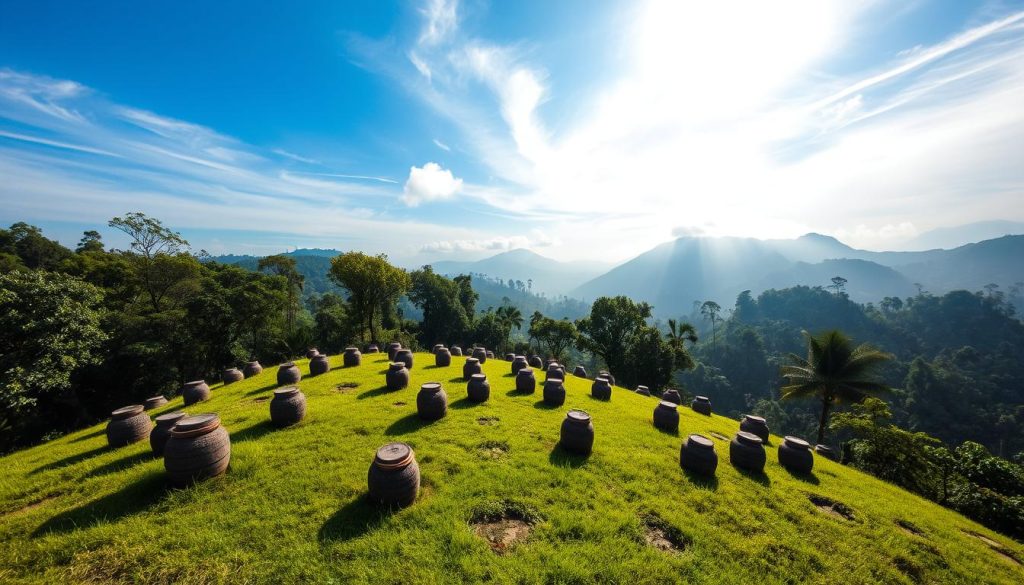
This area is filled with artifacts, showing the ancient burial practices of people. The jars are made from different materials like sandstone, granite, and limestone. This shows the area’s geological diversity.
Recent discoveries have found human remains near the jars. This suggests a deep connection between the structures and burial customs.
- Exploration of more than 90 sites reveals the vastness of this extraordinary area.
- The potential age of some jars might extend beyond 3,000 years, highlighting the site’s historical depth.
- Research indicates that human burials associated with these jars occurred as recently as 1,200 years ago.
The Plain of Jars is a fascinating site in Southeast Asia. But, it faces big challenges. The area is dangerous because of unexploded ordnance from the Secret War.
Only a few sites are safe to visit. This makes studying the site urgent. Exploring this place lets you uncover the secrets of ancient civilizations and their beliefs about the afterlife.
Historical Significance of the Plain of Jars
The Plain of Jars is a key piece of history in Southeast Asia. It shows the advanced societies that once existed. The site is filled with unique stone jars that give us a peek into the past.
These jars are found across the Xieng Khouang plateau in Laos. They date back to the Iron Age, around 500 BC. This makes them important for understanding ancient cultures.
Overview of Archaeological Importance
There are over 2,500 jars spread across 90 sites. These jars are huge, reaching up to three meters tall. They show the advanced skills of the people who made them.
Some jars were used for burials, holding human remains and other items. Nearby, archaeologists have found iron tools, beads, and bronze objects. This suggests these communities were involved in trade and had wealth.
Researchers are still learning about the jars and their connections to other cultures. This helps us understand how these societies interacted.
Connection to Southeast Asian Cultures
The Plain of Jars links to other cultures in Southeast Asia, like India and Vietnam. It’s thought that the jars might have stored food, wine, or even marked trade routes. This shows the lively exchange of goods and ideas in the past.
The jars might have played a role in trade networks, like salt trade. This shows how connected these ancient societies were.
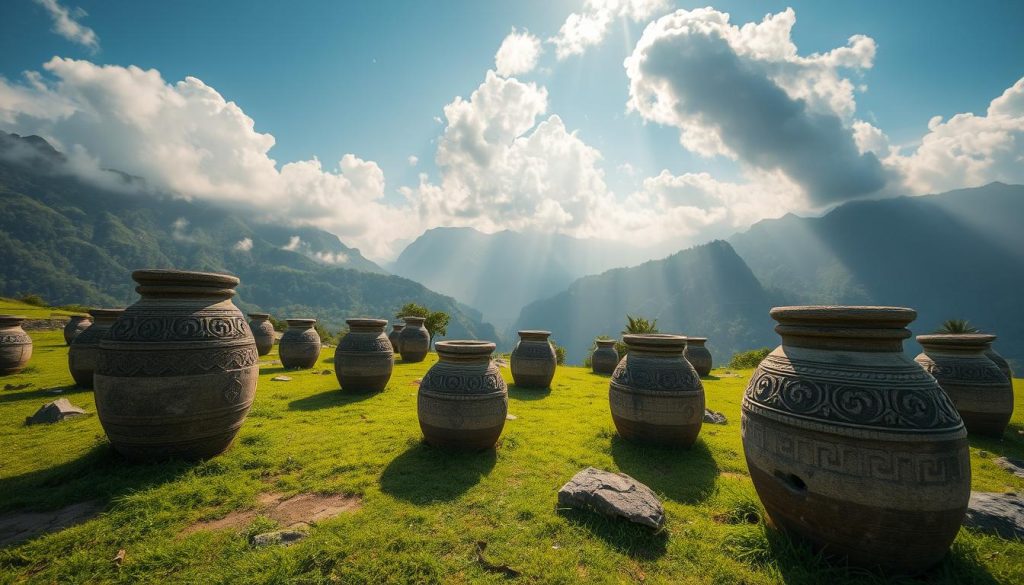
But, the site’s importance is also tied to the challenges of the Vietnam War. The area is still littered with unexploded ordnance. This makes studying and preserving the site very difficult.
Despite these dangers, the site’s cultural and historical value remains strong. It shows the enduring spirit of the region’s cultures and their ongoing quest for knowledge about their past.
Archaeological Findings at the Plain of Jars
The Plain of Jars is a key site in Laos, with over 90 spots of stone jars. Each spot has jars, some as heavy as 20 tons. Made from sandstone and other materials, these jars stand one to three meters tall.
Recent digs have found metal tools and human remains at the Plain of Jars. This shows the jars were used for burial. Researchers found axes, beads, and glass, giving clues about the past.
Studies show the jars date back to 1240 to 660 BCE. The artifacts go up to the 8th century AD. This suggests the Plain of Jars was part of a trade network, possibly for salt.
But, the site is also filled with unexploded ordnance from wars. Only 10 percent of the sites are clear. This makes studying the site hard. Yet, new discoveries could reveal more about the past.
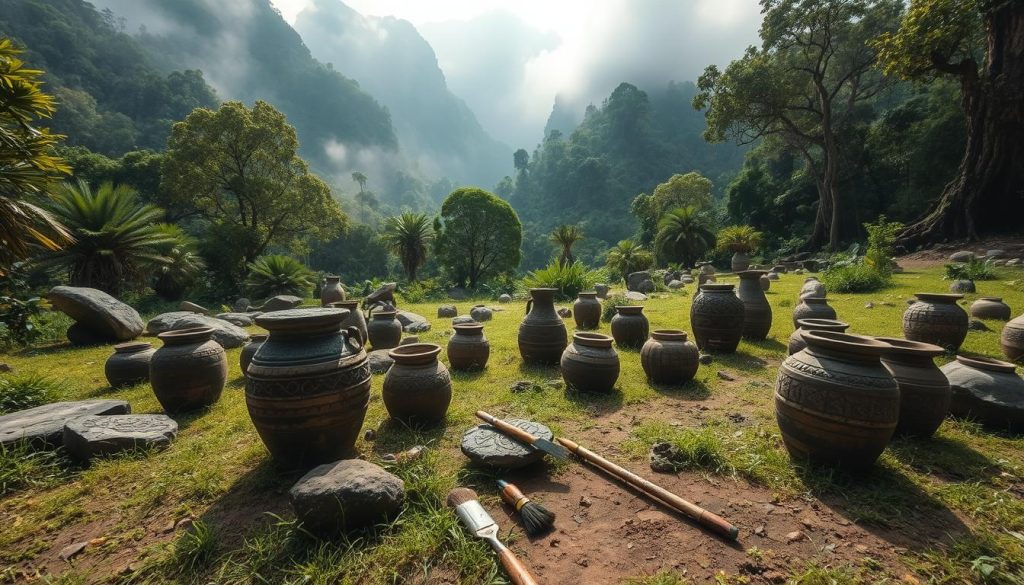
Recent Excavations in Laos
In recent years, Laos has seen a big change in its archaeological scene. This is thanks to efforts to uncover its rich past. Excavations have shed light on the megalithic culture from 500 BCE to 500 CE.
Archaeological surveys have found new jar sites. This shows how important the region’s history is.
Details of the Latest Surveys
Surveys have helped us understand ancient sites in Laos. In Xiang Khouang Province, new sites were found. This increased the number of known megalithic jar sites to 127.
These sites have thousands of carved stone jars. Advanced dating methods have helped us understand when these were made.
Collaborative Efforts with Local Authorities
Working together is key in archaeology in Laos. The Lao Ministry of Information, Culture, and Tourism and groups like the Mines Advisory Group (MAG) are crucial. They help manage dangers while doing research.
This teamwork has helped us learn more about ancient burial practices. It has deepened our understanding of Southeast Asia’s culture.
| Site Number | Group | Total Jars | Total Discs |
|---|---|---|---|
| 1 | Group 1 | 60 | 2 |
| 1 | Group 2 | 227 | 24 |
| 52 | Group 1 | 115 | 44 |
| 52 | Group 3 | 195 | 70 |
| 21 | Group 1 | 16 | 0 |
| 79 | Group 1 | 67 | 5 |
Are there any recent discoveries at the Plain of Jars site?
The Plain of Jars in Laos is still a hot spot for new discoveries. These findings help us understand the purpose of these ancient stone structures. Some think the jars were for storing food or wine because of their size.
Others believe they were used in funerals, with human remains and burial goods found nearby. Excavation updates show that some think the jars might have collected rainwater for travelers on trade routes.
There’s also a theory that the Plain of Jars was part of a trade network, possibly for salt. Local myths add to the mystery, saying giants made the jars for brewing rice wine.
While most theories focus on practical and ritual uses, some suggest the jars had astronomical or territorial roles. This variety of ideas keeps researchers busy trying to figure out the jars’ true purpose.
Recent digs have given us a lot of information about the jars. For example, Site 1, Group 2 has 227 jars and 24 discs. Site 52, Group 3 has 195 jars and 70 discs. These numbers show the jars’ scale and historical depth, making recent finds at the Plain of Jars very interesting.
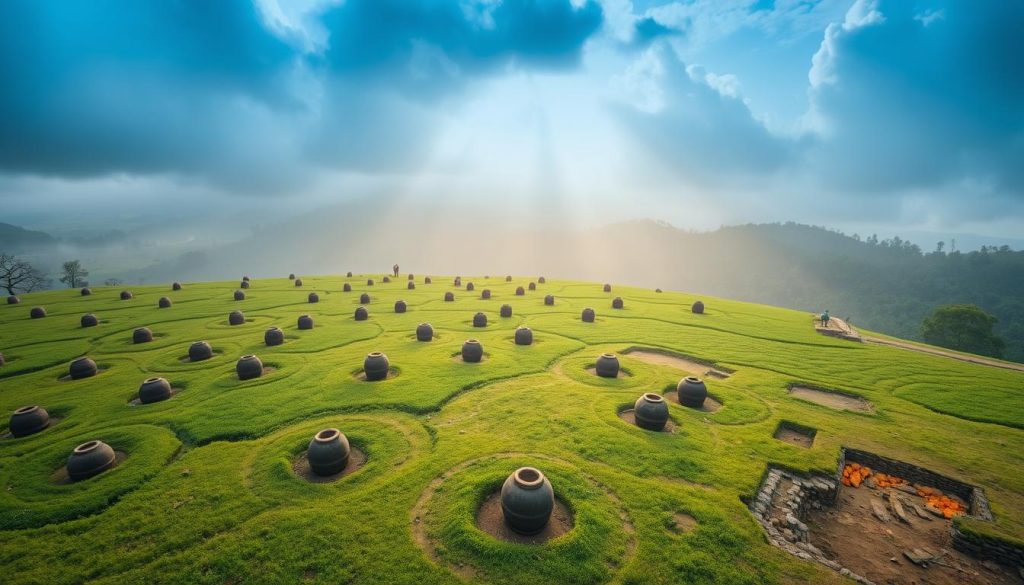
The Discovery of Jar Burial Customs
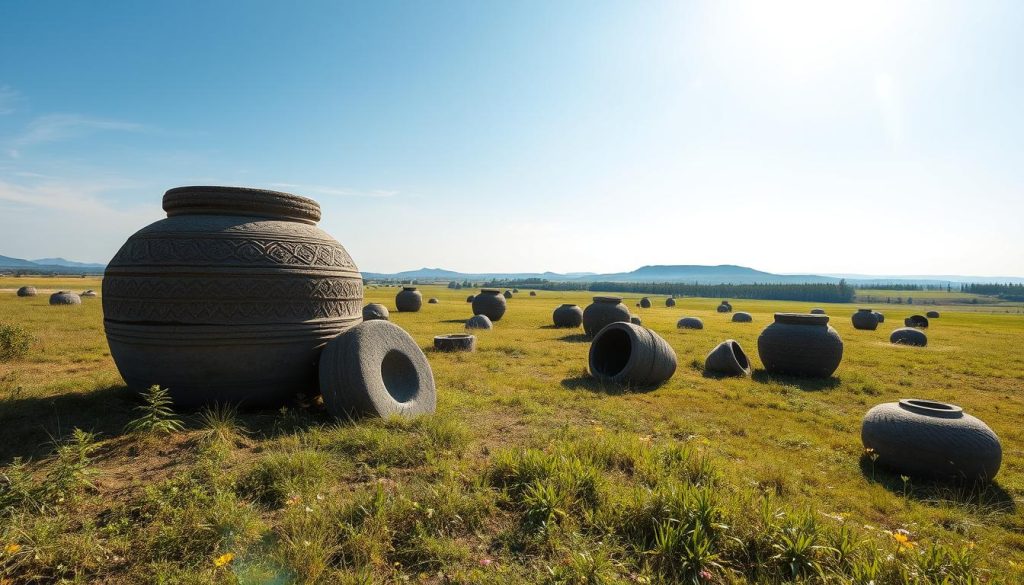
The study of jar burial customs at the Plain of Jars site offers deep insights into ancient rituals. Large stone jars were used to hold the remains of important community members. These customs show a complex mix of cultural beliefs and practices that shaped history.
Traditions Surrounding Mortuary Practices
The mortuary practices at the site are both intriguing and complex. Archaeologists found that remains were buried with various items like glass beads and iron. This shows a detailed way of honoring the dead. The jars were not just for burial but also symbols of status, highlighting the importance of those buried.
Insights from Early Excavations
Early digs have shed light on the region’s past. They found human remains from the 9th to 13th centuries. The presence of cremated bones alongside jars shows the diversity of burial practices. This evidence gives us a peek into the spiritual views on death and the afterlife, making these sites key to understanding cultural expression.
Updates on Archaeological Research
The Plain of Jars is still a mystery, but researchers are making new discoveries. They use modern technology and new methods to learn about this ancient place. These tools help them understand the stone jars and their history.
Current Research Methodologies
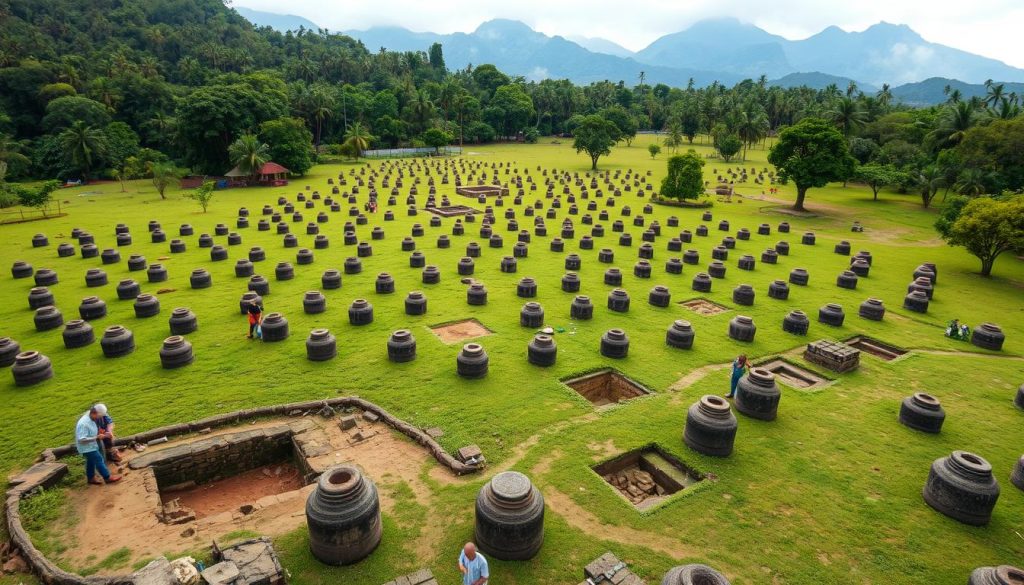
Archaeologists are using new ways to study the Plain of Jars. They use geoarchaeology to learn about the jars’ surroundings. This helps them understand how the jars were used, like in burials.
Contribution of Modern Technology
Modern tech has changed how archaeologists work. They use maps to show where the jars are. They also use methods that don’t harm the site. This way, they can learn more without damaging the jars or the site.
Significant Artifacts and Their Interpretations
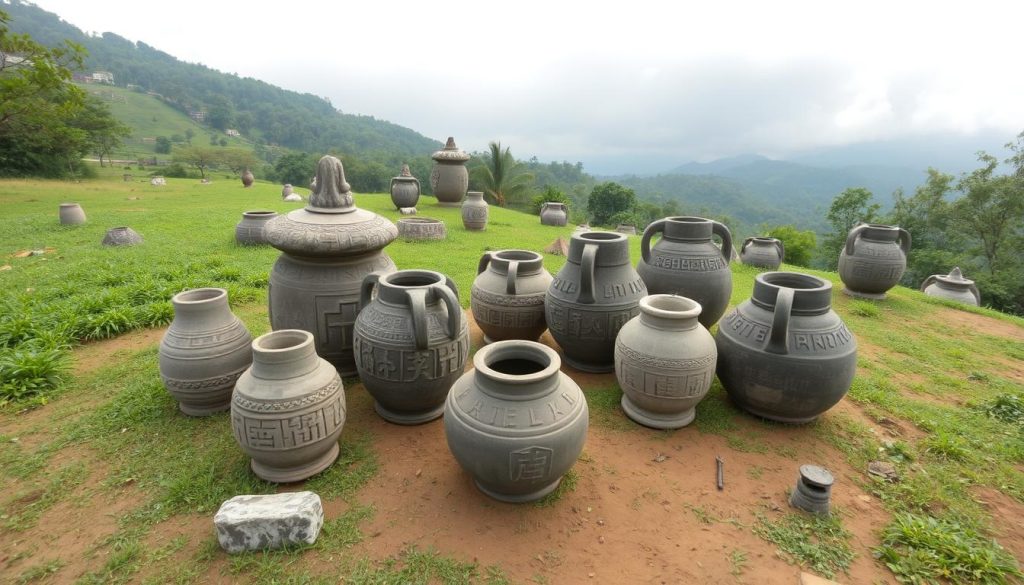
The Plain of Jars has revealed many important artifacts. These discoveries give us a glimpse into the lives of ancient people. Recent digs have uncovered new treasures, helping us learn more about these stone structures.
Unique Discoveries from Recent Digging Campaigns
Teams from the Australian National University have made big finds. They’ve found over 100 ancient stone jars and more sites. This brings the total to over 90, showing how widespread these structures were.
The jars are huge, with some weighing over 20 tonnes. They were carved and moved from far away. In Xieng Khouang province, 137 new jars were found, showing the scale of these ancient burial sites.
Understanding Cultural Context Through Artifacts
The artifacts found, like carved stone discs, help us understand the culture of the Plain of Jars. Miniature clay jars were found with the dead, showing burial customs. Tooth enamel analysis is helping us learn about their diet and where they came from.
Modern tools like drones and Lidar are changing how we research. They give us detailed views of the jar sites and help us understand the culture better.
Environmental Challenges and Preservation Efforts
The Plain of Jars site faces big environmental challenges, like UXO contamination. The Vietnam War left over 80 million unexploded ordnance. These dangers risk archaeologists and slow down preservation work.
Impact of UXO Contamination
UXO contamination makes research hard in the Plain of Jars area. Teams must focus on safety first, needing to clear sites before they can explore. Dense forests hide more dangers, making it hard to know what’s safe.
Groups like the Mines Advisory Group (MAG) help by finding and removing these dangers. This lets archaeologists work safely and do their job well.
Conservation Initiatives by UNESCO
UNESCO is key in saving the Plain of Jars. They’ve made a detailed database of 58 jar sites and found 26 more hidden in the forest. UNESCO also helps local tourism, involving the community in protecting this special place.
They also work on teaching people about the dangers of UXO. This helps keep the site safe for years to come.
The Future of the Plain of Jars Site
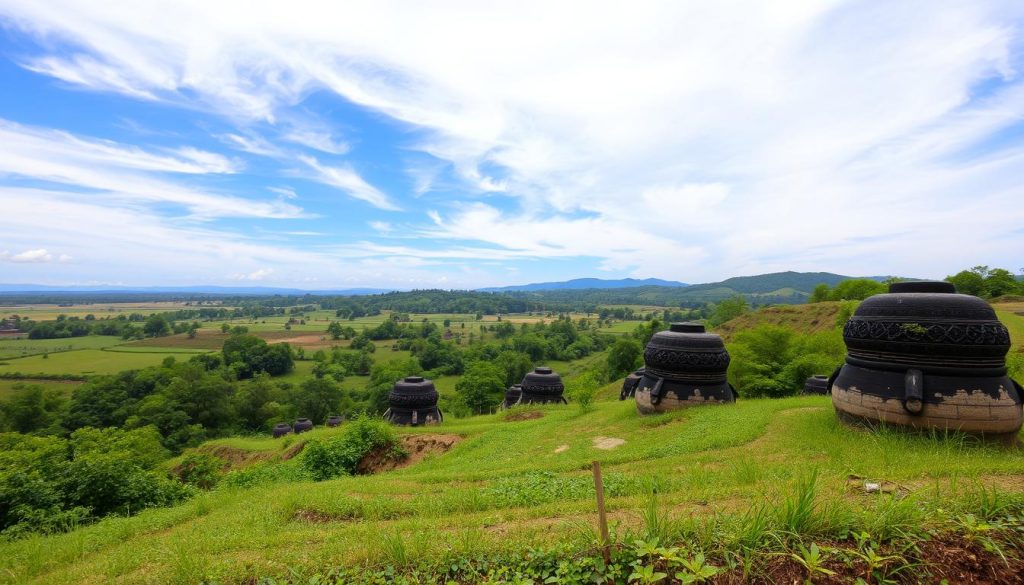
The Plain of Jars site has a bright future ahead, thanks to its potential UNESCO World Heritage status. It has over 85 ancient jar sites on the Xieng Khouang plateau. This area is rich in history and archaeology, attracting visitors from around the world.
Only a few sites are safe from Vietnam War bombs. This highlights the need for ongoing efforts to protect and open these sites to visitors.
Potential UNESCO World Heritage Status
There’s a push to make the Plain of Jars a UNESCO World Heritage Site. This would raise awareness of its historical value and bring in resources for preservation. Getting this status needs teamwork.
It’s crucial to involve local communities. They can help share the site’s importance and build pride in their heritage.
Community Involvement and Tourism Development
Community tourism is key to the Plain of Jars’ future. It ensures tourism benefits both the economy and cultural preservation. Local involvement in tourism can educate visitors and support community projects.
People interested in nature and culture will find the site fascinating. It offers insights into ancient burial practices and ongoing archaeological discoveries. Visitors can also see local handicrafts and traditions.

As interest in the Plain of Jars grows, a balanced strategy for tourism and preservation is needed. Combining community efforts with professional archaeology could make the site a global example.
| Aspect | Details |
|---|---|
| Number of Jar Sites | Over 85 ancient jar sites |
| Cleared Sites | Only seven jar sites cleared of undetonated bombs |
| Recent Discoveries | 11 ceramic jars with evidence of secondary burials |
| Archaeological Participation | Collaboration between experts from Laos and Australia |
| Potential UNESCO Status | Initiatives underway to achieve UNESCO World Heritage status |
Conclusion
The Plain of Jars is a site full of history and culture. It has over 400 sites with thousands of stone jars from the Iron Age. These jars give us clues about ancient burial practices and how societies changed in Southeast Asia.
Recent digs have found human remains and burial items. These finds show us what life was like long ago. They make the Plain of Jars a key spot for archaeologists and tourists alike.
But, there are big challenges like unexploded bombs. To keep everyone safe, Laotian workers are working hard. They want to get UNESCO World Heritage status for the site.
They are clearing old bombs so future visitors can explore safely. The Plain of Jars is still full of secrets waiting to be uncovered. It’s a treasure trove of knowledge about the past.
New tech like virtual reality and drones is helping us learn more. This is good for tourism and the local economy. By supporting these efforts, we help keep the Plain of Jars alive for future generations.