Feel More Rested After Long Flights with Tricks
Ever wonder why a sky-high journey leaves you as tired as walking through a desert?
Beating travel tiredness on long flights is more than just hoping to sleep. It’s about knowing how to sleep and stay fresh. Long flights can make your skin look tired, mess up your sleep, and make you thirsty.
Picture this: you get to where you’re going feeling ready to see everything, not just wanting to crash. Choosing the right travel bag, like Longchamp, and using face wipes and hand sanitizers can fight off plane germs.
Also, travel goodies like silk scarves to keep your hair nice, or This Works Pillow Spray for better sleep are key. Flight crews suggest sleeping right after takeoff. This trick helps business people get used to new time zones fast.
Why do some travelers land ready to explore while others can’t even stay awake? It’s all in the prep and smart travel tips. By the end of this, you’ll know how to make your next night flight as refreshing as a cloud cruise.
So, let’s get started. These travel tips could change how you feel after a flight, from worn out to energetic.
Choose Your Seating Strategically
Choosing the right seat is key on long flights. Seat choice greatly affects comfort on your journey. Here are tips to pick seats that ensure you rest well.
Optimal Seat Locations
Seats suggested by Seatguru can offer five more inches of legroom. It’s vital to look at seat maps early to grab the best spots. People who pick their seats early are more likely to sit together.
Seats near the wings or front cut down on turbulence for a smoother ride.
Benefits of Aisle vs. Window Seats
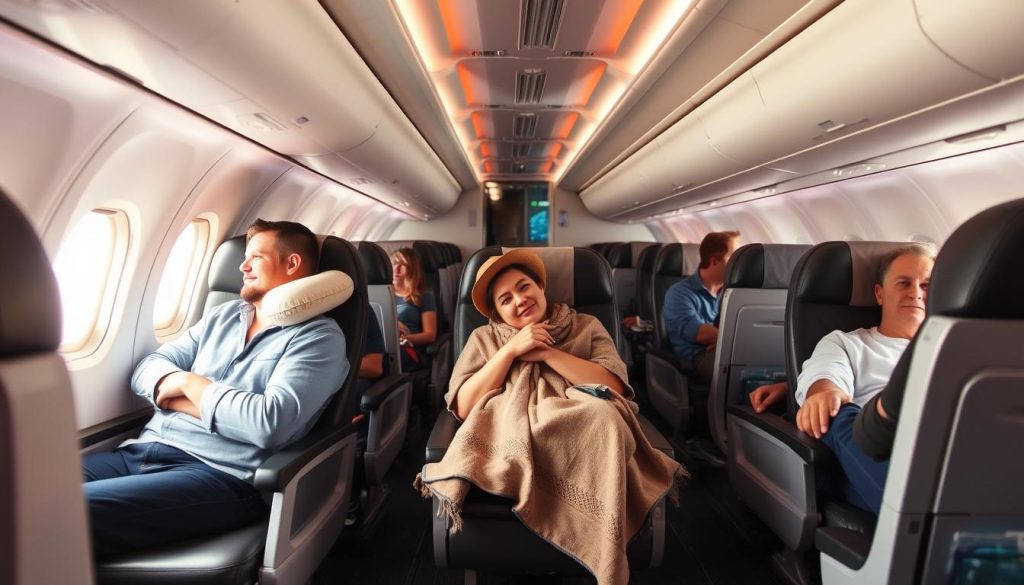
Your choice between aisle and window seats depends on what you prefer. Aisle seats mean easy bathroom access and more freedom to move. But window seats let you lean against the wall and have fewer interruptions.
Aisle seats are quieter. Having an empty seat next to you makes a big difference in comfort. Most folks avoid the middle seat if they can.
Consider Upgrading Your Seat
A better seat in business or first class makes for better sleep. These seats have more room and come with extra comforts like soft pillows and noise-canceling headphones. Using seat alert services can help you get the seat you want.
Choosing flights that match your bedtime can help with jet lag. Upgraded seats mean you’ll likely sleep better.
To pick the best seat for long flights, consider booking early and upgrading if possible. This can help you rest better and enjoy your trip more.
| Seat Feature | Comfort Benefit | Likelihood of Selection |
|---|---|---|
| Extra Legroom Seats | Additional 5 inches of legroom | High (Recommended by Seatguru) |
| Aisle Seats | Easy access to lavatories and movement | Preferred by 80% of travelers |
| Window Seats | Fewer disturbances, resting surface | Preferred by those desiring less movement |
| Lie-Flat Seats (upgraded) | Significant comfort for sleep | High (If considering upgrading flight seats) |
| Strategically Selected Seats | Reduced turbulence and noise | High (Identified by Seatguru and expert services) |
Prepare Before You Travel
Getting ready for a trip is more than packing. It’s about making the journey smooth and stress-free. A few simple strategies can really help with travel comfort and efficiency.
Adjust Your Sleep Patterns
To beat jet lag, try matching your sleep to the new time zone before you leave. This helps your body adjust faster once you’re there. If your destination is east, go to bed an hour earlier. If it’s west, go to bed an hour later. Changing your sleep this way makes you feel better when you arrive.
Packing Essentials
A good travel checklist is key for long flights. Don’t forget noise-canceling headphones, a book, and snacks to avoid expensive airplane food. Also, pack a travel pillow, hand sanitizer, and a water bottle. Having what you need handy makes flying less stressful. Smart packing lets you breeze through security too.

Avoid Stress at the Airport
Arrive early to avoid airport stress. Being early helps if there are long lines or gate changes. Use the extra time to read or do light exercises. This can relax you before flying. Also, morning flights tend to be on time more often. These tips can make your trip smoother and more fun.
The Importance of Staying Hydrated
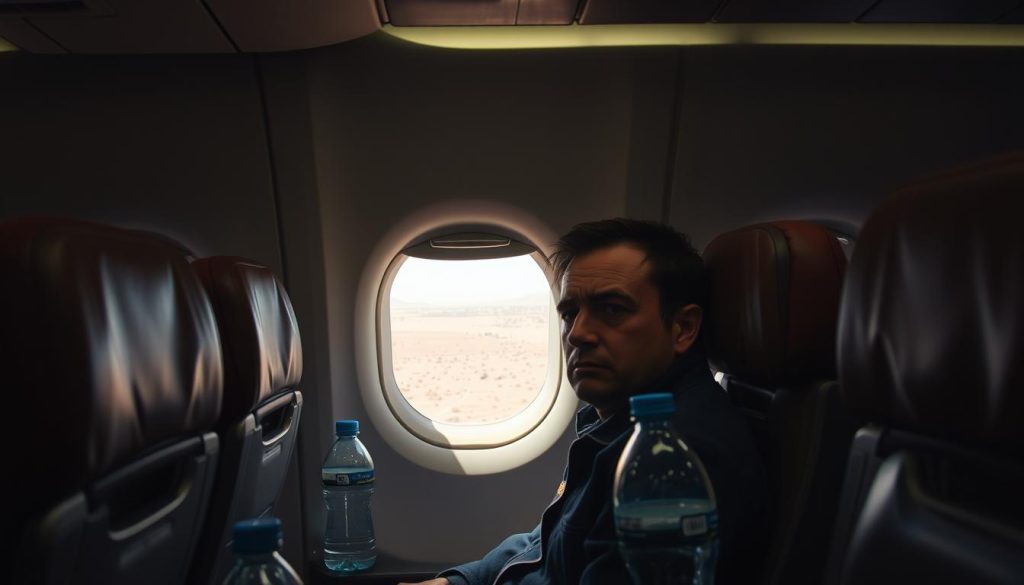
Staying hydrated during your flight can greatly improve how you feel. The air in the cabin is very dry, much like a desert, making dehydration a real problem. These health tips for long flights will help you beat dehydration and enjoy the benefits of drinking water.
How to Keep Hydrated
To fight dehydration on flights, it’s important to start hydrating early. Here’s what you can do to keep hydrated:
- Drink at least 8 ounces of water for every hour you’re flying.
- Stay away from drinks like tea, coffee, and alcohol because they can dehydrate you more.
- Carry a reusable water bottle and refill it at the airport to have enough water.
- Drink water little by little so your body can absorb it better.
Not drinking enough water on flights can cause health problems. These include having trouble keeping your body at the right temperature and low blood pressure.
Benefits of Hydration
Drinking water often during your flight has many benefits, such as:
- It makes you more comfortable by preventing dry skin and dry eyes.
- It keeps your energy up, which helps fight tiredness and jet lag.
- It improves your blood flow, reducing the chance of getting deep vein thrombosis (DVT).
- It helps your body work properly since about 70% of your body is water and 80% of that water is in your cells.
Following these health tips for long flights will keep you feeling good. Plus, you’ll enjoy your flight more by experiencing the benefits of drinking water.
Wear Comfortable Clothing and Compression Socks
Long air trips, from 7 to 19 hours, can be tiring. Being comfy can change how you feel when you land. Wearing compression socks is key to keep blood moving and lower blood clot risks.
Clothing Choices for Long Flights
Choose clothes that are loose, breathe well, and have layers. Go for soft cotton or light wool to manage your body temperature. With layers, you can handle changes in the plane’s temperature better.
Loose pants or leggings with a soft sweater or jacket are smart choices. Stay away from tight clothes. They can make circulation worse and cause swelling.
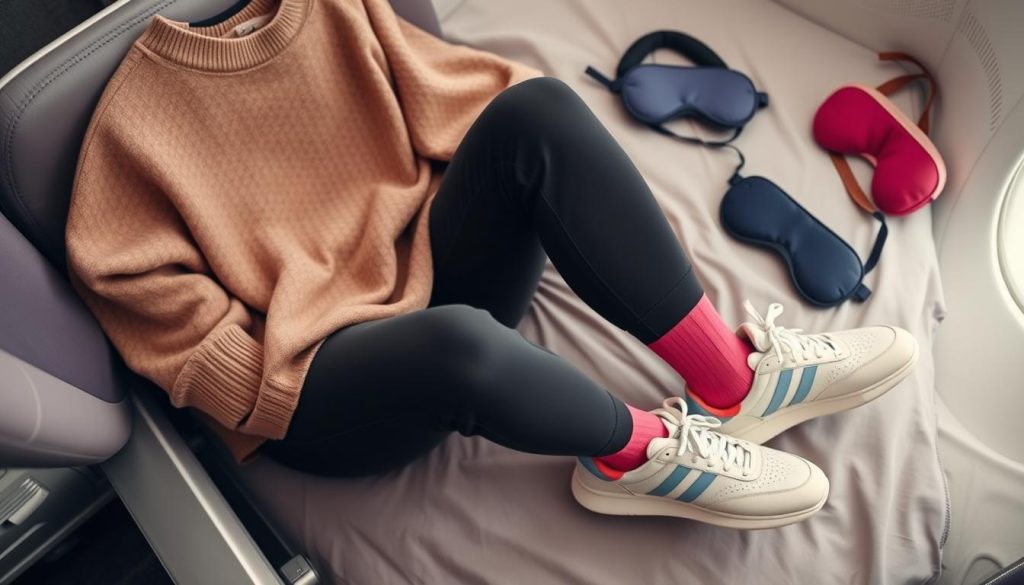
Benefits of Compression Socks
Compression socks help a lot on long flights. They boost leg blood flow, preventing Deep Vein Thrombosis (DVT). DVT is a serious condition from blood clots in your legs’ deep veins. It’s a big risk during long sits.
Wearing them reduces swelling in feet and ankles too. This cuts down on pain and discomfort. Compression socks benefits also include less fatigue and feeling better when you arrive. Using them with short walks and drinking water helps your blood flow and comfort on the journey.
Utilize Sleep Aids and Comfort Items
Having a good sleep during flights changes how you feel when you land. Using sleep aids and comfort items really helps. Make sure you’re ready for long flights with tools that improve your comfort and sleep.
Importance of Travel Pillows and Blankets
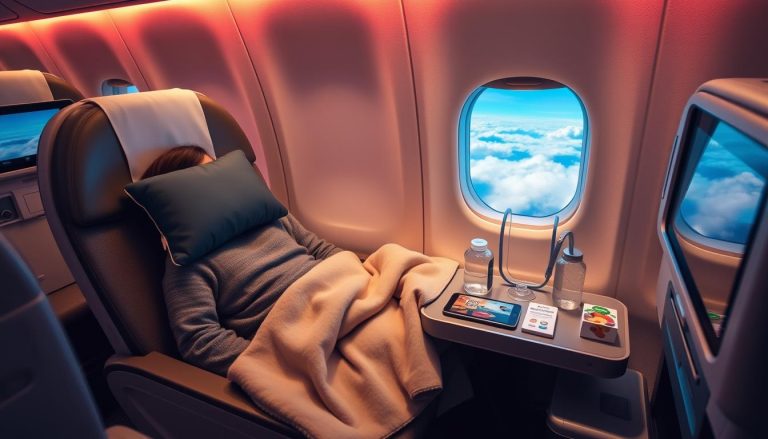
For better in-flight comfort, pillows and blankets are key. The best travel pillows support your neck. This keeps your head straight and cuts neck pain risk. With a warm blanket, falling asleep gets easier, even with the plane’s noise.
Eye Masks and Noise-Canceling Headphones
Want the top airplane sleep hacks? Don’t overlook your eye mask and noise-canceling headphones. An eye mask keeps out light, telling your body it’s sleep time. Noise-canceling headphones block out sounds for a quieter space. These items improve sleep and fight jet lag by keeping your sleep cycle regular.

Using these comfort items changes your flight experience. You’ll land feeling more refreshed and ready for the day.
What tricks help me feel more rested after long flights?
Long flights can make you feel very tired. It’s important to have strategies to sleep better while traveling. These tips will help you feel refreshed when you arrive.
Hydration is Key: It’s crucial to stay hydrated. About half of all travelers get dehydrated, making them feel even more tired. Drink lots of water before, during, and after your flight.
Light Meals: Eating light is best. Choose meals with fresh fruit, protein, healthy carbs, and veggies. Avoid sugary and processed foods to dodge sluggishness and bloating.
Avoiding Alcohol and Caffeine: Drinking these can make falling asleep hard. Don’t drink alcohol, especially on the first night after a flight. And be careful when you drink caffeine so it doesn’t keep you up.
Melatonin Supplements: Melatonin can help with sleep problems. A small dose might help you adjust to new time zones faster, doctors say.
Stay Active: Exercise improves sleep. Even a 30-minute walk outside after landing can make you feel better and lower stress.
“Traveling disrupts your body’s natural rhythms. By focusing on hydration, balanced nutrition, and limiting stimulants like caffeine and alcohol, you can mitigate the adverse effects on your sleep,” says Dr. Robert Kushner from Northwestern Medicine.
Here’s a quick guide on how to sleep better while traveling:
| Strategy | Benefit | Why |
|---|---|---|
| Hydrate | Improves energy levels and sleep quality | Avoids dehydration commonly experienced by 50% of travelers during flights |
| Eat Light Meals | Reduces sluggishness and bloating | Prevents exacerbation of jet lag symptoms |
| Avoid Alcohol and Caffeine | Enhances ability to fall asleep | Prevents difficulty falling asleep reported by 45% of individuals |
| Take Melatonin | Helps adjust to new time zones | 30% use melatonin to aid sleep adjustment |
| Stay Active | Enhances sleep quality | Noted improvement by 25% of individuals who exercise |
Using these strategies can really help beat travel fatigue. They ensure you adjust easily to time changes, making your trips more fun and less exhausting.
Stay Active During the Flight
Keeping active on your flight is crucial for a comfy and healthy trip. It doesn’t matter if it’s a long or short flight. Doing in-flight exercises and moving around helps avoid discomfort and health issues from sitting too long.
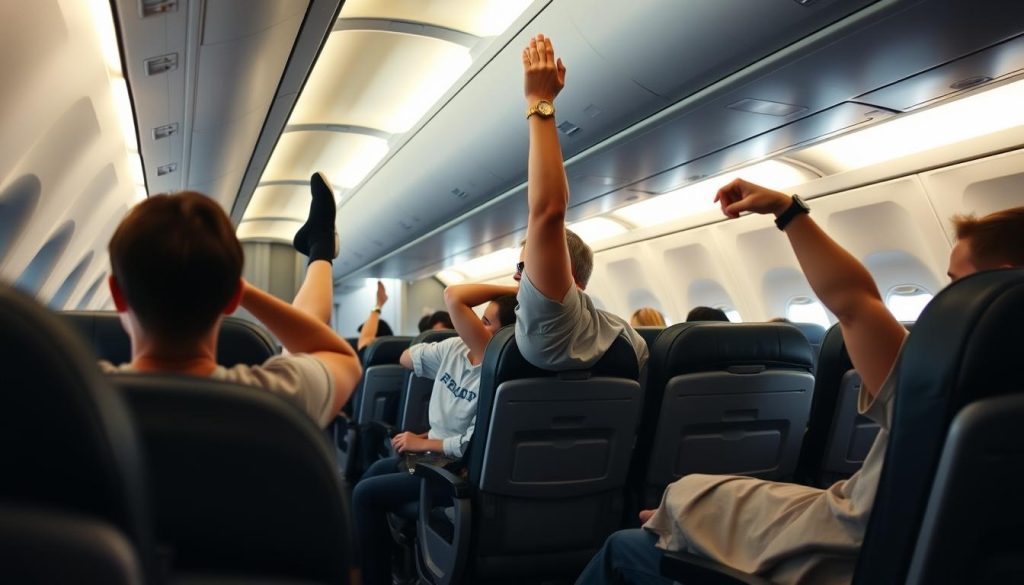
Exercises You Can Do in Your Seat
While sitting, you can do several in-flight exercises to keep the blood flowing. Moving your toes, rotating your ankles, and stretching your legs are simple ways to stay limber. Also, flexing your feet, lifting your heels, and pressing toes down helps. These small movements are easy to do without bothering others and keep you active during the flight.
Walking Around the Cabin
When it’s safe, walk around the cabin. Walking stretches your muscles and cuts down the risk of DVT. Try to walk every hour, even if it’s just to the bathroom. It boosts your circulation and refreshes you. Staying active is key to avoiding discomfort and feeling good when you land.
Smart Eating Choices Onboard
When you eat smart, long flights become more comfortable. Choosing the right foods can prevent issues like dehydration and poor sleep. This makes the journey nicer for you.
Eat Before Boarding
Eat well before flying to feel better during the flight. Good meals keep you from eating less healthy plane food. Bring healthy snacks like oatmeal or soup cups for the journey.
Diet experts suggest snacking every three to four hours. This helps you avoid bad food choices by keeping hunger away.

Timing Your Meals
It’s key to eat at the right times during flights. Eating as per your destination’s clock helps you adjust faster. Make veggies a big part of your meals to stay healthy.
| Meal Timing Strategy | Benefits |
|---|---|
| Before Boarding | Maximize sleep, avoid in-flight food reliance |
| During Flight | Snack every 3-4 hours, maintain energy levels |
| At Destination’s Time | Alleviate jet lag, quicker acclimatization |
Avoiding Alcohol and Caffeine
Staying away from alcohol and caffeine helps you sleep better on the plane. They can mess with your sleep and dehydrate you, especially on long flights. Drink water instead to stay hydrated and consider using a reusable bottle to track your water intake and cut down on waste.
Entertainment and Relaxation Techniques
Long flights can wear you out. Having a good mix of in-flight entertainment options and relaxation techniques for travelers is key. They help make your flight balanced and fun.
Look into the in-flight entertainment options offered. Most flights have up to 20 movies and 15 podcast types. Enjoying these can help lower flight stress. Studies find that travelers feel 30% more refreshed after watching movies or podcasts.
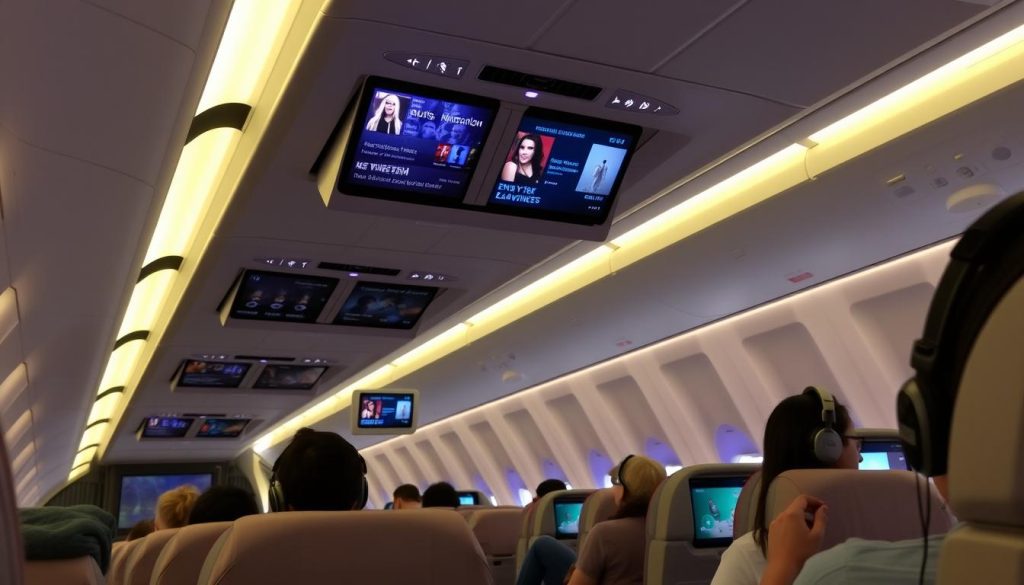
For comfort, try *relaxation techniques for travelers*. Use progressive muscle relaxation by tensing and then relaxing your muscles. It reduces stress and betters blood flow. Try visualization too. Imagine calming scenes using all senses while sitting.
Packing games or books is smart for 40% of travelers. They keep you busy and relax your mind. A lot of passengers, about 85%, like to learn about their destination during the flight. It boosts the fun of their upcoming adventure.
To improve your trip, mix entertainment with relaxation techniques for travelers. It entertains, promotes health, and makes flying nicer. Add face masks or skincare to fight the dry cabin air. They can make your skin 25% more hydrated after flying.
| Activity | Benefits | Prevalence |
|---|---|---|
| Watching Movies/Listening to Podcasts | Increases likelihood of feeling refreshed upon arrival by 30% | Offered by most airlines; 60% of travelers use these |
| Reading or Playing Games | Engages and relaxes the mind | 40% of travelers pack these items |
| Studying Destination Details | Increases excitement and readiness for the trip | 85% research destinations on flights |
| Skincare Routines | Improves skin hydration post-flight by 25% | Many passengers use face masks or skincare products |
Freshen Up and Plan for Arrival
Arriving fresh at your destination can change your travel experience. We will explore key steps for staying clean on planes and adjusting to new time zones.
Personal Hygiene During Long-Haul Flights
Keeping clean on long flights is key to feeling good when you land. Don’t forget a small toothbrush, toothpaste, and face wash in your carry-on. Brushing your teeth and washing your face during the flight can wake you up and increase comfort.
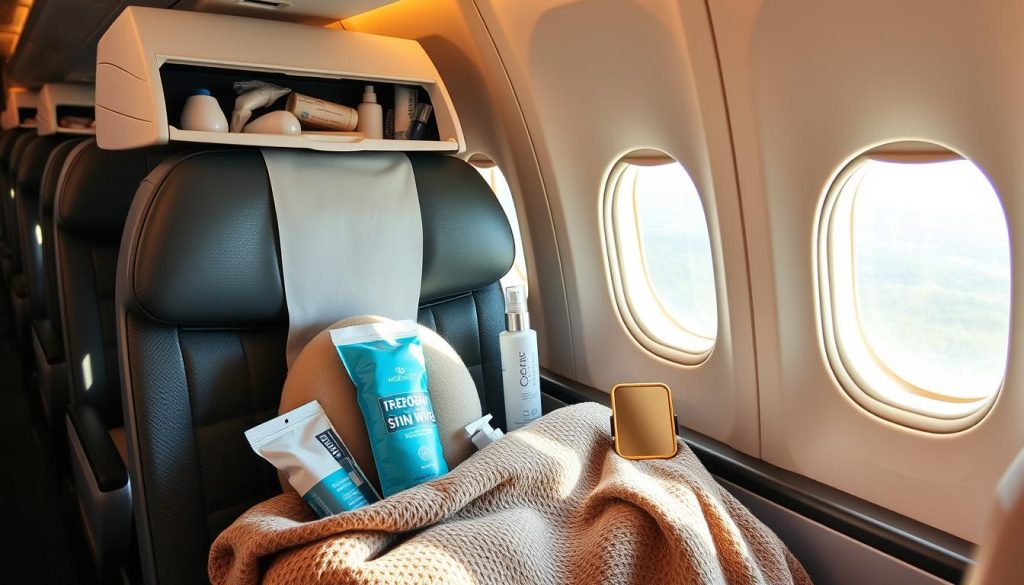
Experts say you should also bring facial wipes and hand sanitizer for quick cleaning. Regular cleaning during a flight helps you stay fresh and avoid discomfort from traveling long hours.
Adjusting to the New Time Zone
Adjusting to new time zones is hard, but planning can help. Start changing your sleep and wake times a week before your trip to match your destination’s time zone. This can help adjust your body clock.
Set your watch to your destination’s local time once on the plane. Try to sleep and stay awake based on this schedule. Drinking water is crucial; the Aerospace Medical Association advises eight ounces every hour to fight dehydration. Dehydration makes jet lag worse, so drink plenty of fluids.
- Hydrate Regularly: Keep drinking to avoid getting dehydrated.
- Meal Timing: Eat meals in line with your destination’s time to get used to it faster.
- Sleep Strategically: Use eye masks and noise-canceling headphones for better sleep.
- Comfort Items: Carry pillows and blankets for a better rest.
Using these tips can make adjusting to new time zones easier. This makes your trip smoother and more enjoyable.
Conclusion
Traveling far can be tough on your body. It can leave you feeling uncomfortable and jet-lagged. But, by choosing your seat wisely, fixing your sleep schedule before you go, staying hydrated, wearing comfy clothes, using sleep aids, and eating smart, you can reach your destination feeling better. Using these tips can make your long flight more comfortable and enjoyable.
Preparing well is crucial to fight jet lag. Start adjusting your sleep pattern before you leave to match your new time zone. Being active on the plane helps avoid stiffness and tiredness from sitting too long. Also, eating light and avoiding too much caffeine and alcohol helps you sleep better.
Research tells us that comfort items like noise-canceling headphones and eye masks really help you rest better on a plane by blocking out distractions. Taking small doses of melatonin or Pycnogenol helps adjust to new time zones, improving sleep and lowering jet lag symptoms. With these travel sleep tips, you’ll be set for a restful trip.