Tips for Handling Turbulence on Flights
Have you ever noticed how some people stay cool during flight bumps, while others get really anxious? Turbulence is normal on flights, but it can scare even frequent flyers. By understanding why it happens and using strategies to cope, you can feel better about it. Let’s look at some helpful flight turbulence tips to make your next trip smoother.
Cases where turbulence caused a crash are very rare. In fact, it’s been years since turbulence led to a crash. Most people get hurt during turbulence because they or their stuff aren’t strapped in. Wearing your seatbelt is key. Even though flying might seem scary, it’s the safest way to travel. So, how to deal with turbulence on airplanes? Get the facts, choose the best seat, buckle up, and try to relax. Let’s dive into more details about these tips.
Understanding the Causes of Turbulence
Airplane turbulence might feel scary, but knowing why it happens can help. It’s caused by air moving unevenly due to natural events.
Weather Patterns
Weather, like thunderstorms, is a big cause of turbulence. On hot summer days, turbulence gets worse because of the heat. Wind shear happens with changes in wind which is common near temperature inversions.
Jet Streams
Jet streams are fast winds high up that cause clear air turbulence (CAT). CAT is found above 15,000 feet mostly in winter. These patches are long and wide but happen in clear skies. Knowing about jet streams helps pilots avoid turbulence.
Geographical Features
Mountains can also cause turbulence, called mountain wave turbulence. When winds hit mountains, they can lift planes up quickly. This effect can stretch 100 miles from the mountains. Understanding this helps in handling turbulence better.
Turbulence: Frightening but Rarely Dangerous
While turbulence might scare some, it’s a normal, safe part of flying. Knowing how planes are made, how pilots train, and how flight crews react can help you feel better. Let’s dive into these important details:
Aircraft Design
Planes are built to handle much more than typical turbulence. For example, a plane’s wings can bend up to 90 degrees. This greatly lowers the chance of any damage. Also, planes have backup systems, like multiple flight instruments from different makers. This shows flying is one of the safest ways to travel.
Pilot Training
Pilots learn a lot about flying through turbulence. They know how to change paths to dodge it and put safety first, even if it means a delay. This skill in moving through the air is how they keep flights smooth.
Flight Crew Experience
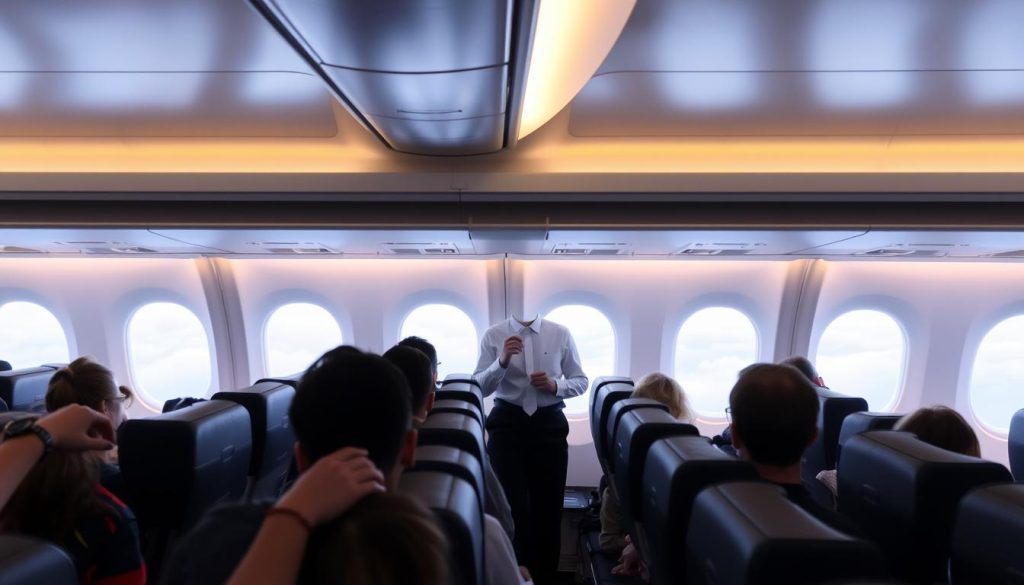
Flight crews are pros at keeping you safe when it’s bumpy. They follow FAA rules, which sort turbulence into four types: Light, Moderate, Severe, and Extreme. Crews help out by giving advice and making sure everyone is buckled in when needed.
Pilots and crews work together to make sure you’re safe. This team effort shows how serious the flying field is about keeping passengers safe. Knowing about all the training and planning might make you less nervous. Even when turbulence feels scary, it’s usually not dangerous.
| Intensity Level | Frequency | Description |
|---|---|---|
| Light | Very Common | Encountered on nearly every flight |
| Moderate | Less Common | Not encountered on every flight |
| Severe | Very Rare | Only frequent flyers typically experience it |
| Extreme | Extremely Rare | Majority of commercial pilots never encounter it |
Selecting the Right Seat to Minimize Turbulence Sensation
To reduce turbulence feeling, know the aircraft’s design and aerodynamics. Choosing your spot wisely improves your flight.
Seats Over the Wings
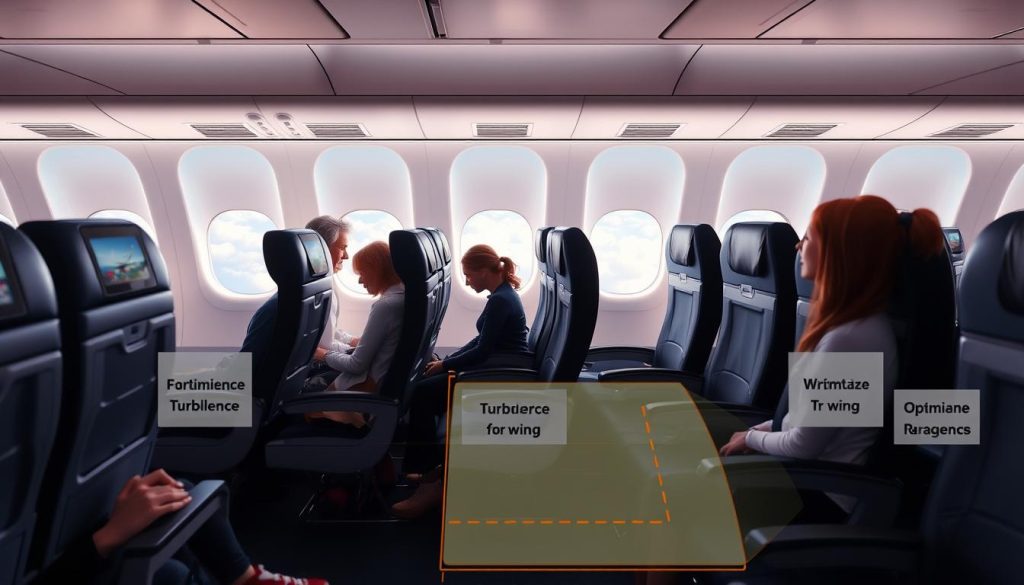
Seats over the wings are best to lessen turbulence. They’re near the plane’s center of gravity, stabilizing it in bumpy conditions. Sitting here means less bouncing and shaking.
Seats at the Front of the Plane
Front seats also face less turbulence than the back. They’re ahead of the center of gravity, so there’s less movement. For those easily bothered by turbulence, the front offers a smoother experience.
Choosing the right seat is crucial, say aviation experts. Big planes like the Airbus A380 and Boeing 747 handle turbulence better because of their size. Smaller planes, like some Boeing 757 models, feel turbulence more.
| Factors | Impact on Turbulence Sensation |
|---|---|
| Seats Over the Wings | Best for stability; closest to plane’s center of gravity. |
| Seats at the Front | Less noticeable turbulence beyond center of gravity. |
| Seats Near the Tail | Roughest spot for turbulence; far from center of gravity. |
| Larger Aircraft | More capable of absorbing turbulence. |
| Smaller Aircraft | More susceptible to turbulence. |
Want tips on handling turbulence? Book flights early for better seat choices. Some airlines have auctions for seat upgrades. But, airlines like Southwest don’t let you pick seats, impacting turbulence management.
Importance of Wearing Your Seatbelt
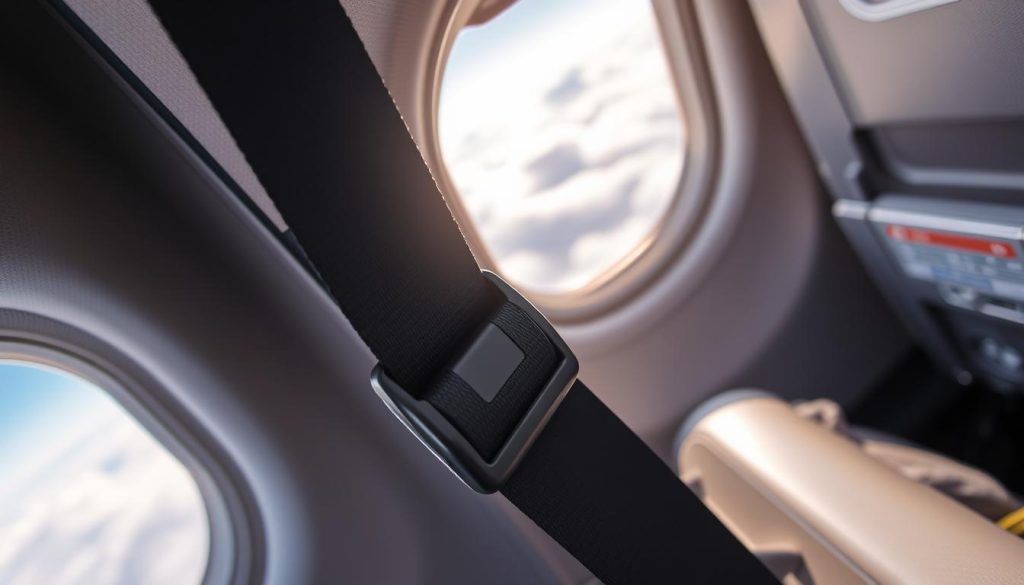
One simple but key tip for flight safety is always wearing your seatbelt. This is important, even if the seatbelt sign is off. The FAA and the National Transportation Safety Board (NTSB) stress this because turbulence can happen suddenly.
- Unpredictability of Turbulence: Turbulence can hit out of nowhere, sometimes hard. Even with new technology, pilots in the U.S. still face about 65,000 cases of medium turbulence and 5,500 cases of severe turbulence every year. That’s why it’s vital to always be buckled in.
- Injury Prevention: Every year, the FAA reports over 58 injuries caused by turbulence. For instance, in 2017, severe turbulence hurt 27 people on a flight from Moscow to Bangkok. Keeping your seatbelt on can greatly lower the chance of getting hurt.
Talking about dealing with turbulence, it’s key to wear your seatbelt. Without it, you’re much more likely to get hurt. Injuries can happen when people hit the ceiling or get hit by stuff flying around. So, it’s always best to keep that seatbelt on.
“Aviation experts emphasize the atmosphere of unpredictability in turbulence and the importance of seatbelt usage in preventing injuries.”
Flight attendants and pilots learn how to handle emergencies, including turbulent shakes. This shows how risky it is when passengers and items aren’t secured. The lap belt used since the 1940s is easy to fasten, even quickly. Following these tips can make flying safer and more secure.
Engaging in Distraction Techniques During Turbulence
When we face flight turbulence, distractions can help reduce our worry. Using different ways to distract ourselves can make the flight feel better. Consider these activities:

Reading Books or Magazines
Getting lost in a good book or interesting magazine helps a lot. It moves your attention away from the bumps. Lots of people find reading calming during rough patches.
Watching Movies or Shows
Airplanes often have lots of movies or shows to watch. This can be a great way to forget turbulence. Top airlines like JetBlue Airways and United Airlines offer many entertainment options to help you relax.
Listening to Music or Podcasts
Listening to top music or interesting podcasts is another good distraction. They can help you feel calm and focused on something fun. Now, many airlines have special playlists and podcasts available.
Playing Games
Games on your phone or the plane’s system can ease anxiety. Whether it’s a puzzle or adventure game, it grabs your focus. Flight attendants note that playing passengers are less anxious.
| Distraction Technique | Effectiveness Rate | Benefits |
|---|---|---|
| Reading Books or Magazines | 65% | Focuses the mind on content, diverting attention from turbulence |
| Watching Movies or Shows | 70% | Provides visual engagement, reducing anxiety symptoms |
| Listening to Music or Podcasts | 68% | Offers an auditory escape, fostering a sense of calmness |
| Playing Games | 65% | Helps occupy the mind with challenging and entertaining content |
Using these techniques can make your flight less stressful. By choosing to do things that keep you busy, you handle flight anxiety better. And you’ll find turbulence easier to deal with.
Practicing Breathing Exercises to Stay Calm
Engaging in breathing exercises is great for staying calm on flights. These methods help you keep calm and reduce stress.
4-7-8 Breathing Method
The 4-7-8 Breathing Method is easy and effective. Studies show it can cut anxiety by 60% in the right settings. Here’s the way to do it:
- Inhale through your nose for 4 seconds.
- Hold your breath for 7 seconds.
- Exhale completely through your mouth for 8 seconds.
This method helps you focus and calm your nerves during flight shakes.
Deep Belly Breathing
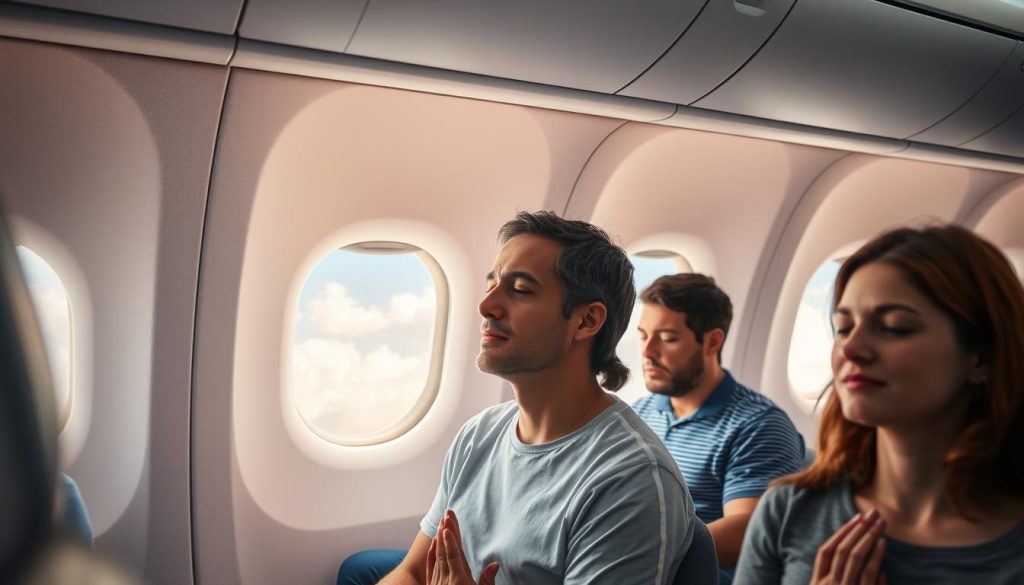
Deep Belly Breathing is another top method for flight shakes. It involves deep breaths into your belly, not just your chest. This ensures you get the most oxygen. Frequent flyers who use this technique feel better during turbulent flights.
- Find a comfortable seated position.
- Place one hand on your chest and the other on your belly.
- Inhale deeply through your nose, letting your belly rise.
- Exhale slowly through your mouth, and feel your belly go down.
Using these breathing methods can help reduce flight-related stress.
Are There Any Special Tips for Handling Turbulence on Flights?
Yes, there are special ways to deal with turbulence on flights. And they can really help.
Choosing where you sit is important. Sitting over the wings feels less bumpy, about 20-30% less. The back of the plane shakes up to 50% more when the weather gets rough.
Relaxation techniques can calm you. Try deep belly breathing or the 4-7-8 method. They are quick ways to beat anxiety during turbulence.
Knowing about the flight’s weather helps too. Pilots use weather radars to avoid turbulence 70% of the time. Services that predict weather can cut down on bumps by 30%.
Trusting the flight crew is key. Good communication from them can make passengers 40% calmer. The autopilot helps too, making the flight smoother during rough air.
Always buckle up. The NTSB says not wearing a seatbelt can lead to injuries in rough air. The seatbelt sign helps prevent up to 50% of those injuries.
Did you miss any tips? For smoother landings in turbulence, pilots make smaller control adjustments. Avoiding too much speed helps hit the landing spot right.
In short, to handle turbulence better, sit over the wings, use relaxation techniques, stay informed, trust the crew, and always wear your seatbelt.
Seeking Professional Help for Turbulence Anxiety
About 6.5% of people in the U.S. are scared of flying, especially when there’s turbulence. But there’s good news. Many ways can help with this fear.

Cognitive Behavioral Therapy (CBT)
Cognitive Behavioral Therapy, or CBT, works well for flight anxiety. It helps about 80% of people feel better about flying. CBT makes you think differently about turbulence, so it doesn’t scare you as much.
Exposure Therapy
Exposure Therapy is another way to face this fear. You might watch videos of flights with turbulence first. Later, you might try simulation flights. This can lower your fear by 30-40%, making turbulence less scary.
Anti-Anxiety Medication
Sometimes, medicine can help too. Drugs called SSRIs are often used. But it’s best to talk to a doctor 2-3 months before flying. This gives the medicine time to start working and helps calm your fear of turbulence.
| Method | Success Rate | Timeframe |
|---|---|---|
| Cognitive Behavioral Therapy (CBT) | 80% | 8-12 sessions |
| Exposure Therapy | 30-40% reduced anxiety | Variable, ongoing practice |
| Anti-Anxiety Medication | Effectiveness varies | 2-3 months before flight |
If you’re scared of flying because of turbulence, getting help is possible. Try CBT, Exposure Therapy, or medication after talking to a professional. This can make flying less stressful and more comfortable for you.
Conclusion
Feeling nervous about flight turbulence is common, but there are ways to make it better. It helps to know why turbulence happens, like changes in weather or jet streams. Knowing planes are built for this and pilots are well-trained can ease your worries.
Finding the best seat helps too. Seats over the wings or at the front feel less shaky. Always wearing your seatbelt keeps you safer if things get bumpy. Trying to distract yourself with a book, movie, or music can also take your mind off the turbulence.
If turbulence makes you very anxious, deep breathing methods like the 4-7-8 technique can be calming. For more severe anxiety, therapies like Cognitive Behavioral Therapy might be good options. These tips can help you have a smoother, more enjoyable flight.