Travel First Aid Kit Essentials – Pack Smartly!
A travel first aid kit is one of the few items you’ll carry on every trip but hope never to use. The right kit handles the minor issues that inevitably come up on the road: blisters from too much walking, a headache at altitude, a cut from an unexpected fall. This guide covers the specific items to pack, how to keep the kit TSA-compliant for carry-on travel, and how to adjust your supplies based on where you’re going.
Why you need a travel first aid kit
Minor injuries happen on virtually every extended trip. Cuts, blisters, muscle soreness, insect bites, mild allergies, and upset stomachs are among the most common. In cities, a pharmacy is usually nearby, but in rural areas, on boats, or during long-haul drives through unfamiliar territory, the nearest medical supply may be hours away. A compact kit keeps you self-sufficient for the small things and buys time while you reach care for anything more serious.

The U.S. Department of State recommends that travelers to high-risk destinations carry a personal health kit with prescription medications, wound care supplies, and documentation of any existing medical conditions. Prescription medications should always travel in their original pharmacy-labeled containers, with the name on the label matching the name on your passport or boarding pass.
| Risk scenario | Preventive supply | Note |
|---|---|---|
| Minor cuts and scrapes | Adhesive bandages, antiseptic wipes | Cover most surface wounds immediately |
| Mosquito-borne illness risk | DEET insect repellent (30-50% for adults, 10-30% for children) | CDC-recommended concentration range |
| Existing health conditions | Adequate prescription supply plus a copy of your prescription | Carry two weeks extra for longer trips |
| Allergic reactions | Antihistamines; epinephrine auto-injector if prescribed | Declare epinephrine at TSA security |
Build your compact carry-on first aid kit
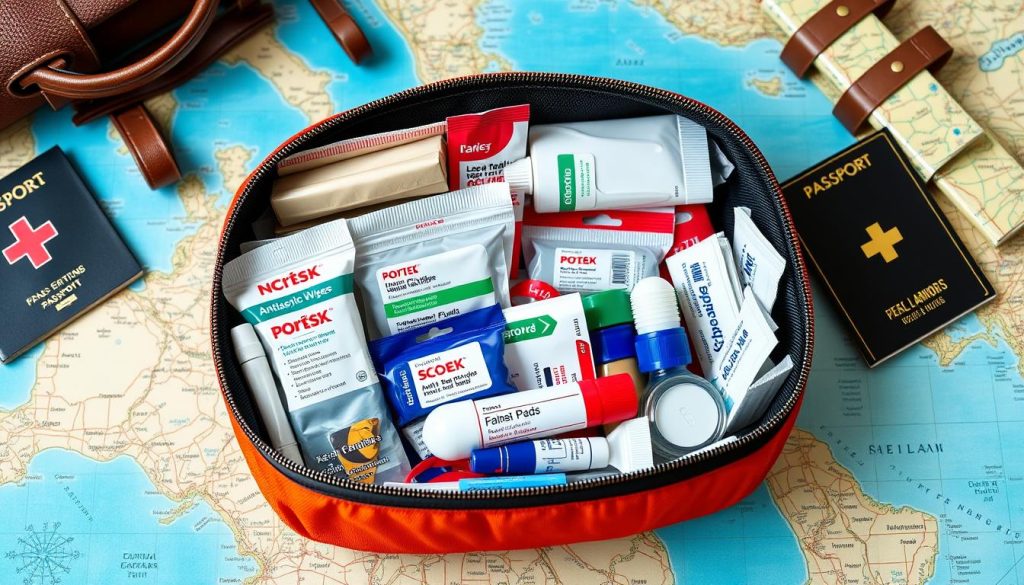
The American Red Cross Be Red Cross Ready First Aid Kit is a 73-piece compact kit measuring 9″ x 2.5″ x 7.5″ and weighing 0.88 lbs. It covers the most common travel injuries: cuts, scrapes, blisters, minor burns, and headaches. For a slightly larger option, the First Aid Kit PLUS offers 93 pieces in a 3″ x 8.5″ x 6″ case weighing 1.5 lbs, practical for family trips, hiking, or keeping in a car. Both kits are available through the American Red Cross and major retailers.
Wound care items
Include adhesive bandages in multiple sizes, antiseptic wipes for cleaning wounds before dressing them, and waterproof bandages for situations involving water exposure. Medical tape holds gauze in place for larger wounds that standard bandages can’t cover.
Pain relief solutions
Single-dose packets of acetaminophen or ibuprofen take almost no space and comply with TSA carry-on rules. Ibuprofen handles both pain and inflammation, which makes it the more versatile option for muscle soreness and minor sprains. Pack enough for your trip plus a few extra days.
Allergies and bites treatment
A small supply of antihistamines (cetirizine, loratadine, or diphenhydramine) covers both allergic reactions and insect bites. Diphenhydramine (Benadryl) causes drowsiness and works faster for acute reactions; cetirizine (Zyrtec) is non-drowsy and better for daily use in high-allergen environments. Keep quantities in TSA-compliant packaging if carrying liquid formats.
Packing for different destinations
The right contents for a travel first aid kit depend on where you’re going. Urban destinations have pharmacies nearby; remote destinations may not have any medical supply within hours. International travel adds the complexity of regulated medications that may be controlled or banned in certain countries.
Urban areas
In cities, keep the kit minimal. Pharmacies are typically within a short walk or rideshare ride, so there’s no need to carry everything. Focus on the items you’ll want immediately, before you can reach a store:
- Adhesive bandages (small, medium, large)
- Antiseptic wipes (60% alcohol hand sanitizer is a useful addition)
- Pain relievers (acetaminophen or ibuprofen)
- Digital thermometer
Make sure you have enough of your personal prescription medications, as your exact formulation may not be available at local pharmacies, especially for branded medications.
Remote locations
Remote travel requires a more complete kit because help is farther away. Include everything from the urban list plus:
- Water purification tablets
- Oral rehydration salts and anti-diarrheal medication
- Antihistamines (loratadine or diphenhydramine)
- Sterile gauze pads and medical tape for larger wounds
- Altitude sickness medication (acetazolamide, by prescription) if going above 8,000 feet
A communication device is also worth carrying in genuinely remote areas. The Garmin inReach Mini 2 Satellite Communicator enables two-way text messaging and SOS alerts from anywhere on earth with no cell signal. It runs on subscription-based satellite service and costs around $350 for the device.
International travel
International trips add medication restrictions to the planning equation. Some common over-the-counter medications in the US are controlled substances in other countries. Research your destination before packing codeine, certain ADHD medications, or sleeping aids. The U.S. embassy website for your destination and the destination country’s customs agency are the authoritative sources on what’s permitted. Include in your international kit:
- Epinephrine auto-injector if you have severe allergies (carry documentation)
- Ciprofloxacin or azithromycin for traveler’s diarrhea (by prescription)
- Daytime and nighttime cold medications
- Personal prescription medications in original pharmacy-labeled containers, with the name matching your travel documents
Liquid and gel restrictions: TSA compliance
TSA’s 3-1-1 rule applies to all liquids and gels in carry-on bags: each container must be 3.4 ounces (100ml) or smaller, and all containers must fit in one quart-sized, resealable zip-lock bag. This covers liquid antiseptics, gel antibiotic ointments, contact lens solution, and hand sanitizers. Solid medications, solid antiseptic sticks, and tablet or capsule forms of medications are not subject to the liquid rule.
Medically necessary liquids in quantities larger than 3.4 ounces are permitted through security but must be declared at the checkpoint and screened separately from your quart bag. Carry a brief note from your doctor for any injected medications, EpiPens, or large-volume medical liquids.
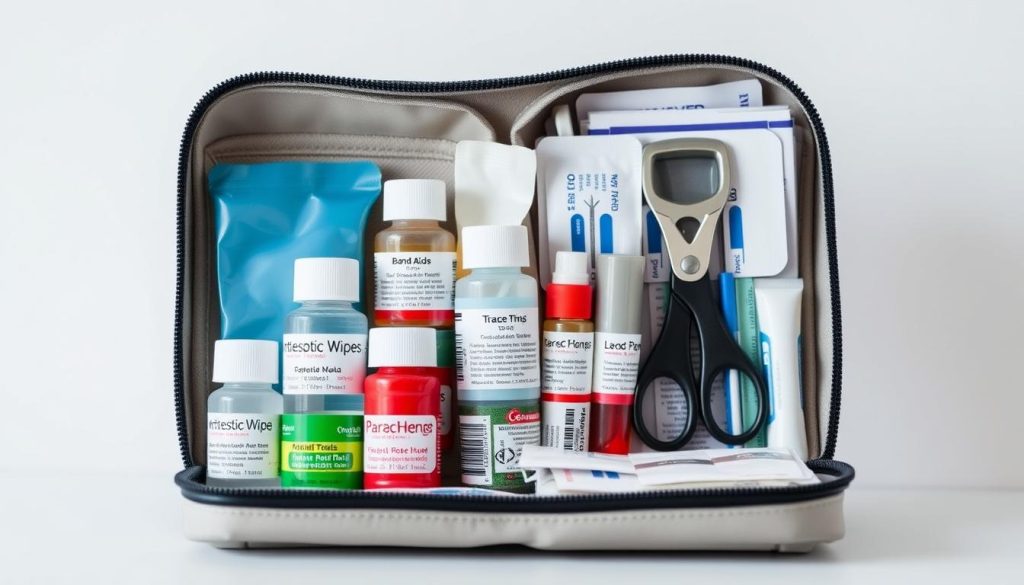
Scissors with blades shorter than 4 inches are allowed in carry-on bags. Scissors with blades longer than 4 inches must go in checked luggage. Tweezers have no size restriction and are permitted in carry-ons.

What are the essentials for a travel first aid kit?
A complete travel first aid kit should cover wound care, pain management, gastrointestinal issues, and allergy response. This covers the vast majority of minor health problems that arise during travel.
Basic supplies
- Antiseptic wipes: essential for cleaning wounds before dressing them
- Adhesive bandages in multiple sizes
- Gauze pads and medical tape
- Pain relievers (ibuprofen or acetaminophen)
- Antihistamines (cetirizine or diphenhydramine)
- Anti-diarrheal tablets (loperamide)
- Digital thermometer
Advanced supplies
For more active or remote trips, add:
- Elastic bandage (ACE wrap) for sprained ankles and joint support
- Moleskin or blister patches for foot care
- Oral rehydration salts for dehydration from heat, illness, or altitude
- SAM splint for temporary immobilization of fractures or sprains
- Tweezers for splinters, ticks, and embedded debris
Choosing a first aid kit bag
The Be Red Cross Ready First Aid Kit (73 pieces, 9″ x 2.5″ x 7.5″, 0.88 lbs) is the most portable fully stocked option and fits easily in a daypack or carry-on side pocket. The First Aid Kit PLUS (93 pieces, 3″ x 8.5″ x 6″, 1.5 lbs) suits longer trips or families. The Emergency Preparedness/First Aid Auto Kit (46 pieces, 7″ x 2.88″ x 9.25″, 1.5 lbs) is designed to live in a vehicle or at home and handles road-trip and disaster scenarios.

Compact and versatile options
For solo travelers, the Surviveware Small Premium First Aid Kit (around $50) is a popular choice. It is water-resistant, clearly labeled inside, and sized for daypack or backpack use. The interior organization separates wound care, medications, and tools into distinct compartments, making it faster to find items under stress.
Durable and waterproof choices
If your trip involves water, a waterproof hard-case kit is worth the extra weight. Waterproof cases protect medications from moisture damage that can degrade effectiveness, and they prevent bandages and gauze from becoming saturated and unusable.
| Kit name | Pieces | Dimensions (in) | Weight (lbs) | Best use |
|---|---|---|---|---|
| Be Red Cross Ready First Aid Kit | 73 | 9 x 2.5 x 7.5 | 0.88 | Solo travel, carry-on, daypack |
| First Aid Kit PLUS | 93 | 3 x 8.5 x 6 | 1.5 | Families, hiking, car, small office |
| Emergency Preparedness/First Aid Auto Kit | 46 | 7 x 2.88 x 9.25 | 1.5 | Road trips, home emergency kit |
Adding personal medications and prescriptions
Prescription medications should always travel in their original pharmacy-labeled containers. This is important for two reasons: identification by medical personnel in an emergency, and compliance with customs inspections when crossing international borders. Pack enough supply for your entire trip plus a minimum of two extra weeks to account for delays, lost luggage, or extended stays.

For trips longer than two weeks or to countries with limited pharmacy access, carry a printed copy of each prescription. If traveling to countries where your prescriptions may be written in a language the local pharmacist doesn’t read, carry the INN (International Nonproprietary Name) for each drug, which is universally recognized. For any injectable medications or controlled substances, a letter from your prescribing physician describing the medical necessity is standard practice.
Over-the-counter additions worth including: ibuprofen, cetirizine, loperamide (anti-diarrheal), antacids, and a thermometer. Check expiration dates before every trip and replace anything within three months of expiry.
| Item | Packing guidance |
|---|---|
| Prescription medications | Original labeled container; pack two weeks extra |
| Prescription copies | Translated version for international travel |
| Travel insurance / health card | Include carrier contact and policy number |
| Ibuprofen or acetaminophen | Single-dose packets for TSA compliance in carry-on |
| Digital thermometer | Avoid mercury/glass versions (restricted on flights) |
| Insect repellent | 10-30% DEET for children; 30-50% DEET for adults (CDC) |
| Malaria prevention | Prescription required; start before travel per your doctor’s schedule |
| Epinephrine auto-injector | Declare at TSA; carry documentation |
Additional safety tools and gadgets
Tweezers and scissors
Tweezers are one of the most-used items in any first aid kit. They remove splinters, cactus spines, embedded gravel, and ticks with far better precision than fingers. Pointed-tip tweezers work better than flat-tip for tick removal. Scissors with blades under 4 inches are allowed in carry-on bags by TSA and are essential for cutting bandages, tape, and clothing away from wounds.
Satellite communicators for remote areas
The Garmin inReach Mini 2 Satellite Communicator is a compact device (3.9 oz) that enables two-way text messaging and SOS activation via satellite from any location on earth with no cellular coverage. It connects to the Iridium satellite network and requires an active subscription (plans start around $14.95/month for basic messaging). For trips to genuinely remote areas where a medical emergency could mean hours before ground help arrives, this device is the single most valuable safety tool you can carry.

Keeping your first aid kit lightweight
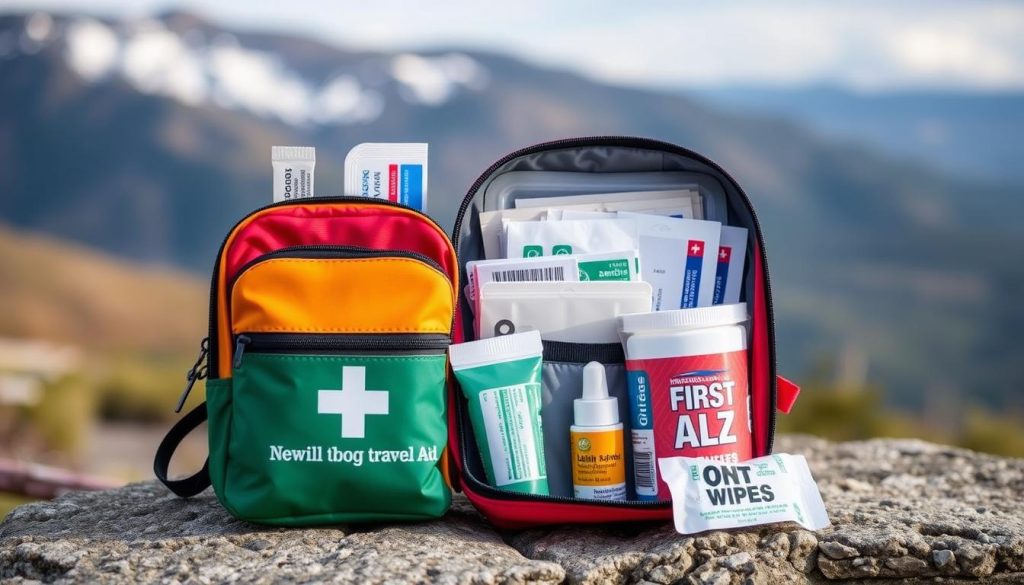
A compact travel first aid kit should stay under 1 pound for most solo trips. Choose multi-use items over single-use ones. Medical tape, for instance, works for securing bandages, reducing blister friction, and making field repairs to gear. Adhesive bandages replace multiple specialized bandage types when you carry an assortment of sizes. The Surviveware Small Premium First Aid Kit at around $50 and roughly 1 pound demonstrates that a fully functional kit doesn’t need to be heavy.
Remove duplicate items. If you’re already packing ibuprofen in your medications, you don’t need a separate blister pack in the first aid pouch. Consolidate pain relief, allergy medication, and anti-diarrheal drugs into a single organized pouch rather than keeping multiple copies. TSA-approved medical scissors (6-inch blades just under the 4-inch limit) cost around $10 and don’t add meaningful weight.
| Item | Approximate price | Notes |
|---|---|---|
| Surviveware Small Premium First Aid Kit | ~$50 | Water-resistant, internally organized, ~1 lb |
| TSA-approved scissors (6-inch) | ~$10 | Blade under 4 inches; carry-on allowed |
| 70-piece first aid kit (basic) | ~$17-18 | Budget option for short trips |
| Garmin inReach Mini 2 | ~$350 + subscription | For remote travel only; adds 3.9 oz |
Space-saving tips for packing your kit
Using multi-purpose items
Medical tape, safety pins, and elastic bandages all have multiple applications beyond their primary use. Safety pins can temporarily secure torn clothing, hold a sling in place, or mark a section of a bandage. Elastic bandages provide joint support, compression for swelling, and can hold ice packs in place. Choosing items with secondary applications reduces overall kit volume.

Decanting liquids into smaller containers
TSA’s 3.4-ounce rule requires smaller containers for all carry-on liquids. Decant antiseptic solution, hand sanitizer, and any liquid medications into travel-sized bottles before your trip. Reusable TSA-compliant silicone bottles work well for this and are sold in multi-packs for around $10-15. For medications in liquid form, ask your pharmacist for a smaller quantity dispensed in a smaller labeled container.
Frequently asked questions
What should I include in a travel first aid kit?
A travel first aid kit should include adhesive bandages in multiple sizes, antiseptic wipes, gauze and medical tape, pain relievers (ibuprofen or acetaminophen), antihistamines, anti-diarrheal medication, a digital thermometer, and any personal prescription medications. For remote or international trips, add oral rehydration salts, water purification tablets, and a copy of your prescriptions.
Can I bring a first aid kit on a plane as a carry-on?
Yes. TSA permits first aid kits in both carry-on and checked luggage. Liquids must follow the 3-1-1 rule: containers of 3.4 ounces or less, in a quart-sized zip-lock bag. Medically necessary liquids larger than 3.4 ounces are permitted but must be declared at the security checkpoint. Scissors must have blades shorter than 4 inches for carry-on; tweezers have no size restriction.
How big should a travel first aid kit be?
For most solo travelers on urban or standard international trips, a kit around the size of the Be Red Cross Ready First Aid Kit (9″ x 2.5″ x 7.5″, 0.88 lbs) is sufficient. Families or travelers headed to remote areas may want a 93-piece kit around 1.5 lbs. Anything larger is typically unnecessary for non-expedition travel and adds weight without meaningful benefit.
What medications should I pack in my travel first aid kit?
Standard over-the-counter medications to include: ibuprofen or acetaminophen for pain and fever, cetirizine or diphenhydramine for allergies, loperamide for diarrhea, and antacids for indigestion. For remote or tropical destinations, add oral rehydration salts and consult a travel medicine doctor about prescription options like ciprofloxacin for traveler’s diarrhea or acetazolamide for altitude sickness.
Are prescription medications allowed in carry-on luggage?
Yes. Prescription medications are permitted in carry-on luggage in quantities consistent with your trip length. They should be in original pharmacy-labeled containers with your name on the label. For controlled substances or injected medications, carrying a letter from your prescribing physician is recommended. TSA does not require medications to go through the standard quart bag, but they may be subject to additional screening.
Do I need a first aid kit if I’m only visiting a city?
A small kit is still worth carrying in cities. The difference between a 15-minute wait at a pharmacy and handling a blister or headache immediately can affect how much of the day you lose. A minimal urban kit: a handful of adhesive bandages, two-day supply of pain reliever, antihistamine, and antiseptic wipes weighs almost nothing and handles the vast majority of situations that arise mid-day.
How often should I restock my travel first aid kit?
Check your kit before every trip. Replace any medications within three months of expiry, any bandages or gauze that have been opened or exposed to moisture, and any items you used on the previous trip. A quick inventory takes about five minutes and ensures the kit is actually functional when you need it. Most component supplies cost under $20 to fully replace.