Essentials for Personal Item vs. Carry-On Pack
Have you ever gotten stuck in the luggage mix-up: deciding what goes in your personal item or carry-on? Knowing this difference is a game-changer for a smooth trip.
Moving through the airport can be easy when you know what to keep close and what to put above. Personal items and carry-on bags have size limits—18 x 14 x 8 inches and 22 x 14 x 9 inches, respectively. These sizes are not just random; they help you avoid fees and reduce travel woes.
Major airlines, such as American, Delta, and JetBlue, stick to these size limits and the well-known liquid rule. With this rule, you can only have 3.4 ounces per bottle. Budget airlines, like Frontier and Spirit, allow one personal item for free but charge for anything more. This shows why knowing what to pack where is crucial for your travel prep.
Stick around as we guide you through packing your personal item and carry-on efficiently. You’ll become a pro at traveling light and smart.
Understanding Personal Items vs. Carry-On Bags
Traveling smart means knowing the difference between a personal item and a carry-on bag. This knowledge helps avoid extra fees and makes your trip more comfortable. Let’s look at what makes each type of bag unique, including their sizes, shapes, and airline rules.
What is a Personal Item?
A personal item is usually smaller than a carry-on and fits under the seat in front of you. This could be a purse, laptop bag, or a small backpack. Normally, the biggest size allowed for a personal item is 18 x 14 x 8 inches. While many airlines don’t limit weight for personal items, it’s best to pack light for ease and convenience.
What is a Carry-On Bag?
A carry-on bag is made to fit in the overhead bin. It has stricter size and weight rules than a personal item. The largest size usually allowed is 22 x 14 x 9 inches, with a weight limit around 22 pounds. Carry-ons are great for avoiding checked bag fees and keeping your journey light.

Size and Shape Differences
The main differences between a personal item and a carry-on bag are their sizes and where you store them on the plane. Personal items are designed to be smaller and fit under the seat, which makes them easy to access. On the other hand, carry-ons go in the overhead bins and can hold more, like clothes and essentials.
Common Airline Policies
It’s important to know the baggage rules of different airlines to avoid surprise fees. For example, American Airlines and Delta Airlines let you bring one personal item and one carry-on bag per flyer, as long as they meet size limits. United Airlines also has specific size limits for both personal items and carry-ons. If your bag is too big or heavy, you could pay $50 or more at check-in. Always measure and weigh your bags before you go to the airport.
To wrap it up, understanding the difference between a personal item and a carry-on is key. Following airline rules and organizing your luggage well can make your travel smoother. Here’s a quick guide to help you:
| Feature | Personal Item | Carry-On Bag |
|---|---|---|
| Typical Maximum Size | 18 x 14 x 8 inches (45 x 35 x 20 cm) | 22 x 14 x 9 inches (56 x 36 x 23 cm) |
| Weight Restrictions | None | 15-22 lbs (7-10 kg) |
| Storage Location | Under the seat | Overhead bin |
| Included Free of Charge | Yes | Depends on airline/ticket type |
Pros and Cons of Carry-On Bags
When you think about taking only a carry-on bag on your travels, there’s a lot to consider. We will look into the good and bad points of carry-on luggage. This will help you decide better for your next journey.
Advantages of Carry-On Bags
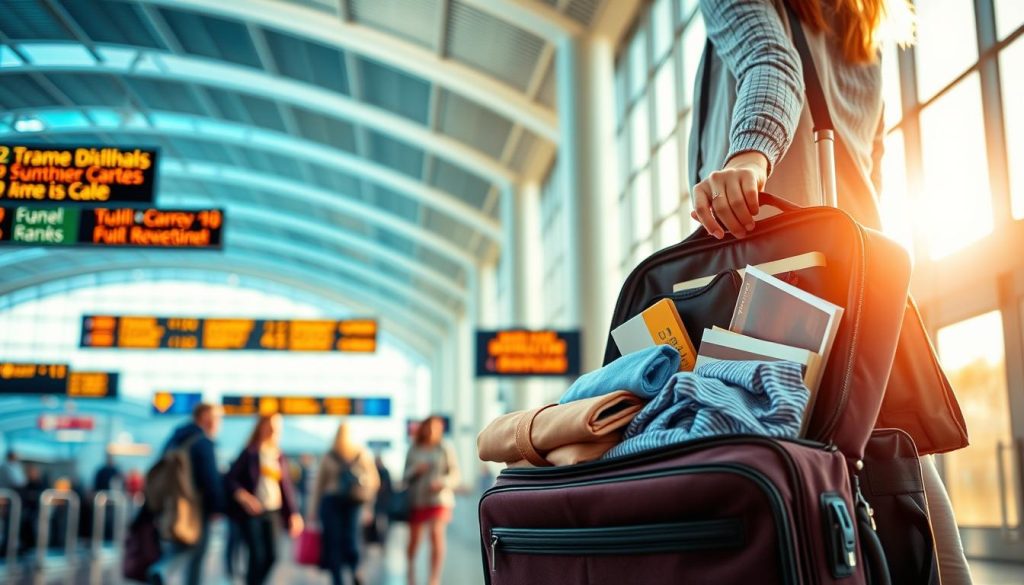
Let’s talk about the good stuff first. Carry-on luggage is super convenient. You don’t have to wait around at baggage claim. This means you save a lot of time. Also, your bag is always with you. So, there’s less chance of losing it. This is why those who travel for business love it.
This luggage is small enough to fit overhead – usually 22 x 14 x 9 inches. And it has a weight limit of about 22 pounds. This makes you pack smart. Using things like compression cubes helps you fit more into your bag.
Drawbacks of Carry-On Bags
But, it’s not all great. Carry-on bags have to be a certain size and weight. Airlines usually cap it at around 22 pounds. This can be tough if you’re going away for a while or have bigger items.
Also, you have to watch how much liquid you bring. All liquids, gels, or aerosols must be under 3.4 ounces. They should also fit in a quart-sized, clear plastic bag. If not, you might have to leave them behind at security.
Another thing is that overhead space can be tight on full flights. If your bag doesn’t fit, you might have to check it anyway. This could mean you lose some of the perks of carry-on travel, like getting out of the airport faster.
| Advantages | Drawbacks |
|---|---|
|
|
Pros and Cons of Personal Items
Personal items, like small bags, can be very handy for travelers. They fit under the seat in front of you. These items should not be bigger than 18 by 14 by 8 inches. They’re perfect for short trips, keeping what you need close.
One of the perks of personal items is that they’re free with all tickets, including basic economy. This beats carry-on bags, which can cost extra if too big. Plus, personal items can weigh up to 20 pounds, which is easy to handle for quick travel.
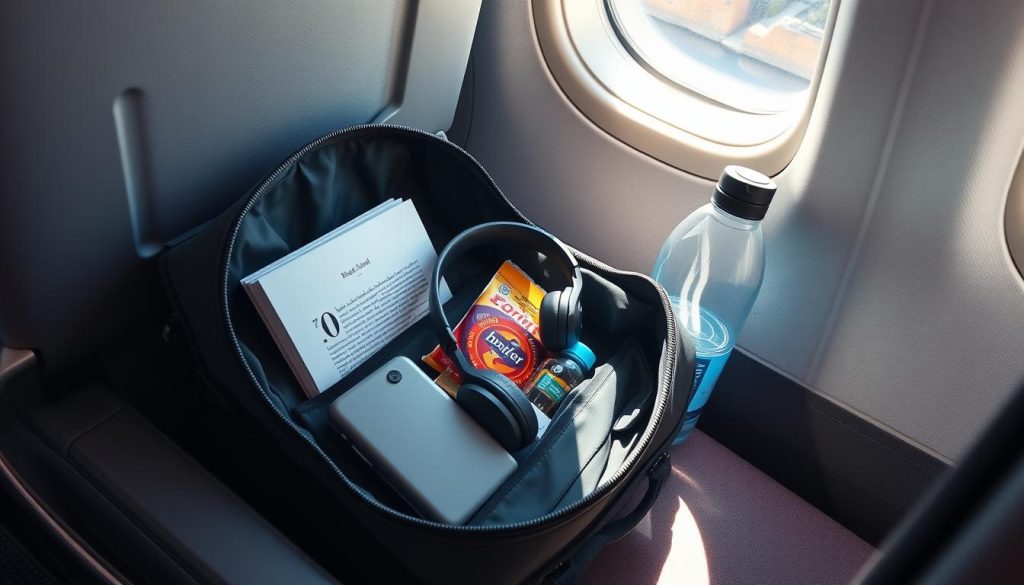
Accessing your personal items during a flight is easy. You can reach under your seat for anything important without bothering others. Airlines let you also bring items like umbrellas, coats, diaper bags, and books, making your personal item even more useful.
However, there are downsides to personal items. Their small size might not work for long trips. You might end up needing an extra bag, which means more luggage. Personal items also follow the same rules for liquids as carry-ons, with a 3.4-ounce limit per container.
Carry-on bags are allowed to be a bit bigger than personal items, with different size and weight limits. This affects how you pack. Despite their smaller size, personal items let you organize and reach your things easily.
Different airlines have different rules for personal items. For instance, American Airlines allows 18 x 14 x 8 inches, but Delta allows 17 x 13 x 10 inches. Always check your airline’s policy to avoid surprises at the gate.
What essentials should be kept in a personal item vs. carry-on?
Understanding what to pack in your personal item versus your carry-on is key. It makes your trip easier and meets airline rules. Pack smart for quick access to your needs.
Personal Item Essentials
Keep your personal item, like a small tote, under the seat in front of you. It’s for must-haves during the flight or in emergencies. Here’s what airplane essentials to include:
- Electronics: Your laptop, tablet, chargers, and power banks should be in your personal item for security.
- Medications: Have any needed medications easily reachable.
- Travel Documents: Keep your passport, boarding pass, and travel plans handy.
- Valuables: Carry cash, cards, and personal IDs close for safety.
- Headphones: Many prefer their own headphones for comfort and fun.
- Essential Toiletries: Stick to travel-sized toiletries under 3.4 ounces to meet TSA rules.
Carry-On Essentials
Your carry-on goes in the overhead bin and can be a bit bigger. It’s for things you don’t need right away but are still useful. Here are essential packing tips for travel for your carry-on:
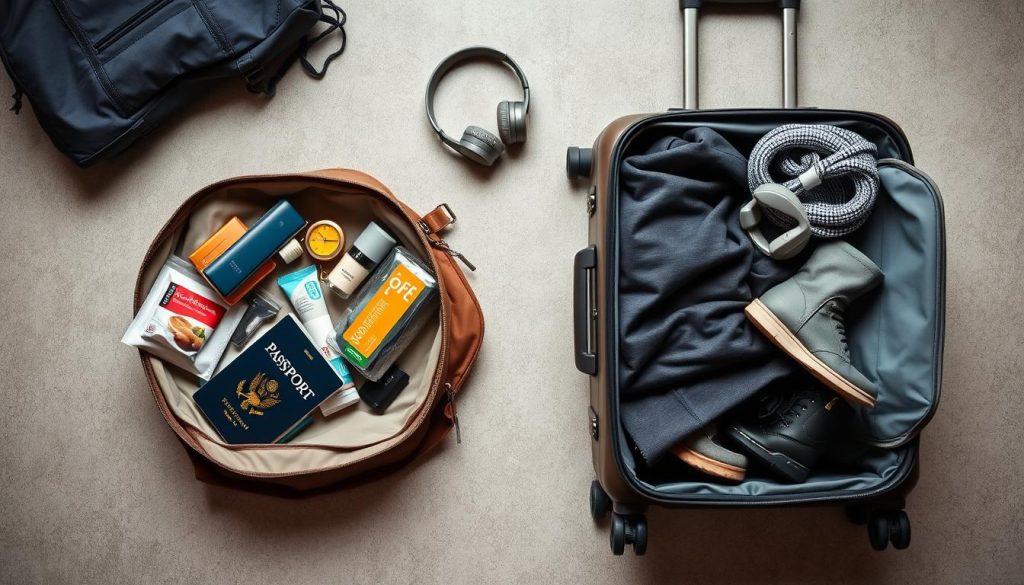
- Clothing: Include a change of clothes, useful for long flights.
- Footwear: Pack an extra pair of shoes or flip-flops.
- Snacks: Non-perishable snacks help during delays.
- Books/Entertainment: Bring a book or something to do when you can’t use electronics.
- Toiletries: Pack travel-size items like toothpaste and shampoo that meet TSA’s rules.
- Important Accessories: Consider a travel pillow or blanket for extra comfort.
Choosing wisely what goes into your personal item versus your carry-on makes essentials handy. It also keeps you organized and ready for your travels.
How to Pack a Carry-On Bag
Packing for a trip doesn’t have to be hard. Using good carry-on packing methods can help. You can pack electronics and maximize space to have everything you need.
Efficient Packing Tips
Choose clothes that work for many occasions and roll them to save space. Rolling clothes instead of folding can give you 20% more room. For a week away, you might pack:
- 1 hat
- 2 pairs of shoes
- 3 bottoms
- 4 tops
- 5 pairs of socks
- 6 pairs of underwear
Compression bags are great for making clothes smaller by squeezing out air. Wearing your biggest shoes can save even more room, up to 30%. Packing light makes it easier to adapt, which 70% of travelers say helps a lot.

Tech and Gadget Organization
Keep all your tech in one spot in your carry-on. You might bring a laptop, chargers, and a travel adapter. Make sure these are easy to get to when you need them. A tech organizer can keep wires neat and gadgets safe.
E-readers are better than heavy books because they’re lighter and can hold many books at once. This makes reading on your journey easier.
Good packing can make your trip smooth and fun. Being organized means you can use every bit of space in your carry-on.
How to Pack a Personal Item
Packing for a flight needs a mix of smart planning and easy access. You need to keep important things handy and follow the airline’s rules.

Personal items should fit under the seat in front of you. They can be things like small handbags, briefcases, or backpacks. Each airline has its own size and weight limits. Always check these details before you fly.
For streamlined packing, use a briefcase with lots of pockets. The @work Medium Brief is perfect for business trips. It holds a 15-inch laptop and helps you stay organized.
Here’s the best way to pack your personal item:
- Identify Your Essentials: Include things you can’t fly without like travel papers, gadgets, and snacks. Pack toiletries in a small bag, following TSA liquid rules.
- Maximize Space: Use bags with extra space. Rolling your clothes also saves space and prevents creases.
- Prioritize Accessibility: Keep stuff like phone chargers and snacks in easy-to-reach spots. This means less digging around during the flight.
- Consider Travel-Sized Items: Choose smaller toiletries. Packing small souvenirs or digital memories helps save space too.
Packing smartly means you follow the rules and have a better trip. By organizing your things well, you have more room and quick access to what you need.
Airline Regulations and Size Limits
When you’re getting ready for your next trip, it helps know the airline size restrictions and baggage policy. This can keep you from getting hit with surprise charges. Knowing what to pack and how big it can be makes getting on the plane easier.
Major Airlines’ Policies
It’s important to know what you can bring and how big it can be on different airlines. Below, you’ll find the size limits allowed by some big airlines:
| Airline | Personal Item Dimensions (inches) | Carry-On Bag Dimensions (inches) |
|---|---|---|
| American Airlines | 18 x 14 x 8 | 22 x 14 x 9 |
| Delta Airlines | Not Specified | 22 x 14 x 9 |
| United Airlines | 9 x 10 x 17 | 22 x 14 x 9 |
| Spirit Airlines | 18 x 14 x 8 | 22 x 18 x 10 |
| JetBlue | 17 x 13 x 8 | 22 x 14 x 9 |
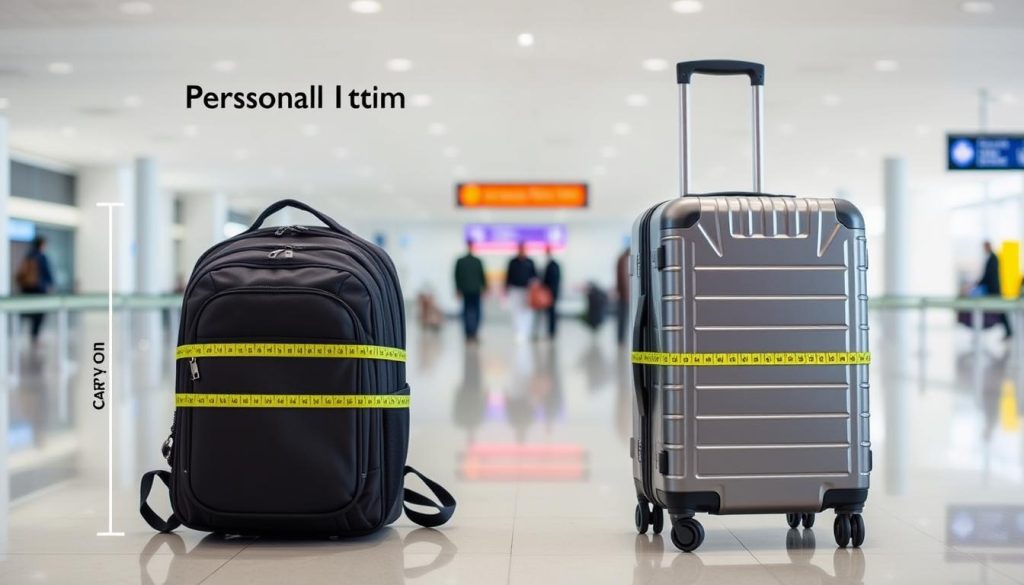
Your personal item should fit under the seat in front of you. This can be something like a laptop bag or a small duffel. Meanwhile, carry-on bags need to go into the overhead bins.
Size Checker Tools
Airlines use size checker tools at check-in or boarding to make sure bags fit their baggage policy. These tools, like metal frames or boxes, help confirm your items are not too big. Following these airline size restrictions with your travel must-haves avoids trouble and extra fees at the airport.
What Not to Pack in Personal Items & Carry-Ons
Knowing TSA rules about what to pack in your carry-ons is key for a hassle-free trip. Breaking these rules can result in delays, items being taken away, and fines.
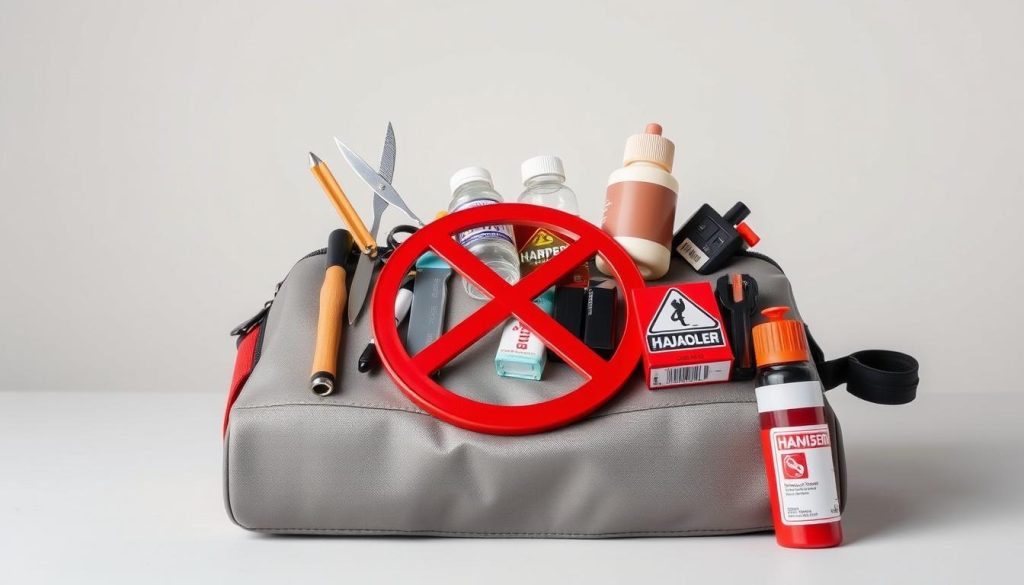
Certain items can’t go in your carry-on: explosives, things that can catch fire, sharp objects, and some sports gear. For example, you can’t take baseball bats, golf clubs, and ski poles on the plane because they could be used as weapons.
Each traveler can usually bring one carry-on. This bag should be no bigger than 22 x 14 x 9 inches and weigh between 15 to 22 lbs. Personal items, which are free with most airlines, must fit under the seat. They should be no bigger than 18 x 14 x 8 inches. Bags that are too big or heavy might cost you $50 or more in extra fees.
| Item Type | Size/Weight Limit | Guidelines |
|---|---|---|
| Liquids & Gels | 3.4 oz (100 ml) | Must be in a quart-sized, clear plastic bag |
| Sharp Objects | Scissors | No straight razors; disposable cartridge razors allowed |
| Sporting Equipment | N/A | Baseball bats, golf clubs prohibited |
| Self-defense items | One 4 oz container (checked luggage) | No pepper spray in carry-ons |
It’s vital to follow TSA’s packing rules. Banned items can slow you down at security and are a danger. Always check your packing list to make sure everything fits the guidelines.
Expert Packing Tips for Air Travel
Travel can be easy with the right packing tips. Whether you travel a lot or this is your first time, these hints will help you pack well. You can bring everything you need without running out of space.
Compression Packing Cubes
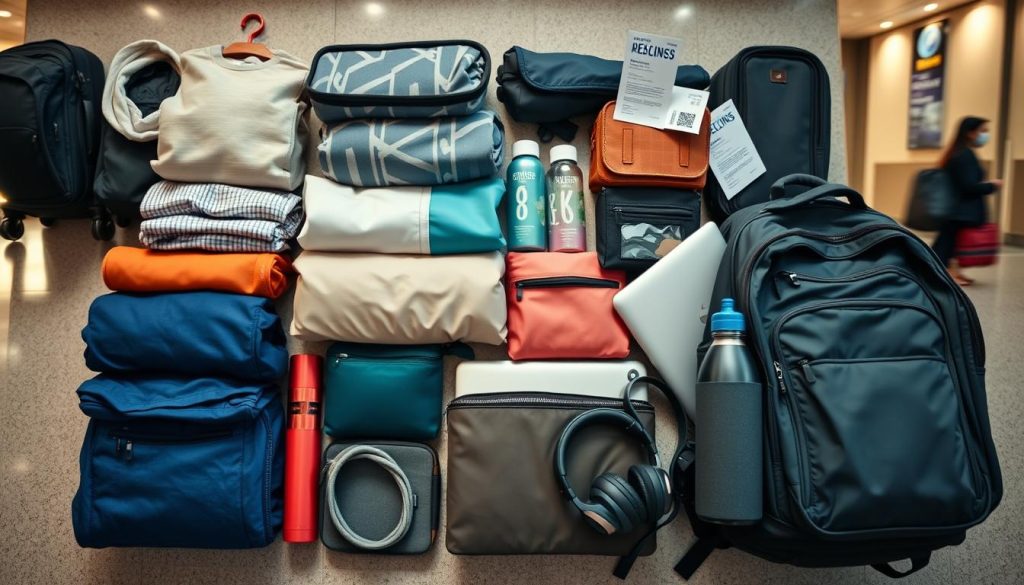
Compression packing cubes change the way you pack. They organize and compress your things. This lets you put more in your bag. Studies show they make packing 25% more efficient. That’s great for making room.
Rolling Clothes to Save Space
Rolling your clothes can save a lot of room. This trick keeps clothes from getting wrinkled. Plus, you can fit 20% more! Try rolling small items to see the difference in how much you can pack.
Maximizing Your Wardrobe
Choose clothing that serves many purposes. Wear layers and mix and match to create different looks. Traveling light is key. By choosing versatile clothes, you can lighten your bag by 15% to 30%. This means more space for essentials.
Travel-Size Containers for Toiletries
Make sure your toiletries follow the TSA’s 3-1-1 rule. Use containers that are 3.4 ounces or smaller. These small containers save space and avoid leaks. This tip is essential for a hassle-free check-in at security.
Conclusion
Learning how to pack smartly is key for a smooth trip. Knowing what counts as a personal item versus a carry-on is crucial. Personal items are smaller, often fitting under the seat, while carry-ons are larger and must meet airline rules.
Carry-ons save you money on fees and time at baggage claims, making them a favorite for many. Personal items are great for short trips, offering ease and flexibility. Tips like using packing cubes and rolling your clothes help fit more into your bag.
Knowing what to pack and following airline rules can avoid extra fees and delays. Make sure to pack personal items and carry-ons smartly for easier trips. Mastering these tips ensures a more enjoyable and hassle-free journey.