Preparing for Turbulence & Long-Haul Flights
Ever wonder how to make long flights easier and deal with turbulence? Flights can last from seven to nearly 19 hours. Knowing the challenges, there are many ways to improve your trip.
How can I prepare for turbulence or long flights in the best way? Start by choosing your seat early. Before flying, try to adjust your sleep patterns. Doing relaxing activities, like reading or a walk, reduces anxiety before flying.
Important tips for packing include taking noise-canceling headphones and an eye mask. These help block out sound and improve sleep. Try to match your sleep schedule with the time zone of your destination. This decreases jet lag.
Drinking water, doing stretches, and wearing compression socks help lower health risks like blood clots. Remember, eating right, using travel meds wisely, and picking the correct gear are key for comfort.
Understanding Turbulence on Airplanes
Turbulence can make many passengers feel uncomfortable. But understanding it can help ease fear and anxiety. It’s the choppy air movement caused by different weather conditions. Pilots and planes are ready to handle it, keeping everyone safe.
Causes of Turbulence
Turbulence comes from several weather-related reasons:
- Jet streams: Fast, narrow air currents in Earth’s atmosphere.
- Thermal turbulence: Caused by uneven heating of the Earth’s surface.
- Mountain waves: Happen when air flows over mountains, creating turbulence that can spread far.
- Wind shear: Changes in wind speed and direction over short distances.
- Clear Air Turbulence (CAT): Common above 15,000 feet, invisible as it doesn’t involve clouds.
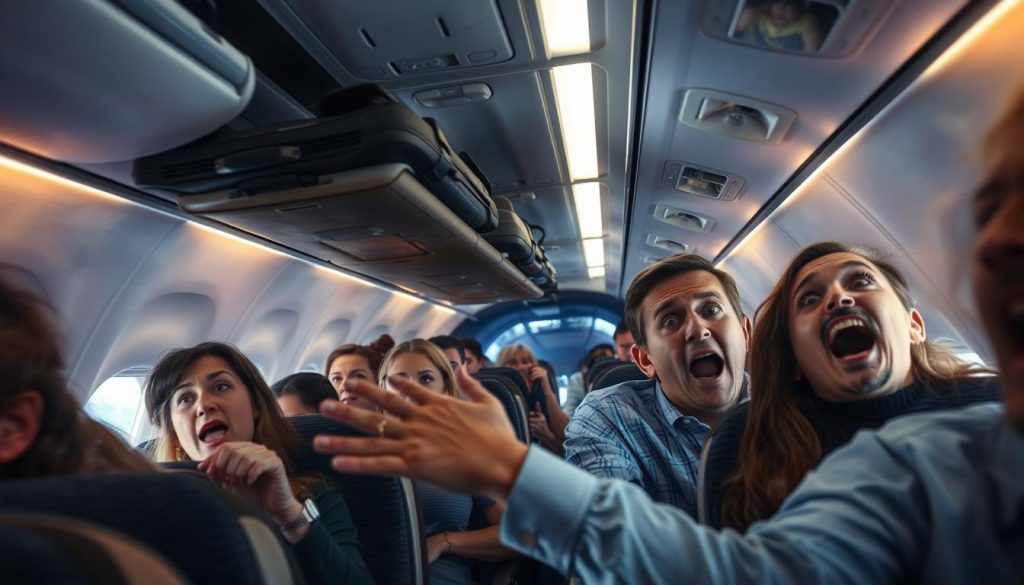
Each year, about 100 people, mostly flight attendants, get hurt by turbulence badly enough to need a doctor. This means only 50 out of 2 billion flyers a year get seriously injured. The risk is tiny, at 0.0000025%. Injuries usually happen to those not buckled in during the bumpy ride.
Types of Turbulence
| Type | Description | Effects |
|---|---|---|
| Light Turbulence | Momentary slight changes in altitude and/or attitude | Minimal discomfort, can usually move about the cabin |
| Moderate Turbulence | Noticeable changes in altitude and/or attitude | Strain against seat belts, unsecured objects may dislodge |
| Severe Turbulence | Large and abrupt changes in altitude and/or attitude | Possible momentary loss of control, significant discomfort |
| Extreme Turbulence | Violently tosses the aircraft, very rare | Practically impossible to control, may cause structural damage |
Most turbulence isn’t dangerous. Altitude changes are often below 40 feet, sometimes just 10 to 20 feet. In the U.S., pilots turn on the seatbelt sign more due to strict rules. Knowing about turbulence helps you handle your flight better and find ways to deal with it.
Choosing the Best Seat to Minimize Turbulence Effects
Finding the right seat on a plane can make your flight much comfier. This is very true if turbulence makes you anxious. By knowing where to sit, you can enjoy a calmer flight.
Every year, about 65,000 flights face turbulence, from a total of 16 million managed by the FAA. This is only 0.41% of all flights. Your experience of turbulence can depend a lot on where you sit.
The smoothest place to sit on an airplane is over the wings, which are close to the plane’s center of lift and gravity. In contrast, the roughest spot, typically the far aft, in the rearmost rows closest to the tail, where the effects of turbulence are more pronounced.
To feel less turbulence, choose seats between rows 12 and 25. This is good on planes like Boeing 737 and Airbus A320. Sitting over the wings is steadier because it’s near the plane’s center of gravity. Many travelers prefer these seats to have a smoother trip.

Seat choices also depend on the plane’s size. Smaller planes, like the Embraer 175 with 76 seats, feel turbulence more. But bigger planes, such as the Airbus A380 and Boeing 747, handle turbulence better. So, bigger planes usually mean less shake during your trip.
If you’re thinking, how can I prepare for turbulence or long flights, start by booking early. This way, you have more seat options. Just remember, cheap tickets often don’t let you pick a seat when booking. Also, some airlines charge more for seat selection, which can affect your travel budget.
For more comfort, try to sit over the wings or towards the front, especially on big planes. Choose early morning flights too, since cooler, denser air means less bumpiness. Keep these tips in mind when you plan how can I prepare for turbulence or long flights.
Pre-Flight Preparations for Long-Haul Flights
Getting ready for long flights is key to a good trip. A few smart steps before you leave can make your flight better and cut down on stress.
Adjusting Your Sleep Schedule
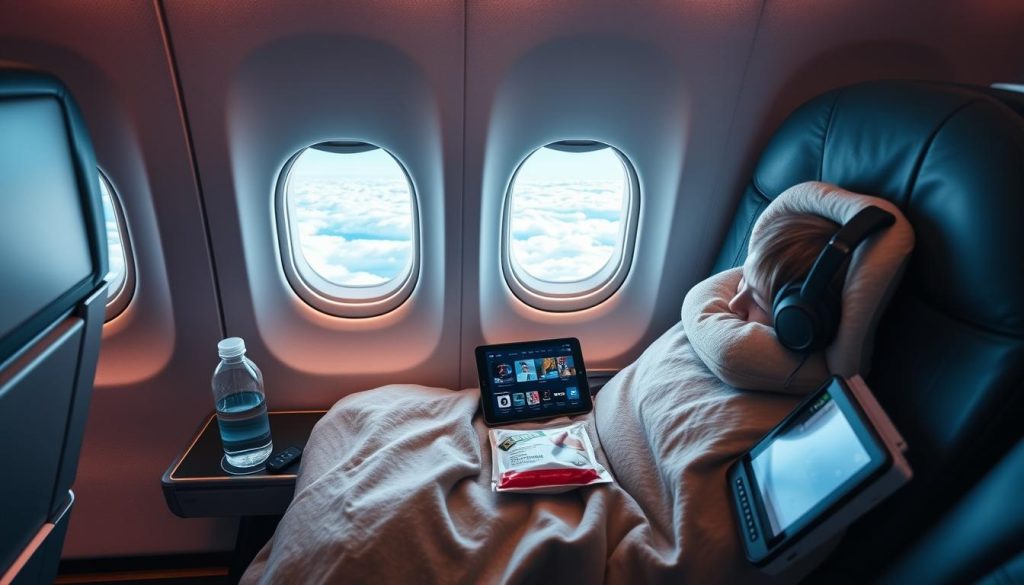
Start changing your sleep habits a few days before you fly. Move your sleep times to match where you’re going. Doing this helps your body adjust smoothly, making the journey easier.
Packing Essentials for Comfort
Your carry-on should have everything you need to relax. Important items are:
- Travel pillows and neck supports for better sleep posture
- Clothes that can be layered for changing temperatures
- Hygiene items like hand sanitizer, a washcloth, and face wipes
Also, keep your important papers and personal stuff within reach. Smart packing turns flight tips into real comfort, making your flight nicer.
Using Travel Accessories
Travel gadgets can make your flight much more comfortable. Noise-canceling headphones help block out the noise, making it easier to rest or concentrate. Eye masks help you sleep by keeping it dark. These items are great for fighting flight stress, offering a peaceful escape during your trip.
How can I prepare for turbulence or long flights?
Getting ready for turbulence and long flights combines mental and practical steps. Knowing that turbulence is normal can lessen fear. About 30% of flights face turbulence, but planes are built to handle even stronger forces.
Pilots train a lot, averaging 1,500 hours, to manage severe turbulence. Their training includes simulations to make sure they can handle any scenario.
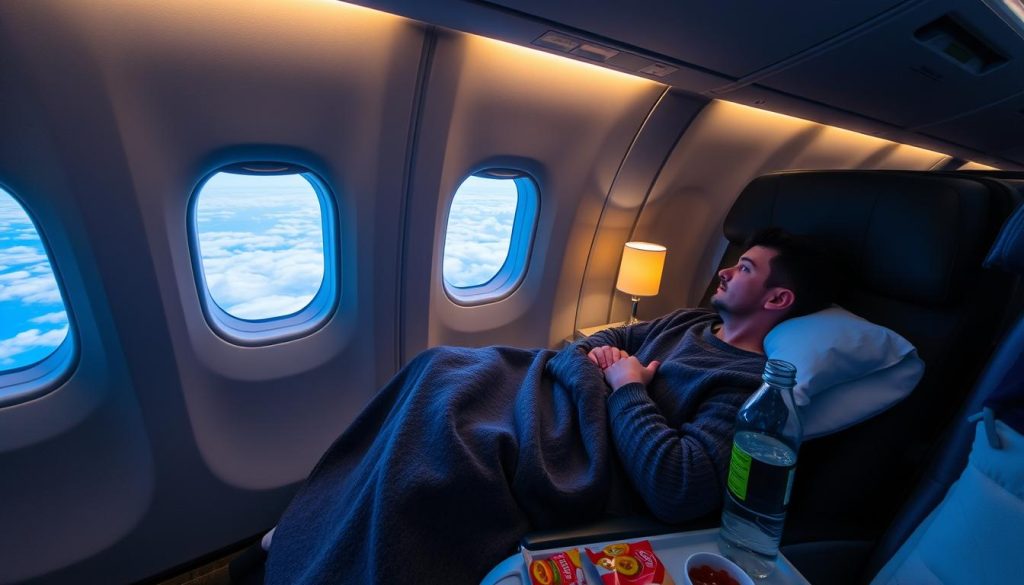
To reduce flight-related anxiety, try relaxation methods like the 4-7-8 breathing technique. It can cut down anxiety by 30% during tense times. Also, Exposure Therapy and Cognitive Behavioral Therapy (CBT) have helped many people, by 60-80% and 50-70%, in overcoming their flight anxiety.
Where you sit can also affect how you feel. Seats over the wings or in front feel less bumpy. Always buckle up whenever you’re sitting to avoid getting hurt if there’s sudden turbulence.
Doing simple things like drinking water, eating well, and staying entertained can make your trip better. Drinking enough and eating light meals keep you feeling good on long flights.
Here’s a quick list of advice for your flight:
- Education: Learn about turbulence and how it works.
- Optimal Seating: Pick seats over the wings or in front.
- Seatbelt Use: Always wear your seatbelt when seated.
- Activity Focus: Bring things to do during the flight.
- Breathing Exercises: Try out the 4-7-8 breathing method.
Discussing your fears with a healthcare provider can also help. They might recommend treatments, including medicine. Ready yourself mentally and physically for flying to enjoy a smoother trip.
Staying Hydrated and Nourished
It’s key to stay hydrated and eat right during flights. The air in the plane is dry, which can make you dehydrated. But, if you plan well, you can avoid this and have a great trip.
Optimal In-Flight Nutrition
Eating well is vital to beat flight stress and feel good. You can find good food options like grilled chicken and salads at the airport. It also helps to bring snacks like trail mix, fruit, and cereal bars. These keep your energy up and hunger away.
The Importance of Hydration
Drinking enough water when flying is a must. You should drink 16 to 24 ounces of water the day before flying. Then, add 8 to 12 ounces before you get on the plane. The dry air on the plane means you could lose a lot of water. Choosing sports drinks with electrolytes is smart because they hydrate you better than water. Herbal tea is also good for staying hydrated, according to research.
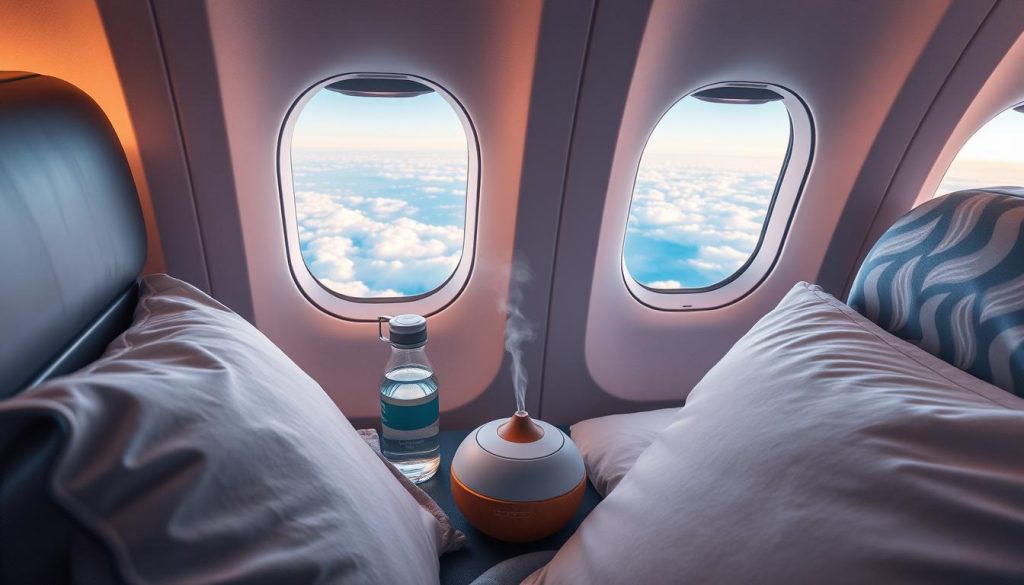
Beverage Choices to Avoid
It might be tempting, but try to skip alcohol and coffee on the plane. They can make you dehydrated and mess with your sleep. It’s best to stick to water and drinks with electrolytes to keep hydrated and alert.
| Beverage | Impact |
|---|---|
| Water | Maintains hydration, supports immune function |
| Sports drinks with electrolytes | Replenishes fluid loss effectively |
| Herbal tea | Helps maintain hydration levels |
| Alcohol | Causes dehydration, disturbs sleep |
| Caffeine | Promotes dehydration, can lead to restlessness |
Calming Techniques for Airplane Rides
About 25 million Americans feel scared when flying, known as aviophobia. Deep breathing exercises, like the 4-7-8 method, are helpful for many. You breathe in through your nose for four seconds, hold it for seven, and breathe out for eight. This technique can really help calm you down during a flight.
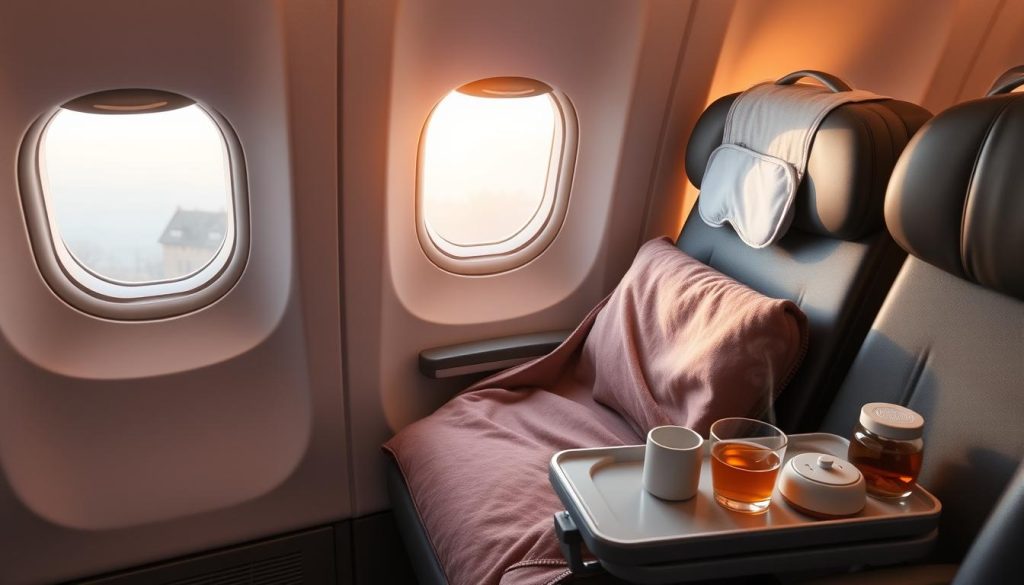
Calming music can also ease flight stress. Studies show music therapy lowers stress hormones significantly. Playing soothing tunes or using meditation apps can help calm your mind. This makes your flight more relaxing and enjoyable.
Getting lost in a book or movie is great for ignoring turbulence. Choosing funny or happy movies can make you feel better. This way, you stay entertained and less anxious.
Visualization is another good strategy. About 60% of folks with flight anxiety say imagining a peaceful place helps them feel calmer. Think of a happy place or outcome to shift your thoughts from fear.
The 5-4-3-2-1 method helps too, by focusing on your senses. Notice five things you see, four things you touch, three sounds you hear, two smells, and one taste. This can help you stay present and feel more at ease.
Dressing comfortably and using things like compression socks are also smart moves. They make you feel better and less anxious. By making these changes, flying can become a more pleasant experience.
Using these tips, you can make your flight nicer, less scary, and more fun.
Overcoming Fear of Flying
Beating the fear of flying and managing flight anxiety is possible with the correct strategy. There are many methods to reduce anxiety and make flying more enjoyable.
Cognitive Behavioral Techniques
Cognitive Behavioral Therapy (CBT) can significantly help with fear of flying. It has a 75% success rate in lessening anxiety. CBT replaces negative thoughts about flying with positive ones. Exposure therapy, part of CBT, is useful too. It slowly introduces you to flying, reducing your fear over time. Learning about air travel’s safety can also change how you see flying. Since the 1970s, flying has become over 80% safer thanks to technology.
Practicing Deep Breathing
Deep breathing exercises can make flying less stressful. They help you relax by slowing down your breathing, which calms the body’s stress response. Practicing this can cut anxiety by about 50%, even when the plane shakes. Pairing deep breathing with grounding exercises, like focusing on what you can touch or see, further reduces stress by keeping you in the moment.
Professional Help and Medication
If you still feel anxious, it might be time to seek professional help. Although CBT works well, only 30% of anxious flyers get professional help. A therapist who understands phobias can offer specific advice and support. For intense anxiety, doctors might suggest medication. Drugs like anti-anxiety medications or beta-blockers offer short-term relief, making flights easier to handle.
| Technique | Effectiveness | Notes |
|---|---|---|
| Cognitive Behavioral Therapy (CBT) | 75% | Reframes negative thoughts |
| Exposure Therapy | 60-75% | Desensitizes fear gradually |
| Deep Breathing | 50% | Reduces anxiety symptoms |
| Professional Help | Varies | Provides tailored strategies |
| Medication | Short-term | Temporary anxiety relief |
In-Flight Entertainment and Activities
Long flights over 13 hours can be fun with good inflight entertainment and activities. Getting ready for these long trips can make you less bored and uncomfortable.
Many airlines have movies, TV shows, and music. But it’s smart to bring your own stuff, like movies or books on your device. That way, you’re set even if the plane’s system doesn’t work. For those who love to read, a good book makes time fly.
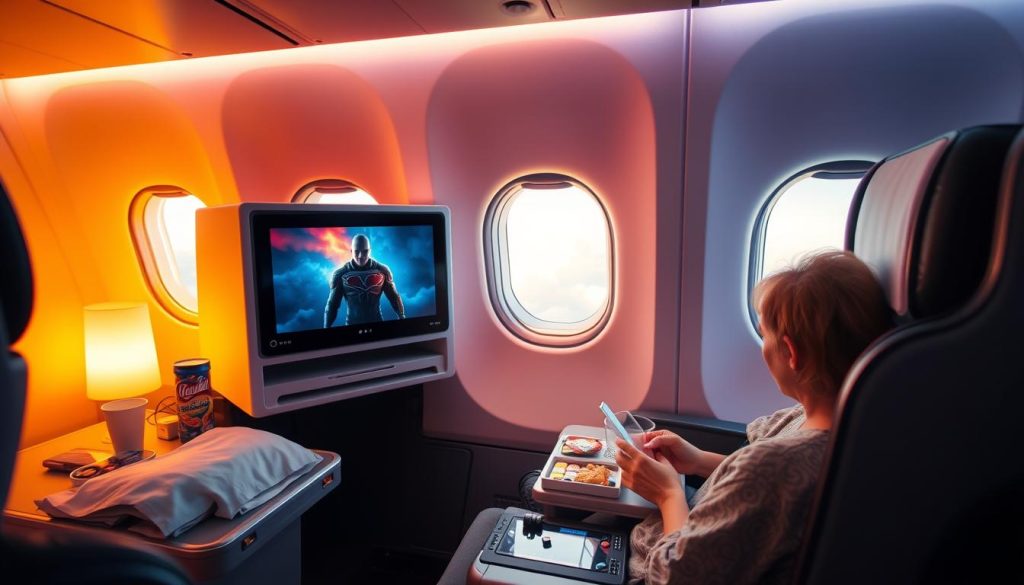
Doing more than just watching movies or listening to music helps too. Writing in a journal or doing puzzles keeps your brain active. If you’re with kids, pack games or stuff to draw with.
Moving around and staying comfy on long flights is important too. It’s good to stretch and move to keep your blood flowing. Bringing a travel pillow, blanket, and headphones can make the trip nicer.
Flight attendants get breaks to sleep on long flights. This helps them stay alert. Having lots of things to do helps make your flight relaxing and fun.
It’s key to plan for other entertainment since inflight entertainment hasn’t changed much. Here are some great tips for long flights:
- Download movies and TV shows on your personal device
- Bring a great book or audiobook
- Fill your device with podcasts and music
- Bring small games or puzzles
- Carry a notebook for journaling
- Pack a travel pillow and blanket
- Drink lots of water and pack snacks
Planning your inflight entertainment and different activities wisely can make your long flight enjoyable and faster.
Tips for Sleeping on Long-Haul Flights
Preparing for a flight can be exciting, whether it’s your first time or not. Getting good sleep on long flights is key to feeling great when you land. To help, here are some top tips for sleeping on planes. They’ll make your long-haul flights more comfy.
Selecting the Right Gear
Choosing the right travel accessories can make a big difference. A contoured travel pillow keeps your neck supported. It stops your head from moving too much. A cozy travel blanket and an eye mask will keep you warm and dark. About 70% of travelers say a sleep mask helps them sleep better on planes. Noise-canceling headphones or earplugs can also cut down the noise, making it easier to sleep longer by 15-20%.

Optimal Sleep Positions
Finding a good way to sit for sleep is key in tight airplane seats. Lean your seat back and support your back well. Use a pillow to keep your head comfy. Keep your legs from crossing to help your blood flow. Studies show that keeping a bedtime routine helps you fall asleep 25% faster. Also, tightening your muscles for 30 seconds then resting for 10 seconds calms your body. It gets it ready for sleep.
Using Sleep Aids Safely
Sometimes, natural methods might not be enough. Then, melatonin can help set your body’s clock right. Doctors often suggest it a few hours before flying. But, it’s very important not to mix sleep aids with alcohol. That can be risky for your thinking and moving skills. Flying nonstop is better for sleeping than having layovers. Proper planning of these flights can help battle jet lag. This makes sure you don’t lose precious vacation time.
| Tips | Benefits |
|---|---|
| Selecting the Right Gear | Improves comfort and reduces noise, enhancing sleep duration |
| Optimal Sleep Positions | Supports body posture, promoting better circulation and relaxation |
| Using Sleep Aids Safely | Aids in falling asleep more easily, adjusting to new time zones |
| Scheduling Nonstop Flights | Reduces interruptions and jet lag, improving sleep quality |
Following these tips for sleeping on planes will help you travel better. You’ll feel rested and ready for adventure when you arrive. By using these tips for long flights, you’ll enhance your travel. And be all set to explore new places.
Conclusion
Going through turbulence and long flights gets easier with the right prep. Knowing about turbulence helps you deal with it better. Picking a seat over the wings makes the ride smoother because there’s less shaking there.
Getting ready before your flight is key to a comfy trip. Changing your sleep cycle, packing comfy items, and choosing the right travel gear can make a big difference. It’s important to drink water and skip drinks like alcohol or caffeine to avoid feeling worse. Eating light and healthy also helps keep you feeling good.
Using calming methods and learning how to handle anxiety can make your trip calmer. Techniques like deep breathing can really help. Making sure you have fun stuff to do and you’re rested makes the journey better. Although turbulence might be scary, planes are built to handle it safely, giving you a safer and nicer flight.