Beat Jet Lag on Your Trip: Pro Tips & Strategies
Have you ever felt really tired and out of sorts after a long flight? It can take days to feel normal again.
Jet lag, or desynchronosis, hits when you travel across many time zones. It messes with your sleep and can ruin your trip or business meeting. But what if you could beat jet lag and enjoy your trip more?
This article offers tips on fighting jet lag with advice from travel pros. You’ll learn why jet lag happens and how to deal with it. By following our tips, you can adjust to new time zones faster.
Understanding Jet Lag and Its Effects
Jet lag happens when your internal clock doesn’t match up with the new time zone. Your body feels the mismatch and struggles to adapt. We’ll look into what jet lag does to your body and its usual symptoms.

What happens to your body
Your internal clock needs to reset when you fly across different time zones. It takes about 1 to 1.5 days per time zone to adjust. Traveling east usually makes jet lag worse for about 75% of people. Your sleep patterns get messed up, hormone levels change, and you might not feel hungry at the right times. Not drinking enough water, especially on long flights, makes jet lag feel even worse.
Symptoms of jet lag
Knowing jet lag symptoms helps figure out how to deal with it. The symptoms can last from a few days to weeks and depend on how many time zones you’ve crossed. These symptoms include:
- Fatigue and daytime sleepiness
- Insomnia or difficulty staying asleep
- Mood changes such as irritability or mild depression
- Digestive issues like stomach discomfort and loss of appetite
- Difficulty concentrating or impaired cognitive performance
The CDC suggests eating smaller meals might ease jet lag-related stomach problems. There’s no solid research linking meal size to jet lag relief yet. Staying hydrated is very important. Dehydration makes the tiredness worse. Getting the right amount of light helps reset your internal clock. If you’re flying east, avoid bright light in the morning. Knowing when and how to tackle jet lag can make adjusting a lot easier.
| Strategy | Benefit |
|---|---|
| Slow-release caffeine (300 mg) | Enhanced alertness in eastbound travelers |
| Hydration | Manages jet lag symptoms and prevents fatigue |
| Limiting alcohol and caffeine | Prevents disruption in sleep patterns |
| Small meals | Reduces digestive issues |
Best Flights to Reduce Jet Lag
Choosing the right flight can really help with jet lag. Think about when the flight leaves, picking between direct or connecting flights, and avoiding night flights. These steps are key for travelers to reduce jet lag.
Flight timing and selection
Picking flights that land during the day can help. About 60% of travelers prefer flying during daylight to fight jet lag. This keeps our body clock in check, making it easier to adjust. Also, flying on planes like the Boeing 787 Dreamliner or Airbus A350 can lessen jet lag. They have special features that make the air inside better.
Direct flights vs. layovers
Deciding on direct flights or ones with stops is important for jet lag. Direct flights might be less exciting but they avoid the stress of extra takeoffs and landings. On the other hand, flights with layovers can mess up your body clock more. Being able to move around easily, like in an aisle seat on direct flights, can help too.
Booking non-red-eye flights
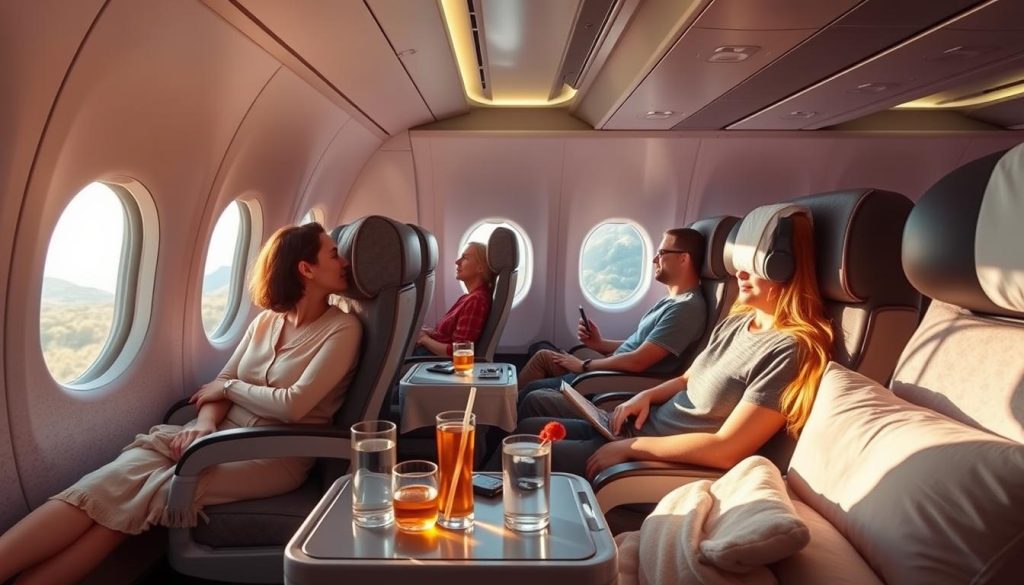
Staying away from overnight flights is a big tip. Choosing flights that don’t fly through the night helps you keep a normal sleep pattern. Studies show it’s hard to sleep well on overnight flights, especially in economy. Getting a seat that leans back fully in Business or Premium Economy makes sleeping easier, leaving you more rested when you land.
How to Eat to Reduce Jet Lag
What you eat plays a huge part in beating jet lag. Picking the right foods before, during, and after flying helps ease into the new time zone. Below are some jet lag diet tips for a comfier journey.
Pre-flight meal tips
Eat well before you fly. Choose meals high in protein yet low in carbs to keep your blood sugar stable. Foods like chicken, eggs, and nuts keep you going without feeling too full. Just remember, too much food can lead to discomfort.
Healthy in-flight snacks
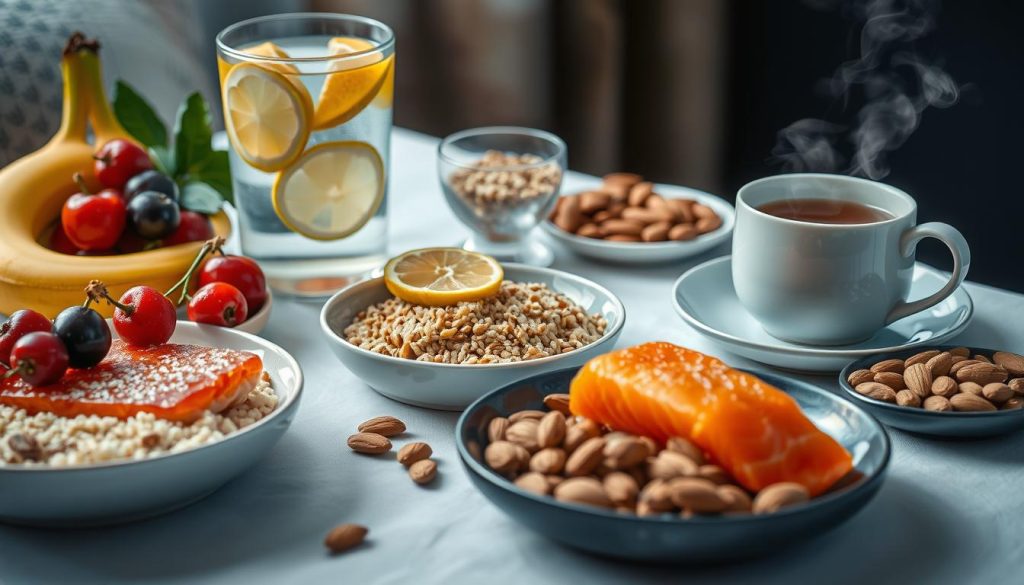
It’s important to eat light yet nutritious snacks on the plane. Pack fruits, yogurt, and whole-grain crackers. They’re good for you and gentle on your stomach, especially when flying.
Post-arrival eating habits
Eating as the locals do helps beat jet lag faster. It gets your internal clock on track quickly. Have small meals regularly to keep your energy up and avoid tummy troubles. Start with a balanced breakfast to adapt to the new time zone, even if not hungry.
| Meal Time | Dietary Recommendations |
|---|---|
| Pre-flight | High-protein, low-carb meals |
| In-flight | Healthy snacks like fruits and whole-grain crackers |
| Post-arrival | Meals aligned with the local time, smaller portions |
Following these diet tips is key to managing jet lag. Using these jet lag diet tips can keep you energized. This lets you adjust quicker to new time zones and enjoy your travels.
How Hydration Helps to Beat Jet Lag
Staying hydrated is key to reducing jet lag effects. Drink lots of water before, during, and after your flight. Airplane cabins are very dry, with humidity under 20%. This makes it easy to get dehydrated.

Importance of Staying Hydrated
Dehydration makes jet lag worse, causing tiredness, mood swings, and thinking troubles. By drinking enough, you can manage these issues better.
Hydration doesn’t just quench your thirst; it helps your body work well and adjust to new time zones faster.
To stay hydrated, try these tips:
- Drink water steadily across your flight, not all at once.
- Avoid drinks like alcohol and caffeine that can dry you out.
- Use drinks with electrolytes to replace important minerals you lose.
Electrolytes and Hydration Strategies
Electrolytes are crucial for staying hydrated. Products like Liquid I.V. Hydration Multiplier can get fluids into your bloodstream quickly. They help you keep fluids in your body better.
Exercise also helps with jet lag hydration. Regular activity helps your body adjust to new time zones. It changes your body clocks and makes it easier to stay hydrated.
In summary, hydration is really important for fighting jet lag. Keep your hydration level up before, during, and after your trip. This will help you feel better, stay in a good mood, and get over jet lag quicker.
How can I minimize jet lag during my trip?
To lessen jet lag, plan carefully and take smart steps. Since jet lag happens to most people flying east and some going west, knowing how to handle it makes a big difference. Here are effective ways to lessen its impact:

Regarding light, it greatly affects your body clock. Changing when you’re exposed to sunlight helps fight jet lag. For example, if you’re heading east, steer clear of bright light when you get there to adjust your sleep schedule.
Using melatonin can also combat jet lag. A small amount of melatonin (1-3mg) can reset your internal clock. Start taking it a few hours before sleep. Also, stick to a regular sleep routine before leaving. Always talk to a healthcare expert for advice tailored to you.
When you eat plays a big role in adjusting to new time zones. Researchers found that a big morning meal can help sync your body to a new schedule. Skipping dinner and eating breakfast like you’re already at your destination can help you adjust faster.
Keeping hydrated is crucial to fight off travel weariness. While a little caffeine can keep you sharp, too much can mess with your sleep. Researchers found that 300mg of slow-release caffeine helps people traveling east stay alert.
The way you think about jet lag matters too. Thinking you’ll suffer from it can make it worse. Stay optimistic and active to manage jet lag better.
Smart gadgets can help as well. The Lumos Smart Sleep Mask claims to adjust your internal clock quickly. Apps like Timeshifter and StopJetLag offer plans to reduce jet lag symptoms.
| Strategy | Effectiveness |
|---|---|
| Light Exposure | Most significant influence on circadian rhythm |
| Melatonin Supplementation | Aids in aligning internal body clock |
| Meal Timing | Helps adjust gut and brain schedules |
| Hydration & Caffeine | Prevents fatigue and improves alertness |
| Psychological Outlook | Belief impacts symptom severity |
| Technological Aids | Provides personalized schedules and shifts internal clock |
Using these strategies can really help against jet lag. Plan ahead, be well-informed, and flying between time zones will be much easier.
Using Light Exposure to Adjust Your Internal Clock
Light exposure is key to resetting your internal clock. It works well for managing jet lag.

Pre-trip Light Adjustment
Getting your body ready for a time zone shift is easier with pre-trip light therapy. You can start by changing your light exposure slowly before you leave. Mimicking the light pattern of where you’re going helps your body adjust early.
Using light therapy boxes or wearable glasses helps. They mimic natural sunlight, aiding in sleep regulation. Limiting screen time at night is also essential. A 2015 study showed that using devices like iPads at night can mess with your sleep cycle and cut melatonin production by 55%.
Exposure to Natural Light Upon Arrival
Once you get to your destination, get into the sunlight as soon as you can. Natural light helps reset your internal clock to match the new locale. Research shows your body can adjust its sleep cycle by over 9 hours in just four days using natural light.
Try to spend time outdoors or take a walk in the sun to stay alert. If you’re stuck inside, light therapy devices are a good substitute. They can help you get over jet lag faster.
Effective Sleep Strategies for Jet Lag Prevention
Sleep strategies are key for fighting jet lag. They help you stay refreshed once you reach your destination. By using certain tips, you can beat jet lag and keep your sleep routine even when you’re on the move.
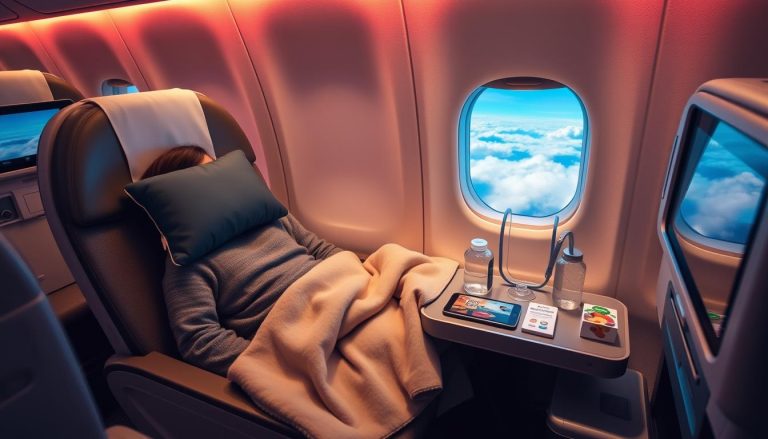
Tips for sleeping on the plane
Choosing the right flight for sleeping well is a smart move. Pick a window seat to keep away from others moving about. Use melatonin supplements wisely to adjust your body’s clock, especially on flights over six hours. About 30% of people say melatonin really helps them sleep better in new places. Also, it’s vital to drink water regularly during the flight. The Aerospace Medical Association suggests an 8-ounce glass every hour to fight off dehydration, making jet lag worse.
Maintaining sleep schedules
Keeping your usual sleep time while traveling helps avoid jet lag. Start adjusting your sleep to the new time zone before you leave; over 40% of travelers find this effective. Once you arrive, try not to sleep in the daytime. Getting some sunlight can lessen jet lag by as much as 20%.
Short naps can also be a big help. Taking several 30-minute naps can make you 60% more alert than if you don’t nap. This method makes it easier for your body’s internal clock to adjust to the new time zone.
Exercise to Reduce Jet Lag
Getting active helps you adjust to new time zones and beat travel tiredness. Simple exercises for jet lag can make you feel fresh and excited to see new places. We’ll show you how to fit these exercises into your travel plans.
In-flight exercises
Doing light exercises on the plane keeps your blood flowing and eases discomfort. Here are some in-flight exercises for jet lag:
- Seated leg lifts: While seated, lift one leg, hold, then lower it. Do the same with the other leg.
- Ankle circles: Rotate your ankles in both directions to help with blood flow.
- Shoulder shrugs: Lift your shoulders towards your ears, then lower. This releases neck and shoulder tension.
- Seated twists: Twist your torso gently each way to stretch your back and enhance blood circulation.

Post-arrival workout routines
A fast workout after landing is key to boosting energy after flights. Exercise helps adjust your body clock and lifts your mood by releasing endorphins. Here are some good post-arrival exercises for jet lag:
Researchers studying 99 people found treadmill workouts changed their body clocks. Specifically:
| Exercise Time | Effect on Circadian Rhythm |
|---|---|
| 7 a.m. or 1 p.m. – 4 p.m. | Advanced the circadian rhythm |
| 7 p.m. – 10 p.m. | Delayed the body clock |
| 1 a.m. – 4 a.m. or 10 a.m. | No impact on melatonin levels |
Given these results, try these activities when you arrive:
- Morning jog: Running in the morning can help your body clock adjust to local time.
- Afternoon workout: Try yoga or light weight training in the afternoon. It greatly impacts your body clock, helping you adjust after a flight.
Studies at UCLA showed morning exercises helped mice’s heart rate and body temperature peak earlier. Afternoon exercises had a bigger effect on their body clocks. Doing these workouts after you arrive can help you get over jet lag faster. They also keep your body clock healthy as you age.
Using both in-flight and after-landing exercises for jet lag changes the game. Stretching during the flight or going for a run after landing is vital. They are key for boosting energy after flights and adjusting to new time zones.
Avoiding Jet Lag: Pro Tips and Hacks
Jet lag can majorly impact your travel experience. To deal with it, advanced preparation and smart strategies are vital. We will share tips for getting ready before you fly and handling jet lag symptoms to tackle jet lag efficiently.
Prepping Before the Trip
Getting ready is crucial to lessen jet lag’s impact. Adjusting your sleep to match your destination’s time zone before leaving can help. You can use apps like Entrain to plan your light exposure. This helps in syncing your body clock with the new time zone smoothly.
- Adjust your sleep schedule: Slowly change your sleeping time to match the new timezone.
- Stay hydrated: Drink about 64 ounces (or 2 liters) of water every day before and during your flight. This is crucial because dehydration levels can fall by up to 20% when flying.
- Consider sleep aids: Melatonin can help improve sleep, particularly if you’re flying east. It works for about 60-80% of people who try it.
- Pre-hydrate: Drinking at least 1 liter of water the day before traveling is advised by most frequent flyers.
Dealing with Jet Lag Symptoms
Once you start feeling jet lag, there are many ways to adjust faster. Using light smartly and managing caffeine intake are especially helpful.
- Light exposure: If you’re flying east, try to get light in the mid to late morning. For westward flights, aim for late afternoon to early evening light. This can shift your body clock by 1.5 hours a day.
- Caffeine use: Stay away from caffeine in the evening. Its effects can last for about eight hours and disrupt your sleep.
- Short naps: Keep naps under 20 minutes to help boost your energy without messing up your sleep at night.
- Post-arrival activities: Doing some physical activities can lift your energy and mood by up to 20%, which helps you adjust to the new place.
- Water intake: Keep drinking 1-3 liters of water per flight to stay hydrated. You should also aim for 64 ounces of water a day during your travels.
Overall, beating jet lag well means preparing before you travel and using smart strategies once you arrive. By following these jet lag tips, you can make your time zone transitions smoother and your trips more enjoyable.
Conclusion
Jet lag is something many travelers face, but it doesn’t have to ruin your trip. About 30% of those flying long distances feel its severe effects. Yet, changing your routine slightly before flying can cut down the discomfort. If you shift your sleep by an hour each day before flying, it helps about 20% of travelers.
Knowing factors like hydration and sleep can change how jet lag affects you. About 40% of travelers pick evening flights to ease jet lag’s effects. Also, being in sunlight after landing can lessen jet lag for up to 70% of people. By also eating at local times, you cut jet lag down by 50%.
For frequent business travelers, 75% say jet lag lowers their work output. Using strategies like getting sunlight, staying hydrated, and eating on a local schedule helps a lot. These methods ensure a smoother trip across time zones.