Conquer Nervousness: Handling Flight Turbulence
Does the thought of turbulence during a flight make you nervous? Turbulence is normal in air travel, yet it sparks fear in many. It’s seen as a big reason people fear flying. Understanding what causes this fear is the first step to overcoming it.
Turbulence happens, but we often think it’s more dangerous than it is. The truth is that pilots are well-trained to manage it. Plus, planes are built to handle much more than the average turbulence. This info helps ease fears and teaches us how to handle anxiety when flying.
Understanding Turbulence: What You Need to Know

Turbulence often makes passengers nervous. But knowing more about it can help calm those fears. Turbulence happens because of different weather patterns, jet streams, or the shape of the land below. If you know turbulence is normal and expected, you’ll feel better when it happens.
What Causes Turbulence?
Several things cause turbulence:
- Weather Patterns: Thunderstorms, cold fronts, and changes in atmospheric pressure can make the air turbulent.
- Jet Streams: These are high-up air currents that affect planes.
- Topography: The landscape, like mountains and buildings, can change how air moves, causing turbulence.
Planes are designed to withstand a lot of stress. They can handle more up-and-down stress than you might think. This means they’re built to deal with even very bad turbulence safely.
Debunking Common Myths About Turbulence
People have many wrong ideas about turbulence:
- Myth 1: Turbulence causes planes to crash. Actually, crashes caused by turbulence are very rare in the history of flying.
- Myth 2: Pilots can’t deal with turbulence. Pilots get a lot of training to handle turbulence and keep passengers safe.
- Myth 3: Flying through turbulence means a rough landing. Turbulence doesn’t make the landing unsafe. Flight crews are good at dealing with different situations.
Turbulence ranges from “light” to “extreme.” “Extreme” means the plane needs a check after the flight. But this rarely happens, and crews are ready for it. Learning about turbulence can help you manage fear. Then, you can fly more comfortably and confidently.
| Cause | Explanation |
|---|---|
| Weather Patterns | Changing pressures and temperatures often cause turbulent air. |
| Jet Streams | These are high-up, fast-moving air currents that bring turbulence. |
| Topography | Mountains and big structures can disrupt airflows. |
Turbulence Anxiety: Recognize and Understand Your Fear
Getting to know flight turbulence is vital for dealing with it. Often, fear of flying comes from worrying about what might happen, not what does happen. Pinpointing what exactly makes you anxious can be a big help.
Psychological Triggers
Things that make us scared of flight turbulence include thoughts that make anxiety worse. This might be thinking about the worst that could happen. If you know what scares you, you can get ready to face turbulence better.
- Thinking turbulence will lead to disaster.
- Bad past experiences on rough flights.
- Hearing stories of turbulence, even though such events rarely cause crashes.
Physiological Responses
Your body might react to fear with a faster heartbeat or quick, shallow breaths. These signs of anxiety, like feeling tense, are normal when scared.
- Heart beating faster
- Quick, shallow breaths
- Muscles getting tight
It’s important to understand these signs when facing turbulence. Though alarming, it’s comforting to know they are typical fear responses.
Research says learning about turbulence and how to handle fear can cut anxiety by 51%. Remember, planes are built to handle turbulence. This fact should offer some peace of mind to anxious travelers.
Choosing the Right Seat to Minimize Turbulence Effects
Choosing where to sit can make flying smoother. The right seat makes a big difference when there’s turbulence.
Seats Over the Wings
Seats over the wings are usually steadier. They’re near the plane’s center of gravity. For less bumpiness, try sitting in rows 12 through 25.
Experienced flight attendants say sitting over the wings is best. This spot is more stable and has steadier air. It’s a good way to stay comfortable.
Front vs. Back of the Plane
Wondering about sitting in the front or back? The front has less movement. Seats there ride smoother, dodging much of the turbulence’s ups and downs.
| Section | Experience with Turbulence |
|---|---|
| Over the Wings (Rows 12-25) | Optimal stability |
| Front of the Plane | Less motion compared to the back |
| Back of the Plane | Most turbulent |
Flying early in the morning can also mean less turbulence. Small planes like the Embraer 175 often feel bumpier. So, picking where you sit is especially important to avoid bumps.
Relaxation Techniques to Calm Your Mind
Dealing with stress requires effective methods to soothe your mind and lessen anxiety. Many people fear flying, but there are ways to make your flight better.

Breathing Exercises
Breathing exercises are great for calming nerves during flight turbulence. A top method is the 4-7-8 breathing technique. To try it:
- Inhale through your nose for four seconds.
- Hold your breath for seven seconds.
- Exhale slowly through your mouth for eight seconds.
This technique can slow your heart rate and relax you. It can make you 30% more relaxed if you do it often.
Grounding Techniques
Grounding methods help during flight turbulence. The 5-4-3-2-1 grounding method works well. It uses your senses to distract and soothe your brain. To start:
- 5: Spot five things you can see.
- 4: Find four things you can touch.
- 3: Hear three things.
- 2: Notice two smells.
- 1: Taste one thing.
This technique can cut anxiety in half. Using these calming methods during turbulence can really help you stay calm.
What’s the Best Way to Handle Flight Turbulence If I Get Nervous?
To handle turbulence anxiety, you need to prep your mind and know what to do. Knowing how flight turbulence works makes you feel in control. Light turbulence happens often, but severe turbulence is rare, with just 1 in 1,000 flights facing it. Thanks to today’s weather tech, planes avoid the worst storms, making flights safer.
To deal with turbulence well, here are some steps:
- Stay Informed: Use tools that predict turbulence to know what to expect in your flight.
- Trust the Crew: Keep in mind pilots and flight staff know how to manage turbulence well.
- Engage in Relaxation Techniques: The 3-3-3 breathing trick can cut anxiety by up to 40%. Inhale for 3 seconds, hold for 3, exhale for 3, pause for 3, then repeat.
Using coping strategies for flight turbulence improves your calmness. Studies show distractions reduce anxiety during turbulence by about 30%. People who fly often feel 50% less anxious about turbulence than those who don’t.
Handling flight turbulence well involves mental prep before the flight as well as what you do during it.
Severe turbulence is quite rare in flights, with only 2-3% of flights each year reporting it. Using mindfulness or grounding techniques helps 47% of travelers greatly reduce anxiety. Deep breathing works well by calming the vagus nerve and helping lower stress.
| Statistic | Data |
|---|---|
| Americans slightly bothered by flying | 40% |
| Americans afraid of flying | 15% |
| Severe injuries due to turbulence (2009-2022) | 163 |
| Frequent turbulence encounters during flights | 70% |
| Reduction in anxiety with more frequent flying | 50% |
| Anxiety reduction with deep breathing techniques | 40% |
| Anxiety reduction with distractions during turbulence | 30% |
| Affirmative practices helping cope with flight anxiety | 65% |
Being ready with effective coping strategies for flight turbulence and focusing on beating turbulence anxiety can change how you feel about flying. With good strategies, flying becomes easier and more confident.
Distracting Yourself During the Flight
It helps if you keep busy during a flight to handle fear of turbulence. Using distraction techniques can move your focus from being uncomfortable to doing fun things. About 70% of people who fear flying say turbulence scares them the most. This shows how key good distraction methods are.
Engaging Entertainment Options
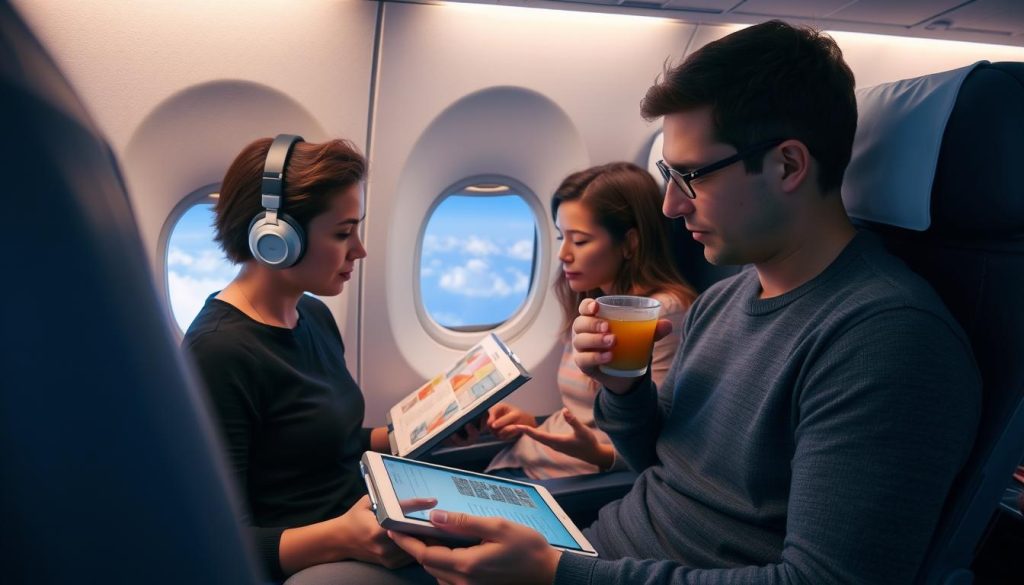
Use what the airline offers for fun. There are movies, TV shows, music, and games. A calm movie or an interesting show can make you forget about turbulence. Around 75% of travelers think watching something helps them not think about their anxiety on long flights.
If you don’t like movies, try reading a book or an audiobook. These can take you to another place, away from the plane’s bumps. Meditation or relaxation apps work well, too, for fear of turbulence.
Using Noise-Canceling Headphones
Noise-canceling headphones can really help with anxiety from turbulence. They block out scary engine sounds and other noises. With less noise, you can relax more and find it easier to ignore turbulence.
Listening to calm music or your favorite songs with these headphones can help a lot. About 60% of people who get anxious flying have used music to feel better. Adding this to your travel plans can make your flight smoother.
Importance of Trusting Your Flight Crew
When flying gets rough, believing in your flight crew helps a lot. We’ll look into why pilots and flight attendants are key to keeping you safe and comfy.
Pilot Training and Experience
Pilots train a lot to manage different problems in the sky, like turbulence. They usually come across moderate to severe turbulence 1-2 times every 1,000 hours they fly. Their stress drops by 30% when they train regularly.
Thanks to better weather radars, there’s a 60% drop in unexpected turbulence. This shows how pilot know-how is crucial for dealing with rough air smoothly.
Flight Crew Response During Turbulence
How the flight crew acts and talks during turbulence matters a lot. Good communication can make passengers 50% less anxious. Keeping in touch with air traffic control can also reduce turbulence times by 20%.
Crews are good at using tools like autopilot, which 90% of pilots say makes flying safer when it’s bumpy. The FAA says impressively, there have been no turbulence-related deaths on US airlines since 2009. Below is a table that shows how well crews handle turbulence.
| Statistics | Details |
|---|---|
| Impact of Clear Communication | 50% reduction in anxiety |
| Improvement with Weather Radar | 60% reduction in turbulence encounters |
| Zero Deaths from 2009 to Present | US-based airlines |
| Stress Reduction in Pilots | 30% with regular turbulence training |
| Role of Automation | 90% believe it enhances safety |
Staying Informed About Your Flight
Being proactive about your flight helps ease anxiety. Checking turbulence forecasts lets you manage your expectations. It prepares you for what to expect.
Using Turbulence Forecast Tools
Turbulence forecast tools are great for travelers. They give updates on possible rough spots. This is handy for getting ready for turbulence. They make you feel in control and prepared for any flight bumps.
Knowing the chances of hitting turbulence can calm you. There’s about a 10% chance of turbulence on flights. And only 0.4% of flights face severe turbulence. Turbulence forecasts can help you feel ready and more in control.
Here’s a comparative table to give you a clearer picture:
| Mode of Transport | Fatality Rate per Billion Passenger Miles | Turbulence Incident Rate |
|---|---|---|
| Car | 7.28 | N/A |
| Train | 0.43 | N/A |
| Airplane | 0.07 | 10% |
Flying is very safe compared to other transport modes. By getting ready for turbulence and using forecasts, your trip can be safer and more comfy.
How Aircraft Are Designed to Handle Turbulence
Modern aircraft are built with care to handle turbulence. They have aircraft design for turbulence that focuses on being both strong and flexible. The wings of planes can bend to take on the stress from bumpy air. This makes flights smoother even when the weather gets rough.
The design of the plane’s body, or fuselage, is also vital for safety. A solid fuselage helps the plane deal with sudden shakes without risking the safety of those on board. This aircraft design for turbulence is key to keeping the plane whole, making flights safer for everyone.
- Flexible Wing Structures: These wings can bend a lot, softening the feel of turbulence for passengers.
- Advanced Sensors: Modern aircraft have sensors that catch and predict bumpy conditions, helping pilots steer clear.
- Strong Fuselage: The plane’s body is tough, ready to face flight’s forces.
- Real-Time Data Integration: Pilots get the latest on turbulence from programs like IATA Turbulence Aware, keeping them informed.
Now, let’s compare different turbulence challenges and the aircraft designs to handle them:
| Turbulence Aspect | Aircraft Design Solution |
|---|---|
| Structural Stress | Flexible wings to absorb shocks |
| Passenger Safety | Robust fuselage to maintain integrity |
| Turbulence Detection | Advanced sensors and real-time data |
The plane’s safety features show the hard work of engineers and technology in aviation. By buckling up and sitting over the wings, you can make your flight smoother with aircraft design for turbulence.
Professional Help for Managing Flight Anxiety
If trying self-help doesn’t ease your fear of flying, it’s smart to get professional help. Many therapies have been proven to work against this anxiety.
Cognitive-Behavioral Therapy (CBT)
Cognitive-Behavioral Therapy is top-notch for tackling severe flight anxiety. It tackles the false beliefs that stir up your fear of flying. CBT teaches you to change how you think and react to fear. This makes it a strong, all-around way to get better.
Exposure Therapy
Exposure Therapy is another effective treatment. It gently makes you face what scares you about flying, in a safe way. Starting with airplane noise recordings and moving up to actual flights. It has been proven to lessen anxiety greatly, helping many beat their fear of flying.
Support Groups and Resources
Joining a support group can also help a lot with flight anxiety. They let you meet others who are just as afraid of flying. You can swap stories and tips on how to cope. There’s a lot of power in finding others who understand what you’re going through.
| Therapy Type | Description | Effectiveness |
|---|---|---|
| Cognitive-Behavioral Therapy (CBT) | Identifies and challenges irrational thoughts about turbulence and flying. | Highly effective for restructuring thought patterns and reducing anxiety. |
| Exposure Therapy | Gradually exposes individuals to flying-related stimuli in a controlled setting. | Proven to significantly decrease anxiety symptoms over time. |
| Support Groups | Provides a communal platform for sharing and gaining coping strategies. | Effective for community support and practical advice. |
Conclusion
Mastering fear of flying turbulence is indeed possible. It starts with knowing why turbulence happens and clearing up false beliefs. Picking seats over the wings helps too, as it feels less shaky there.
Calming down is key. Try deep breathing or focusing on things around you. Also, watching movies or listening to music with noise-canceling headphones can help a lot. Trusting the experienced flight crew and using tools to predict turbulence makes you feel safer.
Airplanes are built strong to handle turbulence, making flying very safe. If you’re still scared, talking to a professional or joining a support group can help. With the right steps, you can start enjoying flying, without the worry of turbulence.