Experience Luang Prabang Textile Workshops
Ever curious about how Laos’ vibrant textiles are made? In Luang Prabang, you can dive into workshops that mix old traditions with new art. Here, you’ll learn from local experts, seeing how they weave and dye fabrics.
These 9-day workshops are more than just learning. You’ll also make your own unique textiles. You might try natural dyeing or work on big looms. It’s a fun and enriching experience.
Guided by experts like Arounna Khounnoraj, you’ll get close to Laotian culture. You’ll also help support the local community. Come see the beauty of Laos‘ textiles and the green ways they’re made.
Introduction to Luang Prabang’s Textile Heritage
Luang Prabang is a shining example of textile heritage, a UNESCO World Heritage Site. The city’s history and culture are seen in its lively textile scene. Here, old weaving methods are kept alive, passed down through families.
Walking through Luang Prabang, you see a mix of Buddhist and colonial buildings. This setting is perfect for the Lao textiles industry. The artists here make some of the best pieces, showing off Laos’ culture. Each fabric has special patterns and materials, truly capturing Laos’ spirit.
Exploring the local textile heritage is a deep dive into Luang Prabang’s traditions. Visitors can join workshops to learn weaving. These experiences not only teach the craft but also help keep Luang Prabang’s cultural legacy alive.
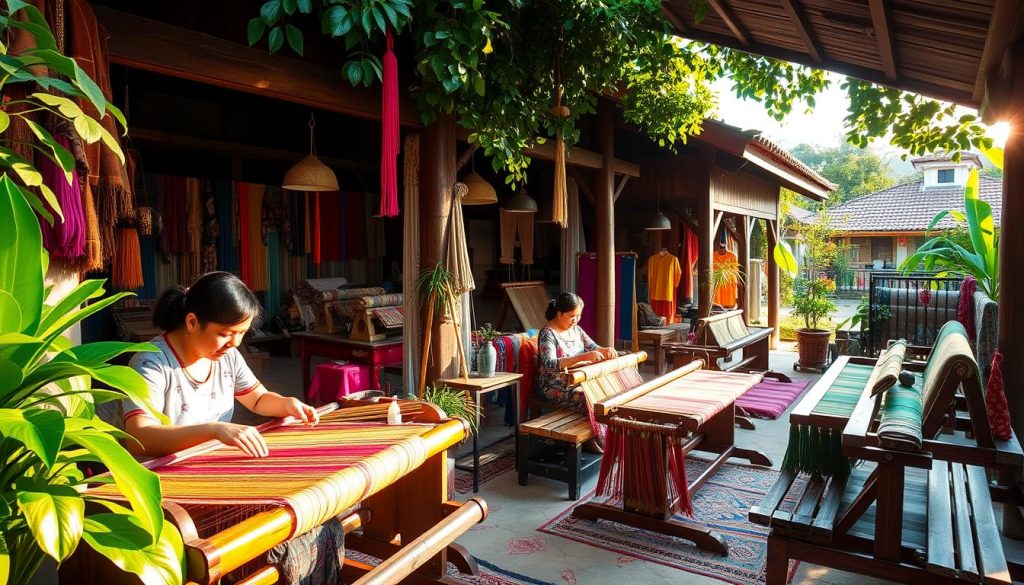
Cultural Significance of Textile Craft in Laos
Textiles in Laos are very important, carrying stories and keeping identity alive. Each piece tells a tale, showing village and family histories. They reflect the rich Laotian textile culture.
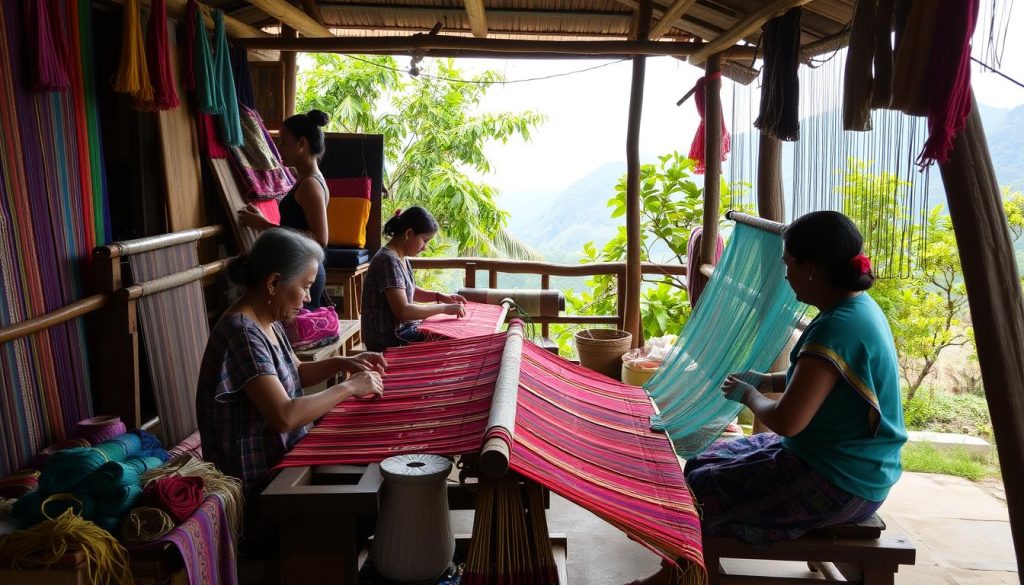
Women mostly make these textiles, showing community spirit and building bonds. They pass down techniques, celebrating regional diversity and skill.
“Textiles serve not only as functional items but also as symbols of identity and heritage among the Laotian people.”
Recently, there’s a new interest in Laotian weaving. Modern artists and young people are learning these old skills. This keeps the craft alive, blending tradition with new art.
Groups like Ock Pop Tok help local artists, highlighting the value of hand-loomed textiles. Laotian textile culture is growing, keeping traditions alive for the future.
What to Expect from Luang Prabang Textile Workshops
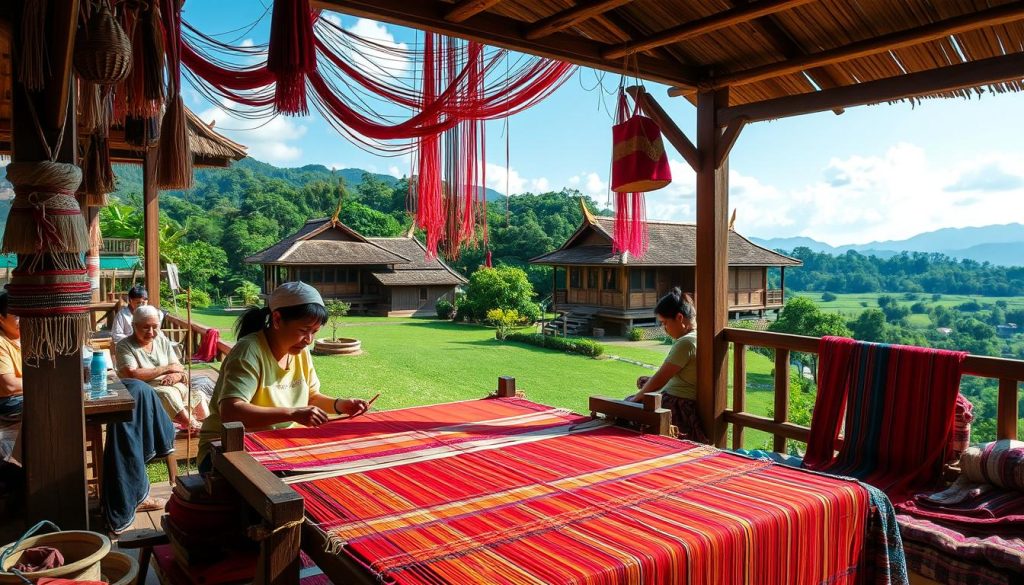
The Luang Prabang workshops offer a chance to explore Laos’ rich textile heritage. You’ll get to try out weaving and dyeing, from beginner to expert levels. It’s a fun way to learn about traditional crafts.
Overview of Workshop Activities
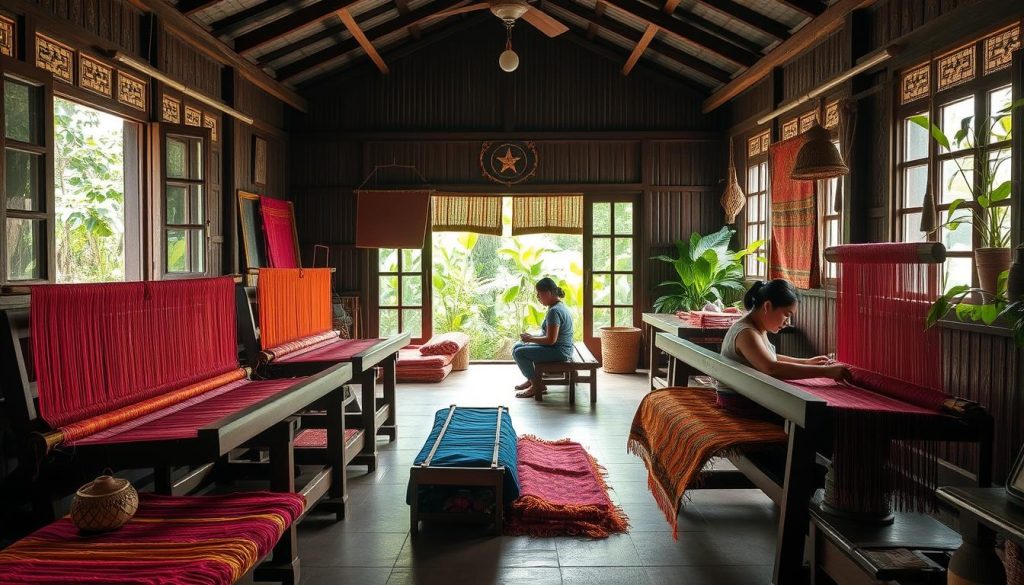
In the Luang Prabang workshops, you’ll enjoy weaving and dyeing activities in beautiful settings. You’ll learn to weave on a loom, dye fabrics with natural plants, and do embroidery. There are also evening sessions with cocktails.
- Hands-on loom weaving with skilled artisans
- Natural dyeing using local plants
- Embroidery workshops to embellish your creations
- Evening workshops paired with sunset cocktails
These activities let you create beautiful textiles while learning about their history. The workshops’ atmosphere makes the experience unforgettable.
Skill Levels Catered: Beginners to Experienced
The workshops welcome everyone, from beginners to experienced artisans. There are classes for all levels. Here’s a look at what’s available:
| Class Name | Duration | Pricing (LAK) | Level |
|---|---|---|---|
| Silk Road: From Silkworms to Nagas | Half-day | 2,080,000 (for up to 10 people) | All levels |
| Natural Dyes Class | ½ Day | N/A | Beginner |
| Natural Dyes & Weaving Class | 1 Day | N/A | Beginner to Intermediate |
| Make an Ikat Scarf | 3 Days | N/A | Intermediate |
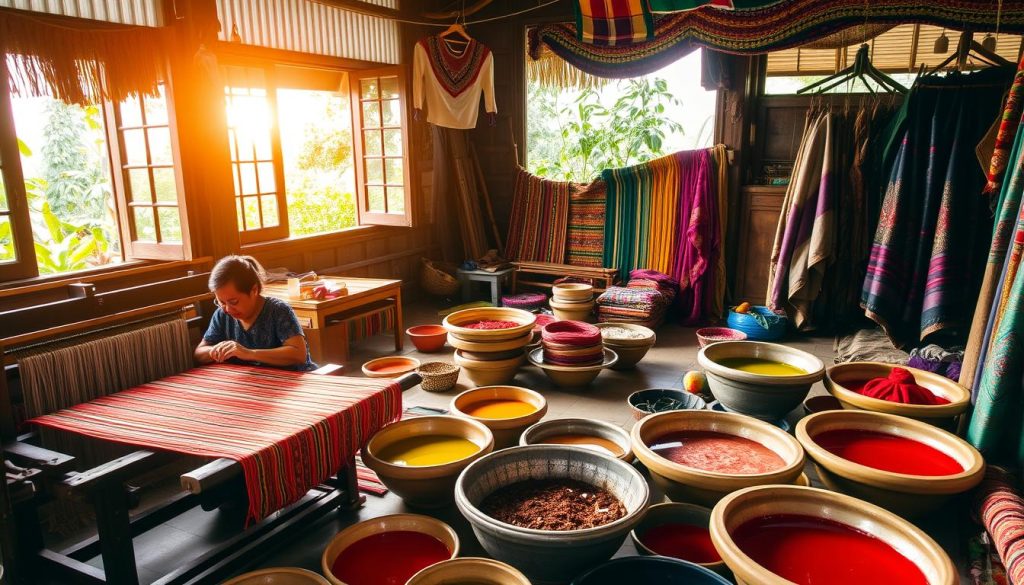
By taking part in these weaving and dyeing activities, you’ll learn a lot about Laotian textiles. It’s a chance to be creative and appreciate the skill of local artisans.
Understanding Weaving Traditions of Laos
Weaving is a key part of Laos’ culture, deeply rooted in its traditions and daily life. This section explores the history of Lao weaving techniques and how they’ve evolved.
Historical Background of Lao Weaving Techniques
Laos has a long history of textiles, passed down through generations. Women are at the heart of this tradition, with many families involved in weaving. This work helps the local economy.
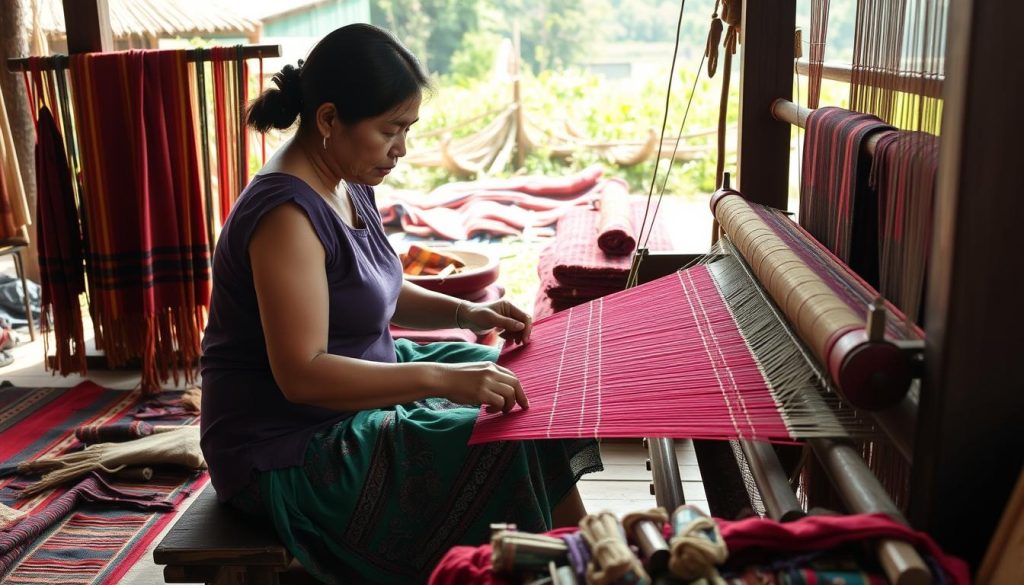
Places like Ban Phanom and Ban Xang Khong are famous for their weaving. Almost every family has a loom, showing their dedication to this art. The weavings often tell stories of spiritual beliefs or important events, making each piece special.
Overview of Modern Adaptations and Innovations
Laos has seen new changes in weaving, blending old methods with new designs. The “Luang Prabang Silk” Promotion Association was formed in 2020 to improve silk quality. This group, mostly women, works to protect the value of Lao silk.
Artisans now mix traditional techniques with modern styles. This creates items like scarves and dresses that appeal to both locals and tourists. Prices vary from $5 to $20, depending on the work.
The interest in “Luang Prabang Silk” has led to more mulberry farming. This has opened up new markets for silk producers.
| Village | Specialty | Price Range | Key Features |
|---|---|---|---|
| Ban Phanom | Woven textiles | $5 – $20 | High-quality goods, rich heritage |
| Ban Xang Khong | Silk and Saa Paper | $5 – $20 | Traditional weaving techniques |
| Other Villages | Various textiles | $5 – $20 | Unique weaving traditions |
Exploring Laotian Handloom Techniques
Laotian handloom techniques show a rich cultural heritage. They are filled with centuries of tradition. Weavers use threads to create stunning patterns that tell stories of Lao culture.
Learning about these techniques shows the hard work needed to make each piece. These skills are often passed down from mothers to daughters. In Luang Prabang, artisans show their dedication to their crafts.
Visitors to Luang Prabang can join workshops to learn about weaving. These classes are more than just art. They connect us to the past and the history of textiles in Laos.
Luang Prabang also has other artisan practices like pottery and basketry. Thanks to places like Ock Pop Tok, these workshops help the local economy. They also help keep cultural traditions alive.
Learning Natural Dye Techniques in Workshops
Workshops on natural dye techniques let you dive into the world of color from local plants. You’ll learn by doing, from finding materials to dyeing fabric. These sessions teach you about Laos’ rich traditions and eco-friendly dyeing.
Uses of Local Plants for Dyeing
Natural dyes from local plants offer a wide range of colors. In these workshops, you can dye silk skeins in many colors. The options include:
- Pink
- Gold
- Beige
- Light Blue
- Dark Blue
- Red
- Light Green
- Light Orange
Learning how plants create these colors shows the link between nature and textile art.
Environmental Aspects of Natural Dyes
Eco-friendly dyeing methods show the value of sustainability in making textiles. Natural dyes are good for the environment and cut down on chemical waste. Workshops teach the benefits of these practices, showing how to care for our planet through crafting.
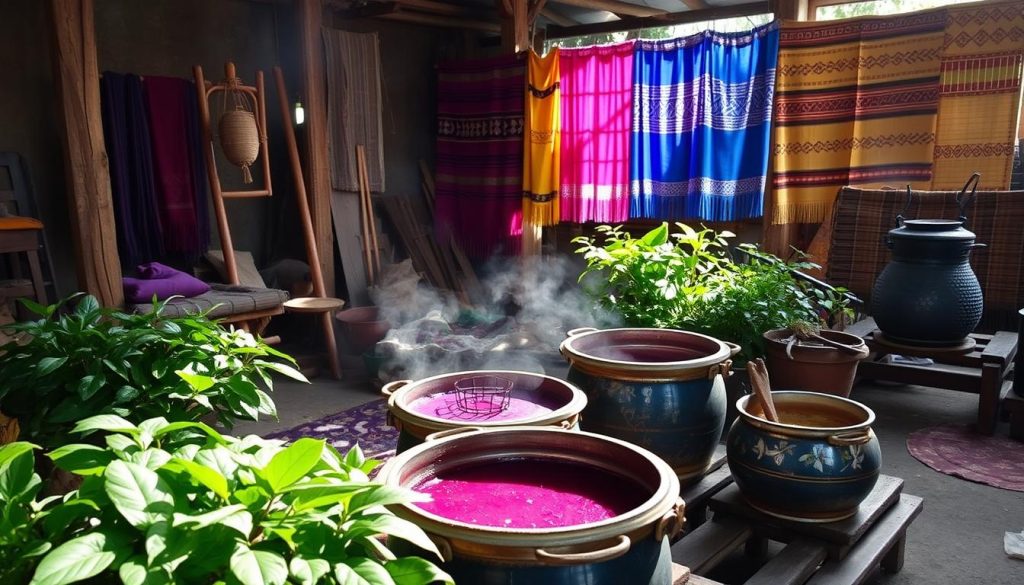
At places like Ock Pop Tock, you’ll see how these old traditions are kept alive today. Working with local artisans deepens your respect for their craft and the sustainable ways of Laos.
Textile Craft Classes and Their Benefits
Textile craft classes dive you into local techniques and artistry. You’ll learn traditional methods from skilled artisans. This hands-on experience lets you see how handmade textiles are made.
Hands-on Experience with Local Artisans
In these classes, you’ll work closely with artisans. This boosts your crafting skills. For example, the Bamboo Weaving Class lets you make a placemat or fan in just half a day.
For a deeper dive, there’s a full-day class. You’ll make a small basket and enjoy a local lunch. You’ll also learn about Hmong batik, a wax resist technique on hemp.
Creating Unique Handmade Pieces
As you learn, your creativity shines in your work. In the Half Day Weaving Class, you’ll weave a placemat with a Lao motif. With only 10 students, you get lots of personal attention.
Leaving with your own handmade piece is incredibly rewarding. It’s a lasting memory of your time in Luang Prabang.
Sustainable Textile Practices in Luang Prabang
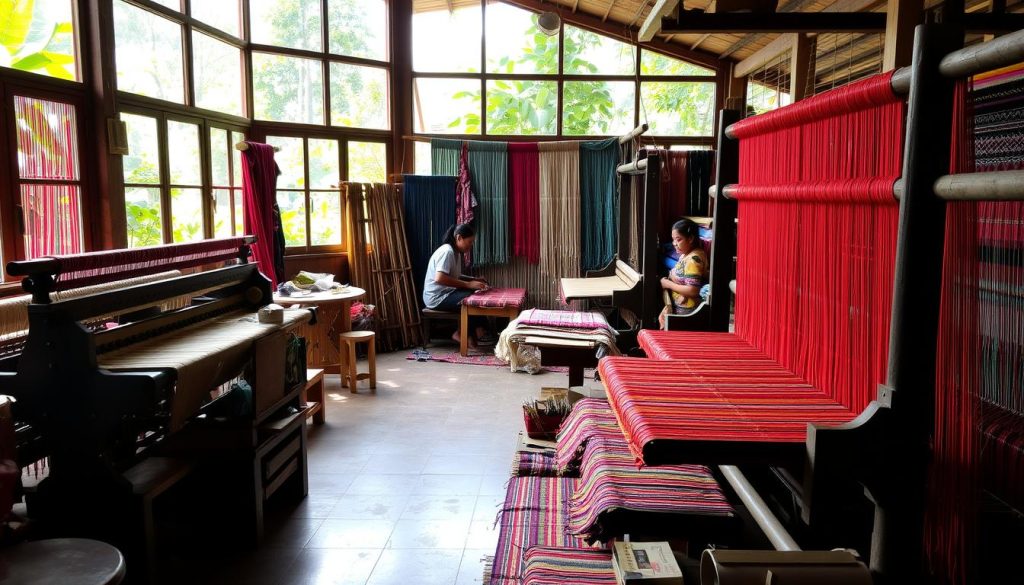
Sustainability is key in Luang Prabang’s textile world. Local artisans are now using eco-friendly methods. They use natural materials and dyes, keeping traditional techniques alive.
Fair trade is a big deal here. Artisans get paid fairly, which helps their families. This support lets them invest in education and health, growing the community. Small cooperatives run many workshops, making unique textiles together.
Places like Ma Té Sai and Passa-paa show their dedication. Ma Té Sai buys directly from Lao artisans, supporting fair trade. Passa-paa mixes old Lao designs with new fashion, keeping traditions alive. They also work to save ancient weaving and embroidery skills.
The table below shows some of Luang Prabang’s sustainable textile efforts:
| Initiative | Focus Area | Impact |
|---|---|---|
| Ma Té Sai | Fair Trade and Artisan Support | Empowers local artisans and promotes economic stability |
| Passa-paa | Modern Design | Blends tradition with contemporary aesthetics |
| Ock Pop Tok | Natural Dye Techniques | Preserves cultural practices while promoting eco-friendly production |
| Training Centers | Skills Development | Supports disadvantaged individuals in gaining income-generating skills |
The textile industry faces big challenges. But, with support from locals and visitors, it can thrive. By joining workshops and buying handmade items, you help keep traditions alive.
Artisanal Weaving Workshops: A Unique Experience
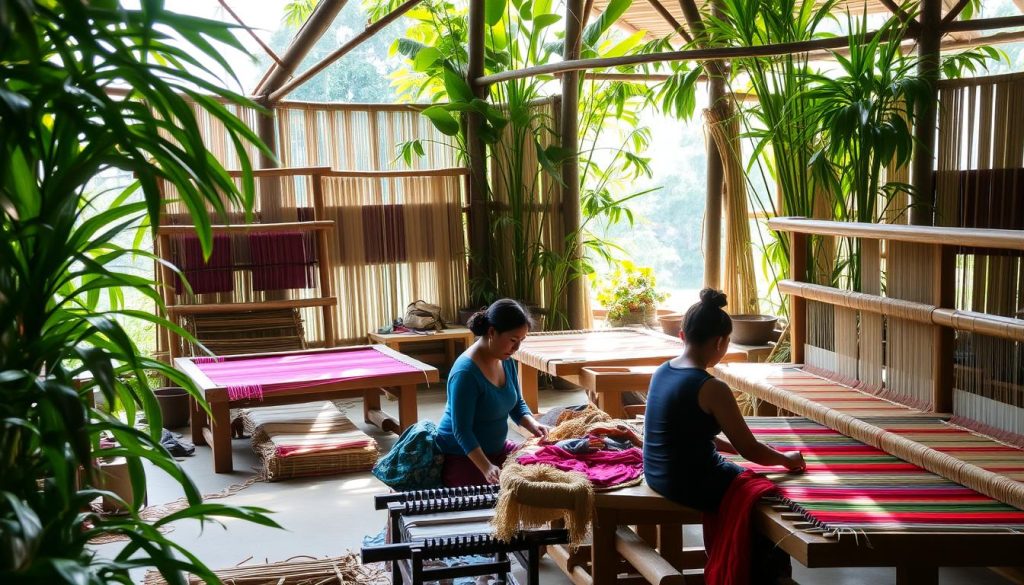
Joining artisanal weaving workshops in Luang Prabang lets you connect with local communities. These workshops are more than learning traditional weaving. They bring people together through shared experiences and cultural exchange. By participating, you help keep heritage crafts alive and learn about local artisans’ lives.
Connection with Local Communities
Workshops offer direct interaction with local weavers. You’ll learn about their craftsmanship and the stories behind their work. Seeing younger generations carry on this tradition is inspiring.
Guided Tours of Craft Centers
Visiting craft centers adds to your workshop experience. Tours like those at Ock Pop Tok and Passa Paa show the art of textile making. You’ll see weaving and natural dyeing, learning about the craft’s importance and its impact on artisans’ lives.
| Workshop Type | Duration | Price | Activities |
|---|---|---|---|
| Ock Pop Tok Weaving Workshop | 9 days, 8 nights | $3695 (Twin Shared Room), $4395 (Private Room) | Traditional loom weaving, natural dyeing |
| Passa Paa Embroidery Workshop | 9 days, 8 nights | $3695 (Twin Shared Room), $4395 (Private Room) | Hmong batik wax resist printing, embroidery techniques |
These workshops let you learn skills and support sustainable textile practices in Laos. You’ll be part of a cultural exchange that celebrates local artistry and makes a difference in their lives.
Conclusion
Your trip to Luang Prabang textile workshops is more than learning to make handmade textiles. It’s a deep dive into Laos’ culture, where you’ll see weaving, dyeing, and paper crafting. You’ll learn from local artisans and gain a new respect for their heritage.
By joining these workshops, you connect with ancient traditions and modern innovation. For example, basket weaving has led to new ideas like wicker solar cell lamps. This shows how old crafts and new ideas can work together in Luang Prabang.
When you leave, you’ll carry memories and skills with you. These workshops give you special skills and help keep important traditions alive. Enjoy the beauty of handmade textiles, the stories they share, and the friendships you make.