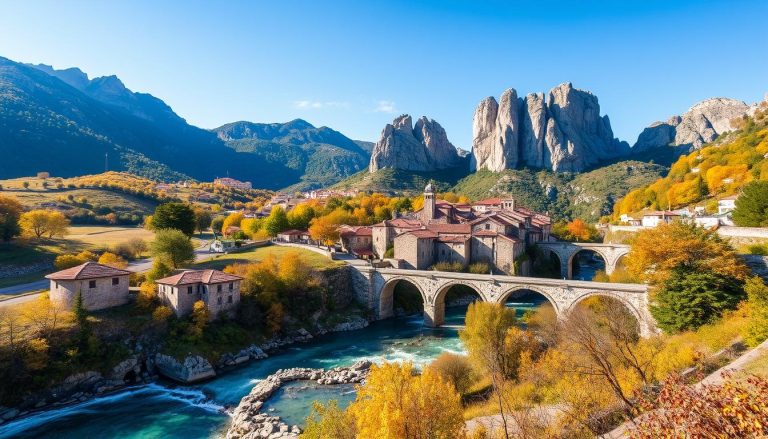
Explore Traditional Crafts Bumthang Artistry
What hidden stories lie within the vibrant threads of Bhutanese handmade products? How do they connect you to a culture steeped in tradition and spirituality?
In Bumthang, the rich tapestry of traditional crafts reflects the artistic dedication of local artisans. They capture the essence of Bhutan’s cultural heritage. From the intricate timber work of Shing zo to the revered art of Lha zo painting, each handcrafted item reveals a unique narrative tied to the region’s history and craftsmanship.
Delving into these authentic craftworks, you will find that traditional crafts from Bumthang not only showcase immense skill. They also serve as a bridge between ancient practices and contemporary relevance. Join us as we uncover the techniques, communities, and stories behind these fascinating artworks.
The Vibrant Cultural Heritage of Bhutan
The cultural crafts of Bumthang show a rich tapestry of Bhutanese identity. There’s a mix of spirituality and practical use in these crafts. Each piece has a story, reflecting Bhutan’s deep cultural heritage.
Exploring the Essence of Bhutanese Arts
Bhutanese arts and crafts show the country’s strong traditions. The 13 traditional arts and crafts, known as Zorig Chusum, include painting, weaving, and sculpture. The National Institute for Zorig Chusum teaches these skills.
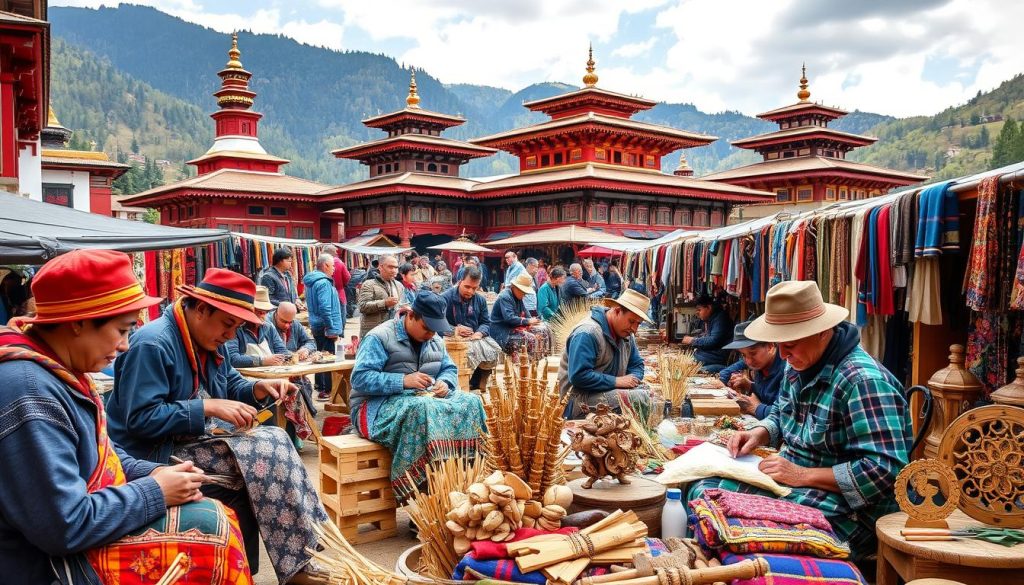
You might see local artisans at markets and workshops. They specialize in Thangka painting and textile weaving. Their talent is on display for all to see.
The Role of Crafts in Bhutanese Society
Crafts are key in keeping community ties and cultural identity strong. For example, Nado Poi Zokhang, the oldest incense stick maker, has grown a lot. It now has around 20 employees.
This shows how traditional crafts are growing, even with modern changes. Young artisans, like Karma, are learning these skills. This ensures traditional crafts in Bumthang will keep thriving.

Understanding the Significance of Handcrafted Items from Bumthang
Handcrafted items from Bumthang are more than just decorations. They carry deep Bhutanese culture and identity. Each piece tells a story, filled with history, traditions, and values. They show the craftsmanship passed down through generations, highlighting respect for heritage and community.
Cultural Identity and Artistic Expression
The vibrant craftsmanship in Bumthang is key to expressing Bhutanese culture and identity. Artisans start learning early, with women learning to weave at eight. This ensures traditional techniques continue, keeping cultural ties strong.
In Chumey, women weave yathra items like coats and accessories. Simple designs earn them Nu 160, while complex ones can earn up to Nu 340. This shows their skill and creativity, and also helps them financially.
The Link Between Crafts and Spirituality
Handcrafted items from Bumthang have deep spiritual meanings, used in religious ceremonies. They connect people and communities to their beliefs. The designs reflect nature and metaphysical themes, linking crafts to spiritual understanding.
Temples like Tamshing Lhakhang and Ngang Lhakhang show this connection. They embody the area’s sacred history through their craftsmanship. Seeing these creations enriches your visit and deepens your appreciation of Bhutan’s culture.
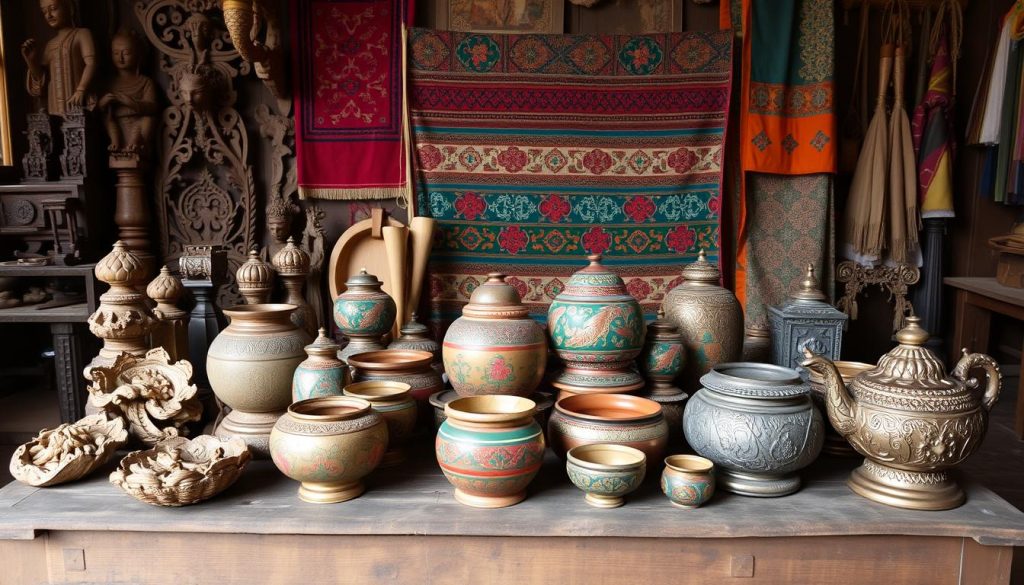
Traditional Crafts Bumthang: A Deep Dive into Techniques
Exploring traditional crafts in Bumthang reveals three key techniques: Bhutanese Thangka painting, textile weaving, and wood carving. Each craft highlights the area’s rich culture, showing the skill and dedication of local artists. These crafts are not just art but also carry deep spiritual meaning.
Thangka Painting: A Methodical Art Form
Bhutanese Thangka painting is a detailed art form tied to Buddhism. Artists spend years mastering their craft, following techniques passed down through generations. The process includes:
- Preparing the canvas, often from cotton or silk.
- Sketching the design, following strict religious rules.
- Using natural pigments for vibrant colors that represent spiritual themes.
- Adding detailed work, focusing on deities and mandalas.
Textile Weaving: The Nation’s Tapestry
Textile weaving in Bhutan showcases the unique cultures of its regions. Each fabric tells a story through its patterns and colors, representing different cultural elements. Key aspects include:
- Traditional wooden looms are used.
- Natural dyes create vibrant colors.
- Patterns reflect local flora, fauna, and folklore.
Wood Carving: Crafting Stories in Wood
Wood carving is a significant part of Bumthang’s traditional crafts. It’s not just about making objects; it’s about telling stories through art. Highlights include:
- Locally sourced wood is used for sustainability.
- Detailed carvings often depict religious motifs or local tales.
- Carvings are integrated into homes and temples.
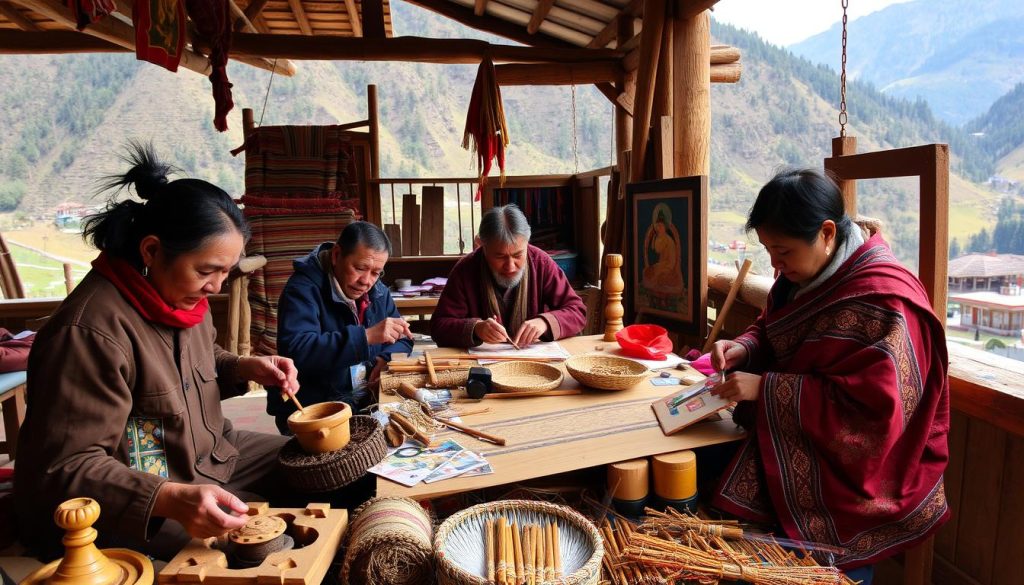
These traditional crafts not only enhance Bumthang’s cultural scene but also offer a glimpse into the spiritual and artistic values of its people. Through the work of dedicated artisans, these crafts continue to thrive, preserving a vital part of Bhutan’s heritage.
Meet the Local Artisans in Bumthang
Exploring the craft world in Bumthang gives you a peek into the culture and community here. The local artisans in Bumthang are key in keeping traditional crafts alive. They show their skills in many art forms, adding to Bhutan’s rich culture.
Profiles of Dedicated Craftsmen and Women
Each artisan has a story that shows their love for their craft. The traditional craftsmen in Bhutan are very talented in weaving, wood carving, and more. They make high-quality yatha, colorful wool textiles for clothes and accessories.
These skilled people share their knowledge, keeping old methods alive. They teach younger ones, ensuring their craft stays strong.
Skills Passed Down Through Generations
Bumthang’s reputation for traditional craftsmanship comes from skills passed down through generations. This shows the value of mentorship among artisans. Older craftsmen teach the younger ones, passing on their wisdom.
This tradition creates a community where artisans keep their heritage alive. They also bring new ideas to their crafts.
| Artisan Name | Craft Specialization | Generational Influence |
|---|---|---|
| Choden Tshering | Textile Weaving | Skills learned from grandmother |
| Jigme Dorji | Wood Carving | Father taught techniques |
| Norbu Wangchuk | Thangka Painting | Mentored by local master |
These profiles highlight the deep bond between local artisans in Bumthang and Bhutan’s culture. Their hard work keeps their ancestors’ stories and traditions alive. They are the guardians of Bhutan’s rich history and culture.
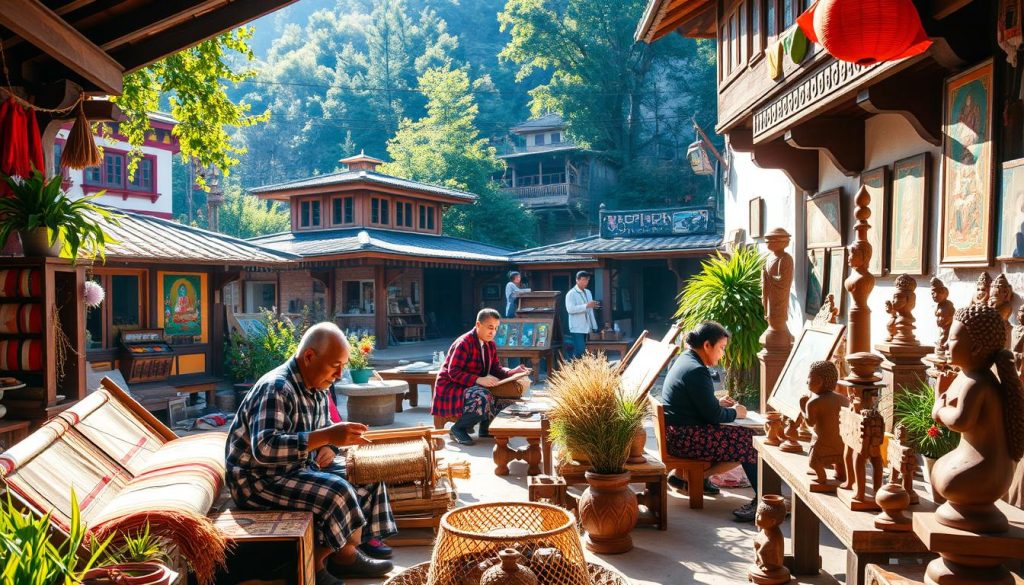
Exploring the Cultural Crafts of Bumthang
The traditions of Bumthang are key to its modern craftsmanship. Artisans here use old methods but add new designs. This mix shows their respect for their heritage in their beautiful and meaningful work.
The Influence of Tradition on Contemporary Artisanship
Artisans in Bumthang look to their ancestors for inspiration. They keep traditional methods alive while also innovating. This mix makes their art unique and appealing to many.
Artisanal Creations: Beyond Aesthetic Pleasure
Every piece from Bumthang has a deeper meaning. They tell stories, show spiritual beliefs, and share community values. Buying these items helps the artisans and keeps their skills alive.
| Craft Type | Traditional Techniques | Contemporary Influences |
|---|---|---|
| Yathra Weaving | Handwoven textiles using colorful threads | Incorporation of modern designs and patterns |
| Thangka Painting | Traditional iconography and natural pigments | Fusion of contemporary themes and messaging |
| Wood Carving | Intricate designs from local wood species | Modern forms and functionalities in carvings |
Supporting Authentic Craftwork in Bumthang
Exploring Bumthang’s vibrant artisan scene helps keep its rich culture alive. You can support local craftwork by visiting markets and joining community projects. These activities let you meet talented makers and buy unique, handmade items.
Visiting Local Markets and Shops
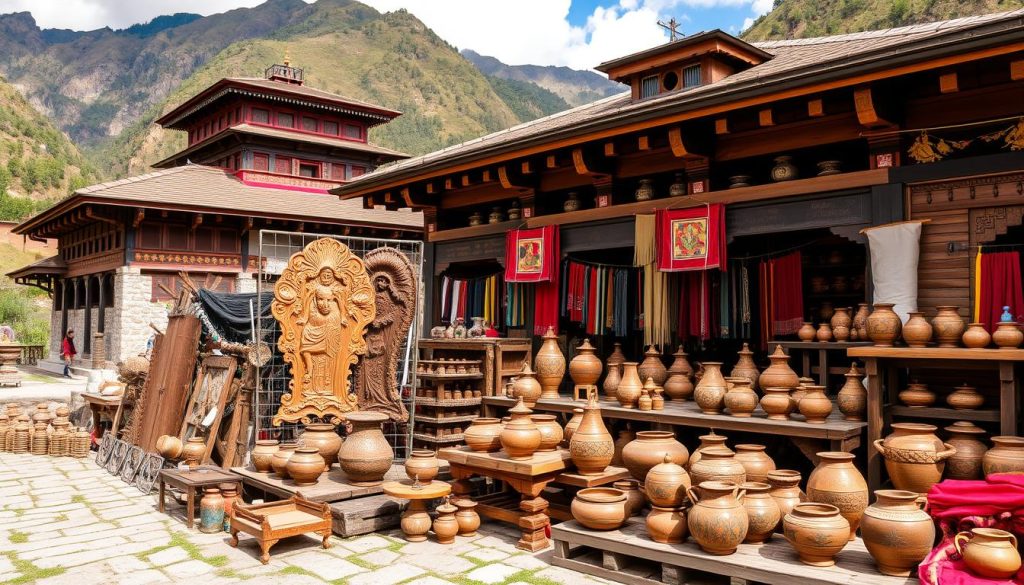
The markets in Bumthang offer a deep dive into local artistry. You’ll find everything from textiles to wood carvings. Talking to the artisans gives you a peek into their world and the stories behind their work. It’s a wonderful way to support their craft and keep traditions alive.
Engaging with Community Craft Projects
Community projects in Bhutan are about teamwork and sustainability. Joining these projects changes your trip into a cultural journey. You’ll learn from the experts and help preserve Bhutan’s artistic traditions.

| Aspect | Details |
|---|---|
| Average Trip Duration | 6 nights |
| Recommended Nights for Ideal Trip | 7 nights |
| Percentage Opting for Guided Tours | 100% |
| Percentage of Solo Travelers | 20% |
| Average Group Size | 4 travelers |
| Percentage Interested in Cultural Immersion | 80% |
| Percentage Feeling Like a Local | 60% |
| Travelers Highly Satisfied with Guides | 95% |
| Average Cost Savings Compared to Other Agents | 15% |
| Percentage of Repeated Travelers | 30% |
The Future of Traditional Handicrafts in Bumthang
The future of handicrafts in Bumthang looks uncertain. Modern trends and global markets change what people want to buy. This makes it hard for local artists to keep their traditions alive.
More and more cheap items from places like India and Nepal are coming in. This makes it tough for Bhutanese crafts to stay true to their roots.
Challenges Faced by Artisans Today
Artisans in Bumthang face big challenges:
- Market Competition: About 90% of what’s sold in handicraft shops comes from outside Bhutan, often labeled as ‘Product of Bhutan.’
- Consumer Awareness: Many people don’t know most items in local shops are made elsewhere.
- Quality Preservation: It’s getting harder for Bhutanese artists to keep their unique touch with mass production on the rise.
- Regulatory Issues: There are plans to make laws to stop fake labels, but it’s a slow process.
Initiatives for Preservation and Promotion of Bhutanese Crafts
But, there are efforts to save Bhutanese crafts:
- Government Programs: The Department of Culture is working on a bill to protect the realness of crafts.
- Education Campaigns: Plans are to visit places like Thimphu and Paro to teach shop owners about honest labeling.
- Cultural Policy Development: A new cultural policy is being made to support and protect traditional crafts.
- Support for Artisans: NGOs and local groups help artists improve their skills and sell their work.
These actions are key to keeping handicrafts in Bumthang alive. They help artists and their work stay a big part of Bhutan’s culture.
The Intersection of Tradition and Modernity
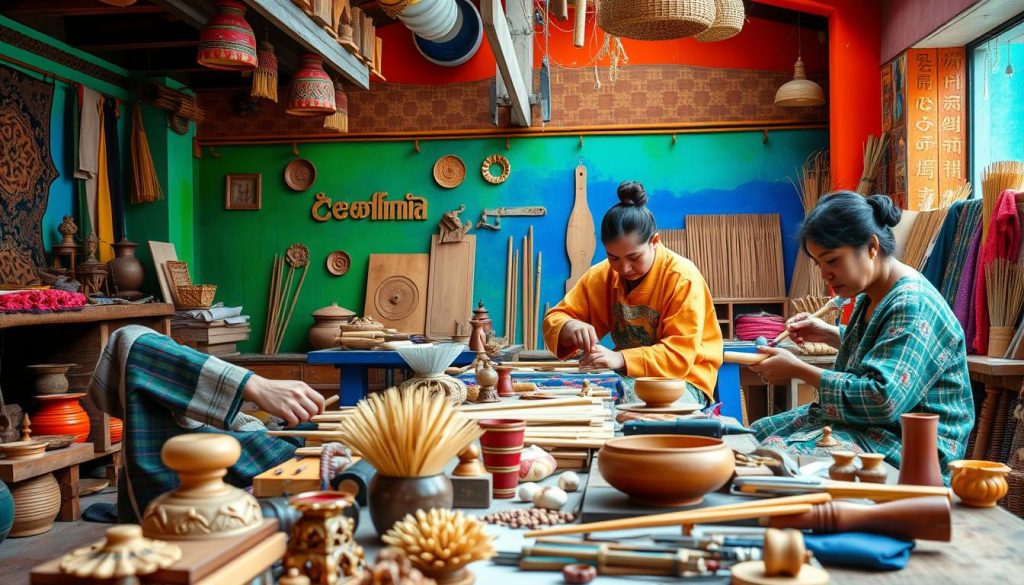
In today’s fast world, mixing old craftsmanship with new techniques is exciting. This blend lets artisans innovate while keeping their traditions alive. By using modern tools, they can improve their work and attract more people.
Modern Techniques Meeting Ancient Craftsmanship
Artisans in Bhutan are always looking for new ways to improve their work. They use:
- Digital design tools to make detailed patterns.
- Sustainable materials that appeal to eco-friendly buyers.
- New marketing ways to show their crafts worldwide.
This mix of old and new makes their craft more interesting and relevant today. It lets artisans create unique items that appeal to both locals and people from other countries.
Global Exposure and Commercial Viability
Thanks to more global exposure, crafts are now more viable. Bhutanese artisans are now at international trade fairs and online markets. This has opened up new opportunities for them.
| Benefit | Description |
|---|---|
| Increased Sales | More people seeing their work means more chances to sell. |
| Brand Recognition | Artisans get known for their skills and cultural heritage. |
| Networking Opportunities | Meeting other artists and brands leads to collaborations. |
| Cultural Exchange | Sharing ideas helps grow and adapt craft techniques. |
This is good news for Bhutanese craftsmanship. It shows that their traditions can grow and thrive in a changing world.
Conclusion
The traditional crafts of Bumthang show the deep artistry of Bhutan. These crafts are a big part of Bhutan’s culture. They highlight the skills of artisans and tell stories of the nation’s history.
Skilled craftsmen like Pema Wangdi, Sonam Choden, and Tashi Dorji bring Bhutan’s heritage to life. They create amazing Thangka paintings and textiles. Their work is a true reflection of Bhutan’s rich culture.
By exploring these crafts, you help keep them alive. You also learn more about Bhutan’s unique culture. The “13 Arts and Crafts” program and training centers work hard to keep these traditions alive.
As you visit markets and talk to artisans, you join a special community. This community keeps Bhutan’s spirit alive. It’s a chance to be part of something truly special.
The world is changing fast, and traditional crafts face challenges. But, they also have chances to grow. By supporting these crafts, you help ensure they continue for many years.