Inle Lake Silk Weaving: Discover Myanmar’s Art
Ever wondered how a lake can create such exquisite textiles? Inle Lake silk weaving is a cherished art form in Myanmar. It shows the creativity and cultural richness of the country. Local artisans weave using lotus fibers from the lake.
In a region home to about 70,000 people, mostly from the Intha ethnic group, you’ll see tradition and innovation. This article will explore the history, processes, and sustainable practices of Inle Lake silk weaving. You’ll learn about the legends that inspire artisans and the eco-friendly techniques used. See how nature and culture meet in this beautiful art form.
Introduction to Inle Lake Silk Weaving
Inle Lake is a beautiful freshwater lake, covering about 50 square miles. It is home to around 70,000 people, who mostly fish and farm. The area is rich in culture, thanks to many ethnic groups living there. Inle Lake silk weaving is a key part of this culture, showcasing the talent of local artisans.
The tradition of silk weaving in Inle Lake dates back about 100 years. It started with a woman named Paw Sar Ou, who found a way to use lotus stem threads. Today, these threads are used to make beautiful silk products at places like Khit Sunn Yin. Artisans there make textiles, scarves, robes, and more, blending heritage with skill.
At Khit Sunn Yin Hand Weaving Center, they use natural dyes from plants and trees. This choice shows their care for the environment. It also makes their work vibrant and keeps traditional silk weaving alive.
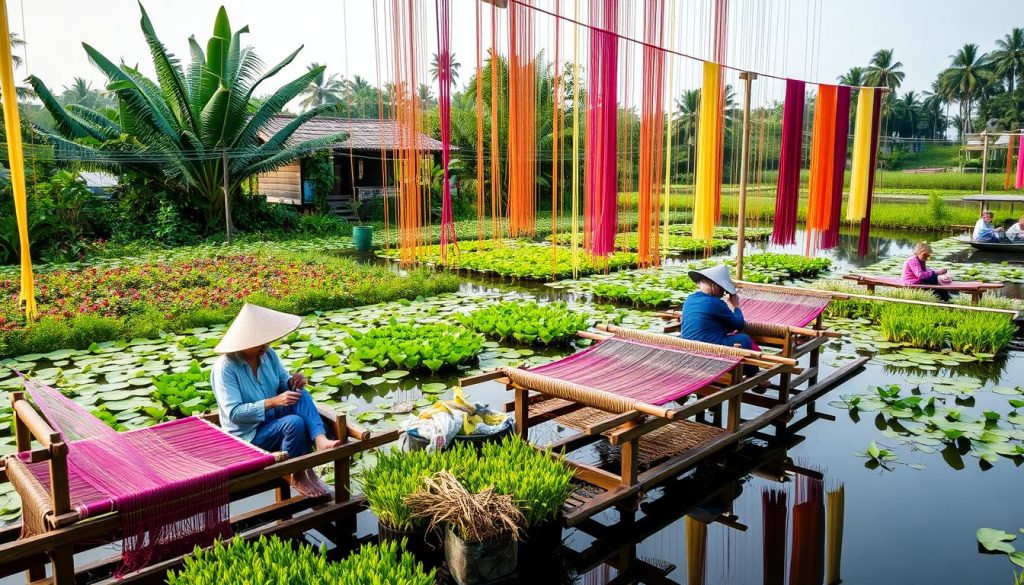
The designs on the floor looms are intricate and take a lot of time to make. The Ikat weaving technique is used to make longyi, a traditional Myanmar garment. Each piece is not just a piece of clothing but also a story of cultural heritage.
Inle Lake silk weaving is more than a craft; it’s the pride of the Intha people. Exploring this craft gives us a peek into the dedication and creativity of Myanmar’s enchanting Inle Lake.
History of Lotus Weaving in Inle Lake
The history of lotus weaving in Inle Lake is rich and deep. It started when people found out how great lotus fibers are. These fibers come from the stems of lotus plants that grow in the lake’s clean water.
This craft shows off traditional weaving skills. It also played a big role in the growth of the Burmese silk industry.
Legend of the First Artisan
A legend tells us how lotus weaving began here. It says an artisan spent a year making a robe from these fibers. They made it to give to a Buddhist abbot.
This story shows the deep spiritual bond and respect for nature in lotus weaving. Even if it’s a legend, it highlights the importance of craftsmanship in the local culture.
Evolution of Weaving Techniques Over Time
Lotus weaving techniques have changed a lot over the years. At first, it was based on old ways of doing things. But now, new styles have been added to it.
Artisans keep their heritage alive while also making new things. Today, you can find lots of products like scarves and shawls made from lotus fibers. It takes over two weeks to make one scarf, using more than 3,000 stalks.
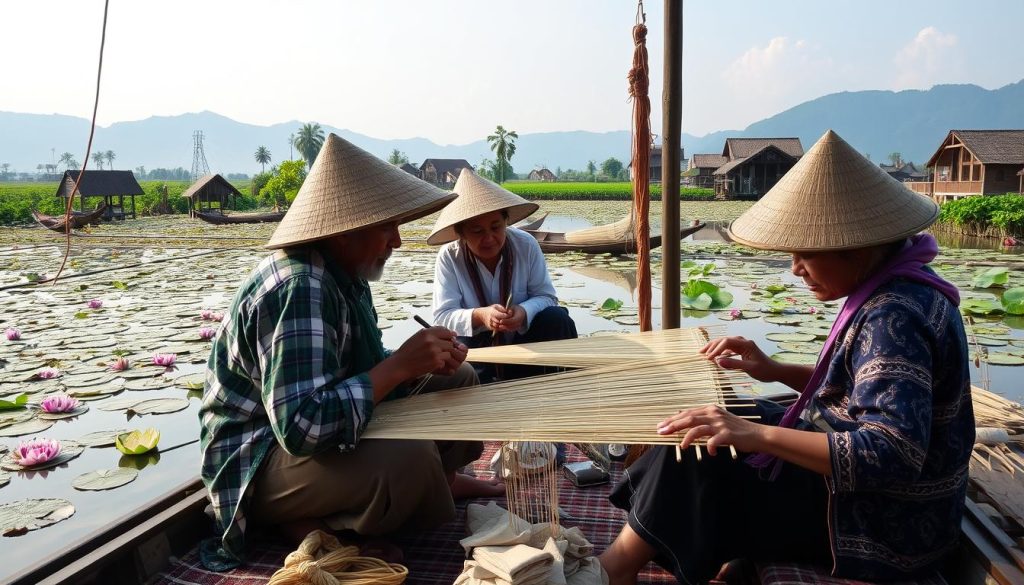
The Unique Fiber of Inle Lake: Lotus Stems
The tradition of weaving with lotus stems in Inle Lake is truly special. It shows off amazing craftsmanship and cultural heritage. The lotus fibers come from the stems of the lotus plant. They are strong, soft, and show the beauty of sustainability and skill.
Properties of Lotus Fiber
Lotus fibers are known for their incredible strength and softness. They are mainly harvested during the monsoon season. It takes about 20,000 lotus stems to make one square meter of cloth, making it very expensive.
The process of making these textiles is very hard work. Women cut the stems into pieces and then bundle them for spinning. The cloth starts off creamy in color and is dyed with natural materials like tree barks and lotus leaves. Artisans make scarves, shawls, and accessories that are both luxurious and delicate.
Significance of the Lotus Flower in Myanmar Culture
The lotus flower means a lot in Myanmar culture. It stands for purity and enlightenment, adding spiritual value. It’s also linked to Buddhist practices and was used to make robes for monks.
Lotus weaving is a tradition that goes back to the early 1900s. It has evolved but still shows the cultural identity of Inle Lake. When you see these fabrics, you’re not just looking at a material. You’re also seeing a piece of history and culture.

Inle Lake Silk Weaving Process
The journey of Inle Lake silk weaving starts with harvesting lotus. During the monsoon, artisans gather lotus stems. These stems are the key to making beautiful textiles. This tradition links the local culture to nature.
Harvesting the Lotus Stems
Harvesting lotus is a careful task. Artisans pick the best stems for fiber. They check the stems’ texture and strength for the next steps.
Extracting and Spinning Lotus Fibers
After harvesting, the stems are used to get the lotus fibers. This step needs a lot of patience. The fibers are pulled out by hand to make thin threads.
These threads are spun into yarn using a spindle. Weavers do this by hand, a task that can take weeks for one scarf. They mix these threads with silk and cotton for better quality and look.
Dyeing Techniques with Natural Materials
The last step is dyeing with natural materials. Artisans use flowers, leaves, and fruits to create colors. These colors make the fabrics look amazing and show the connection to nature.
Artisan Skill in Lotus Weaving
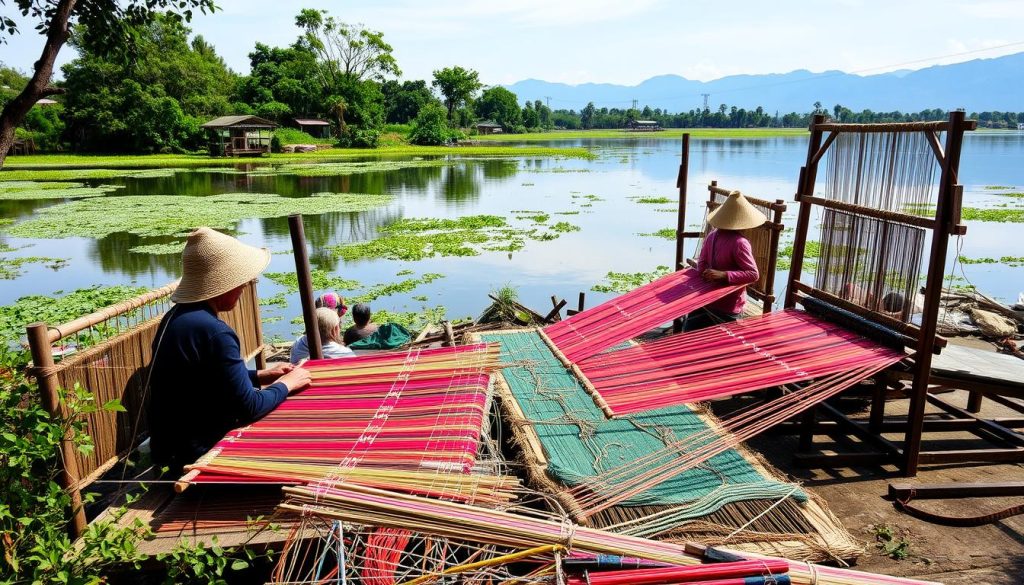
The art of lotus weaving is a mix of patience and skill. It shows the deep traditions of the region. Artisan silk weavers in Inle Lake spend weeks on a single fabric, showing their amazing weaving skills.
Each piece tells a story, passed down through generations. It captures Myanmar’s rich heritage. The unique lotus fiber needs careful handling to keep its quality and show the artist’s skill.
Patience and Craftsmanship of Artisan Weavers
The dedication of the weavers is clear in every piece. For example, making a small scarf from lotus fabric takes about a month. It uses 4,000 lotus stems.
Traditional garments, like the lotus robe for the November festival, are even more demanding. They need 3 to 5 kg of raw lotus fiber and 200,000 lotus stems. Weaving them takes 20 to 45 days. This shows the weavers’ exceptional skill.
Challenges Faced by Modern Weavers
Modern weavers face challenges in lotus weaving. The growing demand for lotus fiber puts pressure on supplies. Some lotus stems come from Wetthe Lake and Inma Lake, raising sustainability concerns.
Artisans must balance tradition and innovation to keep their craft alive. Meeting today’s fashion needs while staying true to their heritage is crucial for lotus weaving’s future.
Sustainable Practices in Inle Lake Silk Weaving
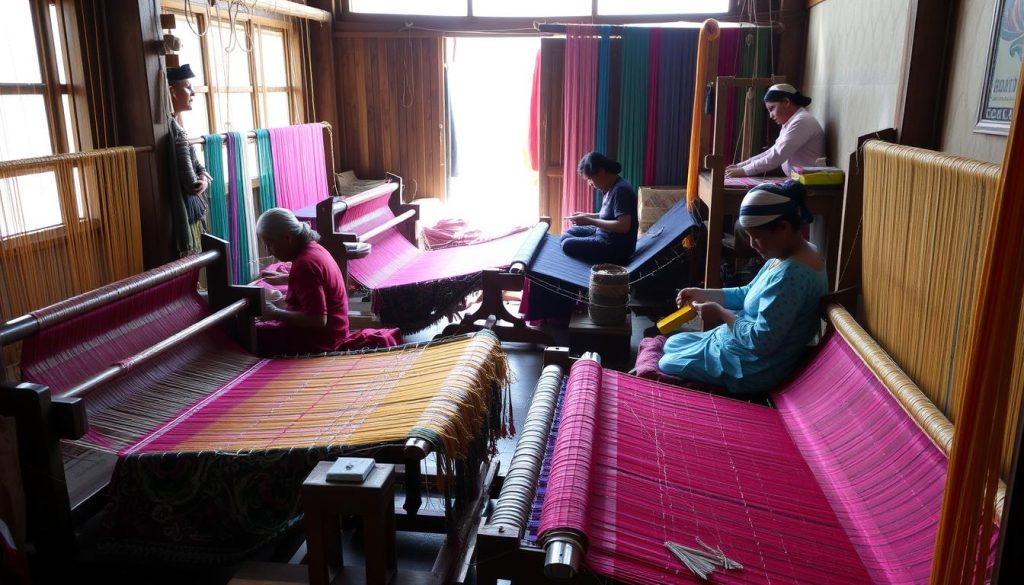
Inle Lake is known for its sustainable silk production. Artisans here work hard to reduce environmental harm while keeping traditional methods alive. They use eco-friendly weaving techniques to protect the local ecosystem.
Eco-friendly Weaving Techniques
Inle Lake’s artisans use eco-friendly methods for silk production. These include:
- Using natural materials without harmful chemicals
- Harvesting lotus fibers that don’t deplete resources
- Using handlooms to keep craftsmanship alive
- Creating biodegradable and safe textiles
- Supporting local communities with renewable resources
These efforts keep traditional lotus weaving alive while caring for the environment.
Future of Sustainable Lotus Production
The future of sustainable lotus production depends on resource management. As people become more aware of environmental issues, preserving this craft is crucial. Combining traditional art with new ideas can make lotus silk more visible and valuable. This might include:
- Supporting local artisans through tourism
- Protecting Inle Lake’s ecosystem
- Teaching about sustainable practices and lotus weaving
- Working with sustainable fashion brands
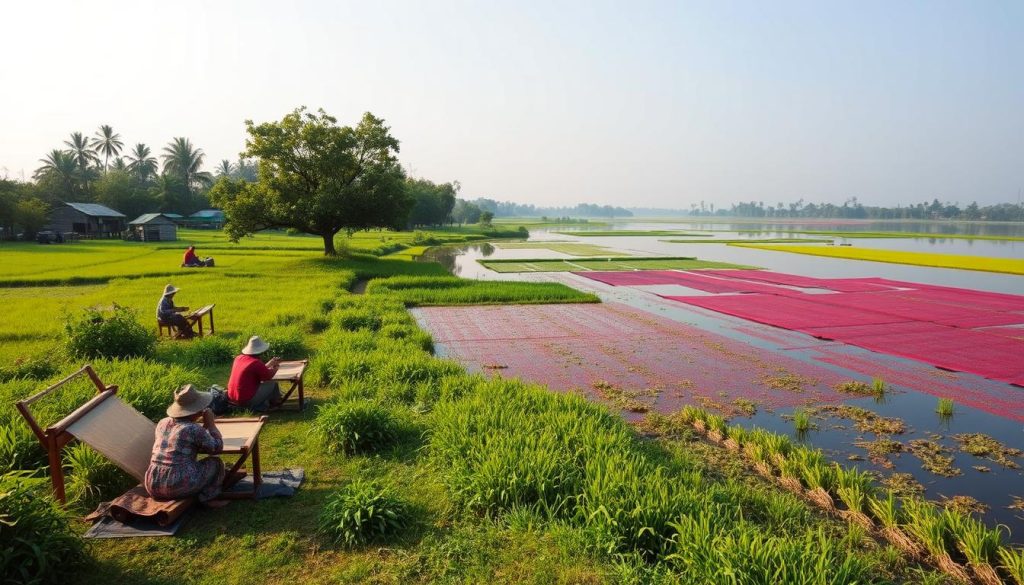
By adopting these new practices, the future of lotus silk weaving looks promising. It ensures that future generations can enjoy this unique and luxurious material.
Visiting the Weaving Centers around Inle Lake
Exploring weaving centers around Inle Lake lets you dive into local craftsmanship. At the Khit Sunn Yin Hand Weaving Center, you’ll see the art of making lotus textiles. Skilled artisans will show you their techniques, giving you a peek into this traditional craft.
What to Expect at the Khit Sunn Yin Hand Weaving Center
At the Khit Sunn Yin Hand Weaving Center, you’ll see the lotus weaving process up close. Here’s what you can look forward to:
- Interactive demonstrations of lotus thread extraction and weaving.
- A chance to engage with artisans about their techniques and tools.
- An opportunity to purchase handmade items such as scarves, skirts, and shawls.
The center is famous for its luxurious products. A piece made entirely of lotus fibers can cost over $400. This shows how special these items are.
Tips for Tourists Visiting Inle Lake Craft Workshops
Visiting Inle Lake can be a rewarding experience for tourists. Here are some tips:
- Approach with an open mind and a willingness to learn about local customs.
- Respect the artisans and their work; photography may require permission.
- Consider bargaining when buying products, as it can enhance the experience.
- Be mindful of the environmental impact; support sustainable practices.
By following these tips, you can gain a deeper understanding of lotus weaving and the community that supports it.

Shopping for Handmade Silk Products
Exploring Inle Lake’s beauty means also shopping for handmade silk. Local markets and weaving centers, like Khit Sunn Yin Hand Weaving Center, have lots of authentic lotus silk textiles. These pieces, made from lotus stem fibers, show the artisans’ hard work and Myanmar’s culture.
Where to Buy Authentic Lotus Silk Textiles
Look for authentic lotus silk textiles around Inle Lake, at floating markets and weaving workshops. Each item has its own story and shows the hard work of making them. For example, scarves need thousands of lotus stalks. Visiting these places helps you understand the craft and supports local artisans.
Understanding Pricing and Value in Lotus Weaving
Knowing the price of lotus weaving is important. It shows the detailed work in making these fabrics. A scarf might need over 3,000 lotus stems and weeks of work. So, pure lotus fabrics can cost hundreds or thousands of dollars.
When you think about the artistry and time, these items are more than just fabrics. They are unique expressions of culture and dedication.