Explore Inle Lake Stilt Houses in Myanmar
Have you ever wondered what life is like in a village built on water? At Inle Lake, you’ll find amazing stilt houses. They show the unique lifestyle of local communities in Myanmar. These homes are not just architectural marvels; they are a testament to the resilient spirit and rich traditions of the ethnic tribes that call this stunning region home.
Situated in Myanmar’s Shan State, Inle Lake offers a unique glimpse into Southeast Asian water dwellings. With its vibrant culture and diverse communities, you’ll see how the Inle Lake stilt houses blend with the environment. This creates a sustainable lifestyle that has endured for generations. Prepare to be captivated by the ingenuity of these Myanmar traditional homes as you explore this extraordinary destination.
Introduction to Inle Lake and Its Unique Culture
Inle Lake is Myanmar’s second largest lake, covering about 44.9 square miles. It’s only 5 feet deep on average during the dry season. This beautiful lake is a cultural center, home to the Intha people and their special way of life.
The Intha are famous for their leg-rowing fishing technique. This skill has helped them build a unique culture around the lake. The lake’s calm waters support their way of life.
The hills and floating gardens around the lake add to its beauty. They also help keep the lake’s biodiversity rich. Over 35 fish species live here, including 17 found nowhere else.
The floating gardens show the Intha’s long-standing farming traditions. You can learn about their culture by visiting markets and watching traditional shows.
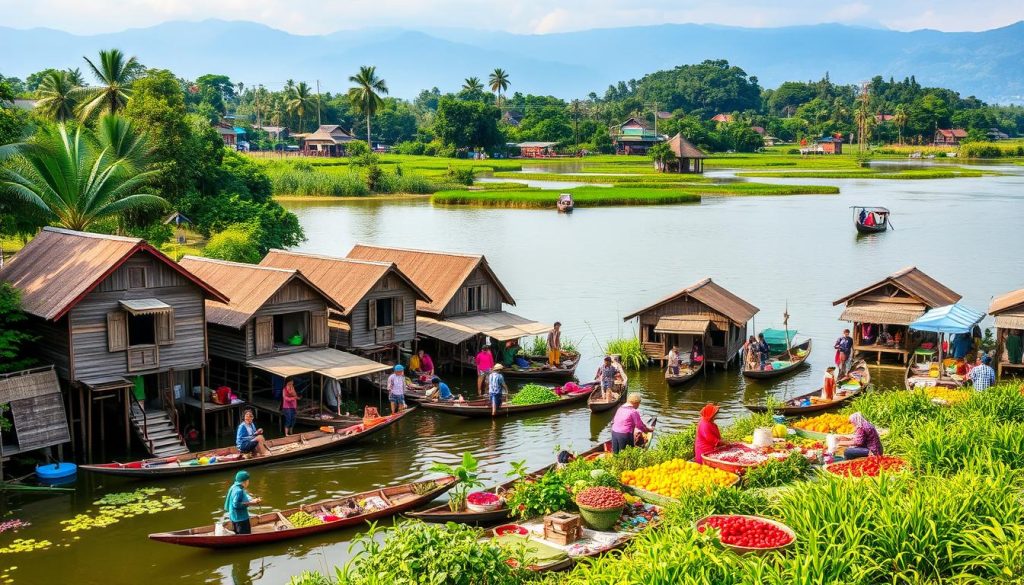
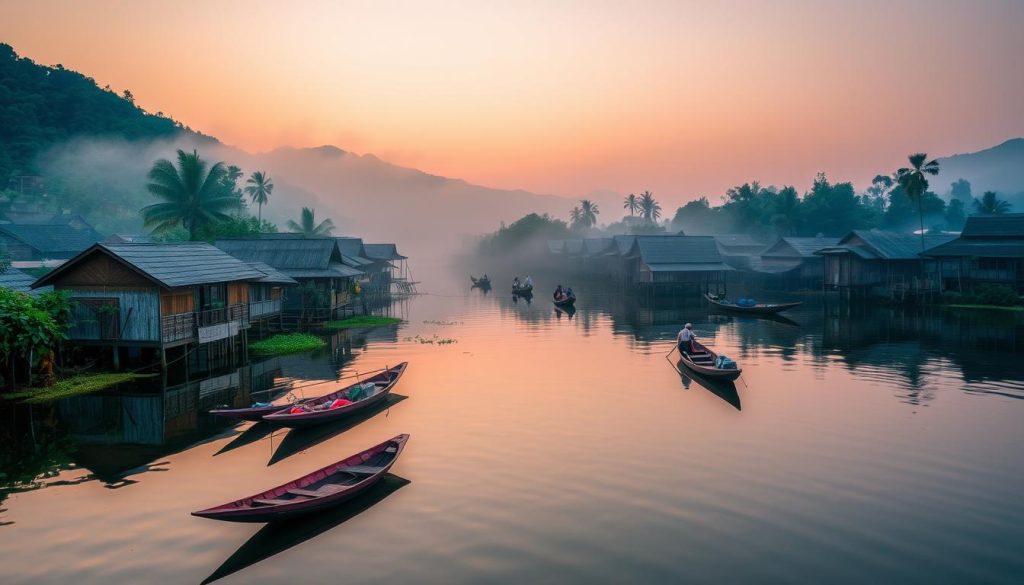
Exploring the lake by wooden boat reveals the beauty of Burmese floating villages. These villages depend on the lake for their daily needs. They make handicrafts and farm here.
Festivals fill the lake from August to October, drawing both locals and tourists. The Phaung Daw Oo Pagoda is a major attraction, with its golden Buddha statues.
Visiting Inle Lake lets you see a world where water is life. You’ll learn about the Intha’s traditions and the challenges they face. The culture of Inle Lake is truly unforgettable.
What Are Inle Lake Stilt Houses?
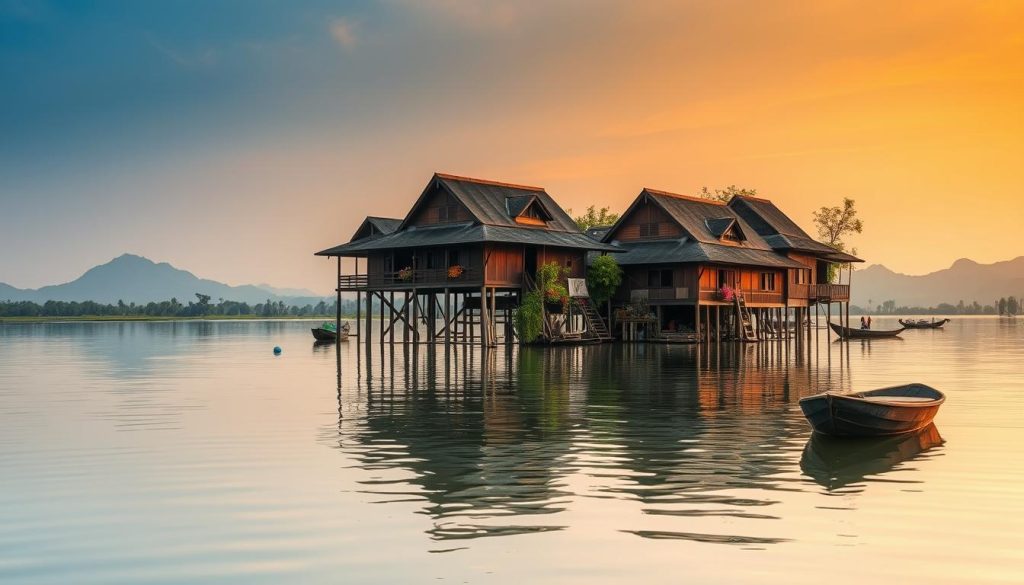
The stilted architecture of Inle Lake is a remarkable adaptation to its unique environment. These structures, known as Inle Lake stilt houses, rise above the water. They offer stunning views and a lifestyle that blends with nature.
The design not only enhances the scenic beauty but also protects against seasonal flooding. This makes these Myanmar traditional homes a key feature of the landscape.
Overview of Stilted Architecture
Inle Lake stilt houses show a deep understanding of the ecosystem. Built by the Intha people, these homes use stilted architecture to rise several feet above the water. This design allows for easy navigation through villages via small boats.
It preserves traditional ways of life despite changing conditions. With an average depth of only five feet, Inle Lake requires homes that can withstand both water and time.
Materials Used in Construction
Construction of these iconic homes uses locally sourced materials. This emphasizes sustainability and cultural heritage. Common building materials include:
- Teak: Known for its durability and water resistance, teak is a preferred choice for foundations and walls.
- Bamboo: Lightweight and flexible, bamboo serves as an ideal material for wall panels and roofing.
- Hardwood: Various hardwoods may be used for structural elements, adding to the strength and longevity of the stilt houses.
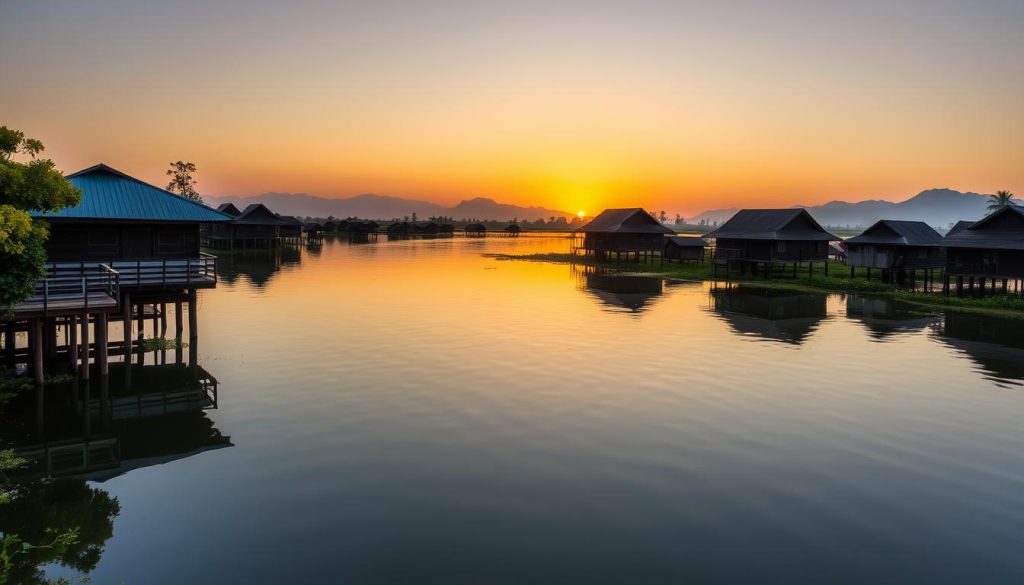
These elements come together to create homes that are not only functional but also symbolic. They show the Intha people’s deep connection to their environment. The stilt houses are more than just shelter; they are a testament to a culture that has thrived in harmony with nature for generations.
Exploring the Floating Villages of Myanmar
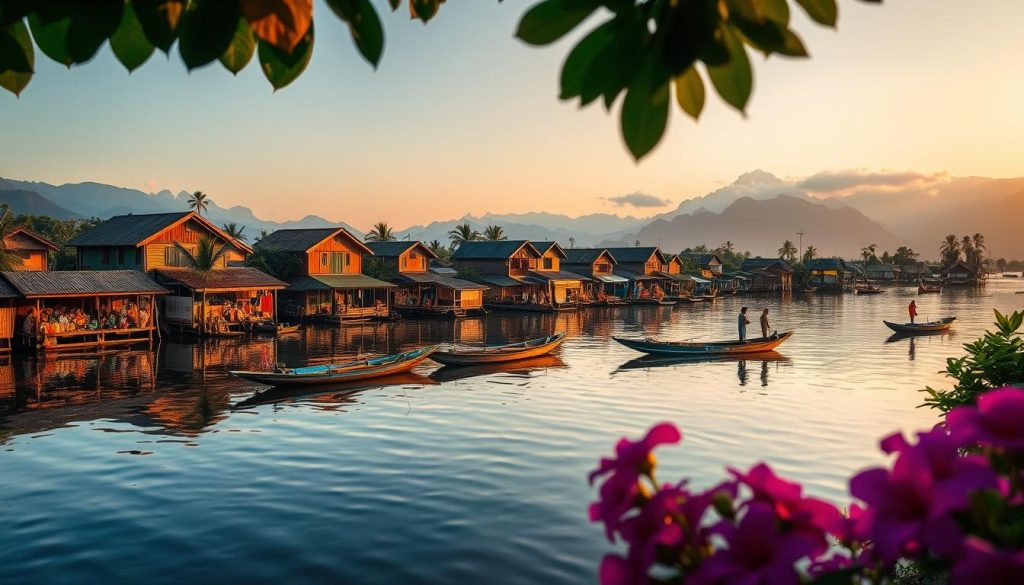
The floating villages of Inle Lake are a mix of nature and culture. They are home to the Intha people. These communities live on the water, showing off their unique traditions and farming ways.
Visitors can see the lively life of these villages. They see farming methods and community activities of the Intha people.
The Intha People and Their Traditions
The Intha people are known for their clever farming. They grow crops on floating gardens made of moss and duckweed. These gardens produce vegetables like tomatoes.
They also have interesting customs, like a dowry system. Daughters get parts of floating rafts in their weddings.
Daily Life on Inle Lake
Daily life in the floating villages is in tune with the lake. The Intha people fish using a special leg-rowing technique. This skill is a big draw for tourists.
There’s more to see than just fishing. You can check out traditional crafts and join in community activities. For a real taste of life here, join a guided tour.
Inle Lake Stilt Houses: A Closer Look
The stilt houses of Inle Lake show the unique architecture of Myanmar. They have intricate designs that reflect local customs. Each house is decorated with colors and handmade crafts, showing the community’s artistic side.
These homes are built from bamboo and wood. They can handle the changing water levels of Inle Lake. The lake is big, about 45 square miles, and its depth changes with the seasons.

These houses have special features. They have balconies for beautiful lake views. Entrances are made for easy access by boat or foot. They also have natural ways to stay cool.
Visitors to these homes see life above the water. They learn about the balance between function and tradition. The stilt houses show how a community lives in harmony with its environment.
| Feature | Description |
|---|---|
| Location | Inle Lake, Myanmar |
| Size of Lake | Approximately 45 square miles |
| Typical Depth | 12 feet deep; rises in rainy season |
| Construction Materials | Bamboo and wood |
| Significance | UNESCO Biosphere Reserve |
| House Design | Intricate, colorful, with functional spaces |
How to Visit Inle Lake Stilt Houses
Visiting Inle Lake is a chance to dive into Myanmar’s unique culture and breathtaking views. You’ll likely start by flying into Heho Airport, about 25 km from Nyaung Shwe. Then, a 45-minute taxi ride or a scenic boat trip will get you to the lake.
Traveling to Inle Lake
Getting there has many options. A one-way plane ticket from big cities costs around $100. Add $20 for transport to the lake. For those on a tight budget, bus tickets are $17 to $25, often for overnight trips.
Recommended Tours and Boat Rides
Exploring Inle Lake is best with recommended tours. These include all-day boat rides for about $20, including lunch. The tours last ten hours and visit cultural spots like artisan workshops. Boatmen earn from sales, helping local families.
- See the Intha people’s leg-rowing, a tradition over 800 years old.
- Check out factories making silk from lotus flowers and tobacco rolled by women.
- Try a cooking class at Bamboo Delight Cooking School, a top culinary spot in Asia.
- Explore floating gardens and stilt houses for a peek into local life.
- Go on a bicycle tour to see more of the lake’s surroundings.
Activities Around Inle Lake
Inle Lake is full of activities for all kinds of interests. You can enjoy boat tours that show off the lake’s beauty. Or, you can dive into the local markets to find unique handicrafts. There’s something for everyone to love.
Classic Boat Tour Experiences
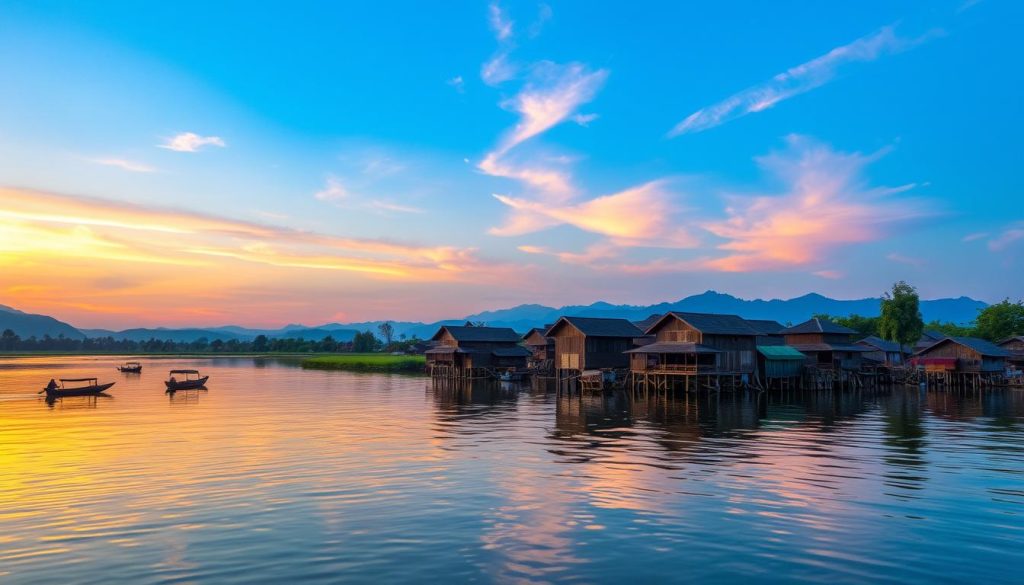
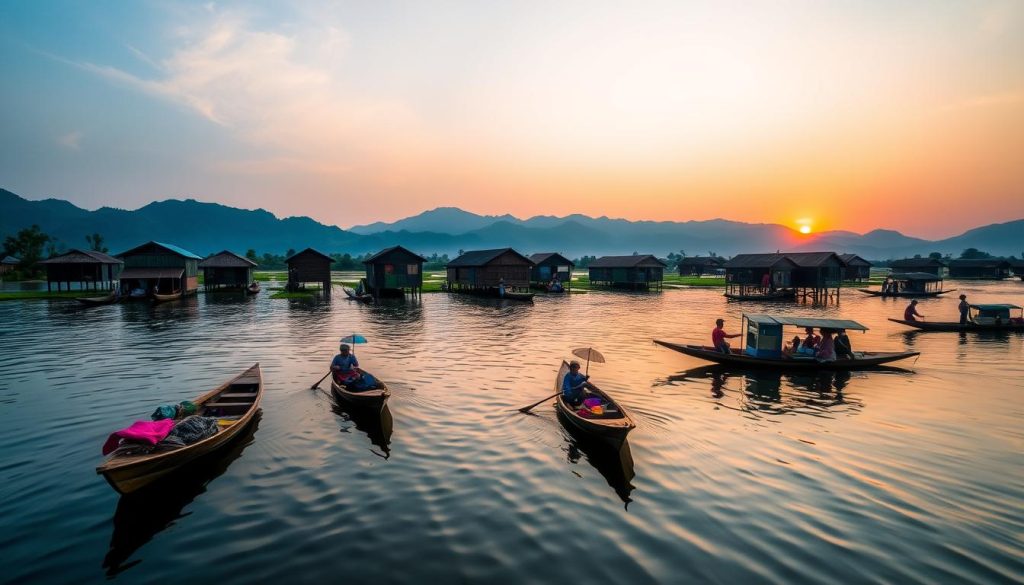
Boat tours are a top choice at Inle Lake. You’ll glide on the calm waters and see stunning views and traditional fishing. The Intha fishermen row with their legs, giving you a special view of life on the lake.
On these tours, you’ll see floating gardens and villages. You’ll also feel the lively vibe of this amazing lake.
Local Handicrafts and Markets
Visiting local markets around Inle Lake lets you see the area’s rich craftsmanship. You can buy local handicrafts, textiles, and more, helping the artisans and their families. Phaw Khone village is famous for its traditional looms and skilled weavers.
Talking to these artisans helps you understand Burmese culture better. It also gives you a chance to find unique souvenirs to take home.
| Activity | Description | Location |
|---|---|---|
| Boat Tours | Experience traditional fishing techniques and stunning scenery. | Inle Lake |
| Handicraft Markets | Shop for local textiles, silverware, and unique crafts. | Phaw Khone Village |
| Floating Gardens Tour | Explore the floating gardens and learn about agriculture on water. | Inle Lake |
Burmese Floating Villages and Their Significance
The Burmese floating villages in Inle Lake are a unique cultural mix. They were created by the Intha people over many years. Life on the water brings people together, making survival a team effort.
With 17 villages on the lake, these communities face many challenges. Yet, they show great strength and resilience.
Community Life on Water
Life on Inle Lake is all about the water. It shapes the social and economic lives of its people. The floating villages have bamboo houses that fit the tropical climate.
Key parts of community life include:
- Farming: Floating gardens grow vegetables like tomatoes all year, thanks to easy water access.
- Fishing: The lake’s fish population is falling due to pollution and human actions. This is a big problem for people’s jobs.
- Transport: Boats are used for daily travel. This creates a strong bond between people and the water.
Cultural Events and Festivals
Cultural events are very important in Intha lives. They make the communities richer and draw in visitors. These festivals celebrate traditions and bring people together. Some notable events are:
- Phaung Daw Oo Pagoda Festival: This festival shows the importance of Inle Lake. It features boat races and religious ceremonies.
- Seasonal Fairs: These events showcase local crafts and foods. They let tourists experience the culture.
- Community Feasts: Meals shared during festivals strengthen family bonds and community spirit.
The Natural Beauty Surrounding Inle Lake
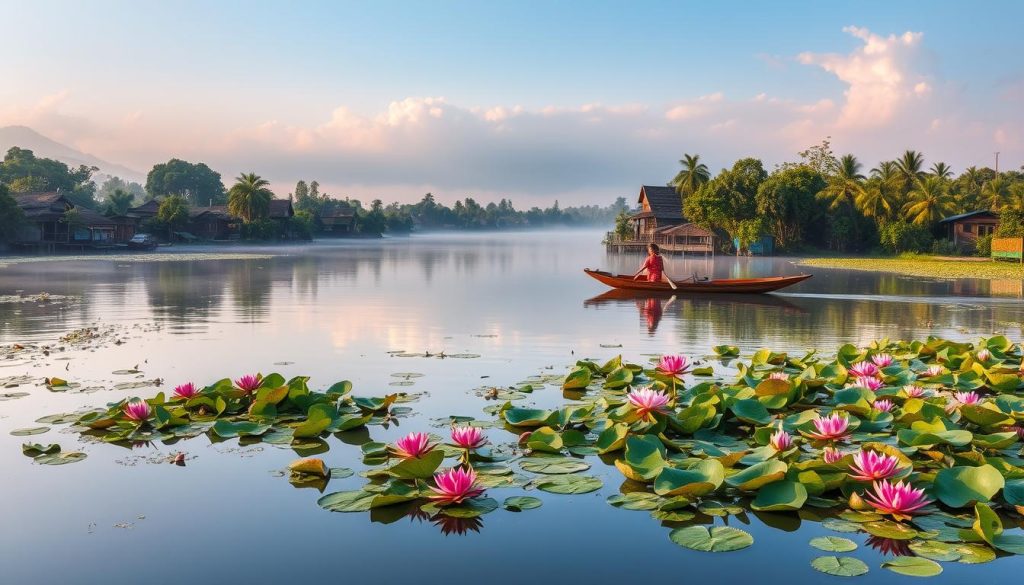
Inle Lake is a stunning freshwater area known for its biodiversity. It’s a key spot for conservation, home to many unique species. Visitors can see floating gardens and traditional fishing, set against mountains and sky.
Understanding the Lake’s Ecosystem
Inle Lake has both water and land habitats. It’s a natural wonder in Myanmar, covering about 50 square miles. It’s vital for local communities and industries.
Flora and Fauna in the Region
The lake is full of plants and animals. The *Intha people* use traditional methods to keep the balance. They grow vegetables on floating gardens.
Birdwatchers will see many bird species. The clear waters are home to diverse aquatic life. This area promotes a sustainable lifestyle, keeping Inle Lake beautiful for the future.
Accommodation Options Near Inle Lake
Finding the right place to stay near Inle Lake can make your trip better. You can choose from stilt houses or local guesthouses. Hotels and guesthouses near the lake offer cozy places to stay and a chance to learn about the local culture.
Staying in Stilt Houses
Staying in stilt houses is a unique experience. These houses are built on stilts over the water, giving you a close-up view of Inle Lake’s beauty. You’ll hear the sound of water and see stunning views. Resorts like Inle Princess Resort and Inle Lake View Resort are top choices for their service and views.
These resorts serve local food, letting you taste Myanmar’s flavors while enjoying the views.
Exploring Local Guesthouses and Hotels
Local guesthouses offer a variety of stays. Inle Cottage Boutique Hotel has cozy cottages and big villas. Ann Heritage Lodge and Golden Island Cottages Thale U are also great, with different prices and cozy feels. They even welcome families, with kids under 10 staying free with parents.
These places also offer free breakfasts for kids, spa services, and traditional Burmese food. This makes your stay at Inle Lake even better.
Traditional Cuisine of the Shan State
The food around Inle Lake shows off Shan State’s culture. It’s known for its lively tastes and fresh ingredients. You’ll find many traditional dishes in local spots or fancy restaurants, all with beautiful lake views.
Must-Try Dishes
- Shan Noodles: A must-try dish, costing about $2.
- Tomato Salad: A cool side dish for your meal.
- Various Traditional Curries: Try unique flavors, priced between 2,800 and 3,500 kyat.
- Lephet Thoke: A favorite tea leaf salad, served with free fermented green tea.
Dining Experiences on the Lake
Inle Lake offers many dining options. You can find local restaurants serving traditional Inthar dishes or Shan cuisine. Some places also offer Chinese dishes, and Aroma Restaurant has Indian food. For Italian, the Golden Kite is a rare find.
Imagine eating at a stilt house restaurant with 20% offering lake views and 10% with live music. Prices vary from 1,000 kyat for noodle soup to 5,100 kyat for salads.
Private cooking lessons, like those at Inthar Heritage House, let you dive deeper into local cooking. You’ll learn to make four dishes, enhancing your Shan State journey. Dining here is more than just eating; it’s an adventure in taste, setting, and culture.
Sustainable Tourism and Cultural Preservation
Inle Lake is a special place where tourism and culture meet. More and more visitors, from about 3,000 in 1996 to almost 180,000 in 2016, bring both good and bad. It’s important to keep tourism sustainable to protect the Intha people’s traditions and support eco-friendly travel.
Impact on Local Communities
The growing number of tourists has brought more jobs to the Intha people. They live in stilt villages on the lake and keep their old ways alive. The lake became a UNESCO Biosphere Reserve in 2015, showing its value for both culture and nature.
This status means we must protect the lake and its people. It encourages visitors to respect the community and their traditions.
Responsible Travel Practices
Traveling responsibly helps the environment and builds good relationships with locals. Here’s how:
- Respect local customs and traditions.
- Support local artisans by buying their crafts at markets.
- Choose eco-friendly tours that care for the environment.
- Pay the US$10 entrance fee to help the local economy.
By doing these things, travelers help Inle Lake stay sustainable. It helps the economy grow while keeping the area beautiful and culturally rich. This way, the Intha people can share their heritage with the world.
When is the Best Time to Visit Inle Lake and Its Stilt Houses?
Knowing when to visit Inle Lake makes your trip better. The weather and seasonal highlights make some months better than others. October to February is the dry season, great for outdoor fun and culture.
Seasonal Highlights
The dry months bring the Phaung Daw Oo Pagoda Festival, lasting 18 days in October. It’s the biggest festival in Shan State and a key event in Myanmar. You’ll see a gilded barge carrying sacred Buddha images, drawing many boats and people.
This festival lets you dive into local traditions. You’ll also see the Intha people’s unique leg-rowing technique.
Weather Conditions
Weather is key when planning your trip. The dry season has sunny days and little rain, ideal for exploring stilt villages. But, the wet season from May to September can be rainy and unpredictable.
Visiting during the dry season is best. It lets you enjoy all Inle Lake has to offer without rain getting in the way.
Conclusion
The Inle Lake stilt houses are not just amazing buildings. They also offer a cultural experience that mixes nature, history, and the Intha people’s lives. Around 70,000 people live in these unique homes, showing how they’ve adapted to the lake.
Here, you can see people fishing in special ways and weaving lotus fibers. You can also try delicious Shan noodles. Every moment here connects you more to Myanmar’s rich culture.
When you visit, it’s important to travel sustainably. Supporting local businesses and respecting the Inle Lake community helps keep this place special. The colors of the markets, the sounds of life on the water, and the peaceful views make your trip unforgettable.
Inle Lake is more than just a place to see. It’s a chance to connect with a living culture in stunning surroundings. The beauty and culture of Myanmar make it a place everyone should see. Your experiences here will surely deepen your understanding of this amazing land.