Discover Gyumri’s Heritage on an Architecture Tour
Have you ever thought about how a city’s buildings can tell its story? In Gyumri, Armenia’s second-largest city, this idea is very important. Here, you can see historic buildings and Soviet-era designs all in one place.
Walking through Gyumri’s streets, you’ll see amazing buildings and learn about the city’s culture. Each building has its own story, giving you a peek into Gyumri’s history. This tour is perfect for those who love history and architecture.
Introduction to Gyumri
Gyumri is a city with a rich history, 126 km from Yerevan. It was once known as Kumayri, Alexandrapol, and Leninakan. Today, it is Armenia’s colorful gem, showing a vibrant culture that has overcome many challenges, like the 1988 earthquake.
A tour of Gyumri reveals its unique architecture. It blends traditional Armenian designs with modern touches. This mix makes Gyumri stand out.
Gyumri has been important for military and trade throughout history. Walking its narrow streets, you’ll see the Black Fortress, built in 1834. This fortress is a key part of Gyumri’s history and culture.
The city’s traditions and spirit are strong. Places like the Harichavank monastery complex show this. Built in the 7th century, it was a summer home for Catholicoses in the 19th century. Its main church dates back to the 13th century.
Gyumri also values community. It offers a variety of lunch options at different prices:
| Lunch Option | Cost (AMD per person) |
|---|---|
| Vegetarian | 3500 |
| Standard | 3900 |
| Premium | 4500 |
Visiting Gyumri lets you see its architectural diversity. It also lets you dive into the region’s deep traditions.
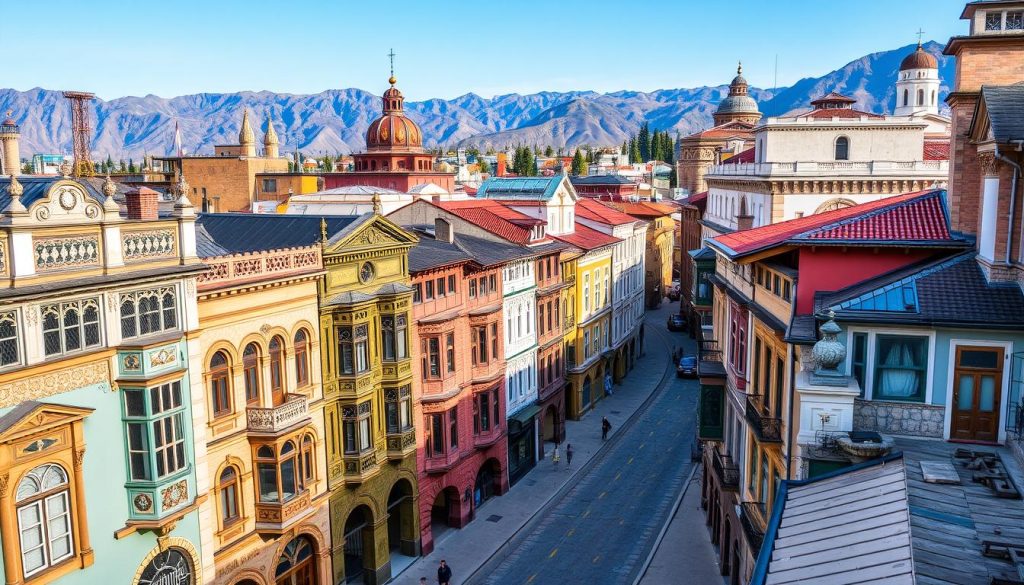
The Rich History of Gyumri
Gyumri’s history is like a rich tapestry, filled with ancient stories and a modern rebirth. It’s Armenia’s second-largest city, with roots dating back to the fourth century BCE. Exploring Gyumri’s historic buildings reveals a city’s deep cultural significance, shaped by its architecture and people’s strength.
From Ancient Roots to Modern Revival
Gyumri started as a small settlement and grew into a key military and trading center. Its location helped blend cultures and trade routes. Despite a major earthquake in 1988, the city’s people showed great resilience, leading to a modern revival.
Walking tours here are filled with stories, as each brick and arch has its own tale. It’s a journey through time, showing how the city’s past and present intertwine.
Significance as a Military and Trading Outpost
Gyumri’s location was crucial for military and trade throughout history. It became a center for traders and soldiers, enriching its culture. Today, visitors can see the beauty of its historic district and feel the echoes of its past.
Walking through its streets, you’ll notice different architectural styles. These reflect the city’s artistic and practical sides, showing how it has adapted over the centuries.
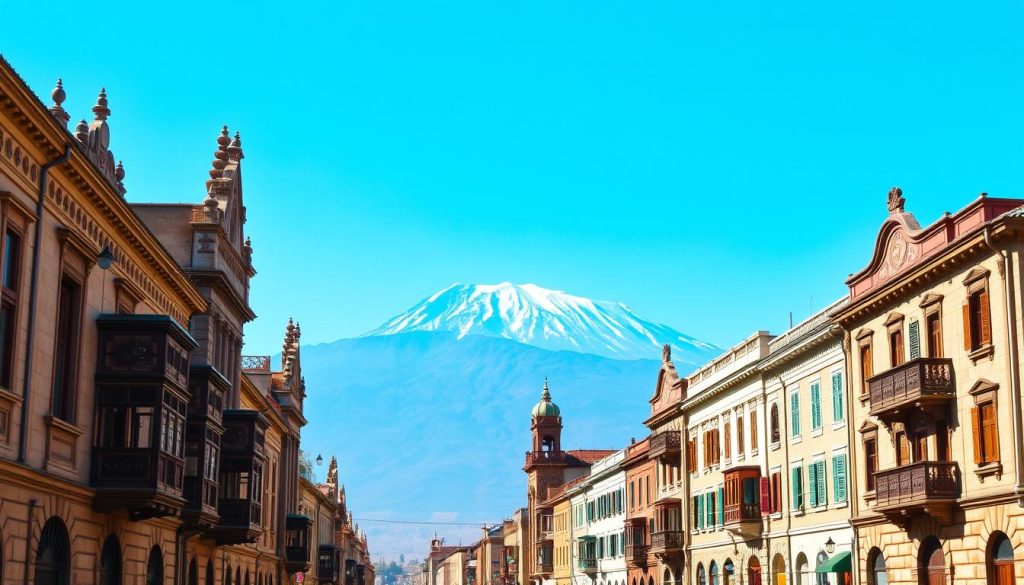
| Aspect | Details |
|---|---|
| City Age | Founded in the 4th century BCE |
| Population | Over 100,000 residents |
| Historic District | Kumayri with over 1,000 preserved buildings |
| Key Square | Vartanants Square, surrounded by 19th-century buildings |
| Tour Options | 1 guided walking tour available |
| Reviews | 7 reviews highlighting cultural significance |
Exploring Gyumri’s Architectural Styles
Gyumri is known for its diverse architectural styles. These styles tell the city’s history and cultural richness. Walking through Gyumri, you’ll see how old traditions meet Soviet designs.
Traditional Armenian Architecture
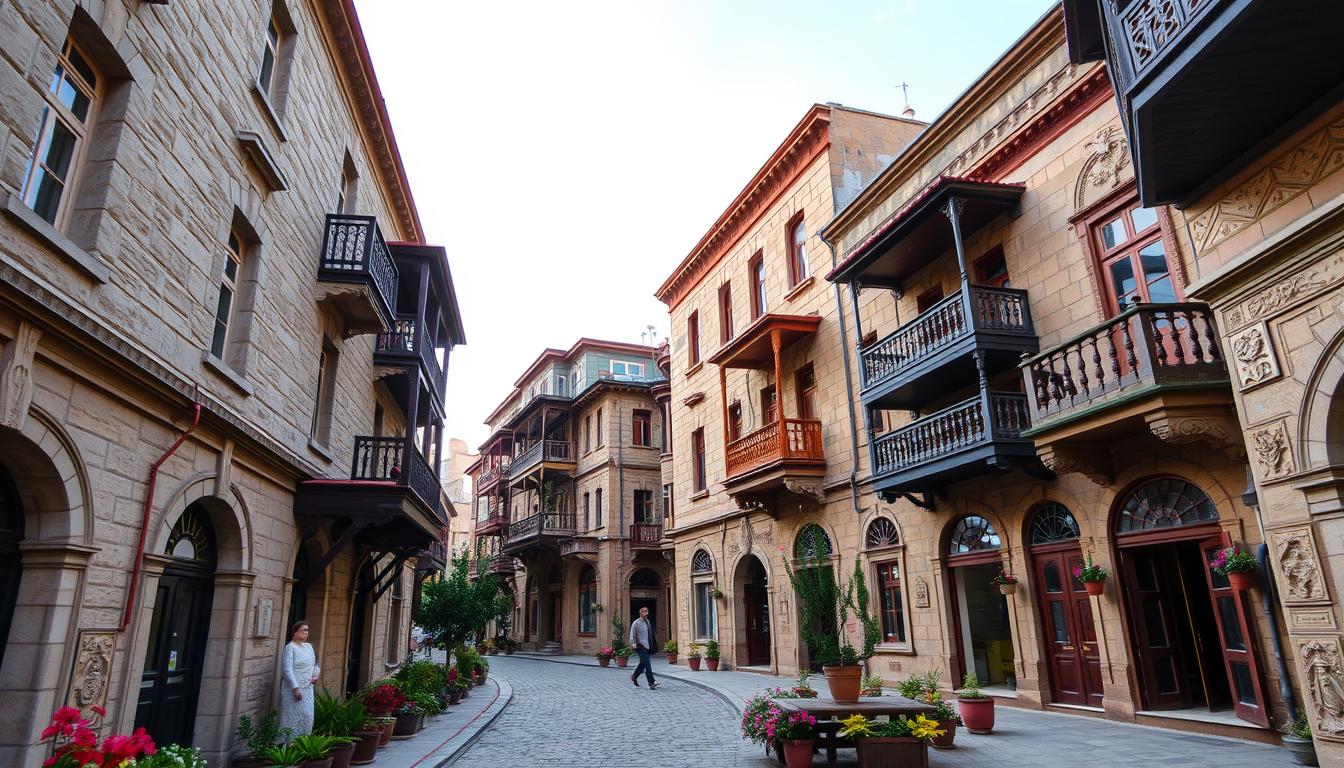
In Gyumri, traditional Armenian architecture is a big deal. It uses volcanic tuff, giving buildings a unique look and feel. You’ll find beautiful doorways and arches that show the city’s long design history.
These buildings are more than just structures. They hold deep cultural value and show Gyumri’s ability to endure through time.
Soviet-Era Influence
The Soviet era changed Gyumri’s look with modernist styles. Buildings became more angular and functional. This mix of old and new makes Gyumri’s skyline special.
Walking around, you’ll see how these styles blend. It’s a great way to understand Gyumri’s growth over the years.
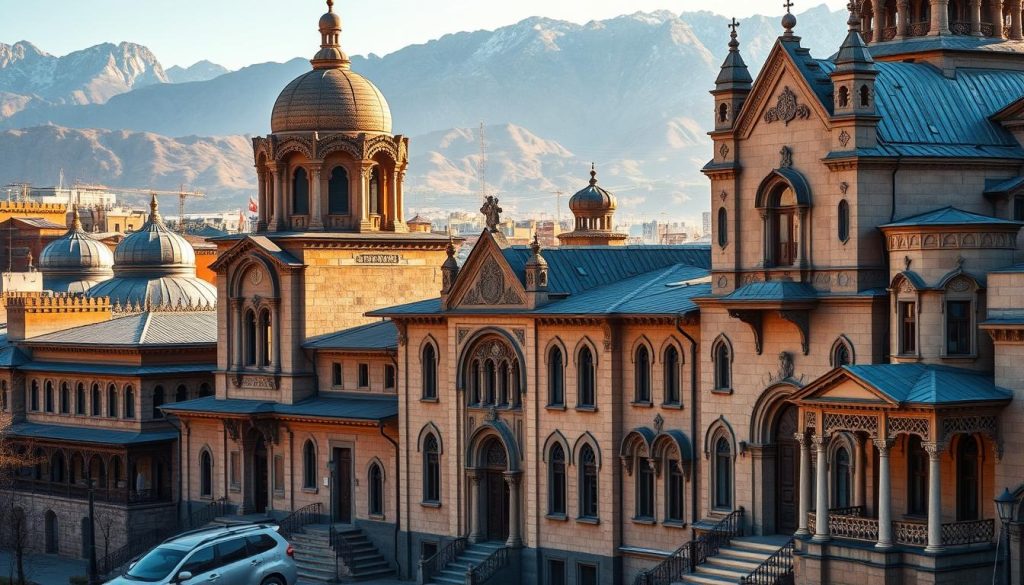
Why Take a Gyumri Architecture Walking Tour
A Gyumri architecture walking tour lets you dive into the city’s rich history. You’ll find hidden gems and a vibrant culture that makes Gyumri special. This tour highlights the city’s architectural beauty and the stories behind it.
The tour begins at Vartanants Square, known for its 19th-century buildings and the Church of the Holy Savior. You’ll see traditional Armenian homes that show the city’s charm. These homes give a peek into Gyumri’s cultural heart.
Kumayri’s historical district is a must-see, with over 1,000 buildings from the 18th and 19th centuries. Guides will share stories of Gyumri’s strength, even after the 1988 earthquake. This adds depth to your tour experience.
Don’t miss the museums like the Mher Mkrtchyan Museum and the Dzitoghtsyan House. They offer a deep dive into Gyumri’s history and culture. This tour is the best way to see Gyumri’s mix of history, culture, and hospitality.
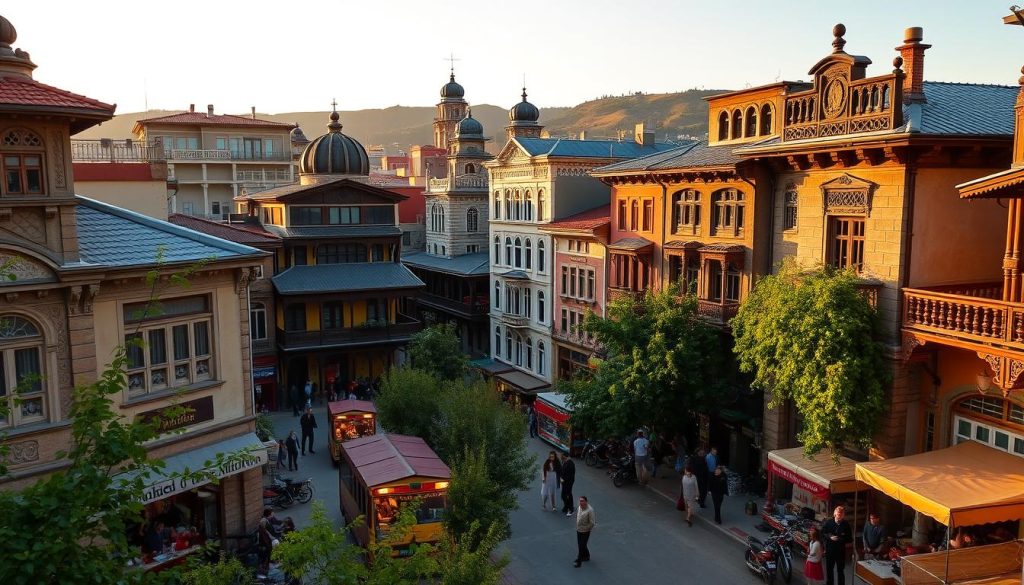
| Tour Feature | Description |
|---|---|
| Starting Location | Vartanants Square |
| Historical District | Kumayri with over 1,000 preserved buildings |
| Languages Available | English |
| Tour Highlights | Church of the Holy Savior, Mher Mkrtchyan Museum |
| Experience Offered | Insight into Gyumri’s resilience and cultural significance |
| Popular Attractions | Mother Armenia Monument, Harichavank Monastery |
Guided Architecture Walk in Gyumri
A guided architecture walk in Gyumri lets you dive into the city’s rich history. Local guides make each landmark come alive with stories and history. It’s a fun and learning experience.
Meet Local Experts
On the guided walk, you’ll meet experts who know Gyumri’s architecture inside out. They share interesting facts and stories about the buildings. You’ll discover hidden spots and learn about the city’s unique architecture.
What to Expect on the Tour
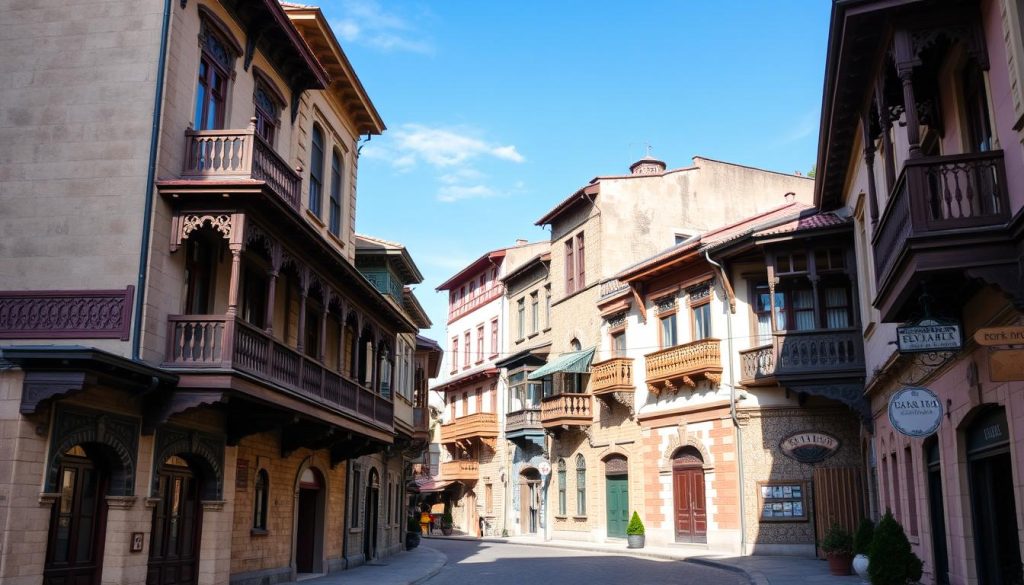
Your walking tour in Gyumri will take you to amazing sites. You’ll see buildings from the 18th and 19th centuries. Expect to taste local food and learn about Gyumretsis’ lives.
Highlights include historic religious buildings and the blacksmith’s house. The tour lasts about two hours. It’s a great way to see Gyumri’s beauty.
| Feature | Details |
|---|---|
| Duration | 2 hours |
| Focus | 18th-19th century architecture, local cuisine, hospitality |
| Content | Historic sites, lifestyle insights, blacksmith’s house |
| Included Services | Tour guide and translation services |
| Availability | All year round |
Top Architectural Landmarks in Gyumri
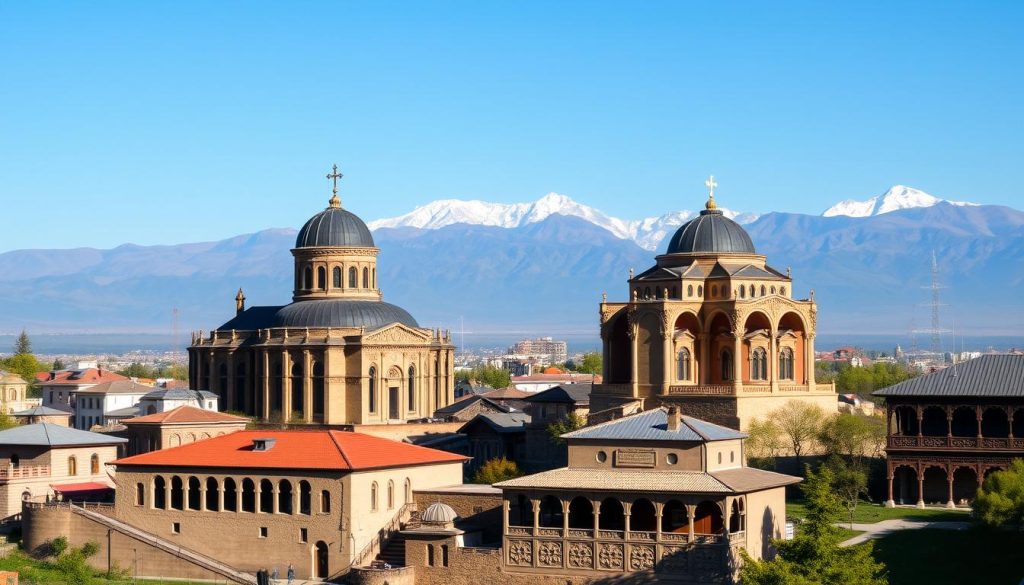
Gyumri is a treasure trove of architectural landmarks. These landmarks show the city’s vibrant history and culture. As you explore historic Gyumri on foot, you’ll see stunning examples of both historic and modern architecture. These buildings tell the story of Gyumri’s resilience and revival.
Prominent Historic Buildings
- The Black Fortress: This iconic fortress offers panoramic views. It stands as a testament to Gyumri’s rich heritage.
- Harichavank Monastery: A serene retreat dating back to the 7th century, this monastery is an architectural gem. It has deep religious significance.
- The Mother Armenia Monument: A powerful symbol of peace and strength, this monument invites reflection. It has an imposing presence.
- Siraz House Museum: Celebrating the life of poet Hovhannes Shiraz, this museum attracts literature lovers. It has a charming ambiance.
Modern Architectural Highlights
- Museum of National Architecture and Urban Life: This museum showcases Gyumri’s architectural evolution. It provides insight into the urban landscape.
- Aslamazyan Sisters House-Museum: A delightful blend of art and history, this museum highlights the works of local artists. It is set in a beautiful historical setting.
To truly appreciate these architectural landmarks in Gyumri, it’s essential to engage with the city’s stories and experiences. Each visit allows you to glimpse the past and witness the city’s ongoing transformation.
| Landmark | Year Established | Architectural Style | Significance |
|---|---|---|---|
| The Black Fortress | 19th Century | Fortification | Historic Archaeological Site |
| Harichavank Monastery | 7th Century | Medieval Armenian | Religious Retreat |
| Mother Armenia Monument | 1967 | Modern | Symbol of Strength |
| Siraz House Museum | 20th Century | Neoclassical | Literary Heritage |
| Museum of National Architecture | 2012 | Contemporary | Architectural Education |
Discover Gyumri’s Architecture: Unique Features
Exploring the city, you’ll see Gyumri’s architecture is special. The choice of materials and designs is key. It shapes the look and function of buildings. This landscape is not just beautiful but also tells Gyumri’s story.
Materials and Designs
The use of tuff stone makes Gyumri’s buildings stand out. It also keeps them warm. The mix of traditional Armenian and modern styles is unique. It shows Gyumri’s rich culture and history.
The Use of Color and Ornamentation
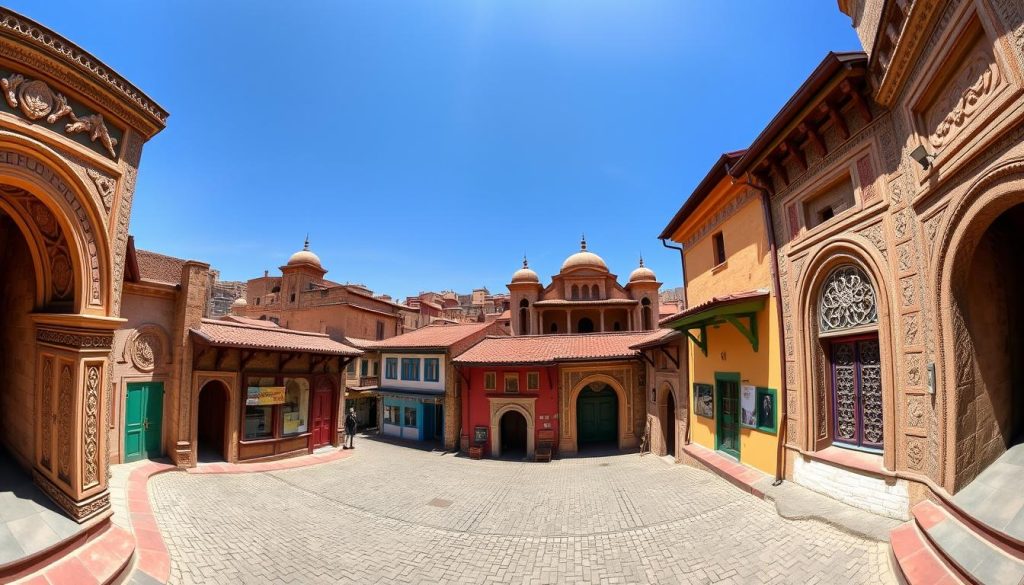
Color and ornamentation add to Gyumri’s beauty. Buildings are painted in bright colors and have detailed carvings. These features show the skill of local craftsmen. Walking through the city, you’ll see how color and detail make it charming.
| Element | Description |
|---|---|
| Materials | Local tuff stone offers durability and thermal efficiency. |
| Design | A mix of traditional and modern influences reflects cultural diversity. |
| Color | Bright hues make buildings visually striking. |
| Ornamentation | Intricate carvings showcase skilled craftsmanship. |
Exploring Historic Gyumri on Foot
To truly appreciate Gyumri’s beauty, explore it on foot. Walking through cobblestone streets, you’ll find charming cafes and lively markets. Each corner tells a story of the city’s spirit and culture.
The old town is a treasure trove of architecture. You’ll see traditional Armenian buildings and Soviet-era designs. This makes your visit even more special.
Experience the Charm of the Old Town
Gyumri’s old town is full of charm. Every building has a story to tell, with beautiful facades that show the city’s history. Walking here, you’ll find local treasures and meet artisans.
This journey combines history and urban charm. It’s why many say it’s the best architecture tour in Gyumri.
Photo Opportunities Along the Way
Your tour is a photographer’s dream. You’ll see historic sculptures, vibrant murals, and stunning architecture. Every photo captures Gyumri’s heritage and charm.
Whether you love photography or just enjoy taking pictures, you’ll find endless beauty. Exploring Gyumri on foot is unforgettable.