Explore Tatev Monastery Architecture Highlights
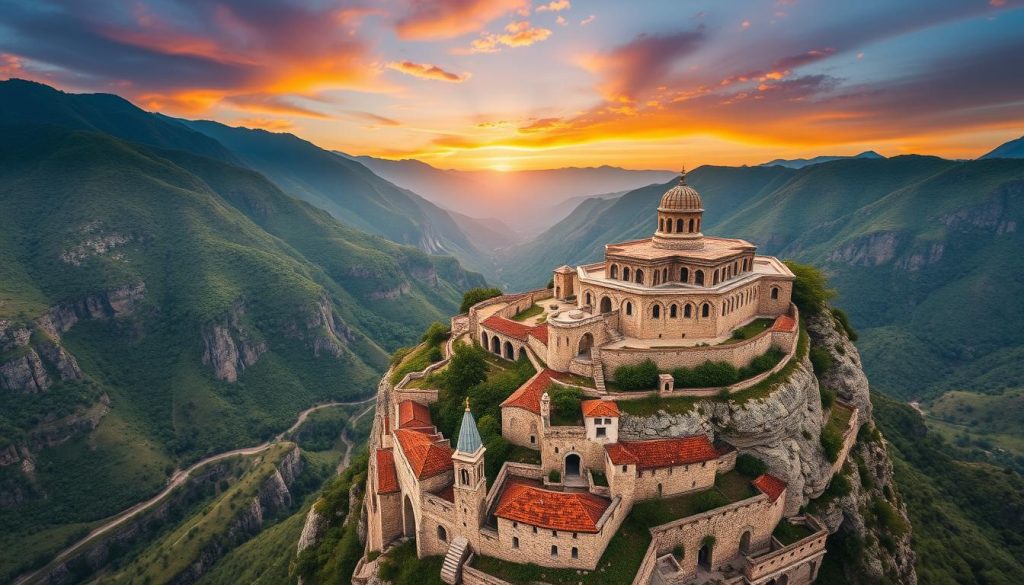
What secrets lie within the walls of the Tatev Monastery that have captivated visitors for centuries? Founded in 895 AD by Prince Ashot Bagratuni, this Armenian medieval monastic complex is a true architectural marvel. It sits on the edge of a dramatic gorge, offering a glimpse into a rich history.
With the “Wings of Tatev” cable car spanning 5 kilometers, it’s now easier to reach. This has made it a key spot for eco and adventure tourism. As you explore, you’ll see how nature and design come together, making Tatev monastery architecture a masterpiece.
Introduction to Tatev Monastery
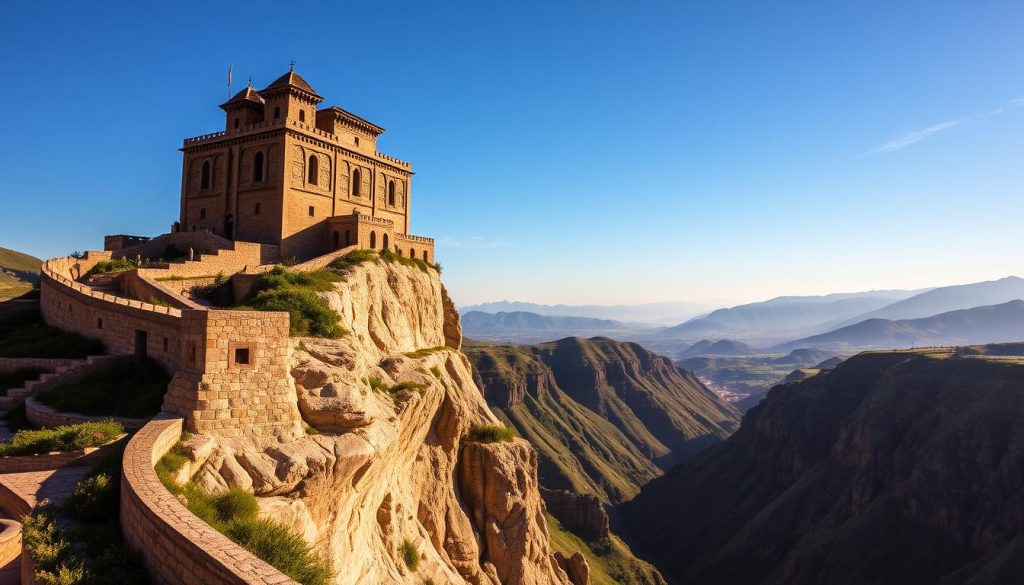
Tatev Monastery is a key historical landmark in Armenia, highlighting the Armenian heritage. It was founded in the 9th century. This place is not just a church but also a symbol of Armenian culture. It sits on the edge of the Vorotan River gorge, offering stunning views to visitors from all over.
The monastery’s location at 39°22′46″N 46°15′00″E has made it historically significant. It has churches, a library, and administrative buildings. These structures show the unique Armenian architectural style. In the early 11th century, it housed about 1,000 monks, becoming a hub for learning and spirituality.
The monastery is famous for its breathtaking views and legends. The name “Tatev” means aspiration and reverence. It’s linked to early Christianity through stories of miraculous flights and legendary figures. Despite facing many challenges, Tatev Monastery remains a symbol of Armenian culture.
| Feature | Details |
|---|---|
| Foundation Year | 9th Century |
| Location | Syunik Region, Armenia |
| Architectural Style | Armenian |
| Notable Structures | Three churches, library, refectory, bell tower, mausoleum |
| Legends | Stories of miraculous events and historical figures |
| Visitors’ Interest | Scenic views, historical significance, architectural beauty |
Historical Significance of Tatev Monastery
Tatev Monastery is a key part of Armenian monastic history. It’s known for its stunning architecture and deep historical value. Founded between 895 and 906 AD, it became a major center of learning and spirituality in the 14th and 15th centuries.
Scholars and thinkers from all over came to this place. They helped make it a beacon of knowledge and culture.
The monastery has many amazing buildings. The St. Gregory the Illuminator Temple, built in 848, is one of the oldest. The Church of Pogos and Petros, built in the 7th century style, shows the skill of its builders. The Gavazan, built in 904, is a unique example of medieval craftsmanship.
Tatev has faced many challenges, like the 1931 earthquake. But it has always stood strong as a spiritual center for the Armenian Apostolic Church. Today, visitors can see the detailed carvings and the beautiful views around the monastery. It’s still a place of learning and spirituality.
| Structure | Year Built | Significance |
|---|---|---|
| St. Gregory the Illuminator Temple | 848 | Most ancient church at Tatev, reflecting early Christian architecture. |
| Church of Pogos and Petros | Unknown | Replicates domed basilica style, showcasing medieval design. |
| Gavazan (Staff) | 904 | A unique tilting pillar demonstrating engineering skills of creators. |
| St. Astvatsatsin Church | 1087 | A rare example of Armenian architecture with vertically oriented proportions. |
Tatev Monastery Architecture
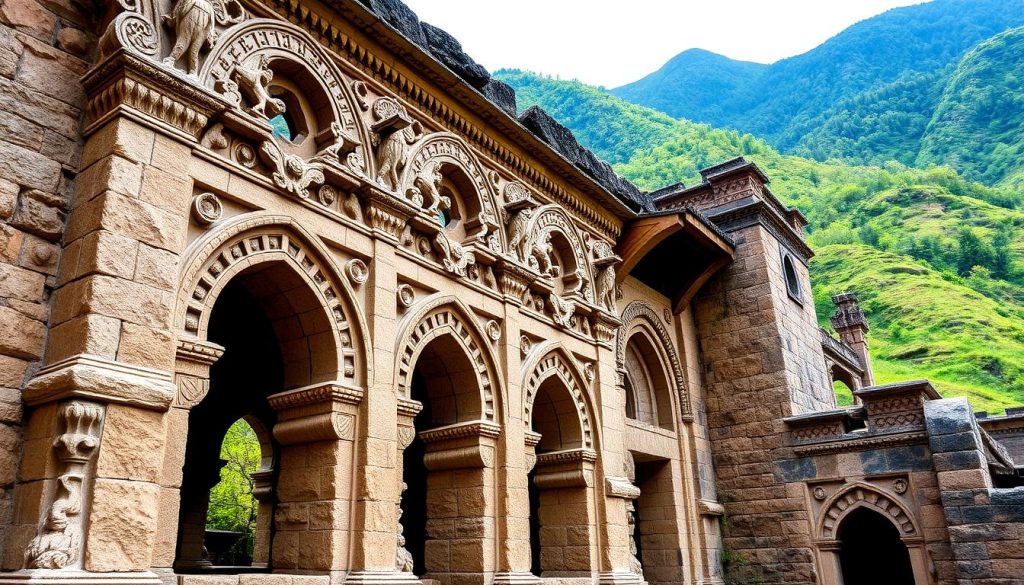
Tatev Monastery is a masterpiece of medieval church design. It shows architectural genius that lasts for centuries. Built from the 6th to the 18th century, it combines Armenian and Byzantine styles. The detailed craftsmanship and artistic touch are evident in every corner.
Overview of Architectural Styles
The monastery’s design is a mix of styles. This mix helps us understand Armenia’s culture and history. Key features include:
- Armenian Design: Unique wooden structures and vaulted ceilings show the medieval style.
- Byzantine Influences: The design has distinct domes and columns, showing Byzantine touches.
- Fortifications: The walls around the monastery were built for defense, showing its strategic value.
Unique Monastery Structure and Features
The monastery has many buildings for different uses. Some notable features are:
- Main Church: Dedicated to Sts. Peter and Paul, built in the 9th century.
- Chapel of the Virgin: A key structure from 1087, near the main entrance.
- P porch-Campanile: Built in the 18th century, showing the changing architectural tastes.
Since 1970, efforts have focused on preserving Tatev’s architecture. This work shows the monastery’s enduring value and cultural importance. With its natural beauty, Tatev Monastery offers a unique blend of history and architecture.
Key Structures within the Monastery Complex
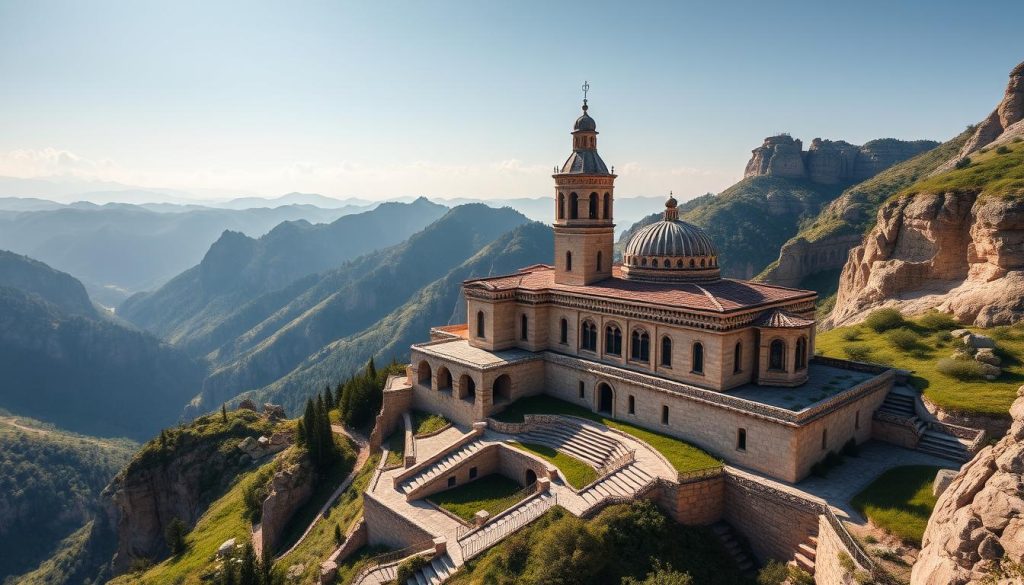
The Tatev Monastery is home to many important structures. The Surb Astvatsatsin Church and St. Gregory Church are known for their stunning designs. The Gavazan is admired for its engineering skills.
Surb Astvatsatsin Church
Built in 1087, the Surb Astvatsatsin Church is a key part of Armenian architecture. It was built over an ancient tomb. Its design shows the skill of the builders back then.
St. Gregory Church
The St. Gregory Church is the oldest in Tatev Monastery, dating back to 848. It’s a symbol of early Armenian religious architecture. Its beauty and details attract many visitors.
The Gavazan: An Architectural Marvel
The Gavazan, built in 904, is a marvel of Tatev’s architecture. It’s an oscillating pillar that fascinates engineers and architects. It shows the perfect mix of function and art in religious buildings.
Artistic Elements and Carvings
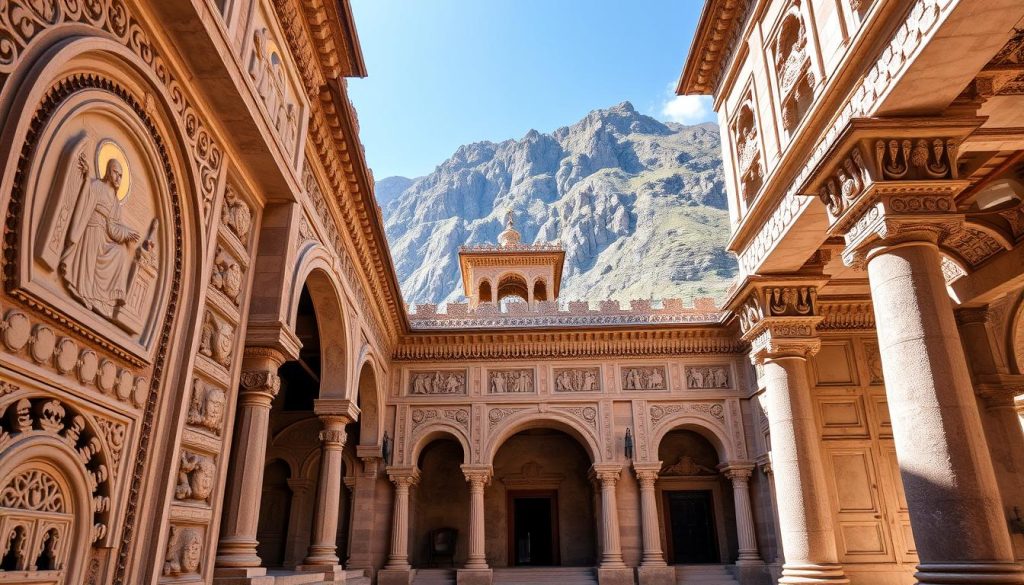
The artistic parts of Tatev tell stories of faith and heritage. The detailed stone carvings guide you through Armenian history and beliefs. They make your visit more meaningful and enriching.
Intricate Stone Carvings
Tatev Monastery’s stone carvings are amazing. They show biblical and historical stories. Each carving has its own story or deep religious meaning.
These carvings make the monastery beautiful. They invite visitors to explore Armenian religious art.
Symbolism in Decorative Arts
The decorations at Tatev have deep meanings. They highlight faith, wisdom, and the link between Armenian identity and spirituality. These elements are more than just decorations.
They help teach visitors about Christianity. They make the monastery a place of learning and reflection.
| Feature | Description |
|---|---|
| Stone Carvings | Detailed depictions of biblical scenes and historical events. |
| Symbolism | Motifs reflect themes of faith, wisdom, and Armenian heritage. |
| Artisan Techniques | Handcrafted sculptures showcasing expert craftsmanship. |
| Cultural Impact | Artistic elements serve educational purposes for visitors. |
Architectural Influence of Tatev Monastery
The Tatev Monastery’s architecture is more than its beautiful stone walls. Built in the 9th century, it’s a key part of Armenian monastic history. It shows the skill of medieval Armenian builders.
This monastery was a major center of learning in the 14th and 15th centuries. It had a library with over 10,000 manuscripts. This made it a place where knowledge and traditions were kept alive.
The Gavazan, an oscillating pillar, is a symbol of this influence. Built in 906 AD, it warned of earthquakes. Restoration work has kept this marvel alive, showing Armenia’s dedication to its heritage.
Tatev Monastery’s architecture is a treasure in Armenian history. It teaches us about the culture and values of the past. It’s a reminder of the importance of preserving our heritage.
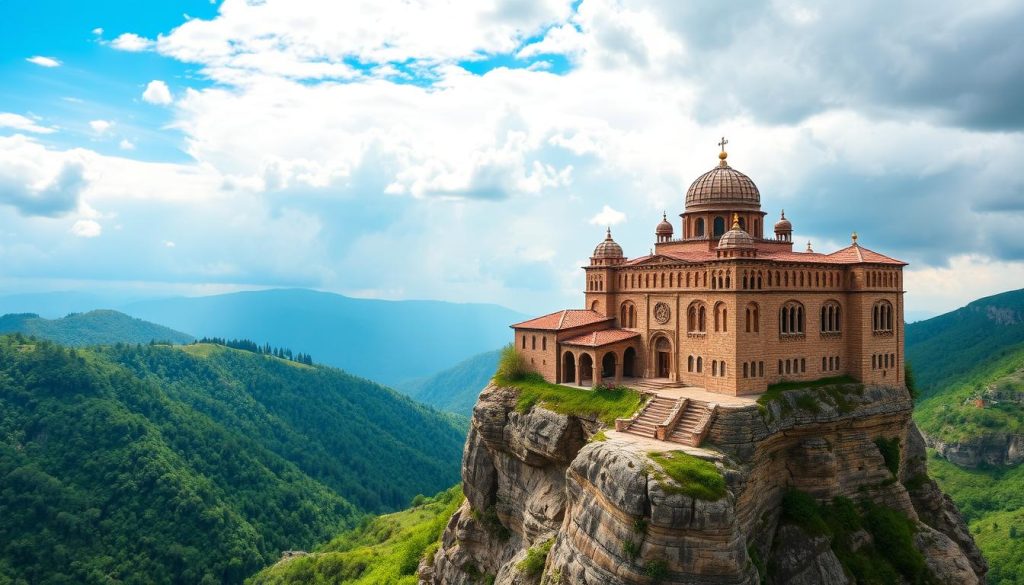
Exploring the Surrounding Landscape
The area around Tatev Monastery is filled with natural beauty. As you explore Tatev, you’ll see the stunning Vorotan River Gorge views. These views add to the monastery’s peaceful vibe.
Breathtaking Views of the Vorotan River Gorge
The Vorotan River Gorge has steep cliffs and greenery. It makes Tatev Monastery even more spiritual. The gorge’s landscapes beautifully surround the ancient buildings, showing nature and human creations can live together.
From different spots, you can take amazing photos. These views make your visit unforgettable.
Nature Trails and Hiking Opportunities
There are many nature trails near the monastery. These trails let you explore the area’s plants and animals. You can choose easy walks or tough hikes, depending on what you like.
These paths offer a chance to breathe fresh air and see beautiful views. Everyone can find something they enjoy.
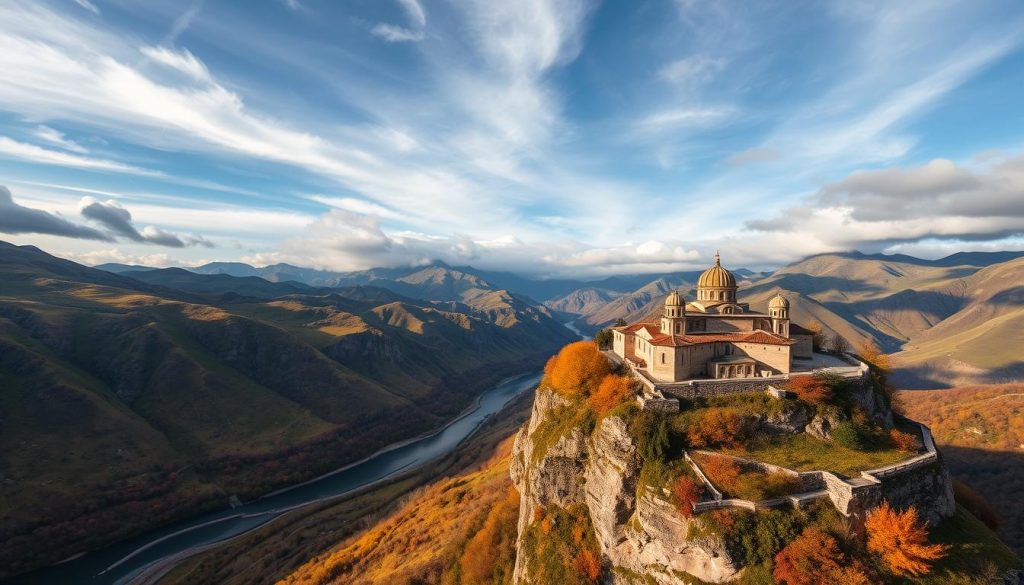
Visiting Tatev: Tips and Recommendations
Planning your trip to Tatev Monastery? Think about the best times for amazing photos and the travel options to enjoy your journey. These tips will make your visit unforgettable and help you capture the beauty of this historic site.
Best Times to Visit for Photography
The best times for photos at Tatev are early morning or late afternoon. These hours give you the best light, making your photos stunning. The warm light adds to the beauty of your photos, making your visit even more special.
How to Get There: Travel Options
There are many ways to get to Tatev. The aerial tramway, Wings of Tatev, offers a thrilling ride with great views. It’s the longest reversible ropeway in the world, taking you high over the gorge.
Driving from Yerevan to Tatev is scenic and takes about 4.5 hours. Taxis are quicker, costing $50 to $65 and taking 3.5 hours. There are also tour packages, from day trips to overnight stays, that include nearby attractions and culture.
The Wings of Tatev runs all year, making it easy to visit any time. A one-way ticket costs about 5,500 AMD, and a round-trip is around 7,000 AMD. For a full experience, two-day tours include everything you need, so you won’t miss out on anything.
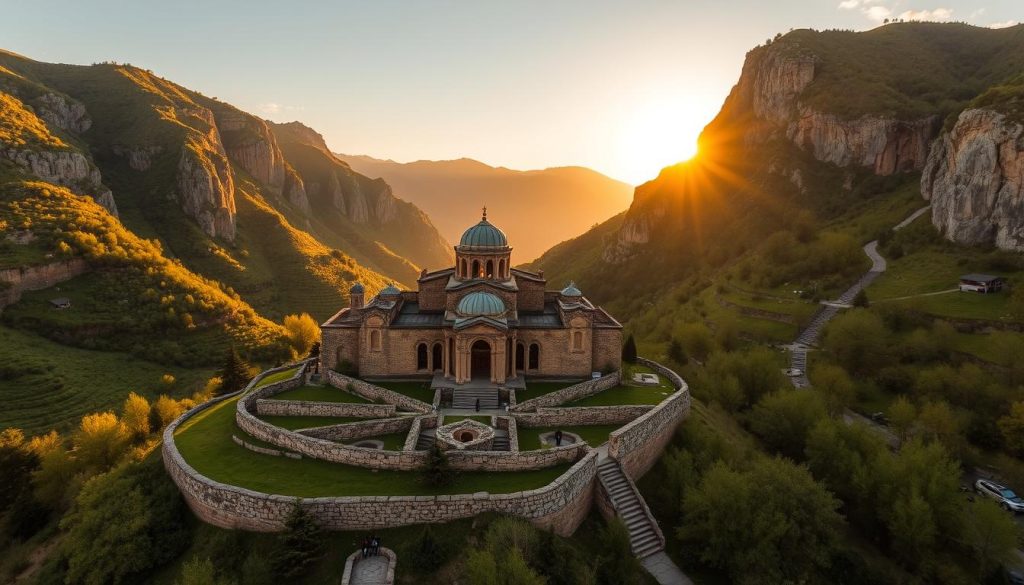
Restoration Efforts and Modern Enhancements
The restoration at Tatev Monastery is all about keeping heritage alive while making visits better. They work hard to fix the damage from natural disasters and past fixes gone wrong. They focus on urgent repairs like the bell tower base and the St. Paul and St. Peter Church dome.
UNESCO says 30% of Armenia’s cultural sites are at risk. The Tatev Revival Project is a key effort to save these treasures. They carefully remove old, bad cement and salt from the ancient walls.
Modern touches make Tatev more welcoming to visitors. This helps boost tourism in nearby villages. From 1998 to 2003, Armenia saw a huge jump in foreign tourists, from 31,800 to over 206,000. Making cultural experiences better can draw even more visitors, as studies show.
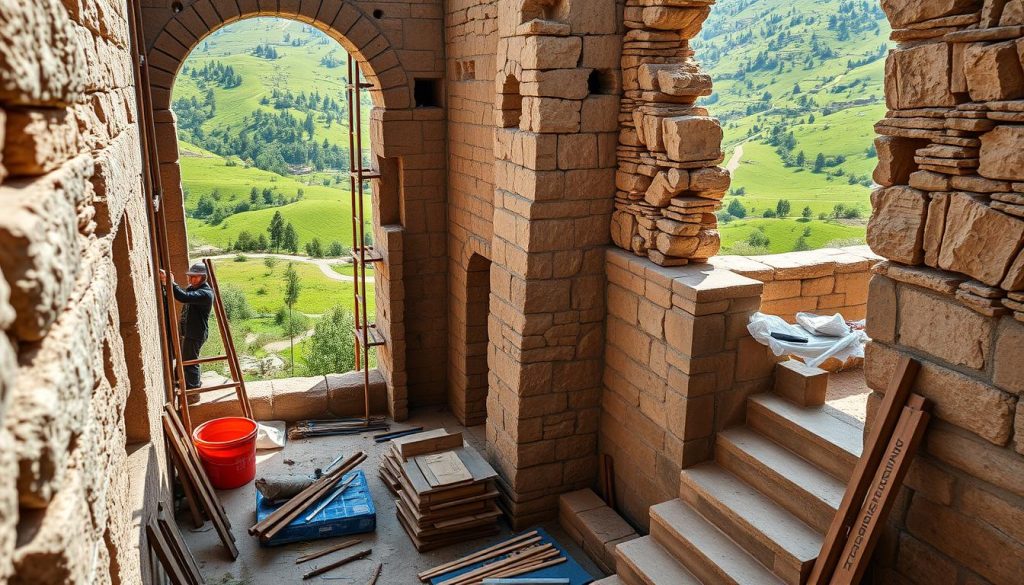
Experts stress the need for careful restoration, like the St. Paul and St. Peter cathedral. These efforts at Tatev are not just about saving history. They also aim to attract people worldwide and make them appreciate Armenia’s culture.
| Aspect | Details |
|---|---|
| Restoration Project | Tatev Revival Project, addressing structural integrity and preservation efforts. |
| Visitor Experience | Enhanced accessibility and tourism infrastructure for a better visitor experience. |
| Tourism Growth | Foreign tourists increased from 31,800 in 1998 to over 206,000 in 2003. |
| Urgent Repairs | Focus on the bell tower base, church dome, and perimeter fence. |
| Community Impact | Aim to develop a viable tourism industry for surrounding villages. |
UNESCO World Heritage Site Status
Tatev Monastery is a UNESCO World Heritage Site, showing Armenia’s rich culture. This status highlights the importance of preserving historical sites. Tatev is a key example of medieval architecture and its religious importance.
Importance of Preservation
Keeping Tatev Monastery safe is vital. It holds stories, architectural styles, and art unique to Armenia. Efforts to restore it ensure its beauty and importance for future generations.
Contribution to Global Cultural Heritage
Tatev Monastery’s UNESCO status makes it a global cultural treasure. It connects architecture, history, and spirituality. Visitors learn about Armenia’s role in religious architecture and shared human stories.
Conclusion
Tatev Monastery is a marvel of architecture and a symbol of Armenian culture. Built from 895 to 906, it showcases Armenia’s spiritual and artistic side. The Gavazan Siun pillar, built in 904, is just one example of the monastery’s detailed designs.
Visiting Tatev Monastery is more than seeing its beauty. It’s about diving into the stories of every stone and carving. These stories reflect the Armenian identity. The aerial tramway ‘Wings of Tatev’ offers breathtaking views of the Vorotan River Gorge and Devil’s Bridge.
For the best experience, visit Tatev Monastery from April to October. The weather is perfect for exploring. As you explore, the monastery’s history and beauty will stay with you, making your trip unforgettable.