Explore Tatev Monastery’s Rich History
Have you ever thought about how one monastery could change a nation’s culture and faith? Tatev Monastery, in Armenia’s rough terrain, is a stunning example. It’s not just about its views and art; it’s a deep dive into history that spans over a thousand years. Located in the beautiful Syunik region, it shows how Tatev monastery’s history is key to understanding Armenia’s cultural wealth.
Founded in 895 AD, Tatev flourished in the 13th and 14th centuries. It was a spiritual and political center in the Syunik principality. The “Wings of Tatev” cableway, the world’s longest reversible cableway, offers a breathtaking ride. It takes you over 6 kilometers through amazing landscapes, revealing the monastery’s incredible stories.
Introduction to Tatev Monastery
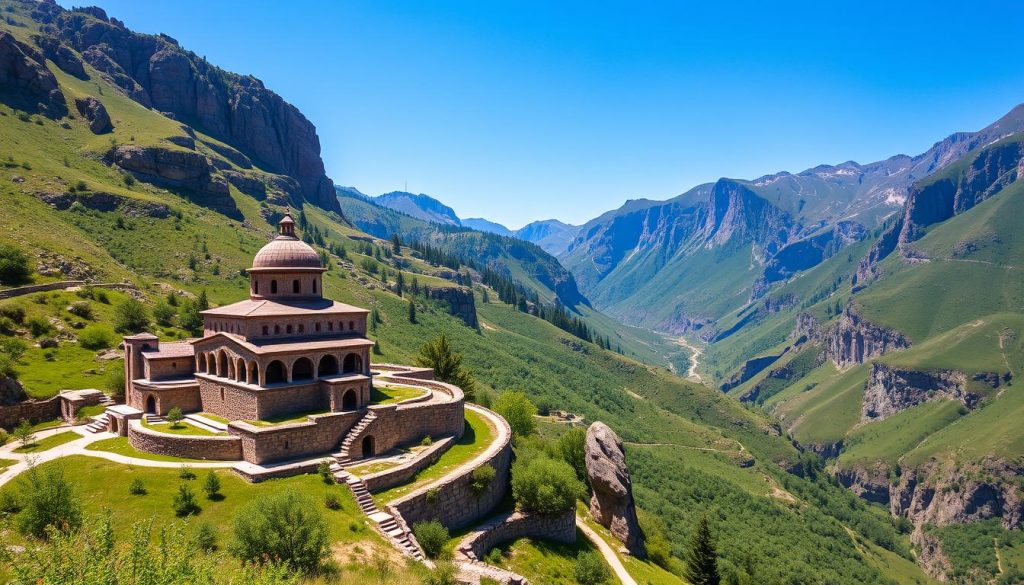
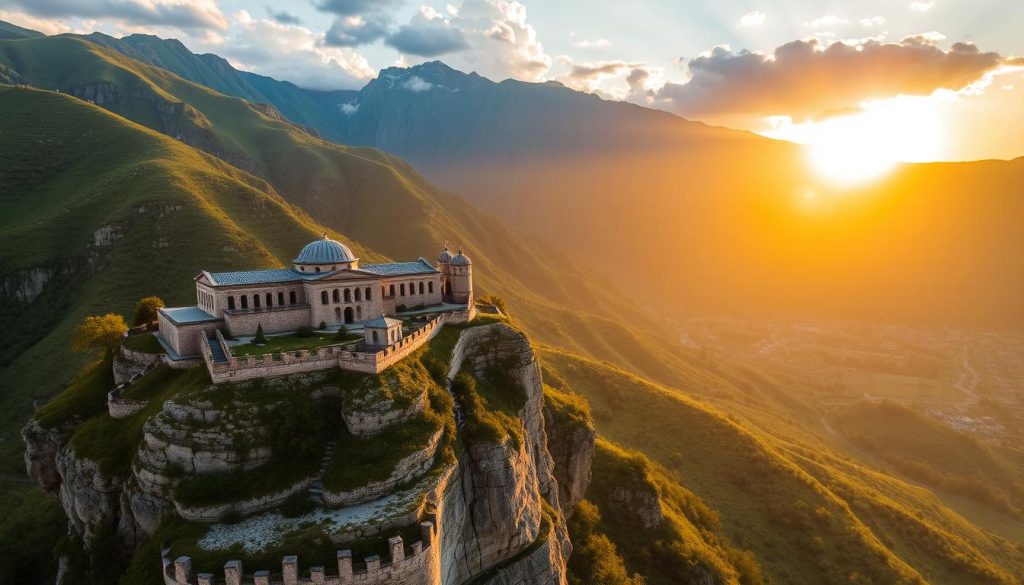
Tatev Monastery is in the heart of Armenia’s Syunik region. It’s a key part of Armenia’s spiritual history. Located on the steep banks of the Vorotan River, it’s about 250 kilometers south of Yerevan. The monastery’s high spot offers amazing views, making it even more special.
As a major Christian monastic complex since the 9th century, Tatev is more than just a sight. It’s a place of deep religious importance.
Overview of its Location and Significance
The monastery’s location is key to its historical and cultural value. It overlooks a deep gorge and has been a bishopric seat of Syunik. In the 14th and 15th centuries, it was home to the University of Tatev, a hub of learning.
The complex has three churches, administrative buildings, and homes for monks. It shows the monastery’s diverse role over time.
Why Tatev is a Must-See Destination
Visiting Tatev is more than just looking at old buildings. It offers a chance to find spiritual balance and learn about culture and history. The Wings of Tatev aerial tramway makes the visit even better, connecting you to the site’s beauty and significance.
This place lets you connect with the past while enjoying stunning views. Known as the pearl of Armenian medieval architecture, Tatev represents resilience and faith. It’s a must-see for anyone exploring Armenia.
Tatev Monastery History
Tatev Monastery was founded in the 9th century. It is a key part of Armenia’s rich culture and spirituality. This Silk Road landmark was not just a religious place. It also played a big role in education in the area.
The monastery’s early years were shaped by donations and the hard work of many people.
Founding and Early Development
In the early 11th century, the monastery became a center for learning. It attracted around 1,000 monks and many skilled artisans. This made Tatev Monastery famous in medieval times.
But, the monastery faced many challenges. In 1044, it was almost destroyed by armed forces. The St. Gregory Church and other buildings were damaged. Luckily, the monastery was rebuilt quickly.
Later, in the 12th century, the Seljuk invasions brought more hardship. But, Tatev Monastery kept going.
Significant Donations and Contributions
Patrons were crucial to the monastery’s growth. Their donations helped Tatev become a hub of Armenian culture. In the 14th century, a university was even established there.
The library at its peak had over 10,000 manuscripts. This showed the high level of Armenian medieval architecture. Despite many setbacks, Tatev Monastery was revived in the late 13th century. This was thanks to Bishop Stepanos’ leadership.
The Architectural Marvel of Tatev
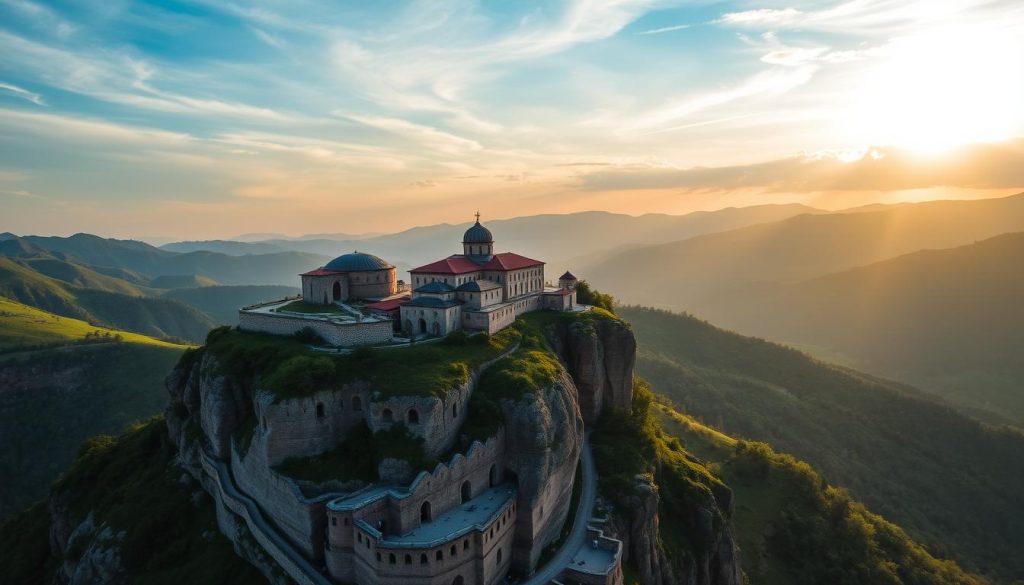
Tatev Monastery is a marvel of medieval architecture, showing Armenia’s rich culture. Built from 895 to 906, it has detailed designs that highlight its history and spirituality. Exploring this site, you’ll see how its structures showcase architectural skill and the traditions of the time.
Medieval Architecture and Design Elements
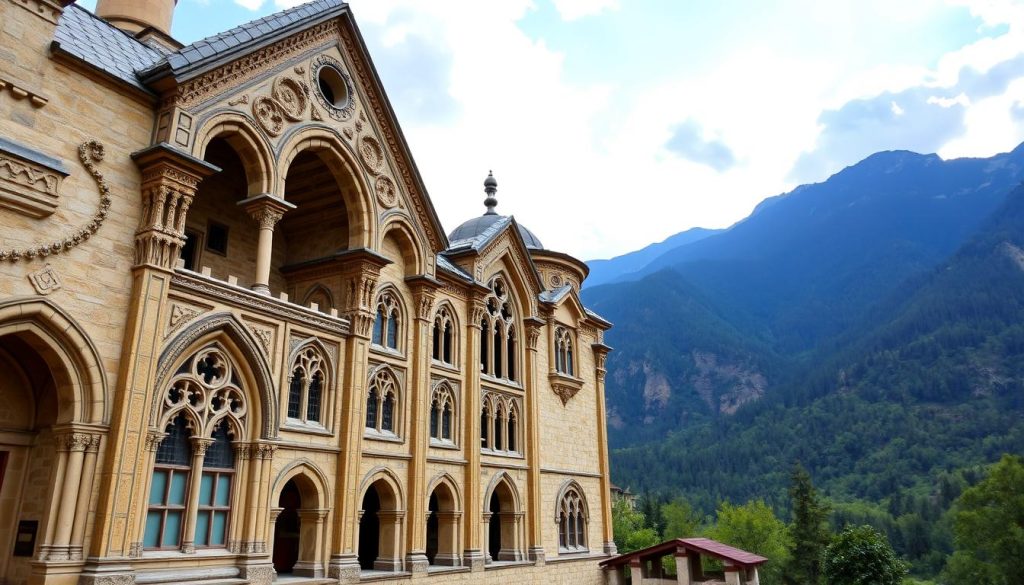
The monastery’s design blends with nature, creating a breathtaking view. The Church of Saints Peter and Paul stands out with its dome and detailed reliefs. Its construction shows the advanced skills of medieval builders, making it last for centuries.
The Unique Structures within the Monastery Complex
The Tatev Monastery Complex has many important buildings, like the Church of Saint Gregory the Illuminator. Each building has its own role, showing Armenia’s heritage. The Gavazan, an eight-meter pillar, warns of earthquakes and threats, blending function with art.
Role in Armenian Culture and Education
The Tatev Monastery has been key in shaping Armenia’s culture. Founded in 895 AD, it became a major center for learning and faith. Scholars from all over came to study and grow spiritually.
Establishment of Tatev University
In the 13th century, Tatev University was founded. This was a big step for the monastery’s education legacy. It was a place where scholars could dive deep into their studies.
The library was filled with important texts. These helped scholars learn and grow. It was a place of knowledge and discovery.
Influence as a Religious and Political Center
Tatev was also a center of religion and politics. It played a big role in the Syunik principality’s governance. Church leaders and monks helped shape policies and guide the community.
The Tatev monastery significance went beyond its walls. It touched the lives of many, creating a strong sense of community.

Historical Challenges Faced by Tatev Monastery
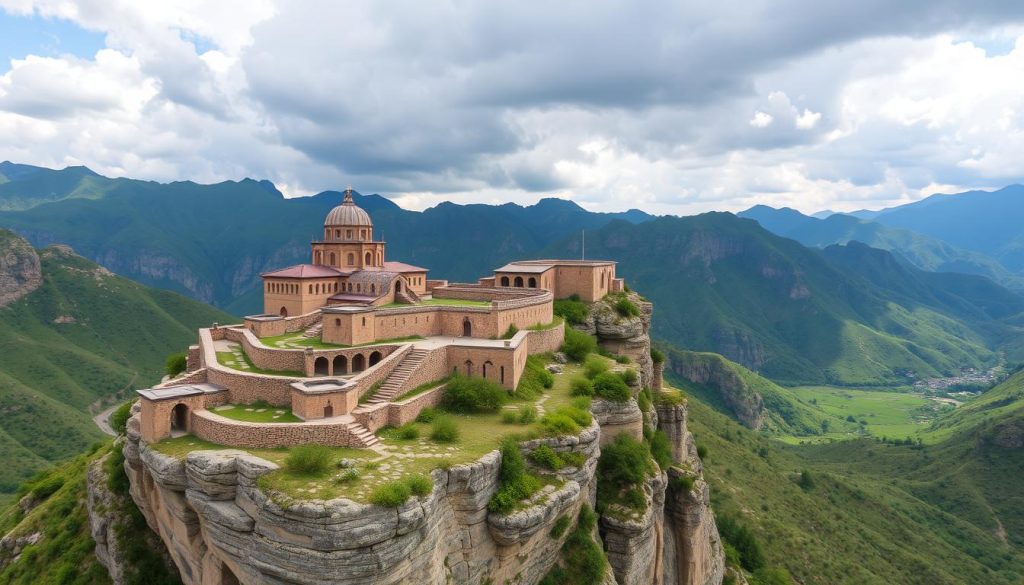
Tatev Monastery has faced many challenges over the years. Earthquakes have damaged its buildings. Invading forces have also threatened its cultural treasures, causing lasting damage.
Natural Disasters: Earthquakes and Their Impact
Several earthquakes have hit Tatev Monastery, with the worst in 1931. This earthquake destroyed parts of the monastery. The Soviet restoration in the 1980s tried to fix it but failed, causing more problems.
Today, the monastery’s walls show signs of damage. This highlights the need for ongoing restoration and preservation.
Invading Forces and the Loss of Cultural Heritage
Invading forces have long threatened Tatev Monastery. In the 14th century, Lenk Timur’s armies burned it down. They destroyed many valuable manuscripts and artifacts.
At its height, the monastery was a center of learning and culture. It had a large community of monks and supported over 678 villages. The loss of these treasures is a sad part of Tatev’s history.
| Challenges Faced | Impact | Period |
|---|---|---|
| Earthquakes | Destruction of structures, restoration challenges | 1931 (major earthquake) |
| Invasion by Lenk Timur | Plundering of manuscripts, loss of cultural heritage | 14th century |
| Flawed restorations | Structural problems, water leakages | 1980s |
Modern Significance and Preservation Efforts
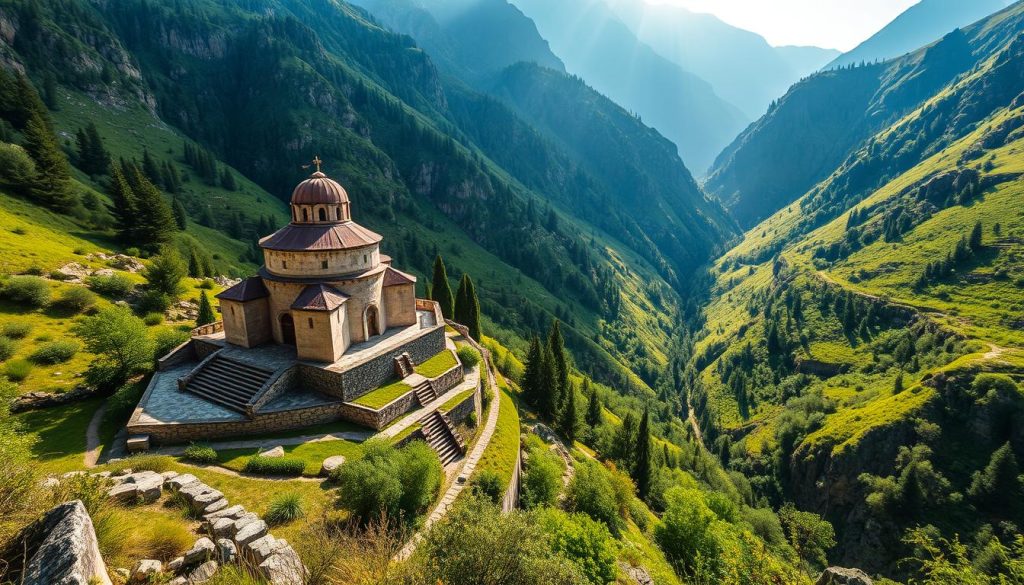
Tatev Monastery is a symbol of Armenia’s strength and culture. Recent restoration projects aim to keep its history alive. They also make it easier for people to visit.
These efforts have made more people aware of this UNESCO World Heritage site. It shows how important it is to Armenia’s culture.
Restoration Projects and Their Importance
Many restoration projects have worked to protect Tatev Monastery. They have:
- Fixed damage from the 1931 earthquake.
- Brought back the art that shows Armenian skill.
- Made it easier for visitors to get around.
These projects not only make the monastery look good again. They also show its big role in Armenia’s history and culture.
UNESCO Recognition and Its Implications
Being a UNESCO World Heritage site would prove Tatev Monastery’s value. It would draw more scholars and tourists. This would help research and learning at the site.
This recognition would also help keep Armenian traditions alive. It would inspire future generations to value their heritage.
| Restoration Efforts | Goals | Impacts |
|---|---|---|
| Structural Repairs | Ensure physical longevity | Preservation of historical authenticity |
| Artistic Revitalization | Restore cultural significance | Enhanced visitor engagement |
| Accessibility Improvements | Facilitate visitor access | Increased tourism and awareness |
The work done shows a strong commitment to Tatev Monastery’s legacy. It ensures it remains a key part of Armenia’s cultural heritage for the future.
Visiting Tatev Monastery Today
Planning a trip to Tatev monastery Armenia? You have several travel options. The drive from Yerevan, Armenia’s capital, is about 250 kilometers and takes 4.5 hours. You can use public transport, taxis, or rent a car.
The “Wings of Tatev” cableway is a must-see. It’s the longest reversible cableway in the world. The ride offers amazing views as you ascend to the monastery.
Accessing the Monastery: Travel Tips
Here are some tips to make your visit easier:
- The cable car runs daily from 10:00 AM to 5:30 PM.
- An adult roundtrip ticket costs 7,000 AMD (about 18 USD).
- The cable car ride is smooth, lasting 10-15 minutes over 5.7 km (3.5 miles).
- Driving from Goris to Tatev takes 40 minutes. Or, take a thrilling 15-minute tramway ride.
Recommended Activities for Visitors
Here are some activities to enjoy at Tatev:
- Take guided tours to learn more about Tatev monastery Armenia’s history.
- Discover the hiking trails around the monastery for unique views.
- Take photos during the golden hours for the best light.
- Don’t miss local events like the sheep shearing festival in June or the Meeting of the Lord feast on February 13th.
Nearby Attractions
Visiting Tatev Monastery opens up a world of amazing sights. The famous Devil’s Bridge is a natural wonder. The “Wings of Tatev” cableway offers stunning views of the area.
Devil’s Bridge: A Natural Wonder
Devil’s Bridge is a natural marvel that took thousands of years to form. It boasts beautiful rock formations and warm mineral springs. Visitors can enjoy the scenery and learn about its geological history.
This place is a unique blend of nature and history in Armenia. It’s a must-see for anyone interested in both.
The “Wings of Tatev” Cableway Experience
The “Wings of Tatev” cableway is the longest reversible cable car in the world. It stretches over 5.7 kilometers (3.5 miles) and offers breathtaking views. As you ride, you’ll see the Vorotan River gorge below.
This ride connects you to Tatev Monastery and shows the area’s importance in Armenian history. A round trip costs just $15. It’s an affordable way to see incredible sights.
Devil’s Bridge and the “Wings of Tatev” cableway make your visit unforgettable. They show the beauty of Tatev monastery history, stunning scenery, and Armenia’s rich culture.
Conclusion
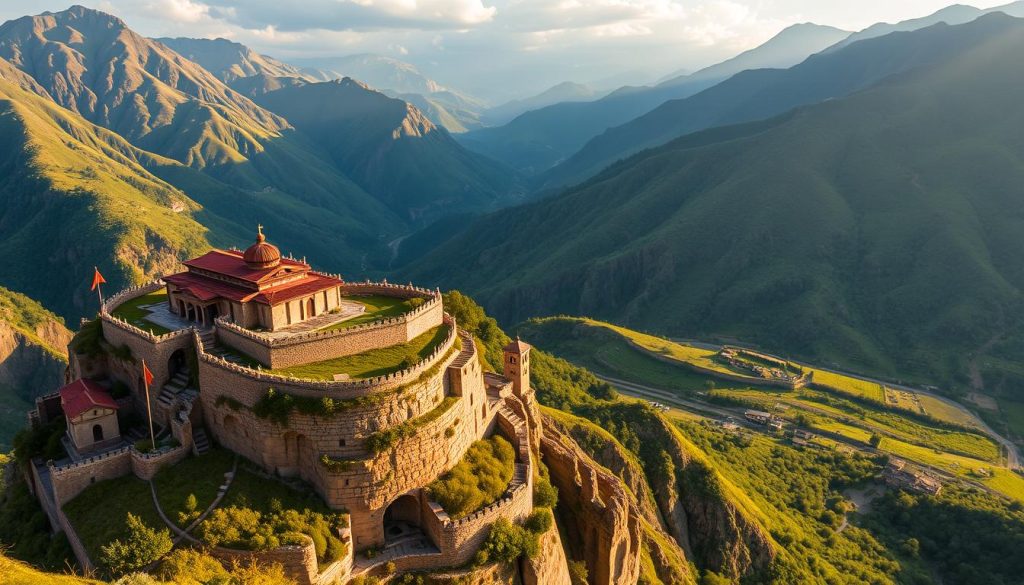
Tatev Monastery is more than just a place to visit. It’s a key part of Armenia’s history. This ninth-century church sits on cliffs, overlooking the Vorotan River Canyon. It shows the monastery’s importance as a spiritual and educational center.
The stunning buildings and deep history make you want to dive into Armenia’s beauty and heritage. Visiting here connects you to a long tradition of art and faith.
The areas around Tatev, like Syunik and Vayots Dzor, add to its charm. Nearby sites like Noravank Monastery and Khor Virap, set against stunning views, leave lasting memories. The Wings of Tatev cable car, one of the longest in the world, makes your trip unforgettable.
In short, Tatev Monastery is a symbol of Armenia’s strength and culture. Exploring its ancient halls and surroundings lets you see the country’s rich history. So, get ready to see the wonders of Tatev, where history meets today.