Your Guide to the Nabeul Pottery Market
Have you ever wondered what makes a trip to Tunisia so unforgettable? Is it the rich history, the vibrant culture, or perhaps the chance to see local handicrafts up close?
For many travelers, the answer is clear. They seek out a place that captures the heart of Tunisian craftsmanship. This is a bustling hub where traditional artisans display their talents. Here, you can dive into the local culture, visit traditional workshops, and see the making of handmade Tunisian pottery.
As you explore this vibrant spot, you’ll find a world of colorful ceramics and unique pieces. These items reflect the region’s heritage. It’s a journey that not only pleases the senses but also deepens your understanding of the local way of life.
The Rich Heritage of Nabeul’s Ceramic Tradition
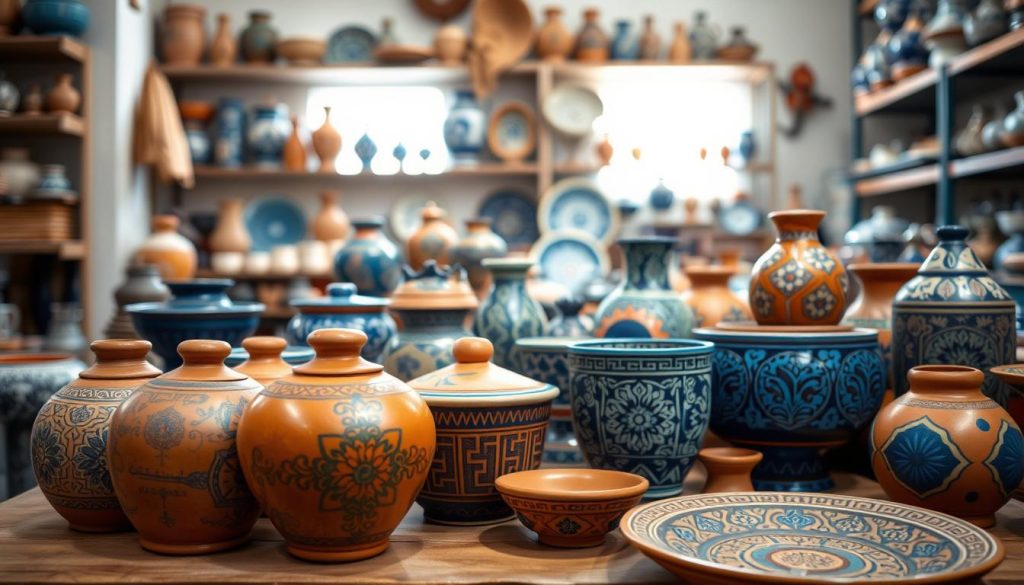
Nabeul’s pottery tradition is a key part of Tunisian identity, spanning thousands of years. The city’s ceramics blend various cultures and techniques. This creates a unique style loved by both locals and tourists.
Historical Origins of Pottery in Tunisia
Pottery in Tunisia has ancient roots, with evidence in archaeological sites. Successive civilizations like the Phoenicians, Romans, and Arabs have shaped it. This has led to a rich diversity in styles and patterns.
Key influences on Tunisian pottery include:
- Phoenician trade networks, which introduced new materials and techniques
- Roman decorative styles, which emphasized intricate designs
- Arabic glazing techniques, which added vibrant colors to the ceramics
Evolution of Nabeul as Tunisia’s Pottery Capital
Nabeul’s rise as Tunisia’s pottery capital shows the city’s skilled artisans and location. It’s known for high-quality ceramics, blending traditional and modern techniques. At the Nabeul Pottery Market, you can find a variety of traditional ceramics and Tunisian handicrafts.
The market is a chance to see Nabeul and Tunisia’s rich culture. Nabeul pottery prices vary based on size, material, and craftsmanship.
Exploring the Nabeul Pottery Market: What to Expect
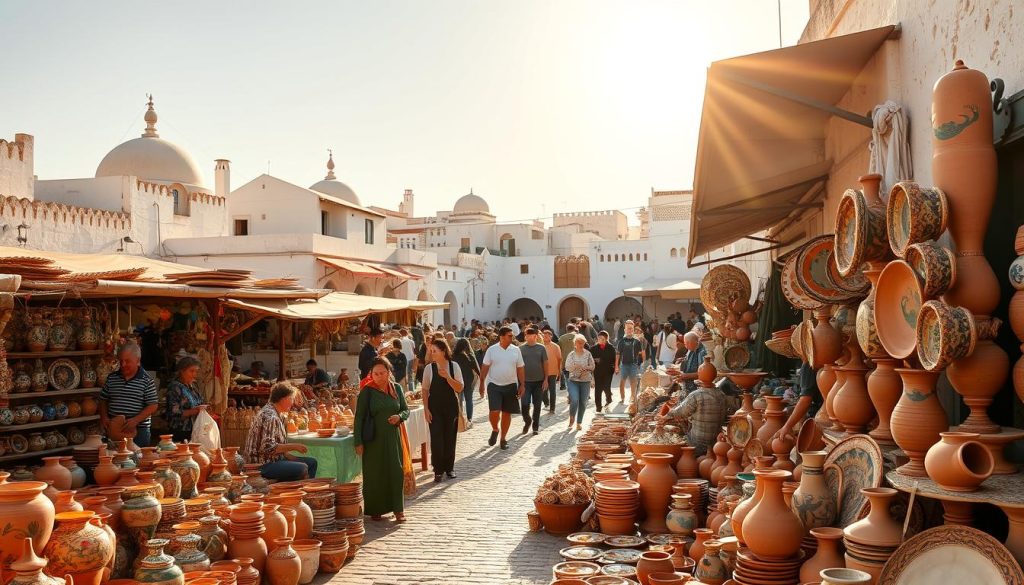
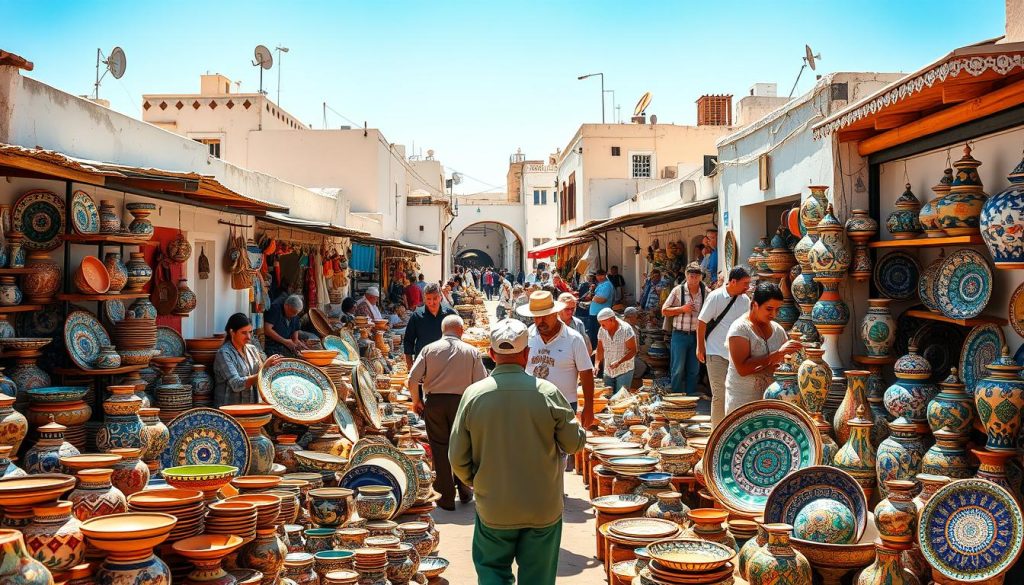
When you enter the Nabeul Pottery Market, you’re surrounded by bright colors and deep cultural roots. The market buzzes with life. Local artists display their work and share their knowledge with everyone.
Cultural Significance in Tunisian Society
The Nabeul Pottery Market is a key part of Tunisian culture. It shows the country’s long history and traditions. For centuries, pottery has been a big part of Tunisian life, with Nabeul leading in ceramics.
The market is where local artists keep their heritage alive. They show off their skills and traditions.
“Tunisian pottery is not just a craft, it’s a way of life, passed down through generations.”
Market Layout and Organization
The market is divided into areas, each with its own pottery type. You’ll see everything from decorative pieces to kitchenware. It’s easy to wander around and see all the stalls.
| Market Section | Types of Pottery |
|---|---|
| North Wing | Decorative Items, Vases |
| Central Area | Functional Kitchenware, Tableware |
| South Wing | Architectural Elements, Tiles |
The Sensory Experience: Sights, Sounds, and Atmosphere
The Nabeul Pottery Market is a feast for the senses. You’ll see bright colors, hear pottery being made, and smell clay. It’s a chance to really feel the local culture and meet the artists.
Planning Your Visit to Nabeul
For a memorable visit to the Nabeul Pottery Market, timing and planning are crucial. Think about the best times to go, how to get there, and where to stay.
Best Times to Visit the Market
The ideal time to visit the Nabeul Pottery Market is during weekdays. This avoids the busy tourist season. It lets you enjoy a calm visit and talk more with local artists. As one vendor said,
“Weekdays are ideal for those who want to see our craft without the crowds.”
Transportation Options from Major Tunisian Cities
You can get to Nabeul by car or public transport from big Tunisian cities. Louage (shared taxi) services run regularly from Tunis and other towns. Driving is also easy, thanks to good road connections.
Accommodations Near the Pottery District
There are many places to stay near the pottery area, from cheap hotels to fancy resorts. Booking early is wise, to get a good spot. Staying in Nabeul’s center lets you dive into the local culture and handmade Tunisian pottery.
Traditional Pottery-Making Techniques on Display
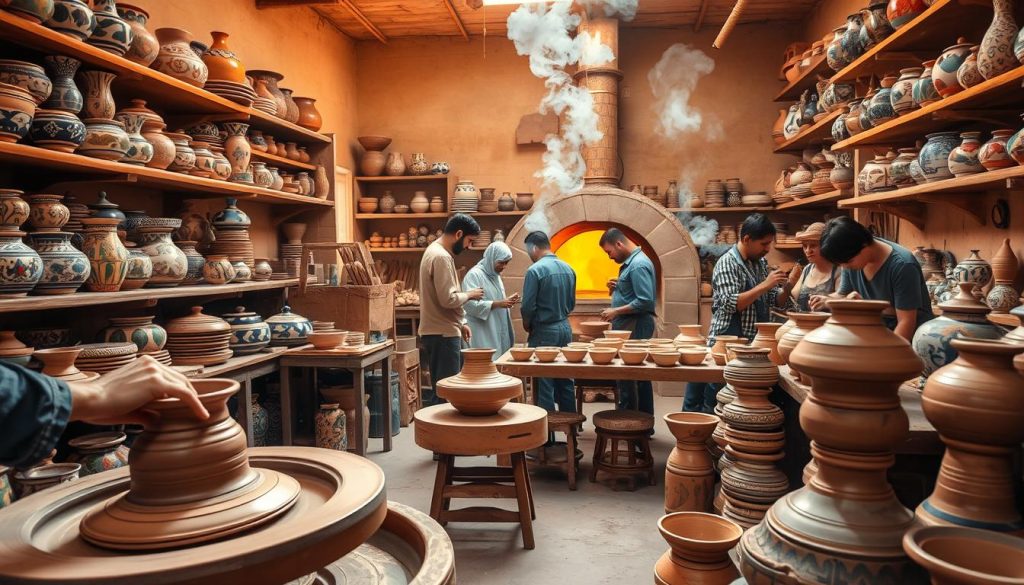
At the Nabeul Pottery Market, you’ll see old techniques passed down for generations. These techniques show the skill and craftsmanship of Tunisian artisans. They make beautiful, useful pieces.
Clay Selection and Preparation
Creating Nabeul pottery starts with picking and preparing clay. Artisans choose the best clays, often from local sources. They clean, mix, and knead the clay to get the right consistency.
Wheel-Throwing and Hand-Building Methods
Potters use both wheel-throwing and hand-building to shape their work. The potter’s wheel makes symmetrical pieces. Hand-building lets artisans create unique designs with their own touch.
Decorative Techniques and Glazing
After shaping, artisans decorate the pottery with painting, engraving, and glazing. The glaze can change the look of the piece. It can be clear to show the clay or colorful to add beauty.
Kiln Firing Processes
The last step is firing the pottery in a kiln. This makes the clay strong and lasting. The firing needs careful temperature and timing control.
Seeing these techniques at the Nabeul Pottery Market helps visitors appreciate the art of Nabeul pottery. It shows the skill and creativity of the artisans.
Distinctive Styles and Patterns of Nabeul Pottery
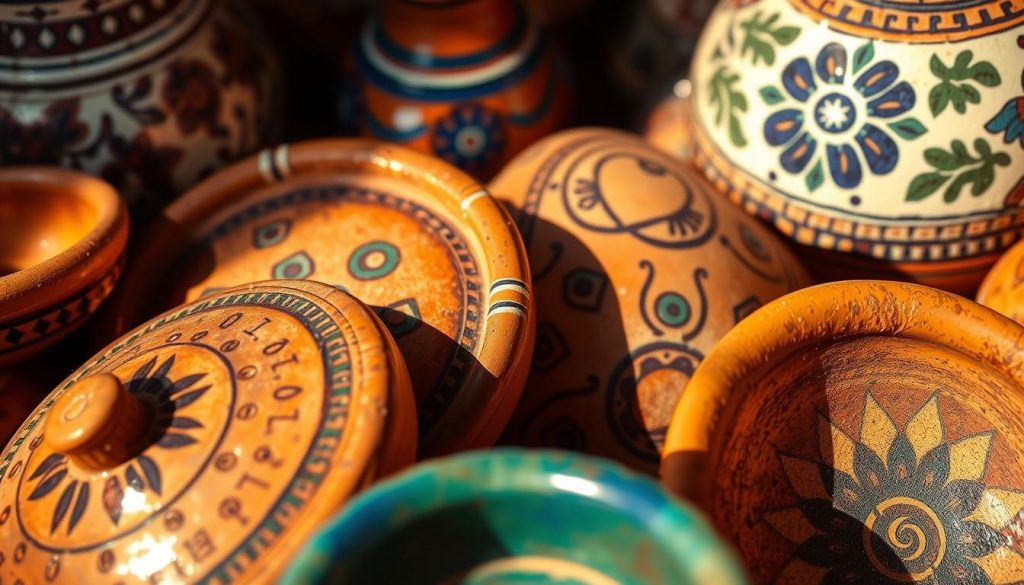
At the Nabeul Pottery Market, you’ll see many unique styles and patterns. These show the area’s deep cultural roots. Nabeul pottery is famous for its bright colors and detailed designs, passed down through generations.
Identifying Authentic Nabeul Designs
Real Nabeul pottery has special motifs and colors. Look for traditional Tunisian patterns like geometric shapes and flowers. The skill and care in each piece also show it’s genuine Nabeul pottery.
Key characteristics of authentic Nabeul designs include:
- Intricate geometric patterns
- Floral motifs inspired by Mediterranean flora
- Vibrant color palettes that reflect the region’s natural beauty
Color Palettes and Their Meanings
The colors in Nabeul pottery mean more than they look good. Blue stands for protection and luck. Green means wealth and joy.
“The colors used in Nabeul pottery are deeply rooted in Tunisian culture, reflecting the country’s rich history and traditions.”
| Color | Symbolic Meaning |
|---|---|
| Blue | Protection, Good Fortune |
| Green | Prosperity, Happiness |
| Yellow | Wealth, Sunshine |
Regional Variations Within Tunisia
Nabeul has its own pottery style, but other parts of Tunisia have their own too. For example, Sfax is known for its calm colors and shapes.
Contemporary Innovations in Traditional Patterns
Today, Tunisian potters mix old and new in their work. They use modern designs and methods but keep the heart of Nabeul’s pottery. This mix attracts many collectors and fans.
Visiting the Nabeul Pottery Market, you’ll see a mix of old and new styles. Each piece shows the area’s culture and creativity.
What to Buy at the Nabeul Pottery Market
At the Nabeul Pottery Market, you’ll find lots of pottery and ceramics. There are decorative items and kitchenware. The market shows off Tunisia’s rich culture and artisan skills.
Decorative Items for Home Display
The market has beautiful pieces to make your home elegant. You’ll find:
Wall Plates and Hanging Ornaments
Beautiful wall plates and ornaments are perfect for decoration. They have traditional Tunisian designs, adding a cultural touch to your home.
Sculptural and Artistic Pieces
Looking for something unique? The market has sculptural and artistic pieces by local artists. They’re great for starting conversations and adding a personal touch.
Functional Kitchenware and Tableware
The market also has practical kitchenware and tableware. Popular items include:
Tagines and Cooking Vessels
Traditional Tunisian tagines and cooking vessels are both useful and beautiful. They’re great for cooking and serving dishes.
Serving Dishes and Dinnerware
Find beautifully made serving dishes and dinnerware. They add elegance to your meals and are adorned with Tunisian designs.
Architectural Elements
Want to add Tunisian pottery to your home’s design? The market has architectural elements like:
Decorative Tiles and Mosaics
Beautiful tiles and mosaics are a sign of Tunisian skill. Use them for backsplashes, tabletops, or other decorative features.
Garden Pottery and Outdoor Décor
There’s also garden pottery and outdoor decor. Items like planters and statues bring Tunisian charm to your outdoor spaces.
Souvenirs and Gift Ideas
Looking for souvenirs or gifts? The Nabeul Pottery Market has many options. Authentic Tunisian handicrafts, like pottery and ceramics, make great gifts.
Mastering the Art of Bargaining at the Nabeul Pottery Market
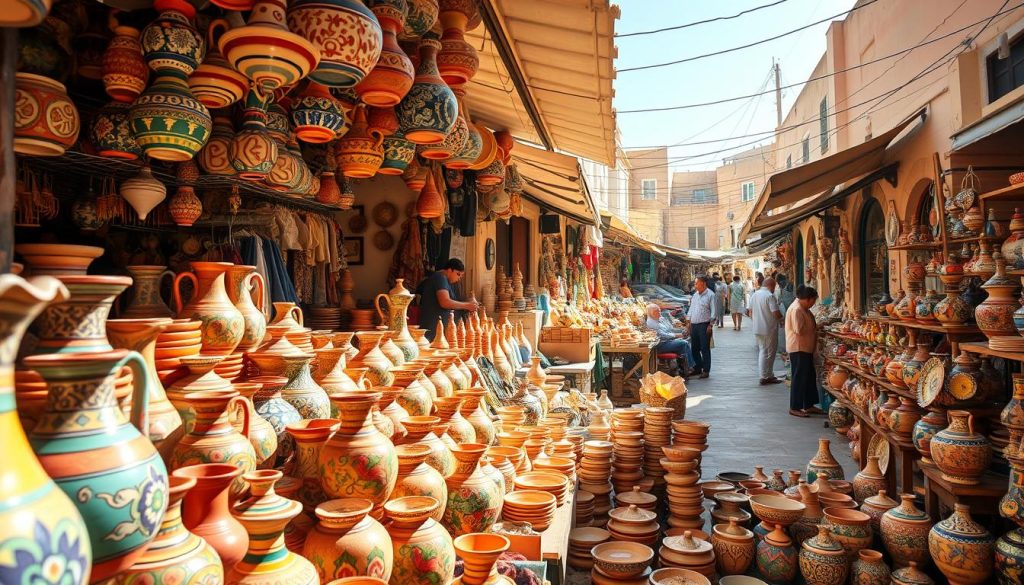
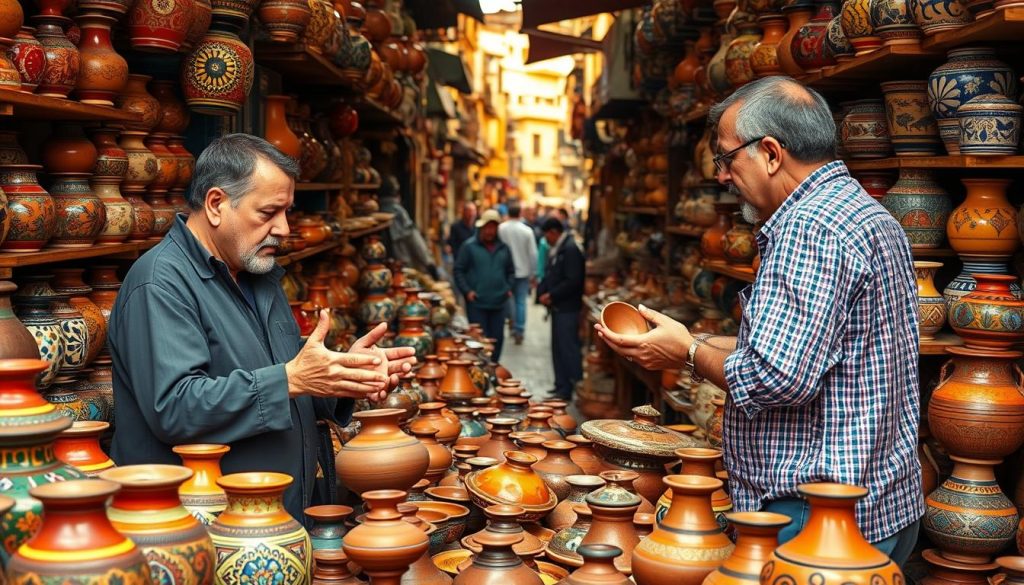
To get the most out of the Nabeul Pottery Market, learning to bargain is key. Bargaining is a big part of the market, where you’ll negotiate prices with vendors. Knowing the local culture and customs can make bargaining easier.
Understanding Price Ranges for Different Items
Prices at the Nabeul Pottery Market vary a lot. This depends on the item, its size, how complex it is, and the materials used. For example, decorative items like vases or wall hangings cost between $10 and $50. Kitchenware might be priced from $5 to $20. Knowing these ranges helps you bargain better.
| Item Type | Price Range |
|---|---|
| Decorative Items | $10-$50 |
| Functional Kitchenware | $5-$20 |
| Architectural Elements | $20-$100 |
Negotiation Etiquette and Cultural Expectations
Bargaining at the Nabeul Pottery Market is more than just about the price. It’s about building a good relationship with the vendor. Being polite, smiling, and showing real interest in the crafts helps a lot. Remember, you can always walk away if the price isn’t right. This might make the seller offer a better deal.
“The art of bargaining is a dance between buyer and seller, each step guided by respect and understanding.” – Local artisan
Phrases and Expressions to Know in Arabic
Knowing some Arabic phrases can improve your bargaining. Saying “As-salamu alaykum” (peace be upon you) can start things off well. When bargaining, “Shukraan” (thank you) and “Hal yumkin takhtasiid?” (can you give a discount?) are helpful.
Recognizing Quality vs. Tourist Traps
Not all items at the Nabeul Pottery Market are the same. Look for pieces with detailed designs, bright colors, and strong construction. Be careful of items that seem too perfect or are much cheaper than others; they might be tourist traps. Talking to the artisans about their techniques can also help you judge the quality of the pottery.
By learning to bargain well, understanding prices, and knowing the cultural tips, your visit to the Nabeul Pottery Market will be more fun and rewarding.
Notable Pottery Workshops and Artisans
In Nabeul, you’ll find many pottery workshops and skilled craftspeople. The city’s ceramics tradition has created a community of talented artisans. Many have learned their craft over generations.
Family-Owned Studios with Generations of Expertise
Nabeul has many family-owned pottery studios with decades of experience. These studios show traditional Tunisian pottery-making techniques. Visitors can see the skill and dedication in each handmade Tunisian pottery piece.
“Atelier de la Médina” is a famous studio run by the Aloui family for over 50 years. It’s a mix of traditional and modern techniques, showcasing the best of Tunisian handicrafts.
Award-Winning Craftspeople to Seek Out
Nabeul is also known for its award-winning craftspeople. They blend traditional pottery with modern designs and techniques. This keeps the essence of traditional ceramics alive.
“The art of pottery is not just about creating functional items; it’s about preserving a cultural heritage and pushing the boundaries of creativity.” – Mohamed Ben Salem, award-winning potter
Workshops Offering Demonstrations and Classes
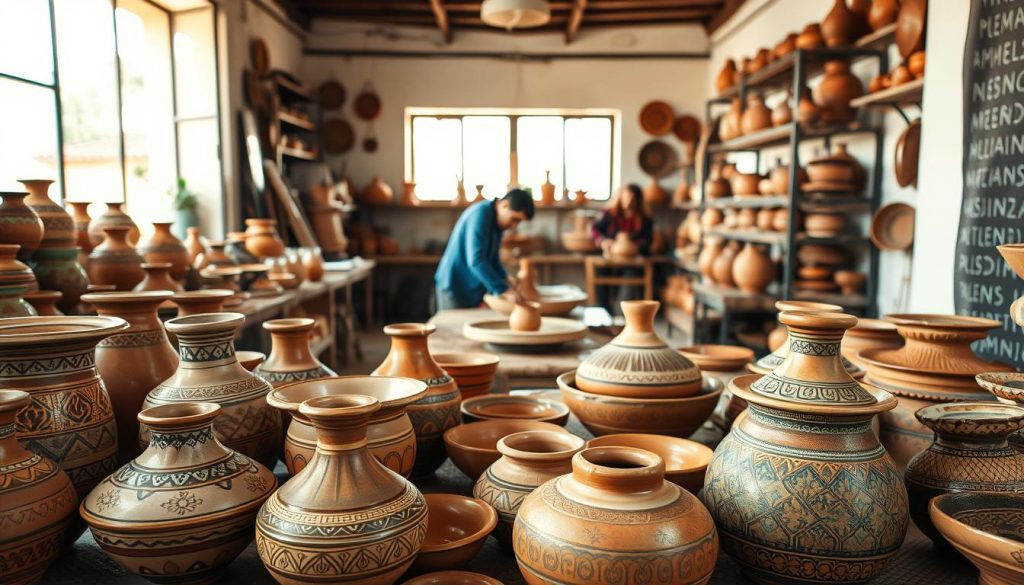
Visitors can join pottery-making demonstrations and classes in Nabeul. These hands-on experiences let you learn from skilled artisans. You’ll get to see the craft of Tunisian pottery up close.
- The Nabeul Pottery Cooperative offers weekly classes for visitors.
- Atelier de la Médina provides demonstrations of traditional pottery techniques.
- The Tunisian Pottery Association hosts workshops on glazing and firing techniques.
Artisans Specializing in Unique Techniques
Nabeul is also a place for artisans with unique pottery techniques. They use special glazing and firing methods. These craftspeople are changing Tunisian ceramics.
| Artisan | Specialty | Workshop |
|---|---|---|
| Mohamed Ben Salem | Innovative glazing techniques | Atelier de la Médina |
| Amira Bouzouita | Traditional wheel-throwing | Nabeul Pottery Cooperative |
| Hichem Lamine | Experimental firing processes | Tunisian Pottery Association |
Practical Tips for American Visitors
American visitors to the Nabeul Pottery Market should be well-prepared. Knowing the local culture and how to navigate the market is key. Also, understanding the rules about buying pottery is important.
Packing and Shipping Your Pottery Purchases
Think about how you’ll carry your pottery. Some sellers might ship it for you. Make sure to ask about costs and how they’ll pack it to avoid damage.
Here’s a comparison of shipping options:
| Shipping Method | Cost | Delivery Time |
|---|---|---|
| Local Courier | $10-$20 | 3-5 days |
| International Shipping | $50-$100 | 7-14 days |
| Freight Forwarder | $100-$200 | 14-21 days |
US Customs Regulations for Ceramic Imports
American visitors need to know about US customs rules for ceramics. Some items might be restricted or have duties.
- Check if your items are subject to duty or if they are exempt.
- Ensure you have receipts and documentation for all purchases.
- Be aware of any restrictions on materials used in the pottery.
Payment Methods and Currency Considerations
Many vendors in Nabeul take Tunisian Dinars, but some accept Euros or US Dollars too. Credit cards are not common, so it’s wise to have local currency.
Tip: Tell your bank about your travel plans to avoid card issues.
Cultural Etiquette and Respectful Shopping Practices
Respect local customs at the Nabeul Pottery Market. Bargaining is okay, but do it nicely and with a smile.
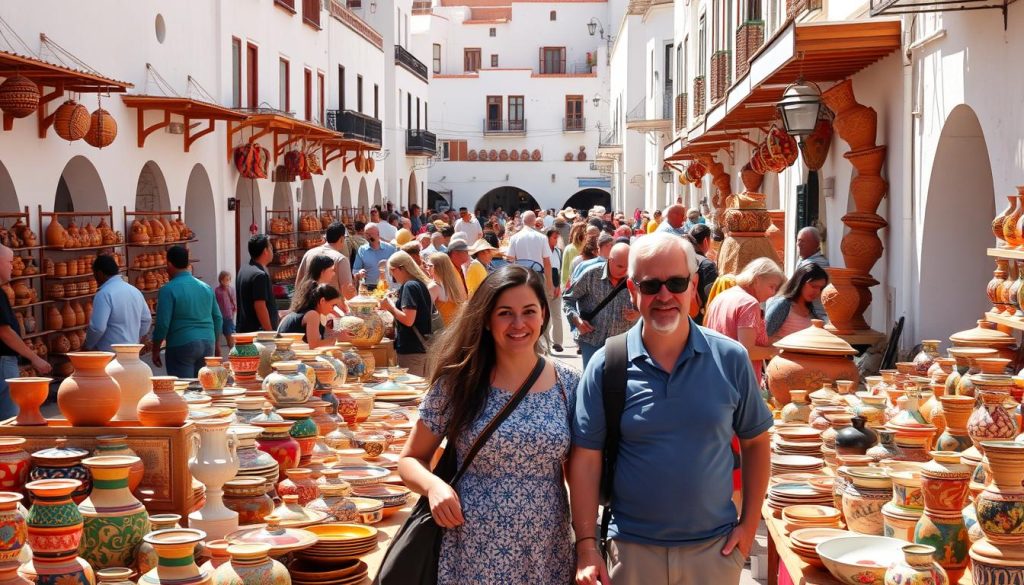
The experience is more than just buying pottery. It’s about connecting with the local culture and artisans.
Conclusion: Bringing the Spirit of Nabeul Home
When you leave the Nabeul Pottery Market, you’ll carry more than just pottery. The colors, patterns, and history of traditional ceramics will stay with you. They remind you of the cultural heritage you’ve seen.
You can bring Nabeul’s spirit home by choosing authentic pottery. Whether it’s for decoration or kitchenware, each piece shows the artisan’s skill. It’s a reminder of what you’ve seen.
Using your Nabeul pottery in your daily life keeps the traditional techniques and cultural significance alive. The memories of your visit and the beauty of the pottery will inspire and enrich your life.