Save on Eats with Budget Travel Tips for Food Dining
Can you enjoy the tastes of your travel spot without big restaurant bills eating into your budget?
Tasting different cultures through their food is a key joy of traveling. But, eating out all the time can make your travel costs soar. Whether you’re in Bangkok’s street markets or Paris’s cafés, there are smart ways to eat well without spending too much.
It’s possible to eat affordably while traveling. By choosing where to eat wisely and sometimes cooking, you can save. Tips like free hotel breakfasts and shopping at local supermarkets help you enjoy food adventures without overspending.
Start with Breakfast Savings
Starting your day with a full belly while saving money is definitely doable. You can save a lot by making smart choices like staying places with free breakfasts and bringing snacks. This way, you can keep more money in your pocket.
Book Hotels with Free Breakfast
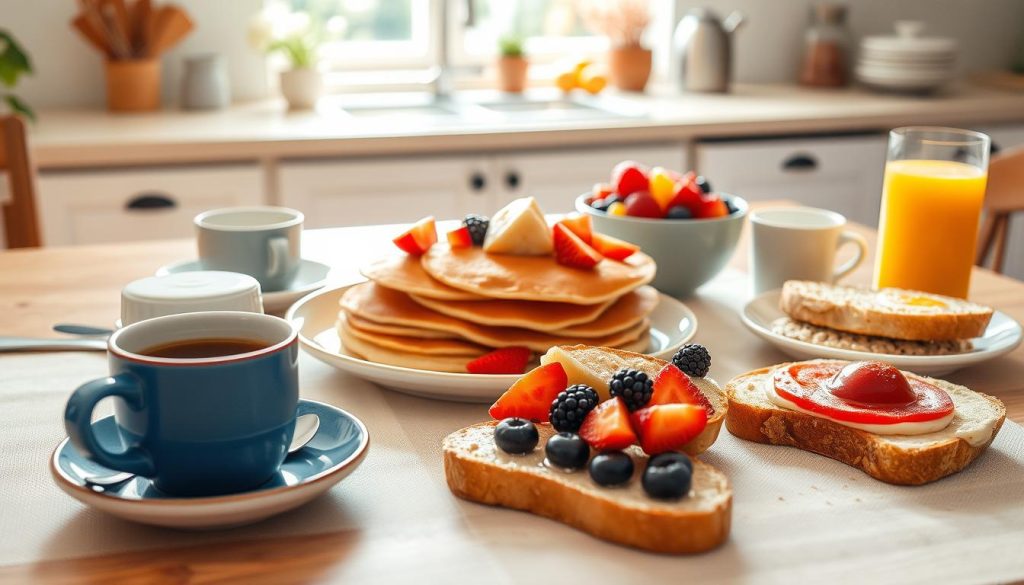
Choosing hotels that offer free breakfast is an easy way to eat cheaply on trips. Places like Hampton Inn give you breakfast for no extra charge. You can start your day well-fed without spending more, saving you $20 to $30 per person each day. In costly areas, such as San Francisco, where daily expenses can hit $79, this is a big deal. Even simple motels often have this benefit, helping you cut down on food costs.
Bring Non-perishable Snacks
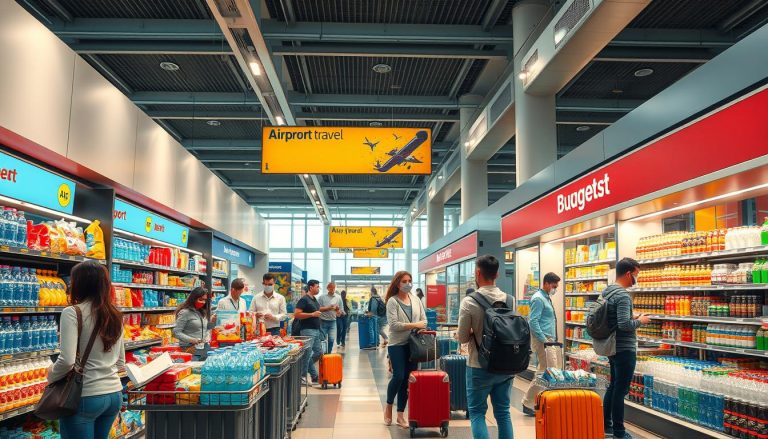
Packing snacks like granola bars, nuts, and crackers is another smart move to save money. These snacks are great for staying full during long trips or wait times. They help you avoid pricey food at airports or stores. With these, you can eat well on your journey without blowing your budget.
| Destination | Estimated Daily Breakfast Savings (USD) |
|---|---|
| San Francisco | $20 – $30 |
| Elko, Nevada | $15 – $25 |
Eat at Buffets
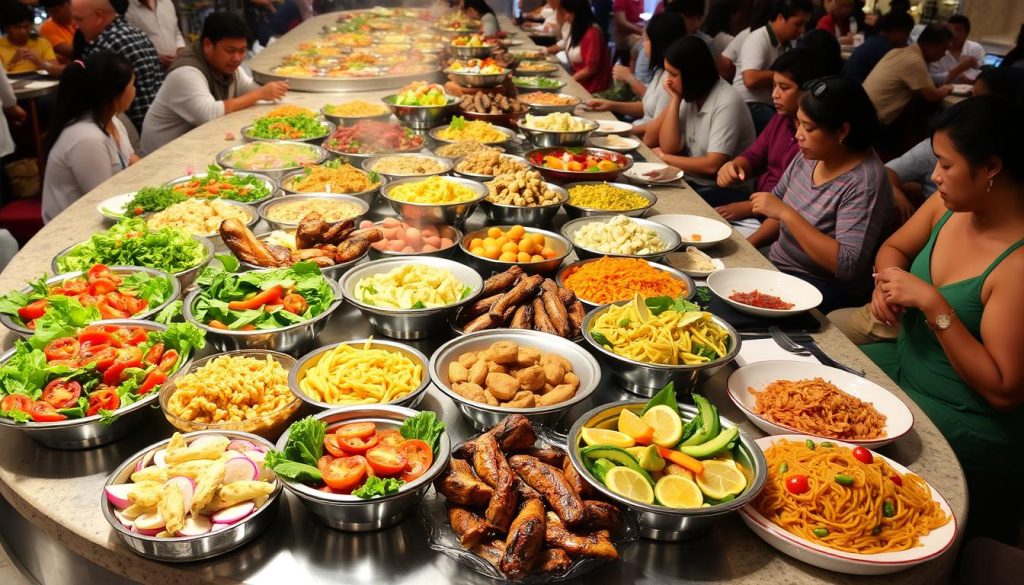
Buffets are a great way to save money while trying many dishes. They’re everywhere, especially in places with lots of tourists. For one price, you get to taste a bunch of different foods. Buffets give you a lot of food, so you’re not hungry until dinner. This makes them a top choice for eating cheaply.
Here’s why buffets are awesome:
- Good for Your Wallet: You can eat all you want for $6 to $18. This helps you stick to your budget.
- Lots of Choices: You’ll find everything from meat and seafood to veggies. This means you can try different things in one go.
- Free Drink Refills: Places like Denny’s and certain Brazilian places give you more drinks for free. This makes your meal even better.
Also, when you’re at theme parks, sharing large meals can save money. Look for deals like “kids eat free” or discounts for children. These tips help you spend less when you’re eating out.
For example, Chinese buffets have an entry fee from $6 to $18, depending on when you go. Sometimes drinks cost extra, but often you can get more lemonade for free. Buffets let you save money and enjoy many dishes without spending a lot.
And let’s compare a few places:
| Establishment | Price for Two | Special Offers |
|---|---|---|
| Denny’s | $30 | Free drinks refills, 24-hour service |
| Applebee’s | $30 | Frequent daily specials |
| Subway | $15 (excluding drinks) | Varies by location |
Using these tips for cheap eats lets you have fun trying different foods without spending too much. Remember to hit up a buffet on your next trip for a good meal that’s easy on your wallet.
Embrace Street Food Culture
Exploring new places? Trying street food is a top tip for saving money while traveling. It lets you taste authentic local flavors affordably. Countries like Thailand and Vietnam are famed for their street food, offering cheap yet tasty meals.
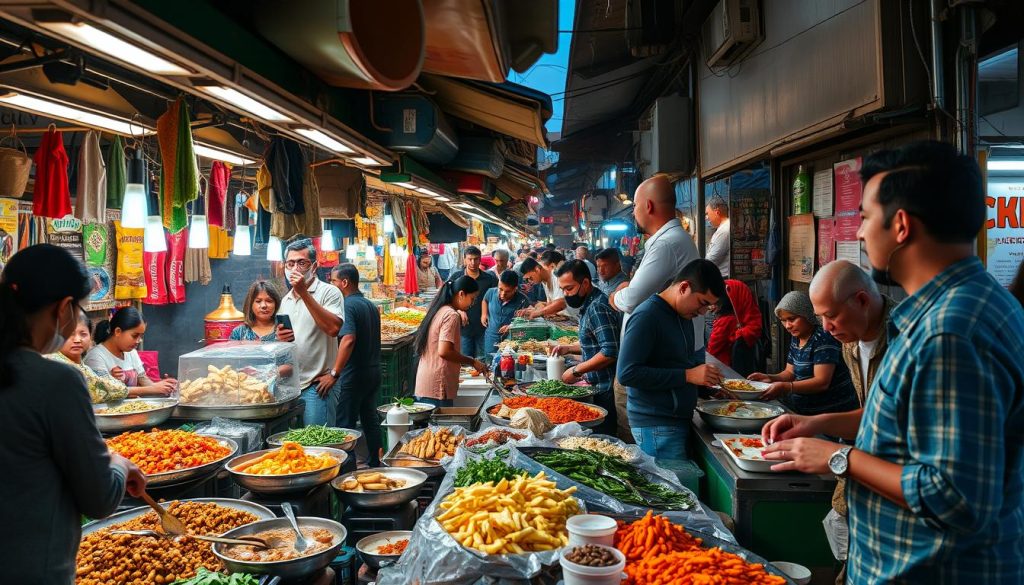
Many countries are known for their amazing street food, such as Thailand, Japan, and Mexico. Eating where the locals eat often means better food. That’s because places loved by locals usually serve more authentic dishes.
But be careful. Eating street food in some places might have risks, like food poisoning. Yet, it can be very cheap. For example, a meal might cost just a few dollars in Asia. A bowl of pho in Vietnam could be under $1!
To eat street food safely and cheaply, remember these tips:
- Pick places where lots of locals eat. It means the food is likely fresh and good.
- Choose vendors who keep their area clean and follow good hygiene.
- Go for cooked dishes over raw ones to avoid getting sick.
Utilize Local Supermarkets and Grocery Stores
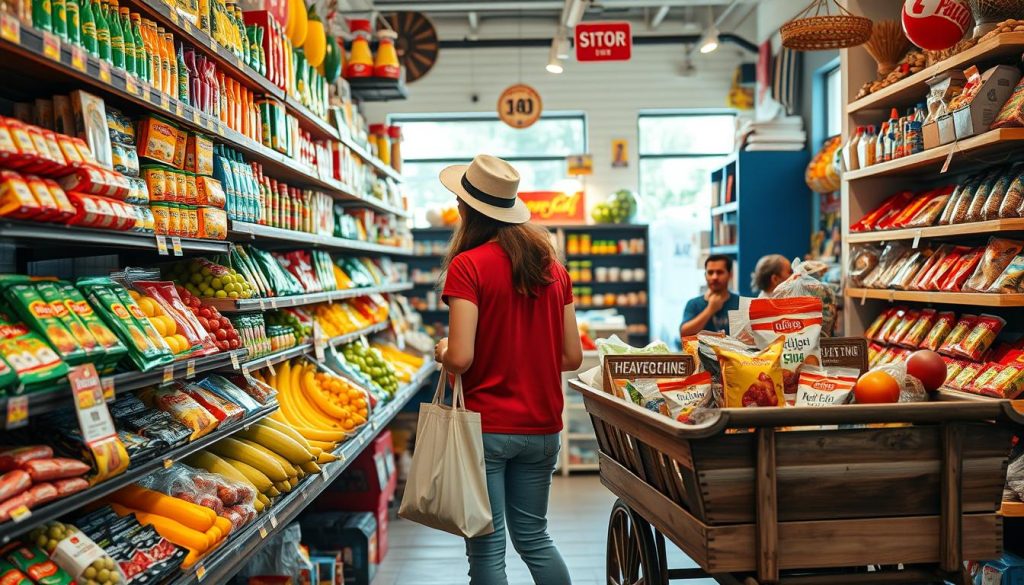
Visiting local supermarkets is a top money-saving tip for travelers. It’s not just about saving cash; it gives you a peek into what locals eat. Shopping for groceries turns into a fun journey in new places.
Find Local Market Deals
Scoring deals at local markets is a smart move for saving money. Items like bread and fruit get cheaper near the end of the day. Plan your visit then to buy fresh goods for less money.
Buy Food for Picnics
Buying picnic food at local stores is another great tip. Make your meal with local cheeses, bread, fruits, and snacks instead of eating out. This saves money and lets you enjoy your food outside in a beautiful spot.
| Item | Cost Savings | Experience |
|---|---|---|
| Fresh Bread | Up to 50% off near closing time | Introduction to local bakery culture |
| Local Cheese | Discounts on regional varieties | Unique taste of local dairy products |
| Fruits and Snacks | Marked down prices | Opportunity to try seasonal produce |
Shopping at local supermarkets is key for budget-friendly travel. It helps you eat well without spending a lot. Plus, you get to understand local food traditions better.
Take Advantage of Lunch Specials
One top Budget Travel Tip for Food and Dining is to use lunch specials. Many restaurants offer these, letting you enjoy fancy meals for much less than dinner prices. You could save from 20% to 50% on each meal. For instance, a meal that’s $50 at dinner might be under $30 at lunch.
This benefits family travelers a lot. They can either share meals or choose lunch deals to save big.
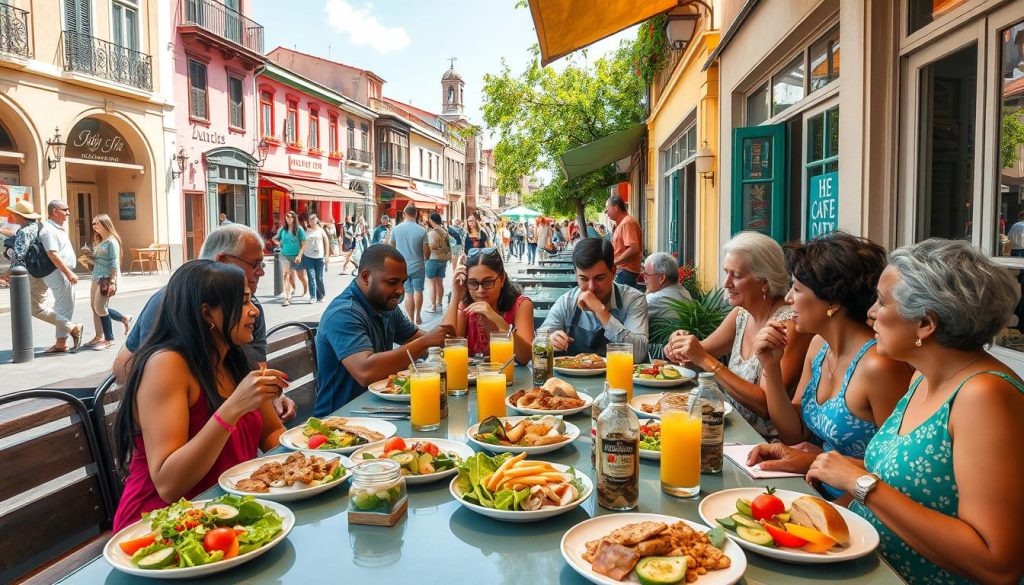
In Europe, it’s common for restaurants to offer dinner favorites for less at lunch. This lets you eat out and save money. Always look up lunch menus and deals before going. Some places even let kids eat free at lunch, which can save families up to $15 per kid.
Another budget tip is to watch your drink expenses. Soft drinks can be overpriced by more than 200%. Choosing water can save you between $3 to $7 per meal. Also, happy hours often offer 20-50% off on appetizers, giving you cheaper dining options.
| Typical Cost (Dinner) | Typical Cost (Lunch) | Potential Savings |
|---|---|---|
| $50 | $30 | 40% |
| $40 | $25 | 37.5% |
| $45 | $35 | 22.2% |
| $60 | $40 | 33.3% |
Make lunch your main meal to manage your budget well. Pairing lunch specials with other tips lets you enjoy various dining experiences without spending too much.
Go Local to Save Big
Looking for economical food choices for budget travel means going local. Local meals often cost less than foods from far away. You save money and learn about the place you’re visiting.
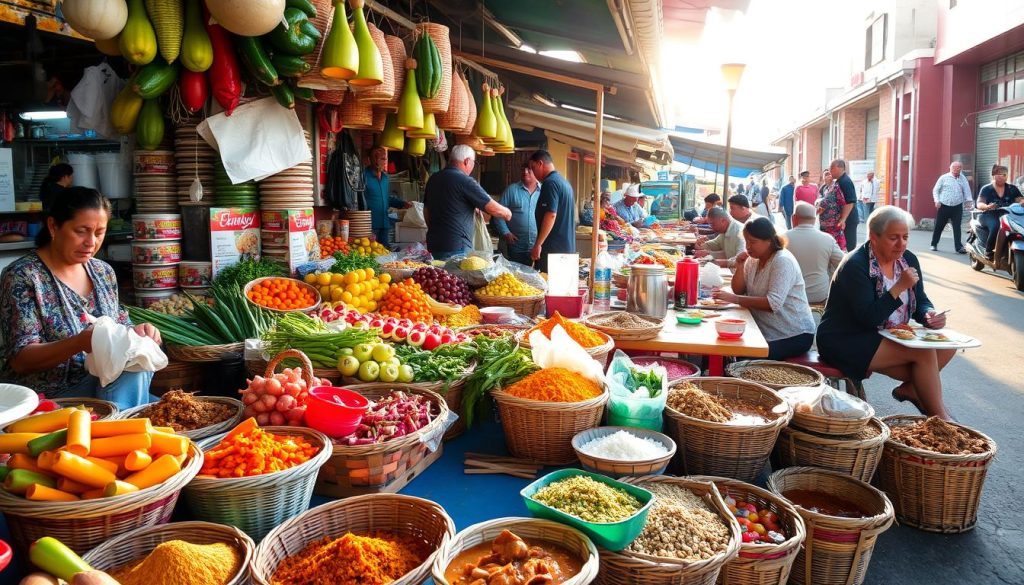
In places like Southeast Asia, local markets and street food are cheap but delicious. You get to eat great food and keep your wallet happy.
- Choose places like Central America, South America, and Eastern Europe for good deals due to weaker currencies.
- Avoid travel during busy seasons to save up to 50% on flights and hotels.
- Stay away from tourist spots to find better prices and tastier meals.
Many places you visit have free or cheap fun things to do, like walking tours or hikes. Eating local foods and doing these activities can help you spend less every day.
| Meal Type | Cost | Additional Benefits |
|---|---|---|
| Local Cuisine | 30-50% Cheaper | Authentic flavors, cultural experience |
| International Dishes | Marked-Up Prices | Limited cultural immersion |
Choosing economical food choices for budget travel lets you enjoy your trip more, for less money. Eating local means you get to try great food and save.
Cook Your Own Meals Often
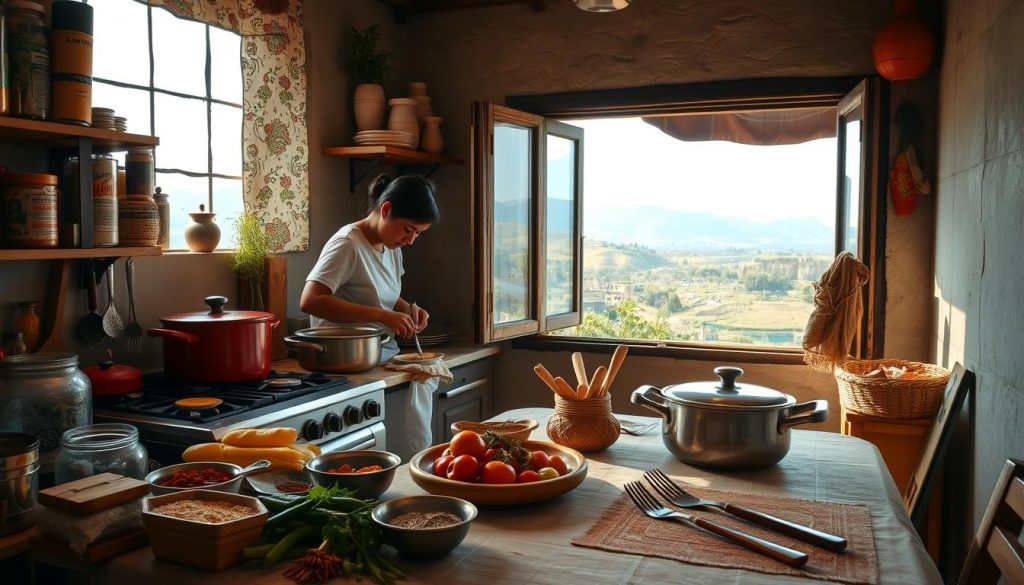
Preparing your meals while traveling saves a lot. Staying in places with kitchens lets you save money and enjoy local flavors. You can try local ingredients and learn about the culture.
Accommodations with Kitchens
Staying places with kitchens changes the game for those watching their budget. It lets you cook and can save lots of money. Making breakfast at these spots helps everyone start their day calmly.
Parents with young kids tend to cook breakfast and dinner but eat lunch out. This keeps costs low and ensures kids eat fresh foods. Older teens and their families might grab breakfast at home, snack on the go, and eat dinner out.
Here’s a look at how much you might save by cooking:
| Meal Type | Cost of Cooking at Home | Cost of Dining Out | Potential Savings |
|---|---|---|---|
| Breakfast | $2 per meal | $10 per meal | $8 saved |
| Lunch | $3 per meal | $15 per meal | $12 saved |
| Dinner | $5 per meal | $20 per meal | $15 saved |
Meal prep while traveling can be quick. Families can enjoy meals like pasta or soups in 20 minutes. It allows for dietary flexibility and indulgence in quality local products.
By using these tips, you can save money while traveling. Staying in places with kitchens means dining out less and lowering food costs. It’s a great way to enjoy affordable cuisine and explore local dishes.
Use a Refillable Water Bottle
Keeping hydrated is key, especially when you’re busy exploring. But, constantly buying water bottles costs a lot. By using a money-saving food strategy for travelers like a refillable water bottle, you save cash and help the planet too.
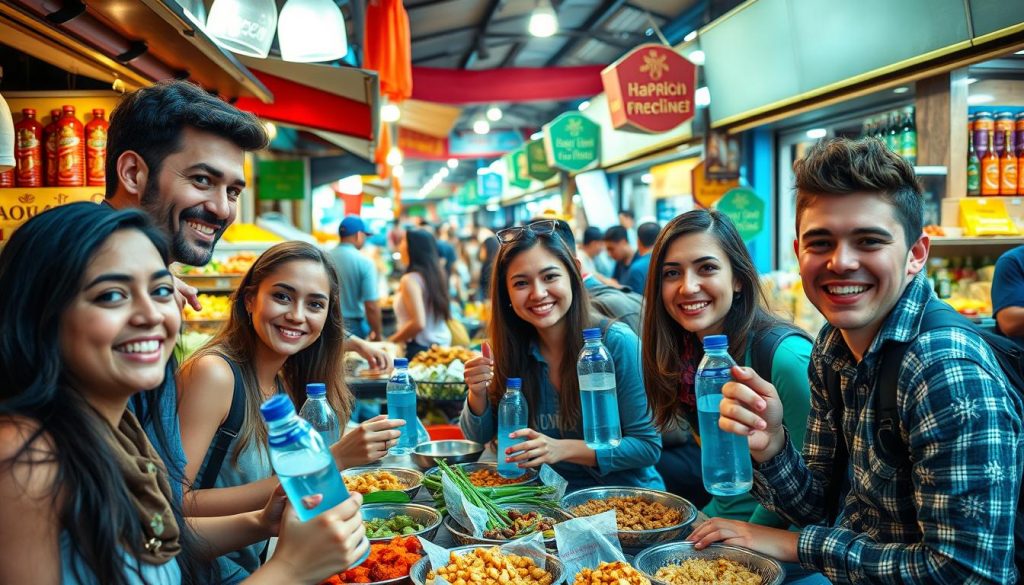
In many places, the tap water is safe to drink. If you’re unsure about the water’s safety, consider getting a portable filter. You’ll find water refill stations in many public areas, like parks and airports. Filling your bottle for free saves you from spending a lot on bottled water.
- The cost of bottled water at tourist spots can reach six dollars.
- A water bottle costs about $3.75 at San Francisco Airport.
- Refillable bottles are smart. They save money and cut down waste. Plus, you can refill them at many public fountains.
This easy step is a great money-saving food strategy for travelers. It keeps you hydrated and leaves more money for fun activities on your trip.
Skip Snacks and Save More
Snacking often can make your travel costs go up without you noticing. Instead, choose full meals at regular times to stay full longer. Plan your meals ahead to avoid paying more when on the road, especially where tourists go a lot. If you need a snack, buy in bulk at local markets. For example, graham crackers cost way more in tourist spots at $14.99 compared to just $4.99 at places like ALDI or Walmart.
Here are some tips for eating cheaply on the road:
- Plan to have one or two meals less than you think you’ll need, to use up leftovers.
- Grab free travel size condiments from grocery delis to cut down on expenses.
- Keep a cooler with ice packs for fresh items like fruit, yogurt, and cheese.
- Buy items on sale before you leave to save on higher road trip prices.
- Look into local restaurant specialties before your trip for savings and better dining.

If you’re traveling with kids, give them their own vending machine money. This teaches them budgeting and helps them pick their snacks. Planning meals ahead helps waste less food and keep grocery costs in check. Look at these savings:
| Item | Purchased in Bulk (per item) | Purchased at Tourist Spot (per item) |
|---|---|---|
| Graham Crackers | $4.99 | $14.99 |
| Mixed Nuts | $5.99 | $12.99 |
| Protein Shakes | $1.50 | $3.50 |
| Fresh Fruit (per lb) | $1.99 | $4.99 |
By using these tips for eating cheaply on the road, making your own meals can save a lot. A homemade sandwich costs about $3 to $5, much cheaper than $6 to $12 at a shop. So, bring your own snacks, make fewer pit stops, and your budget will thank you.
Join Students for Affordable Eats
University areas are great for finding affordable meals while traveling. These places offer lots of cheap but tasty food options. They cater to students, so prices are low. This is great for travelers who want to save money and try local dishes.
But it’s not all about cheap food. These areas also have a lively social scene. You get to hang out with locals. This makes your travel experience richer. Places to eat here are budget-friendly, matching students’ spending patterns.
Nearby Universities
When planning your trip, look for nearby universities. Areas around them usually have:
- Affordable cafes and snack bars
- Cheap international food
- Deals for students
Cheap eateries also focus on quality, buying in bulk to save costs. They offer dishes with rice and beans, and other budget foods like oats and lentils. This reflects student meals.
They often use frozen veggies, which are cheaper than fresh ones. This helps you eat well while saving money. Budget meals may also include canned fish as a low-cost protein.
Visiting student areas can make your travels cheaper and more fun. It’s not just about finding affordable meals while traveling. It’s about experiencing the culture and connecting with students.
Budget Travel Tips for Food and Dining
Traveling on a budget doesn’t mean missing out on great food. Knowing the right tricks can help you enjoy local tastes without spending too much. These tips will show you how to eat well and still save money.
Start by picking places to stay with kitchens. This can be less expensive than hotels. Being able to cook meals like pasta or breakfast yourself helps cut down costs a lot. By making some of your own meals, you can save enough to enjoy a fancy dinner out.
Look into local markets and grocery stores too. Right after you arrive, buy what you need plus some local treats. Adding local flavors to your cooking can save you money because sometimes, street food is 60% cheaper than restaurant meals.
Carrying non-perishable snacks is also a smart move. It can help you keep from spending too much money on eating out. Since meals outside can take up a big part of your budget, bringing snacks could help you save from $50 to $100 in a week.
Trying out local dining traditions can save you money as well. Eating where students eat, enjoying lunch deals, or trying places known for good, cheap food helps stretch your budget. Cities have places like food halls where you can try different foods at good prices.
Lastly, save more by looking for deals on sites like Groupon. Don’t forget to check with local visitor centers for guides with coupons. Planning and using these tips can cut your food spending by 15% to 30%, making your trip more enjoyable without overspending.
Conclusion
Using our Budget Travel Tips for Food and Dining can make your trip better by saving money. Tips like booking early and cooking meals yourself help you dive into the local culture without spending a lot. Also, using buses and trains can save cash while letting you see the city.
Planning your trips well in advance allows you to catch great deals on flights and hotels. This means you can save more money for fun activities. Look for places to stay that don’t cost much, like budget hotels or campsites. They have rooms or spots at prices that won’t break the bank.
Eating like a local by trying street food or shopping at local markets can majorly cut your food costs. Buffets are also a good choice. Plus, taking public transport in big cities can be a lot cheaper than other travel options. This way, you get around for less money.
These tips don’t just help you save; they let you really connect with where you’re visiting. They’re all about experiencing more while spending less. With this advice, your trips will be full of amazing memories without costing a fortune.