Skip Checked Baggage Fees: Smart Travel Tips
Have you ever ended up paying more for flights than you planned, even with a cheap ticket?
Airlines in the U.S. make billions from checked baggage fees yearly. Usually, checking a bag costs $60 for a round-trip on most big airlines. But you can avoid these fees and save money with some smart tips.
Many travelers don’t save money because they don’t read the airline’s baggage policy closely. For instance, Southwest Airlines offers two free checked bags. But, Spirit Airlines might charge you up to $65 for a carry-on. Knowing these details can help you save a lot.
Read on to learn top strategies and secret tips. They will help you skip baggage fees and have a stress-free, affordable trip.
Understanding Airline Baggage Policies
When you plan a trip, knowing how baggage fees vary by airline helps save money. Airlines have different rules that impact cost and ease of travel.
In 2008, major U.S. airlines began charging for checked bags, starting at about $15 each. Now, the fees are usually $30 to $35 for one bag. For a round trip, you might pay $60 to $70 extra. In 2022, airlines in the U.S. got about $6.8 billion from baggage fees. This was 17% more than in 2019, even though fewer people flew.
It’s important to compare baggage policies. Southwest Airlines allows two checked bags for free. Big Gulf carriers like Qatar Airways, Etihad Airways, and Emirates also do not charge for checked bags. But, Spirit Airlines charges $34 for a checked bag and $39 for a carry-on if you pay when booking. The price jumps to $99 at the gate.
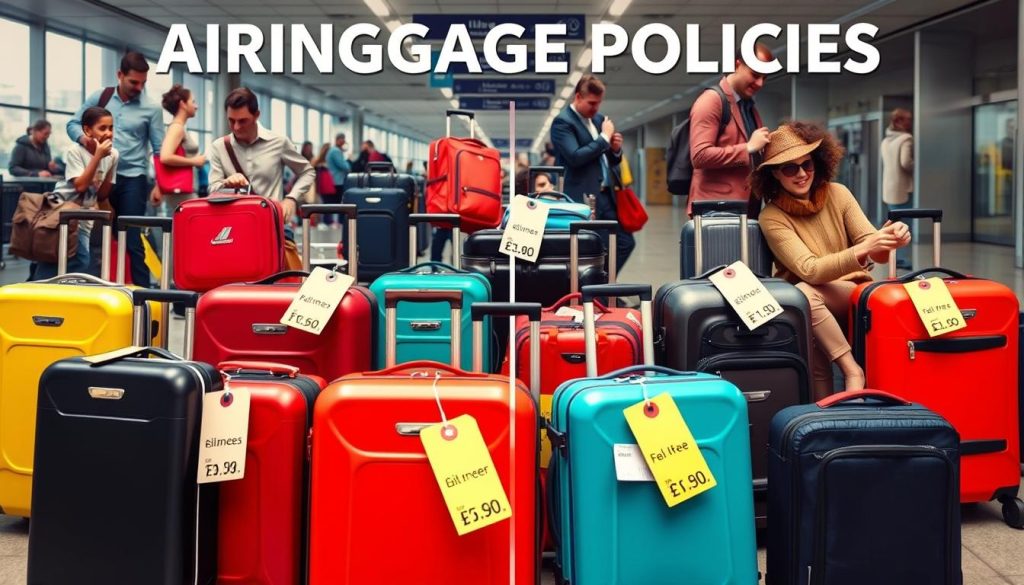
Carry-on bag size is usually 22 x 14 x 9 inches, with a weight limit of 15 to 25 pounds. Checked bags also have size and weight limits, which can change by airline. During busy times, airlines might check these rules more closely.
Knowing about size and weight limits is key to avoid extra fees. Special items, like sports gear or musical instruments, have their own rules. Always check with your airline first.
Here’s a quick guide to keep in mind:
| Airline | Free Baggage Allowance | Checked Bag Fee | Carry-On Bag Fee |
|---|---|---|---|
| Southwest Airlines | 2 Free Checked Bags | $0 | $0 |
| Spirit Airlines | None | $34 (Booking), $99 (Gate) | $39 (Booking), $99 (Gate) |
| Qatar Airways | 1 Free Checked Bag | $0 | $0 |
| Emirates | 1 Free Checked Bag | $0 | $0 |
| Etihad Airways | 1 Free Checked Bag | $0 | $0 |
A portable scale can help keep your luggage within limits and avoid extra charges. Also, smart packing, like rolling clothes and using cubes, saves space and cuts down weight.
Join a Frequent Flyer Program
Joining a frequent flyer program is a smart way to dodge checked baggage fees. By signing up for an airline loyalty program, you unlock benefits that go beyond just earning miles. One key advantage is saving money on baggage fees.
For instance, with Delta, United, and American Airlines, members of their loyalty programs often don’t have to pay for checked bags. Delta’s Medallion members get their baggage fees waived. Gold Medallion members can check two bags for free, while Platinum and Diamond members can check three.
United Airlines treats its Premier travelers well, too. Premier Silver members can check one bag for free, Gold members get two, and Platinum members get three.
Using airline credit cards is another smart move. These cards come with advantages such as free checked bags. Cards like Chase Sapphire Reserve offer up to $300 each year for travel buys, including bags. And the American Express Platinum Card gives you up to $200 yearly for airline fees.
What’s more, these benefits aren’t just for you. Sometimes, up to eight people flying with you can also check their bags for free. Even though these cards have annual fees, the savings on bags can really add up.
| Airline | Member Status | Checked Bags Allowance |
|---|---|---|
| Delta | Medallion | 1 bag for all members, 2 bags for Gold, 3 bags for Platinum and Diamond |
| United | Premier | 1 bag for Silver, 2 bags for Gold, 3 bags for Platinum and 1K |
| American Airlines | Gold/Platinum | 1 bag for Gold, 2 bags for Platinum, 3 bags for Platinum Pro and Executive Platinum |
In the end, using a smart strategy of joining frequent flyer programs and getting airline credit cards can save you lots on baggage fees. Since airline fees added up to more than $6.7 billion in 2022, using these tips can help you save big on your travels.
How can I avoid extra fees for checked baggage?
Packing light is the best way to avoid baggage fees. To keep costs down, always pack smart and light. Knowing your airline’s policies can prevent surprises at check-in.
Start by checking your airline’s baggage rules. For example, Southwest Airlines offers two free checked bags on every flight. This is a huge saving compared to other airlines.

Using carry-on bags well also helps avoid fees. Most airlines allow a carry-on and a personal item for free. This reduces the need to check in bags.
Getting an airline credit card is another good move. For instance, holders of the Delta SkyMiles® Gold American Express Card get one free checked bag. This is for the cardholder and up to nine people traveling with them. Just two travelers could save $120 with this perk.
Being a frequent flyer has its perks too. United MileagePlus Premier members get up to three free checked bags. This benefit depends on their status, making it easier to avoid extra fees.
Here’s a comparison of popular airlines and their baggage rules:
| Airline | Baggage Fees |
|---|---|
| Southwest Airlines | Two free checked bags |
| Delta Airlines | One free checked bag with Delta SkyMiles® Gold American Express Card |
| United Airlines | Waived fees for 1-3 checked bags (Premier members) |
| JetBlue | Two free checked bags for active-duty military |
By following these tips, you can pack smart and light to avoid extra fees. Always check your airline’s rules before flying. Staying informed helps you pack efficiently and save money.
Travel Alternatives to Avoid Baggage Fees
If you hate paying high baggage fees, why not try the train? Trains usually give you a relaxed journey and let you bring more bags for free. Airlines can charge a lot, like $40 for the first bag and even more for heavy or big ones. But trains are more generous with what you can take.

Shipping your bags is another smart choice to dodge extra fees. Companies like FedEx and UPS can send your luggage to where you’re going. This is handy if you’re worried about paying more for heavy bags at the airport. For instance, a bag over 50 pounds might cost you $30 to $100 with an airline. Shipping might save you money and hassle.
“By choosing train travel, you can skip the hassle of airport luggage restrictions and hidden fees, making your journey more enjoyable.”
Let’s look at costs. Here’s how much you might pay for bags when flying versus taking a train or shipping:
| Travel Type | First Checked Bag Fee | Overweight Fee (50-70 lbs) | Oversized Fee |
|---|---|---|---|
| American Airlines | $40 | $30 – $200 | $30 – $200 |
| Delta Airlines | $35 | $100 – $200 | $100 – $300 |
| United Airlines | $35 – $40 | $100 – $200 | $150 – $200 |
| Train Travel | Included | N/A | N/A |
| Shipping (FedEx/UPS) | Varies by distance | Varies by weight | Varies by size |
Choosing to take the train or ship your bags can keep more money in your pocket. It’s smart to check out every choice to see which saves the most. This way, you can travel lighter and enjoy the trip more.
Packing Tips to Reduce Luggage Weight
Traveling smart means learning to pack light. An important tip is to choose clothes that serve many purposes. By doing this, you bring fewer pieces but still have plenty of outfit options.
Packing minimally helps save on bag fees and makes moving through airports easier. Extra baggage can cost $25 to $100 per bag, depending on the airline. Making this small change can help your wallet a lot.
- Use electronic hanging scales to weigh your bags and ensure they don’t exceed airline weight limits.
- Adopt packing cubes to optimize space. By compartmentalizing items, you can fit more into your carry-on.
- Roll your clothes instead of folding them. This hack helps in saving space and keeping wrinkles at bay.
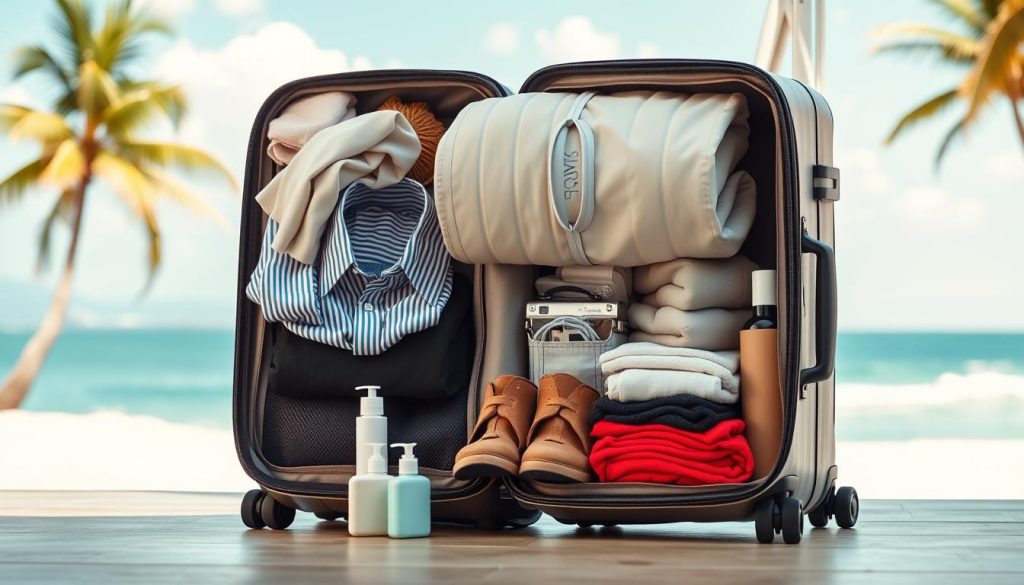
Try to travel with just a carry-on when you can. Most airlines let you bring a free carry-on and a personal item. Put heavy items like electronics and books in your personal item. This spreads out the weight and might help you dodge extra fees, especially with airlines that charge up to $35 for a carry-on.
Here’s a look at how much you might save on bag fees:
| Requirement | Checked Bag | Carry-On |
|---|---|---|
| Typical Fee | $25-$100 | Free to $35 |
| Allowed Items | Varies by airline | One carry-on + one personal item |
Remember not to overpack. About 40% of travelers admit they pack too much. Plan to wear some outfits more than once. This way, you carry less and save money, making your trips more enjoyable.
Lightweight Luggage Options
Choosing High-Tech, Lightweight Materials for your travel gear can really change the game. With modern materials, you don’t just save on baggage fees. You also get to carry something light yet strong. Brands like AwayTravel and Lucas lead the way with materials like polycarbonate and ballistic nylon. These choices keep things light without losing out on toughness. It’s a win for anyone who flies often and wants to save money and stress.
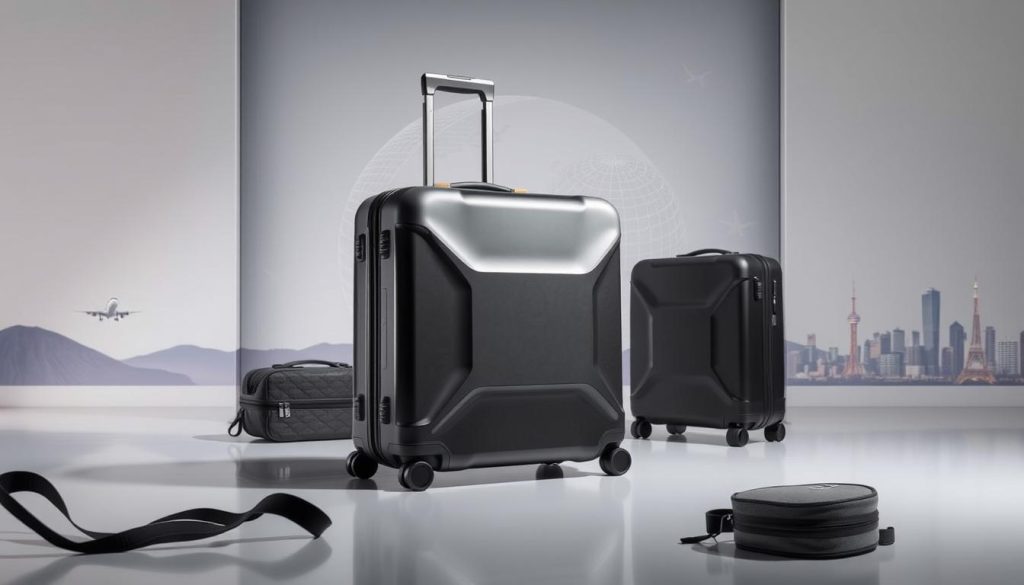
Check out these top picks for lightweight luggage that combines style and function:
| Brand | Material | Weight | Features |
|---|---|---|---|
| AwayTravel | Polycarbonate | 7.6 lbs | Built-in battery, Compression system |
| Lucas | Ballistic Nylon | 5.8 lbs | Expandable, Trolley Handle |
| Samsonite | Curv® technology | 5.5 lbs | Lightweight, High impact-resistance |
| Travelpro | Duraflex® fabric | 6.3 lbs | Water-resistant, Aluminum handle |
To make a good choice in lightweight luggage, focus on Choosing High-Tech, Lightweight Materials. These materials are designed for tough travel but keep bags light. You’ve got ballistic nylon that’s super tough, and polycarbonate that’s amazingly light. Each material brings its own benefits, depending on what you need for your trip.
Selecting the right lightweight luggage can save you money on fees over time. It also makes traveling smoother and more enjoyable. You don’t have to give up on quality or durability to pack light. Instead, pick clever, high-tech luggage options that meet the needs of today’s traveler.
Smart Packing Tools
Using smart packing tools can change how you travel. Compression sacks are a big help. They let you squeeze your clothes into a smaller space. This gives you more room in your bags. It also keeps you from paying high baggage fees, which can be a lot, especially for flights to other countries.
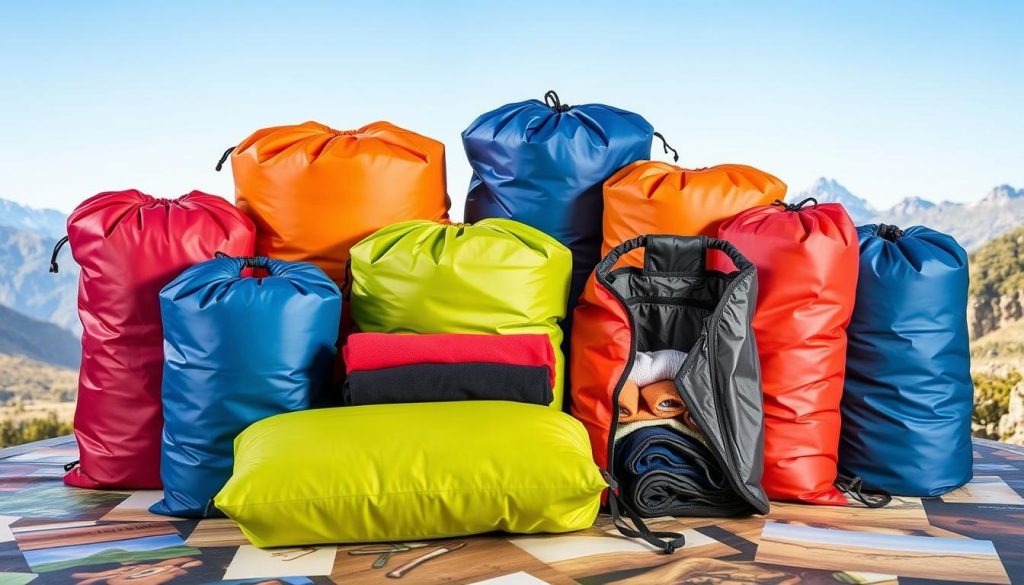
Also, clothes designed for travel are great for packing. Brands like SCOTTeVEST make clothes with lots of pockets for your passport, phone, and wallet. This helps you use the space in your carry-on better. It fits with what airlines allow, which is usually a bag that’s 22 x 14 x 9 inches.
These smart packing tools also make traveling less stressful. For example, compression sacks can shrink down big items like winter coats. This means you can pack more smartly in a bag that’s up to 62 inches all around.
Why are smart packing tools and compression sacks good? Here’s a quick look:
| Tool | Function | Benefit |
|---|---|---|
| Compression Sacks | Compress clothing and soft items | Saves space, reduces luggage volume |
| Multi-functional Garments (e.g., SCOTTeVEST) | Clothing with multiple pockets | Stores essentials, increases carry-on capacity |
| Packing Cubes | Organizes items within luggage | Improves packing efficiency, easy access |
Adding these tools to your packing method helps a lot. With smart packing tools like compression sacks, you make the most out of your luggage. You can dodge big fees for heavy bags. Everything you need stays neat and easy to find.
Avoiding Overweight Baggage Fees
Overweight baggage fees can make a big impact on your travel costs. Using a Portable Luggage Scale before going to the airport can help you avoid these extra charges. It makes sure your suitcase is not too heavy for the airline.

A study showed a third of Brits have paid extra baggage fees. In 2022, this added up to over £490 million in the UK. The cost for overweight baggage can vary greatly, from £11 per kg to £65.
To avoid these big fees, try these tips:
- Spread items across different bags to avoid exceeding weight limits.
- Send heavier items to your destination before you travel. This is smart for bulky items.
- Choose light luggage and use smart packing tools to keep the weight down.
Most U.S. airlines allow up to 50 pounds per checked bag. But, airlines like Spirit and Frontier only allow 40 pounds. Using a Portable Luggage Scale helps you make sure you’re within the limit and won’t be charged extra.
Here’s how some major airlines compare with baggage fees:
| Airline | First Checked Bag Fee | Second Checked Bag Fee | Carry-on Bag Fee |
|---|---|---|---|
| Southwest | $0 | $0 | |
| Frontier | $99 | $89 | $55 – $99 |
| Spirit | Variable | Variable | Variable |
| American Airlines | $30 | $40 | |
| JetBlue | $65 (basic economy) |
Lastly, Using a Portable Luggage Scale can really help. This tool, with some smart planning and repacking, can save you from paying extra. Avoiding those fees is easier than you might think.
Conclusion
Traveling smartly means not getting weighed down by extra costs. Knowing how to work around baggage fees helps you travel smarter. You’ll feel more at ease understanding the high costs of checked or overweight luggage. This knowledge greatly helps manage your travel budget.
Adding smart travel moves to your plan boosts your travel game. Joining frequent flyer programs or using compression bags are such moves. Since unexpected luggage fees can hit hard, over $60 sometimes, being ready is key. Pack with care using cubes and rolling your clothes to stick to airline rules. This can cut your baggage costs in half, making trips cheaper and smoother.
The aim is making your travel simpler and dodging those extra fees. Stay sharp and ahead of the game to enjoy your travels without money worries. Knowing the ins and outs of airline baggage rules, picking the right bags, and packing smart are your keys. These strategies ensure a trouble-free, budget-friendly journey.