Avoid Hidden Hotel Fees: Your Guide
Have you ever checked out of a hotel and found your bill much higher than expected? This happens when hidden fees add up.
Hidden fees can really make your hotel bill jump. Hotels in the U.S. collect about $3 billion a year from these extra charges. For example, mandatory fees can add $26 per night. This means you might pay up to 20% more than you thought at first. Even sites like Airbnb and Vrbo can surprise you with last-minute costs.
Wondering how to dodge these unexpected fees? This guide will show you the ins and outs of hidden hotel fees. Plus, you’ll get tips and tricks to keep your travel budget in check. Learn how to spot these fees early, manage them while you’re staying, and how travel credit cards can help.
Nowadays, being smart about your travel budget is key. By staying informed, you can avoid paying more than you planned. Use these tips to make the most of your travel money.
Understanding Resort Fees
Resort fees are extra charges hotels add on top of the room price. They were meant for amenity use but are now common. You might ask, What Are Resort Fees? They can be $20 to $50 nightly, affecting your spending.

These resort fees started in 1997, and guests have been unhappy since. They make up about 11% of your hotel cost. For instance, a stay at the DoubleTree by Hilton in Waikiki Beach jumps from $235 to $320 with these fees and taxes. That’s a 35% increase.
Hotels add hidden hotel charges to seem cheaper and draw in guests. It makes them look affordable. This way, they also pay less to booking agencies and keep more profit.
- Average resort fee: $42.41.
- Typical fees are $25 to $35 a night.
- Some charge just $5-$10 per night.
- Places like Fisher Island Club Hotel in Miami Beach ask for $160 nightly.
Being clear about costs is key. Often, these fees are hidden until the last minute. This makes it hard to compare prices and choose wisely. In 2012, the Federal Trade Commission warned 22 hotels for not being upfront, highlighting ongoing issues with these fees.
Different hotel brands manage resort fees in their own ways. Wyndham properties have the highest fees in relation to room prices. Marriott, however, offers great amenities with low fees. Best Western has the least fees, as they mostly lack resort amenities.
Understanding these hidden hotel charges is crucial for managing your travel budget well. If you know about these fees, you can plan better. This helps ensure cost clarity and might save you money on future trips.
Identifying Common Hidden Hotel Fees
When you book a hotel, it’s crucial to know about hidden charges that can raise your cost. Charges for Wi-Fi and Internet Fees can reach $15 a day. These costs might not be mentioned in the room rates, leading to a surprise at checkout.
Parking fees are also a common hidden charge in cities. Overnight parking at city hotels can be between $40 and $60. Valet parking adds at least another $20 a day. Fees for housekeeping and room service can also increase your bill, usually around $5 to $20 daily.

Other fees include fitness center access costs, about $10-$15 per day, and pool access charges up to $25 a day. Charges for using the business center, like printing, may also apply, plus minor fees for check-in/out at the front desk. To dodge surprise hotel fees, make sure to ask about these costs before booking.
Here’s a summary of average fees you might face:
| Fee Type | Average Cost |
|---|---|
| Wi-Fi and Internet Fees | $15 per day |
| Parking Fees | $40-$60 per day |
| Valet Parking | $20+ per day |
| Housekeeping/Room Service Fees | $5-$20 per day |
| Fitness Center | $10-$15 per day |
| Pool Access | $25 per day |
| Business Center | Varies |
| Check-in/out Fees | $10+ per instance |
To sidestep additional service charges, always request a full breakdown of fees when you book. This way, you can stay clear of hidden costs and enjoy a transparent stay.
How to Spot Hidden Fees Before Booking
Planning a getaway? Watch out for hidden hotel fees. They can quickly eat into your vacation budget. It’s smart to read the fine print when you book a hotel. This helps you avoid unexpected charges.
Make sure you know the hotel’s policies by looking closely at their terms. Look for added fees for extra adults, Wi-Fi, parking, mini-bar, and tipping the housekeepers. Fees for extra adults can be $20 to $50 per night. Wi-Fi might cost between $10 and $20 a night.

It’s also a good idea to check online reviews. Many travelers talk about hidden fees they’ve run into. This can help you know what extra costs you might face.
Then, call the hotel directly for the most up-to-date info on fees. Talking directly to the hotel helps you learn about charges that may not be listed online or in confirmation emails.
| Common Fees | Typical Range |
|---|---|
| Additional Adults | $20 to $50 per night |
| Wi-Fi | $10 to $20 per night |
| Parking | $25 to $35 per day |
| Housekeeping Gratuity | 10% of the bill |
| Mini-Bar Items | Varies by item |
Using these hotel booking tips helps make your booking clear. And you can avoid hidden fees. By being in the know, your stay will be enjoyable, without budget surprises.
Strategies to Avoid Hidden Fees During Your Stay
Looking for a hotel? There are ways to avoid hidden fees. First, use loyalty programs and points. Hotels offer these programs, and they come with perks. You can get free Wi-Fi, breakfast, and sometimes even room upgrades. Using hotel loyalty programs benefits cuts down on extra charges.

Booking with travel agencies is another good plan. They have clear prices, so you don’t get surprised by hidden fees. Using reputable agencies helps make your costs predictable and clear.
Got unexpected fees at check-in? Knowing how to request fee waivers at hotels can change everything. If some amenities aren’t available, ask the hotel to waive those fees. They usually will, to keep you happy.
Here’s a table with common hidden fees and how to avoid them:
| Hidden Fee | Typical Cost | Strategy to Avoid |
|---|---|---|
| Resort Fees | $20 – $50 per night | Use hotel loyalty programs benefits for fee waivers |
| Wi-Fi Fees | $5 – $30 per day | Book directly through hotels with free Wi-Fi loyalty perks |
| Extra Guest Fees | $20 – $50 per extra person | Clarify guest numbers while booking to avoid surprises |
| Housekeeping Gratuities | $3 – $5 per night | Request for inclusion upfront while booking |
| Early Check-In Fees | $20 – $50 | Inquire and negotiate during the booking process |
| Gym Fees | $10 – $15 per day | Stay at hotels with inclusive fitness amenities |
Savvy travelers know how to avoid extra fees.
Use loyalty programs and points for perks, book through reputable travel agencies, or ask for fee waivers. With these strategies, you can save money and enjoy your stay without fuss.
Using Travel Credit Cards to Offset Fees
Travelers are now using travel credit card perks to deal with hotel charges. Certain cards let you lower the cost of unexpected fees, like resort charges. Chase and Capital One have top cards that help do this.

The Chase Sapphire Preferred® Card has perks making its $95 yearly fee worth it. You can get annual travel credits between $100 to $300. The Capital One Venture Rewards Credit Card lets you use miles for travel costs, each mile worth about 1 cent.
These cards also cut down costs on foreign transaction fees, which are usually between 2% and 5%. For those who travel a lot, not paying these fees means saving up to 5% on purchases abroad. High reward rates for travel buys and point transfers to airlines and hotels can also up your savings.
Imagine a couple flying round-trip could pay more than $120 in baggage fees. Many airline and travel credit cards cover free checked bags, wiping out those fees. Some of these cards have annual fees as low as $95, a deal compared to what you save on just baggage fees.
- High average hospital resort fees: $35 per night
- Annual spending on credit card fees: ≥ $1,000
- Foreign transaction fees for international travel: 2% – 5%
- Baggage fees per couple: ≈ $120
Take the Chase Freedom Unlimited®, with a 3% foreign transaction fee. While this might seem steep, the perks and rewards can balance out the costs, helping you avoid some unexpected fees.
By tapping into travel credit card perks, you can handle hotel fees more easily. This makes traveling more affordable and fun.
How can I avoid unexpected fees at hotels?
Start by doing your homework to avoid unexpected fees at hotels. Check the expected fees before your trip. They often range from $20 to $50 a night, plus tax. Resorts charge fees for things like fax machines, which many don’t use. Know which fees you can’t dodge to plan your spending better.
Read the fine print closely before you book to avoid surprise charges. Find out which fees are fixed so you’re ready. If you spot charges you didn’t expect, speak up right away, especially if they weren’t clear at booking.

Argue the fees if you can’t use what you’re being charged for. Being part of hotel loyalty programs might help. For example, loyal guests at Caesars Entertainment in Las Vegas sometimes don’t pay resort fees. Also, fighting charges through your credit card company has worked for others.
Stay up to date on the rules about hotel fees in different states, thanks to hotel employees’ efforts. If you hit a dead end, think about complaining to the attorney general or going to small claims court. People lose billions to sneaky fees every year. Yet, knowing how to navigate can protect your wallet.
The Role of Government Regulations on Hotel Fees
Hotel prices have been changing a lot because of the Federal Trade Commission (FTC). The impact of regulations on hotel fees is growing. New laws are making things more transparent.
Starting July 1, 2024, California’s Senate Bill 478 makes hotels show all unexpected fees. This law means hotels must tell you about any extra fees before you book. Assembly Bill 537 also fights hidden fees and starts at the same time.
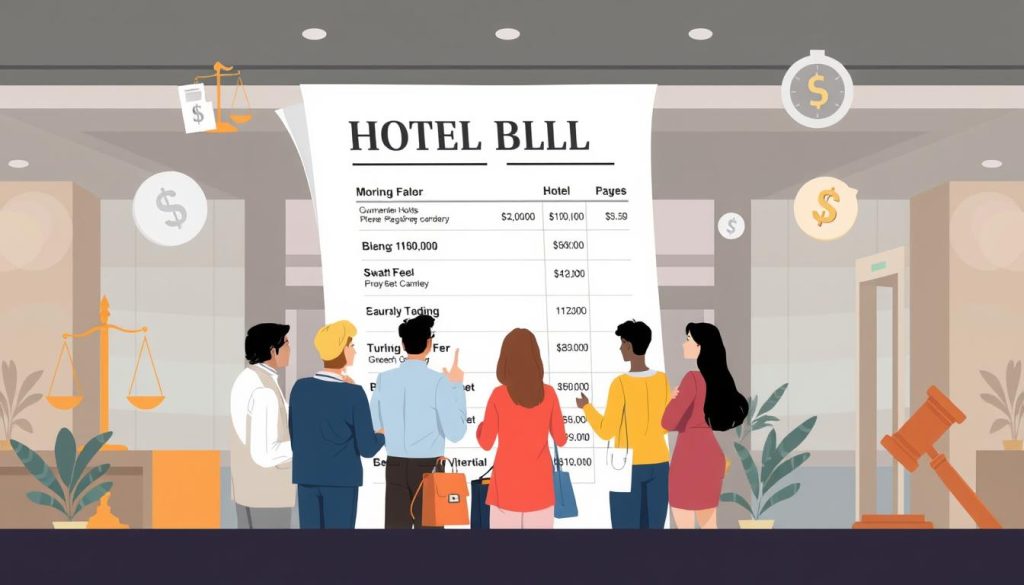
Big hotel groups like Marriott and Hilton are now showing resort fees when you book. They started this after Marriott made a deal in 2021 for clearer pricing. The FTC’s new rules should save people a lot of money – about $11 billion in ten years.
More states are doing what California did, making sure hotels show all costs upfront. Airbnb will also show full rates soon. The Biden administration is working hard to stop junk fees in many areas, including travel.
Most people, 87%, don’t like hidden fees, and 65% want them banned everywhere. Experts think these rules won’t make hotel prices go up. Instead, they’ll make it easier to see the full cost. The cost to businesses for changing their pricing is about $10,000, but it’s worth it for consumers.
| Legislation | Effective Date | Key Provisions |
|---|---|---|
| Senate Bill 478 | July 1, 2024 | Upfront disclosure of all fees beyond the basic service cost |
| Assembly Bill 537 | July 1, 2024 | Targets hidden resort cleaning and service fees |
Consumer Rights and Legal Actions
Knowing your consumer rights in hotels helps you avoid surprise bills. If hidden charges arise, you have options to defend yourself.
Filing complaints with the Better Business Bureau (BBB) is a great first move. It offers a way to challenge unfair pricing and settle disputes with hotels.
Complaining to your credit card issuer can also work well. The Fair Credit Billing Act lets you fight wrongful charges for a refund. To win, it helps to give clear proof for your case.

The Junk Fees Rule could save people up to 53 million hours yearly. This is when they look for the total price of event tickets and short stays. These hours saved are worth over $11 billion in the next ten years.
There are laws to fight hidden fees. For instance, California’s SB 478 requires hotels to show total prices, cutting down on price tricks.
- The FTC got over 12,000 comments on hidden fees, showing many are upset about this issue.
- Hidden hotel fees cost U.S. consumers nearly $3.4 billion each year. Fighting these fees can lessen this big financial weight.
| Legal Action | Details |
|---|---|
| No Hidden FEES Act | The House passed this law aiming for clear disclosure of hotel fees. |
| State Regulations | California and around 10 more states are pushing for clearer fee disclosure. |
| FTC Rule | A new FTC rule requires all necessary fees to be clearly shown to help buyers. |
Stay alert and use your rights to make hotel prices fair and clear. Fight back against hidden charges with the help of new rules and existing laws. Legal actions against hidden fees are vital for protecting consumers.
Top Hotel Brands with Hidden Fees
Knowing which hotel brands have high resort fees can help you avoid surprise costs. In places like New York and Las Vegas, some hotel brands are famous for extra charges. It’s clear that while some hotels are open about their pricing, others might shock you with extra fees.
Before the pandemic, the Federal Trade Commission found that people paid $2 billion in hotel fees. Hotels make about $3 billion every year from these extra charges. For example, Marriott International Inc. faced a lawsuit for $225,000 due to not being clear about extra costs.
Looking closely at hotel brands and their reviews can show you which ones are open about their prices. Knowing all the costs and fees for your stay helps you plan your budget. For a short trip to New York City, you might see extra charges like $90 in destination fees, aside from any resort fees.
Even though hidden fees might get you discounts, like 6% off the New York Pass or 20% off zoo tickets, they’re often not mentioned up front. This is why it’s important to look carefully. Joining loyalty programs can help avoid these fees, offering a quick fix to any disputes.
Many famous hotel brands are now being more open about their pricing because of new rules. For example, the FTC has a new rule starting in May 2024 that bans hidden fees, requiring all fees to be shown upfront. Until this rule starts, many well-known hotels will keep adding to the $3 billion they get from fees.
| Brand | Known Fees | Transparency Initiatives |
|---|---|---|
| Marriott International | $35 daily resort fee | Improved disclosure after lawsuits |
| Hilton Hotels | $30 average nightly resort fee | Member fee transparency programs |
| Choice Hotels | $26 average fee | Regular review and audit of charges |
In the end, knowing which hotel brands have high resort fees and which are transparent about pricing is essential for a worry-free trip. By using detailed hotel reviews, you can make smart choices for a smooth and affordable visit.
Conclusion
Understanding hotel fees is key for a budget-friendly stay. Knowing about resort fees, incidental charges, and taxes helps you plan better. Resort fees can increase your bill by $10 to $50 each day. This makes being aware of all fees before booking very important.
Using travel credit cards is a smart move. They offer benefits like free Wi-Fi and room upgrades. Booking when it’s less busy and finding discounts can lower your costs. It’s important to ask for clear fees upfront.
Knowing your rights as a consumer helps against unfair charges. Hotels improve with feedback, aiming to satisfy guests while making a profit. By staying informed, you can dodge hidden fees for a better hotel experience. These tips prepare you to handle hidden fees for a hassle-free stay.