Navigating Personal Space on Busy Flights
Ever thought about how to get your space back on a full flight? Airlines pack seats tightly, making us think hard about personal space. It’s not just about being comfy; it’s about a peaceful, respectful flight.
This article shows you ways to improve your personal space and comfort on packed flights. You’ll learn about picking the best seat, packing smart, and flight etiquette. Since we need about 24 inches to sleep well but get only 17 inches in economy, knowing how to protect your space is key.
Around 55% of flyers feel cramped during flights, studies say. That’s why learning to handle personal space on packed planes is vital. Besides being squished, long flights can stress you out mentally too.
Keep reading for easy tips to tackle these issues on your next flight. Knowing how to manage your space and stay comfy is a must for today’s travelers. We’ll look at specific tips to help make your next flight better.
The Importance of Personal Space on Airplanes
In today’s flights, keeping personal space is tough but vital. Airlines want more seats, so we lose legroom and seat space. Realizing what this means and the value of travel boundaries can make your trip better.
Understanding Personal Boundaries
Personal boundaries matter a lot on flights because seats are close. Now, the space for your legs in economy is about 28-30 inches, less than before. Also, people from different places think differently about personal space. This matters more on flights to other countries. It’s key to be aware and respect everyone’s space.
Psychological Impacts of Cramped Spaces
Being squeezed in a small space impacts your mind. Over 80% of flight attendants deal with space issues often. This shows airlines need to act. Tight spaces can make you feel stressed and trapped. Setting your own space limits can help lower stress and make dealing with others easier on your flight.
| Aspect | 2023 Data | Previous Standards |
|---|---|---|
| Seat Pitch | 28-30 inches | 32-34 inches |
| Seat Width Reduction | 1-2 inches | No reduction |
| Complaints Reduction with Early Boarding | 40% | N/A |
| Middle Seat Armrest Opinion | 70% believe they should get both armrests | N/A |
| Technology Usage by Passengers | 65% | N/A |
Airline Etiquette: Understanding Unwritten Rules
Following airplane etiquette can make your flight better. And it does the same for others too. It’s about managing personal space and living in harmony when space is tight.
The Middle Seat Armrest Protocol
Who gets the armrests is a big question in airplane etiquette. Most people, about 60%, think the person in the middle seat should get both. This idea makes the flight nicer for everyone.
Reclining Seat Etiquette
When you want to recline your seat, do it slowly. Check behind you first. This keeps things comfortable for everyone. Be extra careful during meals and when the tray tables are down.
Overhead Bin Etiquette
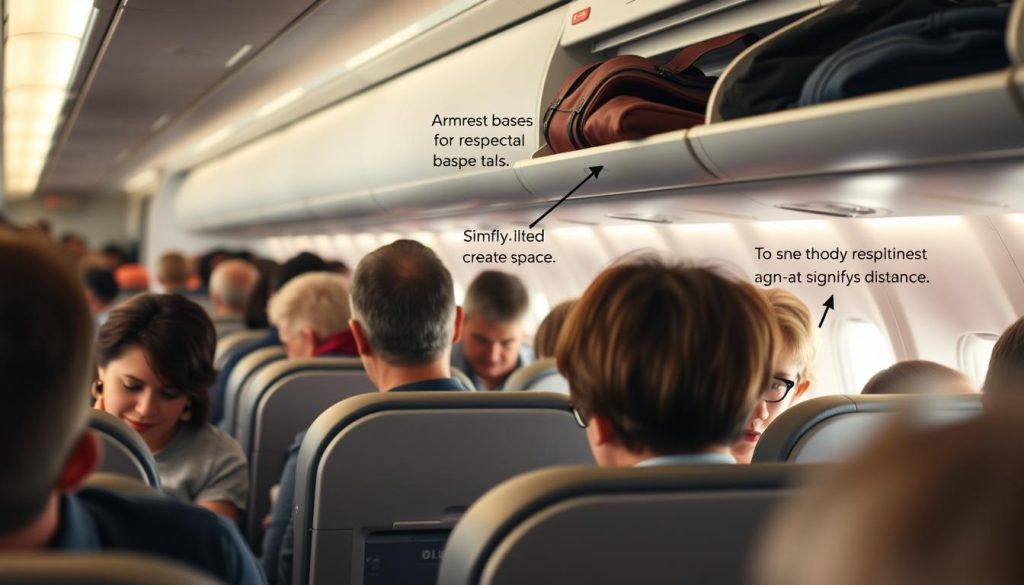
It’s important to use overhead bin space well. Organize your carry-on to help others fit theirs too. A lot of flight attendants, 65% in fact, see mix-ups with this space. It shows we need to be mindful of how we use shared areas.
| Aspect of Etiquette | Agreement | Notes |
|---|---|---|
| Middle Seat Armrests | 60% | Prefer middle seat gets both armrests |
| Reclining Seat | 70% | Prefer clear communication and consideration |
| Overhead Bin Management | 65% | Regular misunderstandings reported by attendants |
Managing Personal Space on Crowded Flights
When flights get full, keeping personal space is key for comfort. With seats in economy often below 17 inches wide and pitches tight at 28 inches, it’s vital to know how to handle these small areas. We’ll look at how picking the right seat and talking to others can make your flight better.
Choosing the Right Seat
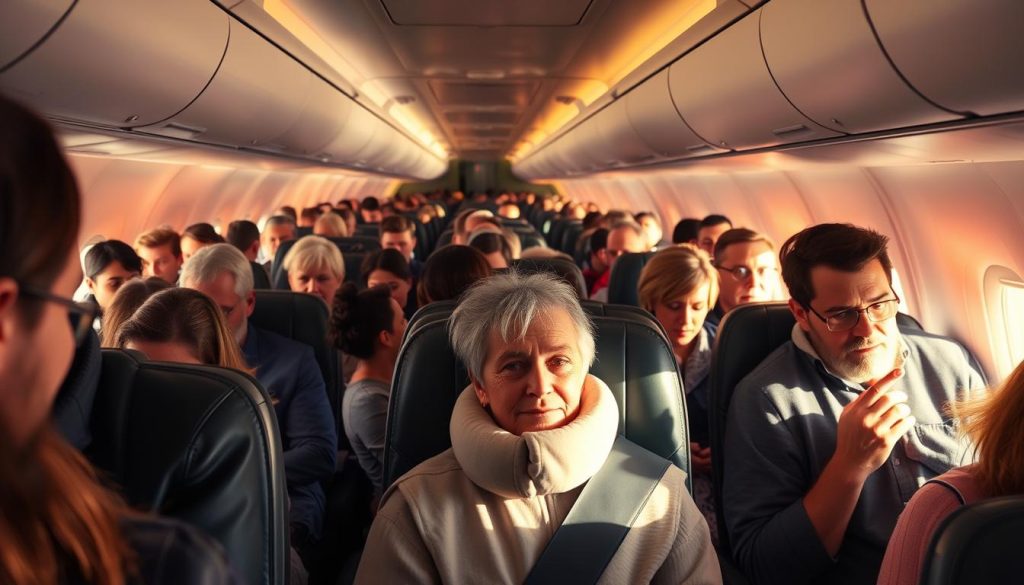
Finding the right seat can make a big difference in comfort. Now, the average seat fits only half of the passengers well. So, picking spacious seats, like those in exit rows or at the front, is a smart choice. These spots give more room for legs and help with the cramped feeling.
A perfect seat does more than just give space. It also makes you feel in control and safe. Choosing a spot by a wall or divider, for example, can make you feel more at ease. It’s like finding a ‘home base’ in a crowded place and helps on full flights.
Talking helps you choose the best seat. Talk to airline staff or look at seat maps online to find good spots. This way, you ensure that you manage personal space well on packed flights.
Communicating with Fellow Passengers
Talking nicely to others on the flight is crucial for peace. Being clear and polite can stop fights and build a friendly space. For example, if you want to recline your seat, telling the person behind you first can avoid problems. Most issues on flights come from sudden seat moves.
It’s key to understand everyone’s space needs. Anthropologist Edward Hall talks about different space zones: close (0-18 inches), personal (1.5-4 feet), social (4-12 feet), and public (12+ feet). Knowing these zones helps keep a good distance from others, even when it’s tight.
Methods like ‘bubble breathing’ can help you relax. This calms you down, helping you manage space without stress. Also, looking at the good things around you changes focus from stress to happier thoughts. This makes the travel vibe better for everyone.
Choosing seats wisely and being nice in how you talk are keys to managing space on full flights. By doing these things, you make your trip and others’ better, leading to a nicer journey for all.
Strategies for In-Flight Comfort
Long flights can be tough, lasting up to 16 hours. It’s essential to use effective strategies for comfort.
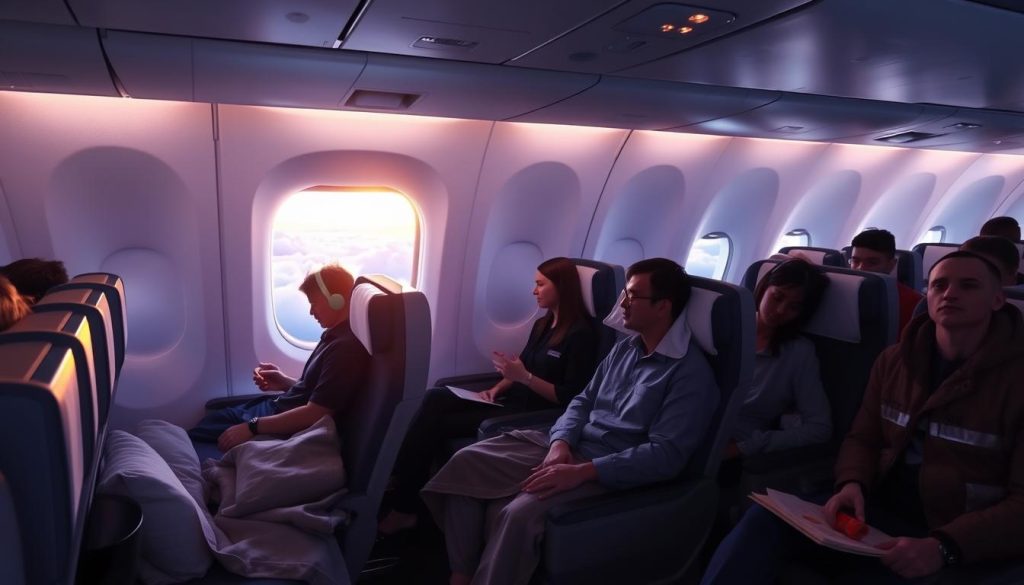
Using Seat Accessories
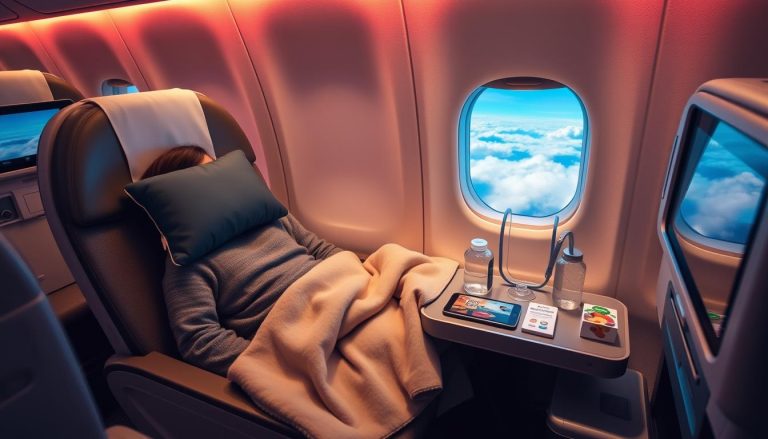
Seat accessories greatly increase comfort. Travel pillows help your neck feel 40% better. Pro Compression socks can cut the risk of DVT by 60%.
Noise-canceling headphones, like the Bose QuietComfort, are loved by 70% of travelers. They make watching movies more enjoyable. A good sleep mask, such as the Nodpod, can also help you sleep better.
“Using airline apps and in-flight Wi-Fi can improve customer satisfaction ratings by over 15%.”
Clothing and Packing Tips
Dressing in layers lets you adjust to cabin temperature changes. Drinking plenty of water makes you 25% less likely to feel tired. Owala FreeSip bottles and Hydro Flask Wide Mouth are great for staying hydrated.
Pack snacks like granola bars to avoid bad airplane food. Packing things like toothbrushes and lip balm helps reduce stress by 20%.
Moisturizer is a must for over 83% of travelers to fight dry cabin air. Travel kits with eye drops and melatonin are popular for comfort.
Using these comfort strategies makes travel better. You’ll reach your destination feeling refreshed and relaxed.
Space-Saving Tips for Your Carry-On
It’s essential to maximize your carry-on space for a smooth travel experience. This avoids the need for checked baggage and ensures you have everything you need. Smart packing techniques and choosing the right carry-on bags can hugely improve your packing. This means more personal space during your flight.
Efficient Packing Techniques
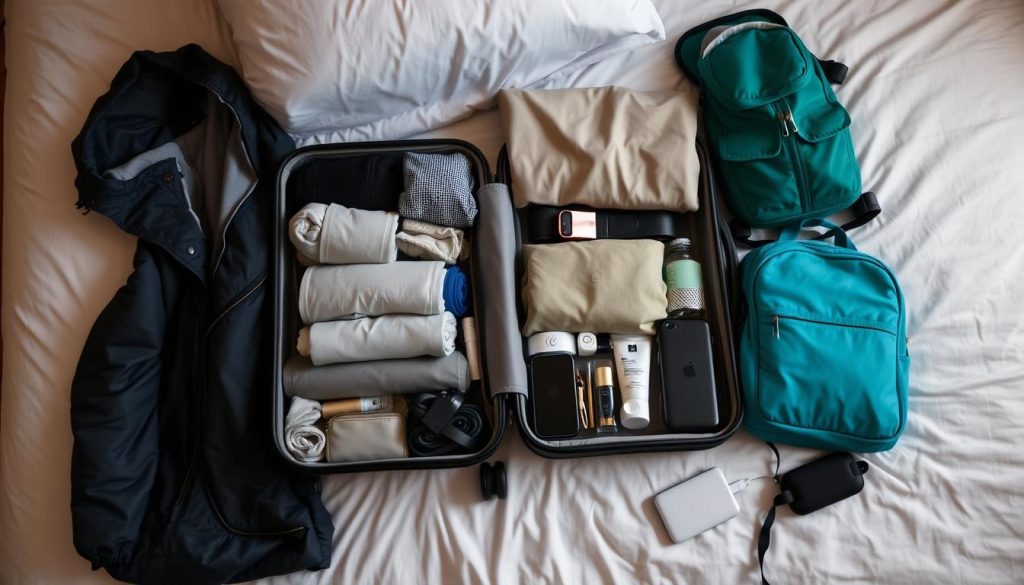
Effective packing methods make a big difference. Rolling clothes instead of folding helps a lot. This method can create up to 25% more space. Packing cubes keep things organized and boost space by 10%. Also, compression bags are great for squeezing in more, especially dirty clothes, adding 30% more space.
Remember, travel-size liquids must follow TSA rules, staying under 3.4 ounces. Solid alternatives like lotion bars cut your liquid needs in half. For longer trips, consider laundry options to save space, using hotel services or local spots. And wear your bulky shoes to save even more room in your carry-on.
The Best Carry-On Bags
Choosing the right bag is key. Most airlines recommend a size of 22 inches for carry-ons. Sticking to carry-on only helps keep things simple and avoids extra fees for checked bags, which can be about $25.
| Carry-On Feature | Benefit |
|---|---|
| Built-in Compression | Maximizes packing space |
| Expandable Compartments | Adjusts to diverse packing needs |
| Durable Materials | Ensures longevity and withstands wear |
| Lightweight Design | Decreases overall travel weight |
Personal Boundaries and Airplane Etiquette
Knowing how to deal with travel boundaries can make your flight better. With a 47 percent rise in passengers behaving badly, it’s key to know how to handle personal space on planes.
Setting Clear Boundaries Politely
It helps to set boundaries kindly right away. Start by kindly telling your seatmate what makes you comfortable. If someone invades your space, asking nicely can usually fix it without causing a problem.
65% of flyers feel uneasy when their space is invaded, and 70% get upset when others ignore their travel boundaries. So, setting boundaries early can make the flight better for everyone.
Handling Space Invasions Gracefully
Sometimes, despite your efforts, others might still invade your space. It’s important to handle these moments with grace to keep peace on the plane. The International Air Transport Association (IATA) says 37 percent of problems happen when passengers don’t listen to the crew. If talking it out doesn’t work, ask a flight attendant for help.
If someone keeps reclining their seat or interrupts meal time—something 40% of travelers face—you can quietly ask a flight attendant to step in. Solving these issues with respectful talks shows the importance of considerate interaction.
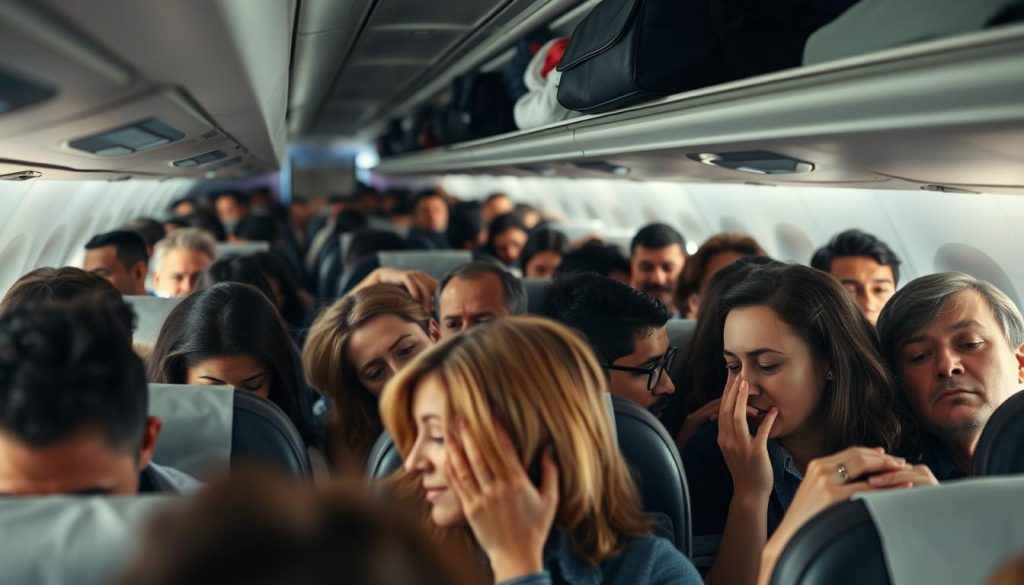
This approach of using polite talk and getting help from the crew when needed helps with handling personal space conflicts. It also makes the travel experience better and more respectful for everyone.
Here’s a quick look at usual flight issues and how to fix them:
| Issue | Passenger Response | Suggested Solution |
|---|---|---|
| Seat Reclining | 40% experience disrupted meals | Negotiate with the passenger politely or involve flight crew |
| Noise Disturbances | 78% negatively impacted | Use headphones and suggest them to others for a quieter cabin |
| Unexpected Personal Space Violations | 65% feel discomfort | Set boundaries early and seek crew help if necessary |
| Blocking of Aisles | 52% of delays caused | Store carry-ons promptly and avoid standing unnecessarily |
Flight Seat Strategies for Optimal Space
Choosing the perfect seat is key to a comfy flight. Your pick among aisle, window, and middle seats affects space and ease. Knowing the pros and cons of each can help you choose wisely.
Benefits of Premium Economy Seats
Upgrading to premium economy is a smart flight seat strategy. You get more legroom and better service. Despite costing more than regular economy, the benefits of premium economy include wider seats and more recline. Plus, sometimes you get to board earlier. These perks make your flight way better.
Aisle vs. Window vs. Middle Seats
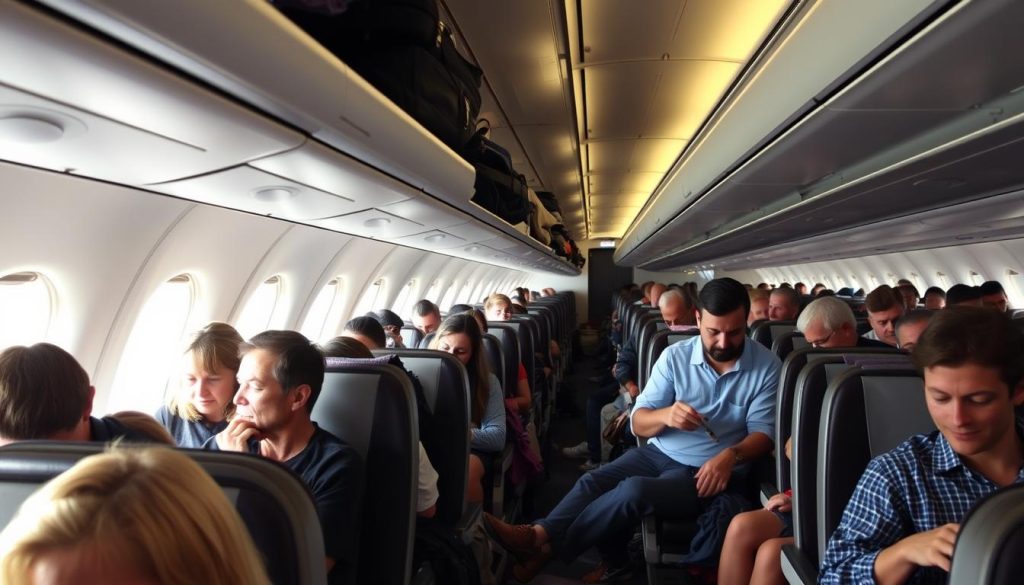
Choosing between aisle, window, and middle seats makes a big difference in your flight. Each type has its own set of pros and cons:
| Seat Type | Advantages | Disadvantages |
|---|---|---|
| Aisle Seat |
|
|
| Window Seat |
|
|
| Middle Seat |
|
|
Most people prefer aisle seats (50%), then window seats (40%), leaving only a few picking middle seats (10%). Middle seats towards the back in big planes are often last to be chosen. This might give you more space. Flights to places like Houston-Tokyo show that empty seats are common between family members. So, choosing wisely can indeed give you extra comfort.
By learning about flight seat strategies and premium economy benefits, you can make your flight much more pleasant.
Dealing with Reclining Seats and Technology
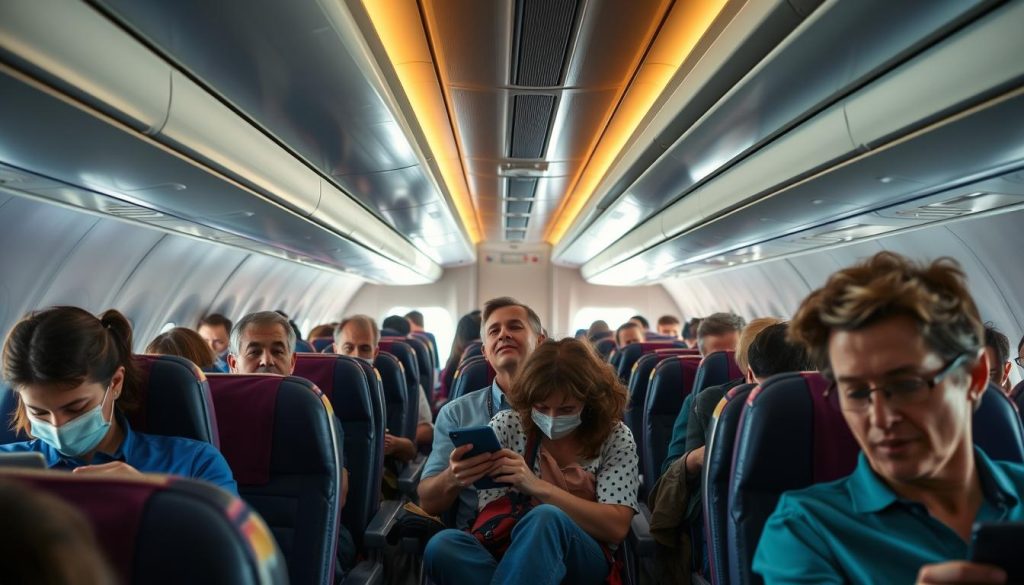
Reclining seat rules and tech use on flights are big issues now. More people means less space on planes. This makes knowing how to handle tech and seat reclining important for a good trip. Problems happen more often because there are fewer inches between seats to sell more tickets. This makes flights less comfy and can cause tension. Delta Airlines’ CEO says you can recline your seat. This shows how key it is to know about reclining seat manners.
Using Laptops and Tablets Effortlessly
Using tech like laptops and tablets on flights needs careful planning. Sometimes, you only get 28 inches of space between seats, much less than the old 34 inches. This small space can lead to damaged laptops and spilled drinks when the seat in front reclines. Here are tips to manage this tight spot:
- Use laptop stands that fit small spaces to keep your screen in view and stay comfy.
- Choose tablet keyboards that don’t need much room.
- Keep your gadgets safe from spills and breaks during meal times.
Think about the person sitting behind you, especially if they’re really tall or have health issues. Using things like tablets can lessen how much you bug them.
Negotiating Recline Time with Neighbors
Talking things out is best when figuring out reclining times with others. Being open and nice helps everyone get along. Try these tactics:
- Talk first to the person behind you about reclining, doing so politely.
- Recline slowly so they have time to move their stuff or change how they’re sitting.
- Don’t recline during meals or when it’s dark in the cabin to avoid problems.
Experts in manners say it’s best to not recline if you can help it. This avoids messing with someone else’s space. After COVID-19, people have been more upset about this. Limiting how far seats recline could help avoid these issues, say some experts.
| Statistic | Details |
|---|---|
| Disruptive Behavior | Flight attendants report increased incidents related to seat reclining. |
| Passenger Support for Reclining | 50% of all passengers support reclining; this rises to 70% among frequent travelers. |
| Seat Spacing | Economy seat spacing reduced to 28 inches from the previous standard of 34 inches. |
| Incidents of Damage | Common reports of laptops and beverages being damaged due to reclining seats. |
Creative Solutions for Overhead Bin Space
Airlines work hard to maximize space for your comfort. Managing the space overhead is key, especially when flights are full. By using smart tips and knowing the airline’s rules, you can use space wisely.
Maximizing Under-Seat Storage
Using the space under your seat wisely begins with understanding seat layouts. For example, AirGo’s Galaxy design and Aviointeriors’ Adagio seats focus on saving space. By packing small, flexible bags for under the seat, you save overhead bin space for larger items.
Seats like the Glasssafe offer clear shields, boosting personal space. This also makes it easier to access your things under the seat.
Understanding Airline Policies
Rules for carry-ons and overhead bins differ with each airline. It’s best to look up these rules before you fly. Some planes, like the Economy-Sky Dream, are set up to fit big bags under seats. This is handy for shorter flights.
Knowing these details helps avoid problems and makes your flight better. Airlines also share how full a flight might be, which can show how much bin space there is. Bigger planes often have more overhead space than smaller ones. Planning with these tips in mind makes flying smoother and less stressful.