Hydrated & Healthy Tips for Long Flights
Have you ever felt very thirsty or tired after a flight? It’s key to stay hydrated and healthy on long flights for a good trip. The air in planes has only about 10% humidity. This is much less than the 30-65% we’re used to at home or work. No wonder many travelers feel dehydrated.
About 70% of your body is water. Staying hydrated is important for comfort and health on a plane. Dry air can make your nose dry, skin itchy, and control of body temperature hard. This makes drinking water on long flights very important.
Not drinking enough water during flights can lead to serious issues. These include low blood pressure, stomach ulcers, and deep vein thrombosis (DVT) on flights over four hours. Feeling very tired or having trouble moving around shows the need to drink water regularly while flying.
Before you take off, learn how to deal with these problems. This guide will teach you about the impact of cabin pressure and dry air. It will also show you how to spot signs that you’re not drinking enough water. With these tips, you can stay hydrated and healthy on long flights.
Understanding the Challenges of Airplane Travel
When you fly, you might face several issues that affect your comfort and health. The hydration of your body is a big concern because of the cabin pressure and low humidity.

Impact of Cabin Pressure and Low Humidity
Airplanes keep the cabin pressure like you’re 8,000 feet up in the air. This can make it hard to breathe and dry out your body faster. Also, the air on planes is much drier than what we’re used to, often below 20% humidity. These conditions make it easier to get dehydrated during your trip.
CNN reported that sitting too long on flights could cause fluid to gather in your legs, leading to dependent edema.
Long flights are even tougher on your body because of more time in these conditions. According to the European Union Aviation Safety Agency, long-haul flights take six hours or more. Ultra-long-haul flights, like the record 18 hours and 50 minutes by Singapore Airlines, expose passengers to these challenges for even longer. And Qantas is looking to push this limit to 22 hours by 2026 with their “Project Sunrise”.
Common Signs of Dehydration in Flight
Knowing if you’re dehydrated is key to staying well on a flight. You might feel thirsty, very tired, have a headache, feel dizzy, or have blood pressure changes.
- Dry mouth
- Fatigue and lethargy
- Headaches
- Dizziness
- Fluctuations in blood pressure
You might also get a mild headache or issues like bloating and constipation because of the dry air and how it changes your eating habits. The dryness could also worsen skin problems or make your skin more sensitive. Since flights are like being at 8,000 feet elevation, about 40% of people could face altitude sickness.
Focusing on staying hydrated can help you avoid these problems. Drinking enough water makes the flight more comfortable and enjoyable. Knowing how to stay hydrated is key when flying.
| Challenge | Percent Affected | Contributing Factors |
|---|---|---|
| Dependent Edema | 60% | Prolonged sitting |
| Altitude Sickness | 40% | Cabin pressure |
| Dehydration Symptoms | Common | Low humidity, cabin pressure |
Pre-Flight Preparation for Optimal Hydration
Packing your bags isn’t the only prep for a long flight. Your body needs to be well-hydrated too. Cabin humidity often drops below 20%. This makes dehydration a real risk.
Hydrating Foods and Beverages to Consume Pre-Flight
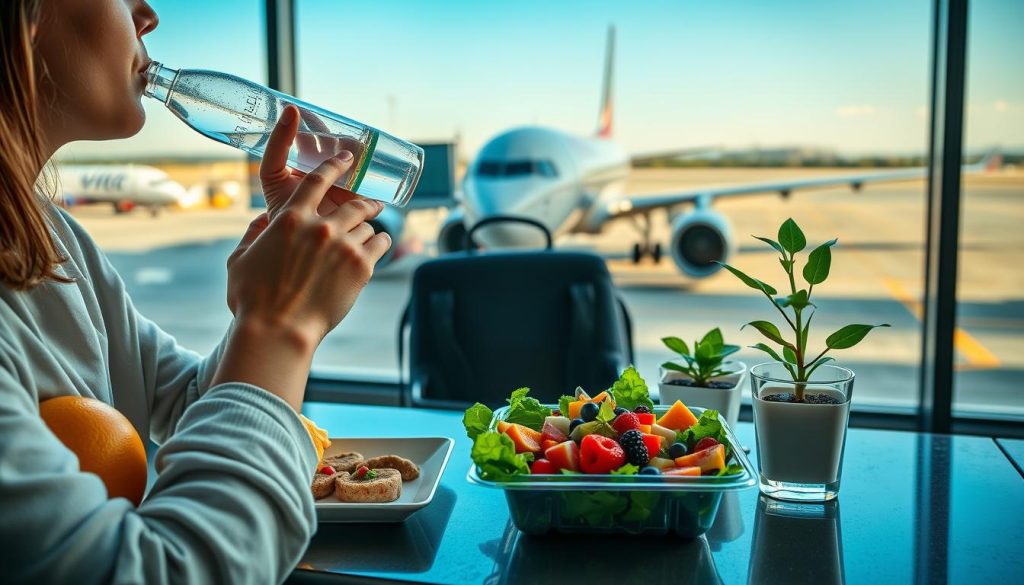
Starting your hydration early is key for in-flight wellness. Begin drinking more water a full day before your flight. Foods high in water, like cucumber and watermelon, help too. You can also sip on coconut water. It’s great because it’s full of potassium, which helps keep you hydrated.
Importance of Avoiding Caffeinated and Alcoholic Drinks
Knowing what to avoid is crucial for staying hydrated. Coffee, certain teas, and alcohol can dehydrate you by making you lose more fluids. Choosing water or herbal teas instead keeps your hydration level up. This is so important for flight attendants too. They’re told to drink 300 to 450 ml of water every hour to fight off the dry air on planes.
Tips for Staying Hydrated and Healthy During Long Flights
Staying hydrated and healthy on long flights can be tough. The air in the cabin is very dry, from 15% to 20% humidity. This is much lower than what we’re used to on the ground. But with some preparation, you can fight off dehydration and stay well on your trip.
Carrying a Refillable Water Bottle
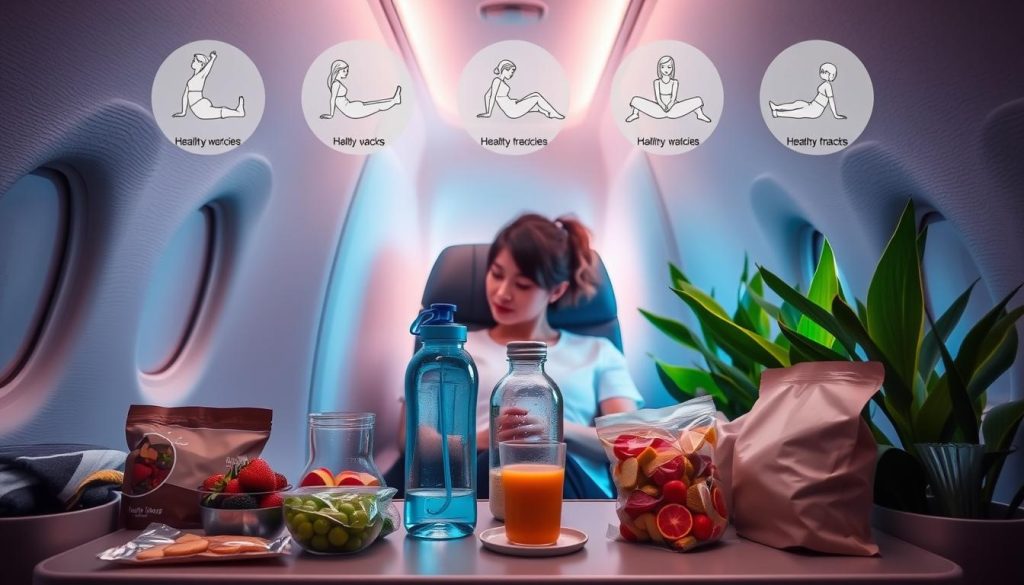
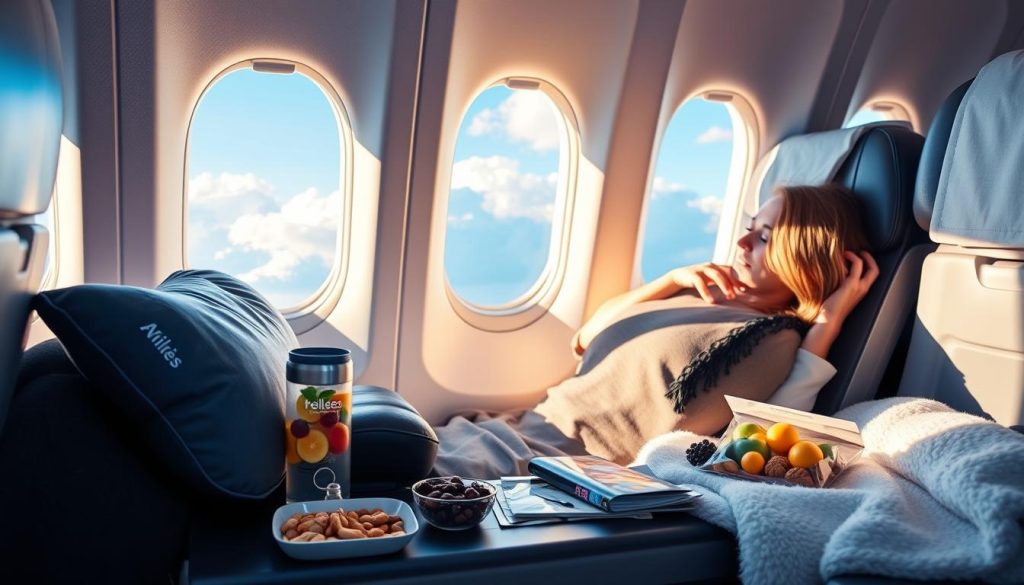
Bringing a refillable water bottle is crucial for long flights. It makes sure you can always drink water, which fights the dry air. You can fill it up at airport water stations or ask flight attendants to refill it. This keeps you drinking water regularly, which is key to staying hydrated.
Electrolyte-Rich Alternatives to Water
It’s also important to keep your electrolytes balanced when flying long distances. Think about packing drinks rich in electrolytes, like sports drinks or coconut water. These drinks have sodium, which helps keep fluids in your body. A single light electrolyte drink can have around 250mg of sodium, making it a good choice for hydration.
Packing Hydrating Snacks
Adding snacks high in water to your in-flight meal plan can help with hydration. Foods like cucumbers, berries, pineapple, and watermelon are great options. They not only provide moisture but also are packed with nutrients, helping you stay healthy in the air.
| Hydration Strategy | Benefits | Examples |
|---|---|---|
| Carrying a Refillable Water Bottle | Continuous access to hydration | Reusable water bottle |
| Electrolyte-Rich Beverages | Maintains electrolyte balance | Sports drinks, coconut water |
| Hydrating Snacks | Provides additional water and nutrients | Cucumbers, strawberries, watermelon |
By following these hydration tips, you can make long-haul flights much better. You’ll not only be more comfortable but also avoid the pains of dehydration. Taking steps to stay hydrated makes a long flight a lot nicer.
Making the Most of In-Flight Beverage Services
When flying, keeping hydrated is key. The cabin’s low pressure simulates high altitude, and the dry air can dehydrate you. So, picking drinks that hydrate rather than dehydrate is essential for comfort and health.
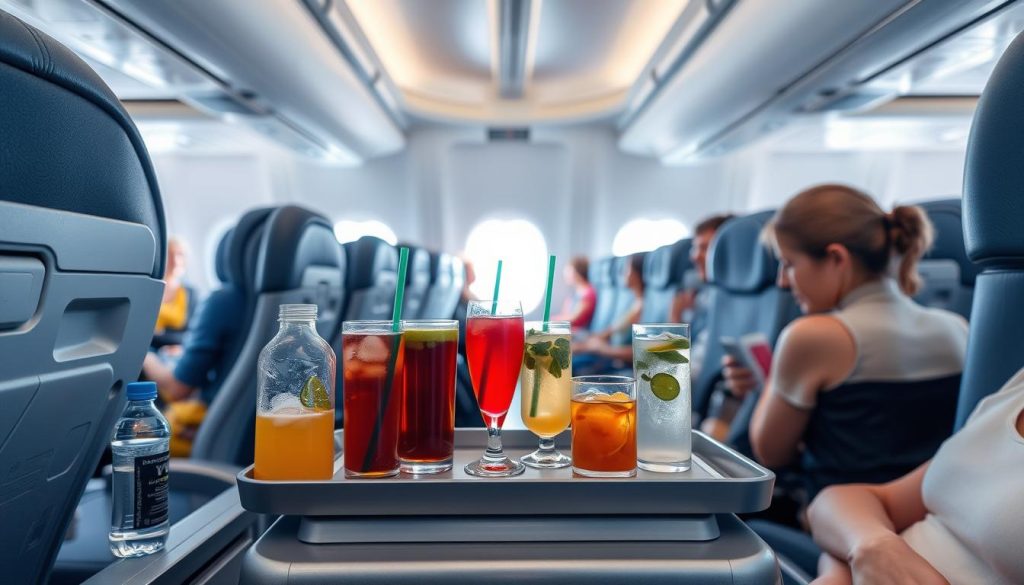
Alternatives to Plain Water: Herbal Tea and Flavored Seltzer
Besides water, other drinks like herbal teas and flavored seltzers keep you hydrated. Herbal teas, such as chamomile or peppermint, lack caffeine. This means they don’t dry you out. Flavored seltzers are also good. They add taste without sugar, making you likely to drink more.
Be careful with alcohol on planes. The Aerospace Medical Association suggests 8 ounces of water for each hour in the air. If you drink alcohol, drink an extra 8 ounces of water to offset dehydration. Also, too much coffee or some teas can hurt your sleep and make you lose more fluid.
Here’s a table showing which drinks are good or bad for staying hydrated on a plane:
| Beverage | Hydration Level | Benefits | Considerations |
|---|---|---|---|
| Herbal Tea | High | Non-caffeinated, soothing | Choose non-caffeinated options |
| Flavored Seltzer | High | Refreshing, no added sugar | Check for artificial additives |
| Alcohol | Low | May relax nerves | Contributes to dehydration, limit intake |
| Coffee | Moderate | May help stay alert | Can interfere with sleep, moderate intake |
Choosing the right drinks on a plane helps you stay hydrated. It’s as important as moving around and moisturizing. So, think about what you drink while flying to stay healthy and comfortable.
Importance of Moisturizing During Flights
The air in planes is very dry, with humidity levels between 10% to 20%. That’s much lower than the usual indoor levels of 30% to 50%. To stay comfortable, it’s key to keep your skin, lips, and mucous membranes moist.
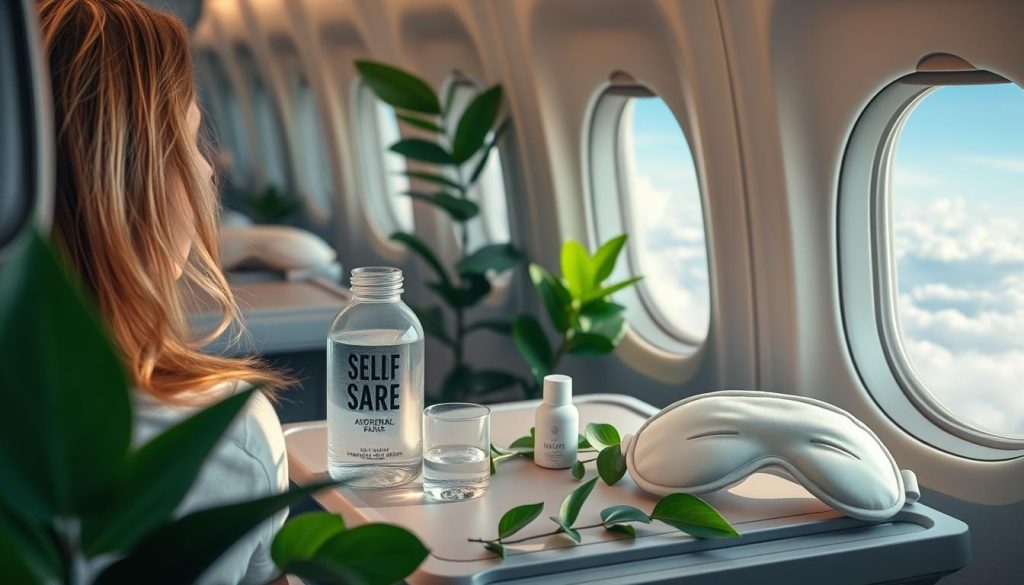
Using Hand Cream and Facial Moisturizers
The cabin’s dry air can make your skin lose moisture, leading to dryness and irritation. Putting on a good hand cream and face moisturizer can help fight this. Dermatologists suggest using products with niacinamide to boost skin moisture by up to 22% quickly.
For even better hydration, try a moisturizing mask during your flight. Leave it on for 15 to 30 minutes for the best effect.
Saline Nasal Spray and Eye Drops
Airplane wellness includes keeping your nose and eyes moist. Using saline nasal sprays and eye drops helps avoid irritation and infections. These sprays can boost nasal moisture by up to 20% in the plane’s dry conditions.
It’s also crucial to keep your eyes wet with eye drops. This stops them from getting dry and uncomfortable.
Lip Balm to Prevent Chapped Lips
A lot of flyers, 58%, complain about chapped lips. Applying a good lip balm often can stop this in the plane’s dry air. Pick balms with shea butter or beeswax to lock in the moisture.
| Tip | Benefit | Recommendation |
|---|---|---|
| Hand Cream and Facial Moisturizers | Prevent skin dryness and irritation | Use products with niacinamide for enhanced moisture |
| Saline Nasal Spray and Eye Drops | Keep mucous membranes moist | Retain moisture in nasal passages up to 20% |
| Lip Balm | Prevent chapped lips | Use hydrating balms with natural emollients |
These moisturizing tips can help you keep feeling good on your flight. They’re great for airplane wellness and making sure you have a comfy and healthy journey.
Choosing the Right Seat for Comfort and Rest
Choosing the right seat on a plane makes your flight much more comfortable. It also helps you stay hydrated on long trips. By knowing the benefits and drawbacks of each seat type, you can choose wisely.
The Benefits of Window Seats
Window seats offer many advantages for a peaceful flight. Studies find that if you sit here, you’re bothered 30% less by others. Less interruption means you can sleep better and stay rested and hydrated during the flight.
People who pick window seats also feel 25% more comfortable since they can lean against the wall. About 70% of travelers prefer these seats on longer flights for comfort and privacy. On shorter flights, under 3 hours, 55% of people like them too, because they’re bothered less by the crew.
Using a Neck Pillow
A neck pillow is key for comfort and staying hydrated. It supports your neck and shoulders for a good sleeping posture. This can help you sleep better and reduce strain.
Good sleep posture on planes, especially on long trips, is vital. Studies show that sleep masks and noise-canceling headphones can make sleep 50% better. Use these with a neck pillow for the best chance at quality rest, helping you stay hydrated.
So, choosing the right seat and using items like a neck pillow can boost your flight comfort. Making these a priority helps you stay rested and hydrated. These tips can make your travel experience much better.
Stretching and Moving to Improve Circulation
Health is a big concern when flying, especially because you’re sitting in a small space for a long time. To keep blood moving well and avoid problems like deep vein thrombosis (DVT), it’s important to move and stretch regularly during a flight.
Studies show that sitting too much can slow down blood flow in your calf muscles. This can cause your veins to swell and hurt. To prevent this, try to walk around the cabin every hour. If you sit by the aisle, it’s easier to get up, allowing you to move around 38% more often than if you were in a window seat.
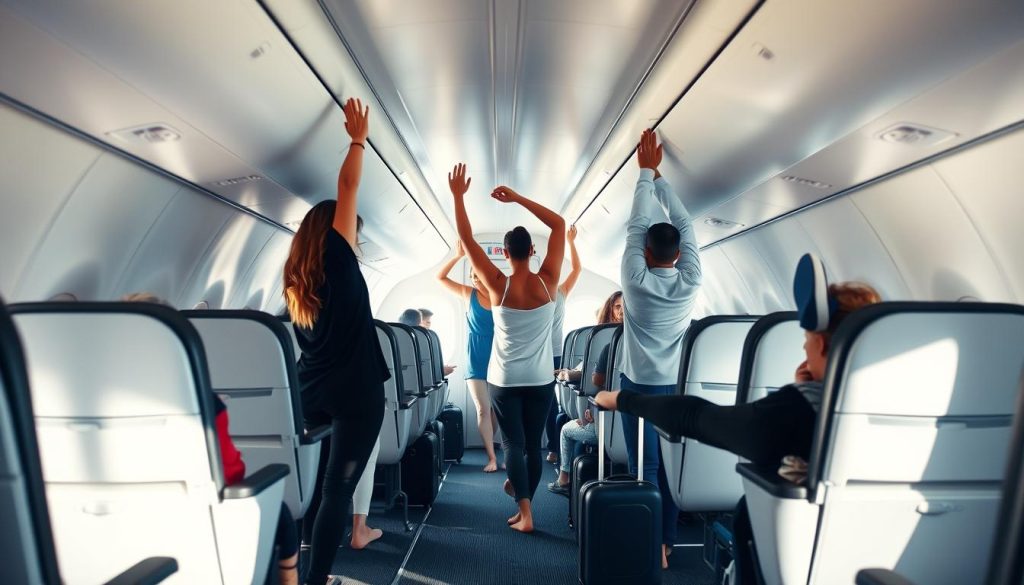
Here are some easy exercises to help keep your blood moving on the plane:
- Ankle Flexes: While sitting, stretch your legs and bend your ankles. Hold each bend for 15 seconds. Do this 10 times for each leg.
- Knee-to-Chest Stretches: Bring your knee up to your chest and hold for 15 seconds. Then switch knees. This boosts circulation.
- Leg Rotations: Turn your legs in circles, 10 times each way. This keeps the blood moving in your calf muscles.
- Abdominal Crunches: Tighten your stomach muscles for 20 to 30 seconds. This helps blood flow all over your body, including your legs.
Doing these exercises can increase blood flow to your legs by up to 80%, reducing the chance of getting blood clots. Also, wearing compression stockings is a good idea. They press gently on your veins to lower the risk of clots and swelling. Compression socks work 30-60% of the time. Also, it’s crucial to drink eight ounces of water every two hours to avoid getting dehydrated, which can make your blood thicker and riskier for clots.
Flyers should wear loose, comfy clothes to keep blood flowing well. Tight clothes can cut blood flow by up to 30%. So, wearing clothes that let you move easily and are comfortable is very important for staying healthy on a plane.
With these exercises and tips, you can make your flight much healthier and more comfortable.
“Regular movement and proper hydration are key to maintaining circulation and health during long flights.”
Packing Smart for Maximum Comfort and Wellness
To make your journey smooth, it’s crucial to pack smart. Here are tips for a more comfortable long-haul flight. These tips also keep you healthy on long flights.
Travel-Size Hydration Essentials
The air in planes is very dry, about 10-20% humidity. This is much lower than the normal indoor level of 30-50%. To fight this, bring small hydration items like face mists, moisturizers, and nasal sprays. These keep your skin from drying out. All items should meet TSA rules, meaning they must be in 3.4 ounces (100 milliliters) containers or smaller and in a clear bag.
Limiting Carry-On Items for Extra Legroom
Packing less in your carry-on gives you more space for your legs. This is important on flights longer than 6 hours. Pack only what you need and try to keep the bag under 20 pounds. This makes moving in the aisle easier and lessens body stress. It makes your flight more comfortable and keeps you healthier on long flights.
Comfortable and Layered Clothing
Choosing the right clothes can make your flight much better. Wear loose and airy fabrics, like cotton. These fabrics help keep your body temperature stable. Wearing layers is a good idea because the plane’s temperature can change. Having a t-shirt, a long-sleeve, and a jacket allows you to adjust easily to stay comfortable during your flight.
| Item | Purpose | Benefit |
|---|---|---|
| Travel-Size Hydration Essentials | Moisturizer, Facial Mist, Nasal Spray | Maintain skin hydration, Prevent dryness |
| Compression Socks | Improve Circulation | Reduce risk of DVT |
| Noise-Canceling Headphones | Block Noise | Reduce fatigue, Improve sleep |
| Layered Clothing | Breathable, Moisture-Wicking | Regulate body temperature |
Smart packing goes beyond what you bring. With items like travel-size moisturizers, a light carry-on, and layered clothing, your flight will be more enjoyable. And, you’ll stay healthy on those long trips in the air.
Conclusion
Flying, especially on long journeys, presents challenges like *dehydration* due to low cabin humidity and a higher chance of catching germs. The CDC recommends wearing a mask to lower these risks, especially in close spaces where you might be near coughing or sneezing people. Even though planes have good air systems, staying well-hydrated and keeping healthy during long flights takes some planning and effort.
To have a comfortable and healthy flight, it’s important to get ready before you leave. Eat and drink things that hydrate you, and stay away from drinks with caffeine or alcohol. On the plane, bring a water bottle you can refill, pick drinks with electrolytes instead of just water, and bring snacks that hydrate. Using services on the flight, like herbal tea and flavored seltzer, also helps keep your hydration up. It’s also key to keep your skin from drying out by using hand cream, face moisturizers, saline nasal spray, and lip balm.
Picking the best seat, like a window seat for more control, using a neck pillow for support, and moving around to keep blood flowing can make a big difference in your flying experience. Pack wisely with small hydration items, don’t bring too much in your carry-on for more space, and wear comfy, layered outfits. By doing these things, your flight can be healthier and nicer.