Handling Voltage Requirements for Devices Abroad
Have you ever wondered why your trusted hairdryer stops working on a trip abroad? It’s tricky to figure out international voltage standards. To keep your devices safe and working well overseas, it’s key to know about voltage differences. In the U.S., devices run on 110 volts, but many other countries use 220 volts. This big difference could harm your devices or even pose safety risks if not handled correctly.
Since devices and power systems differ by country, a detailed guide to voltage transformers for worldwide use is handy. Imagine arriving in a new place and finding out your charger doesn’t fit. Or worse, that your device can’t handle the local power supply. These issues can ruin your convenience and endanger your device. It’s crucial to check whether your gadgets are compatible before you travel. To ensure your travel is easy and your devices stay safe, let’s look into managing different voltage needs abroad.
Understanding International Voltage Variations
Traveling internationally with electronics requires knowledge of different voltage standards. This guide will teach you about voltage and its global variations. You’ll learn when to use voltage converters for foreign travel and other gear.
What is Voltage?
Voltage is the force that drives electrons through circuits, letting your devices work. When abroad, knowing a country’s voltage is key. This prevents harm to your electronics.
Common Voltage Standards by Region
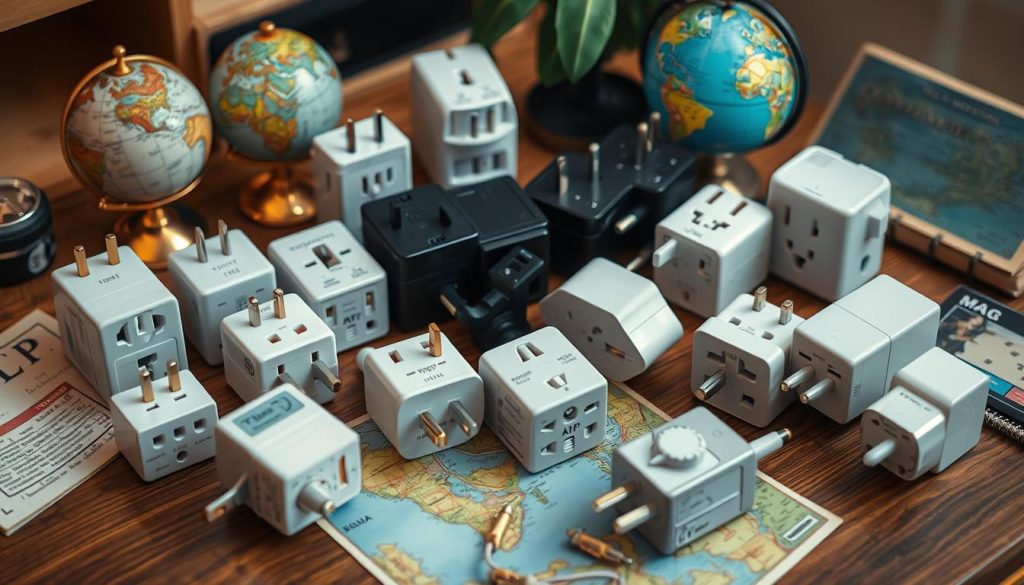
Each part of the world has its own voltage standards. Being aware of these can save you from device damage and make your trip smoother:
- North America: 110-120 volts is common.
- Europe: Uses 220-240 volts mostly.
- Japan: Has 100 volts, with differences in frequency (50 Hz in the east, 60 Hz in the west).
It’s important to prepare the right way. For instance, 68% of travelers have ruined devices by using the wrong adapter. Knowing the voltage standards helps choose between a travel adapter or a voltage converters for foreign travel. Adapters make devices fit in sockets, while converters adjust the voltage for your device.
For gadgets that need a lot of power, there are advanced adapters and converters. They work with 100-240V/AC and can output up to 2500W. Some even use AI to pick the right voltage and plug shape.
Buying high-quality converters and adapters protects your tech. It also makes your trip easier. Check if your devices are dual voltage (100-240 volts) like many phones and laptops. This means they may not need extra converters.
Why Voltage Matters for Your Devices
When you travel abroad, knowing your device’s voltage needs is key. Not doing so can lead to your device breaking or getting damaged beyond repair. It’s very important to understand how to adjust your devices to different country’s voltage before you travel.
The Risk of Incorrect Voltage Usage
Using a device with the wrong voltage can be dangerous. For example, a 110-volt hair dryer in a 220-volt outlet without the right adapter can overheat, stop working, or start a fire. This is why checking the voltage requirement of your device is a must before using it abroad.
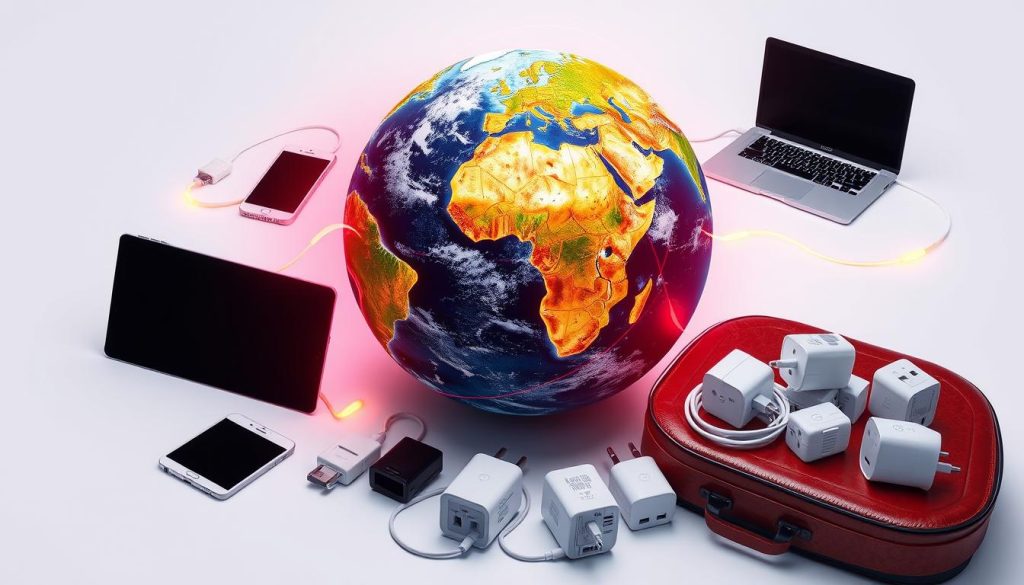
Below is a comparison of voltage ratings and needed equipment for safe use:
| Region | Voltage Rating | Common Plug Types |
|---|---|---|
| United States, Canada | 110/125V | Type A, Type B |
| Europe, Asia, South America | 220/240V | Type C, E, F |
| United Kingdom, Ireland, Malta | 220/240V | Type G |
| Australia, New Zealand, China | 220/240V | Type I |
| India | 220/240V | Type D |
Devices with high wattage like hair dryers need converters for high energy use. Lower-wattage devices may need transformers. Devices that work on dual or multiple voltages are best, as they can adapt to different voltages. But, for devices that only work on one voltage, getting a voltage converter or transformer is key to avoid accidents.
How do I handle different voltage requirements for devices abroad?
When you go abroad, you might find that voltages for devices are different. Your devices could be single, dual, or multi-voltage. For single voltage ones, you might need a transformer or a converter. Mechanical things could use either. But, electronics must have a transformer to stop damage.
Dual voltage gadgets, like laptops and phones, work with 110-120 volts or 220-240 volts. They don’t need a converter. This makes packing easier and takes up less space. About 70% are made to work with different voltages, perfect for world travel.
If you have a single voltage device, picking the right transformer or converter is key. You need a converter to stop ruin when using a 110-volt device in a 220-volt socket. High-power items, like hair dryers, might need more than a standard converter can give.
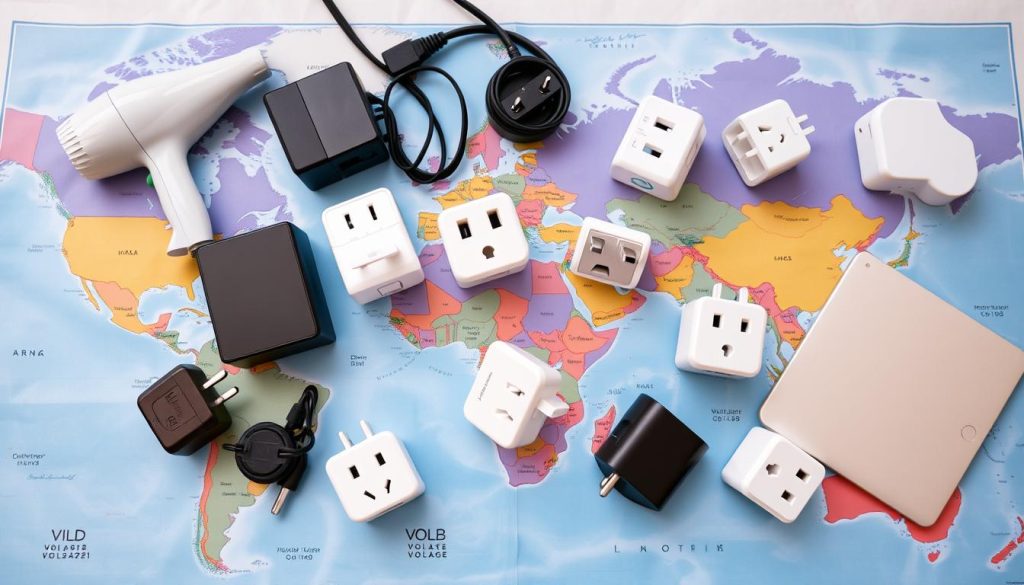
It’s smart to look up the electrical setup of where you’re heading before you leave. Even in the same area, outlets and voltages can vary. For instance, the U.S. uses 110-120 volts, while other places use 220-240 volts. A helpful site for up-to-date power info is ElectricalOutlet.org.
Understanding voltage needs and what you should do is key for easy travel:
| Device Type | Required Tool | Voltage Range |
|---|---|---|
| Single Voltage Devices | Transformer/Converter | 110-125 V / 220-240 V |
| Dual Voltage Devices | Adapter | 110-240 V |
| Multi-Voltage Devices | Adapter | 100-240 V |
By making sure your devices fit the voltage and using the right adapters or converters, managing different power systems becomes easier. This ensures both a smooth and safe travel experience.
Identifying Your Device’s Voltage Needs
Before you pack for a trip, it’s important to know your gadgets’ voltage needs. This avoids problems with power outlets overseas. Different places use different voltage standards. Knowing this can save your devices from damage. Let’s figure out how to find and read your device’s voltage details.

Checking the Manufacturer’s Label
Start by looking at the manufacturer’s label on your device or its charger. This label tells you what voltage your device needs. For example, gadgets from North America often say “115V AC at 60Hz.” But, gadgets made for other places might show different numbers.
The label might say:
- Single Voltage: “120V” – This means the device works only on 120 volts.
- Dual Voltage: “120V/240V” – This tells you the device can use 120 volts or 240 volts.
- Multi-Voltage: “100-240V” – The device can use many different voltages, perfect for world travelers.
Understanding Voltage Labels: Single, Dual, and Multi-Voltage
Knowing what voltage your device uses is key, especially with the various power outlets worldwide. Let’s break it down:
Single Voltage: Items marked “120V” only work with that voltage. They are seen in places with specific voltage needs, like the 115V AC in North America.
Dual Voltage: Devices that say “120V/240V” are dual voltage. These gadgets can switch between two different voltages. They’re great for places with varying electrical standards.
Multi-Voltage: Devices that mark “100-240V” work with many voltages. They’re very flexible and ideal for almost all foreign outlets. Modern devices, like laptops and phone chargers, are often multi-voltage. This makes them handy for those who travel a lot.
Knowing these labels helps keep your gadgets safe and working while you’re in other countries. Always check what you need so you can pick the right adapters or converters. This will make your trip smoother.
Using Travel Adapters to Fit Different Outlets
When you travel around the world, making sure your electronic gadgets fit the local outlets is key. Travel adapters bridge your device’s plug and the foreign socket. Knowing about different plug types and what makes a good adapter is vital for keeping your devices powered safely.
Popular Plug Types and Regions
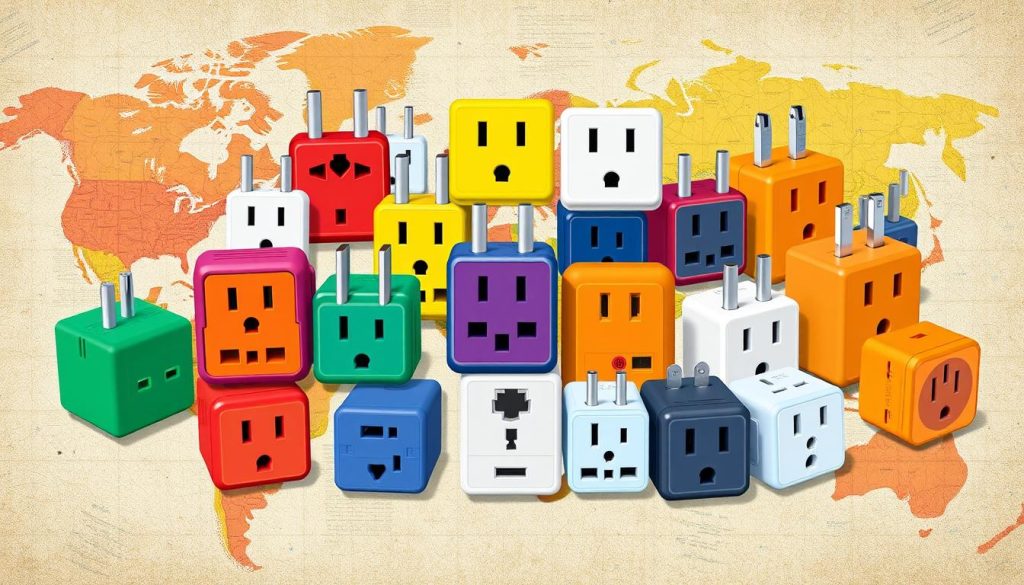
Around the world, various plug types are used in different places. Here’s a brief overview of common plug types and where you’ll find them:
- Types A and B: United States, Canada, Mexico, and Japan
- Types C, E, and F: Most of Europe, Israel, parts of Asia and Africa
- Type G: United Kingdom, Ireland, Hong Kong, Singapore, Malaysia, and some African countries
- Type I: China, Australia, New Zealand, Fiji
Features of a Good Travel Adapter
A quality travel adapter is key for keeping your devices safe and functional. It should have the following characteristics:
- Universal Compatibility: Works with different plug types for global use.
- Safety Certifications: Has protections like shutters and circuits to stop overcharging and overheating.
- Dual USB Ports: Lets you charge more than one device at once, ideally with USB-C and USB-A ports.
- High Quality Construction: Made of fire-resistant materials for extra safety.
Products like the TESSAN International Plug Adapter and UltraProlink World Travel Adapter show what great adapters offer. They support over 150 to 200 countries and handle 100-250V AC. These adapters ensure your travel is smooth by keeping your devices charged without risking safety.
| Feature | Benefit |
|---|---|
| Universal Compatibility | Fits different plug types in over 200 countries |
| USB Ports | Simultaneous charging for multiple devices |
| Safety Certifications | Prevents overcharging and overheating |
| High Quality Construction | Safety with fire retardant material |
Choosing Between Voltage Converters and Transformers
Choosing between a voltage converter and a transformer for travel is important. In the U.S., the power is usually 110 volts. But, when going to places like Europe, Asia, and Australia, where it’s 220 to 240 volts, you must adapt your devices.
Voltage converters work best for devices that use a lot of power but for a short time. For example, hair tools that need about 250 watts are good with converters. But remember, converters are for short uses, about 20 to 25 minutes. Using them longer might shut them down to avoid damage.
Transformers are better for gadgets that need constant, stable power. They handle different power levels, from small ones like the Ceptics PU-200 for up to 200W devices, to big ones for 2000W. A 2000W transformer might be heavy, up to 35 pounds, while a converter of the same capacity would be smaller and lighter.
Dual voltage devices are an easier choice for travel. They work with both 110-120V and 220-240V supplies. Devices like phones, laptops, and camera battery chargers often are dual voltage. They usually just need an adapter, not a converter or transformer.
| Parameter | Voltage Converter | Voltage Transformer |
|---|---|---|
| Usage Duration | Short-term (20-25 minutes) | Continuous |
| Device Type | High-wattage, resistive devices (e.g., hair dryers) | Electronic devices with circuit boards |
| Weight | Lightweight | Heavier (up to 35 pounds for 2000W) |
For safety and efficiency, know your devices’ power needs. Devices needing 110-120V or simply 120V require a converter or transformer abroad. It’s also smart to choose a converter or transformer with a bit more wattage than your device needs. This helps handle any power surges when they start up.
Dual Voltage Devices: The Easy Solution
Traveling abroad? Dual voltage devices are your best friend. They work with 110-volt and 220-volt systems. This means you can use them in many places without worry.
Common Dual Voltage Devices
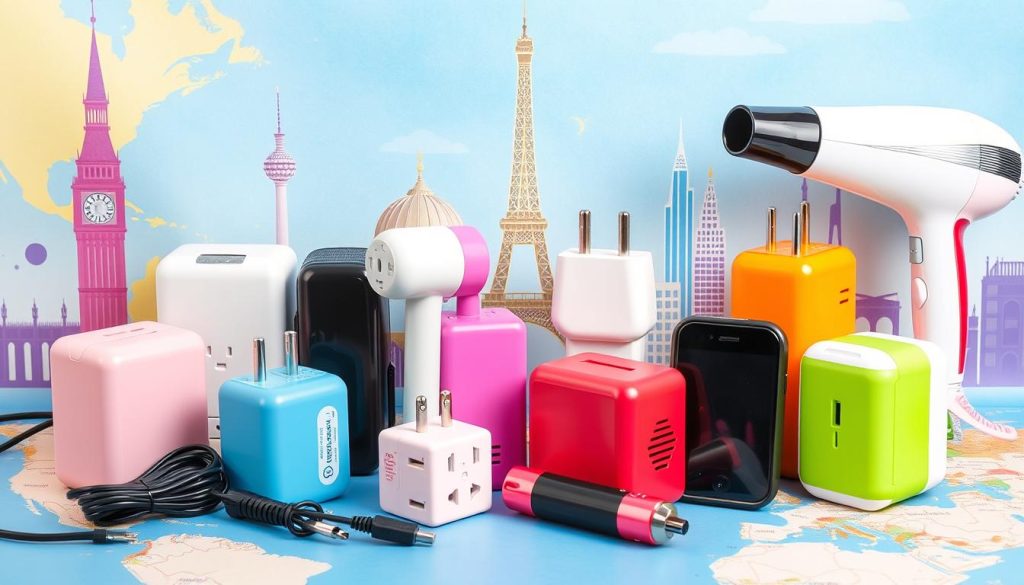
Today, lots of gadgets like laptops, cameras, and smartphones are built to travel. Companies such as Apple, Samsung, and Sony make sure you can take their products anywhere. Things like hairdryers and electric shavers also often come ready for the world stage.
Switching Voltage on Dual Voltage Devices
Many dual voltage devices have a switch for changing between 110 and 220 volts. While laptops might adjust on their own, some gadgets need a manual switch. Always read the manual to avoid damaging your device.
Having dual voltage devices makes traveling easier. They save you from the stress and danger of using the wrong converter. This way, you can enjoy your electronics anywhere safely.
Practical Tips for Using Devices Overseas
Traveling with electronics abroad needs planning. It helps to pack correctly and test your gear beforehand. This way, you avoid troubles.
Packing the Right Gear
Make sure you have the right electrical adapter for overseas electronics for your trip. The type you need depends on your destination’s voltage and plug shape. Buying a universal adapter is smart because it works in many different places. You can find them for under $10 online or in stores.
You might also need a voltage converter for non-dual voltage devices. Converters cost under $20 and are sold in airports and gadget shops. For high-wattage appliances, like hairdryers, you’ll need a heavy and pricier transformer. Always check your device’s specs to see if it matches the foreign voltage.
| Product | Typical Price | Weight | Use Case |
|---|---|---|---|
| Universal Adapter | Less than $10 | Lightweight | Plugs into various outlets |
| Voltage Converter | Less than $20 | Lightweight | Converts voltage for small devices |
| Transformer | Over $20 | Several pounds | Converts voltage for high-power electronics |
Testing Your Setup Before Traveling
Always test your gear before leaving. Connect your electrical adapter for overseas electronics to ensure it works. This prevents damaging your devices by using the wrong voltage.
Devices with dual voltage don’t need a converter. But, adjust their voltage setting before using them abroad. If unsure about compatibility, especially for items like hairdryers, buying what you need in the country you’re visiting might be best.
Following these tips will make using your devices abroad smooth. You’ll keep all your gadgets working and safe while you travel.
Conclusion
It’s vital to make sure your gadgets can handle the voltage of the places you’re visiting. This avoids problems and stress. The world has different voltage and plug types, like 110-120V in the US and Japan, and 220-240V in Europe, Asia, and Australia. Knowing how to adapt your devices to these voltages is key to preventing damage.
Start by knowing what your devices need. Many laptops, phones, and cameras can adjust to voltages between 100-240V, which is great for world travel. But, some items, like hair dryers, need a specific voltage and may require a voltage converter. Getting a good universal adapter is important too. These can fit different plugs and often have USB ports and safety features like surge protection.
Before you travel, figure out what your devices require in terms of voltage and plug type. Invest in good converters and adapters. Make sure everything works before you leave. With the right preparation, you can keep your electronics safe while you explore different countries. Getting ready for international voltage differences ahead of time improves your trip and protects your gadgets.