Exploring Multan Cultural Heritage & Historic Riches
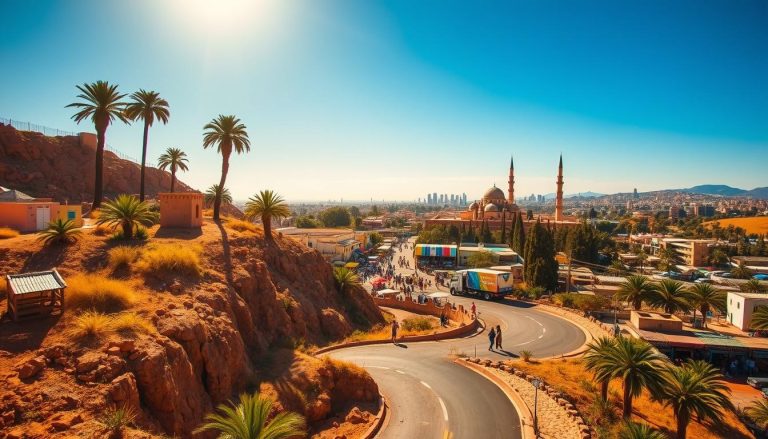
Have you ever wondered about a city that reflects a thousand years of spirituality, cuisine, and art? Welcome to Multan, known as the “City of Saints.” This city is a cultural gem with roots in the ancient Indus Valley Civilization around 2500 BCE. Over the centuries, it grew into a vibrant center where trade routes meet.
Multan is famous for its breathtaking landmarks like Shah Rukn-e-Alam’s mausoleum and the impressive Multan Fort. It’s also known for bustling bazaars full of traditional crafts. Multan’s cuisine is rich with delightful dishes. Its colorful festivals show the city’s diverse traditions and values. Let’s explore the enchanting essence of Multan together.
Historical Overview of Multan
The history of Multan is fascinating and important. This city has seen many civilizations come and go. Each one added to its rich culture and history. From the ancient Indus Valley Civilization to its role as an Islamic learning hub, Multan has always been special.
Ancient Beginnings
Multan, or Mulasthana, is over 5,000 years old. It was key in the Indus Valley Civilization around 2500 BCE. Being at the crossroads of trade routes, it drew many cultures. This made Multan a cornerstone city in South Asia. Finds from digs show it was a trade powerhouse, connecting various regions.
The Arrival of Islam
Islam’s arrival in the 8th century changed Multan. Led by Muhammad bin Qasim, it turned into a center for Islamic learning and Sufism. This drew scholars and pilgrims. They built many mosques and shrines, making Multan important for spiritual reasons. This period made it a highly respected place in Islamic history.
The Mughal Era
The Mughal era brought growth to Multan. Its architecture, with beautiful mosques and tombs, showed artistic brilliance. This time didn’t just make historical sites richer. It also created a unique architectural style. This style draws both historians and tourists. The Mughal influence remains a big part of the city’s charm.
Colonial Influence
The 19th-century British rule brought big changes to Multan. They modernized it, yet kept its cultural heritage intact. As a trade center, the city adapted well to new economic trends. It kept its historical value even as it changed. Colonial architecture mixed with traditional urban design can still be seen in Multan today.
Modern Multan
Today, Multan is bustling with over 5.36 million people. It showcases a rich culture and is still a key agricultural player. The mix of old traditions and modern life is unique. You can see many historical sites and new attractions in Multan. This balance shows a city that respects its past and looks to the future.

Multan’s Cultural Tapestry
Multan’s history is both rich and fascinating. It’s like a cultural quilt, made from different pieces over time. The city has always welcomed new civilizations. Each one added something unique to its art, architecture, and customs. This mix of influences keeps Multan’s culture alive and exciting. It draws visitors who want to see its diverse heritage.
Influences from Various Civilizations
Multan has evolved over 6,000 years with help from many civilizations. It is known as the “City of Saints” because of its many Sufi shrines. The Shrine of Bahauddin Zakariya is a key spiritual site here. It draws locals and pilgrims alike. Each year, festivals like the Urs showcase local devotion. They also show off traditional crafts, music, and dance. The Sibi Festival, in particular, shows Multan’s importance as a place for art and community.
Hospitality and Community Values
Multan is famous for its warm people. They are known for being welcoming, making the city a great place to visit. This welcoming nature helps visitors really get into local traditions and celebrations. Multan’s markets are full of unique items like blue pottery and camel skin products. As you walk through, you’ll see how important community is here. Plus, you can’t miss the local food scene. There’s the famous Multani Sohan Halwa and the delicious mangoes that come into season.

| Aspect | Description |
|---|---|
| Cultural Heritage | Woven from various influences, showcasing Sufi shrines and traditions |
| Community Values | Emphasis on hospitality, welcoming visitors to participate in local culture |
| Traditional Crafts | Includes blue pottery, camel skin art, and intricate embroidery |
| Culinary Scene | Features local delicacies such as Multani Sohan Halwa and seasonal mangoes |
Multan Cultural Heritage
Multan is a city rich in culture, boasting a blend of tradition and spirituality. It’s known for its Sufi shrines, showing deep historical and spiritual values. These sacred places are symbols of faith, connection, and art, carrying their messages through the ages.
Significance of Sufi Shrines
Sufi shrines in Multan are more than just architectural wonders. They’re dedicated to revered figures like Shah Rukn-e-Alam and Bahauddin Zakariya. Pilgrims come seeking peace and wisdom. The shrine attracts not only those who pray but also people gathering for cultural events.
Traditional Arts and Crafts
Multan’s traditional arts are shown in its bright handicrafts, passed down through generations. Famous for its blue pottery, textiles, and carpets, it highlights the incredible talent of local craftsmen. Each piece tells a story, capturing the city’s cultural and historical essence.
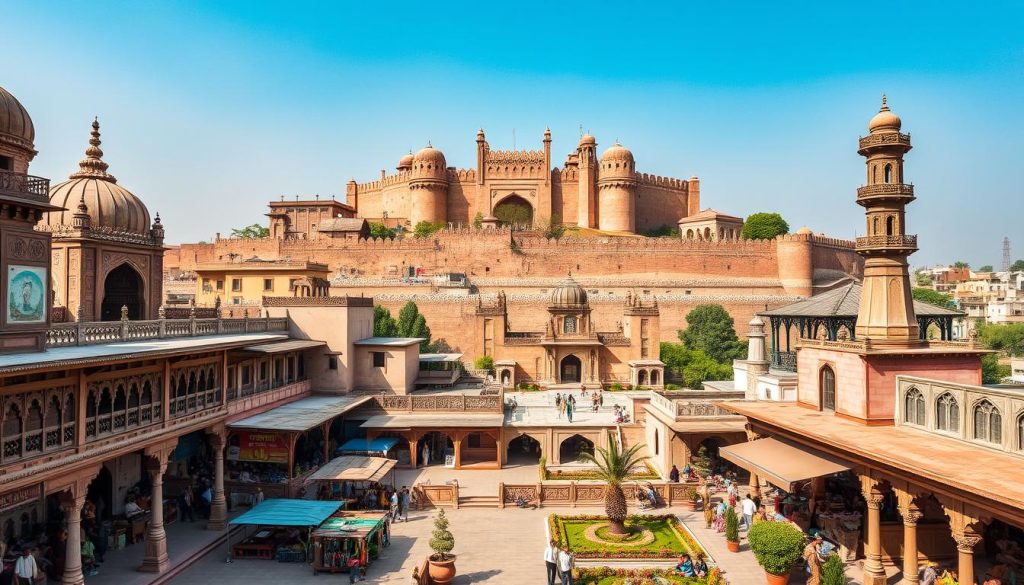
| Sufi Shrine | Year Established | Notable Aspects |
|---|---|---|
| Shah Rukn-e-Alam Shrine | 14th Century | Architectural marvel with intricate tile work |
| Tomb of Bahauddin Zakariya | 13th Century | Significant pilgrimage site, representing Sufi teachings |
| Shrine of Shah Gardez | 1150s | One of the oldest shrines, showcasing regional architecture |
Famous Landmarks in Multan
Exploring Multan’s famous landmarks opens a door to history and architecture. Each site tells stories of this ancient city’s rich past. They draw both local and foreign visitors, showcasing the area’s diverse culture.
Shah Rukn-e-Alam Shrine
The Shah Rukn-e-Alam Shrine is an example of Indo-Islamic architectural genius. Built over 700 years ago, it features beautiful blue tiles. Pilgrims and tourists visit to experience its spiritual legacy.
Tomb of Bahauddin Zakariya
This tomb showcases the intricate tile work that Multan’s sites are known for. Dedicated to a notable Sufi saint, it’s a key spiritual site. People come here to feel connected to the region’s deep history.
Multan Fort and Qasim Bagh Fort
Multan Fort, built in the 12th century, showcases ancient military design and city views. Qasim Bagh Fort adds to its historical importance. Named a UNESCO World Heritage Site in 1981, these places reflect Multan’s enduring spirit.

Exploring Multan’s landmarks, you find tales of devotion, art, and history. These places stand ready to share their stories with you.
Festivals and Celebrations
In Multan, life gets even more colorful when festivals and celebrations happen. These events show off the city’s deep cultural roots. They give people a chance to dive into unique experiences. From sacred ceremonies to happy gatherings, Multan’s festivals remind us of the community’s core values and varied traditions.
Annual Urs Festivals
The Urs festivals are big draws in Multan tourism. The Urs of Hazrat Bahauddin Zakariya lasts three days and brings in thousands from across the country. It honors the saint’s life and lessons with mass prayers and respect. The Urs of Shah Rukn-e-Alam pulls in followers from Pakistan and beyond, showing Multan’s strong Sufi traditions.
Local Cultural Festivals
Local events truly capture the spirit of Multan’s community fests. Eid ul-Fitr is a time of joy, with families uniting for prayers and festive meals. Eid ul-Adha focuses on charity and kindness, bringing people closer together.
Basant festival brightens the sky with kite-flying contests, music, and traditional foods. The Multan Literary Festival showcases the city’s love for words, inviting poets and writers. Thrill-seekers can’t miss the Cholistan Desert Jeep Rally, racing over tough landscapes. These festivals not only honor traditions but also boost tourism, highlighting Multan’s rich culture.
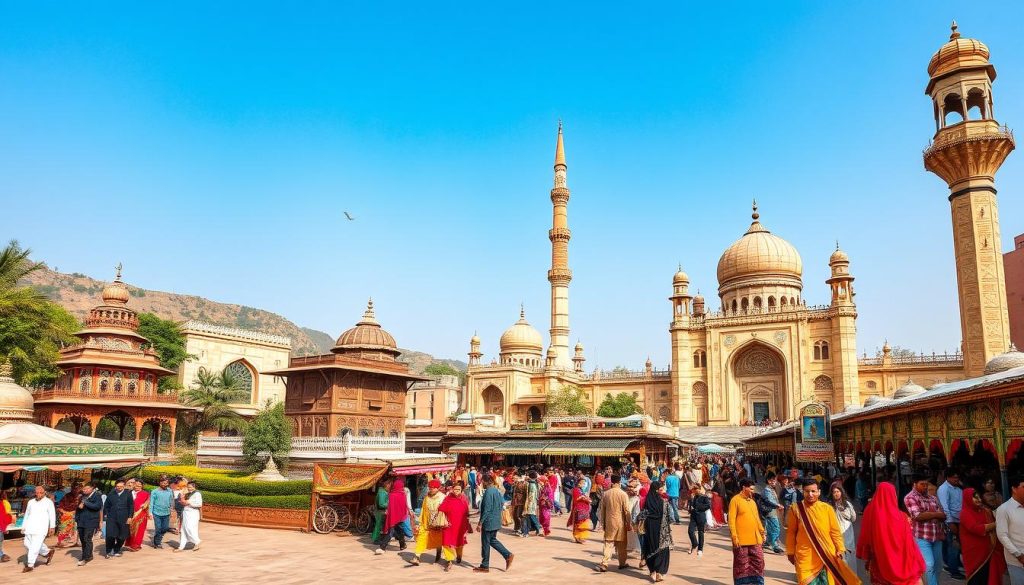
Multani Handicrafts and Artistry
Multan is famed for its beautiful, detailed handicrafts. Its art shows a wide variety of crafts that carry deep cultural meaning. Local artisans have kept these traditions alive for generations, supporting both their identity and the economy.
Blue Pottery
Multan’s blue pottery stands out for its skilled craftsmanship and bright colors. Made from natural materials, it goes through molding, firing, and glazing. The cobalt blue shade, made from specific oxides, is especially unique. Collectors and museums, like the British Museum, highly prize these pieces.
Traditional Textiles and Embroidery
Textiles and embroidery are key parts of Multan’s traditional art. Craftsmen create intricate designs that echo their heritage. The Multani Ajrak, with its bold patterns, is very popular. These textiles are important for trade and tourism, helping many families make a living.
Camel Skin Products
Camel skin items show another aspect of Multani creativity. Products like bags and lamps showcase innovative use of local resources. These crafts symbolize Multan’s culture and find buyers among locals and tourists alike seeking unique items.
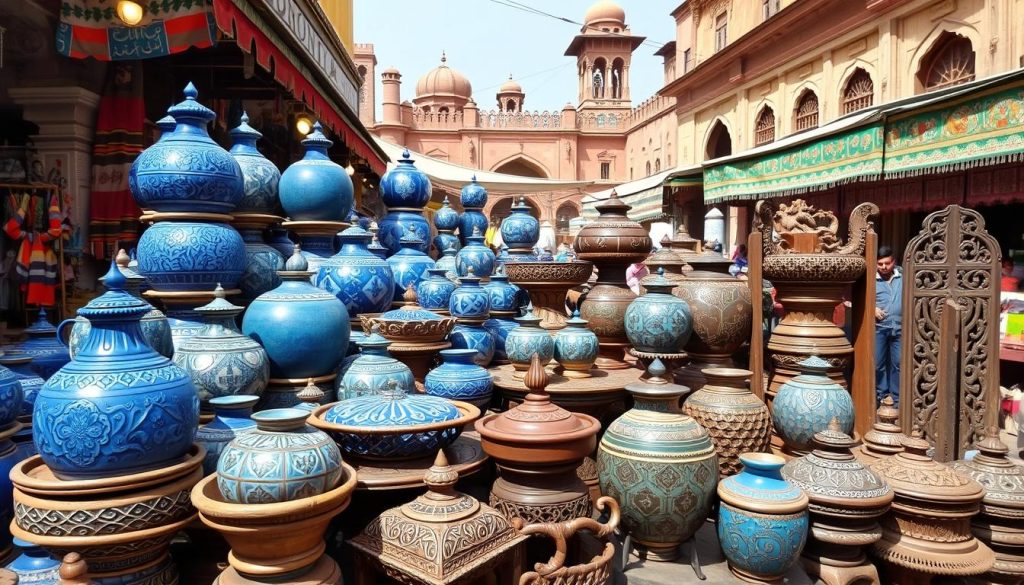
| Craft Type | Key Features | Market Appeal |
|---|---|---|
| Blue Pottery | Intricate designs, cobalt blue color | High demand among collectors, featured in museums |
| Textiles and Embroidery | Colorful patterns, traditional methods | Local markets and fashion enthusiasts |
| Camel Skin Products | Functional and decorative items, artisanal quality | Popular amongst tourists and craft buyers |
Multani handicrafts are thriving, facing new challenges with innovative solutions. Artisans are turning to sustainable methods to ensure these crafts last for future generations. The future looks promising for Multan’s traditional arts.
Culinary Delights of Multan
Multan’s foods show a mix of tastes from many cultures like Greeks, Persians, Mughals, and Sikhs. This mix has led to famous dishes that show off the area’s rich agriculture and cooking skills.
Notable Local Dishes
The dessert Sohan Halwa is a Multan favorite. It’s made from semolina, sugar, ghee, saffron, and cardamom. Multani Sajji, another favorite, is a marinated roasted lamb or chicken. These dishes are full of flavor thanks to local ingredients.
Street Food Culture
Visit Ghanta Ghar Food Street and Shah Shams Park for street food. You’ll find many local and international dishes there. Snacks like Aloo Tikki and Shahi Tukray are popular and affordable, showing the city’s rich culture in every bite.
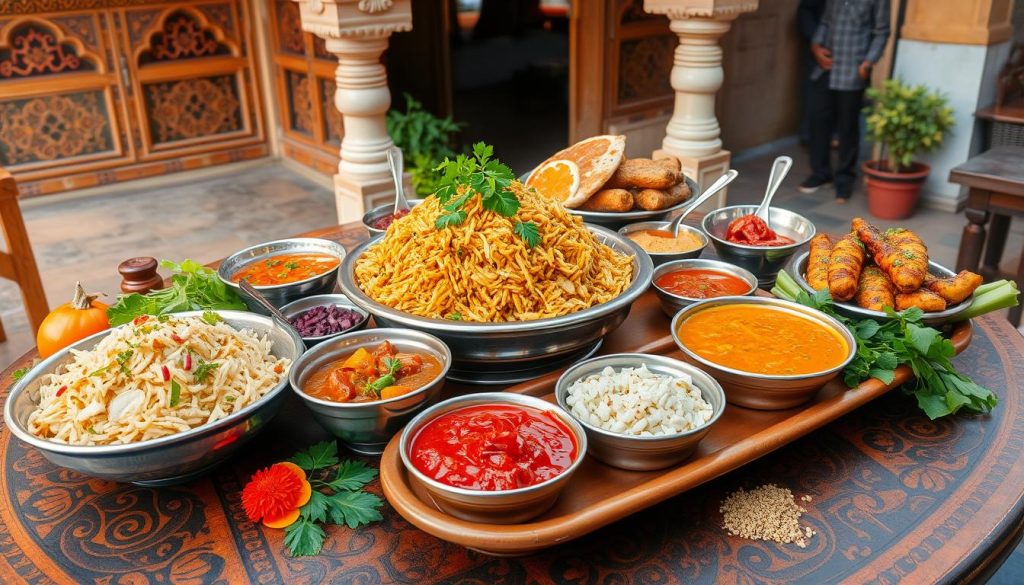
Multan’s Mango Festival celebrates its mango varieties, like Anwar Ratol and Chaunsa. The festival includes culinary contests and cultural performances, displaying the city’s love for food and community.
In Multan, each meal shares a story, and each dish shows its vibrant culture. The diverse culinary scene has something for everyone to enjoy.
Exploring Multan’s Museums and Galleries
Multan’s museums and galleries are a big part of the city’s culture. The Multan Museum has artifacts from over 5,000 years ago. You can see ancient coins, sculptures, and historical exhibits. They tell the story of Multan and its importance in Asia’s history.
Multan Museum
The Multan Museum is a must-see for anyone visiting the city. It has a collection that shows Multan’s cultural history. By seeing these artifacts, you’ll understand and appreciate the city more. It connects you to Multan’s long and rich past.
Art Council Exhibitions
The Art Council also holds exhibitions with works by local artists. These events show modern art influenced by Multan’s culture. By exploring these art pieces, you gain insight into how tradition shapes today’s art. It makes your visit more meaningful.