Explore Myanmar’s Heritage at Bagan Archaeological Museum
What secrets of ancient civilization lie hidden within the walls of the Bagan Archaeological Museum? This fascinating institution stands as a testament to Myanmar’s rich cultural heritage. It invites you to explore an impressive array of ancient artifacts and historical exhibits. Established in 1904, it officially opened to the public on October 1, 1979.
It underwent a transformative renovation, evolving from a modest one-story layout into a prominent three-story structure. This change culminated in its inauguration on April 17, 1998.
As you step inside, prepare to be captivated by the museum’s significant collection. It includes reclining Buddhas, inscribed stones, and mural recreations. These offer a glimpse into the grandeur of the Bagan period.
Priced at 5,000 Kyat (approximately 5 USD) for entry, with free admission for children under 8, the museum provides an affordable gateway. It allows you to explore some of the most noteworthy elements of Bagan’s long history. You will find it nestled near the famed Ananda Temple, open daily from 9 a.m. to 4:30 p.m., excluding Mondays and public holidays.
Introduction to Bagan’s Rich Cultural Heritage
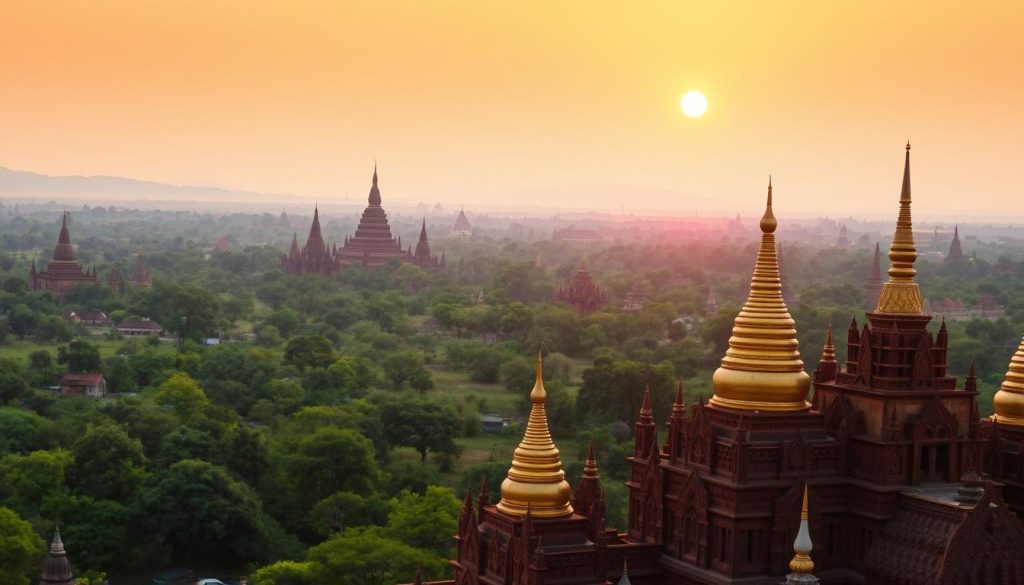
Bagan is a city in Myanmar known for its rich culture. It has over 3,500 ancient temples, pagodas, and monasteries. This place is a UNESCO World Heritage site, showing the power of the 11th to 13th century empire.
Exploring Bagan, you see each temple as a story. They show the art and beliefs of an ancient civilization. This is a unique place to visit.
Bagan’s culture is known for its craftsmanship and religious devotion. The temples have intricate carvings and designs. These show the talent passed down through generations.
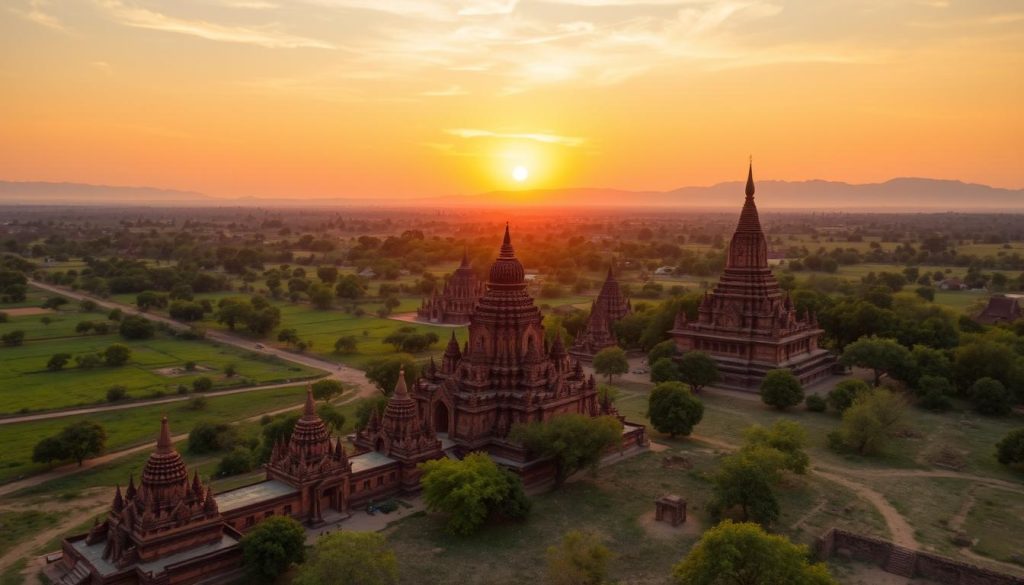
Visitors love the temples against the sunrises and sunsets. It’s a sight that attracts people from all over.
There are concerns about preserving Bagan. In 2011, Aung San Suu Kyi spoke out about the site’s management. This shows how important it is to keep Bagan’s culture safe.
The government is now working with UNESCO to protect Bagan. They are accepting international help to save these historical sites.
Learning about Bagan’s history, you see the challenges in saving its treasures. Bagan has tried to join UNESCO’s World Heritage List but faced issues. But, there’s hope now. UNESCO has recognized Bagan’s sites, helping to protect them.
A Brief History of Bagan Archaeological Museum
The Bagan Archaeological Museum is a key part of Myanmar’s rich history. It tells the story of the Bagan region in a fascinating way. Since it started, the museum has grown, showing off its deep history through changes and new exhibits.
Establishment and Renovation Timeline
The museum began in 1904, being the first in Bagan. It was first near the Ananda Temple. As more artifacts were found, a new place was needed.
In 1976, plans for a new museum were made. It would be south of the Gawdawt Palin Pagoda. After years of work, it opened in October 1979. Since then, it has grown, adding more rooms and facilities.
Significant Historical Artifacts Collected
Visiting the museum is like finding a treasure trove. It shows off many important artifacts. The Myazedi inscription, from 1113, is a highlight, being the oldest stone inscription in Burma.
There’s also a wide range of items like reclining Buddha statues, ancient pottery, and bronze, stone, and wood images. It’s a place where history comes alive, perfect for those who love learning about the past.

Exhibits at the Bagan Archaeological Museum
The Bagan Archaeological Museum is a treasure trove of ancient wonders. It showcases the rich culture and history of the region. As you step inside, you’ll see artifacts that show the art and daily life of the Bagan people. The artifacts display Bagan draws visitors from all over, eager to learn about this UNESCO site.
Notable Ancient Artifacts on Display
The museum has a stunning collection of Bagan ancient artifacts. You’ll see sculptures and parts of old pagodas. These pieces date back to the 11th to 13th centuries, highlighting the art and symbols of the Bagan dynasty. Look out for ancient Buddha images and carved plaques that tell stories of faith and skill.

Stone Inscriptions and Prehistoric Implements
The Bagan stone inscriptions offer a peek into the area’s language and culture. They give us a glimpse into the past, showing us the customs and society of that time. The museum also displays prehistoric implements, showing how people lived and evolved over time.
| Artifact Type | Description | Era |
|---|---|---|
| Buddha Images | Ancient representations of Buddha reflecting religious devotion. | 11th-13th centuries |
| Carved Plaques | Detailed carvings depicting cultural and religious themes. | 11th-13th centuries |
| Stone Inscriptions | Inscribed stones providing historical context and language insights. | 11th century |
| Wood Carvings | Intricate wooden sculptures showcasing craftsmanship. | 11th-13th centuries |
| Prehistoric Implements | Tools used by early inhabitants illustrating technological evolution. | Prehistoric era |
Every exhibit at the Bagan Archaeological Museum adds to our understanding of the past. It helps us see the life, beliefs, and art of Myanmar’s most important historical site.
Location and Accessibility of Bagan Museum
The Bagan Archaeological Museum is in a great spot. It’s on Bagan-Nyaung-U Road, close to the famous Ananda Temple. This makes it easy to find and visit. It’s a key place for those interested in Bagan’s history.
Knowing how to get to Bagan helps plan your trip better. It makes your visit more enjoyable.
How to Get to Bagan Archaeological Museum
Most people fly into Nyaung U Airport. It’s a quick taxi ride to the museum. If you’re on a tight budget, public buses from nearby cities are an option. This makes it easy for everyone to get to Bagan.
Nearby Attractions to Visit
After the museum, you can see many other places. The Ananda Temple and Dhammayangyi Temple are nearby. They offer a deeper look into Bagan’s past.
These sites are close by, making your trip more complete. You’ll learn a lot about Bagan’s culture and buildings.

Bagan Museum Tour Experience
Going on a Bagan museum tour is a great way to dive into Myanmar’s rich culture. Guided tours in Bagan share fascinating stories behind each artifact. You can also explore on your own, taking time to enjoy what catches your eye.
Guided Tours and Personal Exploration
Guided tours at the Bagan Archaeological Museum are very informative. Guides share interesting facts about the exhibits, like ancient Buddha statues. This makes you appreciate the history behind the artifacts more.
If you like to take your time, exploring by yourself is also a good option. It lets you see the museum at your own pace.
What to Expect During Your Visit
Visiting the Bagan Museum is a learning experience. You’ll spend about 45 minutes to an hour looking at exhibits that show Bagan’s history. You’ll see a large bronze statue of King Pyusawhti and many displays of art and culture.
Remember, you can’t take photos, and you’ll need to leave personal items outside. This makes your visit smoother.

Understanding Bagan’s Cultural Heritage
The Bagan archaeological site is a key part of Myanmar’s heritage. It shows the country’s deep Buddhist traditions and architectural growth. With 3,595 recorded monuments, like stupas and temples, Bagan’s cultural value is clear.
During its peak, from the 11th to the 13th centuries, Bagan was home to thousands of temples. It’s believed that up to 13,000 structures once stood there. This period made Bagan a crucial part of Myanmar’s culture.
Since being named a World Heritage Site in 1995, efforts to preserve Bagan have grown. This is after earthquakes in 1975 and 2016 damaged many structures.
The Bagan archaeological area is more than just monuments. It also includes seven villages and parts of two towns. Spanning over 5,005 hectares, it has almost 3,000 temples. These structures show the heart of Buddhist spirituality.
Details like intricate inscriptions and unique designs tell us about ancient beliefs. They prove Bagan’s importance in Myanmar’s heritage.
Visitor Information at Bagan Archaeological Museum
Planning your visit to the Bagan Archaeological Museum is exciting. You’ll need to know about Bagan museum tickets, entrance fees, and Bagan museum opening hours. Knowing this info makes your visit more enjoyable at this important cultural site.
Bagan Museum Tickets and Entrance Fee
The entrance fee to Bagan Museum is 5,000 Kyat, or about 5 USD. This small fee helps the museum care for its treasures. It lets you see the amazing history of Bagan.
Children under 8 get in for free. This makes it easy for families to explore Bagan’s rich history together.
Bagan Museum Opening Hours
The Bagan Archaeological Museum is open every day from 9:00 AM to 4:30 PM. It’s closed on Mondays and public holidays. Before you go, check the museum schedule to confirm the hours. This helps you plan your visit smoothly.
Conservation Efforts in Bagan
In recent years, Bagan has seen a surge in conservation efforts. This is thanks to organizations like the Getty Conservation Institute. They work with local authorities to protect Bagan’s ancient culture. This is crucial because Bagan faces many challenges, like natural disasters and too many tourists.
Role of the Getty Conservation Institute
The Getty Conservation Institute has played a key role in Bagan. Since Bagan was named a World Heritage Site in 2019, they’ve done a lot of work. They’ve documented the temples and made sure they’re safe.
They’ve also trained local staff. This helps them keep the sites in good condition. It’s a big step in protecting Bagan’s history.
Challenges Facing Bagan’s Archaeological Sites
Keeping Bagan’s monuments safe is a big challenge. Earthquakes, like the one in 2016, have damaged over 400 structures. This has made conservation even more urgent.
Too many tourists also pose a threat. The government has created a protective zone and BAGANCOM to manage these issues. They aim to keep Bagan’s cultural heritage alive for future generations.