

Explore the Wonders of Multan Architecture
Have you ever thought about how a city captures centuries of history in its architecture? Multan, in Punjab, Pakistan, is a perfect example. It shows a stunning mix of Mughal and Sufi styles. This city is known as the city of saints.
It has many historic buildings that share stories of old trade routes, cultural exchanges, and its spiritual heart. Multan’s majestic mausoleums and beautiful havelis showcase its rich past. They invite us to discover the stories in its streets.
Admire the beauty of Multan’s architecture. It proves how the city keeps its history alive, even when facing new challenges.
Introduction to Multan’s Architectural Landscape
Multan’s architecture is a mix of many cultures and histories. It’s known as the “City of Saints.” Here, you’ll see everything from old forts to beautiful mausoleums. These buildings show the depth of spirit and art in Multan.
Iconic landmarks in Multan mix history with lively culture. The city is famous for its stunning mausoleums, like the Mausoleum of Shah Rukn-e-Alam. This masterpiece from the Tughluq Dynasty highlights Multan’s rich history. It attracts many visitors and pilgrims each year.
Multan stands out because it blends different styles. You’ll see Islamic designs, Persian influences, and local touches in its architecture. This mix not only highlights the skill of Multan’s artisans. It also tells the stories and values of this area. Exploring the city, each building reveals something special about Multan’s cultural identity.

A Glimpse into Multan’s Historic Roots
Multan’s history goes back over 5,000 years, making it one of Asia’s oldest cities. This ancient city was influenced by many empires and cultures. These influences left lasting marks on its landscape. The history of Multan architecture shows how diverse civilizations shaped architectural styles.
Multan was important for trade and culture, drawing in different ideas and artistic expressions. In the 6th century BC, it was part of the Achaemenid Empire. Later, in 712 CE, Muhammad bin Qasim conquered it. This blend of influences led to a rich architectural mix. This mix includes the Multan Fort and Sufi shrines from the 11th and 12th centuries. These sites highlight Multan’s spiritual importance in South Asia.
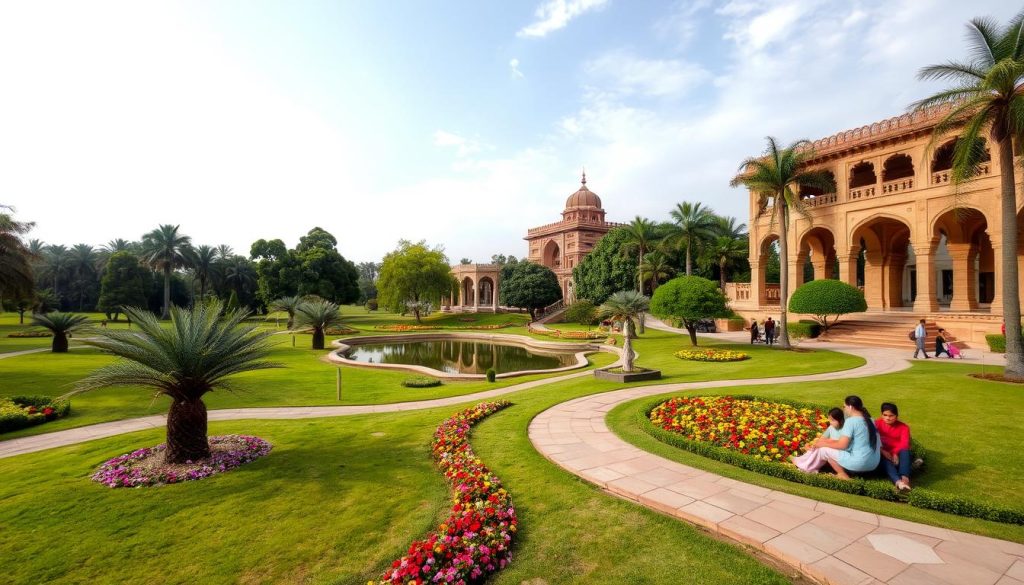
Visitors today are still amazed by Multan’s history, like the intricate tile mosaics and calligraphy. The city combines old sites with new places like a lovely municipal park. This mix shows Multan’s respect for its heritage and builds community. Every corner of the city tells part of its long story, deepening our appreciation for the history of Multan architecture.
Multan Architecture: A Blend of Cultures
Multan’s architecture is a colorful blend of cultural influences. Different dynasties left their mark on the city’s unique look. This reflects its rich history. Each era added something special to Multan’s architectural style.
The Influence of Different Dynasties
Multan’s architectural story goes back over 6000 years. It was a key cultural and trade center. Maharajas and rulers like Mahmud of Ghazni added their touch to the city. Their influences brought new designs and techniques. Thanks to this, Multan has a rich variety of architectural styles today.
Fusion of Islamic and Local Styles
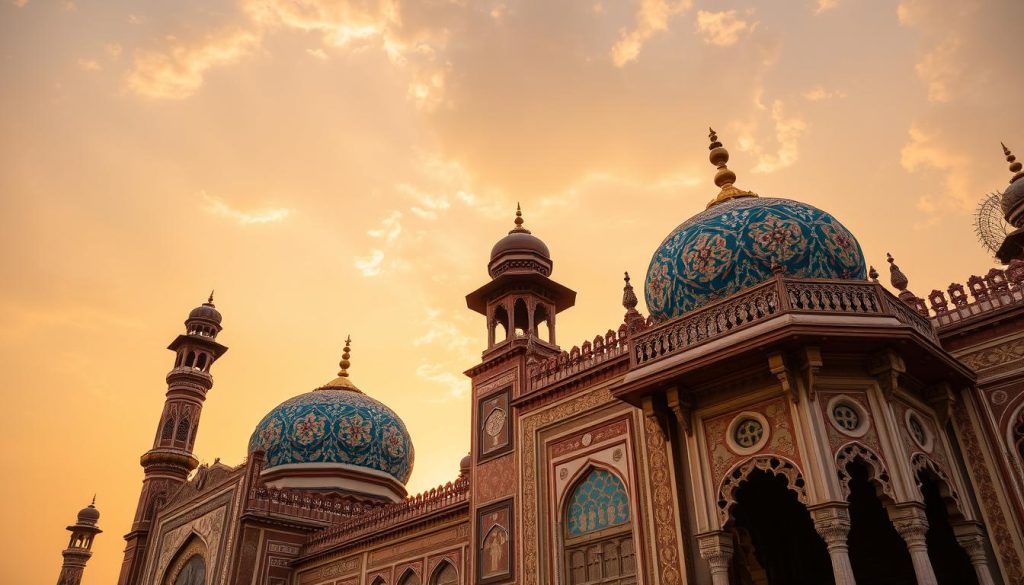
Islamic architecture greatly shapes Multan’s beauty. It’s seen in grand tombs and detailed art. The walls, domes, and tile work are stunning. Local styles mix with Islamic designs, adding more depth. Tombs of Hazrat Bahauddin and Shah Rukn-e-Alam show this beautiful fusion. Modern efforts also work to keep this heritage alive, attracting visitors.
Majestic Mausoleums: The Heart of Multan
Multan’s architecture includes stunning mausoleums that honor the past. These buildings are reminders of the city’s spiritual past. The Mausoleum of Shah Rukn-e-Alam and the Tomb of Bahauddin Zakariya stand out. They are loved for their beauty and meaning.
The Mausoleum of Shah Rukn-e-Alam
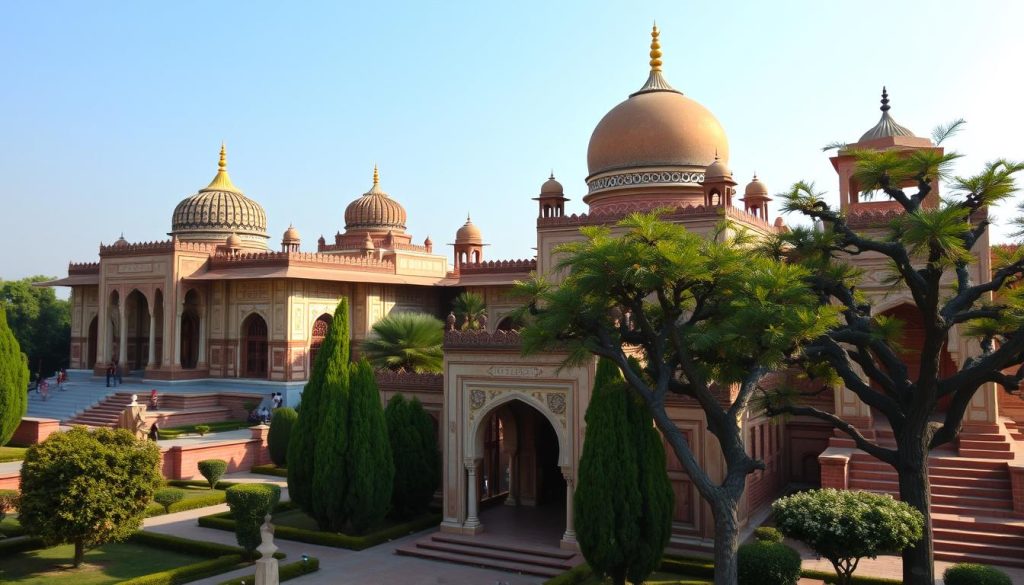
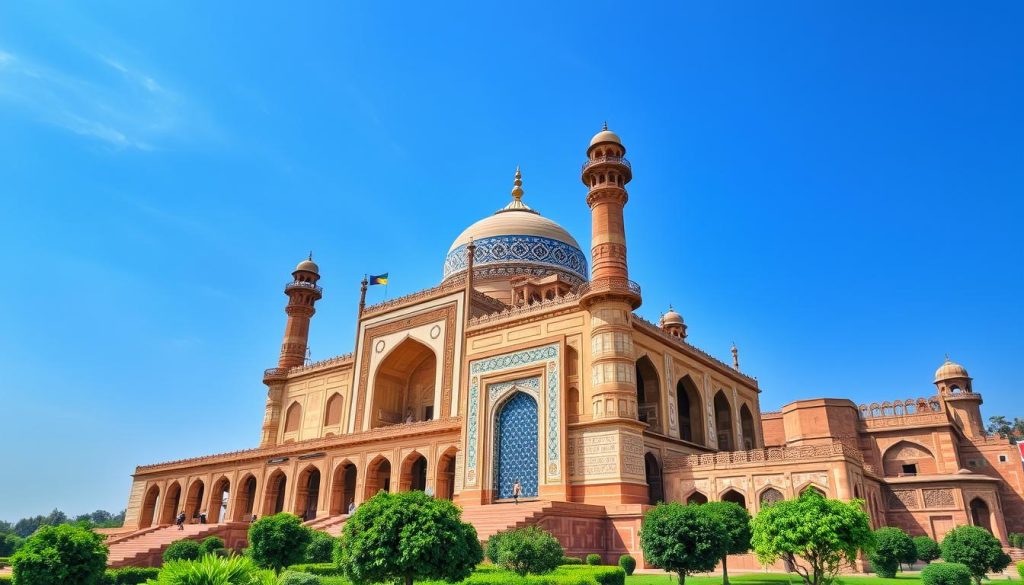
This mausoleum shows Multan’s traditional style, with its Tughluq design. It was built over 700 years ago. It has a huge dome and is decorated with beautiful tiles and motifs.
The colors and size make people admire its beauty and cultural value. It is also a place people visit on spiritual journeys.
The Tomb of Bahauddin Zakariya
The Tomb of Bahauddin Zakariya is just as important. It has a distinctive red brick look and a calming setting. This site shows off Multan architecture’s features, mixing design and use well.
Visitors find peace here. They come for reflection and to admire its place in history.
| Mausoleum | Construction Year | Architectural Style | Significance |
|---|---|---|---|
| Mausoleum of Shah Rukn-e-Alam | Over 700 years ago | Tughluq | Spiritual pilgrimage and cultural symbol |
| Tomb of Bahauddin Zakariya | Approximately 13th century | Red Brick | Important historical and spiritual site |
These mausoleums show the skill and spirit of Multan’s architecture. They help us learn about this ancient city. Multan’s history and architecture make it a fascinating place for anyone interested in the past.
Exploring Multan’s Famous Havelis
Multan’s famous Havelis show the city’s rich architectural history. They were built during times of wealth. Merchants and nobles made lavish homes to demonstrate their riches and taste. Traditional Multan architecture shines through their design. It features large courtyards, beautiful façades, and detailed work.
The History of Multan’s Havelis
These havelis were not just homes. They were centers of culture, where art and music thrived. Each one tells a unique story of Multan’s historic buildings. Many are from the Mughal era, showing diverse styles and influences. Efforts have been made over years to keep them intact. This lets us see their beauty and learn their stories.
Notable Havelis to Visit
When looking around Multan’s famous Havelis, be sure to visit:
- Chowkandi Haveli: It stands out for its amazing architecture and history. It captures the spirit of Multan’s traditional designs.
- Shahi Eid Gah Haveli: This gem features detailed designs. They show the mix of different cultures and styles.
- Haveli of Multan: Its excellent craftsmanship attracts tourists. It’s a key spot to learn about the city’s grand history.
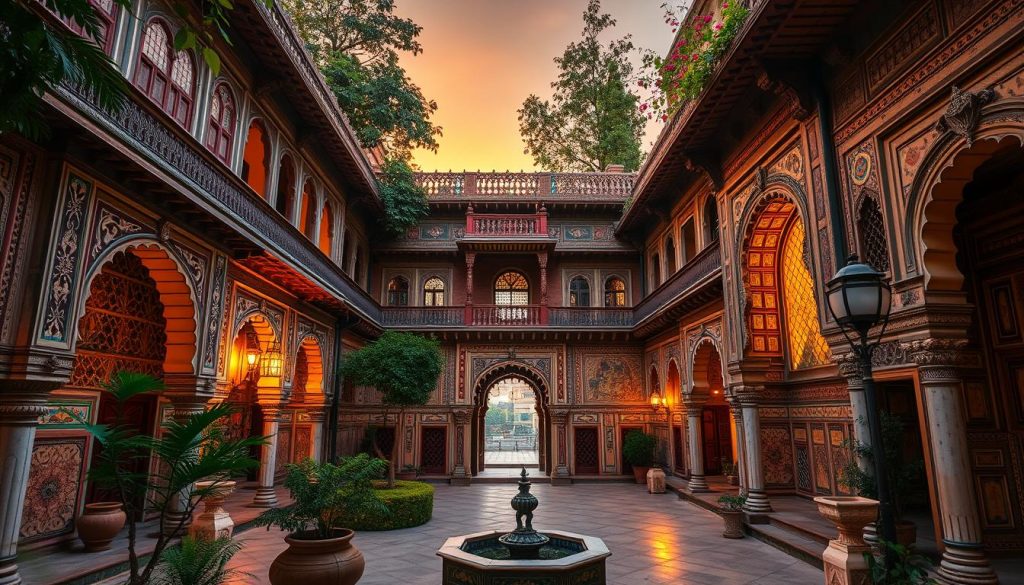
Seeing these Havelis offers a peek into the rich lives of those who lived there and the skill of the artisans. Their history, culture, and architecture attract many visitors. These places fascinate both history buffs and architecture lovers. You’ll be amazed by Multan’s artistic heritage.
Multan’s City Landmarks: More Than Just Buildings
Multan’s cityscape combines ancient charm with modern life. The Walled City, spanning 1.2 square kilometers, showcases Multan architectural design. It’s filled with historic buildings that tell the tale of its rich cultural past.
Each month, the Walled City attracts about 100 foreign visitors and numerous locals. It’s a key tourism spot. A decade ago, a $251 million grant from Italy helped restore important sites. These include the Haram Gate, Sarafa Bazaar, and the Shrine of Musa Pak Shaheed.
Modern Multan’s buildings mix old styles with new ideas. Umair Ghazanfar believes this can bring in thousands of tourists every year. However, this needs better management and improved facilities.
Dr. Sajid suggests more amenities like small hotels, cafés, and fun spots in the Walled City. Organizing cultural events and festivals can also highlight Multan’s unique heritage.
Training locals to be guides will boost the hospitality industry. This ensures tourists get a true feel of Multan’s history. With a welcoming spirit, Multan is on its way to becoming a top cultural destination. It’s a place where history and innovation meet.
Preserving Multan’s Architectural Heritage
Maintaining Multan’s architectural heritage is vital for its unique identity and history. With urbanization, historic sites are at risk. Local authorities and heritage groups work together to care for and promote these sites. These actions help keep the city’s rich cultural backdrop alive.
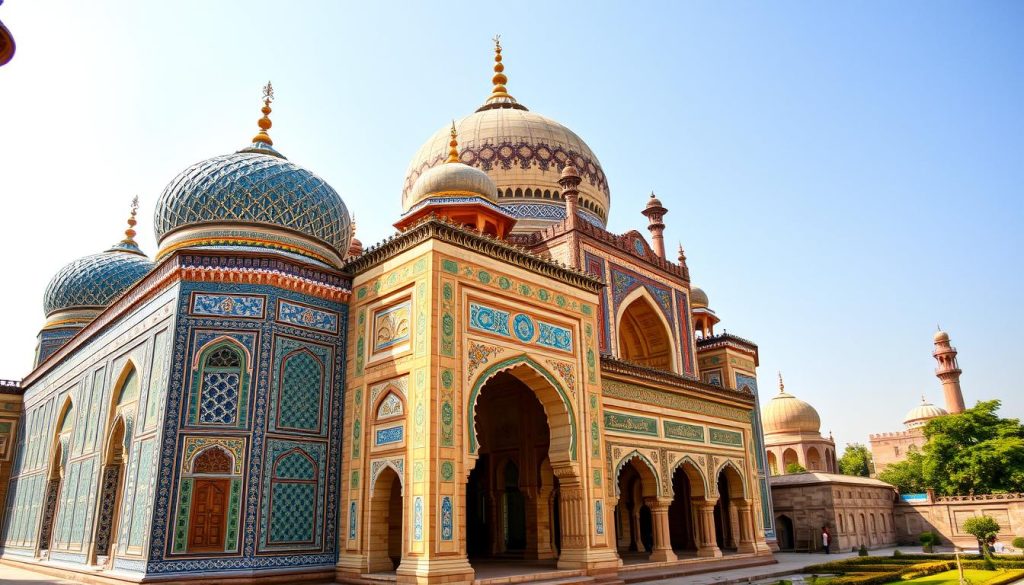
Conservation efforts are key to holding onto cultural importance. The Burra Charter of ICOMOS underlines this. A key example is the Shrine of Shah Yousuf Gardez. It has beautiful blue and white tiles with floral designs, showing Multan’s stunning architectural style.
Tech is big in saving these buildings. Building Information Modeling (BIM) is used for things like asset management. It’s used around the world, even at UNESCO World Heritage sites. Egypt’s work with 3D scans and BIM is helping fix important buildings.
Historic Building Information Modeling (HBIM) makes 3D models of heritage sites. It helps preserve buildings in places like Italy and Poland. In Multan, it’s protecting about 24 historic monuments from urbanization’s impact.
Local efforts also boost traditional crafts and bring back old art forms. This supports the community and keeps Multan’s traditions alive. The city is growing with education and new industries, but it’s also focusing on eco-tourism and green practices.
Rapid urbanization challenges the balance between growth and heritage. Multan is working on projects to be a sustainable development model in Pakistan. It’s learning how to grow while keeping its architectural heritage safe.
Conclusion: The Legacy of Multan Architecture
Multan’s architecture shows the city’s rich past and diverse cultural impacts. It boasts historical sites like the Northbrook Clock Tower and Ripon Hall, built from 1884 to 1888. The beautiful mausoleums show the skill of different dynasties. These buildings aren’t just beautiful. They share stories of cultures and people from ages past.
Multan’s buildings mix many styles, like Indo-Saracenic and Greco-Roman. The British influence in the late 19th century also shaped it greatly. Understanding these structures gives us a glimpse into Multan’s key role in Pakistan’s architecture story.
Preserving Multan’s architectural gems is crucial as the city moves forward. The Walled City’s makeover not only makes these spots look better but also improves life for the locals. Multan’s architecture keeps its cultural identity shining. It invites future generations to explore its beauty and historical depth.





