

Explore Hunza Valley Crafts & Textiles Online
Have you ever thought about the local crafts and textiles from Hunza Valley? This area in Northern Pakistan is known for its beauty and history. But it’s more than that.
It’s a place full of artisan skills and unique craftsmanship. These have been passed down for centuries. Today, there’s a big interest in Hunza Valley’s artisan textiles worldwide.
This interest opens doors for cultural exchanges and helps local artisans. When you look into these authentic textiles, you’re not just buying a product. You’re connecting with the stories and people who work to keep their traditions alive.
The Rich Heritage of Hunza Valley Crafts
The traditional handicrafts Hunza Valley are a crucial part of the local culture. Craftsmen make jewelry, embroider, and create woodworks that have been done for generations. Many of these artists also farm, but spend their free time on their crafts. This shows how their lives are closely connected with nature and their traditions.
In Hunza and Nager, 14 different crafts are thriving. These range from luxury jewelry to unique souvenirs that reflect Hunza Valley’s heritage. Jewelry making, for example, is a skill often learned in three years. Many work near old royal castles, adding historic value to their crafts.
Hunza’s musical culture is also rich, with many traditional songs and instruments. Basketry and mat weaving are common too, but not much written about them exists.
Leatherwork, though less common now, produces important items like shoes and gear for protection. Falconry, once a royal hobby, now has artisans making special gear. This mixes tradition with the valley’s noble past.
Cultural souvenirs from Hunza Valley include not just items to look at but also stone vessels and calabashes. Efforts are made to keep these crafts alive by training new craftsmen and finding markets for them. This helps maintain tradition in a modern economy.
The crafts of Hunza are influenced by neighboring regions, adding beauty to their work. Women’s embroidery, for instance, features colorful patterns. These designs fit both traditional and newer styles. Artisans like Shukrat Bibi have earned national praise for their embroidery.
Visiting Hunza Valley, you’ll see the beauty of its traditional crafts first-hand. This makes your trip not just scenic but also rich in culture.
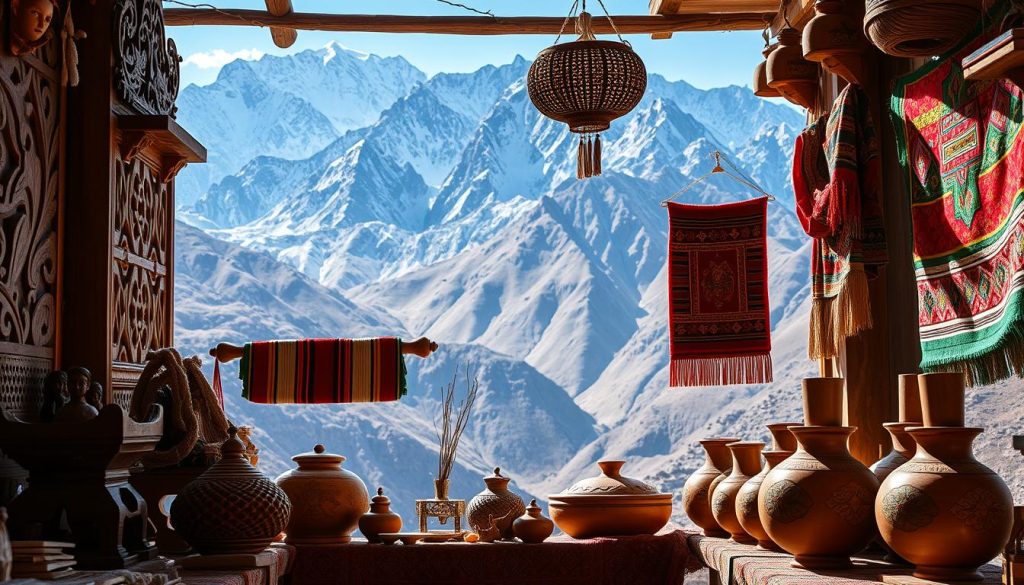
| Craft Type | Key Materials | Notable Features |
|---|---|---|
| Jewelry | Precious stones, metals | Passed down through generations, intricate designs |
| Embroidery | Threads, fabrics | Bright geometric patterns, both traditional and modern |
| Woodwork | Trees, natural finishes | Increased participation of female artisans |
| Leatherwork | Animal hides | Includes shoes, belts, and raincoats |
| Basketry | Natural fibers | Variety of traditional uses |
| Falconry Accessories | Various materials | Uniquely crafted for royal falconry |
Traditional Handicrafts of Hunza Valley
The Hunza Valley’s craftsmanship highlights traditional handicrafts rich in culture and heritage. Here, you’ll find beautiful embroidery, jewelry-making, wood carving, and weaving. These handicrafts not only show off the skills passed down through generations but also share the history of the people.
Overview of Traditional Handicrafts
Artisans in the Hunza Valley make beautiful items that blend tradition with innovation. The embroidery shows different styles such as:
- Traditional erāghi using silk thread
- Charsuta chuk with woolen thread
- Qalmi featuring long and short stitches
- Zardōzi made with silver or golden threads
The motifs often depict animals, birds, leaves, and insects, telling a story. Since 1996, over 250 women have learned weaving, focusing on carpets and Soumak rugs. This adds to Hunza’s unique handcrafts.
The Role of Women in Craftsmanship
Women are key in keeping Hunza’s handicrafts alive. Through training, they gain skills and earn a living. This not only empowers them but also helps the community’s economy. They create diverse embroidery found in textiles and crafts.
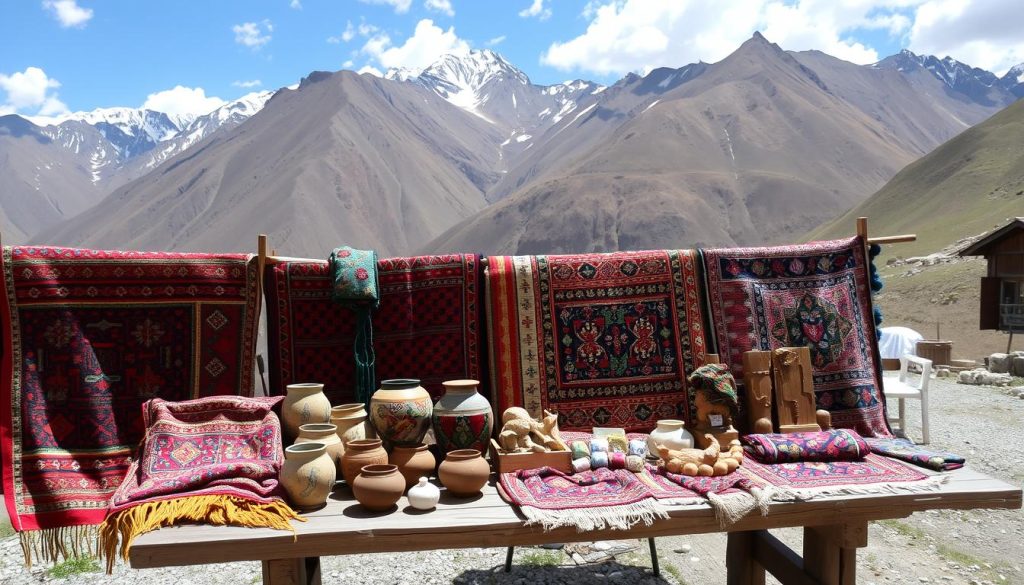
This commitment to craftsmanship helps preserve their culture. It also allows artisans to share their work worldwide, boosting Hunza Valley’s handicraft reputation.
Local Crafts and Textiles Hunza Valley
Dive into the colorful world of Hunza Valley’s local crafts and textiles. This region is a hub of creativity, where every item reflects its culture. Look around and you’ll see amazing traditional weavings, detailed embroideries, and stunning handcrafted jewelry. These pieces are more than just art. They carry the history of Hunza Valley and have practical uses too.
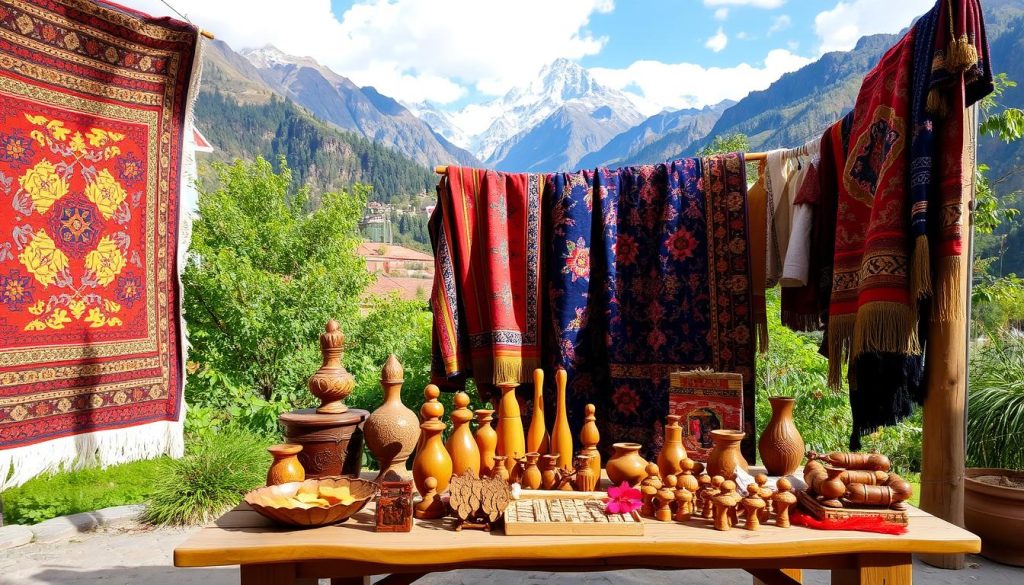
- Hunza Pashmina Woolen Shawls
- Kilim Rugs, originally priced at ₨ 25,999, now available for ₨ 17,999
- Taxidermy Mounts
- Yak Wool items
The local crafts showcase the collaboration of the community. The Hunza Wear Project, for instance, helps women artisans. They gain skills to make valued handmade products. Think of cozy woolen sweaters and soft cotton clothes. These items create a special link between the makers and the buyers.
| Craft Category | Quantity | Prominent Features | Awards |
|---|---|---|---|
| Rugs | 11 Types | Traditional Patterns, Durable Material | Two Presidential Awards |
| Pashmina Shawls | Various | Soft, Warm, Luxurious | N/A |
| Handmade Clothing | Multiple Items | Knitted, Tailored, Eco-friendly | N/A |
Hunza Valley’s crafts stand for creativity and cultural pride. By buying these products, you’re not just getting something unique. You’re also helping artisans maintain a steady income. It’s all about supporting locals and keeping traditions alive.
Artisan Textiles of Hunza Valley
Hunza Valley’s artisan textiles blend cultural heritage with expert craftsmanship. Each piece shares a story, showing the local artisans’ commitment and creativity. In this section, learn about the textiles and weaving techniques that stand out in the region. Discover the beauty of woolen and Pashmina fabrics that carry the stories of their communities.
Types of Artisan Textiles
In Hunza Valley, artisan textiles come in many forms, known for their quality and design. Here are some key examples:
- Woolen Shawls: Made at the Hunza Weaving Center, these shawls are loved for their warmth and strength.
- Pashmina Shawls: These come from the undercoat of Himalayan goats, known for their softness and luxury.
- Cashmere Shawls: They stand out for their fine craftsmanship, adding elegance to Kashmiri textiles.
- Handmade Rugs: The center specializes in rugs with complex patterns that showcase traditional skills.
- Hunza Embroidery: This vibrant art uses mirrors and beads on silk and cotton, showing the local artisans’ imagination.
Weaving Techniques and Patterns
The weaving methods in Hunza Valley textiles vary widely, just like the materials. Artisans use ancient techniques to create patterns filled with cultural meaning. Here are some important weaving techniques:
| Type of Textile | Primary Material | Unique Characteristics |
|---|---|---|
| Pashmina Shawls | Pashmina Wool | Soft, warm, detailed patterns |
| Cashmere Shawls | Cashmere Wool | Luxurious feel, excellent craftsmanship |
| Handmade Rugs | Wool and Cotton | Classic designs, artisanal expertise |
| Hunza Embroidery | Silk and Cotton | Bright colors, complex designs |
| Kashmiri Shawls | Changthangi Wool | Chinar leaves and paisley motifs |
Artisan textiles from Hunza Valley show a deep respect for cultural history while helping local artisans through fair trade. The ancient art of weaving in this area is still strong, mixing historical layers with innovation in a rich tradition.
Unique Crafts of Hunza Valley
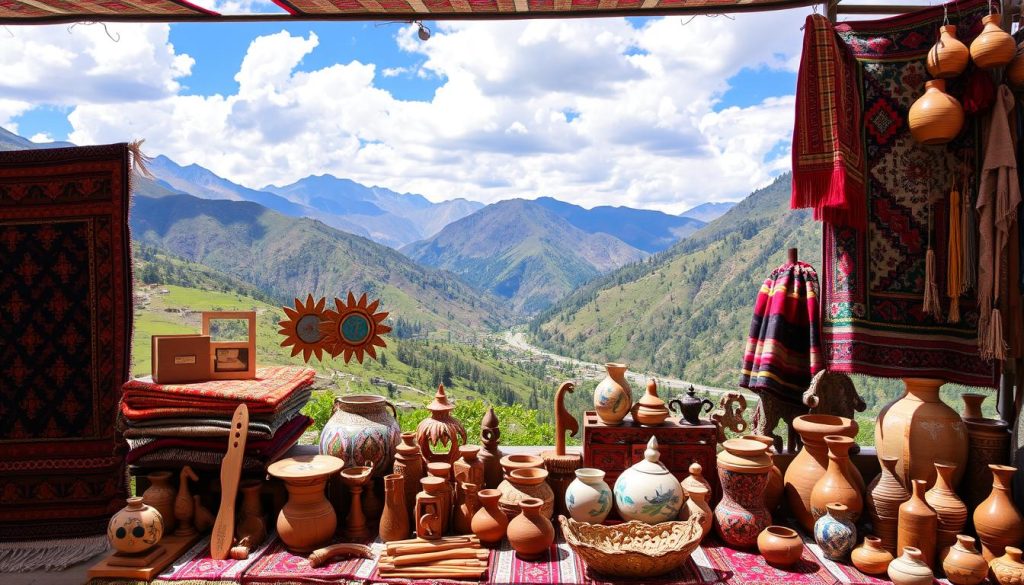
Hunza Valley showcases crafts that reflect its rich culture and artistry. You’ll see amazing basketry, leatherwork, and traditional musical instruments. These items are both useful and represent Hunza’s daily life and festivities.
Basket weaving in Hunza shows off generations-old techniques. Artisans create beautiful, durable goods from natural materials. These crafts demonstrate Hunza’s creativity and focus on sustainability. The leatherwork here also shows a high commitment to quality. You’ll find everything from bags to traditional shoes, all made with great care.
Musical instruments, like the rubab and flute, are vital to Hunza’s culture. These instruments play a big role in local events, bringing people together. Handmade gifts from Hunza are treasured by locals and visitors alike. They offer a meaningful way to remember this unique place.
The crafts of Hunza tell a story of skill and tradition. Engaging with these crafts lets you connect deeply with Hunza’s vibrant culture and art. This experience shows the beauty of this part of Pakistan.
Handmade Products from Hunza Valley
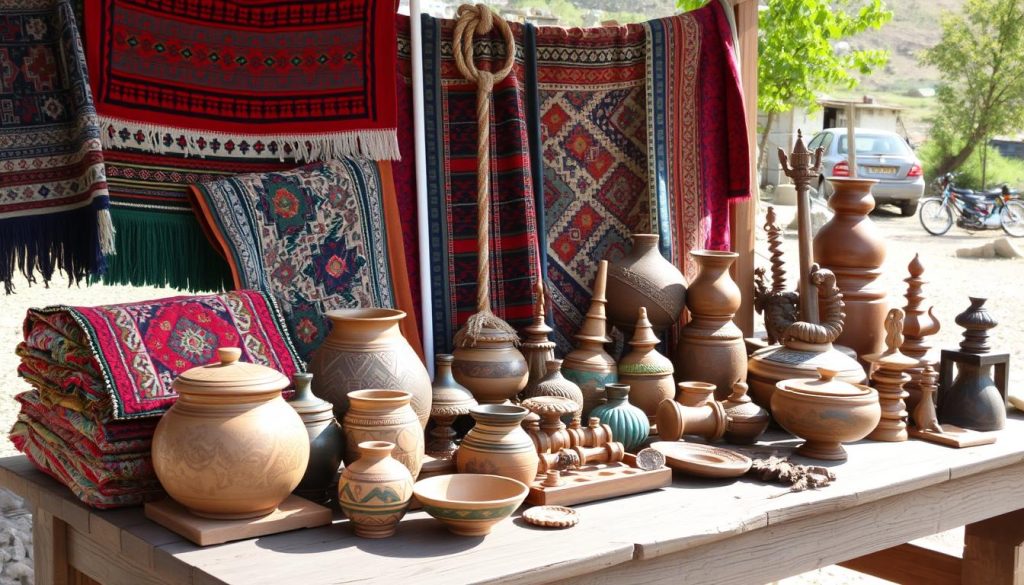
Hunza Valley is known for its beautiful handmade products. These products show off the region’s rich culture. You can find textiles, pottery, and wooden crafts. These items are not just decorations. They also tell the stories of the people who make them. By buying these products, you support local artists and keep the culture alive.
Popular Handmade Items
Some items from Hunza Valley are really popular with tourists and collectors:
- Pashmina Shawls: They are known for their luxury and beautiful designs.
- Cashmere Shawls: These pieces are fancy and highly sought after.
- Handmade Rugs: Each rug is made with care, showing traditional patterns.
- Pottery: The pottery is both beautiful and useful.
- Wooden Crafts: These items show the amazing skill of the local artisans.
Where to Buy Handmade Products
Looking for authentic products from Hunza Valley is exciting. You can find them at local markets or online. When shopping, keep these points in mind:
- Shipping costs can be high, especially to places like Eastern Europe and Central Asia. These costs are often more than to the USA or Western Europe.
- Items are shipped out on Tuesdays and Fridays. This schedule helps with quick delivery.
- If you need to return or exchange something, items under 4 pounds can be exchanged. You have 7 business days to do this after receiving the item.
- Customers must pay for return shipping and any transaction fees. This includes fees for wire transfers and PayPal.
- When buying vintage or antique items, remember there can be customs restrictions on returns.
Cultural Souvenirs from Hunza Valley
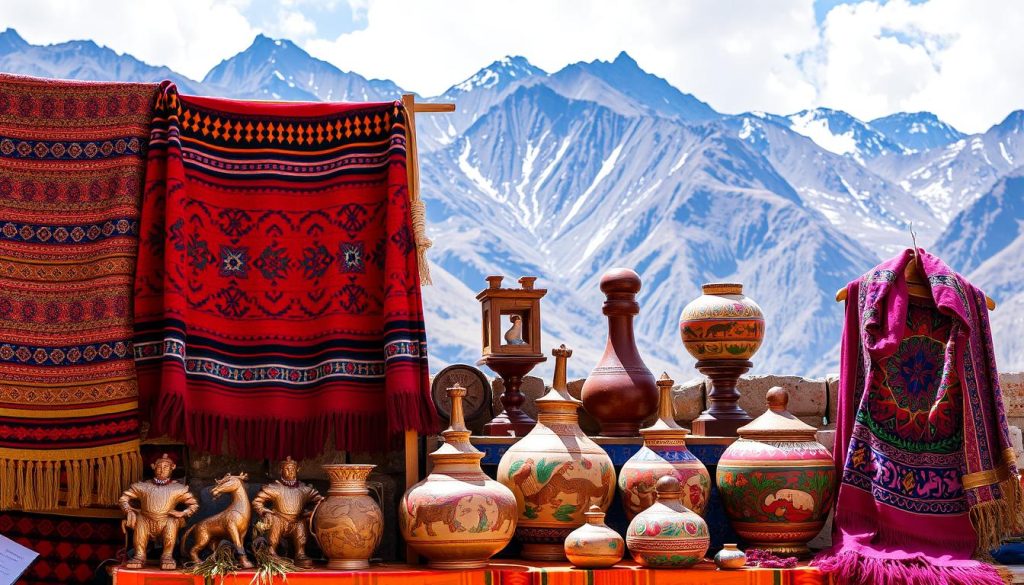
Cultural souvenirs from Hunza Valley give you a peek into its rich culture and history. Every item tells a story, showing the community’s creativity and roots. Look out for beautiful artisan textiles and crafts. They are not just keepsakes but also special gifts for anyone visiting.
Buying these souvenirs helps the local economy a lot. It allows crafters to keep making traditional art. This also saves their ancient methods for the future. Let’s dive into some popular souvenirs that capture Hunza Valley’s spirit:
- Handwoven Shawls: These shawls are famous for their bright colors and designs.
- Carpets: Every carpet tells a unique story with its craftsmanship.
- Dried Fruits: They are high-quality and bring the taste of Hunza to you.
- Handicrafts: Look for jewelry and caps that show off the local creativity and culture.
- Gemstones: Hunza’s gemstones are highly prized here and elsewhere.
The art and craft tradition flourishes in Hunza Valley because of its distinct culture. These souvenirs are not just items to bring back home. They are treasures that narrate the vibrant life of the area. You will find these special items in local markets. There, artisans share their work and the stories behind them.
When visiting Hunza Valley, buying souvenirs helps keep these old traditions alive. These items contain the essence of the valley. They invite you to bring a piece of its rich heritage back home with you.
Authentic Textiles of the Hunza Valley
Authentic textiles Hunza Valley let you touch the heart of local culture. The Hunza Weaving Center is key, offering woolen, Pashmina, and cashmere shawls. Each piece tells the rich history of this place.
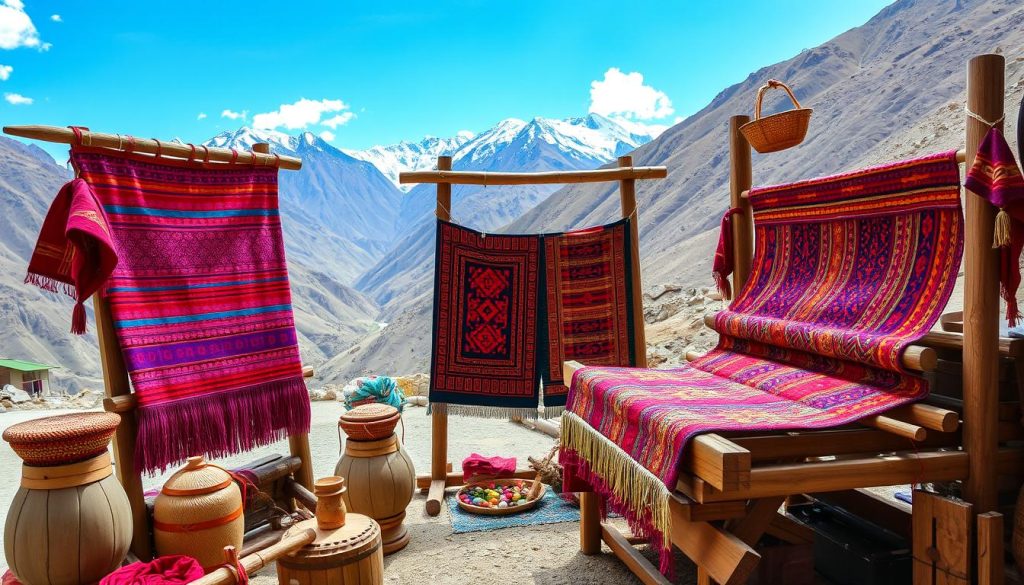
Pashmina shawls are made from Himalayan goats’ undercoat. They are a testament to the crafters’ skill, with each shawl being unique. The softness of cashmere shawls is unmatched, making them a prized possession.
Local artisans also make handmade rugs, showing off their weaving skill. This craft provides a steady income, helping families and the community. The Hunza Weaving Center supports fair trade, which helps local workers and brings positive social change.
In Hunza Valley, the lifestyle is full of customs and traditions. People wear the Shalwar Kameez with the Chitrali cap, showing their cultural pride. Festivals like the Baltit Festival unite people with dance and music. Dastarkhwan, the communal dining, reflects generosity and unity.
The traditional handicrafts Hunza Valley let you feel a deep connection with the region. Be it a shawl or a rug, these items carry stories of endurance and cultural legacy.
The Significance of Embroidery in Hunza Valley Crafts
Embroidery in the Hunza Valley is a key part of traditional crafts. It shows the area’s rich culture. Hunza embroidery is known for its detailed work, including styles like Iraghi, Qalmi, Charsuti, and Zardozi. Each style has its own charm and story. They reflect the artisans’ skills and the tales woven into the fabric.
The Iraghi style is known for its fine work with local silk on cotton. It uses cross and roll stitches. But, this art is at risk because it takes a lot of work to make. Charsuti, on the other hand, uses a loosely woven fabric and wool. It is easier to make. Qalmi embroidery is practical and often found on white cotton. It’s used to make lovely things like pillow covers and handkerchiefs.
Even as times change, these crafts stay important in Hunza Valley. They’re not just pretty decorations. They also help keep the Hunza community’s identity strong. The vivid colors and detailed patterns in Baluchi leather embroidery and crochet show a love for heritage. They help carry on a proud tradition for the next generations.





