Beat Jet Lag on Long Trips with Smart Strategies
Have you ever wondered why some seasoned travelers still can’t ? It’s a real sleep disorder that throws off your body’s clock. It leaves you tired, confused, and not ready to work. About 30% of travelers feel serious jet lag after flying across three or more time zones.
This article will show you smart strategies for managing jet lag on long trips. You’ll learn how to adjust your sleep before you leave and find out what works in-flight. Did you know that staying up until it’s bedtime at your destination can help a lot? This plan works for 70% of travelers, helping them adjust to new time zones quicker. And, travel east usually messes more with your sleep cycle, taking about a day per time zone to get used to. Meanwhile, going west usually isn’t as hard on you.
Knowing how jet lag works and using smart travel recovery strategies can make international trips much better and less tiring. We’ll share more tips in this article to help change how you travel.
Understanding Jet Lag: What Happens to Your Body
Jet lag is a common issue if you fly across three or more time zones. It messes with your body’s internal clock and impacts your biological activities.
The Science of Jet Lag
Your internal clock gets out of sync with the day-night cycle when you travel fast across different time zones. This mismatch affects your body’s rhythms. It can mess with your hormone levels, how warm your body is, and when you sleep.
Being out of rhythm like this could raise your risk for health issues such as diabetes, depression, and certain cancers. Usually, your body adapts to a new time zone in about 1 to 1.5 days per zone. But, jet lag symptoms might stick around from a few days to weeks.

About 75% of travelers find jet lag worse when flying east. That’s because it’s tougher for your body to adjust to an earlier time. Jet lag can cause sleep troubles, feeling sleepy during the day, difficulty thinking, less physical energy, emotional ups and downs, and stomach problems.
Impact of Circadian Rhythms
Jet lag makes us see the importance of our circadian rhythms. These rhythms help control our mood, how well we perform, when hormones get released, how our body uses energy, and helps our immune system. Jet lag’s impact varies based on the trip, when you arrive, your age, how well you slept before the trip, and your stress levels.
| Destination | Average Adaptation Time | Severity of Jet Lag | Symptom Persistence |
|---|---|---|---|
| Eastward (3+ Time Zones) | 1.5 days per time zone | Higher | Up to a few weeks |
| Westward (3+ Time Zones) | 1 day per time zone | Moderate | A few days |
Recovering from jet lag can be harder for older adults. But studies show that younger people, like pilots, may feel worse jet lag. Knowing these factors can help in making tips to deal with jet lag better when adjusting to new time zones.
Prep Before You Depart: Start Adjusting Sleep
Changing your sleep schedule before a long trip helps fight jet lag. Use sleep strategies and prepare ahead to beat the tiredness of traveling across time zones.
Gradual Schedule Adjustment
Start by adjusting your sleep time one to two hours closer to the time at your destination a few days before you go. This makes adapting easier. The CDC says this helps with jet lag from crossing more than three time zones.
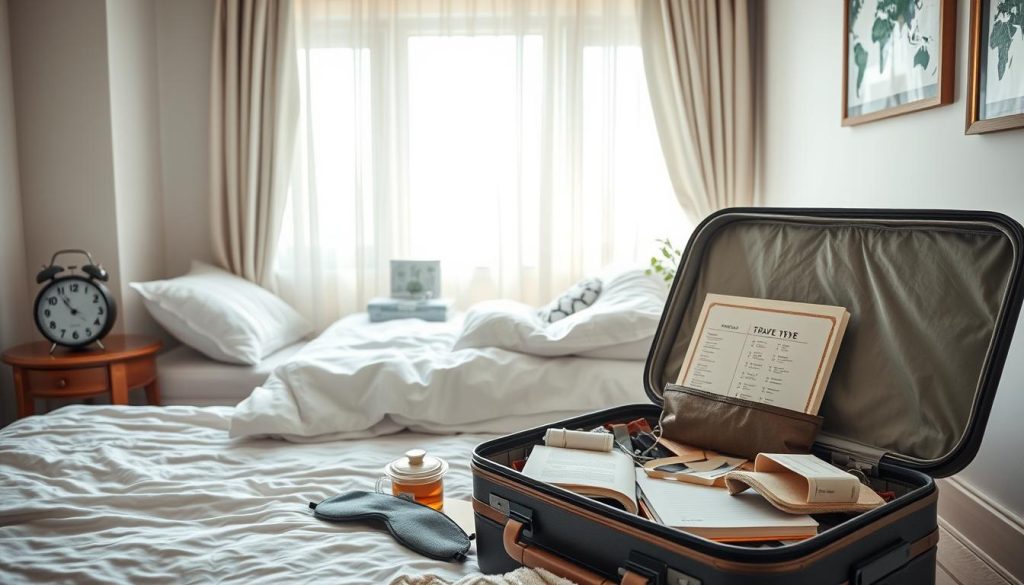
The main thing that affects how long and how bad jet lag feels is how many time zones you cross. For example, going across three time zones might upset your sleep for 1-3 days. But a long trip, like from New York to Tokyo, can mess up your sleep for up to a week.
Pre-Flight Light Exposure
Managing light before you fly is also key. It helps set your body clock. Light in the morning affects it the most, helping adjust when you sleep and wake up.
If you’re flying east, expose yourself to more light in the evening and less in the morning. For westward flights, do the opposite. Good sleep habits combined with this can help a lot with jet lag.
Using these tips and adjusting how you sleep before flying can really help when you arrive.
Choosing the Right Flights to Minimize Jet Lag
Reducing jet lag starts with your flight choices. This means picking the best times to fly, considering time zones and your body clock. It’s all about syncing up properly.
Selecting Flight Times
Matching your flight with your destination’s time zone helps a lot. Most long-haul travelers feel jet lag when their flights don’t align with their natural sleep cycles. Flying during the day is usually best to keep your sleep on track.
Best Airplanes for Comfort and Minimal Jet Lag
Flying on the best airplanes means more comfort and less jet lag. Planes like the Boeing 787 Dreamliner and Airbus A350 use tech to make flying nicer. They’re less pressurized and filter the air better, so you feel better.

Airline Selection Tips
Which airline you pick is key. Going with top-rated airlines, like those awarded five stars by Skytrax, can make a big difference. Japan Airlines, for instance, offers exceptional comfort in economy class, beating some U.S. carriers’ Premium Economy. More comfort in seating, like Economy or Premium Economy and Business Class, means better sleep and less jet lag.
In short, smart flight times, flying on comfortable planes, and choosing the best airlines can majorly cut down on jet lag. This makes your trip more fun and refreshing.
In-Flight Strategies for Minimizing Jet Lag
Changing what you do while flying can make jet lag less harsh. It makes getting used to a new time zone easier. These tips keep you alert and help your body’s clock adjust to travel.
Using Earplugs and Masks
Earplugs and eye masks can make your flight more peaceful. Earplugs keep noise away, and masks block out light. This helps you sleep better. Wearing noise-canceling headphones can improve your sleep by about 30%.
Hydration Tactics
Drinking enough water is very important. 80% of travelers say it helps reduce jet lag. Staying hydrated fights the dry air on planes and keeps you from getting too tired. But, try not to drink things like coffee or alcohol since they can dry you out.

In-Flight Exercises
Many travelers don’t exercise on the plane, but they should. Light exercises help your blood flow and lower the chance of DVT. Stretching keeps you flexible and fights off jet lag. Try doing ankle circles, shoulder rolls, and leg lifts to keep moving during your flight.
How to Sleep on the Plane for Optimal Rest
Many find it hard to sleep on planes. But, right tips can help you get good rest. Then, you’ll feel refreshed when you arrive.
Choosing the Right Seat
Choosing a good seat is key for getting to sleep well during a flight. Pick a window seat to lean against the wall and control the light. It also means you won’t be bothered by people moving around. Avoid seats near the bathrooms or kitchens to lessen interruptions.
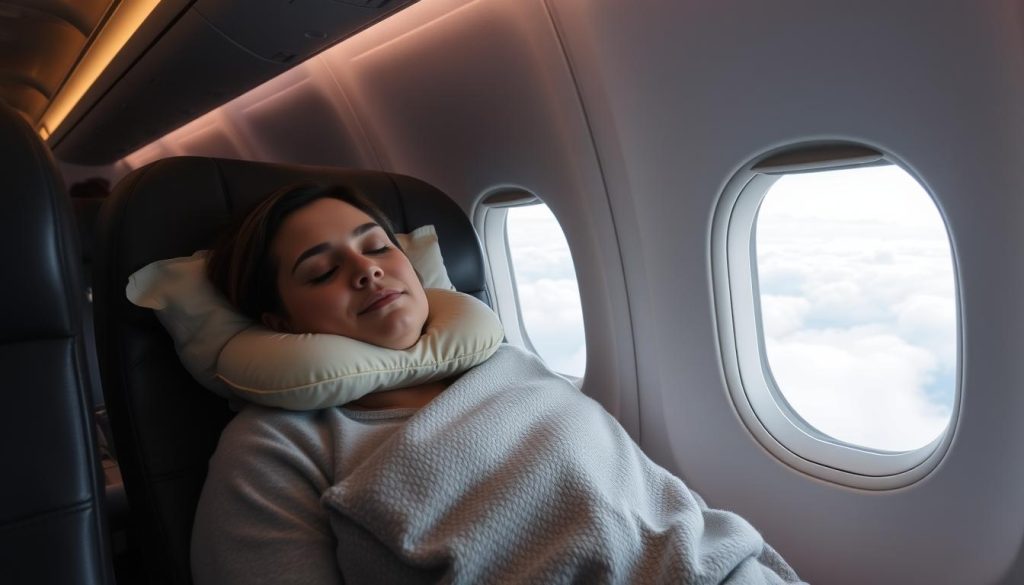
Experts say maintaining a bedtime routine helps start sleep when traveling. About 75% of people sleeping better on flights stick to their usual sleep habits. Being a bit tired helps too, especially for long flights across different time zones.
Effective Use of Sleep Aids
Sleep aids can make your flight rest better. This includes using a sleep mask, earplugs, and a neck pillow for comfort. Always check with a doctor before taking sleep medicine to avoid feeling groggy after. Eating something light and not fatty before flying also leads to sleeping 20%-30% longer.
Less screen time on the flight means better sleep, by about 15%-20%. Because the blue light from screens can mess with sleep hormones. Skipping meals served on the plane, which disturb 63% of travelers, helps too. And prepare your mind for the new time zone right when you get on. This can cut jet lag symptoms by half.
Smart Strategies for Managing Jet Lag on Long Trips
Going on long trips often means fighting jet lag. It’s important to quickly adjust to local time using smart strategies. Here are some helpful tips to make the switch easier.
Mental Reset Upon Arrival
Starting your adjustment begins with a mental shift. Right after you land, set your watch to the current local time. This simple step helps your brain understand the time change, helping you adjust faster. Studies show that how you think about jet lag can actually affect how you feel.
Keeping a positive outlook is key. Tactics like mindfulness can really lessen tiredness and confusion. Using these mental tricks helps you recover faster.
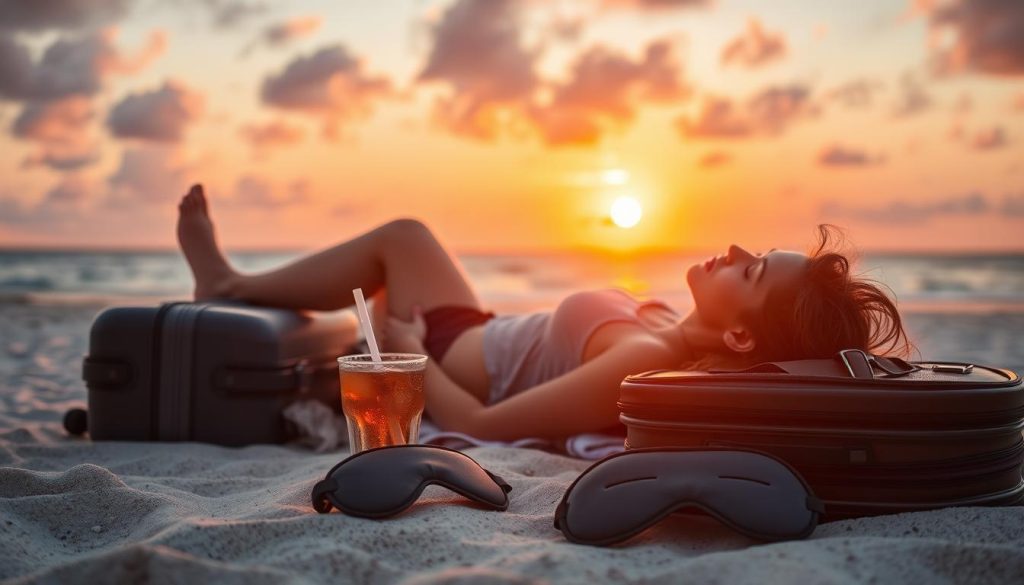
Adopting Local Time Immediately
Quickly getting on the local schedule helps beat jet lag. Eat when locals do and try not to nap right after you get there. Sunlight right after you arrive helps your body clock adjust faster. Also, try some exercise like jogging or stretching to help the adjustment.
- Eat meals when the locals do.
- Get as much sunlight as you can.
- Keep naps short to avoid messing up your sleep at night.
Eating a big breakfast and avoiding dinner can help reset your body clock, studies show. Making these lifestyle changes as soon as you can makes the adjustment smoother. It helps you feel better overall.
Nutrition Strategies: What to Eat and Drink
Travel can change how you eat and lead to poor nutrition if you’re not careful. Using nutritional strategies for travel can keep your diet balanced. This helps you stay healthy while you’re moving around.
Hydration Before and During Flight
Staying hydrated is key when traveling. You should drink water before and during your flight. This is because airplane cabins can dry you out.
Not drinking enough water can make you want junk food. It can also cause fluid retention. This makes you feel bloated and uncomfortable. Drinking water fights these problems. It keeps you energetic and less likely to snack on unhealthy food.

Eating Light and Healthy
Eating light, healthy meals avoids stomach upset and keeps your energy up. Choose foods low in sodium and pack high-protein snacks. Snacks like hard-boiled eggs and yogurt are good. They’re especially helpful on long road trips where there’s lots of fast food.
Using portion control helps too. Avoid heavy sauces and eat at regular times. This is important on cruises where there’s a lot of food around. It stops you from eating too much.
Avoiding Caffeine and Alcohol
Avoiding caffeine and alcohol is smart. They can mess up your sleep and make you dehydrated. Instead, eat foods that help you sleep. These include poultry, fatty fish, dairy, nuts, whole grains, bananas, and kiwis.
Try to limit sweets to once a day. Choose nutrient-rich foods like veggies and lean proteins. This keeps your diet healthy while you’re on the move.
| Recommended Snacks | Benefits |
|---|---|
| Fresh Produce (e.g., apples, carrots) | Rich in vitamins and fiber |
| Low-Fat Yogurt | High in protein and calcium |
| Cheese Sticks | Easy to carry and high in protein |
| Almond Butter | Healthy fats and protein |
Also, apps like Food Tripping and Happy Cow can help you find good food while traveling. Being prepared makes it easier to keep eating well. This lets you enjoy your trip without hurting your health.
Exercise to Combat Jet Lag
Overcoming jet lag is more than just changing your sleep pattern. Adding exercise and stretching after your flight helps a lot. It speeds up resetting your internal clock and eases muscle stiffness and tiredness.
Workouts on Arrival
Workouts after flying energize your body. A quick jog or fast walk boosts blood flow and battles sluggishness. Exercise helps adjust your body’s clock, easing the jet lag.
You could also hit a gym or hotel fitness room for some cardio or weights. Here are some top exercises for jet lag recovery:
- Brisk walking or jogging
- Light weightlifting
- Swimming
- Basic yoga poses
Stretching Routines for Better Sleep
Stretching for travelers is key for loosening tight muscles and improving flexibility after a long flight. Stretching helps you move better and sleep more soundly.
Stretch your lower back, hamstrings, and calves to counteract the effects of sitting too long. Add these stretches to your routine:
- Hamstring Stretch: Sit and extend one leg, fold the other in. Lean forward, holding for 15-20 seconds.
- Calf Stretch: Face a wall with one foot in front. Press your back heel down and lean in.
- Lower Back Stretch: On your back, pull one knee to your chest. Hold, then switch knees.
- Shoulder Stretch: Cross an arm over your chest and press with the other hand for 15-20 seconds.
Doing these workouts after flying and stretching for travelers greatly lessens jet lag. This ensures you enjoy your trip or bounce back to your best fast.
| Exercise | Benefits |
|---|---|
| Jogging | Boosts energy and aligns sleep cycles. |
| Yoga | Makes you more flexible and less stressed. |
| Weightlifting | Improves strength and muscle recovery. |
| Swimming | Better heart health and relaxes muscles. |
Supplements to Consider
Supplements are key in fighting jet lag and adjusting to new time zones faster. The right supplements for jet lag can greatly improve your recovery time and comfort.
Melatonin
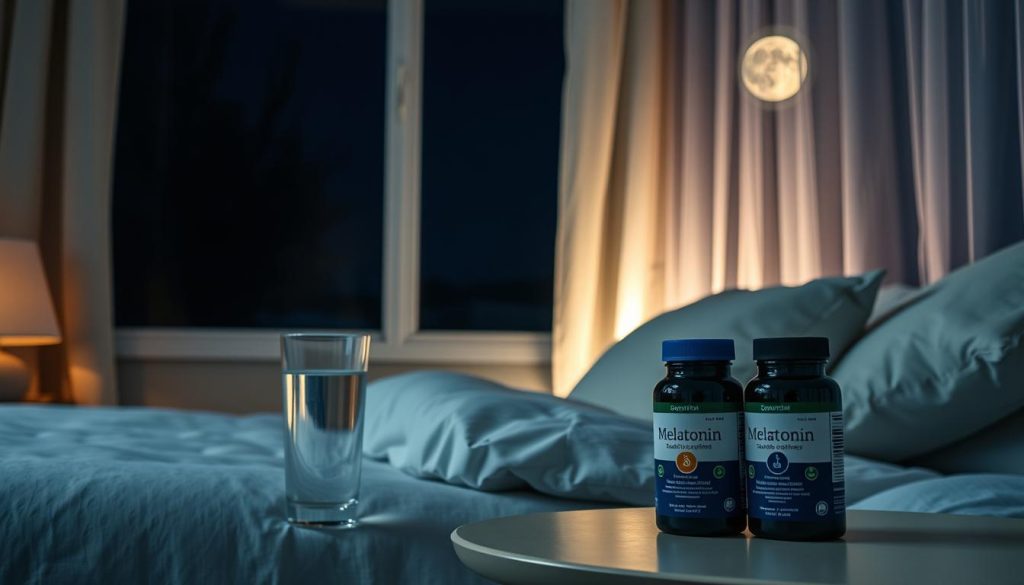
Melatonin use helps greatly with adjusting to new time zones. It’s very helpful for those traveling over seven time zones east or more than 12 west. Most people find a dose of 3 milligrams works, but some need as little as 0.5 or up to 10 milligrams. Typically, melatonin is recommended for up to five nights to help with jet lag.
Melatonin isn’t advised for trips shorter than three days because there’s not enough time to adjust. Side effects can include headaches, feeling sleepy during the day, nausea, and mood swings.
Other Natural Remedies
Many natural remedies for travel can lessen jet lag effects. Getting sunlight when you arrive helps reset your body clock. Drinking lots of water and avoiding alcohol and caffeine are also beneficial. Herbs like valerian root and chamomile are popular natural options for travelers.
Consulting a Doctor
Talking to a doctor before taking supplements for jet lag is wise. They can give tailored advice based on your health and travel. Since about 15% of travelers use medication for jet lag, a doctor can help ensure you use supplements safely and effectively.
| Products | Effectiveness | Dosage |
|---|---|---|
| Melatonin | Most effective for 7+ time zones crossed | 0.5mg-10mg |
| Valerian Root | Natural calming effect | 300mg-500mg |
| Chamomile | Promotes relaxation | 400mg-1600mg |
Dealing with Kids and Jet Lag
Handling kids’ jet lag and their travel tiredness needs careful planning. But, you can make it easier for everyone with the right approach.

Kids often feel jet lag differently than adults do. One key point is how long the journey is. For example, flying from San Diego to Hong Kong takes about 22 hours. This includes nearly 15 hours of flight from LAX to HKG. Kids may sleep just 4 to 6 hours, causing big sleep disruptions.
When you land, like at 7 p.m. in Hong Kong, try to keep the kids awake a bit longer. Until about 11 p.m. is good. This helps them get used to the new time quicker. Making sure they then sleep for 7 hours straight helps avoid long-lasting jet lag.
Dealing with travel tiredness in kids also means careful planning of naps and meals. Naps should be short, under an hour. And pick small, protein-rich meals over big, fatty ones. Kids over one should drink plenty of water. This keeps dehydration and jet lag at bay.
Getting ready before you leave is key too. If you’re flying east, put your kid to bed 15 minutes earlier each night, a week before you go. For westward trips, you do the opposite. This slow change helps match their routine to the new time zone better.
Here is a detailed table outlining a typical travel experience for a child:
| Travel Details | San Diego to Hong Kong | Tokyo to San Diego |
|---|---|---|
| Total Journey Time | 22 hours | 11 hours |
| Flight Duration | 15 hours | 11 hours |
| Child’s Average Sleep Onboard | 4 hours | 4-6 hours |
| Typical Bedtime | 7-8 p.m. | 7-8 p.m. |
| Landing Time | 7 p.m. local time | N/A |
| Child Awake Time After Landing | Until 11 p.m. local time | N/A |
| Uninterrupted Sleep Post-Landing | 7 hours | N/A |
By following these tips on dealing with jet lag in kids, your family can adjust more easily. And you all can fully enjoy your trip.
Maintaining Good Sleep Hygiene
Good sleep hygiene is key to beating jet lag. By keeping up with these habits, you adapt faster to new time zones. This makes your travel way better.
Creating a Restful Environment
To sleep well, your room must be set up right. It should be quiet, dark, and kept between 60 and 67 degrees Fahrenheit. The right bedding and pajamas help too. These changes help your body adjust its temperature and melatonin. This helps you get used to new sleep times easier.
Consistency is Key
Keeping a regular sleep schedule greatly helps good sleep hygiene. Even when traveling, keep your bedtime and wake-up time the same. For trips, slowly change your sleep time—one hour earlier for eastward flights, one hour later for westward. Doing this reduces jet lag and makes sleep better.
| Tip | Details |
|---|---|
| Bedroom Temperature | 60-67°F |
| Light Exposure | Avoid bright light in the morning for east flights; seek light in the afternoon |
| Hydration | Drink water on flights to avoid dehydration |
| Schedule Adjustment | Adjust sleep by 1 hour in the direction of travel |
| Routine Consistency | Maintain consistent sleep and wake times |
Conclusion
To beat jet lag on long trips, you need a mix of smart strategies. Adjusting your sleep, choosing the right flights, sticking to a flight routine, and adapting after you arrive are key. These steps help reduce travel tiredness.
Jet lag often hits when you fly across three or more time zones. It messes up your body’s clock. Experts say using light and melatonin helps get your clock back on track. Staying hydrated, eating well, and exercising after your flight are also important.
Using melatonin supplements is effective, too. Even airlines are coming up with light therapy to help. With 93% of travelers facing jet lag, these methods are crucial. They make your trip more enjoyable and keep you healthier.