Beat Jet Lag Fast: Tips for Quick Recovery
Ever wondered why some travelers get over long-haul flights faster than others? Jet lag messes with your sleep routine, affecting your well-being and work. But, there’s good news. You can conquer jet lag with the right methods.
Jet lag happens when you cross three or more time zones. This confuses your body’s clock. If you travel through five time zones, expect up to five days of adjustment.
This article will show you how to beat jet lag. Adjusting your sleep and making lifestyle changes can help. We’ll tell you about using melatonin, getting the right light, and changing what you eat. Follow our tips to get over jet lag and enjoy your days.
Understanding Jet Lag: Basics and Effects
Jet lag is a sleep problem many travelers face when they fly through many time zones quickly. It messes with your body’s internal clock or circadian rhythm. This leads to uncomfortable symptoms. Understanding jet lag and how it affects you is the first step in preventing it.
What Causes Jet Lag?
Jet lag happens when you travel fast across at least 2 time zones. This confuses your internal clock. Flying east usually makes jet lag worse. Being on frequent flights, like pilots and flight attendants, raises the chance of getting jet lag.
Older adults may have a harder time getting over jet lag than younger people. Staying hydrated is very important, especially because airplane cabins have low humidity.
Symptoms of Jet Lag
Jet lag symptoms often appear 1 to 2 days after crossing time zones. They include trouble sleeping, feeling tired, and finding it hard to focus. You might also experience mood swings and a higher risk of accidents from tired driving.
Some people get over jet lag in a few days. Each time zone you cross may add a day to your recovery time. Frequent flyers should know that blue light from screens can make jet lag worse. It messes with your sleep and makes you less alert the next morning. Recognizing these symptoms and taking steps like getting the right light exposure and drinking plenty of water can help.
Adapting Quickly to Your New Time Zone
Adjusting quickly to a new time zone helps lessen jet lag discomfort. Taking a few smart steps can make you adjust faster. These steps help you get in sync with the local time soon after you arrive.
Set Your Clocks
One simple but powerful tip is to set your clocks to the new time zone when you get on the plane. Don’t forget your wristwatch and all other devices. Doing this gears you up mentally and begins the process of syncing your sleep to where you’re heading. Studies say it usually takes one day per hour of time difference to adjust.
Eat and Sleep According to the New Time Zone
Once you arrive, eat and sleep as per the local time. Doing this speeds up how fast your body’s clock resets. Having your meals at the right times and sticking to a sleep schedule helps fight jet lag better than medicines. This way, you adapt to the jet lag sleep schedule faster.

Here’s a helpful table with tips on adjusting your sleep to beat jet lag:
| Action | Recommended Timing | Additional Notes |
|---|---|---|
| Reset Clocks | Upon Boarding the Plane | Make sure all your devices show the new zone’s time. |
| Meal Times | Follow Local Time | Eat your meals when it’s normal in your new location. |
| Sleep Schedule | Nighttime in New Time Zone | Try not to nap for more than 20 minutes. |
| Light Exposure | Morning (Eastward Travel), Evening (Westward Travel) | Try to get 15-30 minutes of sunlight. |
| Melatonin Supplement | 1-2 hours before local bedtime | Take between 0.5 to 3 mg. |
By sticking to these guidelines, you can cut down the jet lag time and enjoy your trip more.
Managing Jet Lag: Tips for Quick Recovery
Jet lag management starts before you even take off. Between 30-50% of people flying internationally feel its effects. Up to 75% of flight attendants also suffer due to their job.

There are effective steps to minimize jet lag before, during, and after flying. These tips will make adjusting easier:
- Pre-Travel Preparation: Change your sleep schedule a few days before flying. Choose flights that match when you usually sleep.
- In-Flight Strategies: Planes like the Boeing 787 Dreamliner keep the air moist, helping prevent dryness. Choosing premium economy seats gives you more room and comfort.
- Post-Arrival Adjustments: When you arrive, get at least 30 minutes of sunlight in the morning. Avoid naps and stay up until the early evening to adapt faster.
Staying hydrated is key; try to drink 2-3 times more water than usual. Eating less carbs and more protein during your flight helps too. Nowadays, 25% more healthy food choices are available at big airports.
Here’s key info on jet lag and how to beat it:
| Aspect | Details |
|---|---|
| Prevalence Among International Travelers | 30-50% |
| Jet Lag in Flight Attendants | 75% |
| Time Zones Crossed and Impact | More than 2 time zones increase symptoms |
| Average Recovery Time | 1 day per time zone crossed |
| Boeing 787 Dreamliner Humidity Levels | About 30% |
| Premium Economy Seat Benefits | Up to 6 inches more legroom, 2-3 inches additional recline |
Recovery from jet lag takes time. Getting around seven hours of sleep helps a lot. Using melatonin can also reduce symptoms by up to 50%. Exercise, like calf raises and squats, improves blood flow. This lowers the chance of DVT on long flights.
With these tips, handling jet lag becomes simpler. You’ll adjust faster and enjoy your trip more.
Importance of Staying Hydrated
Staying hydrated is key in fighting jet lag. It’s important to drink enough fluids during your trip to prevent jet lag and recover quicker. Knowing about dehydration and how to stay hydrated can make your journey smoother.
Effects of Dehydration
Dehydration can make jet lag worse, causing tiredness, dizziness, and headaches. The air in planes is usually dry, leading to dehydration. This means you lose important minerals that help muscles and energy.
IV hydration therapy is getting more popular for quick rehydration. It’s expected to grow by 7.97% yearly until 2030. This treatment, with nutrients like magnesium and B-vitamins, helps you recover faster than just drinking water.
Tips for Staying Hydrated
Here are some tips to avoid dehydration and fight jet lag:
- Stay away from alcohol and caffeine since they make you lose more fluids.
- Make sure to drink lots of water before, while, and after your flight. Try drinking at least 8 ounces of water every hour on the plane.
- Using electrolyte solutions or IV hydration can provide specific rehydration and important nutrients. This helps with dehydration caused by traveling.
- It’s vital to hydrate well before flying to lower the stress of travel and keep enough fluid in your body. Hydrating after the flight also helps in getting your fluid levels back to normal efficiently.
Follow these tips to minimize the bad effects of dehydration and adjust to new time zones easier. This ensures your travel is more enjoyable and healthy.
Light Exposure: A Key Jet Lag Remedy
Being in natural light helps adjust your body clock. This is key in fighting jet lag. It usually takes about a day to get used to each new time zone. So, traveling across six time zones might need up to six days to adjust. It’s important to know how to use light the right way to recover from jet lag.

The suprachiasmatic nucleus has around 20,000 cells that control our daily body rhythms. Right light exposure in the morning and avoiding it at night helps you adapt faster. Studies show natural light is much brighter than indoor lights. Outdoor light in California can be very bright, even on cloudy days.
| Lighting Condition | Lux Level | Location Example |
|---|---|---|
| Common Room Lighting | 50-250 lux | Homes and offices |
| Outdoor Light | 50,000-100,000 lux | California (even on overcast days) |
| Overcast Day | 10,000 lux | Outdoor environments |
Traveling east is usually harder than going west. This is because our internal clocks tend to run a bit longer than 24 hours. About 75% of people say jet lag is worse when flying east. But the right light exposure can shift our body clock by an hour daily. This helps fight the effects of jet lag.
Studies, including 10 years of NFL and 20 years of MLB data, show jet lag hits harder after flying east. Using light smartly, like spending more time outside or using light therapy boxes, can ease jet lag. These boxes should give off around 10,000 lux without too much UV light.
Proper Sleep Management
Managing sleep for jet lag is key to adjust faster to new time zones. Planning your sleep helps keep your body’s clock on track. Let’s dive into practical tips to avoid jet lag and improve your travel.
Sleep on the Plane
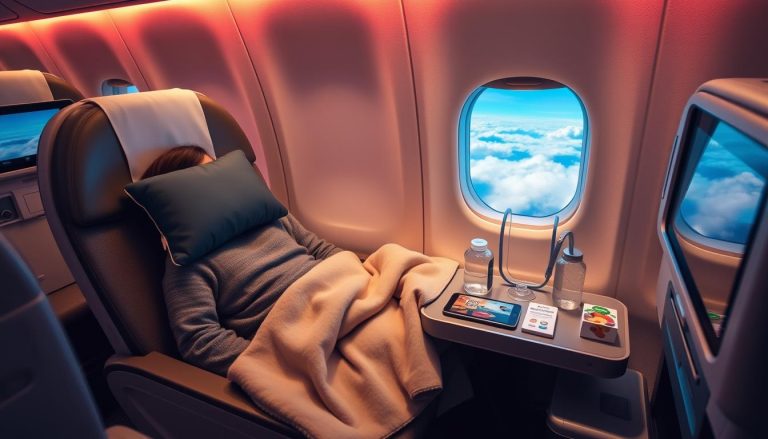
Sleeping on the plane, based on your destination’s time zone, is smart. If it’s night where you’re going, use a sleep mask and earplugs. 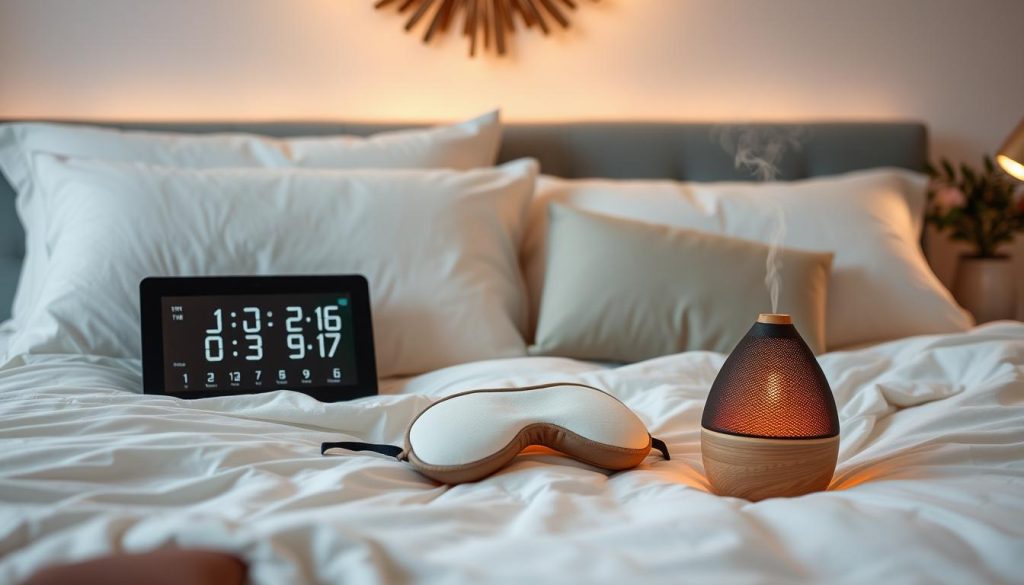 A neck pillow can also make things more comfy. If you think you need it, talk to your doctor about a sleep aid. Skip caffeine and big meals before trying to sleep.
Avoid Daytime Naps
When you get there, try to stay awake during the day and avoid naps. This helps your body clock match the local time. If you nap, especially for more than 30 minutes or close to bedtime, it disrupts your schedule. Being active and getting sunlight during the day can help you avoid napping. Remember, it’s not just about sleeping enough. It’s about sleeping right at the correct times.
Following these tips can make your travel smoother. It lessens the effect of crossing time zones. Be mindful of your sleep schedule to adjust quicker.
Using Caffeine Strategically
Managing jet lag involves some smart moves, like caffeine use for jet lag. Taking it in moderation during the morning can boost your alertness. It helps fight the sleepiness that comes after flying across many time zones.
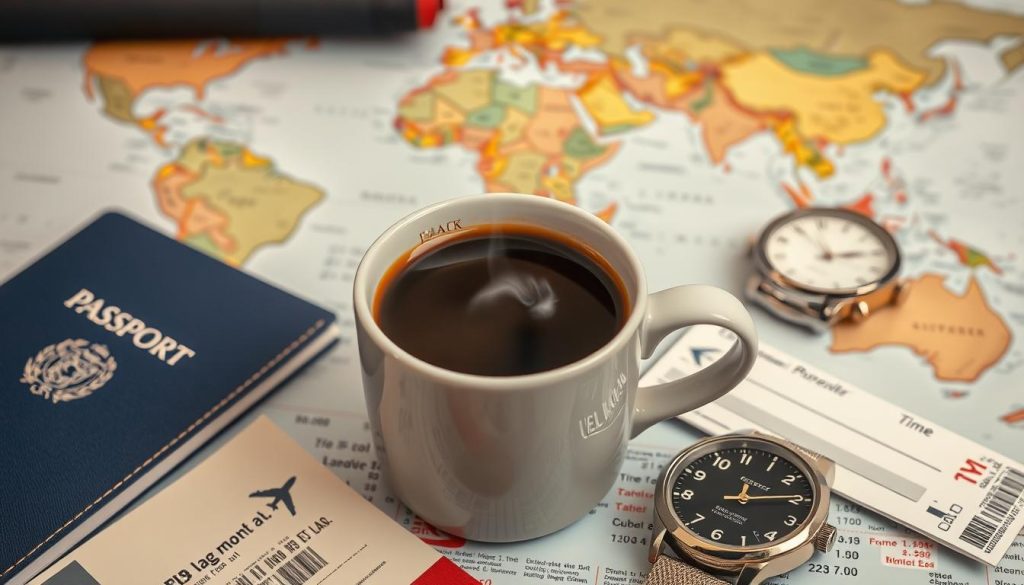
To make caffeine work for you, learning strategic caffeine consumption is key. Avoiding it in the afternoon and evening helps not mess up your sleep. This way, your body can better adapt to the new time zone.
Remember, caffeine doesn’t work the same for everyone. How your body reacts to caffeine and the distance you’ve traveled matter. Drinking a cup or two of coffee in the morning usually helps without causing sleep issues or making you thirsty. Also, keep hydrated, get some sun, and stick to a sleep schedule.
If you’re flying far, especially east, caffeine comes in handy. But don’t drink it on the plane to avoid getting thirsty. Thirst can make jet lag worse.
In short, using caffeine smartly can really help with jet lag. Do it as part of a bigger plan. Then, your trip will be better, keeping you awake by day and asleep by night.
Eating Smaller Meals
Eating smaller meals helps a lot when you’re getting used to new time zones. By planning your meals this way for jet lag, you avoid stomach problems and feel better overall. Let’s look at why this works and some good snack ideas to keep your eating right to beat jet lag.
Benefits of Smaller Meals
Smaller, lighter meals are a big help with jet lag. Eating less at a time makes digestion easier, so you don’t feel bogged down. This method keeps your energy up all day without overloading your stomach.
Jet lag hits harder when flying east because it’s tough to adapt to an earlier time. Eating things like bananas, cherries, lean proteins, and kiwis helps you sleep better. These foods have melatonin, tryptophan, and magnesium, which help you get into a good sleep rhythm when you’re moving across time zones.
Recommended Snacks
Picking the right snacks is key for jet lag meal planning. Choose snacks that are high in protein but low in sugar to keep your energy steady and not mess up your sleep. Here are some snacks to try:
- Almonds and walnuts
- Greek yogurt and berries
- Lean protein like turkey slices
- Fresh fruits such as bananas and kiwi
- Vegetable sticks with hummus
These snacks don’t just help fight jet lag; they also boost your overall health. They provide important nutrients without the sugar highs that can ruin a good night’s sleep.

Melatonin and Other Sleep Aids
Natural remedies like melatonin can make a big difference in fighting jet lag. Melatonin is key for adjusting your internal clock to a new time zone.

How Melatonin Helps
Melatonin is a hormone that helps control your sleep-wake cycles. Its levels go up in the evening and down in the morning. Taking melatonin for jet lag helps your body adjust quicker to new time zones.
Research shows melatonin is quite effective against jet lag after crossing many time zones. A 2014 review of studies found melatonin often works better than a placebo. It usually comes in doses from 0.5 milligrams to five milligrams or more.
When to Take Melatonin
The best time to take melatonin is 30 minutes to two hours before you plan to sleep. For trips east over five zones, try melatonin at local bedtime for at least four days. A smaller dose might help if you wake up too early.
Take melatonin after dark on travel day and for the first few days at your destination for the best effect. If you’re flying east, taking it in the evenings before your flight helps too.
While melatonin is a great tool, remember it’s a dietary supplement in the U.S. and isn’t FDA-regulated. Dosage can vary by brand. Side effects might occur, like headaches or dizziness, and it’s not recommended for everyone.
Combining melatonin with other sleep aids, like caffeine strategically and natural light, can make adjusting to new time zones easier and more comfortable.
Maintaining a Comfortable Sleep Environment
Creating the right sleep environment is crucial for overcoming jet lag. Up to 70% of travelers experience jet lag, worsened by poor sleep settings. To lessen these effects, it’s key to establish a comfortable sleep space quickly when you arrive.
One important tip is to keep your room temperature between 54°F and 75°F. This helps you sleep better and adjust your body clock. Using earplugs or white noise machines can also make a big difference in reducing disturbances.

Blocking out light with blackout curtains or eye masks is also vital. This helps keep your sleep cycle on track. Getting sunlight during the day and ensuring your sleep area is dark at night boosts sleep quality. Bringing your own pillow or blanket can make your sleep space feel more like home. These steps are crucial for travelers aiming to limit jet lag’s impact.
Here is a quick list of sleep tips and their advantages:
| Tip | Benefit |
|---|---|
| Maintain Room Temperature (54°F-75°F) | Promotes optimal sleep quality |
| Use Earplugs or White Noise Machines | Reduces disruptive noise levels |
| Block Out Light with Blackout Curtains | Helps regulate circadian rhythm |
| Emulate Home Comforts (Pillow, Blanket) | Increases relaxation and ease of sleep |
Using these sleep tips to improve your sleeping environment is essential for jet lag recovery. Paying attention to these details greatly improves your sleep quality. This helps you adjust faster to new time zones.
Conclusion
Beating jet lag takes a mix of different steps. You need to adjust your clocks, change what you eat, and use things like melatonin. It’s also good to cut back on caffeine and alcohol. Even though not all these steps have strong proof that they work, using them together can help. Doing things like getting sunlight at the right time, drinking plenty of water, eating light meals, and staying active can make a big difference.
It’s also key to know how your body reacts, like changes in your heartbeat. By the third day after traveling, sleep doesn’t help as much as it normally does. But, by the sixth night, things start to get better. Getting good sleep and using light therapy are important for getting your sleep cycle back on track.
Using smart tips for jet lag and planning ahead can make a huge difference. You might work out at the hotel, eat meals at specific times, or use melatonin. These steps together make it easier to adjust to new time zones. This means you can enjoy your travels more and feel energized.