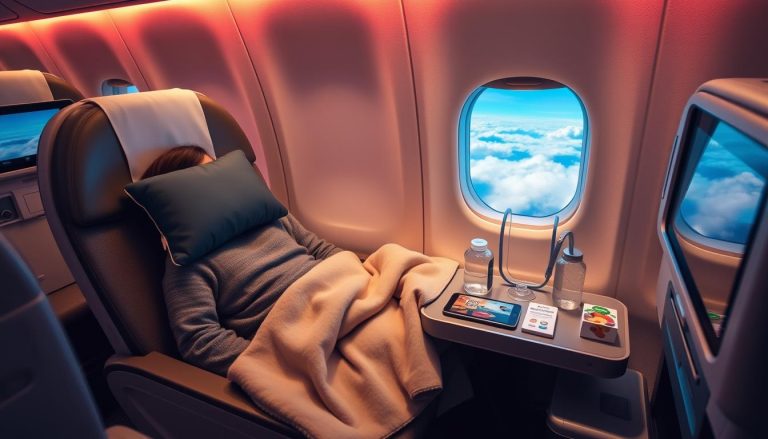
Beat Jet Lag in New Zones: Best Management Tips
Why do some travelers feel great after a red-eye, while others are tired for days? Understanding and managing jet lag can change your travel game. Knowing its causes and having effective strategies is key.
About 33% of international travelers face jet lag. It’s because their body’s clock gets mixed up. This leads to tiredness, sleep problems, and stomach issues. It can ruin your trip and work. That’s why knowing how to handle jet lag is so important.
In this guide, we’ll share proven jet lag management tips. These tips will keep you sharp and well in new time zones. We’ll cover everything from what to do before your flight to how to adjust after landing. These tips are going to help you beat jet lag and enjoy your travels fully. Let’s dive into how jet lag works and the best ways to fight it.
Understanding Jet Lag: Causes and Symptoms
Jet lag affects many travelers who quickly cross different time zones, messing up their natural cycles. It’s important to understand jet lag and its effects to tackle its discomfort.
What is Jet Lag?
Jet lag happens when you travel quickly over long distances. This misaligns your body’s clock with the new local time. Basically, it disrupts your normal body cycles.

Common Symptoms
Symptoms of jet lag show up after crossing two or more time zones. They usually appear:
- Insomnia or trouble sleeping
- Feeling tired or sleepy during the day
- Having a hard time focusing
- Feeling moody, like being irritable or anxious
- Getting headaches and stomach problems
Studies show flying east makes these symptoms worse than flying west.
Causes: Circadian Rhythm Disruptions
Jet lag mainly comes from messing with your circadian rhythms. These rhythms are like a 24-hour internal clock. They get confused when you change time zones quickly.
Things that can make jet lag worse include:
- The number of time zones crossed: recovery typically takes a day per time zone.
- Travel direction: Eastward flights usually bring more challenges.
- Age: Older people might need more time to adjust than younger ones.
- Staying hydrated: Not drinking enough water, especially in the dry air of a plane, can intensify symptoms.
Frequent travelers, like pilots and flight attendants, often feel jet lag more because they switch time zones often.
Pre-Flight Preparation for Minimizing Jet Lag
To fight jet lag before it starts, try some pre-flight steps. Start your travel rested, slowly adjust your sleep, and get your body ready for a new time zone. Doing so can make a big difference.
Leaving Home Well Rested
Beginning your trip well-rested is key. Jet lag symptoms can last up to five days if you cross five time zones. So, starting fresh can help you handle time changes better. It’s also important to stay calm before traveling. This helps keep your sleep quality up.
Adjusting Your Sleep Schedule
Adjusting your sleep before you go is also crucial. Try going to bed earlier or later to match the time zone you’re heading to a few days before leaving. If you’re flying across three or more time zones, jet lag is more likely. And flying east usually feels harder than west. Sleeping as per the new time zone helps. Taking low-dose melatonin (1-3 mg) also helps reset your clock.
Setting Your Clock to Destination Time
Change your watch and devices to the new zone’s time once on the plane. This mental shift is the first step. Then, try to get morning sunlight once you arrive. It helps adjust faster. If you travel east, avoid bright light till about noon. This helps fix your internal clock.
Follow these tips to reduce jet lag’s impact on your travels. They make adjusting to a new time zone easier and more comfy.
What’s the Best Way to Manage Jet Lag in a New Time Zone?
To handle jet lag well, use several strategies together. It’s key to adapt to the new time zone by updating your schedule and surroundings right away.
Change your watch to the local time when you get on the plane. It helps you mentally prepare for the change. When you get there, it’s important to be in natural light. The Mayo Clinic says this helps you adjust faster by fixing your body clock.
Staying hydrated is crucial, too. Try to drink at least 32 ounces of water during your flight. This helps stop jet lag from getting worse. Also, Air New Zealand’s business-premier class shows how sleeping well on the flight helps. They offer a bed for around 8 hours of sleep on a 16-hour trip.
Book an extra day off after your trip to help yourself adjust. This reduces work stress and helps with jet lag. Also, think about using sleep aids like melatonin, but check with a doctor for the right amount.
Older people, especially over 60, may find it harder to bounce back from jet lag. This is because of changes in their body clocks. Yet, studies show that younger people, including pilots, might feel jet lag even more.
- Adjust Your Watch: Change to the new time zone as soon as you’re on the plane to start getting used to it early.
- Exposure to Light: Use the sun to help set your body’s clock right.
- Stay Hydrated: Drink at least 32 ounces of water on the flight to avoid getting dehydrated.
- Get Adequate Sleep: Sleep as much as you can on long flights using available comforts like fold-out beds in better seats.
- Extra Vacation Day: Taking another day off when you come back helps with adjusting better.
Knowing how your body reacts to time zone changes helps you fight jet lag better. Using the right strategies can make your travels less troublesome and more fun.
| Time Zone Changes | Time Difference | Flight Duration | Sleep & Hydration Tips |
|---|---|---|---|
| Chicago to Los Angeles | 2 hours | 4 hours | Light exposure, hydration, minimal caffeine |
| Los Angeles to London | 8 hours | 11 hours | Daylight exposure, drink 32+ oz water, melatonin |
| London back to Chicago | 6 hours | 9 hours | Hydration, stay active, minimize naps |
| Chicago to New Zealand | 17 hours | 16 hours | Hydration, utilize sleep aids, rest on arrival |
Using these methods and paying attention to reducing jet lag can help with time zone adjustments. This ensures your trips are more productive and enjoyable.
Meditation and Relaxation Techniques
When you’re jet-lagged, using meditation and relaxation techniques can really help. They fix your body clock and make adjusting easier. Plus, they cut stress and help you sleep better when you’re moving across time zones.
The Role of Meditation in Sleep
Meditation is key for better sleep. It helps your body get used to new time zones faster. Because it calms your mind, stress hormones drop. This makes your sleep cycle steadier. Trying mindfulness before bed signals your body it’s time to rest. So, falling asleep gets easier.

Relaxation Practices for Better Sleep
Alongside meditation, other relaxation ways can boost your sleep when traveling. These include:
- Deep Breathing Exercises: Doing these helps slow down your heart rate. It makes you feel calm and ready for sleep.
- Progressive Muscle Relaxation: This method has you tense and then relax muscles. It eases the physical stress from travel.
- Guided Imagery: Hearing guided imagery takes your mind to calming places. It lessens mental stress and makes sleep better.
Know how light and your body clock work together with these methods. It helps you adjust to new time zones better. The suprachiasmatic nucleus in your brain manages your sleep cycle and reacts to light. Using relaxation while controlling light exposure makes adjusting your body clock easier. This cuts down jet lag.
To manage jet lag well, especially going east, use these sleep methods. Keeping regular sleep habits and managing light helps too. This lessens jet lag’s trouble.
| Techniques | Benefits |
|---|---|
| Meditation for Jet Lag | Reduces stress hormones, enhances mental calmness |
| Deep Breathing Exercises | Lowers heart rate, promotes relaxation |
| Progressive Muscle Relaxation | Alleviates physical tension |
| Guided Imagery | Reduces mental stress, improves sleep quality |
Utilizing Melatonin and Other Supplements
Travelers often use melatonin and other supplements to fight jet lag. This part talks about melatonin’s benefits, how much to take, and what Pycnogenol does.
The Benefits of Melatonin
Melatonin is a hormone the pineal gland makes. It controls our sleep cycle. Taking melatonin for jet lag can reset our body clock. This helps us adapt to new time zones faster. Studies show melatonin reduces problems like trouble sleeping and feeling tired during the day. This is true for trips across five or more time zones. Some people might feel side effects like headaches, feeling sleepy in the daytime, or feeling sick.
Dosage Recommendations
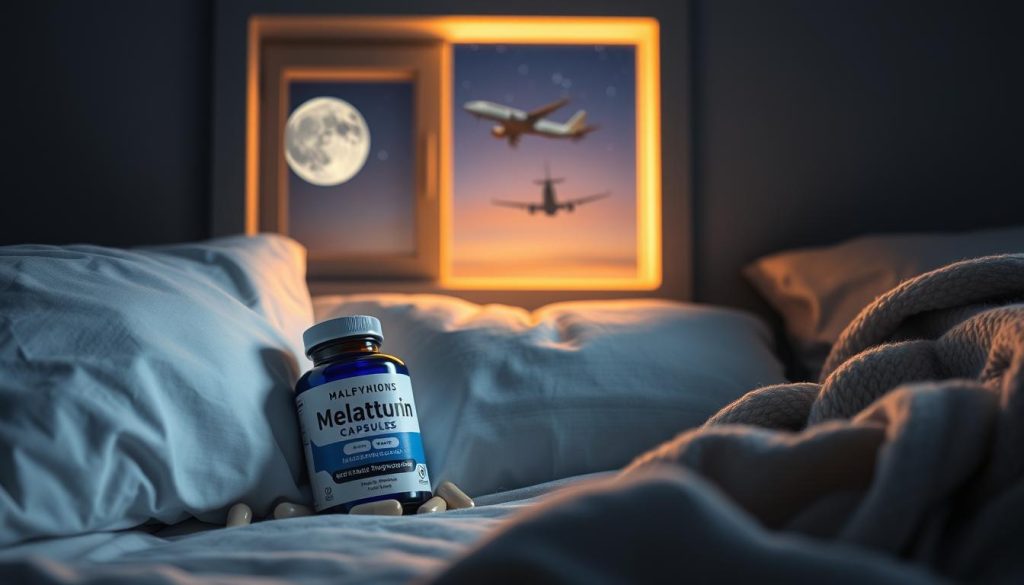
The right amount of melatonin to take is between 0.5 milligrams and 5 milligrams. Even a small dose, like 0.5 mg, can improve sleep. It’s best to take it 30 minutes to 2 hours before you plan to sleep. It’s important to choose melatonin products from trustworthy brands because their quality can vary a lot.
Other Helpful Supplements: Pycnogenol
Pycnogenol benefits those with jet lag too. It comes from maritime pine bark and is a strong antioxidant. Studies show it helps with blood flow and reduces oxidative stress. Both are important for dealing with jet lag. For the best results, start taking Pycnogenol a few days before your trip. Keep taking it for some days after you arrive.
Using these supplements for jet lag can make adjusting to new time zones easier. It helps avoid the usual problems of long flights.
| Supplement | Function | Dosage | Side Effects |
|---|---|---|---|
| Melatonin | Regulates sleep-wake cycle | 0.5 – 5 mg | Headache, nausea, sleepiness |
| Pycnogenol | Reduces jet lag symptoms | 50 – 150 mg daily | Gastrointestinal issues, dizziness |
Managing Light Exposure
Adjusting how much light you see can help fight jet lag. By changing your light exposure, you can reset your body’s clock and lessen jet lag effects. This part talks about the best ways to manage light exposure. It covers dealing with blue light and sleep, and using light therapy for jet lag.
Restricting Blue Light at Night
Blue light at night affects your sleep a lot. Cutting down on blue light and sleep problems can make jet lag less of an issue. Here’s how to do it:
- Wear blue light blocking glasses before bedtime.
- Switch on night mode on gadgets or use them less.
- Choose dim, warm room lights in the evening.
Morning Light Exposure to Reset Your Internal Clock
Getting morning light is key to resetting your body clock. Morning sunshine stops melatonin, which wakes you up and fits you to the new time zone. Try these steps:
- Be outside in natural light for 30 minutes after waking up.
- Do outdoor activities like walking or jogging to get more light.
- Keep doing this for a few days to adjust your body clock.

Using Light Therapy Devices
Light therapy devices are great for getting natural light when it’s gloomy. They are really useful for light therapy for jet lag. Here’s the best way to use them:
“Travelers who used light therapy devices saw a 14.1 times drop in jet lag symptoms compared to those who didn’t.”
- Put the light therapy device about 24 inches away from your face.
- Use it for 20-30 minutes each morning.
- Don’t use these devices at night to keep your sleep-wake cycle right.
By managing light exposure well and using tips to reduce blue light and sleep issues and using light therapy for jet lag, you’ll ease the tough parts of traveling across time zones.
| Strategy | Recommendation |
|---|---|
| Restricting Blue Light | Use blue light blockers, minimize evening screen time, and choose dim lighting. |
| Morning Light Exposure | Spend time outdoors in natural light for at least 30 minutes after waking. |
| Light Therapy Devices | Use devices for 20-30 minutes in the morning to simulate natural sunlight. |
Tips for During the Flight
Start fighting jet lag the moment you get on the plane. Knowing how to sleep well and stay hydrated and nourished is key.
Getting Some Sleep While Airborne
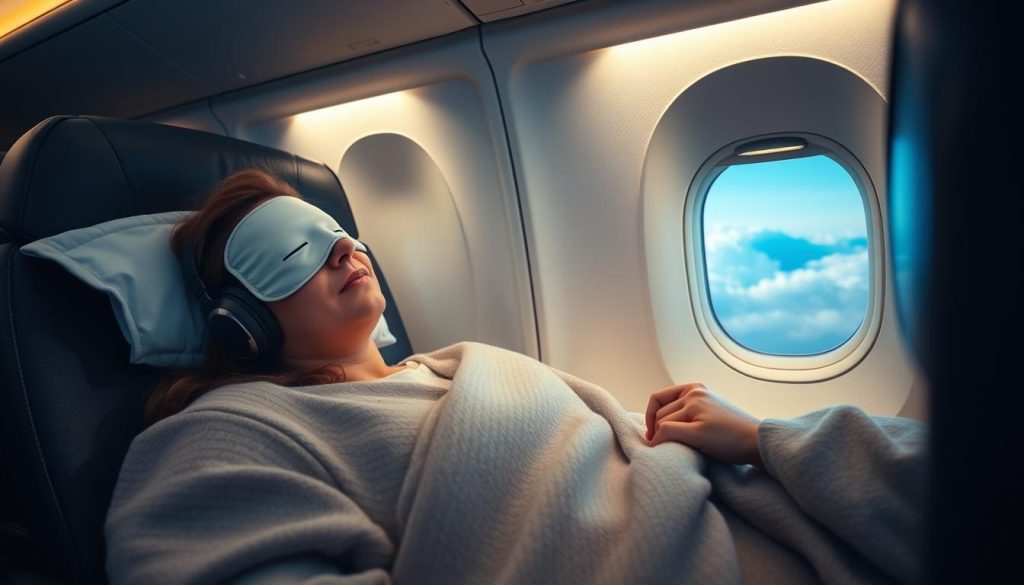
Sleeping well on a plane is big for beating jet lag. Good sleep cuts down on jet lag’s bad effects a lot. Use neck pillows, eye masks, and noise-canceling headphones to sleep better.
Different sleep strategies for jet lag help. Like stretching every few hours to boost blood flow and lessen discomfort on long flights.
Hydration and Nutrition
Drinking enough water on flights is crucial for jet lag. About 95% of travelers worry about getting dry on the plane. Try to drink two to three times more water than usual. Skip alcohol and caffeine because they dry you out.
Eating light meals with fruits and veggies helps. Avoid heavy, fried food, dairy, and sugar. Eating as if you’re already in the new time zone helps your body clock adjust.
Creating a Comfortable Sleeping Environment
Choosing airlines with comfy Premium Economy seats, like many Asian airlines offer, increases comfort. Using pillows and blankets helps you sleep better.
Planes like the 787 Dreamliner have better air systems that might cut jet lag. Learning about these features before flying helps you choose wisely to manage jet lag.
Planning your hydration and sleep for the flight really makes travel smoother. It helps you get used to the new place faster.
Adapt Quickly Once You Land
Getting used to new time zones can really ease jet lag and help you enjoy your trip from the start. Quick adaptation techniques can greatly improve your journey. When you get there, try these easy tips to get your body clock in line with the new time.

Stay Awake Until a Local Bedtime: Feeling sleepy after flying is normal, but try not to nap in the day. Keep yourself up until it’s early bedtime there. This helps you sleep all night and starts fixing your jet lag.
Engage in Light Physical Activity: Do some light exercises, like walking or stretching, after you arrive. Being outside in the daylight is especially good for getting used to the time change. This mix of exercise and sunlight helps your body adjust quicker.
Avoid Afternoon Naps: A short nap might feel good, but keep it under 30 minutes. Long naps later in the day can mess up your sleep at night.
Hydration and Nutrition: Drink lots of water to keep hydrated. Jet lag feels worse if you’re dehydrated, so drink plenty of water before, during, and after your flight.
| Travel Scenario | Recommendation | Effectiveness |
|---|---|---|
| Flying from New York to Tokyo | Engage in outdoor activities upon arrival | Highly effective due to significant time difference |
| Flying from Los Angeles to London | Stay awake until local bedtime | Effective for 8-hour time difference |
| Traveling eastward across multiple time zones | Avoid morning light, seek afternoon light | Helps in circadian rhythm adjustment |
| Traveling westward | Gradually adjust sleep schedule before departure | Reduces jet lag severity |
It usually takes a day to adjust to each time zone crossed, so be patient. For example, going from London to New York, with a five-hour time difference, might take about five days to adjust. By using these tips in your travel plan, you can manage jet lag better and adjust to new time zones smoother.
Conclusion
To lessen jet lag, a complete plan is important. Knowing why jet lag happens helps you fight it off. Getting ready before your flight helps too. Like sleeping enough, changing your sleep time early, and setting your watch to the new place’s time. This makes adjusting your body’s clock easier.
Light exposure is also key. Avoiding blue light at night and getting sunlight in the morning helps reset your body’s clock. Light therapy devices can be a big help here, giving you the right light at the right time. Also, doing things to relax, like meditation, can make your sleep better. This is vital to beat jet lag.
Once you arrive, adapting quickly helps a lot. Being in daylight, drinking lots of water, and eating well help your body adjust faster. Taking melatonin can also help match your sleep schedule with the new time zone. Taking 0.5 to 5 mg works well, studies say. Remember, using all these strategies together makes managing jet lag easier. It helps you enjoy your travels more and recover quicker.